
What Are Block Bottom PP Bags?
Block Bottom PP Bags are precision-shaped polypropylene woven sacks engineered to form a rectangular, brick-like base that stands upright and stacks square. Unlike balloon-like pillow sacks that round off corners and waste pallet real estate, the block-base geometry preserves faces and edges, enabling dense, stable columns, safer wrap, and higher container utilization. The format thrives wherever 10–50 kg units must be filled fast, handled hard, and delivered tidy—cement, mortar, fertilizer, animal feed, seeds, resins, salt, sugar, minerals, and more.
Also known as (buyer cross-reference, numbered aliases)
- Block Bottom PP Woven Bags
- Block Bottom Polypropylene Bags
- Square Bottom PP Sacks
- PP Woven Block-Bottom Valve Bags
- Rectangular-Base Woven PP Bags
- Brick-Pack PP Woven Sacks
Why this many names? Because one geometry solves many pains: straighter stacks for safety, tighter pallet patterns for freight efficiency, calmer docks for fewer rewraps, and neater aisles for better retail presentation. Shape is not a flourish; it is a constraint turned into an advantage. That is the quiet logic behind Block Bottom PP Bags.
One-line purpose
Convert filler speed into delivered reliability by holding a near-cubic profile from plant to pallet to port.
Primary users
Cement and dry-mix brands, fertilizer blenders, feed mills, seed processors, chemical & mineral packers, public works.
Key difference
Rectangular base + engineered seams = square stacks, fewer topple events, and fewer stretch-wrap cuts.
The Materials of Block Bottom PP Bags
Every element in Block Bottom PP Bags earns its place. The woven chassis holds the load, coatings and laminates manage wet yards and print quality, valves and mouths govern fill speed and dust control, and finishes tune pallet friction. The bill of materials below links each layer to a behavior you can measure.
Material stack by function
- Woven polypropylene fabric (structural core): PP is extruded as film, slit into tapes, draw-oriented to align molecules, then woven (circular or flat). Denier, GSM, and weave density select tensile/tear, abrasion tolerance, and seam efficiency.
- Coatings & laminates (surface system): PP/PE extrusion coats add splash resistance and heat-seal potential; BOPP laminates (reverse-printed) deliver billboard-grade graphics and scuff protection. Matte vs. gloss balances look and COF.
- Valves & mouths (filling interface): Corner or side valves couple to high-speed fillers for powders; open-mouth hems suit sewn or heat seals. Easy-open tapes support retail formats.
- Liners (barrier & hygiene): Loose, tabbed, or form-fit PE/PP liners contain odor/moisture and protect food/feed. Antistatic liners serve flammable powders; cone bottoms help poor-flow products.
- Finishes & textures (stack behavior): Anti-slip stripes, matte coats, and micro-emboss textures raise COF for taller columns and calmer sea legs; over-varnish protects text and codes.
- Additives & colors: UV packages slow embrittlement outdoors; antistat reduces cling; color masterbatches support brand and SKU coding.
Cost is not a verdict; it is a set of dials. Thin coats save mass but narrow heat-seal windows. Heavy paper-like stiffness can look premium yet may scuff without varnish. Thin BOPP saves cost but reduces rub headroom. The right recipe tunes those dials for the lane you actually ship, not the lane you wish you had.
| Component | Typical Options | Influence on Behavior |
|---|---|---|
| Fabric GSM | 80–130 g/m² | Strength vs. pliability; seam performance; drop survivability |
| Tape denier | 900–1500 D | Tensile/tear balance; creep resistance |
| Weave density | 12×12 to 14×14 | Dimensional stability; print laydown; porosity |
| Coating thickness | 15–30 µm | Splash resistance; heat-seal window; surface COF |
| BOPP gauge | 18–35 µm (reverse-print) | Graphics fidelity; rub resistance; barcode life |
| Anti-slip strategy | Matte varnish; stripes; emboss | Pallet stability; wrap cuts reduction |
Tip: design the obvious weak link. If anything must fail, let it be a seal you can test, not a hidden delamination you only discover after a long haul.
What Are the Features of Block Bottom PP Bags?
Features matter when they answer predictable problems. The most useful list is short, plain, and testable. Here, engineering nouns translate into operator verbs.
- Shape retention: block bases resist mid-panel bulge and corner collapse, so stacks remain square and tall.
- Sift-proof seams: coated faces and engineered welds or tapes minimize fines leakage with powders and fine granules.
- Moisture moderation: coatings and laminates shed rain; liners add true barrier; uncoated options breathe for certain agri goods.
- High-fidelity graphics: reverse-printed BOPP shelters color under film while matte/gloss control COF and glare for scanners.
- Filler compatibility: corner valves for enclosed powder fills; open-mouth tops for flexible changeovers and retail packs.
- Pallet friction control: anti-slip textures tune bag/bag COF to your wrap recipe and lane vibration.
Reader prompt
Which failure costs you more—sifted dust, toppled pallets, or scuffed branding? Your answer decides where the budget belongs: seams, COF control, or BOPP lamination.
What Is the Production Process of Block Bottom PP Bags?
From pellets to pallets, consistency wins. VidePak standardizes on heavy-duty woven platforms from Austria’s Starlinger and high-register printing/converting from Germany’s W&H (Windmöller & Hölscher). Stable tension, clean selvages, accurate register, and tight gauges are not luxuries—they are risk controls.
Upstream: raw material selection and checks
- Virgin PP matched to target melt flow and draw ratio; CoAs archived; moisture checked.
- Masterbatches: UV, antistat, color; compatibility verified lot by lot.
- BOPP and coatings: gauge, haze, surface energy verified; bondability mapped.
Core manufacturing
- Tape extrusion & drawing: film slit to tapes, oriented; tighter tape width/gauge improves weaving and seam integrity.
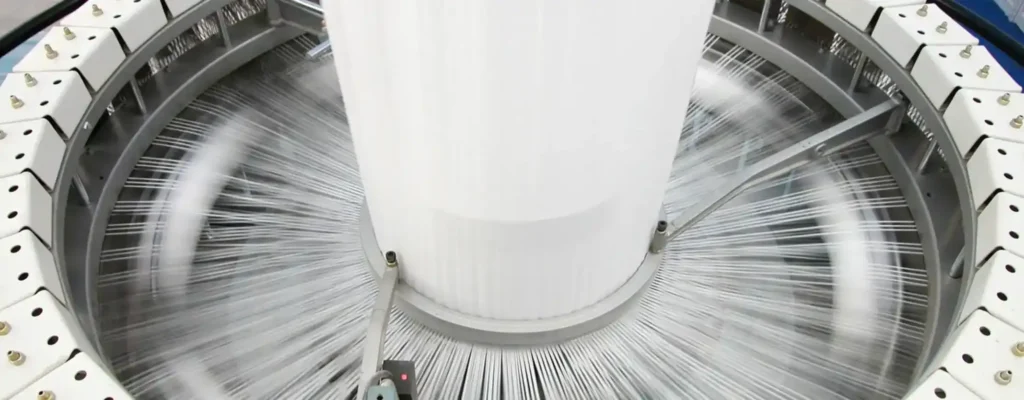
- Weaving: circular or flat looms produce body webs and base panels; weave density set per load/print needs.
- Coating/lamination: PP/PE coat for splash and sealability; reverse-printed BOPP bonded for premium graphics.
- Printing: W&H presses deliver register precision; rub-fast inks protect handling icons, barcodes, and regulatory panels.
- Cutting & conversion: die lines for walls/base; block-bottom formed via hot-air weld system; corner valve installed (if applicable); micro-perf patterns tuned for de-aeration.
- Palletizing: square stacks; COF-matched wrap; corner boards; pallet cards with lot and revision.
Downstream QA and release
- Dimensions: width, height, gusset, block-bottom squareness.
- Mechanicals: tensile/tear, burst, drop; seam strength, weld integrity.
- Surface: COF, rub/adhesion, barcode readability.
- Barrier: WVTR for linered SKUs; micro-perf airflow for high-speed fills.
- Sampling: AQL release with retains archived per SOP.
The fewer the surprises on the floor, the quieter the claims inbox. Standards + stable equipment + simple specs = predictable pallets.
What Is the Application of Block Bottom PP Bags?
Because they blend textile toughness with engineered faces, Block Bottom PP Bags serve a wide industrial map. The scenarios below tie format choices to day-to-day outcomes.
- Cement and dry-mix mortars: block-bottom valve sacks dominate; square geometry supports high stacks; sift-proof seams cut mess at retail sites.
- Fertilizers and soil amendments: coated/laminated faces resist caking and yard damp; matte surfaces stabilize pallets.
- Animal feed and seed: BOPP-laminated open-mouth or valve bags deliver premium print; form-fit liners protect aroma and oils.
- Salt, sugar, and specialty foods: coated faces and liners manage humidity and hygiene; block-bottoms shelf-face neatly.
- Resins and minerals: abrasion-tolerant woven PP with reinforced bases keeps dense goods contained; anti-slip textures reduce shift.
- Public works and emergency response: open-mouth block-bottom sacks fill fast and stack into stable temporary walls.
Related reading
To compare a closely related filling interface, review PE-coated valve woven bags and note when a valve format may outpace open-mouth in dust control.
How VidePak Controls and Guarantees the Quality
Quality is not a slogan; it is a rhythm on the floor. VidePak’s rhythm converts standards into habits and habits into outcomes.
- Standards first: design and testing aligned to mainstream frameworks—ISO, ASTM, EN, JIS. Test suites include tensile/tear, seam efficiency, burst, drop, tilt/stack, COF, rub, and liner WVTR where relevant.
- 100% new raw materials: virgin PP, certified masterbatches, compliant inks/varnishes, and traceable liners minimize drift and simplify root-cause investigations.
- Best-in-class equipment: Starlinger for woven-package platforms and W&H for high-register printing/converting narrow process windows and lift first-pass yield.
- Full-stack inspection: IQC on resins/films/inks; IPQC on tape gauge, weave density, coating/lamination bond, weld/seam integrity, and valve geometry; FQC on dimensions, mechanics, sift-proofing, COF, graphics.
Why standards?
Comparable data builds trust across sites and auditors. Only numbers with methods can be defended.
Why virgin inputs?
Predictable strength and bond behavior beat cheapness that arrives with surprises. Fewer surprises, fewer claims.
Why Starlinger & W&H?
Tight tension windows and crisp register are invisible safety nets that keep little errors from becoming big ones.
System Thinking: From Hazards to Specs to Outcomes
Treat Block Bottom PP Bags as interacting subsystems. Break the problem down—mechanics and load path, filling interface, moisture/odor control, identity and communication, logistics and pallet stability, end-of-life—and then recombine into a coherent specification that behaves the same way every shift.
| Subsystem | Levers | What Shifts When You Pull Them |
|---|---|---|
| Mechanics & load path | Fabric GSM/denier, base reinforcement, weld map | Drop survival, corner crush, seam retention |
| Filling interface | Valve style/length, micro-perfs, liner venting | Fill speed, weight variance, dust index |
| Moisture & odor | Coating vs. BOPP, liner gauge/material | Caking risk, aroma retention, shelf comfort |
| Identity & communication | Color coding, iconography, barcode targets | Right action at a glance; scan rates; rub-fast text |
| Logistics | COF tuning, corner boards, wrap recipe | Topple frequency, damage rate, container utilization |
| End-of-life | Monomaterial PP, separable liners, labeling | Sorting ease, scrap reclaim, emergency repack avoidance |
Recombine thoughtfully. For odor-critical organics, choose generous liner gauge and secure heat-seal windows. For moisture-hating powders, target lower WVTR and add matte varnish to stabilize pallet friction. For consumer returns, use peelable seals and friendly opening features so customers succeed without knives.
Parameters and Ranges: Color-Coded Quick Reference
| Parameter | Typical Range / Options | Purpose / Notes |
|---|---|---|
| Fabric GSM | 80–130 g/m² | Strength vs. pliability; seam and drop performance |
| Weave density | 12×12 to 14×14 | Dimensional stability; print laydown |
| BOPP gauge | 18–35 µm | Rub-fast premium graphics; barcode life |
| COF (bag/bag) | 0.35–0.55 via stripes/matte | Pallet stability through vibration and ramps |
| Valve length (if valve) | 110–160 mm | Coupling to filler; dust control; weight variance |
Quality and Performance Tests That Matter
| Test | Protects Against | Tighten When |
|---|---|---|
| Seam strength | Top/bottom failures on lift and set-down | Tall stacks; heavy density products; long sea legs |
| Drop test | Corner crush, impact puncture | Rough yards; export; high forklift traffic |
| COF | Stack slippage and wrap cuts | Tall columns; smooth films; sea vibration |
| Rub/adhesion | Illegible graphics and codes | Retail-facing SKUs; regulatory environments |
Troubleshoot Once, Fix for Good
Most field issues trace to a few repeat offenders. A seam opens because the hem is thin, needle too large, or stitch density too low. A pallet leans because COF is mismatched to the wrap recipe. Odor escapes because liner gauge is thin and seals are narrow. Each has a countermeasure you can code into the spec and train into the shift.
| Symptom | Likely Causes | Corrective Actions |
|---|---|---|
| Corner sifting | Incomplete bottom weld; porous foot; no seal tape | Raise weld energy; add seal tapes; increase coat gauge |
| Pallet slippage | Low COF; glossy surfaces; wrap recipe off | Specify matte varnish; anti-slip stripes; retune wrap |
| Valve dusting (if valve) | Short valve; poor de-aeration | Extend valve length; add micro-perfs; tune spout air |
| Print scuff | Low rub resistance; no OPV | Add over-varnish; switch to BOPP reverse print |
Cost, Risk, and the Pallet You Actually Ship
A unit price can seduce; a total cost can educate. The bag that looks cheap but bulges into its neighbor is not cheap. The line that moves fast but pushes rework downstream is not fast. Specify to the lane you have: define barrier bands, seal windows, pallet recipes; and measure outcomes you actually pay for—intact pallets per hundred shipped, rewrap hours per week, kilograms per container, claims per million, days between issues. Block Bottom PP Bags set up with discipline lower each of those numbers without calling attention to themselves.
A quiet KPI dashboard is not an accident; it is the echo of a well-written specification executed on stable equipment by teams watching the right numbers.
Sustainability and End-of-Life
Multilayer packaging can complicate recycling, but design choices can soften trade-offs. Favor monomaterial PP pathways (woven + PP coat + BOPP), document separable liners, and print guidance for sorting. The highest-impact sustainability action is durability: packages that do not fail prevent emergency repacks and wasted trips.
KPI Dashboard Ideas
- Mechanics: tensile/tear, seam strength, drop, and compression results.
- Dimensions: width/height/gusset variance; squareness; GSM; coating gauge.
- Seals/valves: peel/burst; dust index; weight variance.
- Graphics: color ΔE, register, rub resistance.
- Process: lamination bond strength, press waste, first-pass yield.
- Field: claims per million, time to CAPA close, topple/overhang incidents.
Glossary (Short and Useful)
- GSM — grams per square meter; proxy for fabric mass/strength.
- COF — coefficient of friction; controls pallet stability and wrap behavior.
- ΔE — color difference metric used in print QA.
- WVTR — water vapor transmission rate; targets caking and moisture ingress risk (liners).
Keyword Cluster (Natural Sentences)
block bottom pp bags; block bottom pp woven bags; pp woven block-bottom valve bags; square bottom polypropylene sacks; brick-pack woven pp bags; cement valve block-bottom sacks; bopp laminated block bottom pp bags; coated woven polypropylene block-bottom bags; sift-proof valve bags; moisture-resistant block bottom sacks; anti-slip block bottom packaging; fertilizer block-bottom pp sacks; animal feed block-bottom woven bags; resin and mineral block-bottom bags; monomaterial polypropylene woven sacks; block-bottom open-mouth pp bags; block-bottom valve pp bags with liners.
October 25, 2025
- What Are Block Bottom PP Bags?
- The Materials of Block Bottom PP Bags
- What Are the Features of Block Bottom PP Bags?
- What Is the Production Process of Block Bottom PP Bags?
- What Is the Application of Block Bottom PP Bags?
- How VidePak Controls and Guarantees the Quality
- System Thinking: From Hazards to Specs to Outcomes
- Parameters and Ranges: Color-Coded Quick Reference
- Quality and Performance Tests That Matter
- Troubleshoot Once, Fix for Good
- Cost, Risk, and the Pallet You Actually Ship
- Sustainability and End-of-Life
- KPI Dashboard Ideas
- Glossary (Short and Useful)
- Keyword Cluster (Natural Sentences)
Block Bottom Bags, specifically BOPP Block Bottom Bags, are an innovative packaging solution widely used across various industries. Their unique design offers several advantages, particularly in terms of stability and usability. This article delves into the characteristics of Block Bottom Bags, explores their applications, and analyzes future trends focusing on recyclability, biodegradability, and customization to meet diverse market needs.
Understanding Block Bottom PP Bags
Block Bottom Bags are designed with a flat bottom, allowing them to stand upright when filled. This design not only enhances stability but also facilitates easier filling and stacking. These bags are primarily made from Polypropylene (PP), a versatile plastic known for its strength and durability.
Key Features
- Stability and Structure: The block bottom design ensures that these bags do not topple over, making them ideal for packaging bulk items like grains, fertilizers, and animal feed.
- Easy Handling: With their ability to stand on their own, Block Bottom Bags simplify the packaging process, allowing for efficient filling and reducing the risk of spillage during transportation.
- Customizable Design: Manufacturers can easily customize these bags with printing options, sizes, and colors, making them suitable for branding and marketing purposes.
- Cost-Effectiveness: Due to their manufacturing process and material efficiency, Block Bottom Bags are often more economical than traditional packaging solutions.
Applications of Block Bottom PP Bags
Block Bottom Bags find applications in various sectors, including:
- Agriculture: Used for packaging seeds, fertilizers, and animal feed.
- Food Industry: Ideal for grains, flour, and other bulk food items.
- Chemical Industry: Suitable for packaging powders and granules.
- Construction: Used for carrying construction materials like sand and gravel.
Future Trends and Developments
As environmental awareness grows, the packaging industry is evolving to meet new standards for sustainability. This shift is evident in the trends surrounding Block Bottom Bags:
1. Recyclability
The focus on sustainability has led to increased emphasis on the recyclability of packaging materials. Block Bottom Bags made from PP are recyclable, which helps reduce waste. Manufacturers are encouraged to use recycled materials in their production processes to promote a circular economy.
2. Biodegradability
While traditional PP bags are not biodegradable, the industry is exploring new materials and additives that can make Block Bottom Bags more eco-friendly. Innovations in bioplastics and the incorporation of biodegradable materials can help reduce the environmental impact of these bags.
3. Customization for Diverse Industries
To meet the specific needs of different sectors, Block Bottom Bags can be tailored in various ways. For instance:
- Food Safety: Bags designed for food packaging can include additional safety features such as moisture barriers and food-safe inks.
- Agricultural Needs: Custom sizes and weights can cater to specific agricultural products, ensuring optimal storage and transportation.
The Importance of Meeting Diverse Market Demands
As consumer preferences evolve, businesses must adapt to stay competitive. The flexibility in design and material choice for Block Bottom Bags allows companies to meet the diverse needs of their customers. Here are some critical factors:
- Market Adaptation: Companies that can quickly adapt their packaging solutions will gain a competitive advantage in the market.
- Consumer Awareness: Increased consumer awareness regarding sustainability will push companies to offer more eco-friendly options.
- Regulatory Compliance: Stricter regulations surrounding packaging materials necessitate innovations that comply with environmental standards.
Table: Key Features and Parameters of Block Bottom Bags
| Feature/Parameter | Description |
|---|---|
| Material | Polypropylene (PP) |
| Design | Block bottom for stability |
| Applications | Agriculture, food, chemicals, construction |
| Customization Options | Size, print, color |
| Recyclability | High (PP is recyclable) |
| Biodegradability | Developing new biodegradable options |
| Cost-effectiveness | Economical compared to traditional packaging |
Conclusion
Block Bottom PP Bags represent a significant advancement in packaging technology, offering enhanced stability and customization options. As the industry shifts toward sustainable practices, the development of recyclable and biodegradable options will be crucial. By adapting to diverse market needs, manufacturers can ensure that Block Bottom Bags remain relevant and effective in meeting the demands of various industries.
References
- K. L. Johnson, “Sustainable Packaging Solutions: Trends and Innovations,” Journal of Packaging Science, vol. 29, no. 2, pp. 65-78, 2022.
- R. T. Anderson, “The Future of Plastic Packaging: Innovations and Sustainability,” Packaging Technology Journal, vol. 30, no. 1, pp. 15-28, 2023.
- J. M. Smith, “Recyclability in the Modern Packaging Industry,” Environmental Science & Technology, vol. 55, no. 3, pp. 200-215, 2021.
- T. B. Reynolds, “Block Bottom Bags: Features and Applications,” International Journal of Food Packaging, vol. 18, no. 4, pp. 150-162, 2023.