
VIDEPAK FFS Woven Bags: Engineered Packaging for Faster Filling, Safer Sealing, and More Stable Logistics
Industrial packaging is judged in motion. A sack may look strong in a warehouse, yet the real test begins when it is pulled from a roll, opened by a forming collar, filled at speed, sealed under heat and pressure, turned on a conveyor, dropped onto a pallet, compressed under several layers, and transported through changing temperatures. VIDEPAK designs FFS Woven Bags for that complete journey. They are not simply containers. They are operating components within an automated packaging system.
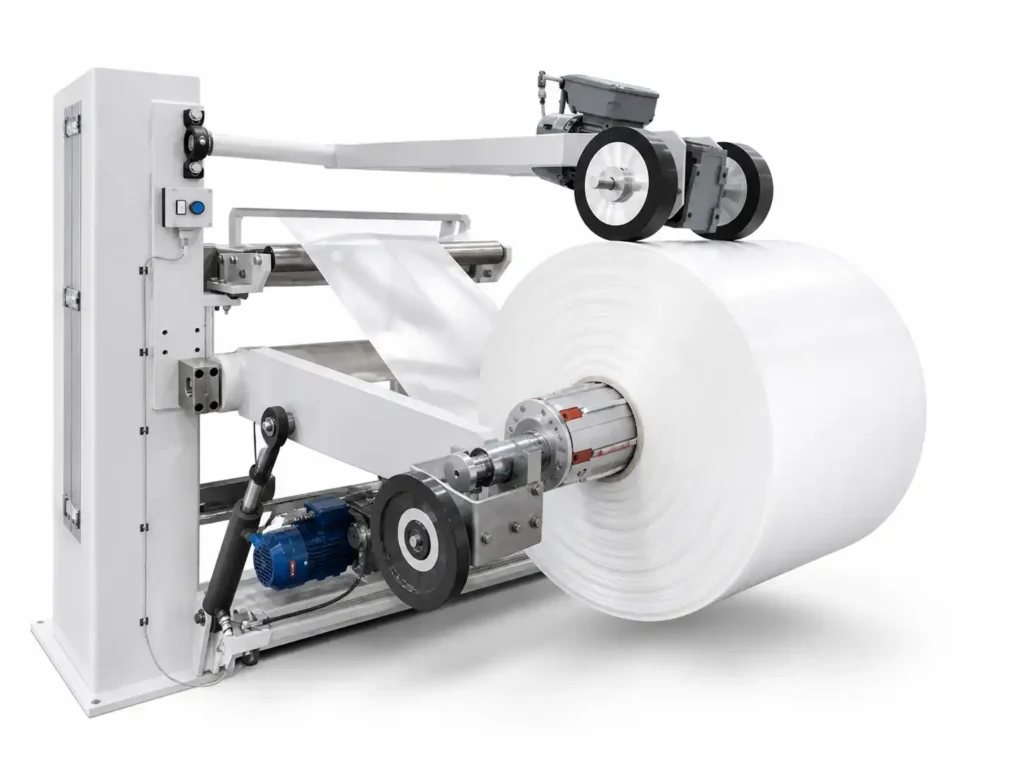
FFS Bags means form-fill-seal bags. In a typical automated process, continuous tubular material is formed into an individual bag, filled with a measured quantity of product, and sealed in one coordinated sequence. When woven polypropylene is used as the load-bearing structure, the result combines the speed of automated packaging with the mechanical strength of woven fabric. This makes Form-Fill-Seal Woven Bags especially useful for dry powders, pellets, granules, minerals, fertilizers, feed ingredients, salts, resins, and other industrial products that demand speed without accepting weak seams, dust leakage, unstable pallets, or repeated line stops. The core principle is simple: form cleanly, fill accurately, seal reliably. The engineering behind that simple principle is not simple at all. VIDEPAK treats fabric strength, tube geometry, surface friction, air release, seal behavior, printing, and logistics as one connected design.
Key value: Well-specified FFS PP Woven Bags can help a packaging line run with fewer interruptions because the bag structure, the product behavior, and the machine settings are developed together. Strength matters. Sealability matters. Air release matters. Pallet stability matters. None of them should be optimized alone.
What VIDEPAK FFS Woven Bags Are
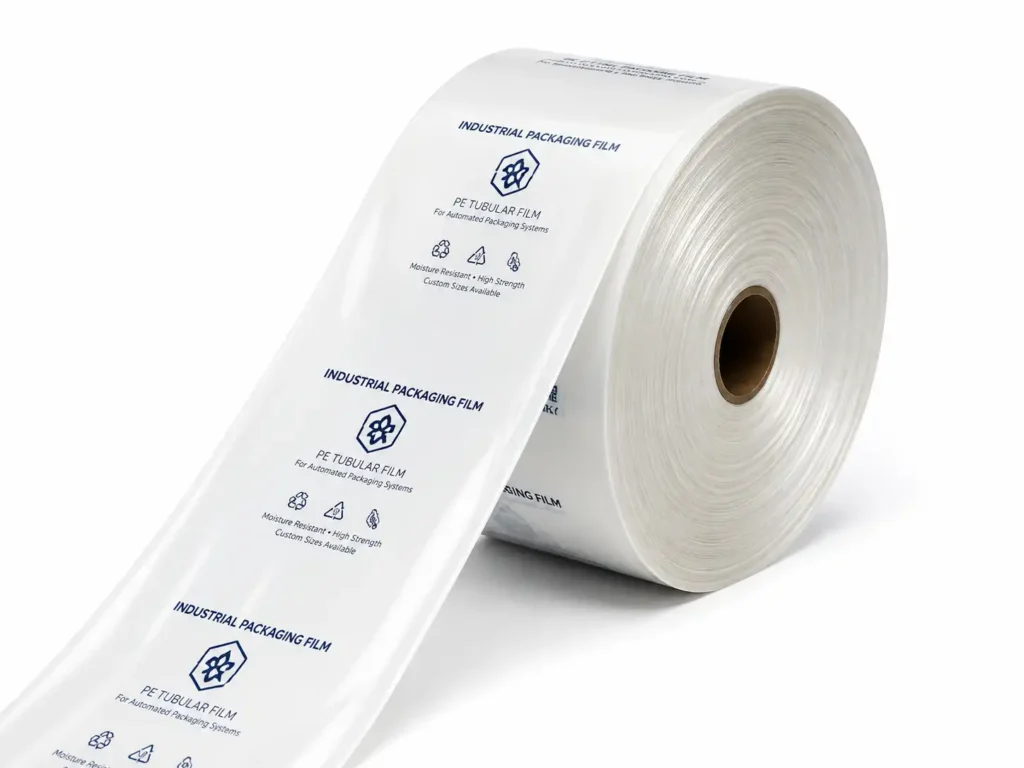
VIDEPAK FFS Woven Bags are supplied as engineered woven tubular material or converted formats intended for automated forming, filling, and sealing. The woven body is normally made from oriented polypropylene tapes. These tapes are produced, drawn to improve strength, and woven into a stable fabric that carries the load. Depending on the product and line, the woven tube can receive a coating, a lamination, a sealing layer, a liner, controlled perforation, gussets, anti-slip treatment, or printed graphics. The construction is selected as a system rather than as a list of isolated options.
The market uses several names for the same general family. Buyers may request FFS Woven Sacks, Tubular Woven FFS Bags, PP Tubular Woven Bags for FFS, or simply FFS Bags. The wording changes, but the required result remains constant: the material must unwind evenly, track correctly, form without skew, accept the fill load, release trapped air, create a dependable seal, and survive distribution. VIDEPAK therefore begins each project by studying the customer’s filling machine, target output, product density, particle shape, dust level, moisture sensitivity, required bag weight, pallet pattern, transport route, and storage conditions.
International guidance for woven polypropylene sacks confirms that performance should be defined through characteristics, requirements, and test methods rather than visual appearance alone. For food-related woven sacks, ISO 23560:2015 applies to 25 kg and 50 kg formats and was reconfirmed as current in 2025. A final customer specification must still reflect the actual product, filling line, destination market, and contact-compliance needs.
A Product Built Around the Packaging Line
A conventional sack can be evaluated as a finished object. FFS Woven Bags must also be evaluated as moving web material. Roll tension that is too high can distort the tube. Roll tension that is too low can create tracking problems. A surface that is too slippery may produce unstable pallets; a surface that is too rough may resist movement through guides and turns. A sealing layer that bonds at one laboratory setting may fail during a cold start or after line speed increases. Good design is therefore a balance of opposites: stiff enough to form, flexible enough to fold; smooth enough to move, grippy enough to stack; vented enough to release air, closed enough to control dust.
Form
Consistent width, gusset, fold, stiffness, and roll build help the tube enter the machine cleanly.
Fill
Fabric strength, controlled air paths, and suitable headspace help the bag accept fast product flow.
Seal
Compatible sealing surfaces, clean mouths, and validated settings support repeatable closure.
Material Architecture and Customizable Parameters
The structure of VIDEPAK FFS PP Woven Bags begins with the woven shell. Polypropylene raffia tapes provide the main mechanical framework, while coatings and inner layers manage the product’s barrier and sealing needs. For many 10 kg to 40 kg industrial applications, a practical development window may start around 90 to 160 g/m² fabric weight, 700 to 1200 denier tape, and about 10 to 14 picks per inch. These values are not universal guarantees. They are engineering starting points that must be confirmed by filled-bag trials, drop testing, compression testing, line trials, and the customer’s acceptance criteria. VIDEPAK’s own technical guidance likewise presents these figures as working ranges rather than fixed rules.
Fabric weight affects more than strength. A higher basis weight can improve tear resistance and seam retention, but unnecessary material increases cost and package weight. Tape denier changes stiffness, load sharing, and the way a tear may travel. Weave density influences fabric stability, coating support, and air passage. The best specification is not the heaviest bag. It is the lightest responsible structure that repeatedly passes the required tests with a suitable safety margin.
Coating and lamination add another level of control. A thin polyolefin coating may reduce dust escape, moderate moisture movement, protect the weave, support printing, and adjust the coefficient of friction. Typical development ranges may begin near 20 to 40 micrometres where a coating is required. For higher barrier needs, a separate PE liner may be selected, often within a broad starting range of approximately 60 to 120 micrometres depending on product sensitivity, puncture risk, sealing design, and handling conditions. The liner can be loose, fixed, form-fit, vented, or otherwise adapted to the filling system. Again, every range should be validated for the actual application.
The coefficient of friction deserves special attention because one value cannot solve every movement problem. The outer face may need controlled slip to travel through metal guides, while the pallet contact face may need stronger grip. ASTM D1894 measures static and kinetic friction for plastic film and sheeting and notes that friction depends on surface condition, processing, additives, age, and test conditions. For this reason, VIDEPAK uses laboratory data as a control tool, then confirms the result on the customer’s conveyors and pallet pattern.
Performance Features That Protect Output
The first performance feature is reliable forming. Roll edges should be even, winding should be stable, and the tube should maintain dimensional consistency across the roll. Small variations can become large disturbances at high speed. A wandering web creates poor registration. A poor fold creates a poor mouth. A poor mouth creates a poor seal. VIDEPAK manages this chain by controlling tape, weave, coating, printing, gusset formation, winding tension, and final roll geometry.
The second feature is controlled de-aeration. Fine powders often carry air into the bag during filling. Without an escape path, the package can remain inflated like a pillow, placing immediate pressure on the hot seal and making pallet layers unstable. VIDEPAK can engineer micro-perforation, porous zones, liner vents, or other air-release patterns according to particle size and dust-control requirements. More holes are not automatically better. Too much venting can increase dust release or moisture exposure; too little can trap pressure. The correct pattern allows air to leave at the right rate while keeping the product where it belongs.
The third feature is dependable seal strength. A seal must be strong after cooling, but it must also hold during the short period immediately after the jaws open, when the closure is still hot and the filled package begins to move. Temperature, pressure, dwell time, contamination at the mouth, sealing-layer thickness, jaw condition, and line speed all influence the result. ASTM F88/F88M provides a recognized method for measuring the force required to separate a seal, while ASTM F1921/F1921M addresses hot-tack performance. These tests support process validation, but production trials remain essential because a commercial line applies dynamic loads that a laboratory sample may not reproduce fully.
Seal rule:
Do not search for one “perfect” jaw temperature. Build a stable operating window. A practical seal window is the combination of temperature, pressure, dwell time, cooling time, product contamination tolerance, and line speed within which seal strength remains acceptable.
The fourth feature is stable handling after the bag leaves the machine. The package must turn without twisting, settle without excessive trapped air, stack without sliding, and tolerate routine drops and impacts. VIDEPAK can combine surface treatment, gusset geometry, bottom reinforcement, coating pattern, and fabric structure to improve this behavior. An anti-slip finish can be applied where additional pallet grip is needed, while other zones remain smoother for line travel. The design follows the route: conveyor first, pallet second, warehouse third, transport last.
The fifth feature is communication. Industrial packaging carries product identity, handling instructions, safety information, batch codes, and brand value. Print quality must survive belts, brushes, dust, and stacking pressure. Depending on the chosen structure, VIDEPAK can support multicolor graphics, protected print surfaces, barcodes, QR codes, warning panels, and traceability marks. Clear packaging reduces mistakes. Durable packaging preserves trust.
From Resin to Finished Roll
Material qualification
Resin, additives, films, and inks are checked against the project specification.
→
Tape extrusion
Polypropylene is extruded, slit, drawn, and stabilized to create strong raffia tapes.
→
Weaving
Tapes become tubular or flat fabric with controlled width and pick density.
→
Coating and printing
Barrier, friction, protection, and graphics are added as required.
→
Conversion and winding
Gussets, vents, liners, folds, and roll dimensions are controlled.
→
Testing and release
Critical dimensions and performance results are reviewed before shipment.
VIDEPAK’s manufacturing approach links process control to customer performance. Incoming materials are sampled. Tape width and strength are monitored. Weave density and fabric weight are checked. Coating and printing are controlled for coverage and registration. Finished rolls are examined for dimensions, winding quality, surface defects, splices, folds, and identification. The official VIDEPAK product information also describes in-house inspection of thickness, tensile behavior, drop impact, seal performance, and friction for related FFS structures.
Preventing Bag Bursts on Automated Lines
Bag burst prevention is not achieved by adding fabric weight after every failure. A burst is usually the final event in a longer chain. Trapped air increases internal pressure. A contaminated mouth weakens fusion. A narrow sealing window creates cold areas. A sharp particle starts a tear. A corner receives a concentrated impact. A rough surface catches at a conveyor turn. A misaligned tube places stress on one side. Effective bag burst prevention identifies the chain, then removes the earliest controllable cause.
VIDEPAK recommends a cause-and-countermeasure trial rather than a random material increase. For a mouth burst, first measure residual air and seal conditions. For a side split, inspect where the tear begins and whether the product is sharp or abrasive. For a pallet shift, study bag shape, air release, layer pattern, and friction together. Drop testing is especially valuable because it reproduces vertical impact hazards in distribution. ISO 7965-2 defines a method in which a filled sack is raised and released onto a rigid surface under specified conditions, allowing results to be reported in a controlled way.
Practical diagnostic:
The location of the first tear often tells more than the final size of the damage. Mark the origin, record line speed and jaw settings, photograph the filled shape, weigh the failed bag, and compare it with a retained sample. Evidence first. Adjustment second.
Applications and Specification Logic
Different products create different stresses, so VIDEPAK FFS Woven Sacks are developed by application. Fertilizer may absorb moisture and cake, requiring a suitable barrier, controlled de-aeration, and stable pallet friction. Mineral products may be dense and abrasive, calling for stronger fabric, reinforced stress areas, and scuff-resistant surfaces. Plastic resin pellets flow easily but may create static and demand clean, low-contamination packaging. Feed and food ingredients may require documented raw materials, hygienic production, traceability, and project-specific contact compliance. Salt and chemical powders may require moisture management, corrosion-resistant handling practices, and clear hazard communication.
Fertilizers and soil products
Focus on moisture resistance, compact bag shape, micro-perforation balance, secure sealing, and stable outdoor or warehouse stacks.
Cement, minerals, and additives
Focus on abrasion, drop resistance, dust control, reinforced impact zones, and readable print in harsh environments.
Resins and masterbatch
Focus on cleanliness, controlled discharge, static-risk review, consistent sealing, and accurate identification.
Food and feed ingredients
Focus on qualified materials, hygiene, barrier performance, traceability, and destination-market requirements.
A strong project starts with product data. Bulk density determines volume and bag dimensions. Particle size and shape affect flow, abrasion, and puncture risk. Moisture sensitivity influences coating and PE liner selection. Fill temperature can change sealing behavior. Dust level influences mouth contamination and vent design. The target bags per hour influences stiffness, tracking, and hot-tack requirements. Storage duration and climate influence barrier and UV stabilization. Pallet height, stacking pattern, and transport vibration influence the anti-slip strategy.
Electrostatic risk must be treated with care. IEC 61340-4-4:2018 classifies and tests electrostatic types for flexible intermediate bulk containers used in explosive atmospheres, not every small industrial sack. Therefore, labels such as Type C or Type D should not be casually transferred to FFS Bags without an applicable design, test method, and safety assessment. For combustible powders or hazardous zones, VIDEPAK asks the customer to provide the product safety data, zone classification, filling equipment details, grounding practice, and regulatory requirements so that the packaging solution can be evaluated correctly.
Quality Assurance, Trials, and Commercial Value
VIDEPAK’s quality approach follows the product from raw material to shipment. The goal is repeatability: one roll should behave like the next, one batch should match the approved sample, and one delivery should support the same line settings as the previous delivery. This begins with controlled resin and additive selection, continues through tape extrusion, weaving, coating, printing, conversion, and winding, and ends with finished-product inspection and traceable records.
Typical checks can include roll width, tube width, gusset depth, roll diameter, core size, fabric weight, weave count, coating condition, print registration, surface treatment, splice quality, and visual defects. Performance checks may include tensile and tear behavior, seam or seal evaluation, filled-bag drop trials, leak observation, friction testing, and pallet trials. The exact inspection plan should be written into the commercial specification. For flexible seals, ASTM F88/F88M offers a quantitative method for measuring seal separation force and identifying failure mode, making it useful for process control when applied consistently.
Before full production, VIDEPAK recommends a structured approval sequence. First, confirm the written data sheet. Second, produce laboratory or pilot samples. Third, test the empty material. Fourth, run the product on the customer’s actual line. Fifth, inspect filled bags immediately after sealing and again after cooling. Sixth, conduct pallet, drop, storage, and transport checks. Seventh, lock the approved construction, tolerances, artwork, roll direction, splice rules, and quality criteria. A sample that looks good but has never run at production speed is not a complete approval.
VIDEPAK approval principle:
Specify what must be measured, test what can fail, record what changes, and approve what performs. This is how Form-Fill-Seal Woven Bags become a stable production input rather than a recurring source of troubleshooting.
The commercial value of Tubular Woven FFS Bags should be measured through total packaging cost, not unit price alone. A lower-priced roll can become expensive if it causes line stops, weak seals, product leakage, manual cleanup, pallet rework, rejected deliveries, or brand damage. A well-designed roll can reduce handling steps, support automation, protect more product with controlled material use, and improve pallet consistency. Faster is valuable. Cleaner is valuable. Predictable is most valuable because predictability allows a plant to plan labor, output, maintenance, and shipment timing with confidence.
Sustainability also improves when design decisions reduce loss. The most direct environmental gain often comes from preventing spilled product, damaged goods, repeated shipments, and excess packaging weight. Woven polypropylene structures can offer strong performance at relatively low mass, and mono-polyolefin concepts may support recycling where collection and processing systems accept them. However, recyclability claims depend on the complete construction, including coatings, liners, inks, labels, residues, and local infrastructure. VIDEPAK therefore develops material efficiency and end-of-life choices as project-specific decisions rather than broad promises.
For procurement teams, a clear request should include nominal fill weight, product name and safety information, bulk density, particle description, target bag size, current material structure, line model, operating speed, seal method, roll direction, core size, maximum roll diameter, print file, pallet pattern, drop requirement, storage climate, destination market, and annual demand. With this information, VIDEPAK can build a more accurate proposal for PP Tubular Woven Bags for FFS, reduce sampling cycles, and focus trials on the risks that matter most.
VIDEPAK FFS Woven Bags bring together woven strength, automated efficiency, controlled sealing, clean product handling, stable pallet performance, and visible brand communication. They are strong where strength is required, flexible where movement is required, sealed where protection is required, and vented where air must escape. That balance is the product. That balance is also the promise: fewer weak points, fewer avoidable stops, fewer damaged bags, and a packaging line that moves with confidence from the first cycle to the final pallet.
- VIDEPAK FFS Woven Bags: Engineered Packaging for Faster Filling, Safer Sealing, and More Stable Logistics
- What VIDEPAK FFS Woven Bags Are
- Material Architecture and Customizable Parameters
- Performance Features That Protect Output
- Preventing Bag Bursts on Automated Lines
- Applications and Specification Logic
- Quality Assurance, Trials, and Commercial Value
- Heat-Sealed PP Woven Bags
- Laminated BOPP Woven Bags
- BOPP PP Woven Bags Solutions
- PP Woven Bags Specifications
- 1. The Science Behind FFS Woven Bags: Combating Burst Risks
- 2. Waste Management Applications: Engineering for Real-World Demands
- 3. VidePak’s Manufacturing Excellence: Precision Meets Scale
- 4. Technical Specifications: Built for Hazardous Environments
- 5. FAQs: Addressing Critical Concerns
- 6. The Future of Waste Packaging: Innovation Driven by Demand
- Conclusion: Trust Built on Engineering Rigor
“How can waste management companies avoid costly bag ruptures during recycling operations?”
The answer lies in advanced material engineering, precision manufacturing, and rigorous quality control. At VidePak, our Form-Fill-Seal (FFS) woven bags are designed to withstand the abrasive demands of waste handling while ensuring operational efficiency. High-tensile polypropylene (PP) fabrics, reinforced seams, and intelligent design form the backbone of our solutions—enabling businesses to transport recyclables like paper, plastics, and metals without compromising safety or sustainability.
Heat-Sealed PP Woven Bags
High-strength heat-sealed woven polypropylene bags with reliable sealing performance to prevent bursting.
Check More →Laminated BOPP Woven Bags
Durable BOPP laminated PP woven bags with enhanced strength and anti-burst performance.
Check More →BOPP PP Woven Bags Solutions
Complete woven bag solutions engineered to avoid burst issues and ensure packaging stability.
Check More →PP Woven Bags Specifications
Professional specifications of PP woven bags for safe use and burst prevention in production.
Check More →1. The Science Behind FFS Woven Bags: Combating Burst Risks
FFS woven bags integrate form-fill-seal technology with woven PP fabric, creating a hybrid solution ideal for high-volume waste collection. Unlike traditional bags, FFS technology ensures seamless packaging by forming, filling, and sealing bags in a continuous automated process, reducing human error and material stress points.
1.1 Material Strength and Durability
VidePak’s FFS bags utilize virgin PP resin sourced from BASF and Sinopec, engineered for tensile strengths of 35–45 N/mm² (machine direction). This prevents tears caused by sharp-edged waste like glass shards or metal scraps. A 2024 study by the International Waste Management Consortium found that bags with >30 N/mm² tensile strength reduce rupture rates by 62% in municipal recycling facilities.
Case Study: A European waste management firm reduced bag replacement costs by 40% after switching to VidePak’s FFS bags, citing their double-laminated PP layers and anti-abrasion coatings as key factors.
1.2 Seam Integrity and Load Distribution
Bursts often originate at weak seams. VidePak addresses this with:
- Ultrasonic sealing: Creates seamless edges 20% stronger than heat-sealed alternatives.
- Cross-laminated weaves: Distribute weight evenly, supporting up to 50 kg without deformation.
2. Waste Management Applications: Engineering for Real-World Demands
FFS woven bags are critical for handling recyclables, where inconsistent loads and harsh environments pose unique challenges.
2.1 Handling Sharp and Irregular Waste
- PE liners: Integrated polyethylene barriers resist punctures from glass or metal fragments, maintaining a <1% failure rate in trials with construction debris.
- Reinforced bottom panels: Add 15% extra fabric density in high-stress areas, tested to withstand 10,000+ flex cycles (ASTM D5264).
2.2 Cost Efficiency Through Reusability
VidePak’s FFS bags achieve 8–10 reuse cycles for non-hazardous waste, cutting per-use costs by 60% compared to single-use alternatives. A U.S. recycling center reported annual savings of $120,000 after adopting reusable FFS bags for paper and plastic collection.
3. VidePak’s Manufacturing Excellence: Precision Meets Scale
Founded in 2008, VidePak combines 30+ years of expertise with cutting-edge infrastructure:
- 100+ Starlinger circular looms: Produce uniform PP fabric with <2% elongation variance.
- 16 extrusion lines: Equipped with UV stabilizers for outdoor durability (tested to 2,000 hours under ASTM G154).
- ISO 9001-certified QMS: Tracks every production batch, ensuring compliance with ASTM D6109 and EN 13432 standards.
CEO Ray Chiang notes: “Our FIBC bags for construction waste have achieved zero ruptures in 12 months of field testing—proof that quality engineering delivers reliability.”
4. Technical Specifications: Built for Hazardous Environments
| Parameter | VidePak FFS Bags | Industry Standard |
|---|---|---|
| Load Capacity | 25–50 kg (standard); FIBC options up to 1,500 kg | 20–40 kg |
| Fabric GSM | 180–220 (customizable) | 150–180 |
| Seam Strength | 2,200 N (ISO 13935-2) | 1,800 N |
| UV Resistance | 1,800 hours (ASTM G154) | 1,000 hours |
| Moisture Barrier | WVTR <5 g/m²/day (PE-lined options) | WVTR 10–15 g/m²/day |
5. FAQs: Addressing Critical Concerns
Q: How do FFS bags handle wet waste without degrading?
A: Our hydrophobic PP blends and PE liners reduce water absorption by 90%, preventing fiber swelling and seam weakening.
Q: Can bags be customized for hazardous material labeling?
A: Yes. We offer ISO-compliant symbols and RFID tags for tracking hazardous waste, aligned with EU Waste Framework Directive 2008/98/EC.
Q: What’s the environmental impact of discarded FFS bags?
A: VidePak’s closed-loop recycling program repurposes 95% of retired bags into new products, reducing landfill contributions by 70%.
6. The Future of Waste Packaging: Innovation Driven by Demand
The 2025 Global Recycling Report predicts a 30% increase in FFS adoption for waste management, driven by:
- Smart sensors: IoT-enabled bags monitoring fill levels and stress points in real time.
- Biodegradable additives: PP blends decomposing within 3 years under industrial composting conditions.
Conclusion: Trust Built on Engineering Rigor
With $80 million annual revenue and a 526-member team, VidePak delivers FFS woven bags that redefine safety and efficiency in waste management. As one client noted: “Switching to VidePak eliminated our rupture-related downtime—finally, a bag that matches our operational grit.”
References
- International Waste Management Consortium (2024). Tensile Strength Requirements for Recycling Bags.
- ASTM International (2023). Standard Test Methods for PP Woven Fabrics.
- EU Waste Framework Directive 2008/98/EC.
- VidePak Case Study: European Waste Management Firm (2024).
- Wenwugang Technology (2024). FFS Film Applications in Batch Processing.
External Links
- Discover how our FFS tubular bags optimize automated packaging lines.
- Learn about jumbo bag manufacturing processes for heavy-duty applications.
Authored by VidePak’s Sustainability and Innovation Team | Updated: March 8, 2025