
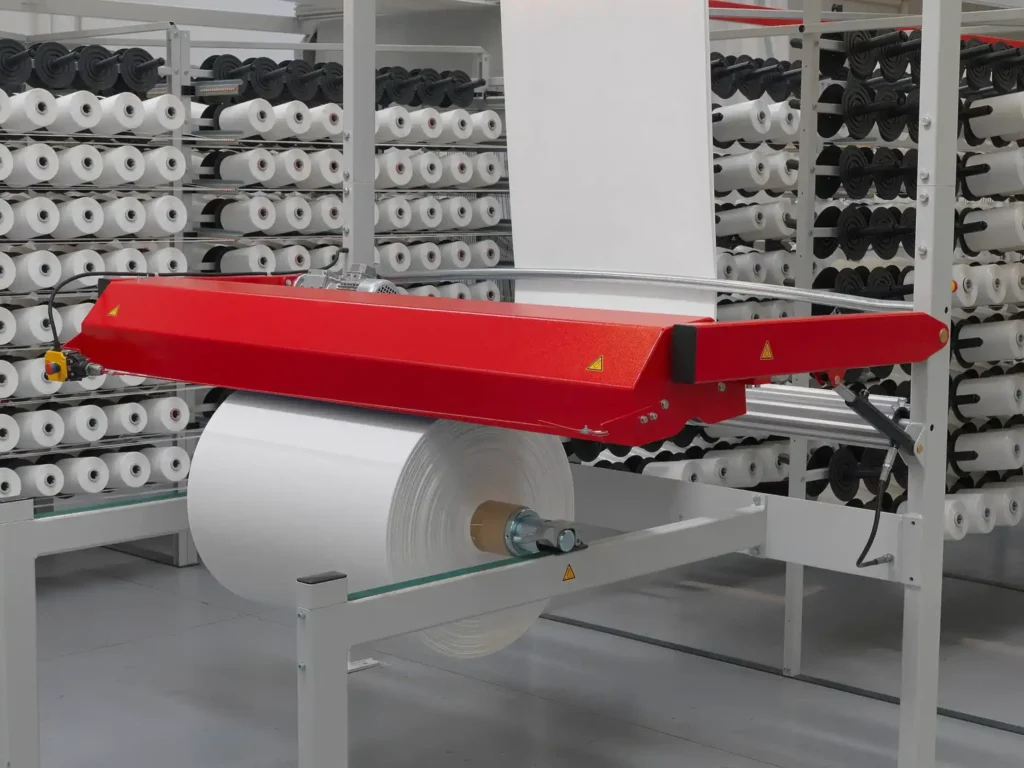
Framing the Question: What Are Lightweight Woven Bags and Why Do They Matter Now?
If packaging is a system, then Lightweight Woven Bags are its most pragmatic lever. Built on oriented polypropylene tapes and disciplined converting, these sacks deliver strength at low gram-per-square-meter (GSM), stack neatly, protect print, and hold up under clamp trucks and corner knocks. They weigh less, ship more, and—when engineered properly—fail less. But what, precisely, are they? How do they differ from yesterday’s sacks? And why do so many operations managers swear by them even while procurement teams keep asking for “one gram less”? This article answers those questions through layered analysis: materials, features, processes, applications, quality governance, and a system map that makes the moving parts visible.
Working definition. Lightweight Woven Bags (also called Lightweight PP Bags and lightweight woven sacks) are PP-woven packaging bags optimized for low GSM without compromising drop resistance, seam integrity, stack stiffness, or print durability.
Lexicon and Aliases: Naming the Same Thing with Different Words
Different teams say different words for the same artifact. To prevent confusion in RFQs and SOPs, unify terminology up front. In practice, buyers, engineers, and printers use overlapping labels that point to a common product family.
- Lightweight Woven Bags — the canonical umbrella term used in this analysis.
- Lightweight PP Bags — emphasizes resin type (polypropylene).
- Lightweight woven sacks — common in logistics and warehouse parlance.
- BOPP-laminated lightweight woven bags — a frequent retail-ready variant when graphics and scuff resistance drive outcomes.
Are these truly different products? Usually not. They are configurations on the same platform—tape denier, picks per inch (PPI), weave GSM, lamination type, and closure all slide to hit specific targets.
A quick rule of thumb: if the bag must look good after conveyors, forklifts, and shelving—choose BOPP-laminated lightweight woven bags. If it must be ultra-clean and sift-proof—choose pinch-bottom lightweight PP woven sacks with an inner liner.
Material Anatomy: What Goes Into a Lightweight Woven Bag?
Systems thinking starts with parts. Each gram must justify its existence. The bill of materials for Lightweight Woven Bags typically includes oriented PP tapes (the structural web), a lamination film (often BOPP) for surface durability and graphics, an optional PE liner for moisture control, and targeted masterbatches to tune behavior. Reducing GSM is never an end by itself; it is a constraint-based optimization.
PP Tape Fabric (structural core)
Oriented slit-film PP tapes form warp and weft. Orientation concentrates strength along tape length, enabling low mass with high tensile. Typical design windows: fabric 55–100 g/m²; weave density 10×10 to 14×14 PPI depending on product demands.
BOPP Lamination (face durability + graphics)
Reverse-printed biaxially oriented PP safeguards inks under film, adds scuff resistance, and stiffens faces. Matte, gloss, or pearlescent finishes modulate shelf appearance and friction.
PE Inner Liner (optional barrier)
Where powders cake or hydrate, an inner PE tube or co-ex film manages WVTR, dust, and clean sealing. Pinch-bottom formats exploit heat-seal closure for sift-proof performance.
Additives & Masterbatches
UV stabilizers for yard storage, slip/antiblock for de-nesting, pigments for opacity and brand color, antistats for powders. Most lightweight programs prefer virgin PP to anchor mechanical predictability.
| Component | Typical Spec Window | Functional Contribution | Notes |
|---|---|---|---|
| PP woven fabric | 55–100 g/m²; 10×10–14×14 PPI | Tensile, tear, seam integrity | Virgin PP favored for lightweight repeatability |
| BOPP film (matte/gloss/pearlescent) | ~15–25 µm | Print protection, face stiffness, scuff resistance | Reverse-printed for rub life |
| PE inner liner | ~40–80 µm | Moisture & dust control, heat seal | Pinch-bottom for sift-proof closure |
| Additives | As per TDS | UV, antistatic, slip, color | Stay within thermal limits to preserve draw strength |
Feature Set: What Performance Should a Lightweight Bag Deliver?
A design earns the “lightweight” label only if it holds its own in the real world. That means predictable drop behavior, seam strength that resists peel and burst, stacked pallet stability, and graphics that remain readable after conveyors and clamp cycles.
- High strength-to-weight ratio from tape orientation and disciplined weaving.
- Stackability via face stiffness and, where needed, block-bottom geometry to resist lean.
- Moisture management using lamination and liners to hit WVTR targets for powders.
- Print integrity through reverse-printed BOPP and tight registration.
- Compatibility with VFFS/HFFS, valve fillers, and sewing or pinch sealing.
- Compliance with common frameworks (ISO/ASTM/EN/JIS) depending on region and end use.
- Recyclability signaling through mono-polyolefin architectures when feasible.
Ask yourself: if a pallet can carry one more layer without crushing, is the bag “stronger” in practice, even if the lab numbers are the same? For operations, the answer is yes—system performance beats single-sample metrics.
Process Discipline: From Resin Gatekeeping to Quality Release
Lightweight gains are won in process windows, not slogans. Resin lots are verified, tapes are drawn to spec, looms are held within tension bands, lamination is monitored for bond strength, and print is registered to barcodes—not just to art boards. Throughout, traceability follows each lot. VidePak pursues this discipline on Starlinger and W&H machine centers to stabilize throughput and reproducibility.
- Incoming controls. Certificates of analysis, melt-flow checks, film thickness maps, masterbatch drawdowns.
- Tape extrusion & orientation. Temperature profiles, draw ratios, denier and shrink control; tensile and elongation checks inline.
- Weaving. PPI settings and tension discipline protect flatness for printing and seamability for forming.
- Lamination. Reverse-printed BOPP bonded with controlled nip pressure and coat weights; matte vs. gloss chosen for friction and brand intent.
- Printing. High-registration gravure or flexo; solvent retention managed to prevent blocking; color tolerance verified by Delta-E windows.
- Converting. Block-bottom or pinch-bottom formation; valve sleeves sized for fill rate and dust control; gusset memory tuned.
- Release testing. Dimensional checks, GSM tolerance, seam strength, drop tests, edge-crush proxies, WVTR, and rub resistance—plus retains for audits.
Why Starlinger/W&H?
Because stable quality comes from stable machines. High uptime, global spares, and mature controls reduce variation, which keeps lightweight SKUs inside narrow tolerance bands where grams truly disappear rather than reappear as returns.
Traceability
From resin silo to pallet wrap, each lot is coded. If a defect appears, root-cause analysis is fast and targeted—no guessing, no broad recalls.
Use Cases: Where Lightweight Woven Bags Win
The best argument is a working pallet. Consider where Lightweight Woven Bags create outsized value:
- Construction powders: cement, gypsum, mortar mixes—square stacks and valve filling speed matter.
- Agriculture: fertilizers, grains, seeds—UV stability and breathable options keep products intact.
- Chemicals: salts, resins, additives—moisture and dust control drive safety and cleanliness.
- Retail: rice, sugar, charcoal, pet food—graphics must survive touch and transport.
- Logistics: house-brand SKUs—dense palletization and low tare weight reduce freight spend and emissions.
| Product | Recommended Format | Barrier Setup | Why |
|---|---|---|---|
| Cement & mortar | Block-bottom valve | BOPP + PE liner | Sift-proof, fast fill, square stacks |
| Fertilizer | Block-bottom or tubular | UV fabric + optional liner | Outdoor storage tolerance |
| Pet food | Pinch-bottom with liner | Matte BOPP + food-grade liner | Shelf appeal + aroma retention |
| Salts/chemicals | Pinch-bottom/FFS | Antistatic options + liner | Clean, dust-controlled operation |
Quality Governance: How VidePak Controls and Guarantees Results
Quality isn’t a department; it’s a loop. VidePak’s approach rests on four pillars that reinforce each other and prevent drift, especially important in lightweight programs where tolerance bands are tight.
- Standards-aligned production & testing. SOPs reference ISO/ASTM/EN/JIS where applicable; acceptance criteria link to performance (tensile/tear, WVTR, drop, edge-crush proxies, color).
- Virgin, tier-one raw materials. When grams are scarce, variability is costly. Stable inputs reduce surprises down the line.
- Best-in-class equipment. Starlinger and W&H platforms run critical stations—extrusion, weaving, coating/lamination, printing—for replicable outcomes.
- Layered inspection. Incoming → in-process → final; lot retains and traceable codes make root-cause fast and limited.
Certification doesn’t ship a good bag—capable processes do. But when audits come, documentation proves the discipline behind every pallet.
System Map: Coordinating Materials, Geometry, Processes, and Logistics
Lightweighting is not a single switch; it is a choreography. Reduce GSM and seam stress rises. Add lamination and face stiffness improves but breathability changes. Shift from sewn to pinch-bottom and dust disappears but sealing discipline must increase. The program works when these threads are braided—materials, geometry, process windows, and logistics policies all tuned together.
| Sub-Problem | Risk | Countermeasure |
|---|---|---|
| Reduce mass without breakage | Weaker seams, poor drop performance | Higher draw ratio, modest PPI increase, block-bottom geometry, BOPP lamination |
| Protect print in logistics | Rub/scuff, barcode misreads | Reverse-printed BOPP, matte/pearlescent finishes, registration ±0.5 mm |
| Control moisture & dust | Caking, hydration, contamination | PE liner, sealed pinch-bottom, valve sleeve tuning |
| Keep pallets square | Leaning stacks, corner collapse | Face stiffness, pallet pattern rules, edge-crush checks |
Comparative View: Alternatives and Trade-offs
Compared with multiwall paper sacks, Lightweight Woven Bags hold up better in humid yards, resist puncture, and keep graphics readable longer. Against jute, they offer dimensional precision and compatibility with high-speed fillers. Versus monolayer PE film, they bring scuff resistance and stack stiffness to heavy powders. Cost curves vary, but when damage rates and write-offs are counted, the lightweight woven platform frequently wins.
| Attribute | Lightweight Woven Bags | Multiwall Paper | Jute | Monolayer PE |
|---|---|---|---|---|
| Wet strength | High with laminate/liner | Low–medium | Low | Medium |
| Scuff resistance | High (reverse-printed BOPP) | Medium | Low | Low |
| Stack stiffness | High (laminate + geometry) | Medium | Low | Low |
Economic Lens: Costs, Freight, and Damage
Every gram removed compounds across production and freight. Lower resin use reduces cost of goods sold; denser palletization lifts units per container; reduced damage stabilizes customer experience. The wrong kind of lightweighting, however, creates a hidden tax—returns, rework, and brand erosion. The only sustainable lightweighting is performance-lightweighting.
Think of pallets like portfolios: slightly higher investments in bag stiffness often pay outsized dividends in transport reliability, just as a minor hedge can derisk an otherwise efficient asset mix.
Risk Playbook: Symptoms, Causes, and Fixes
| Symptom | Likely Cause | Corrective Action |
|---|---|---|
| Bottom bursts in drop test | Under-spec seam strength or stitch cut-through | Wider seam tape; switch to pinch-bottom; adjust needle/looper |
| Ink rub-off | Surface printing; low face stiffness | Reverse-printed BOPP; raise coat weight; matte film |
| Leaning stacks | Insufficient face stiffness; loose wrap | Add lamination; set wrap pre-stretch; revise stack pattern |
| Valve dusting during fill | Sleeve misfit; back-pressure path | Re-size valve; add vent path or dust sock |
Implementation Path: From First Spec to Stable Supply
- Define use-case: product density, particle size, moisture sensitivity, distribution map.
- Set targets: finished mass, drop height, WVTR, barcode legibility, pallet cube.
- Engineer substrate: denier, PPI, GSM, weave plan; decide on lamination.
- Choose format & closures: block-bottom valve vs. pinch-bottom vs. tubular; liner plan.
- Pilot at plant: run-at-rate trials, clamp and drop tests at pallet level; humidity cycles.
- Lock specs: sampling plans, retains, change control templates.
- Rollout: onboarding, PPAP-style signoffs where required, continuous improvement loops.
Need a deeper engineering brief on lightweight design choices and PPI/GSM trade-offs? Explore our in-depth guide: A practical analysis of lightweight woven bag architectures.
Frequently Asked Questions: Short, Useful, and Field-Tested
Do Lightweight Woven Bags always need BOPP film? Not always—industrial lanes can run coated fabric alone; retail lanes benefit from reverse-printed BOPP. How light is too light? When seam pulls and drop failures rise: the optimum is the minimum mass that still protects pallets. Can these bags be recycled? Mono-PP architectures fit PP streams where they exist; check local programs. What if the filler is older? Trials matter. Lamination stiffness and valve tuning can often recover line speed at low GSM.
Keyword Strategy: Natural Language, Not Stuffing
Primary focus phrases appear where they carry meaning: Lightweight Woven Bags, Lightweight PP Bags, lightweight woven sacks, BOPP-laminated lightweight woven bags, block-bottom valve woven bags, low-GSM PP woven sacks. These long-tail variants help practitioners search specifically for engineering answers rather than generic slogans.

- Framing the Question: What Are Lightweight Woven Bags and Why Do They Matter Now?
- Lexicon and Aliases: Naming the Same Thing with Different Words
- Material Anatomy: What Goes Into a Lightweight Woven Bag?
- Feature Set: What Performance Should a Lightweight Bag Deliver?
- Process Discipline: From Resin Gatekeeping to Quality Release
- Use Cases: Where Lightweight Woven Bags Win
- Quality Governance: How VidePak Controls and Guarantees Results
- System Map: Coordinating Materials, Geometry, Processes, and Logistics
- Comparative View: Alternatives and Trade-offs
- Economic Lens: Costs, Freight, and Damage
- Risk Playbook: Symptoms, Causes, and Fixes
- Implementation Path: From First Spec to Stable Supply
- Frequently Asked Questions: Short, Useful, and Field-Tested
- Keyword Strategy: Natural Language, Not Stuffing
Imagine this conversation between a packaging manager and a supplier:
Client: “We need bags that reduce warehouse space but maintain durability. What’s the solution?”
Supplier: “Lightweight woven bags with advanced materials like ultra-fine filaments (1.8–2.3mm thickness) and customizable finishes—matte, pearlescent, or transparent laminates. These optimize storage by 30% and enhance branding flexibility.”
Client: “How do we ensure consistency across global shipments?”
Supplier: “Partner with a manufacturer like VidePak, which leverages 16 extrusion lines and 30+ laminators to deliver uniform quality at scale.”
This article unpacks why lightweight woven bags are revolutionizing packaging efficiency and how VidePak’s 30+ years of expertise positions them as a global leader in this niche.
Section 1: The Science of Lightweight Woven Bags
1.1 Material Innovation: Fine Filament Technology
VidePak’s woven bags utilize polypropylene (PP) filaments with a diameter of 1.8–2.3mm, engineered for high tensile strength (≥80 N/cm²) while reducing material weight by 15–20% compared to traditional 3mm filaments. This precision ensures:
- Smoother surface texture for superior print clarity.
- Enhanced flexibility without compromising tear resistance.
- Reduced bulk, enabling compact stacking (e.g., 1,000 bags occupy 1.2m³ vs. 1.6m³ for standard designs).
1.2 Aesthetic & Functional Customization
VidePak offers three premium finishes:
| Laminate Type | Key Features | Applications |
|---|---|---|
| Matte | Anti-glare, scratch-resistant surface | Luxury agriculture, retail packaging |
| Pearlescent | Reflective sheen for branding impact | Consumer goods, premium fertilizers |
| Transparent | Visibility of contents + UV protection | Food-grade, chemical storage |
These laminates are applied using Austrian Starlinger machines, ensuring uniform adhesion and moisture barrier performance (<0.1g/m²/24hr water vapor transmission).
Section 2: Storage & Logistics Optimization
2.1 Space Efficiency in Warehousing
A 2024 industry study found that lightweight woven bags reduce palletizing height by 25%, allowing warehouses to store 4.2 million bags per 10,000m² facility vs. 3.3 million for conventional designs. VidePak’s circular looms produce seamless weaves, eliminating bulky seams that add unnecessary volume.
2.2 Case Study: Global Fertilizer Supplier
A Southeast Asian client reduced shipping costs by 18% after switching to VidePak’s BOPP laminated bags (45gsm). The bags’ reduced weight (120g vs. 150g) allowed 12% more units per container, saving $4,200 per shipment.
Section 3: VidePak’s Manufacturing Excellence
3.1 Scalability & Precision
With 100+ circular looms and ISO-certified processes, VidePak produces 22 million bags monthly. Key metrics:
- Printing accuracy: ±0.5mm registration error.
- Color consistency: Pantone-matching across 12-color flexographic presses.
- Lead time: 15–20 days for 20,000+ unit orders.
3.2 Sustainability Commitments
- 100% virgin PP resin (FDA-compliant for food contact).
- Recyclable designs aligned with EU Packaging Directive 94/62/EC.
- Energy-efficient production: 8.2 kWh per 1,000 bags (industry avg: 10.5 kWh).
FAQs: Addressing Client Concerns
| Question | Answer |
|---|---|
| Minimum order quantity (MOQ)? | 5,000 units for standard designs; 20,000 for custom laminates. |
| Can bags withstand -20°C to 50°C? | Yes—tested for 500+ cycles without delamination. |
| Printing durability? | Abrasion-resistant inks survive 1,000+ transport cycles (ASTM D5264). |
| Certifications? | ISO 9001, BRCGS, and FDA compliance. |
Section 4: Global Reach & Custom Solutions
VidePak serves clients in 60+ countries, including:
- Agriculture: Custom UV-stabilized bags for grain storage in Africa.
- Chemicals: Anti-static laminates for explosive powders in Europe.
- Retail: Pearlescent finishes for premium pet food brands in North America.
For specialized needs, explore VidePak’s BOPP laminated woven bags or valve bag solutions.
References
- VidePak Co., Ltd. (2025). Product Specifications: Lightweight Woven Bags. https://www.pp-wovenbags.com/
- Industry Report: Global Packaging Efficiency Trends (2024).
- Contact: info@pp-wovenbags.com
Optimize your packaging strategy today—connect with VidePak to leverage lightweight, high-performance woven bags tailored to your needs.