
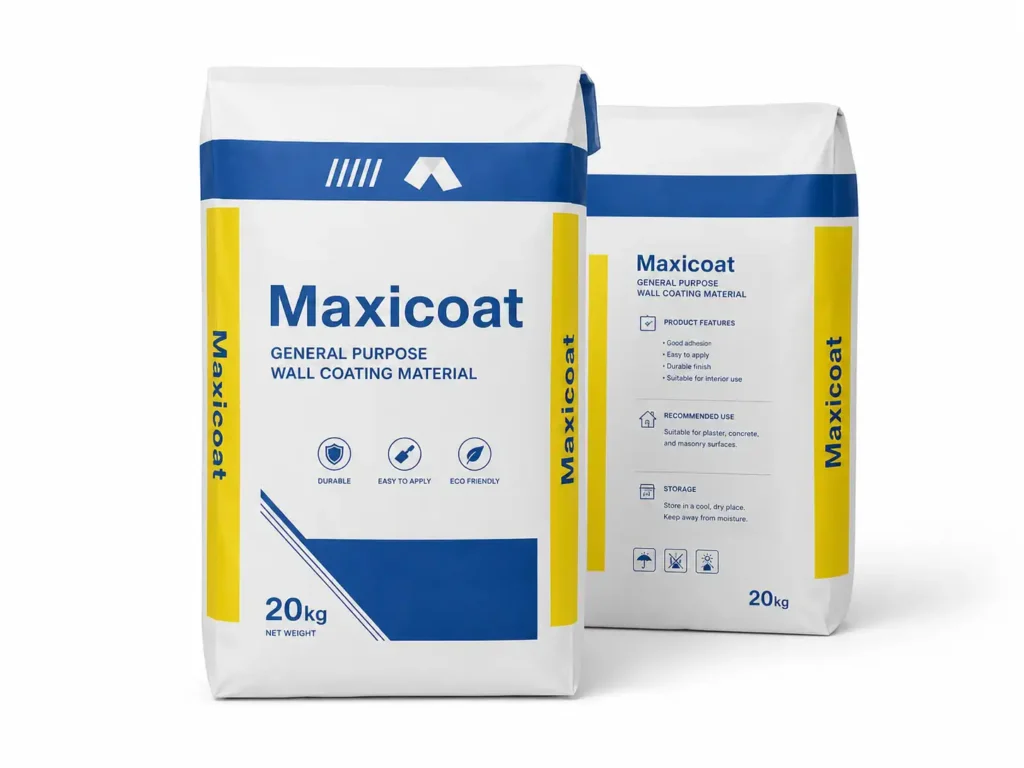
VIDEPAK Valve Bags: A Practical Product Guide to Valve Types, Specifications, and Industrial Performance
Industrial powders and granules create a packaging challenge that looks simple only from a distance. The product must enter the package quickly, trapped air must escape in a controlled way, dust must stay around the filling point rather than spread across the plant, and the finished package must remain strong through conveyors, palletizing, warehousing, container loading, and final delivery. Valve Bags answer these needs with a built-in filling opening that connects to a filling spout and then closes through the pressure of the packed product or through an added sealing step. The result is a compact package that supports fast filling, cleaner handling, and stable pallet formation.
At VIDEPAK, we develop Valve PP Bags, Valve Woven Bags, and related Valve sacks as complete packaging systems rather than as simple empty bags. The fabric, coating, valve sleeve, venting pattern, bottom geometry, print surface, friction level, and testing plan must work together. A strong body with the wrong valve can slow a filling line. A tight laminate with no correct venting can create a soft, inflated bag. A beautiful print with low surface friction can produce an unstable pallet. Good packaging is balance: speed and control, strength and low weight, protection and easy processing.
The central idea is clear: the right Valve Bags do not merely hold a product. They help the filling line run, help the warehouse stack, help the brand communicate, and help the supply chain reduce avoidable loss.
What VIDEPAK Valve Bags Are and Why the Valve Matters
Valve Bags are industrial packages with a corner valve or sleeve designed to fit over or around a filling spout. During filling, cement, mortar, gypsum, lime, fertilizer, mineral powder, chemical additive, flour, starch, feed ingredient, or another dry flowable product moves through the valve into the bag. As the product settles, its internal pressure helps flatten or close the sleeve. Depending on the product and the required containment level, the valve can remain self-closing, be tucked in, or be sealed by heat or another suitable process. This operating principle is why Valve sacks are widely selected for high-volume powder and granule lines.
The valve matters because it is the meeting point between the bag and the filling machine. Its opening width, sleeve length, material stiffness, surface friction, and position influence how easily the operator or automatic system places the bag on the spout. The same details influence filling speed, air release, product backflow, dust leakage, and final closure. For that reason, VIDEPAK does not treat the valve as a small accessory. We treat it as a working part of the customer’s production line.
A well-matched valve can reduce post-fill work because the bag does not need a full-width sewn closure after filling. It can also support more regular bag shape because filling occurs through a controlled corner opening while the block bottom or formed bottom builds a flatter base. Compared with an open-mouth package, the design can shorten handling steps; compared with a simple pillow-shaped package, it can create a more brick-like unit for palletizing. The value is not one dramatic feature. It is the sum of many small improvements: place, fill, vent, close, stack.
The Three Main Valve Designs
Tuck-In Valve
A tuck-in valve is a practical design for products that fill freely and do not require the highest level of airtight closure. After filling, the sleeve is folded or tucked into the valve area, while the weight of the product helps keep the opening closed. This design supports fast operation and cost control. It is often suitable for cement, coarse minerals, grains, and fertilizers when the particle size and dust behavior allow a simple closure system.
Sleeve Valve
A sleeve valve extends farther into the bag and provides a longer path between the product and the outside environment. This longer path can improve containment for finer powders such as pigments, flour, mineral fillers, and chemical ingredients. Sleeve material can be PP film, PE film, coated paper, or another structure selected for the filling temperature, sealing method, friction requirement, and product sensitivity.
Self-Closing Valve
A self-closing valve uses the pressure and position of the filled product to collapse the sleeve after the bag leaves the spout. It can reduce manual closing work and is therefore attractive for fast lines. For very fine, costly, hygienic, or moisture-sensitive products, a self-closing design may be combined with a heat-sealable patch or sleeve so that speed is followed by a more secure final seal.
None of these designs is automatically “best.” The correct choice depends on product bulk density, particle size, trapped-air behavior, moisture sensitivity, dust risk, filling technology, spout dimensions, target bags per hour, and the handling route after filling. A simple tuck-in valve may be the most efficient answer for one cement line, while a heat-sealable sleeve valve may be necessary for a fine chemical powder. VIDEPAK selects the valve by application, not by fashion.
Product Architecture: Materials, Layers, Bottoms, and Venting
The performance of Valve Woven Bags begins with the woven polypropylene body. PP resin is converted into flat oriented tapes, and those tapes are woven into a fabric that spreads load across both machine and cross directions. This structure gives Valve PP Bags a useful strength-to-weight balance and helps resist puncture, tear growth, and repeated handling. Typical fabric weights for many industrial programs fall around 70 to 120 g/m², although the correct value must be confirmed by filled weight, bag dimensions, product density, drop risk, and required safety margin.
The woven fabric can be used with an extrusion coating, a laminated printed film, a paper face, or a separate inner liner. Each choice changes the package. A coating reduces open weave paths and gives a smoother print surface. A laminated film can provide high-impact graphics and better scuff protection. A paper face can improve surface friction and give a familiar look for construction materials. An inner liner can add a second barrier against moisture, contamination, or product leakage. More layers, however, do not always mean better performance. Every layer also affects stiffness, venting, sealability, recycling route, and cost.
How Each Layer Solves a Different Problem
Venting is especially important because fine powders carry air into the package. If air cannot escape, the filled bag may remain swollen, move poorly on conveyors, and form unstable pallets. If venting is too open, product dust may escape. VIDEPAK therefore develops zoned micro-perforation patterns, often concentrated near the valve and upper body, according to the product’s particle size and the filling pressure. The goal is controlled de-aeration, not maximum hole count.
Bottom design is equally practical. A block-bottom format creates broad contact with the bag below it, helping the pallet behave as a single load rather than as many separate soft packages. The flat surfaces also provide useful panels for product name, safety instructions, batch coding, barcode, and brand graphics. Where the route includes vibration, long-distance trucking, or high stacking, anti-slip coatings or embossed areas can further reduce layer movement. A package must look good, but first it must stay where the warehouse places it.
Engineering rule: barrier and venting must be designed together. A tighter surface protects against moisture and dust, while a tuned vent map releases filling air. One without the other can create either leakage or a ballooned bag.
Typical Specifications and Customization Options
Specifications for Valve Bags should begin with the packed product and the customer’s filling line, not with a generic catalogue size. VIDEPAK reviews net weight, bulk density, particle shape, moisture sensitivity, product temperature, filling method, spout size, required filling speed, storage climate, pallet pattern, transport distance, and end-market rules. These inputs determine the practical bag dimensions and the technical structure.
The following ranges are useful starting points for many woven industrial applications. They are not automatic guarantees for every product. A pilot filling test and a filled-bag handling test remain the safest way to confirm the final specification. Published VIDEPAK product guides commonly describe woven fabric around 70–110 or 70–120 g/m², valve openings around 10–17 cm, common packed weights from 10–50 kg, optional PE or BOPP face layers, and liners selected according to moisture or hygiene needs.
Bag size deserves special attention. A “25 kg bag” is not one fixed size because 25 kg of dense mineral powder occupies far less volume than 25 kg of light feed ingredient. The correct dimensions come from filled volume, target headspace, valve position, bottom width, and the desired final shape. Over-sized Valve sacks may wrinkle and shift; under-sized Valve sacks may fill slowly, trap pressure, or place too much stress on the bottom and valve area.
Printing is another technical function, not decoration alone. Clear product identity reduces selection errors. Strong contrast supports barcode reading. Correct ink adhesion helps information survive rubbing on conveyors and pallets. For high-value retail-facing products, a laminated printed film can create sharp images and strong shelf impact. For industrial products, a simpler print system may provide the best balance of cost, clarity, and durability. In both cases, we protect quiet zones around barcodes, keep critical data away from folds, and confirm artwork placement on the real bag shape.
A Practical Selection Workflow
↓
↓
↓
↓
This workflow prevents a common purchasing mistake: choosing only by GSM or price per bag. A lower-cost bag that fills slowly, leaks dust, breaks during drops, or forms poor pallets can cost far more than the saving shown on the invoice. The better measure is total packed cost, including bag consumption, filling speed, product loss, rework, cleaning, rejected pallets, transport damage, and customer complaints.
Applications and the Operating Value of Valve Bags
Valve Bags are most effective where a dry product must be filled quickly and formed into a dense, transport-ready package. Construction materials are a major application because cement, dry mortar, tile adhesive, gypsum, lime, and putty powder are heavy, dusty, and often handled in demanding yards. A woven body supports rough handling; the valve supports fast filling; micro-perforation helps release air; and the block bottom helps build stable units.
Fertilizers, seeds, mineral additives, and agricultural chemicals can also use Valve PP Bags when the product is compatible with the selected polymer, coating, ink, and liner. Here, moisture sensitivity often becomes the first design question. A coated or lined construction can improve protection, but venting must still allow the bag to settle after filling. Outdoor storage may require a UV stabilization package based on the expected sunlight exposure and storage period.
Chemical powders, pigments, masterbatch, polymer additives, and fine mineral fillers place greater pressure on containment. Small particles can travel through tiny paths, and a valuable product makes even a small loss important. These uses often benefit from a longer sleeve valve, a sealing patch, a tighter coating, controlled micro-perforation, or an inner liner. The final design must also consider static risk, chemical compatibility, local safety requirements, and whether the powder can form a combustible dust atmosphere.
Selected food, feed, flour, starch, salt, sugar, and pet nutrition applications may use Valve Woven Bags when the complete material system is suitable for the intended contact. “Food grade” cannot be assumed from PP resin alone; resin, additives, colorants, inks, adhesives, liners, production controls, migration conditions, and supporting documents must all match the destination market. In the United States, olefin polymers used for food-contact articles are addressed under 21 CFR 177.1520. In the European Union, plastic food-contact materials are governed by Regulation (EU) No 10/2011 together with the broader framework and good manufacturing practice rules.
Faster Filling
The valve connects directly with the spout, while tuned venting helps displaced air leave the bag. The process can reduce extra closure work and support high-output lines.
Cleaner Handling
A matched sleeve and controlled closure help limit dust and spillage. Cleaner bags improve code reading, reduce housekeeping, and present a more professional product.
Stronger Logistics
Woven reinforcement, compact geometry, and anti-slip surfaces help the package survive drops, vibration, pallet pressure, and repeated transfer points.
Better Communication
Large flat panels carry branding, product instructions, hazard information, batch data, and machine-readable codes from factory to final user.
The economic result comes from the chain, not the bag alone. Faster filling can improve line output. Lower dust can reduce lost product and cleaning time. Better package shape can increase pallet stability and make storage space easier to use. Stronger surfaces can keep instructions readable after transport. Reduced breakage protects the product that has already absorbed raw material, energy, labor, and freight. This is why the right Valve bags manufacturer must understand operations as well as materials.
VIDEPAK Manufacturing, Quality Control, and Customer Value
VIDEPAK was founded in 2008 and focuses on heavy-duty industrial packaging, including woven polypropylene, valve, paper, polyethylene, and large-format bag solutions. The company reports more than 500 employees, exports to more than 70 countries, and uses 100% virgin materials as its standard approach for key product ranges. Its published product information also describes quality systems based on recognized ISO, ASTM, EN, and JIS methods, with batch testing for properties such as tensile performance, impact resistance, and UV weathering.
For Valve Bags, quality begins before conversion. Incoming resin, film, paper, ink, adhesive, and additives must be checked against the approved specification. During tape production and weaving, process control focuses on tape width, thickness, orientation, break rate, fabric weight, weave balance, and visual defects. During coating and lamination, the key controls include coating weight, bond strength, surface treatment, pinholes, and web stability. During printing, registration, color consistency, ink adhesion, and code readability become central. During valve and bottom formation, dimensions, folding, glue or heat-seal patterns, and sleeve position are checked.
Finished-bag testing connects factory data to real use. Tensile or breaking-strength methods can compare fabric performance; ASTM D5034, for example, covers grab and modified grab procedures for textile fabrics. Drop testing can assess how a filled package responds to vertical impact; ISO 7965-2 specifies a method for thermoplastic flexible sacks. The exact test plan, conditioning, fill material, drop orientation, height, and acceptance rule should be agreed for each program, because a laboratory number has value only when it reflects the actual distribution risk.
As a professional Valve bags manufacturer, VIDEPAK also supports customization beyond dimensions. Customers can specify valve style, sleeve material, heat-seal option, fabric weight, coating, laminate, paper face, liner, vent pattern, UV package, anti-slip area, handle features where suitable, print method, artwork, barcode position, pallet quantity, and packing method. The purpose of customization is not to create complexity. It is to remove mismatch.
A productive request for quotation therefore includes a product data sheet, target net weight, current bag dimensions, filling-machine information, spout drawing, target filling rate, closure method, photos of the filled bag, pallet pattern, storage conditions, transport route, drop-test requirement, print files, and destination compliance needs. With this information, we can recommend a structure that is testable and commercially realistic. Without it, any quotation is only a guess wearing a price tag.
Why customers choose VIDEPAK Valve Bags
Because reliable packaging requires more than strong fabric. It requires a valve that fits, venting that works, printing that lasts, dimensions that repeat, tests that reflect the route, and a manufacturing partner that can connect every detail to the customer’s line.
VIDEPAK Valve PP Bags, Valve Woven Bags, and Valve sacks are designed around one practical promise: make industrial filling cleaner, handling safer, pallets more stable, and product presentation more dependable. We combine material engineering with line compatibility, and line compatibility with supply-chain thinking. Strong but efficient. Tight but breathable where needed. Simple to use, detailed in design.
For cement, minerals, fertilizers, chemicals, food ingredients, feed products, and other dry flowable materials, the best package is the one that disappears into a smooth process: it mounts easily, fills quickly, closes correctly, travels securely, and arrives ready for use. That is the standard VIDEPAK brings to every custom Valve Bags project.
- VIDEPAK Valve Bags: A Practical Product Guide to Valve Types, Specifications, and Industrial Performance
In the world of bulk packaging, Valve Bags offer an efficient and versatile solution for the storage and transportation of various granular, powdery, or fine materials such as cement, chemicals, food products, and more. Their primary feature, a built-in valve, simplifies filling and sealing processes, making them a popular choice across many industries.
This article provides a comprehensive look into the different types of valves used in Valve Bags and examines the key product specifications, such as thickness, weight, size, and load-bearing capacity. We will also explore why these features make Valve Bags the go-to choice for industries that require fast, efficient, and reliable packaging solutions.
Overview of Valve Bags
Valve Bags, also known as Valve sacks or Valve Woven Bags, are designed with a valve in one corner, which allows for easy filling of the bag with minimal spillage. The valve automatically closes after filling due to the internal pressure from the material, which ensures a tight seal and prevents product leakage. These bags are typically made from woven polypropylene (PP) or kraft paper and are available in different forms, depending on the type of material being packaged and the requirements of the industry.
| Feature | Description |
|---|---|
| Valve Type | Types include tuck-in valves, sleeve valves, and self-closing valves |
| Material | Woven polypropylene (PP), paper, or a combination of both |
| Typical Applications | Cement, fertilizers, chemicals, grains, food products |
| Filling Method | Top filling through the valve opening |
| Sealing Method | The valve automatically seals due to internal pressure or can be heat-sealed |
Types of Valves Used in Valve Bags
The design of the valve is a critical aspect of Valve Bags, as it affects the ease of filling, the sealing quality, and the overall performance of the bag during transportation and storage. There are several types of valves used in Valve Woven Bags, each suited to different types of materials and filling processes.
1. Tuck-In Valve
A tuck-in valve is one of the simplest valve designs and is widely used in the packaging of granular or powdered materials. In this design, the valve is inserted into the corner of the bag, and once the filling process is complete, the material’s weight holds the valve shut. This is a cost-effective solution for industries where fast filling is essential and where the product doesn’t require an air-tight seal.
- Advantages:
- Easy to use and cost-effective.
- Suitable for high-speed filling processes.
- Commonly used for packaging cement, grains, and fertilizers.
- Disadvantages:
- Less suitable for fine powders that might leak if the valve is not tightly closed.
2. Sleeve Valve
A sleeve valve offers an advanced design that is ideal for packaging finer materials such as powdered chemicals, flour, or pigments. This valve includes an inner sleeve that extends into the bag and provides a more secure closure after filling. The sleeve acts as an additional barrier, reducing the risk of product leakage and ensuring a tighter seal.
- Advantages:
- Provides a more secure closure compared to tuck-in valves.
- Suitable for fine materials that require a better seal to prevent leakage.
- Disadvantages:
- Slightly more expensive than tuck-in valves.
- May require more precise handling during filling.
3. Self-Closing Valve
The self-closing valve is designed to automatically close after the filling process is complete. This valve type is particularly useful for industries where time efficiency is critical. The pressure from the material inside the bag causes the valve to close automatically, eliminating the need for additional sealing steps. This makes self-closing valves ideal for high-speed production environments.
- Advantages:
- Automatically seals after filling, reducing the need for manual closure.
- Provides a secure and tight seal, preventing leakage.
- Ideal for high-speed filling lines.
- Disadvantages:
- Higher production cost due to the more complex valve mechanism.
- May not be necessary for all types of materials, especially coarser ones.
Conclusion
In summary, Valve Bags, also known as Valve sacks or Valve Woven Bags, offer an efficient and customizable solution for the packaging of bulk materials across various industries. Their specialized valve designs, whether tuck-in, sleeve, or self-closing, ensure ease of filling and sealing, making them ideal for high-speed, high-volume production environments. Furthermore, the wide range of product specifications—including material thickness, bag size, and load-bearing capacity—ensures that there is a **Valve