
Defining the Packaging Problem: Why **Breathable Woven Bags** Matter
Moisture accumulates. Heat builds. Bulk goods perspire. If packaging cannot breathe, product quality falters: kernels cake, powders clump, produce sprouts, fuels reabsorb water, and brands pay the price through waste and claims. Enter Breathable Woven Bags—also described in practice as ventilated woven sacks, air‑permeable polypropylene bags, perforated PP sacks, breathable polywoven packaging, air‑vented woven poly sacks, and breathable FIBC for larger formats. They couple high mechanical robustness with engineered micro‑permeability so that vapor escapes but structural performance remains intact. Are they merely a niche? Hardly. They are becoming the default for moisture‑sensitive dry goods where strength and ventilation must coexist rather than collide.
From Physics to Practice: Why Ventilation Prevents Loss
Let us phrase a simple question: what actually goes wrong inside a sealed bag of hygroscopic goods? Vapor condenses on the inner wall as temperature cycles; absorbed water reduces flowability; particulate bridges form; pressure points develop in stacked pallets; and a chain of minor defects becomes a major cost. Breathable Woven Bags intervene where it counts—at the interface between content and climate. By creating controlled vapor pathways, they minimize condensation, flatten temperature gradients, and slow the cascade from minor dampness to full‑blown spoilage. The result is not merely aesthetic; it is financial. Less waste. Fewer claims. Fewer reworks. Stronger customer sentiment.
Is ventilation always the answer? No. When the product demands barrier performance (e.g., aroma retention), a hybrid solution is needed. Yet even then, the portfolio of air‑permeable polypropylene bags includes designs with breathable side panels and selective barriers that reconcile airflow with containment. Thus, ventilation is not an ideology; it is an instrument—tuned rather than toggled.
Materials and Microstructure: What These Bags Are Really Made Of
At the heart of Breathable Woven Bags lies polypropylene (PP), stretched into tapes that interlace into fabric. The polymer is semi‑crystalline and amenable to orientation; it is the orientation that creates a high strength‑to‑weight structure. Additives act like a quiet orchestra—UV stabilizers preserving outdoor life; antistatic agents taming dust during filling; slip packages improving handling; TiO₂ yielding opacity and print contrast. Sometimes polyethylene (PE) appears as a companion—flexibilizing tape behavior or serving as a liner or lamination for partial barrier zones. The overall assembly is deceptively simple: tapes, weave, seams, optional perforation, optional windows, optional films. Yet simplicity here is power; each variable is a lever.
| Component | Function | Notes |
|---|---|---|
| PP Tapes (warp/weft) | Load‑bearing skeleton | Oriented to raise tensile; sets baseline porosity via weave density |
| Additives | UV, antistatic, slip, pigment | Tuned to climate, dusting, graphics |
| Optional PE Films/Liners | Selective barrier, dust control | Use perforated liners to retain macro‑ventilation |
| Perforations | Repeatable vent holes | Hot‑needle or laser; pattern tied to target air‑permeability |
| Window Weave Panels | High airflow zones | Ideal for produce like onions or potatoes |
| Seams & Threads | Integrity under load | Geometry matters: double‑fold, stitch pitch, thread selection |
What about cost? PP remains broadly cost‑effective within commodity resins, and process efficiency multiplies its advantage. By choosing tape denier and picks‑per‑inch wisely, one reduces resin mass without surrendering core strength. In other words: design by function, not by habit.
Design Typologies: Pathways to Breathability
There is no single template for Breathable Woven Bags; there is a family. Some rely on fabric porosity alone—tuning weave density to nudge airflow just high enough. Others embrace micro‑perforation—precise, repeatable, and adjustable. Still others install window‑weave panels—wide open, visibly ventilated, almost like gills on a living creature. Hybrid designs combine them: perforated body with barrier prints, or windowed sides with a printable front. Which to choose? Follow the product: particle size, hygroscopicity, dust behavior, fill line dynamics, and pallet stacking profile.
Mechanical Behavior: Strength, Stability, and Seam Integrity
Strength is not an abstract virtue in packaging—it is survival. Oriented PP tapes provide tensile properties; the weave converts them into a two‑axis fabric; seams knit everything into a load path. Stack creep, bulging, and seam tears are not random; they are signals. If stacks deform, the GSM and denier may be underspecified, or stitch geometry is mis‑matched to fabric stiffness. If seams fail, thread selection or pitch may be wrong. If punctures occur on corners, handling protocols or edge protection may be absent. Diagnostics matter because failures rhyme. The good news is that test methods—tensile, seam strength, drop, compression, abrasion—are well codified in mainstream standards. Measure, learn, correct.
Process Flow: From Resin to Printed Sack
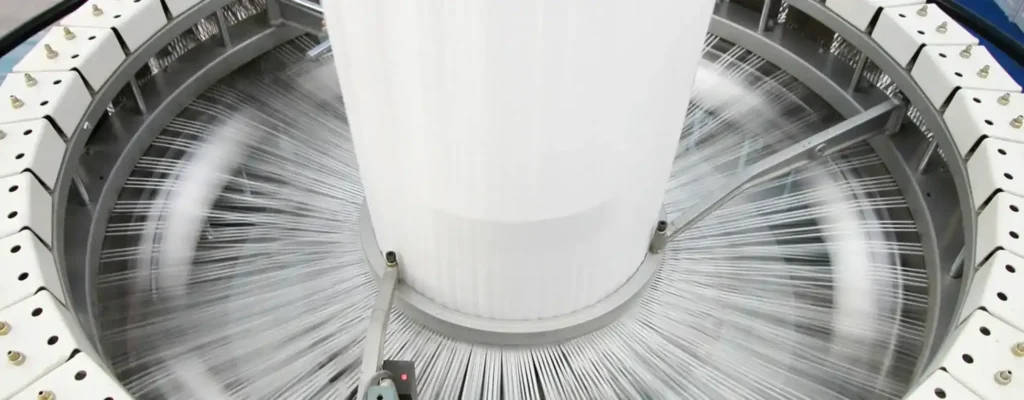
A reliable process is a quiet process. Resin selection and incoming checks set the tone—melt flow for processability, moisture control for stability, ash content for filled grades, additive activity for performance. Tape extrusion and stretching dictate baseline mechanicals via draw ratio and temperature profile. Weaving on circular looms converts tapes into fabric with controlled porosity and flatness. Conversion cuts, hems, and sews; perforation introduces micro vents; printing delivers graphics and traceability. Optional lamination or liners establish hybrid barrier behavior. Finally, quality assurance closes the loop with in‑process controls and end‑of‑line validation.
Equipment matters because repeatability matters. Production floors anchored by Austrian Starlinger lines (tape extrusion, looms, conversion) offer tight denier control and fabric evenness; presses and coating systems from German W&H (Windmöller & Hölscher) produce crisp flexographic graphics and consistent coatweights. The combination reduces variability and shortens line qualification for customers. To explore the manufacturing context beyond ventilated formats, see this related resource on industrial woven bag manufacturing practices.
Quality Governance: Standards, SPC, and AQL
Quality is not one department; it is an agreement. Specifications map to familiar test families, and internal SOPs make them routine. Incoming checkpoints guard inputs; in‑process checkpoints stabilize outputs; final AQL sampling guards shipments. Statistical process control (SPC) on denier, GSM, porosity, and print registration helps teams address drift before it becomes defect. Corrective and preventive actions (CAPA) anchor learning. Retained samples and traceability preserve the record. The outcome is not bureaucracy; it is trust made visible.
| Checkpoint | What It Catches | Action |
|---|---|---|
| Incoming | Resin variability, additive under‑dosage, moisture | Supplier hold, re‑test, adjust recipes |
| Extrusion/Draw | Denier drift, tape weak points | Adjust draw ratio/temps; purge |
| Weaving | Fabric flatness, PPI error | Loom tension & speed tuning |
| Conversion | Dimensional off‑spec, seam weakness | Re‑sew; stitch pitch/geometry correction |
| Perforation/Windows | Air‑permeability out of range | Pattern density or panel width adjustment |
| Printing | Registration drift, ink adhesion | Viscosity & plate checks; cure tests |
| Final | Shipment conformance, pallet integrity | AQL acceptance; corrective loop |
Applications: Where **Breathable Woven Bags** Earn Their Keep
Agriculture first. Onions, potatoes, garlic, ginger, peanuts, seeds—products that respire and sweat. Ventilated woven sacks suppress sprouting drivers by trimming humidity and heat pockets. Food ingredients next. Rice, flour, spices: clumping is a silent thief of efficiency; air‑vented woven poly sacks counteract bridging. Animal nutrition? Pellets stay crisp rather than soggy; hopper flow remains predictable. Solid fuels and biomass? Charcoal and wood pellets may reabsorb moisture and off‑gas; breathable polywoven packaging lets them equilibrate gently. Chemicals and minerals? Hygroscopic powders tolerate storage better when condensation is discouraged. Construction materials? Sand or aggregates dry more consistently during transit if airflow is present. A pattern emerges: where moisture variation destabilizes performance, Breathable Woven Bags stabilize it.
- Potato shipper cuts sprouting risk by switching to window‑panel bags, gaining shelf life and reducing returns.
- Flour mill reduces caking across a humid season with micro‑perforation tuned to line speed and pallet height.
- Biomass producer improves winter storage through ventilated sacks that limit condensation rebound.
Trade‑Offs, Patterns, and Design Choices
Product development is a conversation among constraints. Raise porosity too much and fabric cross‑section shrinks; raise GSM too high and cost climbs; use all barrier and condensation returns. The art is the balance. Popular design patterns help:
Sustainability and Circularity Without Hand‑Waving
Sustainability is not a slogan; it is accounting. Spoiled product has a carbon footprint far exceeding its package. If Breathable Woven Bags avert spoilage by preventing condensation, they directly cut embedded emissions. Monomaterial PP constructions ease recycling in regions where polyolefin streams exist. Hybrid designs should remain separable or minimal. In‑plant regrind fits non‑critical components; critical load paths should remain virgin unless rigorously qualified. Design for disassembly—labels, windows, closures—earns dividends later. In short: breathe to waste less, simplify to recycle more.
Specification Windows: Typical Targets, Practical Ranges
| Parameter | Target Window | Why It Matters |
|---|---|---|
| Fabric GSM | 60–120 g/m² | Load and storage duration drive the choice |
| Tape Denier | 700–1100 D | Heavier denier improves strength; choose by product mass |
| Weave Density (PPI) | 8–14 | Porosity vs strength trade‑off |
| Air‑Permeability | ~200–400 L/m²·h | Tuned by perforation/window design |
| Seam Strength | ≥ 70% of fabric tensile | Stitch geometry and thread are decisive |
| UV Stability | 200–400 h equivalent | Outdoor warehousing tolerance |
Targets are not commandments; they are starting points. That is why trials matter and why feedback loops turn good designs into great ones.
Procurement Playbook: What to Tell Your Supplier
Procurement done well is engineering by proxy. Communicate the product’s moisture profile, bag dimensions and target mass, target air‑permeability, pallet heights and climate, fill method and speed, compliance expectations, UV exposure, branding, trial quantities, and acceptance criteria. The more specific the input, the more precise the output. Ambiguity is the enemy of performance.
- Product type, particle size, hygroscopicity
- Bag size and net weight target
- Air‑permeability window and tolerance
- Stack height, warehouse climate, expected transit
- Filling method, line speed, dust behavior
- Standards and audits expected
- Outdoor exposure duration and UV class
- Branding coverage, ink durability expectations
- Trial quantity, test plan, acceptance criteria
Troubleshooting: Symptoms, Causes, Remedies
Even with robust design, reality has its own agenda. The following patterns and fixes recur across plants and seasons:
- Condensation persists → porosity too low; increase perforation density, widen window panels, or employ perforated liners.
- Bulging in stacks → GSM/denier underspecified or seam geometry weak; upgrade fabric or reinforce seam folds.
- Seam failures → wrong stitch pitch/thread; recalc geometry, switch thread, or double‑fold.
- Dust escapes → use hybrid designs (breathable sides + barrier front) or perforated liners.
- Print rubs off → ink/substrate mismatch; revise ink system and curing checks.
- UV chalking → stabilizer level too low or exposure too long; increase loading and shade storage.
Risk and Mitigation: A Practical Map
| Risk | Symptom | Mitigation |
|---|---|---|
| Design | Unexpected caking or stack failures | DOE, pilot lots, cross‑functional review |
| Supply | Resin grade variability | Qualified dual sources; safety stocks |
| Process | Denier drift; registration drift | TPM, spares strategy, inline vision |
| Quality | Batch variability | SPC on GSM/denier/porosity; CAPA rigor |
| Regulatory | Food‑contact or labeling deviations | Pre‑compliance dossiers; change control |
Storage and Handling: Protect the Bag, Protect the Product
Cool and dry warehousing slows polymer aging. Stack height discipline reduces creep. Gentle forklift and conveyor interfaces prevent abrasion and puncture. FIFO curbs UV accumulation; tarps and shade extend outdoor tolerance even with stabilizers. These are not mere housekeeping tips; they are the operational poetry that keeps performance consistent.
Innovation Frontiers: Where the Category Is Headed
Expect modified PP resins that balance ductility with strength at lower draw ratios, antistatic systems that perform under broader humidity ranges, UV packages with leaner loadings, and odor‑neutral additive strategies for food‑adjacent contexts. Look for digital print evolution on woven substrates, smarter perforation control with vision feedback, and traceability embedded via on‑bag codes. The longer arc points to systems where Breathable Woven Bags communicate their own history—lot, storage time, exposure—so quality is not inferred but recorded.
Glossary‑Style Highlights: Keep These Terms Close
Volume of air per area per hour; tuned by perforation/panels.
Fabric mass per area; correlates with load and creep resistance.
Picks per inch; weave density setting porosity and strength.
Fold type and stitch pitch; major driver of bag integrity.
High‑ventilation insert, especially for produce.
Mix of barrier faces and breathable zones.
A Practical Template: Example Specification
For a 50‑kg produce application: 55 × 95 cm bag; 80 g/m² fabric at ~900 D and 10 PPI; dual window panels (each ~12 cm) or a 12 × 12 per dm² perforation pattern; double‑fold chain‑lock seam with PP thread at ≥ 75% of fabric tensile; two‑sided flexo print (three colors); UV class targeting ~300 h equivalent; drop, compression, and rub testing; air‑permeability around 300 L/m²·h ± 15%.
Frequently Asked Questions: Designed for Practitioners
How do I choose between perforated fabric and window panels? Window panels deliver maximum airflow for produce; micro‑perforation suits moderate needs with simpler conversion. Consider dust, printing, and seam pathways.
Can I get food‑contact compliant formats? Yes—select resins/additives appropriately and control ink and lamination. Align testing to your compliance framework.
What about outdoor storage life? It depends on UV load and stabilizer package; covered storage remains best practice even with stabilizers.
Are ventilated FIBCs possible? Absolutely. The same principles scale to ton‑class loads with engineered seams and ventilated panels.
The Bigger Picture: A Systems View
Supply chain reality is messy: temperature cycles, handling variability, dwell time in yards, and unpredictable weather. Breathable Woven Bags are not isolated products; they are system components interacting with cooling curves, warehouse practices, and logistics. That is why the best designs arise from cross‑functional sessions: operations, quality, procurement, and branding at the same table, asking, sometimes in unison and sometimes in tension: where do we permit air; where do we insist on barrier; where do we reinforce; where do we economize? The answers turn into specifications; the specifications turn into repeatable outcomes; and repeatable outcomes turn into fewer surprises.
- Defining the Packaging Problem: Why **Breathable Woven Bags** Matter
- From Physics to Practice: Why Ventilation Prevents Loss
- Materials and Microstructure: What These Bags Are Really Made Of
- Design Typologies: Pathways to Breathability
- Mechanical Behavior: Strength, Stability, and Seam Integrity
- Process Flow: From Resin to Printed Sack
- Quality Governance: Standards, SPC, and AQL
- Applications: Where **Breathable Woven Bags** Earn Their Keep
- Trade‑Offs, Patterns, and Design Choices
- Sustainability and Circularity Without Hand‑Waving
- Specification Windows: Typical Targets, Practical Ranges
- Procurement Playbook: What to Tell Your Supplier
- Troubleshooting: Symptoms, Causes, Remedies
- Risk and Mitigation: A Practical Map
- Storage and Handling: Protect the Bag, Protect the Product
- Innovation Frontiers: Where the Category Is Headed
- Glossary‑Style Highlights: Keep These Terms Close
- A Practical Template: Example Specification
- Frequently Asked Questions: Designed for Practitioners
- The Bigger Picture: A Systems View
In the realm of industrial packaging, Breathable Woven Bags have emerged as a pivotal solution for the storage and transport of various materials, particularly those sensitive to moisture and spoilage. These bags offer a unique blend of strength and breathability, making them ideal for products such as agricultural seeds, grains, and certain chemicals. This article delves into the features and benefits of Breathable Woven Bags, highlighting recent innovations in material development through collaborations with renowned domestic chemical enterprises and research institutes.
What Are Breathable Woven Bags?
Breathable Woven Bags are designed to allow air and moisture vapor to pass through while still providing robust physical protection to the contents. These bags are primarily made from woven polypropylene (PP) or polyethylene (PE), engineered to create a network of tiny openings that facilitate airflow. This feature is particularly beneficial for products that need to be kept dry and well-ventilated to prevent spoilage or degradation.
Key Features of Breathable Woven Bags
- Air Permeability:
- Breathable Woven Bags are designed with a porous structure that allows moisture to escape, reducing the risk of condensation build-up. This is essential for storing items like grains and seeds, which can deteriorate if moisture is trapped.
- Durability and Strength:
- The woven fabric used in these bags ensures high tensile strength, allowing them to withstand the rigors of handling, transportation, and storage. The bags can support significant weights without compromising their integrity.
- Customizable Design:
- These bags can be tailored to meet specific needs, including size, capacity, and additional features like handles, spouts, or liners for added protection against moisture.
- Eco-Friendly Options:
- Made from recyclable materials, Breathable Woven Bags contribute to sustainability in packaging practices.
Innovations in Material Development
To enhance the performance of Breathable Woven Bags, collaborations with leading domestic chemical companies and research institutions have been instrumental. This partnership has led to the development of modified raw materials that combine strength with excellent ductility and tensile properties.
Key Innovations Include:
- Modified Raw Materials:
- The introduction of specially formulated resins has improved the strength and flexibility of the woven bags. These modifications allow the bags to withstand greater stress without tearing or rupturing.
- Additive Formulations:
- Innovative additive formulations have been developed to enhance the performance characteristics of the bags. These additives are meticulously selected to comply with industry standards, ensuring safety and effectiveness.
- Standards Compliance:
- All additives used in the modification and enhancement of Breathable Woven Bags adhere to stringent quality standards. This compliance guarantees that the bags are safe for use with various products, including food and agricultural inputs.
Applications of Breathable Woven Bags
Breathable Woven Bags are suitable for a wide range of applications across various industries, including:
- Agriculture: For storing seeds, fertilizers, and grains, where moisture control is critical to prevent spoilage.
- Food Industry: For packaging food ingredients like flour, rice, and spices, ensuring that they remain fresh and uncontaminated.
- Chemicals: For safely storing certain chemicals that require ventilation to avoid moisture-related degradation.
- Construction: For transporting materials that need to breathe, such as sand and gravel, while preventing clumping.
Performance Parameters of Breathable Woven Bags
The performance of Breathable Woven Bags can be quantified by various parameters, which are essential in selecting the right product for specific applications. Below is a table summarizing key performance metrics:
| Parameter | Description |
|---|---|
| Material Composition | Polypropylene (PP) or Polyethylene (PE) |
| Weight Capacity | 500 kg to 2000 kg |
| Air Permeability | 200-400 liters per square meter per hour |
| Tensile Strength | Up to 250 kg per square meter |
| Moisture Resistance | Resistant to water ingress, breathable design |
| UV Resistance | Enhanced UV stability for outdoor storage |
| Additive Compliance | Meets industry standards for safety and performance |
Storage Considerations
While Breathable Woven Bags are designed for optimal performance, proper storage practices are essential to maintain their integrity and functionality:
- Environmental Control:
- Store bags in a cool, dry environment to prevent any material degradation. Excessive heat or moisture can compromise the structure of the bags.
- Stacking Practices:
- Avoid over-stacking to prevent crushing or damaging the bags. Ensure even weight distribution to maintain the structural integrity of the bags.
- Accessibility:
- Store bags in a manner that allows easy access for loading and unloading, minimizing the risk of accidents during handling.
Conclusion
Breathable Woven Bags represent a significant advancement in packaging technology, offering a robust solution for the storage and transport of sensitive materials. Their unique combination of breathability, strength, and eco-friendliness makes them a preferred choice across various industries.
The ongoing innovations in material development, achieved through collaboration with leading chemical enterprises and research institutions, ensure that these bags meet the evolving needs of the market. By leveraging modified raw materials and compliance with industry standards, manufacturers like VidePak can provide high-quality Breathable Woven Bags that deliver exceptional performance.
As industries continue to seek sustainable and efficient packaging solutions, Breathable Woven Bags will undoubtedly play a crucial role in meeting these demands while ensuring product integrity and quality. Whether in agriculture, food, or chemicals, these bags stand as a testament to the innovation and commitment to quality that defines modern packaging solutions.