
Industrial Woven Bags Explained in Depth for Modern Bulk Packaging
Industrial Woven Bags are not just containers. They are load-bearing systems, protection systems, branding systems, and logistics systems at the same time. In the most practical sense, they are made by turning polypropylene woven bags fabric into purpose-built industrial bags that can carry powders, granules, pellets, chemicals, feed, grains, minerals, and many other dry bulk products while resisting tearing, seam failure, moisture exposure, and handling shock. The material logic is simple but powerful: polypropylene is lightweight, chemically resistant, moisture resistant, and widely used as both a plastic and a fiber, while woven construction distributes force better than ordinary film packaging in many heavy-duty applications.
What Industrial Woven Bags Really Are
Material logic, not just bag shape
Most modern woven industrial sacks start with polypropylene tapes. Those tapes are extruded, stretched, and woven into fabric; the fabric then becomes the structural backbone of the bag. When manufacturers want higher print quality, stronger dirt resistance, and better surface barrier, they laminate BOPP film onto the woven shell. When they need large-volume transport, they move from small sacks into FIBC or Ton Bag structures. This is why the family of industrial bags looks broad on the outside but still follows one engineering idea on the inside: woven PP provides the strength, added layers tune the barrier, and the final bag geometry determines how the package fills, stacks, seals, and unloads.
BOPP itself is simply biaxially oriented polypropylene, meaning the film has been stretched in both machine and cross directions during manufacturing. That orientation improves strength, rigidity, clarity, and print performance. NIST defines BOPP as oriented polypropylene stretched in both directions, and Nan Ya Plastics explains that BOPP film is produced through extrusion and biaxial stretching; the company also notes good transparency, stiffness, thickness uniformity, and suitability for industrial packaging applications. These properties are exactly why BOPP-laminated polypropylene woven bags sit at the intersection of durable transport and strong shelf presence.
At the FIBC end of the range, the logic changes in scale but not in principle. Starlinger highlights that big bags made of polypropylene or PET tape fabric can hold up to roughly 2 tons while weighing only about 2 kilograms, and industrial packaging suppliers commonly describe FIBCs as preferred solutions for safe storage and transport of bulk dry materials. Light in package weight, heavy in payload: that contrast is one reason industrial bags remain so central to modern bulk logistics.
The comparison below synthesizes the structural logic described by Starlinger, FIBC, and VIDEPAK product pages for the main packaging families discussed in this article.
| Bag family | Main structural role | Best fit | Main strength |
|---|---|---|---|
| PP Woven Bags | Woven PP fabric carries load directly | Bulk powders, granules, feed, seed, fertilizer | Strength, cost control, functional flexibility |
| BOPP Woven Bags | Woven PP core + BOPP laminated face | Retail-facing industrial goods, pet food, rice, premium feed | Print quality, cleaner surface, added barrier |
| Ton Bags | Heavy woven body with lifting system | Large-volume dry bulk transport | Payload efficiency, handling safety, warehouse efficiency |
Why Bag Burst Happens Before the Truck Leaves
The original article’s central warning, expanded
When a bag bursts, people often blame the weight. Yet weight alone is rarely the full story. Related VIDEPAK articles repeatedly connect bag failure to thickness variation, weak tensile values, poor impact resistance, weak seam integrity, lamination weakness, and poor control of drop and stacking performance. That diagnosis aligns with standard test logic in the broader industry: ASTM D5035 covers breaking force and elongation of textile fabrics, ASTM D1709 measures impact resistance of plastic film and sheeting, and ASTM D3786 measures textile bursting strength. The lesson is clear: real Quality control is not decorative paperwork; it is the bridge between design intent and field performance.
That is why strong Industrial PP Woven Bags are built by sequence, not by luck. First, raw PP must be consistent. Second, tape drawing and weaving must maintain balanced structure. Third, cutting, sewing, coating, or lamination must not create new weak zones. Fourth, the finished bag must be checked by tensile, seam, impact, and release tests before shipment. FFS and related quality pages on the VIDEPAK site describe exactly this kind of mapped control system, including documented drop tests, compression checks, dyne-level checks for laminated surfaces, and defined thresholds for tear and leak criteria.
For Ton Bags, standardized production reaches another level. ISO 21898 specifies material, construction, design, type-test, certification, and marking requirements for FIBCs for non-dangerous goods, while FIBC terminology makes clear how bag construction and lift details affect shape, stability, and safe handling. In short: the more the payload rises, the less room there is for guesswork.
PP Woven Bags from 2KG to 100KG
Why plain woven PP still matters
PP Woven Bags remain the most basic and most essential member of the family. They are the workhorse of industrial packaging: strong enough for demanding transport, simple enough to stay cost-effective, and flexible enough to be built as open-mouth, valve, laminated, coated, or liner-added formats. Starlinger’s conversion-line overview shows the breadth of this category, from smaller welded sacks to sewn 50 kg sacks for animal feed, while VIDEPAK’s PP-woven guidance emphasizes consistent bulk packaging, structural stability, and functional bottom choices. For buyers moving between 2KG and 100KG fills, this flexibility is a serious commercial advantage.
Open Mouth for flexibility and filling convenience
The open-mouth format is the most straightforward expression of polypropylene woven bags. The filling mouth stays open and accessible, which makes the style practical for manual, semi-automatic, or gravity filling systems that value simplicity. It is easy to inspect, easy to fill, and easy to adapt to different closing methods such as sewing, tape-over-sew, or heat-sealed liner closure. VIDEPAK’s open-mouth guidance also links this format to better handling flexibility and, when combined with block-bottom design, to more stable upright positioning. Simple does not mean weak; simple means adaptable.
Valve top for speed, cleaner filling, and line efficiency
The valve type is different in character. Instead of a wide open mouth, the bag is filled through an integrated valve sleeve, which is especially valuable on automated powder and dry-mix lines where speed, cleaner dosing, and reduced dust release matter. Starlinger describes the AD*STAR family as a block-bottom valve sack for free-flowing bulk goods such as cement, fertilizers, chemicals, granules, flour, sugar, and animal feed, while VIDEPAK’s valve-bag content explains the same logic from the converter side. In real plants, the valve top is often chosen not because it looks different, but because it works faster and cleaner.
Block Bottom for square shape and better pallet behavior
Among bottom choices, the block bottom is one of the most valuable upgrades for industrial bags that must stack neatly. A block-bottom bag stands more like a brick than a soft sack. Starlinger states that AD*STAR bags can be designed as block-shaped valve sacks or as open-top sacks with a block bottom, and VIDEPAK’s open-mouth guidance notes that block-bottom design supports upright positioning and better stacking. Square on the pallet, stable in the warehouse, cleaner in presentation—three practical benefits from one geometry change.
Double Folded Pinch Bottom for cleaner closure and stronger finish logic
The double folded pinch-bottom style is the answer for customers who want a more sealed, more finished, and often more dust-conscious package. Industry descriptions of PBOM and pinch-bottom formats explain that the bag uses folded and pinched geometry, usually with adhesive or heat-assisted closure, to create a flat and stable base and a cleaner final seal after filling. In adjacent technical discussions on woven and multiwall packaging, double folded pinch-bottom options are grouped with sewn flat bottom and block bottom constructions as higher-control choices for products that value sealed geometry over the simplest stitched end. In commercial terms, this means less “raw sack” feel and more controlled pack presentation.
The table below summarizes how buyers can read top and bottom choices across the Industrial PP Woven Bags segment. It is a synthesis of Starlinger and VIDEPAK format descriptions.
| Format choice | What it does best | Operational signal |
|---|---|---|
| Open Mouth | Flexible filling and closure choice | Good for plants that need versatility |
| Valve | Fast, cleaner automated filling | Good for powders and line speed |
| Block Bottom | Upright stance and brick-like stacking | Good for transport and shelf order |
| Double Folded Pinch Bottom | More controlled seal geometry and finished look | Good for dust-sensitive or premium packs |
BOPP Woven Bags from 2KG to 100KG
Where strength meets presentation
If plain woven sacks are the workhorses, then BOPP Woven Bags are the workhorses in a pressed shirt. They keep the PP woven strength core, then add a laminated BOPP face that improves surface smoothness, print clarity, scratch protection, dirt resistance, and barrier performance. VIDEPAK’s product pages and technical notes consistently describe this structure as woven PP plus BOPP film, and emphasize that the woven layer carries the load while the film carries the graphics and surface performance. This is why industrial bags for premium feed, rice, sugar, seed, and retail-facing dry goods often move toward BOPP rather than staying plain woven.
One-layer and two-layer BOPP options
For the purpose of product positioning, buyers often talk about one-layer and two-layer BOPP faces. In technical production language, that usually maps to single-sided lamination and double-sided lamination. VIDEPAK’s recent guidance explicitly notes that BOPP film can be laminated on one or both sides of the woven fabric, and another page explains that single-sided lamination is commonly chosen when the priority is a strong printable exterior and improved moisture resistance, while double-sided lamination adds greater enclosure and surface control. That distinction matters because not every product needs full two-side treatment; some need strong outside graphics, others need a more controlled inside-and-out package.
Matte surface and glossy surface
The surface finish is not a cosmetic footnote. It changes how the pack looks, feels, and performs in the market. VIDEPAK explains that glossy BOPP makes colors look richer and more premium, while matte surfaces reduce glare and create a more muted, controlled appearance. Film makers such as Cosmo Films and Polyplex describe matte BOPP grades as co-extruded films where one side is matte and the other side remains glossy or treated, which confirms that matte and glossy are not vague sales words; they are real film-engineering choices. Gloss says “bright, sharp, high visibility.” Matte says “clean, modern, understated.” Both can be right; the product and brand decide.
Why BOPP is often safer for premium transport
The deeper reason many buyers choose this format is not only appearance. It is risk reduction. BOPP-laminated structures can improve moisture performance, protect reverse-printed artwork from abrasion, and create a surface that is easier to keep clean during transport and storage. Starlinger’s PP*STAR page goes further by linking BOPP-laminated woven PP bags to reliable protection against light, oxygen, moisture, soiling, insects, and grease migration, especially for sensitive packed goods such as food, feed, and fertilizers. In short: stronger graphics are welcome, but stronger product protection is what closes the sale.
For customers worried about rupture, Quality control still rules this category. VIDEPAK’s BOPP-focused quality page lists checks such as weight consistency, tensile strength, and impact resistance, while laminated-bag guidance also points to peel tests, seam checks, and dimensional control. The surface may look premium, but underneath it still lives or dies by engineering discipline. Beautiful without control is superficial; beautiful with control is bankable.
Ton Bags for Bulk and Heavy Logistics
The bulk bag class
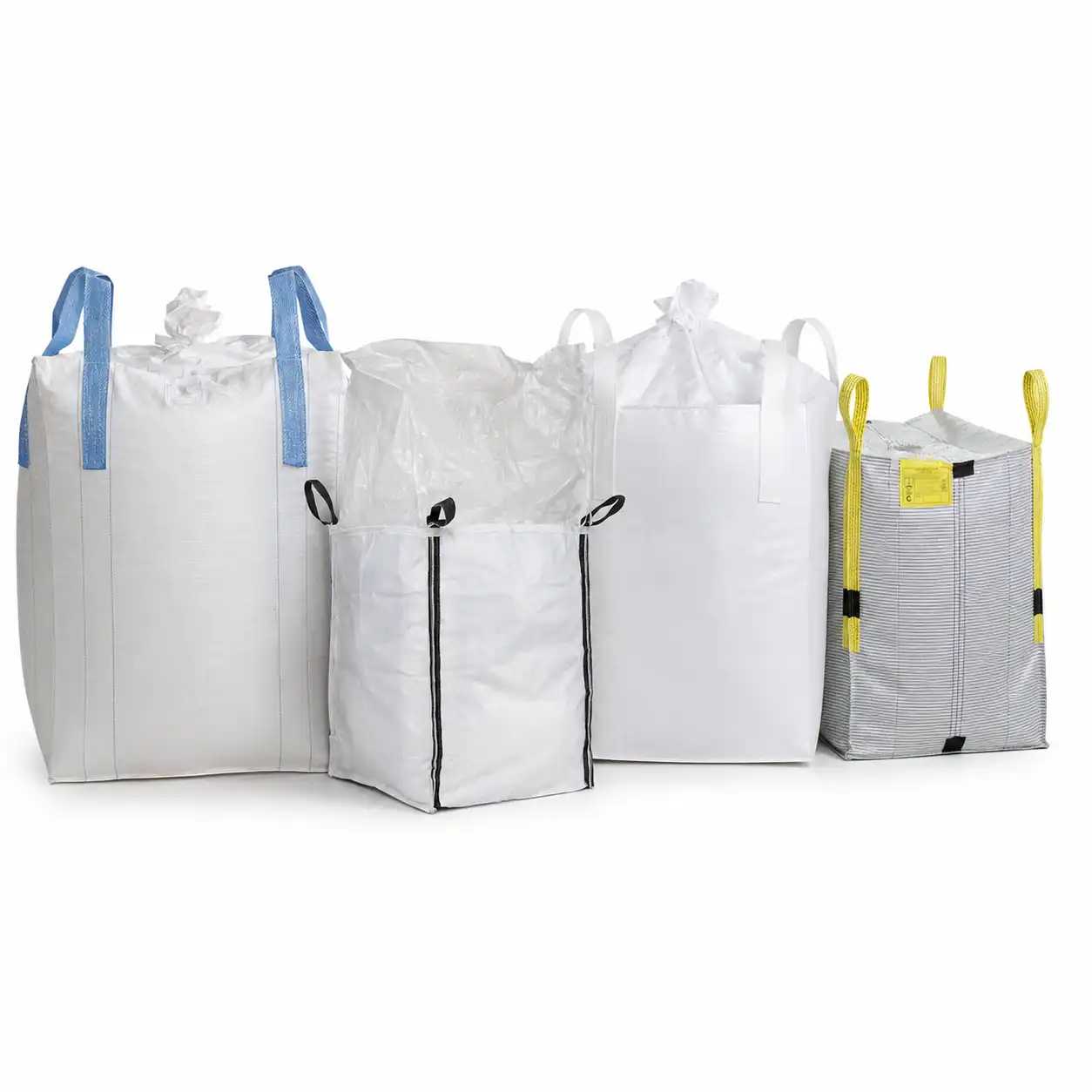
Ton Bags, also known as FIBC Jumbo Bags, Big Bags, or Bulk Bags, are the heavy-lift side of the woven packaging world. VIDEPAK describes them as ton-grade PP fabric bags designed for transport of bulk materials, with options for lifting loops, discharge spouts, liners, and multiple body constructions. ISO 21898 sets the standard framework for material, construction, design, testing, certification, and marking of FIBC for non-dangerous goods, which is why serious Ton Bag sourcing is never only about dimensions; it is about certified performance.
U-Panel construction
The U-Panel style is one of the market’s most common formats because it balances durability, shape retention, and cost. Industry construction descriptions explain that a U-Panel bag uses one large body panel that runs through the bottom and two sides, plus two additional sewn-in side panels. National Bulk Bag notes that U-Panel bags are industry-standard and popular because they maintain a square shape well when filled, especially when baffle are added. For buyers, this means reliable warehouse behavior without moving straight into the most stitch-heavy structure.
Circular construction
The Circular, or tubular, structure is made from fabric woven on a circular loom, which eliminates the vertical side seams found in cut-and-sewn panels. FIBCA defines the circular woven bag exactly in those terms, and VIDEPAK’s FIBC guidance likewise lists circular construction as a standard option. The benefit is simpler body construction with fewer side seams; the trade-off is that the filled bag can bulge more, which makes it practical for many products but not always the best choice when a very square pallet profile is required.
Four Panel construction
The 4 Panel bag uses four separate side panels sewn together to form a more defined square body. National Bulk Bag notes that 4-panel bags typically hold their square shape better than U-Panel bags, though they require more stitching. That extra seam work is not a weakness by itself; it is a design choice. Buyers usually choose 4 Panel when shape discipline, stack appearance, and warehouse order matter more than the simplest construction path.
Baffle construction
The Baffle structure is where Ton Bags become smarter about space. FIBC defines baffle as pieces of fabric sewn across each corner of a tubular or four-panel bag to improve squareness, load stability, and use of storage or shipping space. VIDEPAK’s FIBC overview adds that baffle can be used with U-Panel, 4-Panel, or Circular bodies. This is why baffled bags are often chosen for better cube efficiency and neater stacking: they behave less like swollen sacks and more like soft boxes. More cubic. More stable. More efficient.
Four loops and tunnel lifting
Lifting design is not an accessory. It is a safety decision. VIDEPAK lists both 4 loops and tunnel lifting as standard configuration options for Ton Bags. The four-loop version is the classic format for crane or forklift hook handling. Tunnel-lift designs add fabric sleeves or tunnels for forklift forks, allowing more direct pickup and often reducing manual loop positioning. Industry descriptions of tunnel lift FIBC note that these tunnels help fork engagement and improve handling efficiency. For operations with repeated forklift movement, that difference can save labor and reduce handling friction every day.
The selection table below condenses the Ton Bag construction logic using VIDEPAK, FIBC, and industry construction references.
| Ton Bag option | Best known for | Typical buyer reason |
|---|---|---|
| U-Panel | Balanced durability and good shape | Reliable general-purpose bulk transport |
| Circular | Fewer side seams and simpler body | Cost efficiency for free-flowing goods |
| 4 Panel | Stronger square profile | Better pallet shape and stack control |
| Baffle | Cube efficiency and load stability | Better warehouse and container utilization |
| 4 Loops | Classic lifting flexibility | Widely compatible handling method |
| Tunnel Lifting | Forklift-ready tunnel sleeves | Faster, more direct forklift movement |
Why Choose VIDEPAK
Experience, equipment, and standardized production
VIDEPAK’s positioning is strongest when it moves away from generic sales language and stays with facts. The company’s site states that it has 17 years of experience in industrial bag production. It also states that production uses machinery from Austria’s Starlinger and Germany’s W&H, and that it manufactures according to international standards including ASTM, JIS, EN, and ISO. Recent product pages for kraft paper bags and BOPP woven bags further state annual output above 300 million bags. That combination—time, equipment, scale, and standards—is the practical core of a strong “Why Choose Us” message.
The Starlinger connection matters because Starlinger does not represent one isolated machine; it covers the whole woven-sack production chain, including extrusion, winding, circular looms, coating, printing, and conversion. That matters for Quality control because each production step can reinforce or undo the previous one. Good resin with poor weaving loses value. Good weaving with unstable lamination loses value. Good lamination with weak conversion loses value. Control must travel through the whole chain, and Starlinger’s packaging portfolio is built around exactly that sequence.
17 years of focused bag manufacturing experience.
Austrian Starlinger and German W&H production support.
Recent product pages stating output above 300 million bags per year.
Production language aligned with ASTM, EN, JIS, and ISO-based standards.
That final point—standards—should not be treated as a slogan. ASTM methods such as D5035, D1709, and D3786 give structure to tensile, impact, and bursting evaluation, while EN ISO 21898 gives structure to FIBC design and certification for non-dangerous goods. When a supplier says it works to ASTM and EN logic, the real value is not the label itself. The real value is repeatability: the same bag today, tomorrow, and after the next production run. For industrial packaging, repeatability is trust. And trust is what customers buy when they buy serious Industrial PP Woven Bags.
So the deeper conclusion is simple. Industrial Woven Bags are not a cheap substitute for other packaging; they are one of the smartest engineered answers to modern bulk movement. PP Woven Bags deliver structural value. BOPP Woven Bags add barrier and market-facing impact. Ton Bags solve bulk logistics at scale. And when all three are supported by disciplined Quality control, strong equipment, and standard-based production, the result is more than a bag. It is stable filling, safer transport, better stacking, cleaner presentation, lower failure risk, and stronger customer confidence. That is the real promise of good polypropylene woven bags. Not louder words. Better performance.
- Industrial Woven Bags Explained in Depth for Modern Bulk Packaging
- What Industrial Woven Bags Really Are
- Why Bag Burst Happens Before the Truck Leaves
- PP Woven Bags from 2KG to 100KG
- BOPP Woven Bags from 2KG to 100KG
- Ton Bags for Bulk and Heavy Logistics
- Why Choose VIDEPAK
Imagine a conversation between a logistics manager and a VidePak engineering expert:
Manager: “We’ve had multiple incidents of bags bursting during transit, causing product loss and safety risks. How can your woven bags prevent this?”
VidePak Expert: “Our bags are engineered with ISO-certified polypropylene (PP), rigorously tested for tensile strength and seam integrity, reducing burst risks by 90%. With over 30 years of industry expertise, we’ve integrated advanced safety protocols—from material selection to stress simulation—to ensure reliability even under 50 kg dynamic loads. Let’s explore how we achieve this.”
Polypropylene Woven Bags
Durable industrial pp woven packaging bags with high tensile strength to prevent bursting and damage.
Check More →PP Woven Fabric Bags
Professional analysis of structural design for industrial woven bags to solve bag bursting problems.
Check More →Industrial PP Woven Bags
High-quality industrial woven bags with reinforced structure for heavy load and anti-burst performance.
Check More →Laminated BOPP Woven Bags
Laminated industrial woven packaging with upgraded toughness to avoid cracking and bursting in transportation.
Check More →1. The Science Behind Bag Burst: Causes and Consequences
Bag bursting in industrial packaging is not just a logistical hiccup—it’s a critical safety hazard. A 2024 study by the Global Packaging Safety Institute revealed that 68% of packaging failures in heavy industries stem from inadequate tensile strength or flawed seam construction. Common causes include:
- Material Fatigue: Low-quality PP degrades under UV exposure or repetitive stress.
- Seam Failure: Poorly welded seams split under dynamic loads.
- Overfilling: Exceeding load capacity by 15–20% increases rupture risks.
For example, a chemical logistics firm reported a 25% loss in powdered cement shipments due to burst bags made from recycled PP. In contrast, VidePak’s virgin PP woven bags maintain tensile strengths of 35–40 MPa (machine direction) and 30–35 MPa (transverse direction), tested per ASTM D5034 standards.
2. Health and Safety Evaluation of Woven Bags
2.1 Material Safety: Beyond Tensile Strength
Industrial woven bags must comply with health and safety regulations, particularly for food, pharmaceuticals, and chemicals. Key assessments include:
- Chemical Inertness: PP resins are tested for heavy metals (Pb, Cd) and phthalates, adhering to FDA 21 CFR and EU 10/2011 standards.
- Antistatic Properties: Bags for flammable powders (e.g., coal dust) require surface resistivity ≤10⁹ Ω, verified via IEC 61340-4-1.
VidePak’s anti-static laminated bags, embedded with carbon fibers, reduced electrostatic incidents by 100% in a 2023 trial with a Chilean mining company.
2.2 Structural Integrity Testing
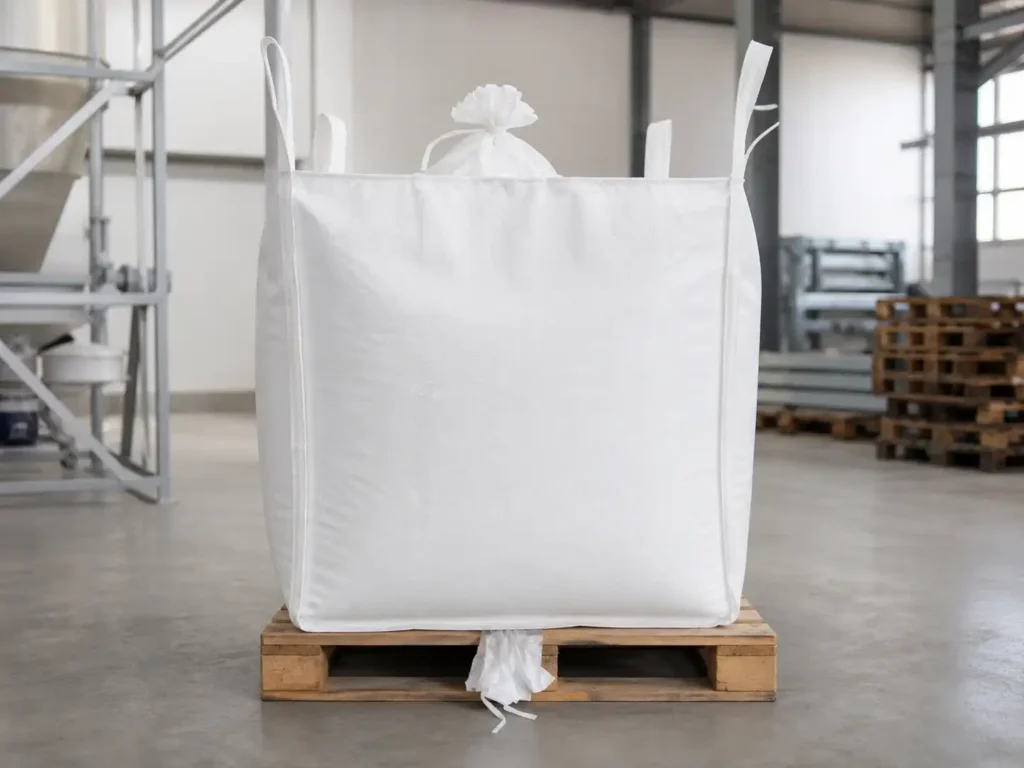
- Burst Strength: Measured using hydraulic pressure tests (ASTM D3786). VidePak’s bags withstand 120–150 psi, exceeding the industry average of 80–100 psi.
- Seam Peel Resistance: Heat-sealed seams are tested for ≥4.5 N/15mm peel strength (ASTM F88), ensuring durability during rough handling.
3. VidePak’s Solutions to Prevent Bag Burst
3.1 Precision Material Selection
VidePak uses virgin PP granules with melt flow indices (MFI) of 8–12 g/10min (190°C/2.16kg), optimizing extrusion consistency. Recycled materials, which degrade MFI by 30–40%, are strictly excluded.
3.2 Advanced Manufacturing Protocols
- Starlinger Circular Looms: 100+ machines weave fabric with ≤0.5% elongation variance, minimizing weak spots.
- Seam Welding: Laser-guided heat sealing ensures 99.9% seam uniformity, tested via high-speed camera inspections.
3.3 Customization for Load-Specific Demands
| Parameter | VidePak Specification | Industry Standard |
|---|---|---|
| Load Capacity | 10–50 kg | 5–30 kg |
| Fabric Thickness | 80–120 μm | 60–100 μm |
| UV Resistance | 500+ hours (ASTM G154) | 200–300 hours |
| Operating Temperature | -30°C to 80°C | -20°C to 60°C |
4. Case Study: Eliminating Burst Risks in Chemical Logistics
A European chemical distributor faced recurring ruptures during transatlantic shipping. VidePak redesigned their bags with:
- Triple-Layer Lamination: PP woven + BOPP film + PE liner, reducing moisture absorption by 40%.
- Reinforced Block-Bottom Valves: Patented design increased filling speed to 1,500 bags/hour without seam stress.
Post-implementation, burst incidents dropped from 12% to 0.2% within six months.
5. FAQs
Q1: How do you test bags for extreme conditions?
A: We simulate real-world stress using vibration tables (ISTA 3A) and drop tests from 1.5 meters (ISO 2244).
Q2: Can bags be customized for hazardous materials?
A: Yes. Our FIBC bags with PE liners meet UN 13H3 standards for flammable solids.
Q3: What’s the lead time for anti-static bags?
A: Standard orders ship in 3–4 weeks. Custom designs require 5–6 weeks, including safety certifications.
Why Choose VidePak?
- Global Reach: 568 employees across 12 countries; $80M annual revenue.
- Certifications: ISO 9001, BRCGS, FDA compliance.
- Sustainability: 100% recyclable PP and water-based inks.
References
- VidePak Company Profile: https://www.pp-wovenbags.com/
- Global Packaging Safety Institute Report (2024)
- ASTM International Standards (2025)
Contact: info@pp-wovenbags.com
External Links:
- Explore our innovations in PP woven bags engineered for heavy-duty applications.
- Learn how FIBC bulk bags enhance safety in bulk logistics.
VidePak: Where Safety Meets Precision.