# Poly Fabric Bags in Transition: Material Science, Smart Technologies, and System-Level Design
## What Are Poly Fabric Bags?
**Poly fabric bags** are industrial packaging sacks made primarily from woven polypropylene tapes, engineered to carry bulk materials such as grains, fertilizers, chemicals, construction aggregates, resins, and countless other products. At first glance they may look like simple plastic bags, but in reality **poly fabric bags** are highly engineered load-bearing structures. They combine a woven polymer fabric, carefully designed seams, optional coatings or liners, and increasingly, smart identification technologies.
Although different industries use slightly different terminology, most of them are referring to very similar products. Common aliases for **poly fabric bags** include:
1. **Poly woven bags**
2. **Polypropylene woven bags**
3. **Poly fabric sacks**
4. **PP woven bags**
5. **Poly bags for bulk packaging**
6. **Poly woven packaging sacks**
All of these terms point back to the same core idea: a strong woven polymer fabric—usually polypropylene—forming the body of the bag, with options for inner liners, BOPP or PE laminations, printing layers, and functional features such as UV protection, anti-static performance, or tamper-evident closures.
What makes **poly fabric bags** so important is this combination of strength, customization, and cost-efficiency. They can carry from a few kilograms up to 50 kilograms or more in typical sack formats, and even several hundred or a thousand kilograms in larger derivatives like FIBC bulk bags. They resist tearing, tolerate rough handling, and perform well in demanding environments ranging from tropical ports to arid farmlands. At the same time, they remain light in weight, easy to stack, and economical to transport.
Crucially, modern **poly fabric bags** are no longer static products. With advances in polymer science, weaving technology, lamination, and digital printing, they have evolved into a platform. The same basic woven fabric can be tuned for different tensile strengths, coated for distinct moisture barriers, and equipped with RFID tags or dynamic QR codes for real-time tracking. In other words, a once-simple sack has become an adaptive packaging solution, capable of fitting into sophisticated global supply chains.
## The Materials of Poly Fabric Bags
### Polypropylene as the Core Structural Material
The backbone of most **poly fabric bags** is polypropylene (PP), a thermoplastic polymer belonging to the polyolefin family. PP is chosen because it combines several favorable properties:
* High tensile strength relative to its weight, making it ideal for load-bearing applications.
* Excellent resistance to moisture and many chemicals, which reduces degradation in harsh environments.
* A relatively low density (about 0.90 g/cm³), giving a superior strength-to-weight ratio.
* Competitive cost thanks to large-scale global production and mature supply chains.
In its raw form, polypropylene is supplied as small pellets or granules. These granules are melted and extruded into thin tapes, which are then stretched (oriented) to align polymer chains and dramatically increase tensile strength. The resulting PP tapes are what get woven into the base fabric for **poly fabric bags**.
From a cost perspective, polypropylene offers a sweet spot. It is generally more expensive than low-grade recycled plastics, but substantially more economical than engineering polymers. For industrial packaging, where millions of bags may be used each year, this balance between performance and cost is critical. It allows producers to design **poly fabric bags** that are robust enough for global logistics without becoming prohibitively expensive.
### Auxiliary Additives: UV, Antistatic, and Color Masterbatches
Raw PP granules alone would not be sufficient for modern packaging demands. To adapt **poly fabric bags** to diverse environments and safety requirements, manufacturers introduce different additive masterbatches into the polymer melt.
Typical additives include:
* **UV stabilizers** to prevent polymer degradation under prolonged sunlight exposure. These stabilizers extend the outdoor service life of **poly fabric bags**, especially for agricultural and construction uses where sacks are stored outdoors for months.
* **Antistatic agents** to control surface resistivity. When **poly fabric bags** are used for flammable powders, grains rich in dust, or chemical fertilizers, static buildup can create ignition risks. Antistatic additives allow designers to target specific resistance ranges, often in the order of 10^6–10^9 ohms, reducing the likelihood of dangerous sparks.
* **Color masterbatches** to create white, blue, green, or branded color schemes. These pigments and dyes not only support marketing but can also signal product types or hazards, helping operators distinguish between, for example, fertilizers and animal feed.
The cost of these additives is small compared with the overall value they provide. A modest increase in raw-material cost can double outdoor lifespan, unlock new safety-critical applications, or support premium branding.
### Woven Fabric, Coatings, and Laminations
The second material dimension of **poly fabric bags** lies in the fabric structure, coatings, and laminations.
* The **woven fabric** is made by interlacing PP tapes on circular or flat weaving looms. The weave density (often expressed in ends per inch and picks per inch) and tape width determine the fabric’s tensile strength and weight. Typical fabric weights range from 55 to 120 g/m² for standard sacks, with heavier options for high-load or high-abrasion applications.
* A **coating layer** of PP or PE can be extruded onto the fabric to reduce porosity, improve moisture resistance, and create a smoother print surface. Coatings are especially common for **poly fabric bags** used in food, feed, and powdered chemicals.
* **BOPP (biaxially oriented polypropylene) or PE laminations** may be added for higher barrier performance and improved print quality. BOPP films provide glossy, high-resolution graphics and enhanced moisture and oxygen blocking, while PE inner liners act as a contamination barrier and facilitate heat sealing.
These layers are chosen and combined according to the end-use requirements. A bag for cement might prioritize breathability, allowing air to escape during rapid filling; a bag for milk powder might prioritize low water-vapor transmission rates and excellent print presentation.
### Functional Components: Liners, Seams, and Smart Tags
Modern **poly fabric bags** also integrate specific components that may not be obvious at first glance:
* **Inner liners** made from PE or PP can be inserted or tube-laminated to provide an additional hygienic barrier. They are standard for food ingredients and moisture-sensitive chemicals.
* **Seams and stitching threads** are often made from PP or high-tenacity polyester, matched to the fabric for consistent elongation and strength. The seam design—fold type, stitch density, and seam allowance—directly affects the bag’s safety factor.
* **Smart tags**, including RFID inlays and printed or laser-etched QR codes, are increasingly embedded or attached to **poly fabric bags**. These components are not structural in a mechanical sense, but they materially change how the bag functions within digital supply chains.
In total, the material composition of **poly fabric bags** is a deliberate combination of the polymer backbone, functional additives, woven fabric architecture, coatings, laminations, and smart components. No single layer defines performance; rather, it is the synergy between them that matters.
## Key Features of Poly Fabric Bags
### High Strength-to-Weight Ratio
Perhaps the most defining feature of **poly fabric bags** is their ability to carry heavy loads while remaining surprisingly light. Thanks to the oriented PP tapes and optimized weave patterns, a bag weighing only a few hundred grams can reliably carry 25 or 50 kilograms of product. This high strength-to-weight ratio lowers transport costs, simplifies manual handling, and reduces the packaging share of a product’s total environmental footprint.
The woven structure also distributes loads in both warp and weft directions. When a filled bag is lifted, stacked, or dropped, forces are shared across many tapes and yarn intersections rather than being concentrated at a single point, reducing the chance of catastrophic tearing.
### Durability and Resistance to Environmental Stress
**Poly fabric bags** are designed to survive real-world abuse. They are dragged across warehouse floors, lifted by hooks, exposed to rain, and stacked in tall pallet columns. With appropriate UV stabilization, they can be stored outdoors for extended periods without significant loss of strength. Their resistance to moisture helps prevent mold growth in the packaging itself, and their chemical resistance makes them suitable for many fertilizers, salts, and specialty chemicals.
Compared with paper sacks, **poly fabric bags** are far less susceptible to weakening when wet. Compared with plain PE film bags, they are much less prone to stretching and tearing under concentrated loads. This robustness directly translates into fewer product losses, fewer cleanup operations, and greater confidence in long-distance exports.
### Customizable Permeability and Barrier Performance
Another important feature is the ability to tune permeability. For some applications—cement, specific powdered building materials, and certain fertilizers—air must escape quickly during filling to avoid bag expansion and rupture. Here, uncoated woven fabric provides enough porosity to vent air while keeping product loss within acceptable limits.
For other products—sugar, rice, milk powder, fine chemicals—moisture ingress must be strictly controlled. In these cases, coatings, liners, or BOPP laminations convert **poly fabric bags** into high-barrier packaging. By adjusting coating thickness, lamination combinations, and seal designs, manufacturers can achieve a broad range of water-vapor and oxygen-transmission rates.
### Excellent Printability and Brand Presentation
With the advent of BOPP laminations and advanced flexographic printing, **poly fabric bags** have become powerful branding surfaces. Full-color, photographic-quality graphics can be printed on the outer BOPP film, which is then laminated to the woven fabric. This approach allows consumer brands in sectors such as rice, pet food, and specialty fertilizers to use **poly fabric bags** not only as containers but as mobile billboards.
Even without BOPP, high-quality printing on coated woven fabric supports clear product identification, hazard symbols, barcodes, and regulatory information. This combination of technical performance and visual appeal is one reason why **poly fabric bags** have grown from purely industrial use into retail-facing channels.
### Reusability and Recyclability Potential
While real-world recycling depends on local collection and processing systems, the inherent design of many **poly fabric bags** is increasingly aligned with circular-economy goals. Monomaterial constructions—where both the fabric and coating are polypropylene—allow the entire bag to be recycled as a single plastic stream. This simplifies sorting and improves the value of recovered material.
In addition, many end users reuse **poly fabric bags** multiple times, especially in agriculture and construction, where bags are repurposed for storage, transport of tools, or even improvised coverings. Reuse extends the service life of each bag, distributing its environmental impact across more uses.
### Compatibility with Smart and Connected Packaging
A defining feature of the newest generation of **poly fabric bags** is their compatibility with smart technologies. The relatively rigid woven surface provides a stable foundation for RFID inlays, NFC tags, tamper-evident labels, and printed or dynamic QR codes. As regulatory and market pressure for traceability increases, this compatibility transforms **poly fabric bags** into data carriers as well as product carriers.
Supply-chain managers can track individual batches, monitor environmental conditions, and verify authenticity by scanning tags on the bag surface. For brands, this opens new possibilities in consumer engagement, recall management, and sustainability reporting.
## The Production Process of Poly Fabric Bags
### Raw Material Selection and Testing
Production of **poly fabric bags** begins with rigorous selection and testing of raw materials. VidePak and other advanced manufacturers prioritize 100% virgin PP granules from large, reputable producers. Virgin material minimizes variability in melt-flow index, density, and impurity levels, which are all critical to stable extrusion and consistent bag performance.
Incoming raw materials undergo quality checks such as:
* Melt-flow index testing to confirm that PP granules will extrude consistently at targeted temperatures and pressures.
* Density measurement and moisture analysis to avoid bubbling or voids in extruded tapes.
* Visual inspection and filtration testing to detect contaminants or gels that might weaken tapes or cause surface defects.
* Verification of additive masterbatches (UV, antistatic, color) to ensure proper concentration and dispersion.
Inks, coatings, and laminating films are also vetted for viscosity, adhesion properties, and regulatory compliance, especially when **poly fabric bags** will be used for food or pharma-related products.
### Tape Extrusion and Orientation
The first major transformation step is tape extrusion. PP granules and additives are fed into an extruder, melted, and forced through a die to form a thin sheet or multiple strands. This sheet is typically quenched in a water bath, then slit into narrow tapes.
These tapes undergo stretching (orientation) under controlled temperature and tension. During orientation, the polymer chains align in the direction of stretch, dramatically increasing tensile strength and modulus. Process parameters such as draw ratio, line speed, and hot-plate temperature are carefully tuned to strike the right balance between strength and elongation.
VidePak’s use of Austrian Starlinger equipment at this stage is critical. Starlinger’s extrusion and stretching lines provide precise control of processing conditions, real-time monitoring of thickness and tension, and high throughput with low defect rates. The result is a consistent supply of PP tapes with very tight tolerances—an essential foundation for strong and reliable **poly fabric bags**.
### Weaving on Circular or Flat Looms
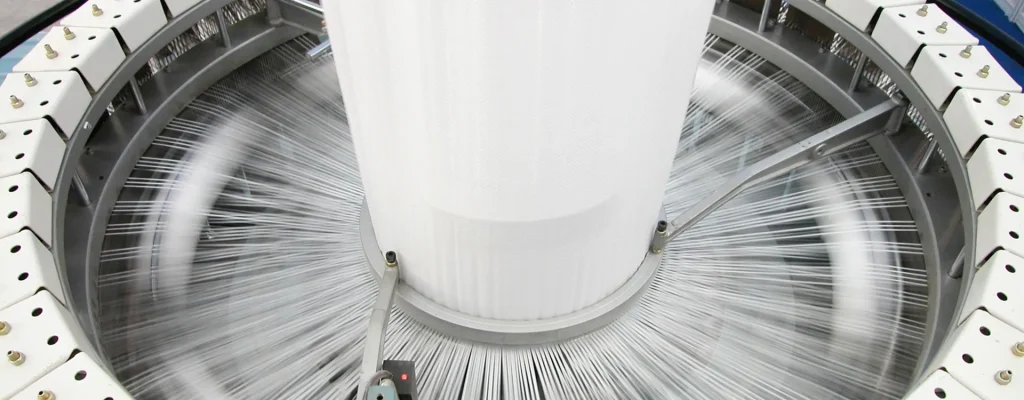
Oriented tapes are then fed into circular or flat weaving looms, where they are interlaced to form the fabric. Weave patterns (plain weave being the most common), tape density, and loom speed directly influence fabric properties.
On circular looms, tapes are woven into a continuous tube, which is later cut to form individual **poly fabric bags**. On flat looms, sheets are woven and subsequently cut and joined. VidePak’s deployment of advanced Starlinger looms allows for:
* High running speeds with stable tension control.
* Accurate pick and end counts, which correlate to tensile strength and basis weight.
* Integrated defect detection systems that flag broken tapes or pattern irregularities.
The woven fabric is then wound into rolls and passed to the next processing stage.
### Coating, Lamination, and Printing
Depending on the design, woven fabric may be coated, laminated, printed, or all three.
* **Coating** involves extruding a thin PP or PE layer onto the fabric, sealing pores, enhancing moisture resistance, and improving print surfaces.
* **Lamination** attaches films such as BOPP or PE to the fabric using heat and pressure. BOPP laminations are popular for high-end printed **poly fabric bags**, adding gloss and barrier properties.
* **Printing** is performed using flexographic or gravure presses. German W&H presses are widely recognized for their ability to deliver high-resolution, precisely registered printing at industrial speeds.
In a typical VidePak workflow, digital artwork is converted into printing plates, color standards are defined, and test runs are conducted. Once print quality is approved, the woven fabric is printed either before or after lamination, depending on the structure. Web tension, ink density, and registration marks are continuously monitored to ensure that each bag carries clear branding and legible regulatory information.
### Cutting, Forming, and Sewing or Sealing
After coating, lamination, and/or printing, the fabric rolls move to conversion lines where they are transformed into finished **poly fabric bags**.
Key conversion steps include:
* **Cutting to length** based on the required bag height.
* **Forming side gussets**, if needed, to increase volume and create a brick-like shape for better palletization.
* **Creating the bottom closure**, which may involve folding and sewing, hot air welding, or a combination of folding and heat sealing for pinch-bottom designs.
* **Forming valve openings** for valve-type bags used on high-speed filling lines.
The choice between sewing and sealing depends on the bag design and barrier requirements. Sewn bottoms provide very robust mechanical integrity; heat-sealed or pinch-bottom designs offer improved leak resistance and a cleaner appearance. In all cases, seam design and quality control are vital, because seams are often the most stressed regions of the bag.
### Final Inspection, Testing, and Packaging
The last stage of the production process focuses on inspection, testing, and packing.
Typical tests on finished **poly fabric bags** include:
* Dimensional checks (width, length, gusset depth) to ensure compatibility with filling lines and pallet patterns.
* Fabric and seam tensile testing to verify that load capacity meets or exceeds the design rating.
* Drop tests and stacking tests to simulate real-world logistics conditions.
* Visual inspection for print defects, coating voids, missed stitches, or foreign contamination.
Where smart tags are used, RFID or QR codes are scanned to verify readability and correct data encoding. Only after passing these checks are **poly fabric bags** bundled, baled, or palletized for shipment. Throughout the process, production data and test results are logged, forming a traceable quality record for each batch.
## Applications of Poly Fabric Bags
### Agriculture and Food Supply Chains
One of the largest application areas for **poly fabric bags** is agriculture. Farmers, cooperatives, and traders rely on these bags to move grains, seeds, animal feed, fertilizers, pesticides, and micronutrients.
For grains and seeds, **poly fabric bags** balance strength with breathability. They must be tough enough to withstand transport and handling, yet allow limited air exchange to prevent condensation. When used with inner liners, they can support extended storage of sensitive seeds with closely controlled moisture content.
For fertilizers and agrochemicals, chemical compatibility and UV stability are crucial. Bags are often stored in outdoor yards, exposed to sunlight and rain. With appropriate UV-stabilized fabrics and coatings, **poly fabric bags** can maintain performance over long seasons, protecting product value and safety.
### Building Materials and Industrial Minerals
Cement, sand, limestone, gypsum, and dry mortar mixes are typically heavy, abrasive products that place intense mechanical stress on packaging. **Poly fabric bags** meet these demands through heavy-gauge fabrics, strong seams, and specialized valve or open-mouth designs for fast filling.
The bags must survive repeated handling by forklifts and cranes, sometimes in very dusty environments. High seam strength and puncture resistance prevent bag bursts, which would otherwise cause product loss and hazardous working conditions. For bagged cement, the combination of woven strength and controlled permeability ensures that entrapped air escapes during filling, enabling high-speed filling lines to run smoothly.
### Chemicals, Resins, and Specialty Powders
Chemical producers use **poly fabric bags** for a wide array of powders and granules, from commodity resins to specialized additives. For some chemicals, low moisture ingress is vital; for others, static control and dust minimization are more important. Through coatings, liners, and antistatic formulations, **poly fabric bags** can be tailored to each requirement.
In export scenarios, bags may travel thousands of kilometers, pass through multiple climate zones, and endure long storage periods. A robust woven structure, combined with quality-controlled seams and barrier layers, helps ensure that materials arrive in specification, maintaining customer satisfaction and process consistency.
### Consumer and Retail Packaging
While industrial uses dominate volumes, **poly fabric bags** have also entered consumer-facing packaging. Retail bags for rice, flour, pet food, charcoal, and gardening products increasingly use woven PP with BOPP laminations. The result is packaging that feels sturdy in the consumer’s hands, looks premium on the shelf, and performs well in transport and storage.
For brand owners, **poly fabric bags** can deliver high-impact graphics, convenient features such as easy-open notches or handles, and enough durability to survive e-commerce shipping. Their reusability can also become part of the brand story, with consumers repurposing bags for household storage or outdoor use.
### Large-Capacity and Bulk-Handling Systems
Although this article focuses on sack-sized **poly fabric bags**, the same woven PP technology underpins larger packaging like FIBC bulk bags and heavy-duty FFS (form-fill-seal) systems. These formats allow users to move hundreds or thousands of kilograms in a single container, using cranes or forklifts.
In these cases, fabric weight, lifting-loop design, and safety factors (often 5:1 or 6:1) become paramount. Yet the design logic remains the same: woven polypropylene provides a strong, lightweight, and adaptable foundation for modern bulk logistics.
## How VidePak Controls and Guarantees the Quality of Poly Fabric Bags
### 1. Standards-Based Design and Testing
VidePak designs its **poly fabric bags** within a framework of international standards such as ISO, ASTM, EN, and JIS. These standards define test methods and performance thresholds for parameters like tensile strength, seam efficiency, UV resistance, and load capacity.
Instead of making vague claims of “strong” or “durable” bags, VidePak translates requirements into measurable targets. For example, a 25 kg bag might be designed for a minimum breaking load that is two or three times the nominal fill weight, with test methods referencing specific ISO or ASTM procedures. UV exposure, drop testing, and stacking simulations are all conducted using standard methodologies.
This standards-based approach ensures that **poly fabric bags** are not only strong in theory but demonstrably robust in controlled testing environments. It also allows customers—many of whom operate under their own ISO 9001 or GMP systems—to integrate VidePak’s test data into their internal qualification processes.
### 2. Use of 100% Virgin Raw Materials from Major Producers
The second pillar of VidePak’s quality strategy is strict control over raw materials. For critical applications in food, agriculture, pharmaceuticals, or high-purity chemicals, VidePak relies on 100% virgin PP resins and high-grade masterbatches sourced from established global producers.
Using virgin material minimizes variability in melt behavior, impurities, and long-term mechanical performance. It reduces the risk of odor, discoloration, or unpredictable aging that can arise when poorly characterized recycled material is used in structural fabrics.
Where sustainability goals or specific projects call for recycled content, VidePak approaches this deliberately—reserving such materials for non-critical components or clearly defined applications, and ensuring that all recycled streams are traceable and tested. This differentiated strategy allows **poly fabric bags** to meet the highest safety and performance expectations while still exploring responsible material-use options.
### 3. Advanced Equipment from Austrian Starlinger and German W&H
VidePak invests heavily in high-end production equipment. In extrusion, weaving, and lamination, Austrian Starlinger lines provide the backbone of manufacturing capacity. These machines offer precise control over process parameters, integrated defect-detection systems, and consistent output even at high speeds.
In printing, VidePak deploys German W&H presses, known for their tight registration control, stable color reproduction, and suitability for both short and long runs. This combination of Starlinger and W&H equipment ensures that every layer of the **poly fabric bags**—from the inner fabric strength to the outer print quality—is produced under controlled conditions.
Beyond mechanical excellence, VidePak increasingly integrates digital monitoring and AI-based analytics into its equipment. Sensor data on tension, temperature, speed, and defect signals feeds into dashboards that support rapid troubleshooting and continuous improvement.
### 4. Comprehensive Inspection: Incoming, In-Process, and Final
Finally, VidePak’s quality guarantee rests on a layered inspection system:
* **Incoming inspection** screens raw materials, confirming that each batch of PP resin, masterbatch, ink, or film meets its specification. Certificates of analysis are cross-checked with in-house tests such as melt-flow index, density, and visual inspection.
* **In-process inspection** monitors critical control points during extrusion, weaving, lamination, printing, and conversion. Operators and quality technicians check fabric weight, tape width, weave uniformity, coating thickness, and print registration at defined intervals.
* **Final inspection** evaluates finished **poly fabric bags** against agreed specifications. Dimensional checks, tensile tests, seam-strength tests, UV exposure samples, and visual inspections are combined with, where applicable, verification of RFID or QR functionality.
Sampling plans are documented, often using statistically based acceptance criteria. Data gathered from these inspections is stored and analyzed over time, supporting traceability, trend spotting, and targeted improvements. For customers, this means consistent quality and transparent evidence of performance.
## Evolution of Poly Fabric Bags: From Simple Sacks to Engineered Systems
Looking back over the last several decades, **poly fabric bags** have undergone a remarkable evolution.
In the 1960s and 1970s, woven PP sacks primarily served as a cost-effective replacement for jute and paper bags. The main selling points were lower weight, better moisture resistance, and competitive pricing. Designs were simple, with plain weaves and minimal printing.
By the 1990s, improvements in polymer formulations and weaving technology enabled higher-strength fabrics and more consistent quality. BOPP laminations began to appear, providing both improved barrier performance and higher-quality print surfaces. **Poly fabric bags** moved into more demanding roles, carrying chemicals, specialty fertilizers, and retail-facing food products.
The 2000s and 2010s saw further refinement. UV-stabilized fabrics became standard for outdoor storage; antistatic bags were developed for flammable powders; and high-speed valve-bag filling systems drove innovations in fabric porosity and seam design. Environmental and regulatory pressures pushed manufacturers to explore monomaterial constructions and more efficient production lines.
Today, in the 2020s, **poly fabric bags** are entering a new era shaped by digitalization and sustainability. Smart tags, real-time tracking, AI-assisted quality control, and lifecycle assessments are redefining what it means for a bag to be “fit for purpose.” Instead of being treated as a disposable accessory, the bag is recognized as a critical node in the supply chain, one that can either support or undermine efficiency, safety, and environmental goals.
## Material Science Innovations in Modern Poly Fabric Bags
### Tailored Polymer Blends and Additives
Contemporary **poly fabric bags** are the result of sophisticated material science. Researchers and engineers now tailor polymer blends to achieve specific balances of strength, flexibility, UV stability, and static behavior.
For outdoor agricultural bags, PP formulations may prioritize slow, predictable degradation under sunlight, ensuring that the bag lasts through its intended service life but does not persist indefinitely in the environment if improperly discarded. For antistatic bags in chemical plants, a different additive package ensures that surface resistivity remains within safe ranges even under low-humidity conditions.
These tuned formulations allow manufacturers to move beyond one-size-fits-all bags and design application-specific solutions.
### Advanced Coatings and Laminations
In parallel, advances in coatings and laminations give **poly fabric bags** new barrier and aesthetic capabilities. Coatings can be engineered to be more flexible, more resistant to cracking at low temperatures, or more amenable to high-resolution printing.
BOPP laminations, once reserved for premium brands, are now common. With well-designed structures, it is possible to achieve very low water-vapor transmission rates and oxygen transmission rates while maintaining a monomaterial PP base. This is especially valuable for food and feed applications, where shelf life and taste preservation are critical.
### Monomaterial and Recyclable Structures
Another area of innovation is the push toward monomaterial **poly fabric bags**. By ensuring that the woven fabric, coating, and lamination are all PP-based, recyclers can treat the entire bag as a single polymer stream. This avoids the complex separation problems associated with mixed-material structures.
As extended producer responsibility regulations expand, such monomaterial designs will likely become more attractive to both manufacturers and end-users. They simplify compliance, improve the economics of recycling, and support corporate sustainability narratives.
## Smart Packaging and Digital Integration
### RFID, QR Codes, and Connected Supply Chains
One of the most exciting developments around **poly fabric bags** is the integration of digital technologies. RFID tags can be embedded within or attached to the bag, allowing warehouse systems to track individual pallets or even individual bags in real time. QR codes printed on the surface serve as gateways to rich data, from batch numbers and production dates to sustainability metrics and usage instructions.
For global supply chains, this connectivity is invaluable. It reduces manual entry errors, accelerates inventory reconciliation, and enables traceability from origin to final destination. In agriculture, for example, a bag of coffee beans or rice can carry a digital record of where and how it was produced, supporting certification schemes and premium pricing based on verified sustainability.
### AI-Driven Quality Control and Predictive Analytics
Digital integration does not stop at the bag surface. Inside production plants, cameras and sensors capture data about tape quality, fabric defects, print registration, and seam formation. AI algorithms analyze these data streams, detecting patterns that may indicate equipment wear, raw-material issues, or process drift.
For **poly fabric bags**, such AI-driven quality systems can predict where future failures might occur—perhaps at certain loom positions, under particular humidity conditions, or in combination with specific additive batches. By addressing these issues proactively, manufacturers can deliver more consistent bag performance and minimize the risk of failures in the field.
## System Thinking: Poly Fabric Bags in the Packaging Ecosystem
### Subsystem 1: Product Protection and Performance
At the heart of the ecosystem is the product being packaged. **Poly fabric bags** must protect it from mechanical damage, contamination, and environmental stress. Their woven structure, coatings, and liners form a protective envelope that must remain intact from filling to end-use.
### Subsystem 2: Production and Filling Efficiency
Bag design influences how smoothly filling lines operate. Poorly dimensioned bags can jam automatic packers; fabrics with the wrong permeability can cause dusting or bag bursts on high-speed systems. When **poly fabric bags** are designed with filling equipment in mind, they support higher line speeds, fewer stoppages, and lower operating costs.
### Subsystem 3: Logistics and Handling
Once filled, bags move through warehouses, trucks, trains, and ships. Their stackability, friction characteristics, and resistance to vibration and impact all affect how efficiently they can be stored and transported. Strong seams, predictable dimensions, and appropriate surface friction help create stable pallet loads that travel safely.
### Subsystem 4: Information, Compliance, and Branding
The bag also carries information—product names, safety warnings, barcodes, and, increasingly, digital links. For regulated products, this information is a legal requirement; for brands, it is a critical touchpoint with customers. **Poly fabric bags** must present this information clearly, resist scuffing or fading, and maintain legibility throughout their lifecycle.
### Subsystem 5: Environmental and Regulatory Context
Finally, **poly fabric bags** exist within a broader environmental and regulatory framework. Decisions about fabric weight, material choices, and reuse or recycling strategies all influence carbon footprints, waste generation, and compliance with packaging directives. System thinking requires companies to evaluate not just the bag in isolation, but the net impact of packaging on product waste, logistics efficiency, and end-of-life scenarios.
## Technical Parameters and Specification Table
To bring these concepts into a more concrete form, the following table summarizes typical parameters for industrial **poly fabric bags** and illustrates how they relate to performance.
| Parameter | Typical Range or Option | Practical Notes |
| —————————- | ————————————- | ——————————————————————————— |
| Nominal bag capacity | 10–50 kg (common: 20, 25, 40, 50 kg) | Choose based on product density, handling ergonomics, and filling equipment. |
| Fabric weight | 55–120 g/m² | Heavier fabrics increase strength and puncture resistance at higher material use. |
| Tape width | 2.5–4.0 mm | Narrower tapes can yield smoother fabrics; width interacts with weave density. |
| Weave density (warp × weft) | 10×10 to 14×14 tapes per inch | Higher densities raise tensile strength and reduce porosity. |
| Coating thickness | 15–40 μm | Thicker coatings improve moisture barrier but increase stiffness and cost. |
| Lamination (BOPP/PE) | Optional, 15–30 μm films | Adds barrier and printability; best combined with monomaterial PP where possible. |
| Tensile strength (fabric) | 500–1,200 N / 5 cm | Depends on fabric weight, weave pattern, and tape quality. |
| Seam strength | ≥ 60% of fabric strength (target) | Critical to prevent seam failure under dynamic loads. |
| UV resistance | 500–2,000+ hours accelerated exposure | UV-stabilized **poly fabric bags** for outdoor storage require higher ratings. |
| Surface resistivity | 10^6–10^12 Ω (antistatic grades) | Selected according to ATEX or similar safety requirements for dusts and vapors. |
| Safety factor (bulk formats) | 5:1 to 6:1 | Particularly relevant when woven PP is used in FIBC or heavy-duty sacks. |
These values are indicative rather than prescriptive. For any specific project, engineers should work with suppliers like VidePak to define precise targets based on product properties, supply-chain conditions, and regulatory constraints.
## Future Outlook: Pathways for Poly Fabric Bags in a Circular Economy
The story of **poly fabric bags** is still being written. As material science, digital technology, and sustainability frameworks evolve, several trajectories are becoming clear.
First, demand for traceability and compliance information will continue to grow. Smart tags, sensor-enabled packaging, and interoperable data platforms will make **poly fabric bags** part of a connected network rather than isolated objects. This will help brands demonstrate responsible sourcing, track carbon footprints, and respond quickly to quality or safety issues.
Second, pressure to reduce environmental impact will push further innovation in materials and design. Monomaterial structures, lighter fabrics that still meet performance targets, and better collection systems will all contribute to more circular use of polypropylene. In some applications, **poly fabric bags** may be designed explicitly for reuse, with reinforced handles, reclosable features, and aesthetic considerations that encourage consumers to keep using them.
Third, system thinking will become a standard expectation rather than a niche perspective. Packaging engineers, sustainability teams, and supply-chain managers will increasingly collaborate at the design stage, treating **poly fabric bags** not as a cost to be minimized but as an integrated tool for reducing product waste, improving logistics, and supporting brand strategies.
In this context, VidePak’s approach—combining standards-based design, high-quality raw materials, advanced Starlinger and W&H equipment, and robust quality systems—positions **poly fabric bags** as a strategic asset for customers. They are not just sacks that happen to be made of woven plastic; they are carefully engineered interfaces between products, people, and the complex flows of modern commerce.
Imagine a conversation between a global supply chain manager and VidePak’s Chief Technology Officer: Manager: “We need packaging solutions that adapt to both current logistics demands and future sustainability mandates. How can your poly fabric bags evolve with these needs?” VidePak CTO: “Our polypropylene (PP) woven bags integrate cutting-edge material science and smart technologies—from RFID-enabled traceability to AI-driven durability testing—ensuring they meet today’s operational demands while future-proofing supply chains. With 30+ years of industry leadership, we’ve redefined what ‘durable packaging’ means in the age of Industry 4.0. Let me explain how.”
1. The Historical Journey of Poly Fabric Bags
Poly fabric bags, first commercialized in the 1960s, revolutionized bulk packaging by replacing jute and paper with lightweight, moisture-resistant polypropylene. Early iterations focused on basic functionality, but the 1990s saw advancements like biaxially oriented PP (BOPP) lamination, enhancing tensile strength by 40% and enabling multi-layer barrier designs.
By 2010, the global woven PP bag market reached $12.5 billion, driven by agriculture and chemicals. However, challenges persisted:
Limited traceability: Manual tracking led to 15–20% logistical errors in bulk shipments.
Environmental concerns: Non-recyclable coatings contributed to 8 million tons of annual plastic waste.
VidePak addressed these gaps through virgin PP granule adoption and Starlinger circular loom technology, achieving 99.8% material consistency and reducing defects by 90% since 2008.
2. Material Science Breakthroughs in Modern Woven Bags
2.1 Enhanced Polymer Formulations
VidePak’s R&D lab has engineered PP blends with:
UV Stabilizers: Extend outdoor lifespan to 5+ years (vs. 2 years industry average) per ASTM G154 testing.
Antistatic Additives: Carbon nanoparticles reduce surface resistivity to 10⁶–10⁹ Ω, critical for flammable powders.
Recyclable Monomaterials: Single-material structures enable 100% recyclability, aligning with EU Circular Economy targets.
2.2 Advanced Lamination Techniques
Layer
Function
VidePak Innovation
Outer PP Woven
Load-bearing (up to 50 kg)
120 μm thickness, 35 MPa tensile strength
BOPP Film
Moisture/Oxygen Barrier
<1 g/m²/day WVTR, 0.8 cc/m²/day OTR
PE Inner Liner
Contamination Prevention
FDA-compliant, heat-sealable at 150°C
Data sourced from VidePak’s 2024 Material Safety Reports
3. Smart Packaging: The Next Frontier
The global smart packaging market is projected to grow at 8.2% CAGR through 2030, driven by traceability demands in food and pharmaceuticals. VidePak’s solutions include:
3.1 RFID & QR Code Integration
RFID Tags: Embedded chips enable real-time tracking across 120+ countries, reducing shipment losses by 25% in a 2024 pilot with a Brazilian coffee exporter.
Dynamic QR Codes: Scannable labels provide batch-specific data (e.g., harvest date, carbon footprint), enhancing compliance with EUDR deforestation regulations.
3.2 AI-Driven Quality Control
Leveraging partnerships with AI innovators like The Future Factory, VidePak employs:
Predictive Analytics: Machine learning models forecast bag stress points, optimizing weave patterns for 50 kg dynamic loads.
4. Case Study: Transforming Agricultural Logistics
A Kenyan tea producer faced 18% spoilage rates due to humidity and counterfeit packaging. VidePak implemented:
BOPP/PE Laminate Bags: Reduced moisture ingress to 0.5 g/m²/day.
Blockchain-Linked QR Codes: Enabled farm-to-supermarket traceability, cutting counterfeit incidents by 95%. Post-deployment, the client reported a 30% increase in export premiums due to verified sustainability claims.
5. Technical Specifications: VidePak vs. Industry Standards
Parameter
VidePak
Industry Average
Test Method
Load Capacity
10–50 kg
5–30 kg
ISO 2233
UV Resistance
2,000+ hours
500–1,000 hours
ASTM G154
Seam Strength
5.0 N/15mm
3.0 N/15mm
ASTM F88
Recyclability
100% Mono-PP
60–70% (Mixed Materials)
EN 13432
6. FAQs
Q1: Can smart tags withstand harsh environments? A: Yes. Our RFID tags are IP67-rated, resisting dust, water, and temperatures from -40°C to 85°C.
Q2: What’s the minimum order quantity for customized smart bags? A: MOQ starts at 10,000 units, with prototyping completed in 14 days.
Q3: Do your bags comply with food safety regulations? A: Absolutely. We meet FDA 21 CFR, EU 10/2011, and FSSC 22000 standards.
Why VidePak?
Global Scale: 568 employees, 100+ Starlinger looms, serving 60+ countries.
Sustainability Leadership: 100% recyclable bags, 30% energy reduction via AI-optimized production.