
1) What Is Pasted Valve Bags? Definitions, Architecture, and Everyday Aliases
At its core, pasted valve bags are pre‑formed industrial sacks created from multi‑ply kraft paper (and, in some builds, paper–poly hybrids) with a precisely engineered valve sleeve at one corner or along the top seam. The bag is filled through the valve by impeller, auger, or air packers, and the valve then closes—by head pressure alone or via heat/ultrasonic sealing—so that product stays inside and ambient dust stays outside. Because the tube is pasted (glued) rather than sewn, the structure is low‑lint and low‑sift, and that matters in bakeries, dairies, cocoa plants, and any dry‑goods line where cleanliness is not a wish but a requirement.
Why this format exists: printing clarity of paper, dosing accuracy of valve packers, and the stack geometry only a pasted bottom can deliver. One package, three problems solved.
Across specifications, POs, and plant‑floor shorthand, the same family appears under several names. Common alternatives for pasted valve bags include:
- pasted valve sacks
- multiwall paper pasted valve bags
- block bottom pasted valve bags
- square bottom pasted valve bags
- paper valve sacks (pasted)
- laminated pasted valve bags
- paper–poly pasted valve packaging
- food‑grade pasted valve sacks
No matter the label, the logic is consistent: a multi‑ply paper tube (optionally laminated to film or reinforced with woven PP), a tight‑tolerance sleeve that mates to packer spouts, and a pasted bottom that squares up into a box‑like silhouette after filling for superb pallet stability.
2) The Material of Pasted Valve Bags: Layer Stack‑Ups, Functions, and Cost Logic
Great sacks aren’t accidents; they are engineered layer stacks. Each layer in pasted valve bags is chosen to cause a measurable effect on the packer, on the pallet, and at retail. Below is an expanded map you can actually tune in procurement specs and on the machine floor.
Kraft Paper Plies
Bleached or unbleached, 60–120 g/m² per ply; calendered for print fidelity. Delivers graphics, stiffness, and controlled breathability. With the right OPV, rub resistance can rival films.
Optional Woven PP Reinforcement
Oriented PP tapes (60–100 g/m²) laminated to paper. A load‑bearing backbone for abrasive or high‑drop lanes (minerals, cementitious blends).
Extrusion Lamination / Tie Layers
Thin PP/PE (sometimes with functional tie polymer) between paper and poly substrates. Prevents tunneling/delam at folds and valve corners; tempers moisture ingress.
Valve Sleeve
PE‑coated paper or PE/PP laminate that mates to impeller/auger/air spouts. Designs include internal self‑closing, external sleeve, heat‑sealable, and ultrasonic variants.
Inner Coatings & Liners
PP/PE inner coats (10–30 µm) control sift; LDPE/LLDPE liners (40–80 µm) add moisture/oxygen barrier and food‑contact hygiene. Free, tabbed, or semi‑bonded to mitigate slump.
Inks, Varnishes, Additives
Migration‑aware inks and OPV for rub resistance; UV stabilizers, antistatic, and slip in poly layers to tune outdoor life, dust behavior, and pallet COF.
| Layer / part | Typical materials | Primary function | Line impact |
|---|---|---|---|
| Paper face | Kraft 60–120 g/m² | Graphics, stiffness, hygiene feel | Legal panels, barcodes, shelf appeal |
| Tie layer | PP/PE extrusion | Bond paper↔poly; barrier assist | Prevents blistering, tunneling, fold delam |
| Poly core (optional) | Woven PP 60–100 g/m² or film | Tensile, tear, puncture | Survives pallet compression and scuff |
| Inner coat | PP/PE 10–30 µm | Sift control, seal aid | Cleaner fill, better valve hygiene |
| Valve sleeve | PE‑coated paper / PE film | Spout interface & closure | Drives fill rate & self‑closure |
| Liner (optional) | LDPE/LLDPE 40–80 µm | Moisture/oxygen hygiene | For humid lanes and long voyages |
3) What Are the Features of Pasted Valve Bags? Dust Hygiene, Strength, and Stack Geometry
A package earns its budget by protecting product, enabling operations, and communicating clearly. Pasted valve bags do all three—often with fewer grams of material than you expect.
Low‑Dust Filling
Sleeve geometry matched to spouts enables fast fills with clean cut‑off. Impeller lines favor internal self‑closing sleeves; auger lines prefer stiffer sleeves that resist twist. Air‑packers fly—if you engineer vent paths that bleed air without creating sift.
Strength at Modest Mass
Two to four paper plies—optionally with a thin woven reinforcement—deliver drop and stack performance that keeps pallets square and tall. Box‑like bottoms minimize creep and topple events in transit.
Tunable Barrier/Breathability
Select porous papers and micro‑venting for gassing flours; specify liners and inner coats for salt, sugar in humid lanes, or milk powder bound for hot ports.
Print Durability & Brand Clarity
High‑line flexo/gravure with OPV keeps labels legible from truck to store. Rub resistance reduces mis‑picks and chargebacks—a direct lever on waste.
4) What Is the Production Process of Pasted Valve Bags? Gate‑to‑Gate With VidePak Equipment Choices
Consistency is not luck; it is capability. VidePak anchors hybrid builds in Austrian Starlinger lines (PP tape extrusion, weaving for paper–poly hybrids) and German W&H (Windmöller & Hölscher) platforms for extrusion lamination and high‑registration printing, then finishes on precision sackmaking equipment for tubing, pasting, and valve patching.
Short thesis: upstream uniformity (Starlinger tapes and fabric) + downstream stability (W&H coating/print) = valve corners that don’t split and pasted bottoms that stay squared after cure.
Front end: raw material selection and incoming inspection. Paper: grammage, moisture, porosity, Cobb, stiffness, and print surface. PP resins for hybrids: MFI, isotactic index, ash, gels; masterbatches (UV, antistatic, slip) screened for dispersion. Lamination resins: neck‑in/drawdown characterized; adhesion verified on both paper and PP substrates. Inks/OPV/solvents: adhesion on treated surfaces and migration‑aware choices for food panels. Liners: gauge uniformity, WVTR/OTR, COF. Valve stocks: stiffness and sealability tuned to packer type.
Paper tubing and valve patch formation. Slit plies to recipe, align registration marks, form multiwall tubes at speed; pasting heads apply controlled adhesive beads, monitored by IR/ultrasonic sensors. Valve sleeves are cut, folded, and applied—internal self‑closing, external sleeve, heat‑ or ultrasonic‑sealable variants supported. Precision here dictates dust hygiene later.
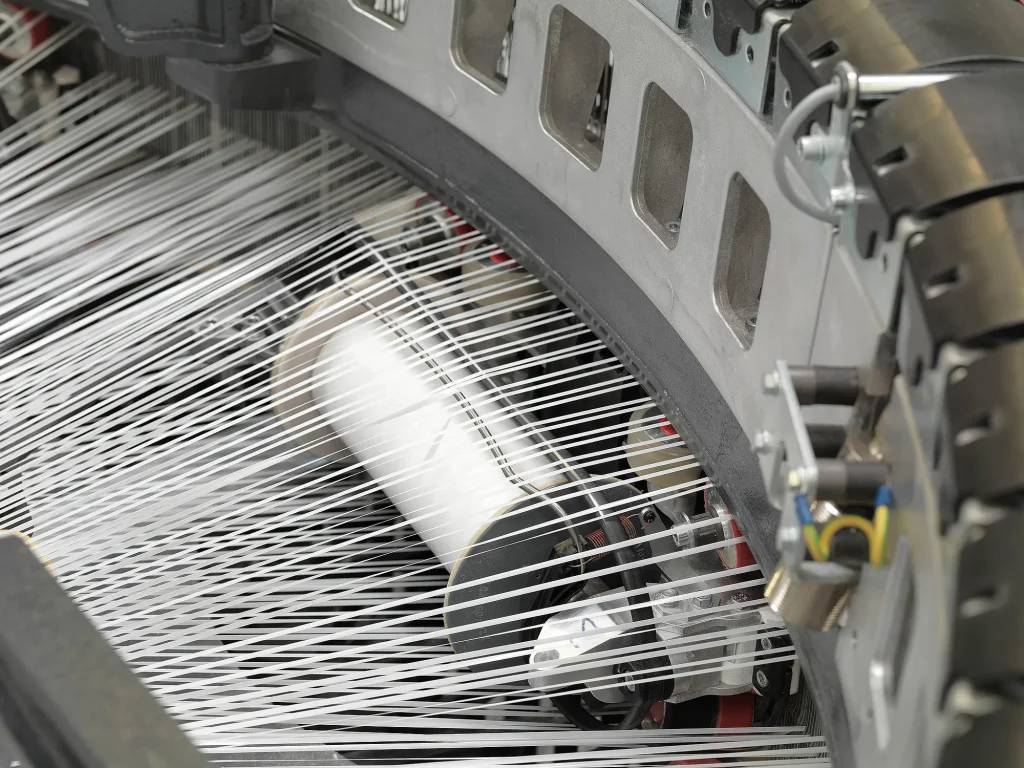
Optional poly component manufacture (Starlinger). Tape extrusion and orientation create uniform denier; circular looms weave 60–100 g/m² fabrics for tough hybrids. Extrusion lamination and printing (W&H). Molten PP/PE curtains bond paper to woven or film; neck‑in, gauge, and chill‑roll planarity held to recipe. Flexo/gravure lays down crisp inks; corona/primer anchors adhesion; OPV adds scuff resistance.
Bottom pasting, squaring, and finishing. Pinch or block bottoms pasted with controlled adhesive weights; corner folds reinforced as needed. Bags are squared so that, after fill, they stand like bricks. Tear tapes or scored folds can be added for fast foodservice or bakery prep.
Final QC and release. Tensile/tear, burst/drop, and stack tests; valve sift and seal strength; rub resistance and color; barcode/QR readability; dimensional checks; cleanliness and odor (hot storage screens for off‑notes). Batch dossiers map raw lots to process conditions and final tests for traceability.
5) What Is the Application of Pasted Valve Bags? Food‑Led, Cross‑Category Use Cases
Wherever powders and micro‑granules need speed, hygiene, and presentable branding, pasted valve bags shine.
- Staple foods: flours (wheat/rye), cornmeal, semolina, rice, pulses/beans, sugar, salt.
- Dairy and nutrition: milk/whey powder, cocoa, malt, infant‑formula base, premixes.
- Baking inputs: starches, dextrose, icing sugar, chocolate powder, mixes.
- Pet nutrition and feed premix: small kibbles, vitamins/minerals, micro‑ingredients.
- Industrial minerals & chemicals: calcium carbonate, talc, silica, pigments, soda ash.
- Cementitious blends (via paper–poly hybrids): cement, dry mortar, tile adhesive, grout.
6) How VidePak Control and Guarantee the Quality: Four Interlocking Lines of Defense
Quality is a system. VidePak structures assurance around four pillars so that pasted valve bags behave the same on Monday mornings and Friday nights.
- Standards‑aligned design and validation. Build to ISO/EN/ASTM/JIS where applicable; qualify sealing windows against packer method; keep type‑test dossiers for drop, stack, seal creep, and—if barrier is claimed—WVTR/OTR. Follow IEC guidance when antistatic packages are specified.
- 100% virgin, traceable raw materials. Virgin PP for woven/film layers; audited masterbatch suppliers; paper mills qualified for basis‑weight control and migration‑aware chemistries; liner films from extruders with tight gauge control and pellet traceability.
- Best‑in‑class equipment: Starlinger + W&H. Starlinger tape lines and looms for uniform tapes/weave; W&H lamination and printing for gauge stability and registration accuracy at industrial speeds. PM/calibration keeps capability inside recipe windows.
- Layered inspection and testing. Incoming (MFI, grammage, Cobb, porosity, dyne, WVTR/OTR); in‑process (denier/width, fabric weight, lamination gauge/neck‑in, print color/register, valve dimensions, splice control); final (tensile/tear, drop/stack, rub, barcode/QR, valve sift/seal, dimensions, cleanliness); periodic audits feed Kaizen.
7) Extending the Theme: Why Pasted Valve Bags Are Healthy, Compliant, and Recyclability‑Oriented
Food safety is a supply‑chain property. Pasted valve bags contribute at the level of materials (clean paper surfaces; mono‑polymer strength in hybrids), process (low‑dust valve filling; sealed sleeves), and performance (moisture discipline; upright stacks that avoid floor contact). Compliance is clearer when labels remain legible and when batch/lot codes actually survive the trip to retail.
Recycling pathways: all‑paper builds are attractive to fiber recovery when kept dry and clean; paper–poly hybrids need design‑for‑recycling choices (poly family labeling, minimized incompatible inks/adhesives) and can be directed to mechanical polyolefin recovery in some regions after de‑fiber.
Where recovery is weak, waste‑to‑energy often compares favorably to open dumping—yet the strategic goal should remain circularity via design and partnership with local mills/recyclers.
8) Systems Thinking: Decompose the Challenge, Then Re‑Integrate a Coherent Solution
Treat pasted valve bags as five interacting subsystems—materials, structure, manufacturing, packer interface, and compliance. Solve each in its own language, then bring them back together in trials.
- Materials. Paper basis weight/porosity/Cobb/stiffness; woven/film reinforcement for abrasion; lamination resin/gauge; liner presence/gauge by WVTR/OTR; inks/OPV for rub and migration profile.
- Structure. Width/length/gusset for pallet fit; valve type and sleeve geometry for packer; venting strategy balanced against sift; outside COF tuned for pallet stability and machinability.
- Manufacturing. Starlinger draw ratios and loom PPI (hybrids); W&H neck‑in and gauge stability; plate/cylinder upkeep; splice mapping and roll IDs for predictability.
- Packer interface. Heat/ultrasonic sealing recipe validated; form and clamp tensions steady; extraction and humidity controlled; changeover checklists enforced.
- Compliance and policy. Reference recognized test families (ISO/EN/ASTM/JIS); align to customer HACCP/FSMS; label polymer families and publish baling/take‑back guidance in EPR markets.
Integrate by running bracketed trials—two laminations, two sleeve geometries, three speeds. Capture fill time, dust plume, valve sift, seal strength, and pallet stability; invite operator feedback; codify the winning spec. Rinse, iterate, and only then freeze.
9) Technical Parameters and Engineering Notes (Indicative)
| Parameter | Typical range | Engineering note |
|---|---|---|
| Fill mass | 10–50 kg | Foods 10–25 kg common; minerals 25–50 kg |
| Paper grammage | 2–4 plies @ 60–120 g/m² | Balance rub resistance vs weight; hybrids may reduce ply count |
| Woven fabric (hybrid) | 60–100 g/m² | Higher for abrasion/tall stacks |
| Lamination gauge | 10–25 µm | Suppress tunneling; lift rub resistance |
| Inner coating | 10–30 µm | Sift control and seal aid |
| Liner (if used) | 40–80 µm | Pick for WVTR/OTR and formability |
| Valve type | Sleeve material | Packer type | Advantages / watch‑outs |
|---|---|---|---|
| Internal self‑closing | PE‑coated paper | Impeller | Auto‑closure under head; tune stiffness for powder flow |
| External sleeve | PE film/laminate | Auger | Easy alignment; twist‑resistant; keep cut‑off clean |
| Heat‑sealable | PE/PP laminate | Impeller/Auger | Security seal; dial dwell/pressure profile |
| Ultrasonic‑sealable | PE/PP laminate | Impeller/Auger | Low heat near graphics; sleeve thickness tolerance matters |
| Air‑packer optimized | Porous paper + sleeve | Air | Fast fills; engineered vent path; manage blow‑back dust |
10) Implementation Playbook: From RFQ to First Stable Pallet
- Define the product. Density, particle size, oiliness, abrasiveness, moisture/aroma sensitivity.
- Set performance targets. Drop/stack safety factor, sift rate, WVTR/OTR with/without liner, rub resistance, barcode/QR readability, pallet height.
- Map the packer. Impeller/auger/air; spout OD and clamping; current valve geometry; sealing method; changeover cadence.
- Pick the stack‑up. Paper grade/plies, lamination gauge, woven weight (if hybrid), additive package, sleeve style, venting plan, liner yes/no.
- Trial with brackets. Run two lamination gauges and two sleeve geometries at three speeds; measure fill time, dust plume, valve closure and sift, seal strength.
- Lock the spec. Freeze tolerances; keep heavy ink out of seal zones; publish acceptance tests and roll maps (splice flags).
- Monitor and improve. Serialize pallets; audit quarterly; Kaizen small moves (+2 mm lay‑flat, OPV tweak, adjusted venting).
11) Risk and Mitigation Matrix
| Risk | Likely cause | First actions |
|---|---|---|
| Valve sifts after fill | Sleeve too limber/short; poor cut‑off | Increase stiffness/length; refine cut‑off; add heat/ultrasonic seal |
| Delamination at folds | Tie layer thin; adhesion low | Bump laminate gauge; verify corona/primer; check chill‑roll planarity |
| Scuffed graphics | OPV mismatch; paper too soft | Change OPV; calendered paper; tune COF to reduce rub |
| Moisture caking | Insufficient barrier; humid warehouse | Add inner coat/liner; dehumidify; rotate FIFO |
| Pallet slippage | Outside COF too low; over‑slip | Reduce slip additive; add micro‑texture; adjust pallet pattern |
12) Advanced Topics: Engineered Venting, Anti‑Counterfeit, and Easy‑Open Features
Air‑packer lines for gassing powders benefit from micro‑perfs or porous paper stripes that evacuate air without opening a highway for sifting. If your brand needs anti‑counterfeit defenses, deploy microtext, latent images, serialized QR, and even forensically unique OPV chemistries. For fast prep in foodservice, integrate tear tapes or scored folds; for partial‑use bags, add reclosable tape. Small design nudges, big operational wins.
13) Practical Checklists
Packer‑Room Checklist
- Spout OD matches sleeve; clamp pads intact
- Venting active (if air‑packer); extraction on
- Seal bar/sonotrode clean; dwell/pressure per recipe
- Valve sleeve alignment verified on first ten bags
- Roll map visible; splice flags obvious at unwind
- Housekeeping: dust bins, brooms, wipes available
Warehouse Checklist
- Pallet flatness and dryness checked
- Stack height within design; top sheets applied
- UV exposure tracked (if yard time); rotate FIFO
- Random pallet drop/tilt tests each quarter
- Temperature/RH logged; dehumidify in humid seasons
14) Vocabulary Snapshot
Valve sleeve: short internal/external sleeve that mates with the filling spout and closes by head pressure or with heat/ultrasonics. Cobb value: water absorption per time; a proxy for surface sizing. WVTR/OTR: water vapor and oxygen transmission; barrier indicators. Picks per inch (PPI): weft insertions per inch in woven reinforcement; sift control proxy. COF: coefficient of friction; key to pallet stability and machinability. Kaizen: small, continuous, test‑driven improvements.
15) Putting It All Together: From Commodity Cost Line to Supply‑Chain Asset
When teams align material choices (paper grade/plies, lamination, optional woven, liner), structural decisions (bag geometry, sleeve type, venting, anti‑slip), process capability (Starlinger for woven components, W&H for lamination/print), and operational choreography (packer recipes, housekeeping, stacking), pasted valve bags stop being a cost and start working as a competitive moat. They protect product, accelerate line speed, reduce dust/returns, and communicate clearly at retail—while positioning brands for evolving compliance and circularity expectations.
Looking beyond 25–50 kg: if your flows grow into bulk, stability and deformation control remain central. For a macro view of how large formats evolved and why anti‑bulging geometry matters, see this companion read on jumbo solutions: how jumbo formats evolved and what they mean for modern bulk packaging.
- 1) What Is Pasted Valve Bags? Definitions, Architecture, and Everyday Aliases
- 2) The Material of Pasted Valve Bags: Layer Stack‑Ups, Functions, and Cost Logic
- 3) What Are the Features of Pasted Valve Bags? Dust Hygiene, Strength, and Stack Geometry
- 4) What Is the Production Process of Pasted Valve Bags? Gate‑to‑Gate With VidePak Equipment Choices
- 5) What Is the Application of Pasted Valve Bags? Food‑Led, Cross‑Category Use Cases
- 6) How VidePak Control and Guarantee the Quality: Four Interlocking Lines of Defense
- 7) Extending the Theme: Why Pasted Valve Bags Are Healthy, Compliant, and Recyclability‑Oriented
- 8) Systems Thinking: Decompose the Challenge, Then Re‑Integrate a Coherent Solution
- 9) Technical Parameters and Engineering Notes (Indicative)
- 10) Implementation Playbook: From RFQ to First Stable Pallet
- 11) Risk and Mitigation Matrix
- 12) Advanced Topics: Engineered Venting, Anti‑Counterfeit, and Easy‑Open Features
- 13) Practical Checklists
- 14) Vocabulary Snapshot
- 15) Putting It All Together: From Commodity Cost Line to Supply‑Chain Asset
VidePak’s pasted valve bags are engineered to deliver unmatched durability, compliance with international regulations, and eco-friendly recyclability. With over 1.2 billion bags produced annually, our solutions meet the rigorous demands of chemical, agricultural, and industrial sectors, ensuring safe transportation and storage for materials like fertilizers, plastic pellets, activated carbon, and disinfectant powders.
1. Key Features of Pasted Valve Bags
Pasted valve bags are designed with precision to address the unique challenges of bulk material packaging. Their structural and material advantages include:
1.1 High-Strength Material Composition
- Material: Made from virgin polypropylene (PP) woven fabric laminated with BOPP (Biaxially Oriented Polypropylene) or kraft paper, these bags offer tear resistance and moisture protection. VidePak uses Starlinger weaving machines to ensure fabric densities of 8×8 to 12×12 threads per inch, achieving tensile strengths up to 1,200 N/5 cm.
- Lamination: Outer layers are laminated with BOPP film (20–30 microns) for UV resistance and print clarity, critical for branding and outdoor storage.
1.2 Advanced Valve Design
The pasted valve mechanism allows for rapid filling and minimizes dust leakage. For hygroscopic materials like disinfectant powders, an inner polyethylene (PE) liner (0.03–0.05 mm thickness) is added to prevent moisture ingress.
1.3 Customization Capabilities
VidePak’s 30+ printing machines support up to 8-color flexographic printing, enabling high-resolution branding and hazard symbols compliant with global standards (e.g., GHS for chemicals).
2. Recycling and Sustainability Practices
Pasted valve bags are 100% recyclable, aligning with circular economy principles.
2.1 Recycling Process
- Collection: Post-consumer bags are collected through partnerships with recycling agencies.
- Reprocessing: PP fabric is shredded, melted, and pelletized for reuse in non-food-grade products.
- Certifications: VidePak’s bags meet ISO 14001 standards, and our recycling partners hold GRS (Global Recycled Standard) certifications.
2.2 Reducing Environmental Impact
By using 30% recycled PP in non-critical layers, VidePak reduces carbon footprint without compromising strength. For example, a 50 kg fertilizer bag with recycled content lowers CO2 emissions by 15% compared to virgin PP.
3. Compliance with Global Standards
Selecting compliant packaging requires understanding regional regulations:
3.1 Regional Standards Overview
| Region | Key Standards | Critical Parameters |
|---|---|---|
| EU | EN 277:2022 (Transport) | Thickness ≥ 90 GSM; Stacking strength ≥ 1,000 kg |
| USA | ASTM D5635 (Chemical Resistance) | PE liner thickness ≥ 0.04 mm; UN certification |
| Japan | JIS Z 1539 (Moisture Barrier) | Water vapor transmission ≤ 5 g/m²/day |
| Australia | AS 2070:2020 (Recyclability) | Recycled content ≥ 20% |
| China | GB/T 8946-2021 (PP Bags) | Tensile strength ≥ 800 N/5 cm |
3.2 Product-Specific Packaging Solutions
- Fertilizers: Opt for 100–120 GSM bags with UV-stabilized BOPP lamination to withstand prolonged outdoor storage.
- Plastic Pellets: Use anti-static liners to prevent dust explosions (required under ATEX directives in the EU).
- Activated Carbon: Integrate multi-layer kraft paper liners for odor containment.
4. Choosing the Right Parameters
4.1 Thickness and Weight
- Lightweight Materials (e.g., plastic pellets): 80–90 GSM fabric + 20-micron BOPP.
- Heavy-Duty Applications (e.g., construction chemicals): 120–150 GSM fabric + 30-micron BOPP.
4.2 Leak Prevention
- Seam Design: Ultrasonic sealing for valve areas ensures no leakage during pneumatic filling.
- Inner Liners: PE or aluminum foil liners (0.05 mm) for fine powders like carbon black.
5. FAQs
Q1: How do I select the right GSM for my product?
A: Match GSM to product density. For example, 25 kg of fertilizer (bulk density 0.8 g/cm³) requires 100 GSM fabric.
Q2: Are pasted valve bags reusable?
A: Yes, but reuse depends on material condition. We recommend single-use for hazardous chemicals.
Q3: Does VidePak provide customized sizes?
A: Yes, our 100+ circular looms support sizes from 10 kg to 50 kg.
6. About VidePak
Founded in 2008 and led by CEO Ray, VidePak specializes in woven packaging solutions with 568 employees across global markets. Our advanced infrastructure includes:
- Production: 100+ circular looms, 16 extrusion lines.
- Sustainability: 40% energy reduction via solar-powered facilities.
- Certifications: ISO 9001, BRCGS, and Sedex compliant.
References
- VidePak Woven Bags. (2025). Custom Solutions for Chemical Product Packaging. https://www.pp-wovenbags.com/
- GB/T 8946-2021: Polypropylene Woven Bags – China National Standard.
- ASTM D5635-19: Standard Test Method for Dynamic Water Resistance of Shipping Containers.
Contact
Email: info@pp-wovenbags.com
Website: https://www.pp-wovenbags.com/
This article integrates technical expertise, regulatory insights, and VidePak’s industry leadership to guide procurement decisions. For further details on valve bag customization or sustainable packaging solutions, explore our dedicated resources on valve bag innovation and chemical-grade packaging standards.