
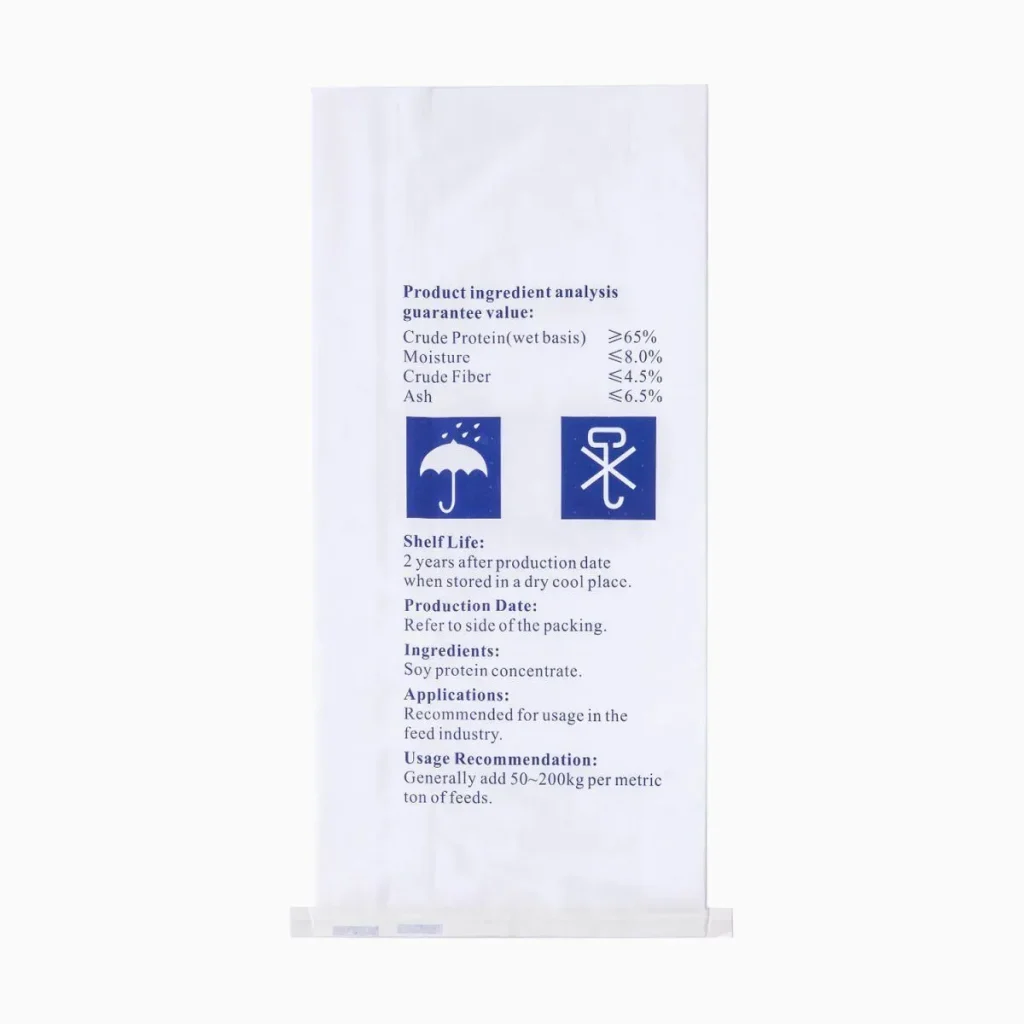
1) What Are Poly‑paper Bags? Definitions, Scope, and Everyday Aliases
In contemporary industrial packaging, poly‑paper bags are hybrid sacks that marry the stiffness, printability, and pleasant hand‑feel of multi‑ply kraft paper with the moisture control, heat‑sealability, and abrasion tolerance of a polyolefin layer. The design principle is straightforward yet powerful: place each material exactly where its physics creates the most value. Paper faces outward to carry high‑fidelity graphics, regulatory panels, and barcodes while presenting controllable friction for stacking; poly faces inward (or between plies) to provide a low‑lint, low‑sift surface and a forgiving heat‑seal interface. The result is a package that runs fast on modern lines, protects powders and micro‑granules, and still looks clean after a long trip.
Core logic: paper where you need stiffness, friction, and print; poly where you need sealing, hygiene, and barrier. One bag, two sciences, three operational wins—speed, cleanliness, and stack geometry.
Across specifications, RFQs, and plant‑floor shorthand, practitioners describe the same family with interchangeable labels. Common aliases for poly‑paper bags include:
- kraft‑poly bags
- paper/poly laminated sacks
- paper‑laminated PP woven bags
- poly‑lined paper bags
- PBOM poly‑paper bags (pinch‑bottom open‑mouth)
- block‑bottom poly‑paper valve bags
- kraft paper PP bags
- kraft paper woven sacks
Whatever the alias—poly‑paper laminated sacks, poly‑lined paper bags, or paper‑laminated PP woven bags—the unifying idea is a hybrid stack‑up that turns conflicting needs into complementary layers.
2) The Materials of Poly‑paper Bags: Constituents, Properties, Cost Signals, and Stack‑Up
Excellent sacks are engineered, not improvised. Each constituent in poly‑paper bags is chosen to cause a specific, measurable behavior on the packer and in the field. The following map is organized so procurement teams can build a clear spec and operations can validate it on their lines.
Kraft Paper Plies (structural skin & print bed)
Unbleached or bleached kraft, typically 60–120 g/m² per ply. Stiffness preserves pallet geometry, breathability can be dialed for gassing flours, and the calendered surface holds sharp graphics. Basis weight and calendering drive cost; both are indexed to pulp and energy markets.
Poly Layer(s) (functional barrier & seal surface)
LDPE/LLDPE for broad heat‑seal windows; HDPE or PP sub‑layers when stiffness and cuttability matter. Architecture may be extrusion coating directly onto paper, adhesive lamination, or a film encapsulated between paper plies. Resin cost tracks energy/feedstocks; ROI is paid back in fewer rejects and faster cycles.
Optional Woven Reinforcement
Oriented PP fabric at 60–100 g/m² laminated to paper—yielding paper‑laminated PP woven bags for abrasive or high‑drop lanes (minerals, cement). Adds tensile/tear without thick paper boards.
Valve Sleeves & Closures
PE‑coated paper or PE/PP laminates tuned for stiffness and seal behavior. Internal self‑closing, external sleeve, heat‑sealable, and ultrasonic variants interface with impeller, auger, or air packers.
Inner Coats & Liners
PP/PE inner coats (10–30 µm) curb sift; LDPE/LLDPE liners (40–80 µm) add moisture/oxygen control and hygiene for food and dairy powders. Tie or tab liners if static or slump is a risk.
Inks, OPV, and Surface Treatments
Migration‑aware inks, rub‑resistant over‑print varnish, and corona/primer treatments build graphics that survive long hauls and rough handling without barcode loss.
| Layer / component | Typical materials | Primary function | Why it matters on the line |
|---|---|---|---|
| Paper face | Kraft 60–120 g/m² | Graphics, stiffness, friction | Squares pallets, carries legal panels |
| Poly layer | LDPE/LLDPE; HDPE/PP sub‑layers | Sealability; moisture discipline | Enables high‑speed sealing with low dust |
| Woven core (optional) | Oriented PP 60–100 g/m² | Tensile, tear, puncture | Survives abrasive lanes and tall stacks |
| Valve sleeve | PE‑coated paper; PE/PP laminate | Spout interface and closure | Drives fill rate and self‑closure |
| Inner coat / liner | PP/PE 10–30 µm; LDPE/LLDPE 40–80 µm | Sift control; barrier; hygiene | Prevents caking and contamination |
3) Features of Poly‑paper Bags: Mechanics, Hygiene, Branding, and Sustainability
A credible poly‑paper bags program should not ask you to accept fragility for the sake of grams saved. The hybrid stack is designed to do contradictory things at once: be stiff yet forgiving, breathable on request yet protective against moisture, fast on the packer yet gentle on graphics. Below, each feature is mapped to the operating reality it solves.
Strength at Modest Mass
Two to four paper plies—optionally backed by a thin woven core—deliver drop and stack capability while minimizing creep. In logistics with rough handling, paper‑laminated PP woven bags outperform paper‑only builds without resorting to heavyweight boards.
Low‑Dust, High‑Speed Filling
Sleeve geometry and inner coats create a clean cut‑off. Impeller lines tend to prefer internal self‑closing sleeves, while auger lines favor stiffer sleeves that resist twist. Air packers fly—if you engineer vent paths that bleed air without inviting sift.
Moisture Discipline with Optional Breathability
Poly layers clamp WVTR for salt, sugar, and dairy powders; micro‑venting or porous stripes preserve breathability where gassing or fermentation demands it (select flours and bakery mixes).
Print Durability and Compliance Clarity
Paper’s print bed plus OPV yields labels that remain legible after long hauls and warehouse rub. Barcode readability and color fidelity directly reduce mis‑picks and chargebacks.
4) Production Process of Poly‑paper Bags: Gate‑to‑Gate with VidePak Equipment
Consistency is not luck; it is capability plus discipline. VidePak anchors hybrid builds in Austrian Starlinger platforms (PP tape extrusion and circular looms where paper‑poly hybrids are specified) and German W&H systems for extrusion coating/lamination and high‑registration printing, then finishes on precision sackmaking lines for tubing, pasting, and valve patching. Below is the full flow from procurement to release.
Front end: raw material selection and incoming inspection. Paper lots are quarantined until grammage, moisture, porosity, Cobb, stiffness, and surface uniformity pass. Poly resins (LDPE/LLDPE/HDPE/PP) and functional tie layers are screened for rheology, neck‑in behavior, and sealing curves. Masterbatches (UV, slip, antistatic) are vetted for dispersion and migration profile. Inks/OPV are qualified for adhesion on treated surfaces and rub resistance. Liners are checked for WVTR/OTR, gauge variation, and COF. Valve stocks are measured for stiffness and sealability against the intended packer type.
Optional poly component manufacture (Starlinger). Film casting → slitting → orientation produce uniform denier tapes with controlled elongation. Circular looms then weave 60–100 g/m² fabrics for tough hybrids, with PPI set to balance sift control and drape. Poor control here metastasizes into downstream instability; tight metrology is mandatory.
Extrusion coating/lamination and printing (W&H). Molten PP/PE curtains bond paper to film or woven substrates, with neck‑in, gauge, and chill‑roll planarity held inside recipe. Corona or primer ensures ink anchorage. Flexo/gravure presses lay down high‑line graphics; OPV adds rub resistance without embrittling folds.
Tubing, pasting, and valve patching. Multiwall tubes form at speed with controlled adhesive beads (IR/ultrasonic monitoring). Valve sleeves are cut, folded, and applied—internal self‑closing, external sleeve, heat‑ or ultrasonic‑sealable variants supported. Bottoms are pasted (pinch or block), corner folds reinforced as needed, and bags are squared so that, after fill, they stand like bricks.
Final QC and release. Mechanical tests (paper tensile/tear; seam/heat‑seal strength), drop/stack tests by spec, valve sift and seal strength checks, color/rub testing, barcode/QR verification, dimensional inspection, and cleanliness/odor screens. Batch dossiers map raw lots → process conditions → final tests for full traceability.
Equipment thesis: upstream uniformity (Starlinger tapes and fabric) + downstream stability (W&H coating and print) = hybrid sacks whose valves don’t fray, whose bottoms stay square, and whose graphics survive the journey.
5) Applications of Poly‑paper Bags: Food‑Led, Cross‑Category Use Cases
Wherever powders and micro‑granules need speed, hygiene, and durable branding—at a sensible tare—poly‑paper bags shine. Typical segments include:
- Staple foods: wheat/rye flours, cornmeal, semolina, rice, pulses/beans, sugar, salt.
- Dairy and nutrition: milk/whey powder, cocoa, malt, infant‑formula base, premixes.
- Baking inputs: starches, dextrose, icing sugar, chocolate powder, mixes.
- Pet nutrition and feed premix: kibbles, vitamins/minerals, micro‑ingredients.
- Industrial minerals & chemicals: calcium carbonate, talc, silica, pigments, soda ash.
- Cementitious blends (via paper‑poly hybrids): cement, dry mortar, tile adhesive, grout.
Related guides for buyers and engineers: For strict leak‑control in waste and sanitation programs, see a practical playbook on leakproof woven compliance. For film‑forward branding performance, explore block BOPP bags engineered for strength and graphics. When your product skews toward chemicals and fertilizers, multiwall paper bag configurations can be compared head‑to‑head with poly‑paper hybrids. If you require premium paper aesthetics with woven strength, study Kraft paper bags laminated with PP woven fabric, and for valve‑style automation history and options, this comprehensive valve‑bag overview is helpful. For macro logistics strategy, see FIBC bulk‑bag sustainability and policy trends and FFS woven bags for transport efficiency.
6) How VidePak Controls and Guarantees Quality
Quality is a system, not a slogan. VidePak’s assurance model rests on four interlocking pillars so poly‑paper bags behave the same on Monday mornings and Friday nights.
- Standards‑aligned design and validation. Designs reference ISO/EN/ASTM/JIS families where applicable; sealing windows (hot‑bar, impulse, ultrasonic) are qualified with coupons and on‑line trials; type‑test dossiers cover drop, stack, seal creep, and—if claimed—WVTR/OTR. IEC guidance is referenced when antistatic packages are specified.
- 100% virgin, traceable raw materials. Virgin PP for woven/film layers where hybrids are used; audited masterbatch suppliers for UV/slip/antistatic; paper mills qualified for basis‑weight control and migration‑aware chemistries; liners from extruders with tight gauge control.
- Best‑in‑class equipment: Starlinger + W&H. Starlinger tape lines and circular looms for uniform denier and a stable tubular weave in hybrid formats; W&H coating/lamination and printing for gauge stability and registration at industrial speeds.
- Layered inspection and testing. Incoming (MFI, grammage, Cobb, porosity, dyne, WVTR/OTR); in‑process (denier/width, fabric weight, lamination gauge/neck‑in, print color/register, valve dimensions, splice mapping); final (tensile/tear, drop/stack, rub, barcode/QR, valve sift/seal, dimensions, cleanliness). Periodic audits feed continuous improvement.
7) Why Combining Materials Works: Reconciling Conflicts by Layer Placement
Hybrid design solves a persistent paradox: we want breathability for gassing flours, yet we need moisture control for sugar; we want brick‑like stacks, yet we need soft edges for safe handling; we want billboard‑grade print, yet we need scuff resistance. Poly‑paper bags resolve the paradox by distributing functions spatially:
- Paper outside for print clarity, friction, and scuff absorption.
- Poly inside or between plies for sealing, sift control, and moisture discipline.
- Woven reinforcement on demand where drop heights, abrasion, or stack heights exceed paper’s comfortable domain.
The pay‑off is operational peace: seals hold at speed, pallets stay square, and labels remain readable. Fewer rejects, fewer returns, fewer forklift babysits.
8) Systems Thinking: Decompose, Solve Locally, Re‑Assemble Globally
Treat poly‑paper bags as five interacting subsystems—materials, structure, manufacturing, packer interface, and operations—and integrate via bracketed trials.
- Materials. Paper basis weight/porosity/Cobb/stiffness; poly architecture (sealant + tie layer); additives aligned to storage and safety; optional woven reinforcement; liner yes/no.
- Structure. Width/length/gusset; pinch vs block bottom; valve geometry; venting plan; outside COF tuned for pallet stability and machinability.
- Manufacturing. Starlinger draw ratios and loom PPI (hybrids); W&H neck‑in and coating gauge; print adhesion and OPV; paste weights and fold discipline.
- Packer interface. Seal method and recipe; spout OD and clamp pressures; dust extraction settings; changeover cadence.
- Operations. Warehouse humidity; trailer pattern; corner boards; FIFO/UV exposure.
Integrate with trials: two paper stacks × two poly gauges × two sleeve geometries × three speeds. Measure seal strength, sift rate, dust plume, and pallet stability. Capture operator feedback. Freeze only after repetition creates confidence.
9) Technical Parameters and Engineering Tables (Indicative)
| Parameter | Typical range | Engineering note |
|---|---|---|
| Fill mass | 10–50 kg | Foods 10–25 kg common; minerals 25–50 kg |
| Paper grammage | 2–4 plies @ 60–120 g/m² | Balance rub resistance vs weight; hybrids can reduce ply count |
| Woven fabric (hybrid) | 60–100 g/m² | Higher for abrasion/tall stacks |
| Lamination gauge | 10–25 µm | Suppress tunneling; improve rub resistance |
| Inner coating | 10–30 µm | Sift control and seal aid |
| Liner (if used) | 40–80 µm | Pick for WVTR/OTR and formability |
| Valve type | Sleeve material | Packer type | Advantages / watch‑outs |
|---|---|---|---|
| Internal self‑closing | PE‑coated paper | Impeller | Auto‑closure under head; tune stiffness for powder flow |
| External sleeve | PE film/laminate | Auger | Easy alignment; twist‑resistant; keep cut‑off clean |
| Heat‑sealable | PE/PP laminate | Impeller/Auger | Security seal; dial dwell/pressure profile |
| Ultrasonic‑sealable | PE/PP laminate | Impeller/Auger | Low heat near graphics; sleeve thickness tolerance matters |
| Air‑packer optimized | Porous paper + sleeve | Air | Fast fills; engineered vent path; manage blow‑back dust |
10) Implementation Playbook: From RFQ to First Stable Pallet
- Define the product. Density, particle size, oiliness, abrasiveness, moisture/aroma sensitivity.
- Set performance targets. Drop/stack safety, sift rate, WVTR/OTR with/without liner, rub resistance, barcode/QR readability, pallet height.
- Map the packer. Impeller/auger/air; spout OD and clamping; current valve geometry; sealing method; changeover cadence.
- Pick the stack‑up. Paper grade/plies, lamination gauge, woven weight (if hybrid), additive package, sleeve style, venting plan, liner yes/no.
- Trial with brackets. Two lamination gauges and two sleeve geometries at three speeds; measure fill time, dust plume, valve closure and sift, seal strength.
- Lock the spec. Freeze tolerances; keep heavy ink out of seal zones; publish acceptance tests and roll maps (splice flags).
- Monitor and improve. Serialize pallets; audit quarterly; pursue small, compounding improvements (+2 mm lay‑flat, OPV tweak, adjusted venting).
11) Risk and Mitigation Matrix
| Risk | Likely cause | First actions |
|---|---|---|
| Valve sifts after fill | Sleeve too limber/short; poor cut‑off | Increase stiffness/length; refine cut‑off; add heat/ultrasonic seal |
| Delamination at folds | Tie layer thin; adhesion low | Increase laminate gauge; verify corona/primer; check chill‑roll planarity |
| Scuffed graphics | OPV mismatch; paper too soft | Switch OPV; calendered paper; tune COF to reduce rub |
| Moisture caking | Insufficient barrier; humid warehouse | Add liner; dehumidify; rotate FIFO |
| Pallet slippage | Outside COF too low; over‑slip | Reduce slip additive; add micro‑texture; adjust pallet pattern |
12) Advanced Topics: Engineered Venting, Anti‑Counterfeit, and Easy‑Open
Air‑packer lines for aerated powders benefit from micro‑perforations or porous paper stripes that evacuate air without opening a highway for sifting. If your brand needs counterfeit deterrence, deploy microtext, latent images, serialized QR, and forensically unique OPV chemistries. For fast prep in foodservice, integrate tear tapes or scored folds; for partial‑use workflows, add reclosable tape. Small design nudges, big operational wins.
13) Vocabulary Snapshot
Poly‑paper bags: hybrid kraft‑poly sacks combining paper strength/print with poly seal/barrier. PBOM: pinch‑bottom open‑mouth format relying on heat‑activated adhesive or hot‑melt. Cobb value: water absorption per time; a proxy for surface sizing. WVTR/OTR: water vapor and oxygen transmission rates; barrier indicators. Picks per inch (PPI): weft insertions per inch in woven reinforcement; sift control proxy. COF: coefficient of friction; key to pallet stability and machinability. Kaizen: small, continuous, test‑driven improvements.
14) Putting It All Together: From Cost Line to Supply‑Chain Asset
When material choices (paper grade/plies, lamination, optional woven, liner), structural decisions (bag geometry, sleeve type, venting, anti‑slip), process capability (Starlinger upstream; W&H downstream), and operational choreography (packer recipes, housekeeping, stacking) are aligned, poly‑paper bags stop being a commodity and start acting as an operational advantage. They protect product, lift throughput, reduce dust and returns, and speak clearly at retail—all while trimming resin and supporting circularity goals.
Looking beyond 25–50 kg: if workflows scale into bulk, stability and deformation control remain central. For the macro view on large‑format packaging strategy, see a sustainability‑focused perspective on FIBC evolution and a logistics‑centric discussion of FFS woven bags in transportation.
- 1) What Are Poly‑paper Bags? Definitions, Scope, and Everyday Aliases
- 2) The Materials of Poly‑paper Bags: Constituents, Properties, Cost Signals, and Stack‑Up
- 3) Features of Poly‑paper Bags: Mechanics, Hygiene, Branding, and Sustainability
- 4) Production Process of Poly‑paper Bags: Gate‑to‑Gate with VidePak Equipment
- 5) Applications of Poly‑paper Bags: Food‑Led, Cross‑Category Use Cases
- 6) How VidePak Controls and Guarantees Quality
- 7) Why Combining Materials Works: Reconciling Conflicts by Layer Placement
- 8) Systems Thinking: Decompose, Solve Locally, Re‑Assemble Globally
- 9) Technical Parameters and Engineering Tables (Indicative)
- 10) Implementation Playbook: From RFQ to First Stable Pallet
- 11) Risk and Mitigation Matrix
- 12) Advanced Topics: Engineered Venting, Anti‑Counterfeit, and Easy‑Open
- 13) Vocabulary Snapshot
- 14) Putting It All Together: From Cost Line to Supply‑Chain Asset
In the world of packaging, the choice of materials significantly influences performance, sustainability, and cost-effectiveness. Among the innovative solutions emerging in recent years, Poly-Paper Bags stand out for their unique blend of polypropylene and kraft paper. This blog will explore the benefits of using Poly-Paper Bags, delve into the mechanics of their production, and highlight how advancements in technology, particularly through the use of Starlinger equipment, have revolutionized the manufacturing process.
What are Poly-Paper Bags?
Poly-Paper Bags are hybrid packaging solutions that combine the strength of polypropylene (PP) with the natural aesthetic and barrier properties of kraft paper. This combination results in bags that are not only durable but also environmentally friendly.
Advantages of Poly-Paper Bags
The integration of these two materials offers several benefits:
- Strength and Durability: The polypropylene component enhances the tensile strength of the bags, making them resistant to tearing and puncturing. This durability is essential for packaging products that require extra protection during transport and storage.
- Moisture Resistance: While kraft paper is naturally more susceptible to moisture, the polypropylene layer provides a barrier that helps keep contents dry. This is particularly important for products sensitive to humidity, such as food items or agricultural products.
- Aesthetic Appeal: Kraft paper gives Poly-Paper Bags a natural look and feel, making them suitable for brands looking to convey a sustainable image. The ability to print high-quality graphics on the paper surface further enhances brand visibility.
- Sustainability: By combining a recyclable plastic (PP) with paper, these bags present a more sustainable alternative to traditional plastic bags. Many consumers are increasingly drawn to eco-friendly packaging options.
- Cost-Effectiveness: The use of two materials can optimize production costs while maintaining high quality. This cost-effectiveness is crucial for businesses looking to remain competitive in the market.
The Production Process of Poly-Paper Bags
The manufacturing of Poly-Paper Bags involves several key stages, each critical for ensuring the bags meet quality standards. Here’s a detailed look at the production process:
1. Material Selection
The first step involves selecting high-quality kraft paper and polypropylene. The choice of materials directly impacts the final product’s strength, moisture resistance, and overall performance.
2. Weaving
Polypropylene fibers are woven into a fabric, creating a strong base that will be combined with kraft paper. The weaving process may vary in technique, but it generally focuses on maximizing the fabric’s strength and flexibility.
3. Laminating
The woven polypropylene fabric is then laminated with kraft paper. This can be done using a variety of methods, including adhesive lamination or thermal bonding. The laminating process ensures that the two materials adhere well and create a functional barrier against moisture and air.
4. Cutting and Shaping
Once laminated, the material is cut into the desired bag sizes. This step can be automated to enhance efficiency and precision. The cutting process ensures that the bags meet specific dimensions, tailored to the requirements of different applications.
5. Sewing and Finishing
The cut pieces are then sewn together, forming the final shape of the bag. This process includes creating seams that are strong enough to withstand the stresses of filling and transporting heavy products.
6. Quality Control
Each batch of Poly-Paper Bags undergoes rigorous quality control testing. This includes checking for defects, ensuring proper dimensions, and verifying that the bags meet industry standards.
7. Packaging and Distribution
Finally, the bags are packaged and prepared for distribution to clients, ensuring they arrive in optimal condition.
The Role of Automation in Production
Advancements in technology, particularly automation, have greatly enhanced the efficiency and consistency of Poly-Paper Bag production. Starlinger’s latest equipment plays a pivotal role in this process:
- 3D Weaving: This innovative technique allows for the production of complex bag structures that can be tailored to specific applications. 3D weaving increases the strength and durability of the bags while maintaining lightweight properties.
- Automated Production Lines: Starlinger’s machinery includes automated features that streamline the entire production process. This not only speeds up production times but also reduces the likelihood of human error, ensuring high-quality output.
- Increased Efficiency: With advanced machinery capable of handling multiple tasks simultaneously, production efficiency is significantly improved. This means that manufacturers can meet rising demand without compromising on quality.
Applications of Poly-Paper Bags
Poly-Paper Bags have diverse applications across various industries:
- Agriculture: These bags are ideal for packaging seeds, fertilizers, and other agricultural products, offering durability and moisture resistance.
- Food Packaging: The moisture barrier properties of Poly-Paper Bags make them suitable for packaging grains, pet food, and other food items that require protection from humidity.
- Construction: They are often used to hold bulk materials like sand and gravel, where strength is a primary concern.
- Chemical Industry: Poly-Paper Bags can safely package chemicals and powders, providing the necessary barrier against environmental factors.
Comparison with Other Bag Types
To understand the unique advantages of Poly-Paper Bags, it’s essential to compare them with other common bag types:
| Bag Type | Material | Advantages | Disadvantages |
|---|---|---|---|
| Kraft Paper Bags | Kraft paper | Eco-friendly, good for light products | Less durable, not moisture resistant |
| PP Woven Bags | Polypropylene | High strength, moisture resistant | Less aesthetic appeal |
| Laminated Woven Bags | PP + additional layers | Enhanced moisture barrier, high durability | May be more expensive |
| Poly-Paper Bags | Kraft paper + polypropylene | Combines strength and aesthetic appeal, good moisture resistance | Slightly more complex production |
Conclusion
Poly-Paper Bags represent a significant innovation in the packaging industry, offering a unique combination of strength, moisture resistance, and aesthetic appeal. The advancements in production technology, particularly through automation and the use of Starlinger equipment, have enhanced the manufacturing process, ensuring high-quality output that meets the diverse needs of various industries.
As businesses increasingly prioritize sustainability, Poly-Paper Bags present a compelling option that aligns with eco-friendly practices. By understanding the benefits and applications of these bags, companies can make informed decisions that enhance their packaging strategies, ensuring their products are well-protected while appealing to environmentally conscious consumers.