
1) What Are FIBC Bulk Bags?
When warehousing teams talk about modular bulk handling, they usually mean FIBC bulk bags—industrial, high‑capacity sacks purpose‑built to store and move powders, granules, flakes, pellets, and small aggregates at scale. The acronym stands for Flexible Intermediate Bulk Containers, a hint that these packages sit between small sacks and rigid totes: large enough to replace hundreds of 25–50 kg bags, yet flexible enough to stack, sling, and conform to pallet footprints and container walls. Typical safe working loads (SWL) range from 500 to 2000 kilograms per unit, and common safety factors are 5:1 for single‑trip and 6:1 for multi‑trip or heavy‑duty regimes, subject to product risk, regulations, and customer SOPs.
Beneath the familiar cube silhouette is a deliberate, engineered architecture: woven polypropylene (PP) body fabric tuned for tear and tensile; high‑tenacity webbing loops that safely transfer lift loads; optional baffles to hold geometry; and liners that deliver barrier and hygiene. With the right top and bottom modules—spout, duffle skirt, conical discharge—FIBC bulk bags act like collapsible bins that fill quickly, de‑aerate predictably, stack safely, and empty on demand.
- Flexible Intermediate Bulk Containers
- FIBC bags
- Jumbo bags
- Big bags
- Bulk sacks
- Super sacks
- Ton bags
Why do operations teams choose them? Because speed, repeatability, and cubic efficiency all move in the right direction when FIBC bulk bags are specified well. If product variability is high—coarse fertilizer one week, fine pigment the next—the same platform adapts through liners, static‑control classes, loop geometries, and top/bottom modules without reinventing the line. This blend of flexibility and discipline is why Flexible Intermediate Bulk Containers dominate in agriculture, minerals, chemicals, food ingredients, plastics, and construction materials.
2) The Materials of FIBC Bulk Bags (Architecture, Constituents, Cost/Benefit)
A FIBC bulk bag is a system, not a sheet. Each component earns its place by contributing strength, safety, barrier, or handling performance. The baseline strategy is mono‑polyolefin—polypropylene at the core—for mechanical efficiency and potential recyclability, with optional liners and coatings to tune barrier and cleanliness. This section maps the bill of materials and explains how each layer affects performance and total cost of ownership (TCO).
2.1 Body Fabric — Woven Polypropylene
Raffia‑style PP tapes—extruded from virgin polypropylene, slit, drawn (mono‑oriented), then woven—form the mechanical backbone. Typical GSM windows for body panels are 140–230 g/m², higher for heavy duty or harsh logistics. The weave’s openness governs breathability and de‑aeration; optional hot‑needle vents further accelerate air escape during filling. The payoff is a high strength‑to‑weight fabric that resists abrasion, puncture, and flex‑fatigue through loading, stacking, and transport.
2.2 Lifting System — Webbing, Loops, and Reinforcement
High‑tenacity PP multifilament webbing—occasionally polyester for specific heat environments—forms corner loops, cross‑corner loops, continuous belt sleeves, or one‑/two‑loop crane styles. Stitch patterns (box‑X, W‑stitch) and anchor lengths are engineered to transfer top‑lift forces into the body fabric without cutting yarns. Wider webbing and longer anchors distribute stress and reduce local strain, improving loop life with modest material cost.
2.3 Top Constructions — Filling Interfaces
Open/hemmed tops prioritize speed for coarse products and low dust; spout tops match a filler nozzle and add drawstrings and dust collars; duffle skirts provide a full opening for irregular or low‑flow bulk; conical tops discourage bridging near corners. Picking correctly is the first step toward predictable bags‑per‑minute (BPM) and clean fill rooms.
2.4 Bottom Constructions — Discharge Interfaces
Spout discharges meter the flow and protect against gushes; full‑open bottoms accelerate drops for coarse or non‑dusty materials; conical bottoms promote mass flow and minimize heel for cohesive powders. Secondary closures (iris or pajama under the main spout) add dust control and finer metering where needed.
2.5 Liners — Barrier and Hygiene
Food‑grade PE or PP liners—loose‑insert, tube, or form‑fit—set water vapor/oxygen transmission (WVTR/OTR) performance for hygroscopic goods like sugar, salt, and fertilizers. Co‑extrusions add aroma or oxygen barriers for sensitive ingredients. Antistatic or conductive liners exist for static‑sensitive powders, integrating with the bag’s electrostatic class. Thicker gauges typically improve barrier but can decrease breathability and influence pallet friction; form‑fit liners maintain cube inside baffle bodies.
2.6 Coatings and Laminations
Extrusion coatings of PP/PE improve dust control, moisture resistance, and print anchorage. If breathability is needed, hot‑needle or laser vents restore de‑aeration paths. Coated faces protect high‑contrast print and codes through rough handling and stacked storage—key for automated intakes.
2.7 Baffles and Internal Bracing
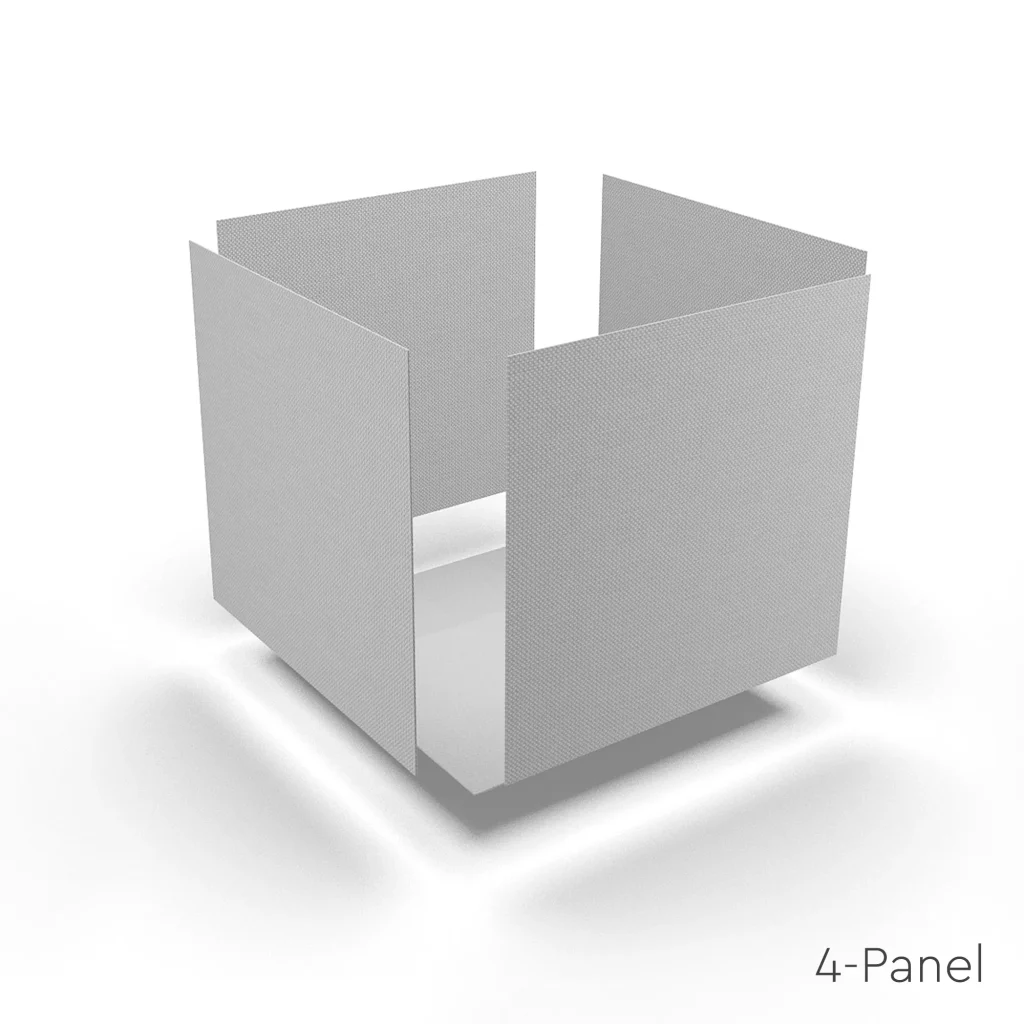
Corner baffles (Q‑bag design) sew non‑woven or woven PP panels into the corners, holding a near‑square cross‑section under load. Baffles increase container cube, reduce load creep, and present clean pallet faces. Their airflow holes must be sized and patterned to deaerate during fills while avoiding fines trapping.
2.8 Electrostatic Classes — Matching Powders and Areas
Type A (no protection) suits non‑flammable powders in non‑flammable atmospheres. Type B fabric prevents propagating brush discharges but still requires careful area controls. Type C is conductive, requiring a verified ground during filling and discharge; Type D dissipates charge without a direct ground when used as instructed. Selecting the right class is non‑negotiable around flammable dusts or vapors.
| Sub‑System | Primary Role | Key Decisions |
|---|---|---|
| Woven PP body | Tensile/tear; puncture; abrasion | GSM; weave openness; venting |
| Loops & webbing | Safe lifting; ergonomics | Loop style; stitch pattern; anchor length |
| Top & bottom modules | Fill/empty control; cleanliness | Spout vs. duffle; conical bottom; safety closures |
| Liners | Barrier; hygiene; static | Gauge; material; form‑fit vs. loose‑insert |
| Baffles | Geometry; cube; stack stability | Baffle fabric; airflow holes; stitch type |
3) What Are the Features of FIBC Bulk Bags?
Feature lists only matter if they map to what operators actually experience: fill speed, dust control, stack safety, discharge predictability, traceability in the warehouse, and a credible route to lower TCO. Below, each capability is linked to day‑to‑day outcomes.
- High strength at manageable mass. Woven PP and engineered loop anchors deliver high SWL without over‑engineering, protecting against corner drops and aggressive handling while keeping tare weights low.
- Configurable filling and discharge. Spout, duffle, and conical top choices; spout, conical, or full‑drop bottoms—each combination tunes the bag to a product’s angle of repose and dust profile. One body platform can serve multiple SKUs by swapping modules.
- Stackability and container cube. Corner baffles hold a box‑like cross‑section, reducing voids, taming load creep, and improving safe stack height and container utilization. For non‑baffled designs, tuned COF and wrap recipes still yield reliable stacks.
- Electrostatic risk management. Type C grounding or Type D dissipation aligns the package with powder minimum ignition energy and area classification, limiting brush discharges near vapors or dust clouds.
- Hygiene and barrier options. Food‑grade liners and clean conversion cells (where required) maintain ingredient quality; WVTR/OTR windows match climate and route to counter caking or oxidation.
- Warehouse discipline. High‑contrast barcodes and QR codes on glare‑controlled panels preserve scan grades. Pictograms improve handling consistency across shifts and languages.
- Sustainability levers. Mono‑polyolefin builds enable recycling where streams exist; down‑gauging with high‑tenacity tapes, reuse programs under 6:1 SF, and take‑back pilots can reduce footprint and cost without sacrificing safety.
Shorten deaeration time with vented coatings and baffle airflow windows; stabilize stacks with COF 0.32–0.40 and verified wrap tension; secure codes with matte windows and ΔE ≤ 2 across lots; choose Type C when reliable grounding is easy, Type D when mobility dominates.
4) What Is the Production Process of FIBC Bulk Bags?
Production quality is not an accident; it’s a sequence. VidePak anchors that sequence on Austrian Starlinger extrusion and weaving platforms and German Windmöller & Hölscher (W&H) printing/lamination/converting assets. Starlinger stabilizes tape orientation, loom uniformity, and fabric GSM—problems solved early never haunt conversion. W&H protects register, nip, and bond strength so microtype and barcodes survive long runs and rough routes. The flow spans pre‑material qualification, core unit operations, and end‑of‑line QA.
4.1 Pre‑Material Qualification and Incoming Testing
- PP resin: Melt flow index (MFI), isotacticity, ash, odor, moisture (Karl Fischer), gel count.
- Webbing yarns: Tenacity, elongation at break, thermal shrinkage, abrasion resistance.
- Coatings/films: Thickness tolerance, dyne level (≥ 38 dyn/cm), gloss/haze, COF.
- Liners: WVTR/OTR, seal initiation temperature, dart impact, antistatic decay, migration compliance (food builds).
- Inks/adhesives: Viscosity windows, solids ratio, residual solvent limits; low‑migration stacks when ingredients are in scope.
- Static‑classed fabrics/liners: Surface resistivity and breakdown voltage against Type B/C/D requirements.
- Documentation: Lot barcoding secures cradle‑to‑pallet traceability.
4.2 Core Unit Operations (Starlinger + W&H)
- Tape extrusion and orientation — Starlinger. PP pellets are plastified, cast, slit into tapes, drawn and annealed to reach target tenacity and dimensional stability. Controls: denier uniformity, tape width, crystallinity (DSC), tensile/elongation.
- Fabric weaving — Starlinger circular/flat looms. Target GSM and picks per inch are maintained while monitoring broken‑end rates and defect maps. Flatness and pick balance determine downstream seam quality and print uniformity.
- Surface treatment. Corona/plasma raises dyne levels to ≥ 38 dyn/cm on faces that will be coated, laminated, or printed so inks and ties anchor reliably.
- Coating or lamination. Extrusion coat with PP/PE ties for dust/moisture protection and print faces; solventless adhesive lamination for specialty stacks. Targets: bond strength, residuals, curl, and temperature windows.
- Cutting, paneling, and body assembly. Panels are cut to length, selvedges trimmed, corners squared. If tubular fabric isn’t used, side seams are formed with stress‑relief geometries that avoid crack initiators.
- Webbing and loop integration. Loops are cut and sewn using box‑X or W patterns; anchor lengths are sized to spread stress into the body fabric without yarn cutting.
- Top and bottom module construction. Spout/duffle/conical tops are fabricated and fitted; bottom discharges are built with secondary safety closures where dust control or metering is critical.
- Baffle installation (Q‑bag). Corner baffles are stitched with controlled airflow holes for fill uniformity and deaeration. Stitch choices minimize fines trapping.
- Liner insertion. Form‑fit or tube liners are inserted and tabbed; spouts are heat‑sealed against SIT windows.
- Printing and coding — W&H. High‑contrast, glare‑controlled print (including barcodes/QR) is applied to coated faces or labels. Varnish maps protect high‑abrasion zones while leaving code windows matte.
4.3 End‑of‑Line QA and Compliance
- Top‑lift test to verify loop/body/anchor integrity at specified load factors.
- Stacking/compression tests to validate safe stack regimes.
- Drop and topple tests to simulate handling shocks.
- Electrostatic verification: ground continuity (Type C) or surface resistivity (Type D) and labeling/work instructions.
- Barrier validation (WVTR/OTR) for linered builds under climate‑appropriate conditions.
- Dimensional audits: footprint, filled height, loop clear length, spout diameters, baffle inset, GSM, bale counts.
- Documentation: GMP/HACCP for food builds; UN certificates and test records for dangerous goods.
Starlinger’s closed‑loop tension control and defect logging eliminate weak points upstream; W&H holds register and bond strength downstream. Fewer defects, better uptime, and reorders that match the master—predictable quality is a compounding advantage.
5) What Is the Application of FIBC Bulk Bags?
Wherever high mass, repeatable handling, and storage efficiency beat the economics of rigid bins or thousands of small sacks, FIBC bulk bags thrive.
- Agriculture and feed: Grains, seeds, oilseeds, premixes, pet food bases. Form‑fit liners preserve aroma and moisture; ventilated sidewalls for produce; baffles for container cube.
- Fertilizers and soil amendments: Urea, NPK, potash. Hygroscopic goods demand liners and UV‑stabilized faces; static‑safe fabrics mitigate ignition risk near vapors.
- Minerals and building materials: Clinker, lime, gypsum, calcium carbonate, silica sand. Conical bottoms reduce heel; full‑drop discharges speed coarse aggregate handling.
- Chemicals and plastics: Resins, masterbatch, additives, absorbents. Traceability, static class, and dust control are crucial.
- Food ingredients: Sugar, salt, starches, dairy powders. Food‑grade liners and migration‑safe stacks; baffle cube for cold‑chain containerization.
- Emergency logistics and flood control: Rapid‑fill crane bags and single‑/double‑loop styles move large mass fast with sling operations in difficult terrain.
For adjacent solutions that complement or extend FIBC bulk bags, see these in‑depth resources:
- Leak‑resistant woven packaging for critical containment
- High‑fidelity printed BOPP woven formats
- Multi‑wall woven bags and their evolution
- Kraft‑paper woven hybrids for pet nutrition
- Valve woven formats with controlled materials
- Global market dynamics for jumbo bags
- Form‑fill‑seal woven rolls in waste systems
6) How VidePak Controls and Guarantees the Quality
VidePak’s quality architecture rests on four pillars designed for certification‑ready repeatability and continuous improvement.
- Design, manufacture, and verify to mainstream standards. Structured SOPs and statistical controls align with widely referenced methods: tensile/tear/burst; top‑lift; stacking/compression; drop/topple; COF; WVTR/OTR; electrostatic resistivity. Sampling follows AQL with CAPA backstops; PPAP‑style validations are available as required.
- Use virgin, big‑brand raw materials (and qualified PCR where specified). 100% virgin PP resin for woven body and webbing; certified food‑grade liners and low‑migration ink/adhesive stacks where ingredients are in scope. Lots are traceable from silo and yarn to bale labels.
- Run best‑in‑class equipment: Austrian Starlinger and German W&H. Starlinger extrusion/tape/loom lines minimize denier drift and broken‑end rates; W&H presses/laminators hold register, tension, and bond strength—protecting microtype and code grades through long runs.
- Complete test coverage: Incoming → In‑Process → Outgoing. Incoming verification on resin, yarn, film, webbing, inks/adhesives; in‑process vision and seam audits; outgoing functional checks (top‑lift, stack, drop, barrier) and dimensional audits. Retention samples and color swatches travel with the BoM for forensic reference.
7) Systems Thinking for Storage Optimization with FIBC Bulk Bags
Optimizing storage with FIBC bulk bags is not a single decision; it is a sequence of smaller, coupled choices: product physics, warehouse constraints, climate and route severity, safety/compliance envelopes, and finally, the operational economics that decide whether a spec stays or goes. By decomposing the problem and then recombining solutions, teams find repeatable wins.
7.1 Product Physics and Flow
Angle of repose, loose/tapped bulk density, PSD, hygroscopicity, oil/odor, and minimum ignition energy (MIE) for powders define how the product behaves. Those inputs drive top geometry (spout vs. duffle), bottom geometry (spout vs. full‑drop), baffle need (cube vs. flow), liner gauge (WVTR vs. breathability), and static class (Type A/B/C/D). Get those wrong and nothing downstream feels right—BPM suffers, heel grows, and dust control slips.
7.2 Warehouse and Containerization Constraints
Pallet size, racking rules, aisle widths, stack limits, wrap recipes, container cube (20’/40’/HC), and floor COF define how bags behave after the filler. Baffle selection and bag footprint (e.g., 90×90 cm vs. 95×95 cm) decide whether container rows complete or leave value on the floor. Interlayers tame very smooth faces; pictograms reduce handling variance across shifts.
7.3 Climate and Route Severity
Outdoor dwell, UV intensity, humidity/temperature cycles, and route shocks (cranes, docks, long roads) stress both materials and geometry. UV‑stabilized masterbatch hours, liner gauge, coating choice, static class, corner protection, and wrap tension must all be set to the route—not to a generic spec.
7.4 Compliance, Branding, and Traceability
Food contact, UN hazardous status, barcode standards, and serialization move quality from a promise to a practice. Low‑migration stacks, UN test plans, matte code windows, high‑build edge varnish, and robust serialization schemes create audit‑ready packages that scan the first time, every time.
7.5 Integrated Path — From Intake to Scale
- Intake: product physics + warehouse/container constraints + climate/route + compliance/brand.
- Concept shortlist: non‑baffled open‑top + full‑drop; spout top + spout bottom with form‑fit liner; baffle Q‑bag + duffle top + spout bottom; static‑classed Type C/D for ignition control.
- DFMEA: rank failure modes—loop pull‑out, seam tear, collapse/slump, code glare, liner puncture, static discharge.
- Pilot: 300–1000 bags on the real line; instrument fill rate, deaeration time, stack creep, scan grades, discharge heel.
- Finalize: lock GSM, loop webbing, stitch pattern, top/bottom modules, liner gauge, baffles, static class, COF window, QA plan.
- Scale: SPC on denier, picks, loop strength, seam patterns, bond strength, code grades, WVTR stability.
- Lifecycle: down‑gauging trials, recycled‑content pilots (non‑food), UV‑hour updates, artwork governance.
8) Technical Parameters and Windows
| Attribute | Typical Range | Notes |
|---|---|---|
| Safe Working Load (SWL) | 500–2000 kg | Heavier custom builds under spec and testing |
| Safety Factor | 5:1 single‑trip / 6:1 multi‑trip | Application‑dependent and regulated |
| Footprint | 85×85 to 100×100 cm | Align to pallets and container rows |
| Filled Height | 90–140 cm | Driven by density and stack rules |
| Body Fabric GSM | 140–230 g/m² | Higher for harsh routes |
| Loop Clear Length | 25–35 cm | Ergonomics for forklifts/hoists |
| Sub‑System | Options | When to Choose |
|---|---|---|
| Top | Open, spout, duffle, conical | Dust profile, flow behavior, equipment fit |
| Bottom | Spout, full‑open, conical | Discharge control vs. heel tolerance |
| Liner | Loose‑insert, form‑fit, co‑ex | Hygroscopic/odor, food grade, cube control |
| Loops | Corner, cross‑corner, continuous, 1–2 loop | Handling method and speed |
| Static Class | A, B, C (grounded), D (dissipative) | Powder MIE and area classification |
| KPI | Target | Why It Matters |
|---|---|---|
| Deaeration time | ≤ 30–90 s typical | Faster turns, less operator time |
| Stack creep @ 30 days | ≤ 2–5% height loss | Load stability and safety |
| Barcode grade | ≥ ISO/IEC 15416 B | Intake automation reliability |
| Discharge heel | ≤ 1–3% of fill mass | Yield and housekeeping |
9) Comparative Perspectives: FIBC vs. Alternatives
Should you adopt FIBC bulk bags or stay with small sacks, drums, or rigid IBCs? The answer depends on rate, risk, and route. Small sacks suit manual distribution and retail pack sizes but explode labor and floor space. Drums excel for liquids and hazardous containment but suffer in cube efficiency and handling touches for dry bulk. Rigid IBCs deliver excellent stack discipline but demand cleaning, capital, and return logistics. In contrast, Flexible Intermediate Bulk Containers deliver the sweet spot for most dry bulk: modular capacity, quick changeovers, and strong storage density—without committing to rigid fleets.
If your operation handles more than ~10–15 metric tons per SKU per week and the product is dry bulk, a properly specified FIBC bulk bag system often beats small sacks on labor and damage, and beats rigid bins on cube and flexibility.
10) Case‑Style Scenarios (Problem → Intervention → Outcome)
Scenario A — Container cube loss from “pillow” bulge
Problem: Non‑baffled bags bulge, creating voids and cutting container payloads by 10–15%.
Intervention: Corner‑baffled FIBC bulk bags with a 95×95 cm footprint and form‑fit liner; wrap recipe tuned; interlayers added for glossy faces.
Outcome: +8–12% container cube; lower load shifts; fewer claims.
Scenario B — Dust and ignition risk with fine pigments
Problem: Operator shocks and dust clouds near intermittent vapors; scuffed labels cause scan failures.
Intervention: Type C grounded fabric with conductive threads; antistatic form‑fit liner; matte code windows; spout top with dust‑collar; iris under discharge.
Outcome: Controlled electrostatic environment; cleaner fills; barcode grades ≥ B; better operator comfort.
Scenario C — Caking of urea in monsoon climates
Problem: Moisture uptake leads to clumps, slow discharge, and rework.
Intervention: Coated body fabric plus 60 μm PE form‑fit liner; conical bottom; conical top for flow guidance; UV‑stabilized masterbatch.
Outcome: Lower caking; faster discharge; stable stacks outdoors.
Scenario D — Slow turns on resin due to under‑spec loops
Problem: Drivers struggle to engage short loops; elongation near stitch lines observed.
Intervention: Wider webbing and longer anchors; box‑X stitch pattern; 32 cm clear loop length; handling pictograms.
Outcome: Faster hook‑in; fewer loop NCRs; higher throughput.
Scenario E — High discharge heel on cohesive powders
Problem: 4–6% heel remains after discharge; bins require manual intervention.
Intervention: Conical bottom plus larger spout with anti‑bridge cone; improved slide via surface treatment; low‑frequency vibrator table.
Outcome: Heel ≤ 1.5%; less manual effort; safer operations.
11) Sizing, Palletization, and Logistics Discipline
Good storage performance comes from working backward: bulk density × target mass sets footprint and filled height; then headspace, deaeration, and discharge heel are tuned; finally, wrap, COF, and baffle decisions lock stack safety. Containerization rewards precise footprints—small differences (90 vs. 95 cm) unlock full rows or cause awkward voids.
- Size selection: align to pallet program and container cube; keep overhang within safety rules.
- Stacking: verify compression and creep limits; manage COF at 0.32–0.40; set wrap overlap and tension deliberately.
- Containerization: model 20’/40’/HC loads with dimensional tolerances; include baffle inset in cube math.
- Traceability: print high‑contrast codes; reserve a matte window; maintain retention swatches for ΔE control.
12) Purchasing Checklist (Data VidePak Needs to Nail the Spec)
- Product physics: PSD, angle of repose, bulk density (loose/tapped), hygroscopicity, MIE, oil/odor.
- Filling/emptying: Nozzle ID/OD, target BPM, deaeration path, discharge heel limits, dust ppm targets.
- Warehouse/container: Pallet size, racking, max stack height, wrap recipe, container cube goals.
- Climate/route: UV hours, humidity/temperature cycles, handling shocks, outdoor dwell time.
- Compliance/brand: Food contact, UN status, static class, color tolerances (ΔE), barcode/QR specs.
- Sustainability: Mono‑PP claim, reuse rules, recycled‑content pilots (non‑food), take‑back options.
- Performance windows: SWL/SF, WVTR cap, COF window, stack creep limits, top‑lift margin.
13) Troubleshooting Matrix (Symptoms → Likely Causes → Fixes)
| Symptom | Likely Cause | Corrective Action |
|---|---|---|
| Pallet slumps after two weeks | COF too low; wrap tension too low; no baffles | Tune wrap recipe; add interlayers; switch to baffles; adjust face coatings |
| Barcode scan failures | Gloss glare; color drift; abrasion | Matte code windows; lock ΔE; high‑build varnish on edges only |
| Loop tearing near stitch lines | Short anchors; needle cutting yarns | Extend anchor length; switch needle system; adopt box‑X or W stitches |
| High discharge heel | Spout too small; cohesive powder; flat bottom | Conical bottom; larger spout; anti‑bridge cone; vibration aids |
| Static shocks during fill | Wrong static class; poor grounding | Type C with verified ground or Type D; confirm ground continuity; antistatic liner |
14) Frequently Asked Questions (Engineering‑Centric)
Q1: Which is better for storage—baffled or non‑baffled designs?
For storage density and stack discipline, baffled FIBC bulk bags win. Non‑baffled designs still shine for fast turns, low stacks, or when cleanliness and reuse constraints rule out baffle cleaning.
Q2: Do thicker liners always mean safer product?
Not automatically. Beyond a point, extra stiffness reduces pallet friction and can curl edges or complicate discharge. Balance gauge against WVTR goals, COF windows, and converting behavior.
Q3: How do I choose between Type C and Type D for static control?
If reliable grounding is easy and policed, Type C is robust and cost‑effective. Where mobility is high or ground reliability is suspect, Type D dissipative designs reduce handling steps. Always validate against your dust/vapor zone and powder MIE.
Q4: Can Flexible Intermediate Bulk Containers be reused?
Yes—under 6:1 safety factor designs and with rigorous inspection/cleaning. Food and pharma chains often prohibit reuse; assess risk and regulatory envelopes before deciding.
Q5: What really limits stack height?
Fabric modulus, baffle stiffness, COF, wrap recipe, pallet stiffness, and time‑dependent creep. Test stack regimes; don’t extrapolate beyond validated conditions.
Q6: Are baffle holes a contamination risk?
They can be if fines lodge and cleaning is lax. Choose hole geometry and stitch types that minimize retention, or opt out of baffles for ultra‑clean programs.
15) Example Integrated Specifications (Reference Sketches)
Use Case A — 1200 kg fertilizer, monsoon storage, export containerization
Body: 180–200 g/m² coated woven PP; Loops: cross‑corner 4‑loop, 30 cm clear, box‑X stitch; Top/Bottom: spout top with dust‑collar; conical discharge with iris; Liner: 60 μm form‑fit PE antistatic; Baffles: woven PP with 10–12 mm airflow holes; Static: Type C with ground tabs; QA: 6:1 top‑lift, WVTR target by climate, barcode grade ≥ B. Outcome: clean fills, minimal caking, high cube in 40’ HC, safe stacks in humid yards.
Use Case B — 1000 kg resin pellets, fast turns, automated intake
Body: 160–180 g/m² woven PP; Loops: corner 4‑loop, 28–30 cm clear, W‑stitch; Top/Bottom: spout top; spout discharge with star‑closure; Liner: 40 μm loose‑insert PE; Static: Type B (non‑propagating) in non‑flammable area; QA: barcode ≥ B, discharge heel ≤ 1.5%. Outcome: fast turnover, clean discharge, reliable scanning.
Use Case C — 1500 kg calcium carbonate, long truck routes, abrasive duty
Body: 200–220 g/m² coated fabric with abrasion‑resistant varnish zones; Loops: continuous belt sleeve; Top/Bottom: duffle top, full‑open bottom; Liner: none (non‑hygroscopic); Baffles: none; QA: drop/topple tests, stack creep ≤ 3%, COF 0.38–0.42. Outcome: minimal face wear, stable stacks, low claim rates.
Use Case D — 1000 kg starch, food‑grade chain, strict hygiene
Body: 160–180 g/m² panels converted in clean cells; Loops: covered seams; Top/Bottom: spout top with tamper‑evident ties; spout discharge; Liner: 60 μm food‑contact co‑ex barrier; Static: Type D; QA: GMP/HACCP documentation, residuals within limits, serialized QR. Outcome: audit‑ready packaging and predictable flow.
16) Why VidePak (Equipment, People, Process, Supply Security)
- Equipment pedigree: Starlinger for extrusion, tape, and looms; W&H for printing/lamination/converting—global benchmarks for consistency, register fidelity, and bond strength.
- People and method: Cross‑functional teams (process, QA, graphics) operate with SPC discipline, DFMEA up front, and color‑management control to keep branding consistent.
- Collaboration: Pilot runs on your filler; rapid iteration pre‑scale; rigorous change‑control for artwork and materials to keep reorders aligned with the master.
- Supply security: Multi‑line redundancy, preventive maintenance, and safety stocks for yarns, inks, adhesives, and liners.
17) Keyword Strategy and Long‑Tail Variants
Primary keyword: FIBC bulk bags. Supporting terms that reflect real buyer queries include Flexible Intermediate Bulk Containers, FIBC bags, jumbo bags, big bags, bulk sacks, super sacks, ton bags, baffle FIBC bulk bags, conductive Type C FIBC, dissipative Type D FIBC, form‑fit liner FIBC, and container‑optimized Q‑bags. Intent‑rich long‑tails such as “food‑grade FIBC bulk bags with form‑fit liner,” “Type C grounded Flexible Intermediate Bulk Containers for pigments,” and “baffle jumbo bags for 40’ HC container cube” help content meet technical buyers where they are.
- 1) What Are FIBC Bulk Bags?
- 2) The Materials of FIBC Bulk Bags (Architecture, Constituents, Cost/Benefit)
- 2.1 Body Fabric — Woven Polypropylene
- 2.2 Lifting System — Webbing, Loops, and Reinforcement
- 2.3 Top Constructions — Filling Interfaces
- 2.4 Bottom Constructions — Discharge Interfaces
- 2.5 Liners — Barrier and Hygiene
- 2.6 Coatings and Laminations
- 2.7 Baffles and Internal Bracing
- 2.8 Electrostatic Classes — Matching Powders and Areas
- 3) What Are the Features of FIBC Bulk Bags?
- 4) What Is the Production Process of FIBC Bulk Bags?
- 5) What Is the Application of FIBC Bulk Bags?
- 6) How VidePak Controls and Guarantees the Quality
- 7) Systems Thinking for Storage Optimization with FIBC Bulk Bags
- 8) Technical Parameters and Windows
- 9) Comparative Perspectives: FIBC vs. Alternatives
- 10) Case‑Style Scenarios (Problem → Intervention → Outcome)
- 11) Sizing, Palletization, and Logistics Discipline
- 12) Purchasing Checklist (Data VidePak Needs to Nail the Spec)
- 13) Troubleshooting Matrix (Symptoms → Likely Causes → Fixes)
- 14) Frequently Asked Questions (Engineering‑Centric)
- 15) Example Integrated Specifications (Reference Sketches)
- 16) Why VidePak (Equipment, People, Process, Supply Security)
- 17) Keyword Strategy and Long‑Tail Variants
In today’s fast-paced industrial world, efficient packaging solutions are vital for successful operations, especially when dealing with bulk materials. One standout solution is the FIBC Bulk Bags (Flexible Intermediate Bulk Containers), which are designed for a variety of applications across multiple industries. In this blog, we will delve into the features of FIBC Bulk Bags, focusing on their customizable designs and the importance of storage considerations. This exploration will highlight how FIBC Bulk Bags can optimize the warehousing of bulk materials, ensuring maximum efficiency and minimal waste.
Understanding FIBC Bulk Bags
FIBC Bulk Bags, also known as Jumbo Bags or Ton Bags, are large bags designed to carry bulk materials. They are made from woven polypropylene, which makes them incredibly durable and capable of holding substantial weights. FIBC Bulk Bags are commonly used in industries such as agriculture, construction, chemicals, and food processing.
Key Features of FIBC Bulk Bags
- Versatile Filling Options: FIBC Bulk Bags come with various filling designs, including top openings, spouts, and valves. This flexibility allows for easy loading of materials, tailored to the specific requirements of different industries.
- Customizable Designs: Businesses can customize the design of the opening and discharge spouts. Whether it’s a large opening for quick filling or a valve for controlled dispensing, the ability to customize makes these bags suitable for diverse applications.
- Capacity: FIBC Bulk Bags can typically hold between 500 kg and 2000 kg of materials, depending on their size and construction. This high capacity makes them ideal for storing large quantities of products.
- Stability and Strength: Constructed with robust materials, FIBC Bulk Bags can withstand the rigors of transportation and storage, ensuring that the contents remain secure and intact.
| Product Parameter | Details |
|---|---|
| Material | Woven polypropylene (PP) |
| Capacity | 500 kg to 2000 kg (varies by design) |
| Dimensions | Customizable (e.g., 90 x 90 x 110 cm) |
| Filling Options | Top open, spout, valve |
| Closure Type | Heat sealed, sewn |
| Recyclability | Typically recyclable |
| Usage | Construction, agriculture, food processing |
Importance of Storage Considerations
Efficient storage practices are crucial in maximizing space utilization and maintaining product quality. Here are several key considerations when storing FIBC Bulk Bags:
1. Controlled Environment
When storing bulk materials, especially those sensitive to moisture or temperature fluctuations, maintaining a constant temperature and humidity level is essential. An ideal storage environment will:
- Prevent Degradation: Some materials can degrade or lose their properties when exposed to extreme conditions. Maintaining a stable environment minimizes this risk.
- Extend Shelf Life: For products with expiration dates, proper storage conditions can significantly extend shelf life, ensuring materials remain usable.
2. Maximizing Container Space
Utilizing storage space efficiently can lead to significant cost savings. FIBC Bulk Bags are designed to optimize container space through the following features:
- Stackability: The design of FIBC Bulk Bags allows them to be stacked neatly, making the most of vertical space in warehouses. This is particularly useful in situations where floor space is limited.
- Tight Packing: Using a 200MT pressure machine to pack the bags tightly can help maximize the number of bags stored in a given space, thereby increasing overall storage capacity.
3. Safe Handling and Storage Practices
To ensure safety and prevent accidents when handling FIBC Bulk Bags, consider the following practices:
- Forklift Compatibility: Ensure that the bags are designed for easy forklift access. Many FIBC Bags come with straps or loops that make them compatible with standard lifting equipment.
- Proper Stacking: When stacking FIBC Bulk Bags, always follow the manufacturer’s recommendations. This ensures stability and minimizes the risk of collapse.
- Weight Distribution: Be mindful of how weight is distributed within the warehouse. Heavier bags should be placed lower to the ground to prevent accidents.
Benefits of Using FIBC Bulk Bags
The adoption of FIBC Bulk Bags in warehouses provides several benefits:
- Cost Efficiency: FIBC Bulk Bags are an economical option for storing and transporting bulk materials. Their reusability and recyclability further enhance their cost-effectiveness.
- Ease of Use: Their customizable designs and various filling options make FIBC Bulk Bags easy to use in various applications, from agriculture to construction.
- Environmentally Friendly: Many FIBC Bulk Bags are made from recyclable materials, contributing to a more sustainable approach to packaging.
- Increased Productivity: By optimizing storage practices and utilizing FIBC Bulk Bags, businesses can increase overall productivity, reducing the time spent handling materials.
Conclusion
FIBC Bulk Bags are an indispensable solution for industries requiring efficient storage and transportation of bulk materials. Their versatile designs, customizable options, and ability to maximize storage efficiency make them an ideal choice for a wide range of applications.
By prioritizing proper storage practices, businesses can optimize their warehousing operations while ensuring product quality. As industries continue to evolve, FIBC Bulk Bags will undoubtedly play a critical role in shaping the future of bulk material handling.
In summary, investing in FIBC Bulk Bags not only enhances operational efficiency but also contributes to sustainable practices, making them a smart choice for businesses aiming for growth and innovation in today’s competitive market.