
What Are Printed Woven Bags?
Printed Woven Bags are polypropylene raffia sacks engineered to combine industrial toughness with retail-grade visual precision. They protect powders, granulates, and small-piece goods across filling lines, truck docks, and warehouse stacks while carrying color-critical graphics, barcodes, and regulatory icons. In practice, the décor layer can be created by direct print on coated PP fabric or by laminating a printable BOPP film and then applying high-resolution artwork. The outcome is a package that must carry two burdens at once: mechanical reliability when lifted by forklifts and grippers, and chromatic fidelity when seen by customers and auditors. When one format must lift, stack, survive a rainy yard, navigate dusty conveyors, and still look brand-true at point of sale, Printed Woven Bags are the format of choice.
Across catalogs and shop floors the same concept travels under practical aliases (numbered and bolded for clarity):
- Printed PP Woven Bags
- Printed BOPP Woven Bags
- Custom Printed Woven Bags
- Printed Woven Sacks
- BOPP‑laminated Printed Woven Bags
- Photo‑quality Printed Raffia Bags
- Graphic‑rich PP Woven Packaging
- Retail‑grade Printed Woven Carriers
Position in the packaging matrix can be imagined as three axes: substrate family (pure woven PP vs BOPP‑laminated PP), print engine (direct flexo/gravure vs print‑then‑laminate), and stack architecture (U‑panel/4‑panel/circular/baffle). Printed Woven Bags occupy the high‑demand intersection where structural polypropylene is fused with a print‑receptive surface and where both mechanical and chromatic tolerances remain non‑negotiable.
The Materials of Printed Woven Bags — Composition, Properties, Costs, and Roles by Layer
Designing Printed Woven Bags is a systems exercise. If you tune only inks but neglect fabric porosity, you invite mottling; if you chase color vibrancy without controlling coefficient of friction (COF), pallets slip. The bill of materials must let each layer contribute to three outcomes at once—mechanical integrity, print fidelity, and total landed cost.
Extruded PP film is slit into tapes, drawn to align molecular chains, then woven on circular or flat looms. Typical fabric weights: 60–120 gsm for retail sacks and 120–180 gsm for industrial sacks. This backbone supplies tensile strength, seam retention, puncture and creep resistance, and dimensional stability for registration.
- Key properties: tape tenacity/elongation, pick density, porosity, UV stability.
- Cost levers: resin grade (MFR), draw ratio, loom uptime, and gsm.
Biaxially oriented polypropylene (15–35 μm) in matte or gloss finish, pre‑treated to elevate surface energy for ink anchorage. It provides a smooth, low‑porosity print canvas and helps with scuff resistance when over‑varnished.
- Key properties: surface energy (dynes), haze/gloss, heat resistance during lamination.
- Cost levers: film gauge, finish, dyne retention, lamination OEE.
Solventless polyurethane systems dominate for BOPP‑to‑PP woven bonds; hot‑melt and extrusion lamination appear in specific builds. Adhesive must provide uniform, bubble‑free bonds that survive folding, gusseting, and heat during finishing—without telegraphing weave texture.
- Key properties: peel strength, cure profile, heat resistance, odor/taint.
- Cost levers: coat weight control, mix ratio precision, pot‑life discipline.
Water‑based or solvent‑based flexographic/gravure inks tuned for PP/BOPP; protective topcoats (matte or gloss) to raise scuff resistance, tune COF, and lock color. On non‑absorbent surfaces, laydown thickness and surface energy dominate tone stability.
- Key properties: viscosity window, pigment loading, lightfastness, rub resistance.
- Cost levers: color count, coverage, anilox/cylinder selection, make‑ready waste.
Anti‑slip topcoats to hit COF windows; UV stabilizers for outdoor dwell; labels/QR patches for traceability; optional tear aids for retail variants.
PP or polyester threads; loop/handle options for specialty formats; heat‑seal for laminated open‑mouth, sewing for non‑laminated, and valve tops for high‑speed fills.
| Construction | Primary Role | Where It Shines |
|---|---|---|
| BOPP 25 μm (matte) // Solventless PU // PP woven 80 gsm | Retail‑grade photo surfaces with scuff‑hiding matte | Rice, boutique grains, pet food |
| BOPP 20 μm (gloss) // Extrusion coat // PP woven 120 gsm | High gloss, strong tear resistance | Fertilizers, garden products |
| Direct‑print on coated PP woven 100 gsm + anti‑slip varnish | Cost‑efficient graphic clarity | Construction minerals, additives |
What Are the Features of Printed Woven Bags?
Features only matter if they survive the route, preserve color in the aisle, and prevent claims. For Printed Woven Bags, five domains dominate: registration stability, color repeatability, abrasion resistance, pallet safety, and mechanical resilience.
Mis‑registration shows as halos, blurs, misaligned barcodes—brand damage and scanner failures. Stability is born from fabric dimensional control, web tension discipline, and closed‑loop register cameras.
ΔE drift erodes brand trust. Use ICC‑disciplined prepress, spectrophotometric feedback on press, and stable anilox/engraving libraries to hold ΔE ≤ 2.0 between lots.
Stretch‑wrap rubs and forklift brushes abrade high spots. Protective topcoats, correct cure, and reduced weave telegraphing mitigate rub‑off and whitening.
Too slick and pallets walk; too grabby and depalletizers choke. Tuning COF via micro‑texture varnish and verifying μs/μk per lot prevents high‑cost incidents.
Adequate gsm, robust seams, base strength, and UV packages keep loads intact. Strong art cannot compensate for weak fabric; a beautiful failure is still a failure.
Barcodes and QR codes near handling points enable faster audits, recalls, and return logistics. Printed data becomes operational leverage.
What Is the Production Process of Printed Woven Bags?
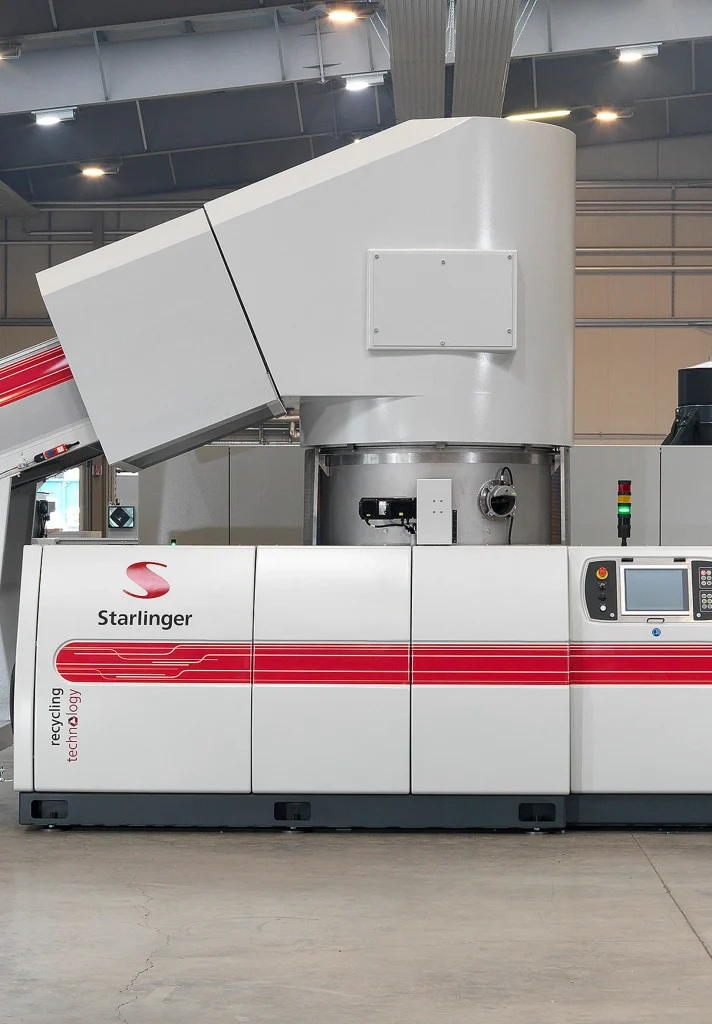
From pellet to pallet, every conversion step either adds value or adds variability. VidePak’s line philosophy is simple: put variability where it can be measured and controlled, eliminate it where it cannot. Equipment matters. Austrian Starlinger platforms provide uniform PP tapes and woven fabric; German W&H (Windmöller & Hölscher) presses, coaters, and bottomers deliver tight registration and coat weights. Together they compress the defect spectrum that plagues Printed Woven Bags.
- PP resin: MFR matched to draw ratio; ash/moisture checks; UV packages validated for yard dwell.
- BOPP film: dyne level verification (print promptly or re‑treat); haze and gloss checks; gauge consistency.
- Adhesives: mix ratio control; peel coupons; food/odor declarations where relevant.
- Ink & topcoat: viscosity windows; lightfast ratings; adhesion tests on actual film/fabric.
- Threads/loops: tenacity and colorfastness certificates; lot serialization into ERP.
- Tape extrusion & weaving (Starlinger): stable tape width lowers loom stops; pick density controls porosity.
- Lamination: solventless PU with precise coat weights; nip pressure and temperature tuned to avoid bubbles/orange‑peel; staged cure before print.
- Printing (W&H presses): register cameras, spectrophotometric ΔE monitoring, disciplined anilox/engraving sets.
- Topcoating: matte or gloss; COF tuning; cure to target crosslink; retain samples for rub tests.
- Cutting, gusseting, sewing/heat sealing: servo length control; seam architecture optimized for SWL and appearance.
- Valve/handle integration: geometry fit to packers; hole punches aligned to artwork to avoid visual defects.
| Gate | Typical Checks | Why It Matters |
|---|---|---|
| Mechanical | Fabric tensile, seam pull, base burst, 1.2 m drop (five faces) | Route survivability |
| Print & surface | ΔE, gloss/haze, Sutherland rub, tape adhesion | Shelf presence and barcode readability |
| Friction | Static/kinetic COF on outer face | Pallet safety versus conveyor flow |
| Environment | UV weathering, humidity cycling, freeze‑thaw | Outdoor dwell and cold‑chain resilience |
What Is the Application of Printed Woven Bags?
Applications map to two dimensions: the mechanical severity of the route and the brand visibility at point of sale. Printed Woven Bags prosper where both are high.
Rice, grains, sugar, flour, milk powder: high shelf visibility and moisture sensitivity. BOPP‑laminated prints enhance shelf appeal. For color‑coded warehouse picking using SOM formats, see this discussion on inventory color‑coding with sewn‑open‑mouth PP bags.
Cement additives, silica, lime: direct‑printed woven sacks with scuff‑resistant varnish; COF tuned for dusty yards. For related block‑format innovations, review future trends in block BOPP bags.
Granular fertilizers and catalysts: UV‑stabilized fabrics, matte topcoats that hide scuffs, and anti‑slip priority to avoid pallet walk. For paper‑valve hybrid standards, see paper valve woven bag quality standards.
Where aroma and oxygen barrier matter, kraft‑paper/foil combinations or PE‑coated valves play a role. Explore kraft paper aluminum foil quality control and custom printing for PE‑coated valve woven bags.
How VidePak Controls and Guarantees Quality
Assurance must be auditable, not aspirational. VidePak’s control plan for Printed Woven Bags follows four interlocking steps.
- Build to mature standards: methods aligned with ISO/ASTM/EN/JIS for tensile, seam, drop, friction, and print evaluation; calibrated instruments; occasional third‑party correlations.
- Use 100% virgin critical materials: virgin PP tapes for structural integrity; first‑line BOPP with certified dyne; tier‑one inks and adhesives with lot traceability. Recycled content enters only after capability study.
- Run on best‑in‑class equipment: Austrian Starlinger for tape/weaving/lamination foundations; German W&H for printing and converting; tight coat weights, register stability, and web handling that translate into fewer defects.
- Layer inspections and surveillance: incoming → in‑process → finished goods → route surveillance. SPC on gsm, dyne, COF, ΔE; acceptance sampling with critical/major/minor taxonomies; CAPA tied to trend signals.
| Metric | Mechanism | Impact |
|---|---|---|
| Lower reject rates | Fewer mis‑registration and adhesion failures | Less reprint waste, faster releases |
| Stable COF | COF‑tuned varnish with narrow variance | Safer pallets, fewer claims |
| Color within ΔE window | On‑press spectrophotometry + anilox discipline | Reduced brand disputes |
Quality Issues in Printed Woven Bags — Failure Modes and Root Causes
No amount of glossy photography can erase physics. Below are recurring defects in Printed Woven Bags, their likely causes, and how to neutralize them before they become customer complaints.
| Symptom | Likely Cause | Countermeasure |
|---|---|---|
| Registration drift | Variable tension; fabric growth; thermal expansion | Close‑loop register; controlled web temperature; splice decel profiles |
| Ghosting & mottle | Ink starvation; anilox mismatch; solvent imbalance | Re‑spec anilox; stabilize viscosity; staged drying |
| Poor ink adhesion | Dyne decay; contamination; under‑cured varnish | Re‑treat film; improve cleaning; verify cure; change ink vehicle |
| Scuffing/rub‑off | Insufficient topcoat; aggressive wrap tension | Increase coat weight; lower wrap force; matte micro‑texture |
| Pallet slippage | COF too low; dust on outer face | COF‑tuned varnish; housekeeping; interlayers for risky lanes |
Comprehensive Testing for Printed Woven Bags — From Color to COF
A credible testing program concentrates on the few measures that predict route survival and brand fidelity. It is concise enough to use daily and rigorous enough to satisfy auditors.
| Test | Target/Method | Purpose |
|---|---|---|
| Color difference (ΔE) | ΔE ≤ 2.0 vs master; on‑press spectro | Brand fidelity |
| Gloss/Haze | 60° gloss; haze per spec | Aesthetic control |
| Rub resistance | Sutherland counts (dry/wet) | Abrasion survival |
| Tape adhesion | Cross‑hatch/tape on print area | Ink anchorage |
| Test | Target/Method | Purpose |
|---|---|---|
| Dyne level (BOPP) | ≥38 dynes fresh (re‑treat if <36) | Print wetting & adhesion |
| Lamination peel | ≥2 N/15 mm (spec dependent) | Bond integrity |
| COF (outer face) | μs 0.40–0.55; μk 0.35–0.50 | Pallet stability |
| Drop (filled) | 1.2 m, five faces | Route survivability |
System Thinking — From Sub‑Problems to an Integrated Specification
A robust program for Printed Woven Bags begins by decomposing the problem, solving each piece, and then recomposing into a small, auditable spec.
Tighter ΔE requires slower runs; uptime demands speed. Solve with a color library that pairs each brand hue with standard anilox/engraving; trigger spectral feedback only when deviation exceeds a smart threshold.
Heavier varnish costs; scuffs cost more. Use matte micro‑textures to hide scuffs at lower coat weights while maintaining rub counts, validated by Sutherland equivalence.
High COF secures pallets; too high stalls conveyors. Specify μ windows and verify per lot; deploy slip sheets only for risky lanes.
Full cure slows shipping; under‑cure risks rub‑off. Stage cure under controlled climate; test peel and rub at 12/24 h gates and release only on pass.
“Printed Woven Bags — BOPP 25 μm matte laminated to PP woven 100 gsm (Starlinger); solventless PU coat weight 2.0 g/m²; printed 6‑color flexo (W&H) with ΔE ≤ 2.0; matte topcoat with COF μs 0.48 ± 0.03; Sutherland ≥ 200 dry rubs; UV stabilized for 6 months yard life; seam pull ≥ spec; drop pass at 1.2 m (five faces). Lot documents and QR to tests included.”
Storage and Handling Logic for Printed Woven Bags
A great print ruined in storage is a preventable loss. Climate, stacking, FIFO, and housekeeping convert good specs into good outcomes.
- Climate: keep RH 45–65% and moderate temperature; extreme humidity undermines dyne and adhesive cure.
- Stacking: avoid over‑wrap tension that crushes corners; use edge boards for tall stacks.
- FIFO: rotate treated/laminated rolls quickly to minimize dyne decay.
- Housekeeping: dust on outer faces lowers COF predictability and scratches varnish under wrap.
Economics of Quality — The Practical Case for Discipline
The cost of quality for Printed Woven Bags is dominated by reprints, returns, and pallet incidents—not by the price of ink. A small ΔE drift can force full‑lot rework; a pallet walk can erase the margin of an entire order. Investing in register cameras, spectral controls, and COF testing pays for itself.
| Lever | Mechanism | Economic Impact |
|---|---|---|
| Register cameras | Reduce mis‑registration waste | Fewer reprints; faster approvals |
| Spectral color control | Hold ΔE within window | Reduced brand disputes |
| COF‑tuned varnish | Stabilize pallet friction | Avoided losses and claims |
| Lamination OEE | Better bond uniformity | Less orange‑peel, lower ink waste |
Case Studies (Worked Examples)
Short, concrete scenarios demonstrate where parameters shift the outcome.
BOPP 25 μm gloss // PP woven 100 gsm; 8‑color gravure; gloss topcoat; COF μs 0.45. Early scuffing on corners resolved by switching to matte micro‑texture and increasing corner radii—rub counts improved by 60%.
BOPP matte // PP woven 120 gsm; 6‑color flexo; μs 0.50 topcoat. Pallet walk during summer shipments cured by narrowing the COF window and adding housekeeping—claims dropped to zero next quarter.
BOPP gloss // PP woven 80 gsm; 7‑color flexo; high white coverage. ΔE drift solved by a brand color library with fixed anilox sets—ΔE stabilized within 1.5.
Cross‑Technology Insights and Related Reading
Printed woven programs often intersect with jumbo formats, FFS automation, and alternative laminate stacks. For high‑load bulk transport, review FIBC jumbo bags for chemicals. When transitioning to in‑line automation, see form‑fill‑seal woven bags for packaging efficiency. And for block‑format print systems evolving toward shelf‑ready graphics, study block‑BOPP market adaptations.
Frequently Asked Questions (Engineer’s Edition)
Do glossy films always scuff more? Not always. Gloss surfaces make scuffs more visible; a matte micro‑texture often hides them while maintaining rub counts. The chemistry of the topcoat matters more than sheen alone.
Is direct print cheaper than BOPP lamination? Often yes for simpler graphics. When high coverage and photo areas are needed, BOPP‑laminated prints may lower total defects and cost.
What’s the single most predictive metric of pallet safety? The COF window measured on the finished outer face of the actual lot, aligned with wrap SOPs.
Can automated warehousing change the print stack? Yes. Automated scanning wants consistent barcode contrast and finish that avoids glare; matte topcoats and color discipline pay dividends.
Keyword Strategy — Primary, Synonyms, and Long‑Tail Phrases
Primary keyword throughout: Printed Woven Bags. Secondary synonyms used where they add clarity: Printed PP Woven Bags, Printed BOPP Woven Bags, Custom Printed Woven Bags, Printed Woven Sacks. Long‑tail variants used contextually: Printed BOPP Woven Bags with matte anti‑slip, Printed PP Woven Bags for fertilizers, custom printed woven bags with UV stabilization, and photo‑quality printed woven sacks for retail.
November 26, 2025
- What Are Printed Woven Bags?
- The Materials of Printed Woven Bags — Composition, Properties, Costs, and Roles by Layer
- What Are the Features of Printed Woven Bags?
- What Is the Production Process of Printed Woven Bags?
- What Is the Application of Printed Woven Bags?
- How VidePak Controls and Guarantees Quality
- Quality Issues in Printed Woven Bags — Failure Modes and Root Causes
- Comprehensive Testing for Printed Woven Bags — From Color to COF
- System Thinking — From Sub‑Problems to an Integrated Specification
- Storage and Handling Logic for Printed Woven Bags
- Economics of Quality — The Practical Case for Discipline
- Case Studies (Worked Examples)
- Cross‑Technology Insights and Related Reading
- Frequently Asked Questions (Engineer’s Edition)
- Keyword Strategy — Primary, Synonyms, and Long‑Tail Phrases
In this article, we address a critical concern for global buyers: How can businesses ensure the durability, print fidelity, and cost-efficiency of printed woven bags? The answer lies in three pillars: [1] stringent raw material controls, [2] precision-driven production, and [3] multi-layered testing protocols. Backed by VidePak’s 30+ years of expertise and ISO-certified processes, we provide actionable insights, validated data, and case studies to empower informed purchasing decisions.
1. The Backbone of Quality: VidePak’s Supplier and Material Vetting
1.1 Supplier Audits and ISO Compliance
VidePak’s printed woven bags begin with globally certified raw materials. Suppliers undergo a rigorous three-tier evaluation:
- ISO Certification: Mandatory ISO 9001 (Quality Management) and ISO 14001 (Environmental Compliance) certifications ensure systemic reliability.
- Technical Capacity: Audits verify production scalability (e.g., minimum 10,000 MT/year PP/PE output) and alignment with ASTM D882 (tensile strength) and EN 15534 (chemical resistance) standards.
- Market Reputation: Third-party platforms like Alibaba and industry forums are analyzed for supplier defect rates (<1%) and delivery punctuality (>98%).
For instance, VidePak partners with BASF and Sinopec for premium-grade PP granules, ensuring consistent MFI (Melt Flow Index) values of 4–8 g/10 min (ISO 1133).
1.2 Incoming Material Inspections
Every batch undergoes:
- MFI Testing: Ensures polymer flow consistency (critical for extrusion uniformity).
- Tensile Strength Analysis: PP fabrics must achieve ≥30 N/cm² (machine direction) and ≥25 N/cm² (cross direction).
- Visual Defect Screening: Automated cameras detect pinholes or misweaves, maintaining a rejection rate of <0.3%.
Case Study: In 2024, VidePak rejected 8 batches (0.5% of total) due to MFI deviations, preventing $320K in potential client losses.
2. Precision Manufacturing: Technology and Customization
2.1 Advanced Production Infrastructure
With 100+ Starlinger circular looms and 30+ gravure printing machines, VidePak delivers:
- Print Accuracy: Pantone color matching (ΔE ≤1.5) and 8-color printing capabilities.
- Customization: MOQ of 50,000 units, supporting UV-resistant BOPP lamination and anti-static coatings.
| Parameter | Standard Value | Testing Method |
|---|---|---|
| Fabric Density | 90–120 g/m² | ISO 536:2019 |
| Print Abrasion Resistance | ≥4,000 cycles (Grade 3) | ASTM D5264 |
| Seam Strength | ≥65 N/cm | EN ISO 13935-2 |
| Load Capacity | 25–50 kg | ISTA 3A |
2.2 Sustainability Initiatives
- Recycled Content: Up to 30% post-industrial PP reuse in non-food-grade bags.
- Energy Efficiency: Solar-powered extrusion lines reduce carbon footprint by 15%.
3. Multi-Stage Testing: Ensuring Zero Defects
3.1 Laboratory Testing Protocols
- Burst Strength: ≥300 kPa (ISO 2758) for cement and chemical packaging.
- Moisture Barrier: PE-coated variants achieve ≤3% water absorption (ASTM D6701).
- Accelerated Aging: 500-hour UV exposure tests simulate 2-year outdoor use.
3.2 Field Performance Validation
- Case Study: A Kenyan fertilizer supplier reported a 50% reduction in transit damage after switching to VidePak’s double-stitched valve bags.
4. FAQs: Addressing Buyer Concerns
Q1: How do your bags compare to competitors in terms of cost?
A1: VidePak’s printed woven bags cost $0.18–$0.25/unit (vs. industry average $0.30) due to vertical integration and bulk PP procurement.
Q2: Can bags withstand high-humidity environments?
A2: Yes. PE-laminated options maintain ≤5% moisture uptake at 85% RH for 72 hours.
Q3: What is the lead time for custom designs?
A3: 15–20 days (30% faster than market average), supported by in-house design teams.
5. Conclusion
Printed woven bags are pivotal for brands prioritizing durability, branding, and sustainability. VidePak’s ISO 9001-certified workflows and 100% traceable raw materials guarantee unmatched reliability. For bulk orders or technical consultations, contact us at info@pp-wovenbags.com.
References
- VidePak Corporate Profile (2025).
- ASTM International Standards for Polypropylene Testing (2024).
- Alibaba Supplier Audit Reports (2024).
External Links
- Explore our innovations in BOPP laminated woven bags for enhanced UV resistance.
- Learn about sustainable practices in custom printed woven bags.
Contact
Website: https://www.pp-wovenbags.com/
Email: info@pp-wovenbags.com
Data validated as of March 2025. Specifications subject to customization.