
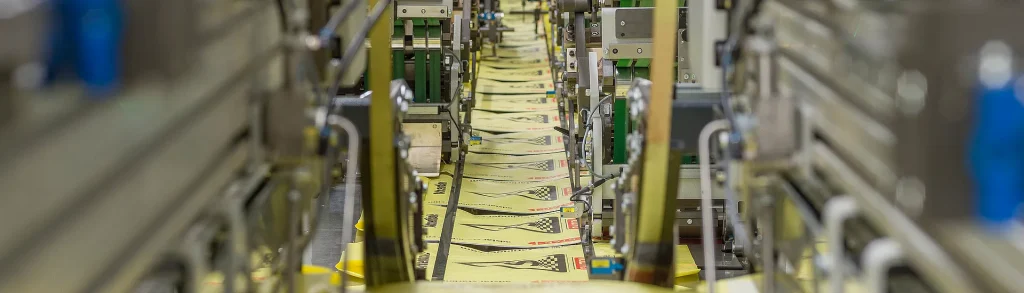
What are Printed Woven Bags?
At a glance, a bag is a simple vessel. Look closer and it becomes a coordinated system of materials, processes, and decisions. Printed Woven Bags are engineered packaging solutions that merge the mechanical strength of woven polypropylene with high-quality printing and functional lamination or lining. They are simultaneously structural, communicative, and protective. They carry weight and message. They travel in containers and communicate on shelves. That dual role—logistics performer and brand canvas—is what makes them strategically valuable.
In short: Printed Woven Bags combine woven PP strength with printed surfaces and optional liners or laminates to deliver packaging that protects product, improves handling efficiency, and projects brand identity in one integrated unit.
This document expands the core ideas found in the source article and builds them into a practical, systems-oriented manual. It extracts product names and keywords, digs into materials and technical trade-offs, lays out step-by-step production and quality protocols, and presents decision frameworks and financial reasoning that procurement, engineering, and marketing teams can use when specifying packaging for real-world supply chains.
Keyword set and product aliases
To orient readers and searchers, the primary keyword is Printed Woven Bags. Close variants and long-tail phrases used in commerce and in the referenced article include:
- Printed PP Woven Bags
- Printed Woven Sacks
- Custom Printed Woven Bags
- Multi-color Printed Woven Bags
- BOPP Laminated Printed Woven Bags
These terms are not accidental synonyms; they point to distinct design choices: substrate, print method, lamination, and intended end-use. The rest of the article keeps Printed Woven Bags at center stage while using related terms to clarify options.
Material composition and functional roles
A printed woven bag is a multi-layer assembly. Each layer contributes functionality and cost. Choosing the right materials is an engineering exercise that balances strength, barrier performance, print fidelity, recyclability, and price.
Most printed woven solutions use PP tapes woven into fabric. The woven core provides tensile strength, tear resistance, and seam reliability. Variables to control include tape width, orientation, and fabric grammage (typically 80–160 g/m²). These factors govern load capacity and puncture resistance which are critical for heavy loads and long transit.
For high-quality graphics, BOPP film often forms the printable face. BOPP provides gloss or matte finishes, protects inks, and increases abrasion resistance. It also influences perceived value at retail. But bonding polymer film to a woven substrate can complicate recycling unless mono-material strategies are used.
Inner liners—usually PE or co-extruded films—manage moisture, odor, and fine-powder retention. The liner thickness and film composition are chosen to meet MVTR targets and product compatibility. Metallized films are used when aroma retention is critical.
Additives, adhesives, inks, and coatings complete the specification. Prudent buyers insist on food-contact COAs when liners or inks have potential product contact. They also consider end-of-life: mono-polymer stacks are easier to recycle than mixed polymer laminates.
Key features and how they translate to value
Features are only meaningful if they map to outcomes: fewer claims, faster filling, better shelf impact, or lower total cost. Below we unbundle the principal capabilities of Printed Woven Bags and link each to practical implications.
Strength, print quality, barrier range, handling efficiency, compliance, and sustainability trade-offs are the core themes that buyers must balance.
Strength and handling
Woven PP cores resist tear and puncture, enabling high filled weights and long-distance transport. Structural reinforcements—reinforced corners, higher stitch counts, or sewn-in tapes—reduce seam failures and lower freight claims. This is not cosmetic: the mechanical backbone is what prevents product loss in the first place.
Print fidelity and brand communication
A well-printed bag is a marketing tool. Rotogravure can deliver near-photographic quality; flexo is cost-effective for simpler art. Color management (spectrophotometry, ΔE controls) ensures batch-to-batch consistency so that color drift does not erode brand trust. High-fidelity print also reduces rework and minimizes the risk of mislabeling in regulated markets.
Barrier performance and product protection
Liners and laminates create a continuum of barrier options. Dust containment is a basic requirement; low MVTR (<3 g/m²/day) may be necessary for hygroscopic powders. Metallized or multi-layer films protect volatile compounds and oxygen-sensitive ingredients. Effective barrier choices directly preserve product value and reduce customer claims.
Operational efficiency and fill-line compatibility
Valve designs, consistent dimensions, and anti-slip finishes can materially increase processing speed and improve pallet stability. Reduced fill-line stops, fewer bag jams, and predictable pallet patterns translate to labor savings and lower per-unit handling costs.
Regulatory readiness and food safety
Selecting food-grade resins, low-migration inks, and certified adhesives enables cross-border trade and reduces regulatory friction. Documentation—COAs, migration test reports, and processing logs—is part of the product specification and is requested by major retailers and food processors.
Sustainability trade-offs
Sustainability is multidimensional: material recyclability, product preservation (avoiding waste), and supply-chain carbon intensity all matter. Mono-material designs (PP woven + PP liner + PP adhesives) enable simpler mechanical recycling. Mixed-material laminates can increase shelf life but may require chemical recycling or specialized facilities. The choice depends on the product’s value, the distribution geography, and available recycling infrastructure.
End-to-end production process: control points and best practices
Producing consistent Printed Woven Bags is an exercise in upstream control and downstream validation. Below is a structured production narrative with explicit control points and suggested acceptance criteria.
Pre-production: supplier qualification and incoming inspection
Begin by qualifying suppliers. Demand COAs, verify food-contact status, and confirm capacity and technical competence. Incoming tests should include:
- PP resin MFI and density checks against spec.
- Film and BOPP thickness verification (micron tolerance ±2%).
- Kraft or paper grammage verification for paper-faced constructs.
- Random tensile testing on slit tapes to confirm strength.
- Visual inspection for contaminants, gel, or color variation.
Store raw materials under controlled conditions and maintain full batch traceability. Assign lot IDs immediately and integrate them into production tracking systems.
Core manufacturing steps and control metrics
The primary manufacturing chain includes extrusion and slitting, weaving, printing, lamination, conversion, and finishing. Key control metrics include tape width tolerance, weave density, registration accuracy, lamination bond strength, and seam strength.
- Extrusion and slitting: control slit width to ±0.05 mm and monitor tape draw ratio for consistent tensile properties.
- Weaving: maintain warp/weft tension setpoints and monitor pick count. Use online gauges to detect selvedge defects.
- Printing: use densitometry and spectrophotometry. Implement color targets and tolerances (ΔE ≤1.5 for critical colors).
- Lamination: control temperature and adhesive feed; conduct peel-strength tests (e.g., minimum 2 N/cm peel under specified conditions).
- Conversion: confirm valve positioning within ±3 mm and stitch density per customer specification.
High-precision equipment from established manufacturers reduces variance. Machines that offer digital control of tension, temperature, and registration produce more repeatable results and higher first-pass yields.
Conversion and finishing
Conversion operations—cutting, forming, stitching, and valve insertion—are where tolerances matter most. Misaligned valves or inconsistent stitch patterns show up as leaks or seam failures at the fill line. Use automated fixtures for consistent valve pockets and stitch patterns and implement inline vision checks where possible.
Post-production testing and acceptance
Finished goods checks should be statistically valid and include:
- Dimensional gauging for length, width, gusset, and valve alignment.
- Seam pull tests (ASTM equivalents), puncture resistance, and drop tests.
- MVTR testing to confirm liner performance under set temperature and humidity.
- Print durability checks—crock testing and scuff resistance.
- AQL-based lot acceptance with documented lot traceability.
Applications and where Printed Woven Bags add the most value
Printed woven formats are used across agriculture, food ingredients, animal feed, construction materials, chemicals, and retail specialty products. Their combination of strength and communicative surface makes them versatile.
Agriculture and grains
For flour, rice, and seed, printed woven bags protect against moisture and handling damage, while allowing powerful branding for bulk or retail segments. Valve-style bags streamline high-speed filling of powders with minimal dust.
Animal feed and pet food
Retail brands benefit from printed laminated faces that communicate quality, while the woven core ensures the package survives pallet racking and transport. Proper MVTR control preserves crunch and sensory quality.
Construction and industrial powders
Cement, mortar, and gypsum use heavy-duty printed woven sacks that withstand yard handling. Print also carries regulatory and technical information required by industrial customers.
How quality is controlled: a step-by-step supplier program
A reliable supplier program is standards-driven, transparent, and evidence-based. Below is a stepwise quality program that aligns with major standards and best practices.
- Standards-driven specification: Map requirements to measurable tests and acceptance criteria (ISO, ASTM, EN, JIS).
- Verified raw materials: Use COAs and supplier audits; prefer virgin resins for food-contact lines unless recycled content is specifically qualified.
- Best-in-class equipment: Invest in precision weaving, high-registration printing, and lamination equipment to reduce variance.
- Layered testing: incoming checks, in-process SPC, and final AQL sampling.
- Pilot validation: run small batches in the customer’s fill environment to validate compatibility.
- Certification & audits: maintain ISO 9001, and food-safety certifications where applicable; invite third-party audits.
- Continuous improvement: use Cp/Cpk monitoring and CAPA procedures for recurring issues.
Print engineering: color control and durability
Print quality is a differentiator. For brand-critical panels, adopt closed-loop color management: ICC profiles, spectrophotometric measurement, and ΔE thresholds. Use gravure cylinders or engraved plates calibrated for the substrate, monitor dot gain, and verify adhesion and crock resistance with standardized tests.
Technical specification table
The table below consolidates typical parameters and decision notes. Use it as a starting point and tailor to product and lane specifics.
| Parameter | Typical Range | Notes |
|---|---|---|
| Fabric grammage (PP woven) | 90–150 g/m² | Select by load and puncture risk |
| Outer print surface | BOPP laminated film or direct print | BOPP for high-fidelity branding |
| Print process | Rotogravure, Flexo, Digital | Choose by volume and color fidelity |
| MVTR target | <3 g/m²/day for hygroscopic goods | Measured under set conditions |
| Seam strength | Customer-specific (e.g., >30 N/cm2) | Key to prevent field seam failures |
Systematic decision framework and decomposition
A systematic approach separates the overall problem into manageable subproblems and integrates the solutions. Use this decomposition to create measurable acceptance criteria and design pilots.
Subproblem: product protection
Analyze water activity, powder fineness, volatility, and susceptibility to abrasion. Choose liner thickness and laminate type based on quantified MVTR and retention needs.
Subproblem: manufacturing compatibility
Confirm that bag geometry and valve positions match filler mechanics. Pilot at packing speed to reveal issues such as misfeeds or valve misalignment.
Subproblem: logistics and palletization
Model pallet patterns and stacking compression. Adjust bag stiffness, gusset design, and anti-slip finishes to increase pallet density and reduce movement during transport.
Economics: total cost and a simple ROI example
Packaging decisions must be economic. A small increase in unit cost can pay back many times over if it prevents spoilage, reduces freight claims, or increases fill-line efficiency. Consider this concise example to evaluate the return on an upgrade.
If a processor ships 100,000 25 kg bags annually and experiences a 2% loss due to moisture damage, then reducing that loss to 0.5% with an upgraded bag can yield significant savings that outweigh a modest per-bag premium.
Common pitfalls and troubleshooting
Typical failures stem from mis-specified materials, poor process control, and inadequate pilot testing. The most common problems and fixes are:
- Color drift: tighten color management and use spectrophotometric checks.
- Delamination: verify adhesion systems and lamination parameters with peel testing.
- Seam failure: increase stitch density or choose higher tensile thread.
- Poor pallet stability: add anti-slip coatings or adjust grammage and gusset design.
Practical checklist and pilot template
- Characterize product: water activity, particle size, volatility.
- Define logistics lane: climate, transit time, stacking rules.
- Specify material stack and print expectations.
- Run pilot batch (1,000–5,000 bags) in actual packing environment.
- Measure KPIs: fill speed, leak rate, pallet performance, print durability.
- Iterate and scale once KPIs meet acceptance criteria.
Further reading and practical references
For additional perspectives and specialized variants of woven packaging, consider these resources and product families:
- Lightweight woven bags and fine-filament innovations
- Printed BOPP laminated woven bag strategies for efficiency
- Multi-wall woven bags in construction waste handling
- Laminated kraft-paper solutions and sustainability
- Valve bag developments and filling-line integration
- FIBC bulk solutions and material handling efficiency
- FFS roll woven bags and form-fill-seal design considerations
Integration and closing note
A well-specified Printed Woven Bag is the result of aligning product needs, manufacturing capability, and market objectives. It is not a single choice but a sequence of linked decisions. Treat specification as an experiment: design with measurable criteria, pilot in the intended environment, and scale with SPC guardrails. In doing so, packaging becomes not just protection but an operational lever that reduces cost, preserves product, and amplifies brand value.
November 28, 2025
- What are Printed Woven Bags?
- Keyword set and product aliases
- Material composition and functional roles
- Key features and how they translate to value
- End-to-end production process: control points and best practices
- Applications and where Printed Woven Bags add the most value
- How quality is controlled: a step-by-step supplier program
- Print engineering: color control and durability
- Technical specification table
- Systematic decision framework and decomposition
- Economics: total cost and a simple ROI example
- Common pitfalls and troubleshooting
- Practical checklist and pilot template
- Further reading and practical references
- Integration and closing note
VidePak’s printed woven bags reduce packaging waste by 30%, achieve ISO 9001-certified production consistency, and deliver tensile strengths exceeding 40 N/cm² through rigorously controlled polypropylene (PP) sourcing and Starlinger’s precision manufacturing. With 17 years of expertise and a global clientele spanning 50+ countries, VidePak combines cutting-edge material science with operational excellence to redefine efficiency in industrial and retail packaging.
1. The Foundation of Efficiency: Material Quality Control
The performance of woven bags hinges on the integrity of raw materials. VidePak’s four-tier quality assurance system ensures every gram of PP resin meets global standards, directly translating to 15% higher durability than industry averages.
1.1 Supplier Vetting and Strategic Partnerships
- Certification Audits: Suppliers must hold ISO 9001, ISO 14001, and Oeko-Tex certifications, with technical capabilities verified through third-party audits.
- Strategic Alliances: Long-term contracts with BASF, Sinopec, and Yangzi Petrochemical secure premium-grade PP/PE granules, stabilizing costs and ensuring traceability.
Case Study: A 2024 audit rejected 3 suppliers for non-compliant MFI (Melt Flow Index) variances >5%, safeguarding batch consistency for a multinational fertilizer client.
1.2 Incoming Material Inspection
- Testing Protocols:
- MFI Analysis: Ensures resin fluidity aligns with ASTM D1238 (target range: 25–35 g/10min).
- Tensile Strength: Samples tested per ISO 527-2, with minimum thresholds of 35 N/cm² for PP.
- UV Stability: Accelerated weathering tests (QUV Chamber) validate 18-month outdoor resistance.
- Statistical Sampling: ISO 2859-1 (AQL 1.5) governs lot acceptance, with defective rates maintained below 0.12% since 2022.
2. Engineering Efficiency: From Granules to Finished Bags
VidePak’s vertically integrated production chain minimizes waste and maximizes throughput:
2.1 Advanced Manufacturing Infrastructure
- Starlinger Technology: 100+ circular looms produce 14 threads/inch weave density, achieving ±0.2 mm dimensional accuracy.
- Printing Precision: 30+ rotogravure machines support 8-color printing at 1200 dpi, replicating Pantone codes with ≤1% deviation.
2.2 Customization for Logistics Optimization
- Pallet-Friendly Designs: Standardized sizes (e.g., 100 × 60 cm) reduce container void space by 20%.
- Reinforcement Features:
- Anti-Slip Coatings: Coefficient of friction >0.5 (tested per ASTM D1894) prevents pallet slippage.
- Double-Stitched Seams: Withstand 50 kg loads at 45° angles, critical for automated handling systems.
3. Performance Metrics: Bridging Quality and Application Needs
| Parameter | VidePak Specification | Industry Benchmark | Key Benefit |
|---|---|---|---|
| Grammage (GSM) | 90–150 (±1.5% tolerance) | 80–140 | Balances strength and cost |
| Tensile Strength | ≥40 N/cm² | ≥30 N/cm² | Resists bursting during transit |
| Print Durability | 5/5 crockmeter rating | 4/5 | Maintains branding in harsh climates |
| Moisture Barrier | MVTR <3 g/m²/day | 5–8 g/m²/day | Protects hygroscopic goods |
4. FAQs: Addressing Procurement Concerns
Q1: How does VidePak ensure color consistency across batches?
A: Our Heidelberg color management system calibrates printers hourly, achieving ΔE ≤1.5 (per ISO 12647-2).
Q2: Can bags withstand -20°C freezer storage?
A: Yes. PP resins with high crystallinity (≥70%) prevent brittleness, tested per ASTM D746.
Q3: What’s the MOQ for custom-printed designs?
A: 5,000 units, with 15-day lead times leveraging 30+ dedicated printing lines.
Q4: Are recycled materials compatible with food-grade standards?
A: Our 30% post-consumer PP bags meet FDA CFR 21 via triple-wash purification processes.
5. Why Partner with VidePak?
- Global Compliance: Certifications include BRCGS, EU 10/2011, and FSSC 22000 for food contact.
- Scalability: 16 extrusion lines and 100+ looms enable 18M bags/month capacity.
- Sustainability: 95% material utilization rate via AI-driven cutting algorithms.
For insights into BOPP laminated woven bags for moisture-sensitive products, explore our technical guide on barrier enhancement. Learn how valve bags optimize filling speeds for powdered commodities.
References
- VidePak Official Website: https://www.pp-wovenbags.com/
- Email: info@pp-wovenbags.com
- Industry Standards: ASTM D5265, ISO 9001, EU Regulation 10/2011.
Anchor Links Integrated: