
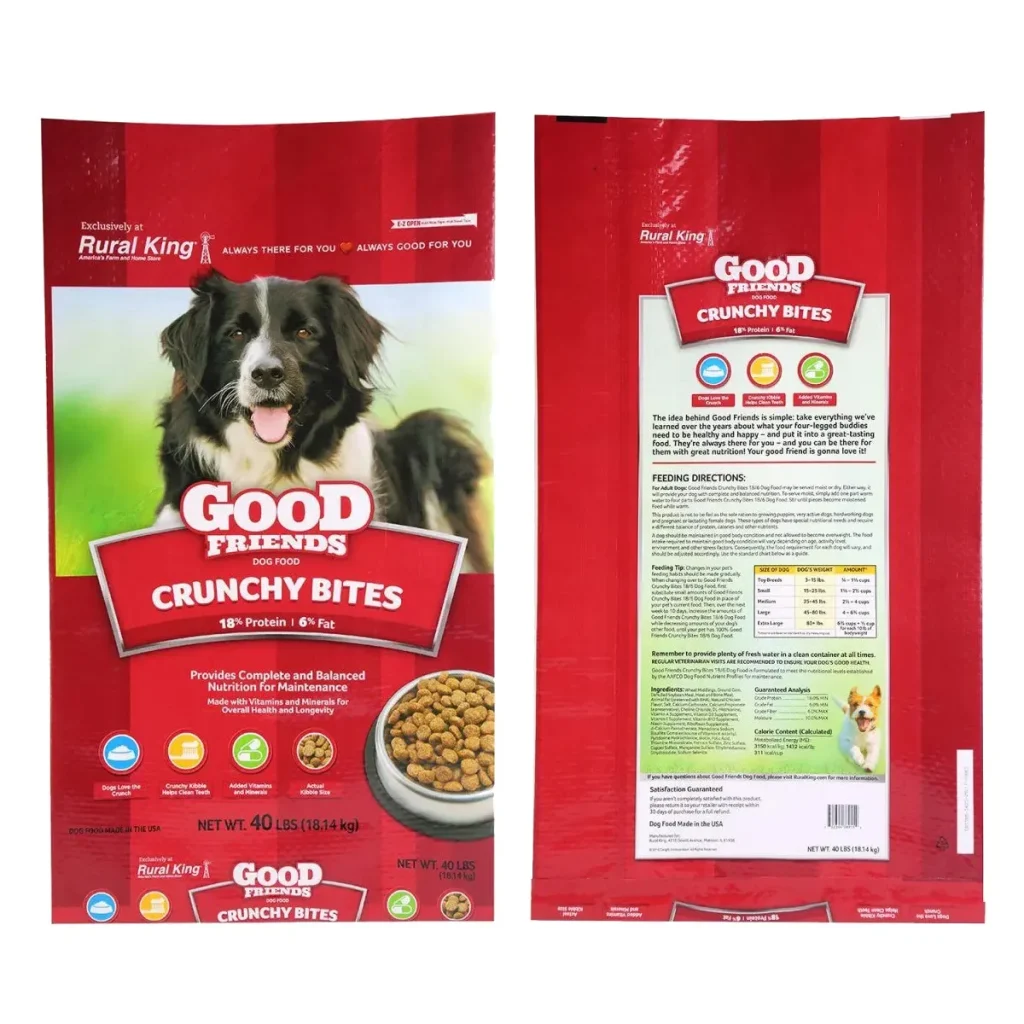
What Are Lightweight Woven Bags and Why Do They Matter in Agricultural Packaging?
When agricultural goods move, packaging becomes the silent negotiator between what farmers harvest and what markets finally accept. One weak seam, one poorly controlled tape, one bag that “looks fine” but fails during stacking—and the loss is no longer a few grams of plastic; it becomes a few kilograms of spilled product, a few hours of rework, a few angry phone calls, and a few damaged relationships. That is precisely why Lightweight Woven Bags have gained such relevance. They are designed to carry real weight while using less material, to stay practical while staying protective, and to keep logistics efficient without gambling with reliability.
A common misconception is that “lightweight” is a synonym for “thin,” and “thin” is a synonym for “weak.” But do we evaluate a bridge by the amount of steel alone, or by the way the steel is shaped, joined, and supported? Packaging works the same way. In Lightweight Woven Bags, strength is engineered through oriented polypropylene tapes, balanced weaving, and controlled conversion. You do not simply remove grams; you redistribute capability.
Reader shortcut: If you remember one idea, remember this: Lightweight Woven Bags are not a single item; they are a configurable system. The fabric, the seam, the surface treatment, and the optional liner must work together, or they will fail separately.
In the market, buyers use several names for the same product family. The labels differ by region, by industry, and sometimes by purchasing tradition. The function, however, remains consistent.
- Lightweight Woven Sacks
- Lightweight PP Bags
- Lightweight Polypropylene Woven Bags
- Lightweight Woven Packaging Bags
- Lightweight Woven Sacks for Agricultural Products
Throughout this text, Lightweight Woven Bags remains the central keyword, and you will also see closely related expressions—because procurement teams rarely search with one identical phrase, and operational teams rarely think in one single label.
How the Agricultural Supply Chain Shapes the Design of Lightweight Woven Bags
Agriculture is not a single environment. It is a sequence of environments. Grain may start dry on the farm, then sit in a humid warehouse, then travel inside a container with day–night temperature cycling, then wait again at a port. Flour may be filled at high speed, stacked tall, vibrated for hours, and finally handled manually in small shops. Fertilizer may see chemical exposure, dust generation, and rough loading. Each stage adds a different kind of stress, and stress does not ask permission.
Farm & initial storage
Dust, sun exposure, handling variability. A bag may sit outdoors longer than planned. UV stability becomes a real requirement, not a marketing claim.
Filling & stacking
Impact loads, seam fatigue, and compression. If a bag fails here, the loss is immediate and visible—spillage, downtime, cleanup.
Transport & warehousing
Vibration, humidity swings, and abrasion. Problems can develop slowly, like a whisper that becomes a shout at the destination.
This is why the correct way to talk about Lightweight Woven Bags is not “How low can we push the weight?” but “How intelligently can we control performance?” It is a question of engineering priorities. It is also a question of accountability. Because when a bag breaks in transit, who pays? The bag manufacturer? The commodity trader? The logistics provider? The retailer? The truth is uncomfortable: often everyone pays, in different forms.
So a practical design philosophy emerges: reduce material where it is redundant, but reinforce where failure is costly. Reduce grams, yes—but not at the seam, not at the bottom fold, not at the points of concentrated stress. In other words: less mass, more method.
The Material System of Lightweight Woven Bags: What They Are Made Of, and What Each Part Does
To describe Lightweight Woven Bags accurately, it helps to stop thinking in “a bag” and start thinking in “a system.” A system has components, interfaces, and failure modes. The main structural material is polypropylene, but final performance depends on how that polypropylene is processed and how it cooperates with optional layers like coatings, laminations, and liners.
Material anatomy at a glance
- Woven PP tape fabric: the load-bearing skeleton
- Optional coating or lamination: barrier and print surface control
- Optional PE liner: enhanced moisture barrier and hygiene support
- Thread, seams, and closures: where many real-world failures start
- Ink system: brand clarity, compliance labeling, traceability marks
Polypropylene is widely used in packaging because it offers a strong balance of mechanical performance, chemical resistance, and processability. But polypropylene is not magical by itself. It becomes high-performing through controlled extrusion and stretching, where polymer chains are oriented. This orientation is why Lightweight Polypropylene Woven Bags can remain strong even when they are designed with reduced mass.
Additives are often misunderstood. Some buyers treat additives as “extras.” In reality, additives are risk controls. UV stabilizers protect against sunlight. Slip and anti-block agents help stacking and high-speed bag separation. Anti-static packages can reduce dust attraction in certain powder applications. For food-related packaging like flour or rice, the additive strategy must align with relevant food-contact expectations, because packaging is not just logistics; it is also safety, reputation, and compliance.
Surface options—uncoated, coated, or laminated—change the bag’s relationship with the environment. A plain woven fabric allows micro-venting through weave gaps, which can help prevent trapped moisture in some scenarios. But for fine powders or moisture-sensitive goods, those same gaps may become leakage pathways or ingress channels. Here comes a necessary question: do you want air exchange, or do you want barrier? Sometimes you want both, but not in the same way. That is why the most effective specification is commodity-specific, route-specific, and storage-specific.
Small but important contrast: a laminated Lightweight Woven Packaging Bag behaves very differently from an uncoated Lightweight Woven Sack. One prioritizes barrier and printing clarity; the other may prioritize breathability and lower cost. Choosing without clarifying the commodity risk is like choosing shoes without checking the weather.
Finally, optional inner liners—often polyethylene—act as a second envelope. A liner can reduce moisture ingress, contain odors, and improve hygiene. Liners are especially relevant for fine powders, grains, or products that must remain clean through long storage and shipping. If you think of the outer woven layer as armor, the liner becomes the clean room inside the armor.
Why “Lightweight” Works: Orientation, Weave Balance, and the Hidden Physics Behind Lightweight Woven Bags
How can a bag become lighter without becoming weaker? The answer is neither mysterious nor superficial. It is physical. It is structural. It is controlled. In woven polypropylene packaging, the key transformation happens when polypropylene is extruded into tape and then drawn. Drawing aligns polymer chains, improving tensile properties. Then weaving turns those high-tensile tapes into a fabric that distributes load in two directions. Strength is not “added” afterward; it is created during conversion.
But here comes the tricky part: once you design a Lightweight PP Bag, the tolerance window narrows. In heavy structures, variation can hide. In lightweight structures, variation appears. A small drift in tape thickness can translate into a meaningful change in fabric strength. A small drift in weave density can change breathability and print behavior. A small drift in seam settings can become a large drift in real-world failure rates.
Parallel thinking: Lightweighting succeeds when you remove redundant material, not functional material; when you reduce waste, not safety; when you optimize structure, not hope.
Rhetorical question: If a bag is strong on paper but fails at the seam, is it truly strong? The answer is obvious, yet many specifications still ignore seam performance.
This is also where equipment capability matters. Precision in extrusion, drawing, weaving, lamination, printing, and converting is not a luxury. It is the foundation that keeps a lightweight design from turning into a fragile design. VidePak’s manufacturing strategy highlights high-grade machinery from Austria’s Starlinger and Germany’s W&H, which aligns with the logic of process stability: stable equipment supports stable output, and stable output supports consistent performance, and consistent performance supports trust.
Key Features of Lightweight Woven Bags: Not a Checklist, but a Set of Trade-Offs
A feature list is easy to write. A trade-off map is harder, but more honest. Agriculture forces trade-offs: breathability versus barrier, cost versus claims, printing beauty versus abrasion resistance, lightweighting versus safety margin. The best Lightweight Woven Sacks succeed because they manage these conflicts rather than pretending the conflicts do not exist.
Simple truth, repeated on purpose: A bag is judged not by its first hour, but by its last hour. Not by its appearance, but by its survival. Not by its grams, but by its outcomes.
Below are the most important feature areas, explained in operational language.
Strength-to-weight ratio
Oriented tapes and balanced weave deliver strength without simply adding thickness. This is the heart of Lightweight Polypropylene Woven Bags.
Moisture strategy
Uncoated woven fabric can breathe; coated/laminated structures can resist moisture and dust. The best choice depends on commodity behavior and route conditions.
Printability and clarity
Multi-color flexographic printing supports branding and sorting. Clear printing also reduces warehouse errors and improves traceability.
Sustainability is often discussed as if it were a single attribute. It is not. It is a chain of decisions. Source reduction through lightweighting is one lever. Durability and reuse are another. Cleaner production with less scrap is yet another. And end-of-life reality matters: if a bag is theoretically recyclable but practically contaminated and discarded, the theoretical benefit becomes invisible. Sustainability is not a slogan; it is a system, again.
To explore sustainability and responsibility across packaging categories, you may also read this internal resource on responsibility frameworks and compliance thinking: how compliance-driven packaging choices can strengthen operational resilience.
Production Workflow of Lightweight Woven Bags: From Resin Selection to Final Release
A Lightweight Woven Bag is not “made” in one step; it is assembled through a chain of controlled transformations. Each stage either preserves quality or introduces risk. Each stage either maintains consistency or amplifies variation. The production story, therefore, is a story of discipline: discipline in raw material choice, discipline in process settings, discipline in inspection, discipline in documentation.
Process flow card
Incoming materials → Tape extrusion → Drawing/orientation → Weaving → Optional coating/lamination → Printing → Cutting & conversion → In-process checks → Final testing → Packaging & shipment release
Upstream: raw material selection and incoming inspection
Upstream control begins with resin qualification. Melt flow consistency supports stable extrusion and drawing. Clean pellets reduce defect risk. Batch stability reduces variability in tape strength. In a lightweight design, the “buffer” is smaller, so incoming variation becomes more dangerous. Additives are verified against performance requirements and compliance needs. If a liner or film is used, thickness uniformity and seal performance must be checked. If ink is used, compatibility with the surface and abrasion resistance become critical. None of these are optional steps if the goal is reliable Lightweight Woven Packaging Bags.
Midstream: tape extrusion and drawing
Polypropylene is melted and extruded into a film, slit into tapes, and then drawn. Drawing is the moment when strength is created. Too aggressive drawing can produce brittle tapes; too gentle drawing can produce weak tapes. Temperature control, draw ratio control, and filtration stability are therefore central to quality. This is also where premium equipment can reduce drift and improve reproducibility, which is one reason why VidePak emphasizes its equipment sourcing.
Midstream: weaving
Tapes are woven into fabric on circular looms. Weave density, warp/weft balance, and width stability influence not only strength but also breathability, print performance, and lamination behavior. A fabric that drifts in density can become a bag that drifts in quality. When buyers ask for performance, what they are often asking for is consistency. Consistency comes from stable weaving.
Midstream: coating or lamination (when required)
For flour, rice, fertilizers, and many moisture-sensitive or dust-sensitive commodities, surface treatment becomes important. Coating can reduce leakage pathways; lamination can improve barrier properties and enhance printing clarity. But surface treatment introduces a new interface: bonding. If bonding fails, delamination becomes a visible defect and a functional defect. That is why temperature, pressure, and material compatibility matter. It is also why manufacturing knowledge must include both polymer behavior and converting behavior.
Midstream: printing and customization
Printing is not merely visual decoration. In agriculture, printing signals grade, origin, batch, warnings, and usage instructions. The more complex the distribution, the more valuable clear printing becomes. A blurred label can become a wrong pallet. A wrong pallet can become a costly claim. Ink selection, drying behavior, and register control are therefore operational concerns, not just marketing concerns.
Downstream: cutting, conversion, and seam engineering
Conversion turns fabric into finished Lightweight Woven Sacks for Agricultural Products. Cutting must be precise. Edges often require hot-knife sealing to prevent fraying. The bottom can be single-fold or double-fold. Closures can be stitched, heat-sealed, hemmed, or designed with specialized structures. The seam is the most common point of failure because it concentrates stress. Therefore seam settings, thread selection, stitch density, and seam geometry deserve the same seriousness as fabric tensile targets.
Practical insistence: If a supplier can only talk about fabric weight but cannot discuss seam strength, you are not buying a bag system. You are buying a partial promise.
How VidePak Controls and Guarantees the Quality of Lightweight Woven Bags
Quality assurance in packaging is often described as “testing.” Testing is necessary, but it is not sufficient. Quality is not a single gate; it is a series of gates. It is not a final check; it is a continuous loop. It is not a single document; it is a manufacturing culture. VidePak’s quality approach can be described through four connected pillars: standards alignment, virgin material discipline, premium equipment stability, and multi-stage inspection.
Pillar 1: Standards-driven production and testing (ISO / ASTM / EN / JIS)
Standards turn expectations into measurable methods. When production and inspection follow recognized frameworks, customers gain a shared language for tensile tests, seam performance, dimensional tolerance, and acceptance criteria. The point is not the acronym; the point is repeatability, traceability, and audit readiness.
Pillar 2: Virgin raw material strategy sourced from major suppliers
Virgin materials support mechanical consistency and reduce contamination risk, especially for food-related commodities. When a lightweight structure is engineered, resin consistency becomes even more important because there is less tolerance for drift.
Pillar 3: Top-tier equipment across the chain (Starlinger and W&H)
In lightweight designs, stability is safety. Equipment that supports precise extrusion, consistent weaving, controlled lamination, and stable printing reduces defects and improves lot-to-lot consistency. Process stability prevents surprises, and prevention is cheaper than correction.
Pillar 4: A complete inspection loop (incoming, in-process, final, and sampling)
- Incoming checks: resin, additives, films/liners, inks, documentation
- In-process checks: tape dimensions, fabric weight and density, lamination bond, print register, seam sampling
- Finished-goods checks: dimensions, weight, tensile behavior, seam strength, moisture-related performance where relevant
- Sampling discipline: stable sampling plans ensure defects are caught early, not discovered by customers later
For a deeper look into material integrity and how quality discipline is implemented in woven packaging, you may also review this internal resource: a practical explanation of quality control and material integrity in woven bag structures.
Applications of Lightweight Woven Bags: Matching Commodity Needs to Packaging Behavior
The same bag design cannot be perfect for every commodity, because commodities behave differently. Flour absorbs moisture and creates dust. Rice demands cleanliness and stable storage. Seeds have viability concerns and can benefit from controlled air exchange. Fertilizers may be chemically active and sensitive to moisture caking. Animal feed has its own odor and hygiene expectations. So how do you choose? Not by guessing. Not by copying. By matching risks to design variables.
Flour and fine powders
Priority: dust control, hygiene, moisture protection. Recommended direction: coated or laminated Lightweight Woven Bags, optional liner for additional barrier, strong seam controls to prevent sifting.
Rice and grains
Priority: contamination prevention, moisture management, warehouse stability. Recommended direction: Lightweight Woven Sacks with route-specific barrier strategy; liner can protect in high humidity logistics.
Seeds and fertilizers
Priority: viability and labeling clarity for seeds; moisture and chemical resistance for fertilizers. Recommended direction: tailored surface option, clear printing, and durable bottom construction.
If your application involves chemical products or raw materials beyond agriculture, you may find this internal resource useful for valve-style solutions: a guide to PE-coated valve woven bags for demanding chemical applications. And if you are evaluating retail-ready distribution with high-speed packing, this internal resource can provide additional context: how form-fill-seal woven bag formats support modern retail workflows.
Colored Parameter Table: A Practical Specification Snapshot for Lightweight Woven Bags
Specifications should be readable, not intimidating. They should help operations, not confuse them. The table below summarizes typical parameters and what they mean in practical agricultural logistics. Use it as a checklist, then refine it based on your commodity, route, and equipment.
Systems-Level Cost Thinking: Why Lightweight Woven Bags Can Reduce Total Cost, Not Just Material Cost
A purchasing spreadsheet often sees the unit price first. Operations see the downtime cost first. Finance sees the claim cost first. Brand teams see the reputational cost first. Which one is correct? All of them. That is why the most realistic way to evaluate Lightweight Woven Bags is total cost thinking. Not cost in one dimension, but cost across the whole chain.
Material reduction through lightweighting can reduce resin cost and shipping cost. Yet if lightweighting is done recklessly, hidden costs grow: bag breakage, product loss, contamination risk, line stoppage, rework, customer dissatisfaction. So the decision is not simply “lighter is better.” The decision is “lighter is better when performance is controlled.” This is a design-and-process question, not a marketing statement.
Cost components that quietly dominate the real budget
- Line interruptions: minutes lost per shift become tons lost per month
- Damage claims: product loss is visible; trust loss is invisible but larger
- Warehouse inefficiency: unstable pallets, extra wrapping, extra labor
- Regulatory or customer audits: weak documentation becomes a business risk
If your team is comparing woven solutions with paper-laminated hybrids for moisture resistance, you may find this internal resource useful: how kraft paper laminated with woven fabric balances barrier and durability. If your sustainability roadmap includes industrial reuse cycles, this internal resource can add ideas on reuse-oriented designs: approaches that focus on recyclability and reuse in bulk packaging. If your brand is exploring paper valve formats for certain markets, here is another internal option for context: how paper valve woven bags can support sustainable packaging pathways.
A Practical Selection Framework: How to Specify Lightweight Woven Bags Without Guesswork
Many sourcing problems do not come from bad manufacturing; they come from unclear specifications. Buyers request “strong bags” and receive bags that are strong in one test but weak in one real-world event. Why? Because the problem was never defined at the right level. A better approach is to ask targeted questions, then translate answers into design variables.
Six questions that transform a vague request into an actionable specification
- What commodity is inside: flour, rice, seeds, fertilizer, feed, pulses, spices?
- What route is expected: local, regional, or export shipping with long dwell time?
- What environment dominates: humidity, UV exposure, temperature cycling, dust?
- What filling method is used: manual, semi-automatic, high-speed automatic?
- What warehousing behavior is required: stack height, pallet wrap, forklift cycles?
- What compliance requirements apply: food-contact expectations, labeling needs, customer audit standards?
Once these inputs are clear, design decisions become easier: woven density, surface option, liner choice, seam architecture, printing layout, and sampling plan. Notice the pattern: you are not choosing a bag; you are choosing a set of controlled trade-offs. That is how engineering moves from hope to predictability.
And one more question, asked as a quiet challenge: if a supplier cannot guide you through these decisions, are they providing a solution—or simply selling an item?
January 25, 2026
- What Are Lightweight Woven Bags and Why Do They Matter in Agricultural Packaging?
- How the Agricultural Supply Chain Shapes the Design of Lightweight Woven Bags
- The Material System of Lightweight Woven Bags: What They Are Made Of, and What Each Part Does
- Why “Lightweight” Works: Orientation, Weave Balance, and the Hidden Physics Behind Lightweight Woven Bags
- Key Features of Lightweight Woven Bags: Not a Checklist, but a Set of Trade-Offs
- Production Workflow of Lightweight Woven Bags: From Resin Selection to Final Release
- How VidePak Controls and Guarantees the Quality of Lightweight Woven Bags
- Applications of Lightweight Woven Bags: Matching Commodity Needs to Packaging Behavior
- Colored Parameter Table: A Practical Specification Snapshot for Lightweight Woven Bags
- Systems-Level Cost Thinking: Why Lightweight Woven Bags Can Reduce Total Cost, Not Just Material Cost
- A Practical Selection Framework: How to Specify Lightweight Woven Bags Without Guesswork
In the world of agricultural packaging, Lightweight Woven Bags have become increasingly essential. These bags offer an ideal solution for various products, particularly in the agricultural sector, including flour, rice, and other processed agricultural items. With their lightweight structure, these bags facilitate ease of transport and handling while ensuring durability and protection for the contents. To explore the benefits and specifications of Lightweight Woven Bags, we can refer to this insightful article on Lightweight Woven Bags.
Understanding Lightweight Woven Bags
Lightweight Woven Bags, often referred to as Lightweight Woven Sacks or Lightweight PP Bags, are made from polypropylene (PP), a versatile and durable material. The woven design provides strength and flexibility, making these bags suitable for storing various agricultural products. Unlike traditional packaging methods, these bags allow for better breathability and moisture control, which is crucial in preserving the quality of agricultural goods.
Key Features and Advantages
- Durability: Lightweight Woven Bags are designed to withstand the rigors of transportation and storage. Their strong fibers can resist tearing and puncturing, ensuring the contents remain intact.
- Lightweight: As the name suggests, these bags are lightweight, reducing shipping costs and making them easier to handle for workers.
- Customizable: Manufacturers can customize Lightweight Woven Bags to meet specific needs, including size, print, and color. This customization helps brands stand out in the market.
- Sustainability: Many Lightweight Woven Bags are made from recycled materials, making them an eco-friendly choice for packaging.
- Versatile Applications: These bags can be used for a wide range of products beyond agriculture, including construction materials, pet food, and more.
Specifications and Parameters
The effectiveness of Lightweight Woven Bags can be understood through specific parameters that define their quality and usability. The following table outlines key specifications for these bags:
| Parameter | Details |
|---|---|
| Material | Polypropylene (PP) |
| Weight | Typically ranges from 30 to 120 grams per bag |
| Strength | Tensile strength varies between 300 to 600 N |
| Dimensions | Common sizes include 25kg, 50kg, and custom sizes |
| Print Options | Up to 6 colors, flexographic printing available |
| Closure Type | Heat seal, stitched, or open mouth |
| Moisture Resistance | Varies based on coating options |
| Recyclability | 100% recyclable, depending on manufacturing process |
Applications in Agricultural Product Packaging
Lightweight Woven Bags are widely used in the agricultural sector due to their favorable properties. Here are some common applications:
Flour Packaging
Flour is one of the most common products packaged in Lightweight Woven Bags. The breathable nature of these bags helps maintain the quality of the flour by preventing moisture accumulation, which can lead to spoilage. Furthermore, the customizable options allow brands to print their logos and information directly on the bags, enhancing brand visibility.
Rice Packaging
Rice, being a staple food item, requires secure packaging to avoid contamination and moisture ingress. Lightweight Woven Sacks offer the necessary strength and durability to protect the grains during transportation and storage. Their lightweight nature also aids in reducing shipping costs, which is vital for rice distributors.
Seeds and Fertilizers
Packaging seeds and fertilizers in Lightweight PP Bags ensures protection from external elements. The bags can be designed to allow minimal moisture while providing strength against rough handling. Custom printing also helps in providing essential information, like planting instructions and nutritional values, which is valuable for consumers.
Other Processed Agricultural Products
Beyond flour and rice, Lightweight Woven Bags are suitable for various processed products like pulses, spices, and animal feed. The versatility of these bags makes them a go-to solution in the agricultural packaging landscape.
Quality Control and Manufacturing Process
To ensure the integrity of Lightweight Woven Bags, manufacturers must adhere to strict quality control measures throughout the production process. At VidePak, for instance, comprehensive quality management systems are in place to oversee every stage of production, from raw material selection to final inspection. This process involves:
- Raw Material Sourcing: High-quality polypropylene is sourced from reputable suppliers to ensure the bags meet industry standards.
- Weaving Process: Advanced weaving technology is employed to produce strong and durable fabrics, crucial for the performance of Lightweight Woven Bags.
- Printing and Customization: Utilizing state-of-the-art printing techniques, manufacturers can create vibrant, high-resolution designs that enhance product appeal.
- Final Inspection: Before shipping, bags undergo rigorous testing to check for strength, weight, and moisture resistance, ensuring they meet customer specifications.
Environmental Impact
As sustainability becomes a more significant concern, the role of Lightweight Woven Bags in promoting eco-friendly practices cannot be overstated. Many manufacturers are now focusing on producing bags from recycled materials, which helps reduce plastic waste. Moreover, the recyclability of these bags contributes to a circular economy, where materials can be repurposed instead of ending up in landfills.
Conclusion
Lightweight Woven Bags play a pivotal role in the agricultural packaging sector, providing a versatile and sustainable solution for various products, including flour and rice. Their durability, lightweight nature, and customizable features make them an ideal choice for manufacturers and consumers alike. As the demand for environmentally friendly packaging continues to rise, Lightweight Woven Bags stand out as a practical and responsible option that meets the needs of the modern market.
With their numerous advantages and applications, it is clear that Lightweight Woven Bags will remain an essential component of agricultural product packaging for years to come.