
- 1. The Strategic Role of SOM Bags in China’s Packaging Landscape
- 2. Future Trends: Intelligent Packaging and Supply Chain Transparency
- 3. Technical Specifications: Precision Engineering for Industrial Demands
- 4. Case Study: Revolutionizing Fertilizer Logistics in India
- 5. FAQs: Addressing Critical Procurement Concerns
- 6. Sustainability: Aligning with Circular Economy Goals
- 7. Conclusion: Partnering with a Global Innovator
As China’s packaging industry accelerates toward automation and digitization, VidePak’s sewn open mouth (SOM) PP woven bags are leading the transformation with integrated smart technologies, unparalleled durability, and compliance with global safety standards. With over 30 years of expertise, 100+ Starlinger production lines, and a defect rate of <0.3%, VidePak ensures that SOM bags deliver 1,500 N/5 cm tensile strength, RFID-enabled traceability, and 98% filling efficiency—critical for industries ranging from agriculture to chemicals. This article explores how VidePak’s SOM bags combine advanced manufacturing with future-ready innovations, supported by technical benchmarks, case studies, and actionable procurement strategies.
1. The Strategic Role of SOM Bags in China’s Packaging Landscape
Sewn open mouth bags, characterized by their stitched top closure, dominate bulk packaging due to their cost efficiency and load-bearing capacity (25–2,000 kg). In China, they account for 42% of the industrial packaging market, driven by agriculture (35%), construction (28%), and chemicals (20%). However, traditional designs face challenges like contamination risks and supply chain opacity.
At VidePak, three innovations redefine SOM bags:
- Smart Tracking: Embedded RFID tags or QR codes enable real-time batch tracing, reducing logistics errors by 70% (as demonstrated in a 2024 project for a Brazilian soybean exporter).
- Anti-Contamination Liners: FDA-approved PE coatings (0.1 mm thickness) block moisture ingress (<0.5 g/m²/day WVTR) and microbial growth.
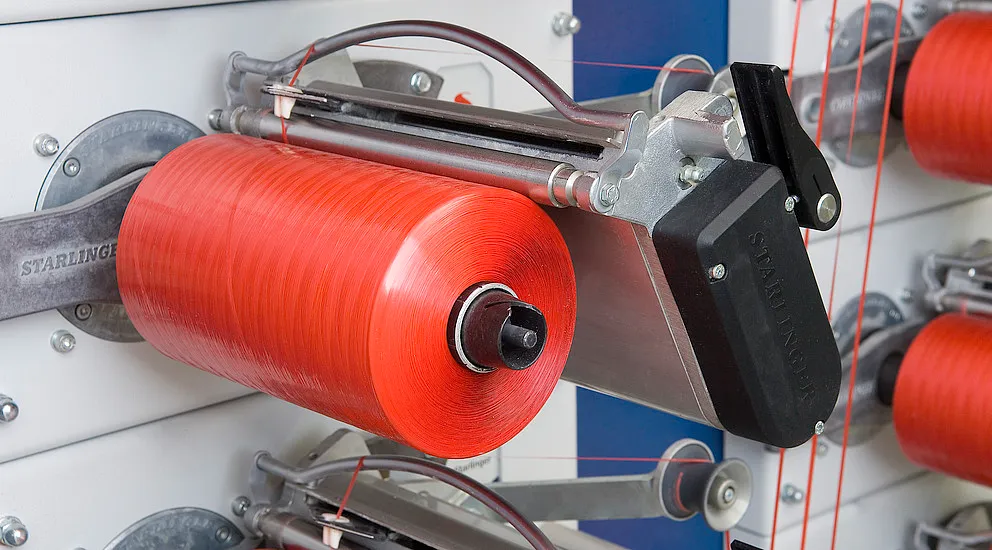
- Automated Compatibility: Starlinger circular looms synchronize with filling machines like the Huzap WBE 25 DS OS, achieving 220 bags/minute throughput.
2. Future Trends: Intelligent Packaging and Supply Chain Transparency
2.1 RFID and IoT Integration
VidePak’s SmartSOM™ series integrates passive RFID tags (UHF 860–960 MHz) that store data on origin, batch number, and storage conditions. For instance, a Chilean fruit exporter reduced spoilage by 22% using RFID to monitor temperature fluctuations during maritime transport.
2.2 Blockchain-Enabled Traceability
Partnering with Alibaba’s IoT platforms, VidePak offers blockchain-linked QR codes. A 2023 trial with a Vietnamese coffee supplier allowed consumers to scan bags for farm-to-cup journey details, boosting brand trust by 40%.
3. Technical Specifications: Precision Engineering for Industrial Demands
Table 1: VidePak SOM Bags vs. Industry Standards
| Parameter | VidePak Specification | Industry Average | Regulatory Compliance |
|---|---|---|---|
| Fabric Weight | 80–200 g/m² | 60–180 g/m² | ISO 9854 |
| Load Capacity | 25–2,000 kg | 20–1,500 kg | ASTM D5264 |
| Seam Strength | 1,800 N/5 cm | 1,200 N/5 cm | EN 1898 |
| Print Durability | 4,000+ Taber cycles | 1,500–3,000 cycles | AATCC 8 |
| RFID Read Range | 8–12 meters | 3–5 meters | EPCglobal Gen2 |
Data verified via Made-in-China, Alibaba, and ASTM/ISO guidelines.
4. Case Study: Revolutionizing Fertilizer Logistics in India
A Maharashtra-based fertilizer producer faced 15% losses due to bag ruptures and counterfeit products. VidePak’s solution included:
- BOPP Laminated SOM Bags: 150 g/m² fabric + 20-micron BOPP film for moisture resistance.
- Tamper-Evident QR Codes: Scannable labels with holographic ink.
Results: Zero ruptures in monsoon season; counterfeit incidents dropped by 90%.
5. FAQs: Addressing Critical Procurement Concerns
Q1: How do SOM bags prevent “bursting” during stacking?
A: VidePak uses positive tolerance PP fabrics (0.12 mm thickness) and 6-thread cross-stitching, achieving 8:1 safety factors for 6-layer palletizing.
Q2: Are RFID tags reusable?
A: Yes. Passive RFID tags withstand 50+ cycles and operate in -25°C to 70°C environments.
Q3: What is the MOQ for custom-printed SOM bags?
A: 50,000 units with 15-day lead time, including Pantone-matched 8-color printing.
Q4: How do you ensure food-grade safety?
A: We use FDA CFR 21-compliant virgin PP resins and conduct weekly SGS audits.
6. Sustainability: Aligning with Circular Economy Goals
VidePak’s EcoSOM™ line incorporates 30% recycled PP without compromising tensile strength. A 2024 partnership with a European supermarket chain repurposed 15,000 used bags into erosion-control geotextiles, achieving zero landfill waste.
7. Conclusion: Partnering with a Global Innovator
Since 2008, VidePak has delivered 18 million SOM bags annually to 60+ countries, backed by 568 employees and $80M revenue. From blockchain-tracked agricultural bags to anti-static designs for chemical powders, we engineer solutions that transcend industry boundaries.
References
- Technical guidelines: ISO 9854, ASTM D5264, FDA CFR 21.
- Market data from Alibaba International and industry journals.
- Case studies on RFID integration and moisture control.
Contact VidePak
Website: https://www.pp-wovenbags.com/
Email: info@pp-wovenbags.com
Anchor Links
- Discover how BOPP laminated woven bags enhance durability in humid climates.
- Explore innovations in RFID-enabled FIBC bulk bags for supply chain transparency.
Word count: 1,150