
Form-fill-seal (FFS) woven bags, also known as FFS woven sacks, play an integral role in modern packaging solutions, especially in industries dealing with bulk products like fertilizers, food grains, chemicals, and construction materials. These bags are produced using a highly automated process known as Form-fill-seal, wherein the bag is formed, filled, and sealed in a single operation, making the process more efficient and cost-effective.
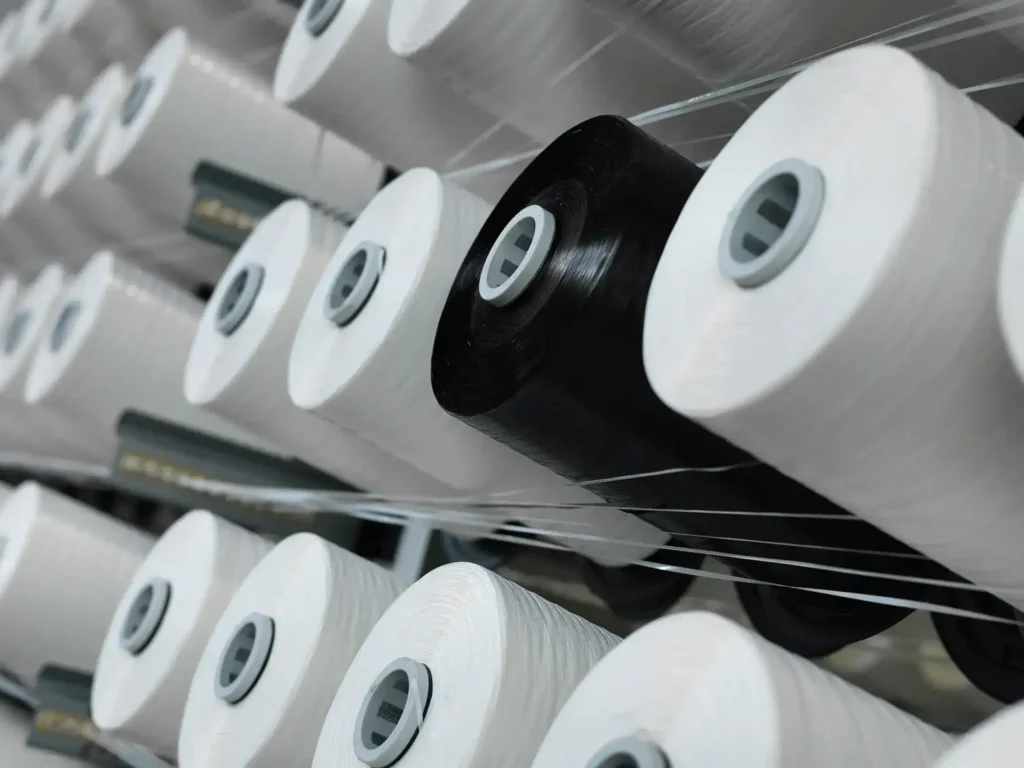
What Are Form-Fill-Seal Woven Bags?
Form-Fill-Seal Woven Bags are polyolefin-based packaging structures engineered to be formed, filled, and sealed—continuously and directly—on vertical or horizontal form‑fill‑seal equipment. Instead of receiving discrete pre‑made sacks, a packaging line feeds continuous rollstock (tubular or sheeted woven polypropylene), shapes it into a tube or pouch, meters the product, and closes the package in a single integrated cycle. The target is simple to state yet demanding to execute: match the mechanical durability of woven polypropylene with the speed, repeatability, and labor efficiency of FFS automation; align the cube for stable pallets; protect graphics from scuffing; and keep moisture and fines where they belong—inside the bag.
For clarity in drawings, RFQs, and audit notes, the same format often appears under varied labels. Those aliases usually emphasize either the inline conversion (FFS) or the sealing skin. The geometry, however, remains recognizably the same: a woven structural wall plus a heat‑sealable interface and—when branding matters—a protective print face.
FFS Woven PP Bags
Tubular Woven FFS Rolls
BOPP‑Laminated FFS Woven Sacks
Heat‑Sealable Woven Polypropylene FFS Bags
VFFS Woven Rollstock
HFFS Woven Bagging Rolls
PE‑Seal‑Layer Woven Bags
FFS Square‑Bottom Woven Packs
Callout — definition in one line: a woven polypropylene body that runs natively on FFS machinery, closes by heat and pressure rather than stitching, and—optionally—carries a reverse‑printed film face for retail‑grade branding.
Why do plants adopt Form-Fill-Seal Woven Bags? Because speed without strength causes returns, and strength without speed raises cost. This format attempts both. It is not a silver bullet, but it is a disciplined toolkit: a small set of material layers, tuned coefficients of friction, measured seal windows, and square‑shouldered geometry that stands up to conveyors, forklifts, and store floors alike.
Material Architecture of Form-Fill-Seal Woven Bags
Every robust specification is a negotiation among layers: the substrate that takes the load, the skin that seals cleanly, the face that carries your brand, and—if needed—the liner that protects from humidity and aroma transfer. Below is a practitioner’s architecture with placement, properties, and cost signals that matter in day‑to‑day engineering.
Structural Wall — Woven Polypropylene
PP resin is extruded into films, slit into tapes, drawn for tensile strength, and woven on circular or flat looms. Weave counts of roughly 10×10 to 14×14 picks per inch and fabric mass from ≈55 to 110 g/m² cover most food and industrial loads. Higher denier tapes and tighter weaves resist puncture from abrasive fills and suppress sifting at corners. The wall carries the weight, keeps the cube, and survives the drop tests that thin films alone rarely tolerate.
Seal Interface — Heat‑Sealable Skins
Two roads are common: a PE‑rich layer (LDPE/LLDPE blends) that seals at relatively low temperatures with forgiving windows, or a PP‑rich skin/tie that preserves a mono‑PP narrative for end‑of‑life alignment. The former maximizes machine latitude; the latter simplifies polymer identity. Either way, seal jaws will ask for predictable melt behavior and consistent thickness.
Print Face — Reverse‑Printed BOPP (Optional)
When branding matters, reverse‑printed BOPP (≈15–35 μm) laminated to the exterior yields photo‑quality graphics protected under film. Gloss magnifies color; matte hides scuffs and reduces glare; satin splits the difference with a soft touch. Thicker gauges improve abrasion tolerance on rough routes. For a related primer on tubular FFS roll formats, see PE heavy‑duty form‑fill‑seal tubular rolls.
Hygiene Layer — Liners (As Needed)
LDPE/LLDPE liners (≈20–60 μm) provide a continuous moisture barrier for hygroscopic powders such as sugar or flour. Where aroma is critical—premium pet nutrition, spice mixes—co‑extruded EVOH or a metallized laminate may be introduced, kept to the smallest effective footprint so that end‑of‑life narratives remain credible.
Bondlines — Extrusion vs. Adhesive
Extrusion lamination with PP/PE ties keeps the stack all‑polyolefin and is robust for logistics. Solventless/solvent PU adhesives deliver extremely uniform thin bonds at lower thermal loads—excellent for matte films and precise lay‑flat—while demanding disciplined cure control for food packaging.
Functional Additives
UV stabilization for outdoor depots, slip/anti‑block for runnability, anti‑slip bands to protect pallets, pigments/opacifiers to reduce show‑through or light ingress. Additives should be chosen for function first, aesthetics second.
Tip — don’t treat the film face as vanity. It is a membrane that sheds dust and oil, protects inks, stabilizes CoF, and enables windows without sacrificing hygiene. The premium look is a useful side effect.
In sum: the structure of Form-Fill-Seal Woven Bags is spare—fabric, bond, seal skin, optionally a film and a liner—but the tuning within those few layers determines whether you will run quickly, stack safely, and arrive with branding intact.
Feature Set: What Users Actually Experience with Form-Fill-Seal Woven Bags
Packaging earns its keep at the filler, on the floor, and at the shelf. Spreadsheets cannot feel CoF, and audits cannot hear a bag chatter on a forming shoulder—but operators can. The following traits translate specification choices into lived performance.
Native Automation
Rollstock engineered for predictable unwinding, web tracking, and forming. Mouth stiffness remains consistent; seals close without stringing or fish‑eyes; gussets register. One line can run multiple SKUs with controlled changeovers.
Strength at Low Mass
Woven PP’s tensile and tear strength outperforms many all‑film designs at similar mass. When drops at 0.8–1.2 m are routine, the woven wall absorbs corner knocks that puncture thin films.
Moisture and Sift Control
Polyolefin walls resist humidity. Film faces and liners complete the barrier path; bottom geometry and corner creases are tuned to avoid powder weeping without bulky patches.
Branding That Survives the Route
Reverse‑printed BOPP shelters imagery. Matte hides scuffs in cross‑docks; gloss amplifies color in retail aisles; satin offers soft tactility. Graphics arrive legible and clean after long transit.
Runnability Tuning
Engineer different coefficients of friction on A and B surfaces. Let one side slide for speed and let a patterned band grip for pallet stability. Local control beats global slowdown.
Credible End‑of‑Life Pathways
Keep film, tie, and fabric within the polypropylene family where possible. When barrier layers are necessary, identify them explicitly and keep their footprint small.
Reflection — speed versus safety, gloss versus matte, barrier versus simplicity. In each pair, it is tempting to choose one. Resist that urge. Specify locally, test empirically, and let the line tell you where balance lives.
Production Process: From Pellet to Pallet
No single step is exotic; the win is in the orchestration. The same sequence that yields commodity sacks can, with tighter windows and better documentation, produce retail‑grade Form-Fill-Seal Woven Bags that run fast and look good.
Tape Extrusion and Weaving. Melt PP, extrude thin films, slit to tapes, draw to strength, weave at 10×10–14×14 picks per inch. Choose denier and fabric mass to pass tensile, tear, and drop targets without over‑engineering.
Surface Preparation, Coating, and Lamination. Raise surface energy by corona; apply a PE‑ or PP‑rich seal layer if sealing on fabric; reverse‑print BOPP and bond by extrusion tie or PU adhesive if a film face is planned.
Roll Building. Control hardness, splice quality, and diameter. FFS lines punish erratic unwinds. Measure A/B CoF on incoming rolls and match to the filler’s expectations.
Tubing and Body Formation. Supply tubular rollstock to minimize seams on VFFS, or sheeted webs for HFFS to fold and seam. Place register marks for graphics and gussets; keep drift within the forming collar’s tolerance.
Printing. Reverse gravure or high‑screen flexo. Calibrate tone curves for matte films (slightly higher dot gain). Keep windows in low‑stress zones with generous radii.
Sealing on the FFS Line. Bottom seal, form and fill, top seal. Constant‑heat, impulse, or hot‑bar jaws are tuned by temperature, dwell, and pressure. Cooling bars preserve flatness on heavy graphics.
Quality Control and Documentation. Fabric tensile/tear, laminate bond/peel, A/B CoF, drop tests across orientations and humidities, registration/visual inspection, migration/odor for food. Tie results to lot numbers.
Operator note — the bag is not finished when it leaves converting; it is finished when your line closes it cleanly at speed. Publish seal windows beside the HMI; audit them per shift.
Application Landscape for Form-Fill-Seal Woven Bags
Applications are laboratories for constraints. Rice teaches moisture control; sugar exposes weak sift‑proofing; flour punishes poor mouth behavior; pet nutrition demands haptics and aroma stewardship. The same core adapts through liners, finishes, and CoF zoning.
Agricultural staples. Rice, grains, and pulses (5–25 kg) benefit from film faces that stabilize CoF and display quality through windows while preserving texture in humid depots.
Sugars and fine powders. Smooth seal skins and optional LDPE liners provide continuous barriers. Block‑bottom geometry and clean creases prevent corner leaks.
Flour and bakery mixes. Matte films hide scuffs from cross‑docks; micro‑perfs can vent trapped air cautiously; mouth stiffness and tube width tolerances keep the spout happy.
Pet nutrition. Satin textures cue premium positioning; optional barrier liners protect aroma; easy‑open features enhance user experience without compromising sift‑proofing.
Seeds and mineral feeds. Abrasive fills and outdoor storage push toward higher denier tapes, reinforced seams, UV stabilization, and under‑laminate serialization for traceability.
Industrial resins and chemical powders. Un‑filmed coated woven walls run fast and rugged when retail graphics are secondary; priority rests on robust sealing and high drop‑test performance.
System Method: Decompose, Solve, Integrate
Optimizing a single knob—print, or speed, or cost—invites failure. A useful habit is to decompose by function, set measurable targets, and only then integrate solutions that do not fight each other. Below is a working template that teams can adopt.
Subsystem A — Protection and Shelf Life
Define WVTR targets by product and route. For rice and sugar, suppress caking and texture loss under local humidity. Where aroma matters, introduce barrier sparingly and document polymer identity.
Subsystem B — Machinability and Speed
Tune exterior CoF to the real equipment, not a catalog. VFFS may want different ranges than HFFS. Keep mouth stiffness tight and dimensional drift low; forming collars are unforgiving.
Subsystem C — Strength and Logistics
Drop at ambient and at elevated humidity; watch for star‑cracking on corners. Engineer pallet height and wrap recipes to measured CoF. Use anti‑slip zoning rather than slowing lines.
Subsystem D — Branding and Retail
Reverse‑printed BOPP supports photographic imagery; matte, gloss, and satin each change optics and scuff behavior. Windows, used wisely, are trust engines—place them in low‑stress zones.
Subsystem E — Compliance and End‑of‑Life
Treat food‑contact declarations and migration testing as foundational. Prefer polyolefin‑only stacks and document any barriers for credibility. Track permissions for recycled PP; start with non‑contact layers if in doubt.
Integrated example: a 15 kg premium kibble SKU shipping to humid coasts might specify woven PP 80 g/m², 30 μm satin BOPP face reverse‑printed ten‑color, pasted or thermal block bottom, exterior CoF 0.35–0.40 with anti‑slip banding only on the back, an optional EVOH liner, and under‑laminate serialization. Pilot 5,000 packs; lock only after live performance matches lab intent.
Colored Tables: Parameters, Seals, Specs, and QC
Troubleshooting and Continuous Improvement
Delamination at folds. Increase bond strength, widen glue/heat footprints, smooth fold radii, verify dyne levels pre‑lamination, and avoid over‑drying that embrittles creases.
Pallet slippage. Raise CoF via top coats or patterned anti‑slip; revise wrap tension and pattern; reduce exposed gloss where stacks rub.
Sift leaks at corners. Re‑profile block‑bottom crease geometry; add inner patches for extreme fines; tighten weave to reduce leak paths.
Ink scuffing or ghosting. Confirm reverse print under film; consider thicker or satin films; check curing and adhesion promoters; use cooling bars after hot‑bar sealing.
Odor or NIAS risk. Extend adhesive curing, audit chemical inputs, switch to low‑odor systems, and control storage to prevent taint pickup.
Production Windows and Operator Notes
Surface Energy
Keep incoming BOPP at ≥38 dynes (40–42 preferred after storage) for ink and adhesive wetting; monitor decay and re‑treat if needed.
Adhesive Control
Solventless PU: verify mix ratios and pot life. Solvent systems: maintain drying tunnel residence to limit residuals before winding.
CoF and Drop
Measure A/B surface CoF routinely and record with line speed. Drop test at 0.8–1.2 m across orientations and humidities relevant to route.
Documentation binder — keep certificates of analysis, CoF reports, bond/seam strength data, migration summaries, and pest‑control logs keyed to lot numbers for faster audits and fewer surprises.
Market and Policy Context, 2024–2025
Three realities frame present choices around Form-Fill-Seal Woven Bags. First, polypropylene supply in Asia has broadened, muting the sharper price swings of earlier cycles and enabling longer contracts on woven substrates and films. Second, retailers and regulators expect clear polymer identification, credible recyclability narratives, and traceable, tamper‑evident prints. Third, permissions for recycled PP in carefully defined use conditions are expanding—encouraging, but far from blanket approval—which pushes teams to start with non‑contact layers and document every claim.
Frequently Asked Questions
Are Form-Fill-Seal Woven Bags recyclable? When film, tie, and fabric remain within the polypropylene family and a PP collection/sorting stream exists, mechanical recycling is feasible. Document adhesives, inks, and any barrier components to keep claims grounded.
Do all food applications require liners? No. Liners are recommended for fine powders, hygroscopic contents, or aroma‑sensitive SKUs. Coarse, dry grains with robust laminates can perform well without an inner liner.
Which is more secure for 25 kg flour in humid climates, an FFS woven pack or a pinch‑bottom woven pack? Both can pass drop and stack tests when engineered well. Pinch‑bottom excels in ultra‑tight sift‑proofing; FFS woven often wins on speed and labor. Validate on your equipment and route.
What exterior CoF should we target? Typical ranges of 0.30–0.45 balance fill speed and pallet stability, but the optimal value is line‑specific. Measure on the actual finish you intend to ship.
How do matte, satin, and gloss films behave? Matte masks scuffs and reads premium; gloss amplifies color; satin delivers soft tactility with moderated glare. Proof tone curves again if you switch finishes.
Supplier Shortlisting and RFQ Checklist
Product: Form-Fill-Seal Woven Bags, capacity ___ kg, contents ___.
Wall: Woven polypropylene ___ g/m²; weave ___×___; tape denier ___D; UV stabilized (Y/N).
Print face: BOPP ___ μm; finish (gloss/matte/satin); reverse print (Y/N).
Lamination: Extrusion tie PP/PE ___ μm or adhesive (solventless/solvent) coat weight ___ g/m².
Seal layer: PE‑rich or PP‑rich; jaw temperature/dwell/pressure target windows.
Bottom: Thermal or pasted block bottom; glue pattern or heat settings.
Mouth: Flush‑cut; easy‑open notch or laser score; handle (Y/N).
Liner: LDPE/LLDPE ___ μm; barrier (Y/N); attachment method.
Targets: Exterior CoF A/B; drop test height; film WVTR goal; seam strength.
Compliance: Food‑contact declarations; migration data; GMP/BRCGS if applicable.
Traceability: Under‑laminate QR (Y/N); serialized batches (Y/N).
Logistics: Pallet height; climate (dry/humid/tropical); outdoor storage (Y/N).
QA deliverables: CoA per lot; CoF results; bond and seam strength; vision inspection; odor/migration summaries (for food).
Focused Heuristics Shaped by the Phrase “A comprehensive guide to form-fill-seal woven bags”
Begin by asking the nagging questions: What exactly are we protecting? What must the package survive? What does the machine need from the web? Those answers translate to shelf‑life targets, drop/stack expectations, and machinability windows. From there, map applications to constraints: rice and sugar drive moisture decisions; pet nutrition layers aroma and branding demands; mineral feeds command abrasion resistance; resin pellets push drop tests. Next, convert benefits into numbers: exterior CoF ranges, drop heights and pass criteria, pallet creep limits under humidity and vibration. Finally, sequence like a playbook: pilot on the real line; record CoF, line speed, seal temperatures, and reject codes; adjust; only then lock specifications and publish a one‑page QC plan that travels with every order. In other words, let measurement make promises believable.
In this article, we will explore the various aspects of FFS PP bags, FFS woven bags, and tubular woven bags, emphasizing the importance of product specifications such as thickness, weight (grammage), size, and the load-bearing capacity of these bags. By understanding these parameters, you can make informed decisions when selecting the best packaging solutions for your products.
1. Introduction to Form-fill-seal Woven Bags
Form-fill-seal woven bags are crafted using polypropylene (PP) material, making them extremely durable, tear-resistant, and suitable for holding large quantities of materials. The FFS process is highly automated, which ensures consistency in quality and speed in production. This method also helps in reducing manual labor and packaging costs.
These woven bags are primarily used in the packaging of granular or powdered materials. Industries like agriculture, construction, chemicals, and food rely heavily on FFS PP bags due to their versatility and efficiency.
Key advantages of form-fill-seal woven bags include:
- Durability: These bags are resistant to wear and tear, ensuring that the contents remain intact during transportation and storage.
- Cost Efficiency: The automation involved in the FFS process reduces production and labor costs.
- Customization: FFS woven sacks can be tailored to meet specific requirements such as size, print, and color.
2. Understanding Product Specifications
When selecting FFS woven bags, it’s crucial to evaluate several product specifications. These parameters determine the bag’s suitability for various applications, ensuring that the bag can handle the load without failure while providing optimal protection to the contents.
2.1 Product Thickness
One of the most important parameters is the thickness of the bag, which is measured in microns. The thickness of FFS PP bags can vary depending on the type of product being packed. Thicker bags are generally used for heavier and more abrasive materials, while thinner bags might be sufficient for lighter products.
- Thin bags (50-70 microns): Suitable for light materials such as flour, sugar, and fertilizers.
- Moderately thick bags (70-100 microns): Commonly used for grains, seeds, and chemicals.
- Thick bags (100+ microns): Best for heavy materials like construction sand, gravel, or cement.
The choice of thickness affects the bag’s strength and flexibility, as thicker bags offer more resistance to punctures and tears but might be less flexible than thinner alternatives.
2.2 Grammage (Weight)
Grammage refers to the weight of the woven bag material per square meter, typically expressed in grams per square meter (GSM). It is a critical factor in determining the strength and durability of FFS woven sacks. Higher grammage bags are heavier and stronger, ideal for carrying dense or abrasive materials, while lower grammage bags are lighter and more cost-effective for less demanding applications.
- Low grammage (60-80 GSM): Used for lightweight materials like powders and grains.
- Medium grammage (80-100 GSM): Best for packaging mid-weight products like chemicals and pet food.
- High grammage (100-150 GSM): Required for heavy materials like construction supplies.
The grammage also influences the cost of the bag, as higher grammage typically results in a more expensive product.
2.3 Size Variability
The size of the FFS woven bags is another important consideration, as it must correspond to the volume of the material being packaged. Customizing the bag size ensures that the packaging process is efficient and that the bags do not have excess space, which can lead to material shifting during transit.
Standard sizes for tubular woven bags include:
- Small (10-25 kg capacity): Often used for grains, seeds, or animal feed.
- Medium (25-50 kg capacity): Commonly used for bulk products like fertilizers, cement, and chemicals.
- Large (50-100 kg capacity): Typically used in industrial applications for heavy materials like gravel or sand.
The length and width of the bags can be customized to fit specific requirements, ensuring that the bags are perfectly suited for the storage and transportation of the product.
2.4 Load-bearing Capacity
One of the most critical factors in selecting an FFS woven bag is its load-bearing capacity. The load-bearing capacity is directly influenced by the bag’s thickness, grammage, and size. Bags must be able to handle the weight of the contents without tearing or breaking, especially during transportation and handling.
- Light-duty bags (up to 25 kg): Suitable for products like flour, sugar, and grains.
- Medium-duty bags (25-50 kg): Commonly used for fertilizers, seeds, and animal feed.
- Heavy-duty bags (50-100 kg): Used for industrial materials such as cement, sand, and other construction materials.
The load-bearing capacity of FFS woven bags can also be enhanced by incorporating additional features like liners or lamination, which help to improve the overall strength and durability of the bags.
3. Comparing Form-fill-seal Woven Bags
Below is a table summarizing the key points discussed in this article, including the main parameters and how they impact the performance of FFS woven sacks and tubular woven bags.
| Parameter | Description | Key Considerations | Applications |
|---|---|---|---|
| Thickness | Measured in microns, determines the strength and flexibility of the bag. | Thicker bags for heavy/dense materials, thinner bags for lighter products. | Construction, food, agriculture. |
| Grammage (GSM) | Weight of the bag per square meter, affecting strength and cost. | Higher grammage for heavier materials, lower grammage for lightweight products. | Fertilizers, chemicals, grains. |
| Size | Customizable dimensions of the bag to fit specific product requirements. | Proper sizing ensures efficient packaging and prevents material shifting. | Industrial and agricultural use. |
| Load-bearing Capacity | Maximum weight the bag can carry without breaking or tearing. | Light-duty, medium-duty, and heavy-duty bags for various types of products. | Ranges from food grains to construction materials. |
4. Importance of Customization in FFS Woven Bags
One of the significant advantages of FFS woven bags is the level of customization they offer. Companies can tailor bags to meet their specific needs, choosing the right combination of thickness, grammage, size, and load-bearing capacity to ensure optimal performance. Furthermore, bags can be customized with various types of printing and branding, which adds value to the packaging process by helping companies stand out in a competitive market.
- Open-mouth bags: Easy to fill and close, suitable for manual or semi-automatic filling.
- Valve bags: Typically used in industrial settings, ideal for automated filling lines.
- Tubular woven bags: Seamless construction enhances strength and uniformity, often used for heavy-duty applications.
5. Sustainability Considerations
Sustainability has become an essential factor in the production of FFS woven sacks. Polypropylene is a recyclable material, which makes these bags more eco-friendly than many other packaging options. Additionally, advancements in manufacturing technologies allow for the production of lighter yet stronger bags, reducing material consumption and waste.
FFS woven bags can be designed to include features like recyclable inner liners, reducing the environmental impact of the packaging process. These innovations ensure that the use of FFS PP bags is not only practical but also environmentally responsible.
6. Conclusion
Form-fill-seal woven bags have revolutionized the packaging industry by offering high levels of durability, customization, and efficiency. Whether you are packaging food products, chemicals, or construction materials, understanding the key specifications—thickness, grammage, size, and load-bearing capacity—can help you select the right type of bag for your needs. The versatility of FFS woven bags, FFS PP bags, and tubular woven bags ensures that businesses can find a reliable, cost-effective solution for their packaging challenges.
By considering these factors and leveraging the advantages of the FFS process, companies can improve their packaging efficiency, reduce costs, and enhance the safety and protection of their products during transportation and storage.