
What are FFS Roll HDPE Bags?
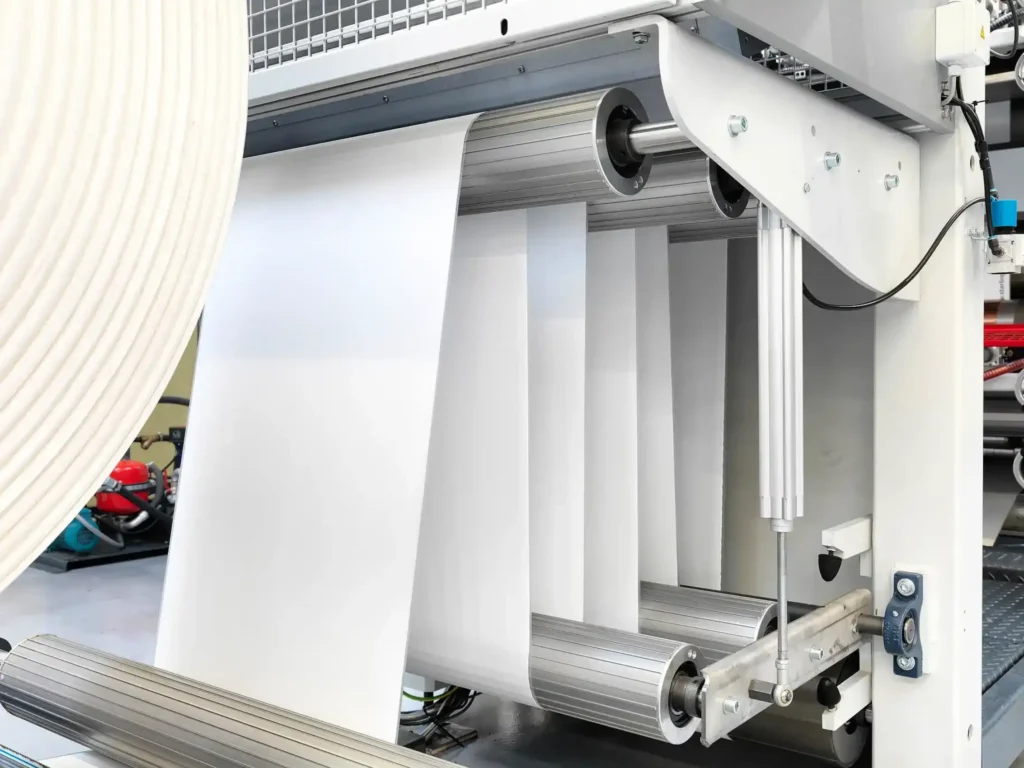
FFS Roll HDPE Bags are heavy‑duty polyethylene packages supplied as continuous film on rolls and converted in real time into finished sacks on automated form‑fill‑seal equipment. The web may be tubular, center‑folded, or flat. On the machine, jaws form the bottom seam, the filling module meters product, and a top seam is welded; a cutter separates the bag, and the cycle repeats in fractions of a second. Less manual handling, more synchronization, fewer variables. In procurement catalogs and shop‑floor slang, you will also see these referred to as tubular roll PE bags, heavy‑duty FFS polyethylene sacks, FFS tubular film, PE heavy‑duty rollstock, or simply FFS rolls. Different names, same idea: the roll is the raw material for a bag, not a finished bag waiting on a pallet.
Why do plants choose FFS Roll HDPE Bags over pre‑made open‑mouth or valve styles? Because they compress steps. Inventory of empty bags disappears. Changeovers shrink. Coding, sealing, and filling share one timing diagram. When film science, machine kinematics, and product flow align, this format delivers speed without surrendering seal integrity or pallet stability. The rule of thumb is telling: the more granular the product and the higher the required throughput, the stronger the case for FFS Roll HDPE Bags.
The Material of FFS Roll HDPE Bags
Materials decide behavior. In FFS Roll HDPE Bags, a co‑extruded polyolefin laminate apportions jobs by layer: skins for barrier and printability, cores for impact and tear, inners for sealing and hot‑tack. The art is to maximize process latitude while preserving mono‑material recyclability.
High‑density polyethylene (ρ≈0.940–0.970 g/cm³) supplies stiffness and a naturally lower water‑vapor transmission rate (WVTR) than LDPE at equal gauge thanks to higher crystallinity. That stiffness is not cosmetic; it resists layer slump on tall pallets and keeps unit loads square. Corona or flame treatment raises surface energy for ink adhesion, and—importantly—treatment must retain over storage so codes remain legible weeks later.
Cost logic: HDPE is globally available, price‑linked to ethylene. Grades differ (unimodal vs. bimodal molecular‑weight distributions, melt index), yet all stay inside the polyolefin family, preserving recyclability pathways.
Medium‑density polyethylene (MDPE) and linear‑low‑density polyethylene (LLDPE)—often metallocene catalyzed—absorb drop energy and buffer punctures from angular granules. The proportion of this layer scales with product aggressiveness: urea prills with rough facets, mineral fillers with hard edges, or resin pellets with cut corners all push the formulation toward tougher cores.
Design aim: balanced tear in machine and transverse directions to prevent zippering. Impact and Elmendorf tear targets are not academic; they correlate with real‑world failure modes at conveyors, chutes, and pallet corners.
LLDPE or metallocene LLDPE builds a forgiving heat‑seal and hot‑tack window that matches the machine’s dwell and cool‑time reality. On an FFS line, the bag often moves while the seal is warm. Hot‑tack strength arrests peel‑open failures at transfer—an invisible champion of OEE.
Slip agents (erucamide/oleamide) and silica antiblock keep the web cooperative through forming shoulders and nips. Yet pallets need friction. The compromise: localized matte lanes or micro‑textures that anchor layers without pushing global COF so high that conveyors stall. The paradox is solved by precision, not by averages.
Antistatic masterbatch limits tribocharging; UV stabilizers protect sacks in yards; pigment concentrates supply branding and light management; process stabilizers preserve melt strength and cut gels at high outputs. Each modifier adds function without leaving the polyolefin family.
Treat to ≥38 dyn/cm and verify retention; treat decay erodes code legibility and label bond. Printing (flexo or digital) lands regulatory icons, batch IDs, and brand elements—data that travel with the pallet and matter when something goes wrong.
What are the Features of FFS Roll HDPE Bags?
Features must pull their weight on a noisy line at real speed. The attributes below are framed as solutions to chronic pain points—caking, leakers, split seams, wandering codes, unstable pallets.
- Moisture management at realistic gauges — HDPE skins suppress WVTR relative to LDPE, protecting hygroscopic cargos without exotic laminates. In wet climates, thicken skins and trim core to keep weight neutral while pushing barrier forward.
- Forgiving seals and strong hot‑tack — mLLDPE‑rich inners allow small drifts in jaw temperature and dwell without spawning leakers. Hot‑tack strength keeps new seams intact when the web moves under load.
- Impact and puncture resilience — Balanced MD/TD tear and elevated dart impact absorb oblique hits from chutes and pallet corners. The payoff is not just fewer spills; it is fewer stop‑and‑clean episodes.
- Machine harmony and low dusting — Tuned COF and antiblock reduce squeal and stalls through forming shoulders; clean edges cut fines and reduce dust collection demand.
- Print clarity and traceability — Treat retention holds graphics and codes; serialized IDs unlock lot‑to‑pallet trace in warehouse systems.
- Mono‑material recyclability — Staying in the polyolefin family simplifies take‑back; edge trim can be reincorporated as post‑industrial recycled content in core layers where regulations allow.
- Pallet stability by design — Localized anti‑slip lanes hold stacks in compression without choking conveyors. Precision friction, not brute friction.
What is the Production Process of FFS Roll HDPE Bags?
The journey divides cleanly: film converting at the supplier and in‑line bag making on the packer’s FFS machine. Each half has a control plan, each plan has measured gates.
A. Film production and converting (supplier side)
- Resin selection and blending — HDPE for stiffness and barrier; MDPE/LLDPE for toughness and sealability; masterbatches for slip, antiblock, antistat, UV. Blend consistency is the first gate to consistency downstream.
- Blown‑film or cast‑film co‑extrusion — Blown film dominates for toughness and orientation; cast offers tight gauge control. 3–7 layers are typical; more layers compartmentalize functionality without abandoning mono‑polyolefin logic.
- Surface treatment — Corona or flame elevates dyne; treat decay is tracked over storage to protect coding quality.
- Printing — Flexo or digital places brand, regulatory icons, and traceability marks. Registration and adhesion are verified.
- Gusseting and edge profiling — Folds define volume; edges are trimmed for clean forming on the packer.
- Perforation and venting — Laser or mechanical arrays add micro‑vents to purge air for aerated fills; hole diameters and counts are controlled.
- Slitting and roll winding — Widths are slit; rolls are wound on 76 mm or 152 mm cores with tuned hardness to prevent telescoping and ensure smooth unwind.
- Quality checks — Thickness mapping, tensile/elongation (ASTM D882), tear (D1922), dart impact (D1709), COF (D1894/ISO 8295), hot‑tack strength, seal initiation temperature, dyne level, perforation metrics, gel/pinhole inspection.
B. In‑plant conversion on the FFS machine (packer side)
- Unwind and tension control — Dancers and load cells manage web tension; ionization bars temper static where codes or fines misbehave.
- Forming — A shoulder (for flat webs) or simple path (for tubular) shapes the bag; lap or fin longitudinal seals apply as needed.
- Bottom sealing — Transverse jaws weld the bottom; cool‑time locks hot‑tack before the web moves.
- Filling — Auger, gravity, or belt feeders meter material; vented nozzles and micro‑perfs prevent pillowing.
- Top sealing and cutting — The upper jaw closes the bag; a cutter separates it; high‑risk lanes add a redundant safety seal.
- Coding and marking — Thermal inkjet or laser writes dates, lots, or QR IDs; vision verifies readability.
- Checkweighing and rejection — Off‑weights or seal defects divert to rework without slowing the line.
- Palletizing and stabilization — Robotic or conventional systems stack to pattern; stretch‑hood/wrap secures the load.
What is the Application of FFS Roll HDPE Bags?
FFS Roll HDPE Bags dominate wherever the cargo is free‑flowing and the schedule is unforgiving. The following clusters illustrate the logic.
| Application Cluster | Typical Contents | Design Emphasis |
|---|---|---|
| Petrochemical resins | PE, PP, EVA pellets | High hot‑tack; low dust; clean seals; fast coding |
| Fertilizers | Urea, NPK, MAP/DAP | WVTR control; UV stability; robust seals for outdoor stacks |
| Salts & de‑icing | Rock salt, solar salt | Barrier forward; abrasion resistance; friction lanes |
| Food‑adjacent commodities | Industrial sugar, starches | Treat retention; coding clarity; material compliance |
| Construction minerals | Controlled gradation sand, blends | Impact handling; pallet integrity; corner robustness |
Technology, Materials, and Automation Trends — A Reasoned Walkthrough
“Technology” names the machine envelope and its controls. “Materials” names the co‑extruded stack. “Automation trends” name the sensors, data, and robotics that elevate OEE. Put them together and the trajectory of FFS Roll HDPE Bags becomes legible: wider windows, smarter checks, lighter films that still survive the lane.
- Wider process windows — Metallocene catalysts and bimodal resins create flatter seal‑strength plateaus. Flatter plateaus mean less sensitivity to jaw temperature drift and dwell variability; the machine can run closer to its ceiling without courting leakers.
- Machine intelligence — IR thermography of jaws, load‑cell feedback on web tension, vision on codes, vacuum‑decay or bubble‑leak sampling on finished bags: feedback loops that compress discovery time from hours to minutes.
- Source reduction and circularity — Downgauging paired with localized reinforcement (corner thickness, matte lanes) trims weight while preserving performance; edge trim returns as post‑industrial recycled (PIR) content in cores when permitted.
- Safety by design — Antistatic films, grounded paths, and gentle web routing reduce shocks, dust, and abrasion. A quiet line is a safer line.
- Digital traceability — Serialized IDs handshake with warehouse systems so a complaint becomes a targeted corrective action rather than a broad recall.
System Thinking: Decompose, Optimize, Recompose
Systems thinking resists silver bullets. It breaks the problem into parts, tunes each part, then tests the whole. For FFS Roll HDPE Bags, three subsystems carry most of the risk.
WVTR target from climate and hygroscopicity; core toughness from density and abrasiveness; antistatic loading from electrostatic behavior. Each input sets a lever; each lever moves a property.
Seal window mapped to dwell and cool‑time; web handling tuned by COF and antiblock; registration protected by treat retention and vision checks.
Block‑bottom options and friction lanes for stack integrity; UV stability and abrasion resistance for yards and long export lanes; transport simulation to validate the whole stack, not just the bag.
Recomposition then reads like a checklist: HDPE skins for barrier, MDPE/LLDPE core for impact, LLDPE inner for sealing; sleeve width and venting tuned to flow; exterior COF elevated only where shear demands it; QC metrics tied to recognized tests; pallet patterns validated by compression and vibration profiles.
Standards, Certifications, and Identifiers
Numbers settle arguments. The identifiers below anchor specifications for FFS Roll HDPE Bags and their manufacturing environment.
- ASTM D882 — tensile properties of thin plastic sheeting (MD/TD strength and elongation).
- ASTM D1709 — free‑falling dart impact; proxy for drop/impact robustness.
- ASTM D1922 — Elmendorf tear; controls tear propagation and zippering.
- ASTM F1249 — water vapor transmission (modulated IR); barrier target for humidity‑sensitive loads.
- ASTM D3985 — oxygen transmission; relevant for oxidation‑sensitive contents.
- ASTM D1894 / ISO 8295 — coefficient of friction; conveyor vs. pallet stability balance.
- ISO 527 / ISO 4593 — tensile testing and film thickness for EU‑centric specs.
- 21 CFR 177.1520 and EU 10/2011 — material compliance when bags contact food‑grade products.
- UN performance packaging — plastics film bag authorizations and tests for dangerous goods where applicable.
- IEC 60204‑1 and EN 415 series — machinery safety and performance references for FFS systems.
- ISTA 3A/3E — transport simulations (vibration, compression, drops) validating pallet patterns and stabilization.
- BRCGS Packaging Materials / ISO 22000 / FSSC 22000 — hygiene frameworks for plants serving food‑adjacent markets.
Engineering Calculations and Practical Heuristics
Selection is not guesswork; it is a sequence of bounded choices constrained by physics and validated by trials. The following heuristics translate product dossier and lane risk into film, sealing, and roll‑build parameters.
- Gauge selection — Export lanes with tall stacks and rough yards justify 100–140 μm; domestic, gentle lanes may succeed at 80–100 μm. Abrasive granules or high drop heights argue for MDPE‑rich cores.
- WVTR modeling — For hygroscopic contents, set ≤2–6 g/m²/day at 38 °C/90% RH. Increase HDPE skin crystallinity or gauge before reaching for non‑polyolefin barriers if recyclability is a priority.
- Seal‑window mapping — Characterize seal initiation, peak strength, and hot‑tack decay vs. dwell/temperature. Choose the plateau where small thermal perturbations do not collapse strength.
- COF tuning — Global static 0.40–0.55; add localized anti‑slip lanes at corners and mid‑spans. Verify both conveyor harmony and stack shear resistance.
- Roll build — Core ID 76 mm or 152 mm; wind hardness that prevents telescoping yet avoids cinch marks. Store rolls to prevent flat‑spotting.
| Parameter | Typical/Recommended | Rationale |
|---|---|---|
| Total film thickness | 80–140 μm (20–25 kg) / 100–160 μm (abrasive/export) | Balances impact, barrier, and weight against lane risk. |
| Structure | 3–7 layer HDPE/MDPE/LLDPE co‑ex | Zones properties while staying mono‑material. |
| Seal initiation | < 120–130 °C (LLDPE‑rich inner) | Enables lower jaw temps and fewer leakers. |
| Hot‑tack | Pass at transfer load immediately post‑seal | Prevents peel‑open at high CPM. |
| WVTR (38 °C/90% RH) | ≤ 2–6 g/m²/day | Limits caking in humid storage. |
| Dart impact (D1709) | ≥ 300–600 g | Survives oblique hits and drops. |
| Elmendorf tear (D1922) | ≥ 150–300 mN (MD/TD) | Prevents zippering under stress. |
| COF (D1894 / ISO 8295) | Static 0.40–0.55 | Balances conveyor flow and pallet stability. |
| Dyne level | ≥ 38 dyn/cm | Secures ink adhesion and label bond. |
Comparative Positioning
Choice is contextual. The grid below captures debates that recur during trials.
| Criterion | FFS Roll HDPE Bags | Pre‑made open‑mouth | Valve sacks | Woven PP with liner |
|---|---|---|---|---|
| Speed potential | High at steady state | Moderate; manual steps | High for certain powders | High but slower changeovers |
| Moisture barrier | Strong at modest gauge | Varies; paper needs laminates | Good with liners | Good; added complexity |
| Dust containment | Excellent sealed seams | Moderate | Very good with heat‑sealed valve | Good; liner‑dependent |
| Recyclability simplicity | Mono‑polyolefin | Mixed materials common | Mono‑polyolefin possible | Delamination often needed |
Implementation Roadmap
From pilot to plant‑wide adoption, discipline outruns enthusiasm. The following steps sequence risk discovery before capital and changeover time are fully committed.
- Three to five candidate co‑ex structures across two gauges
- Seal‑window map (initiation, plateau, hot‑tack decay)
- Venting pattern validated at line speed for the actual product
- COF tuning with localized anti‑slip lanes
- Transport simulation (ISTA vibration/compression/drop)
- Compliance review for food‑adjacent products (21 CFR 177.1520 / EU 10/2011)
- Ongoing control plan (thickness Cpk, dyne retention, hot‑tack audits)
Risk Management and Safety
Powder and pellet handling spans tranquil to volatile. Assess Kst and Pmax where combustible dust is plausible; ground equipment; deploy ionization where needed. For outdoor stacks, require UV stabilizers and robust seals; for abrasive lanes, reinforce corners and raise dart impact thresholds. Ergonomically, FFS Roll HDPE Bags reduce repetitive lifts and manual bag presentation, though guarding and interlocks must stay uncompromised.
Two Worked Examples
Petrochemical resin pellets (25 kg, export) — Film: 5‑layer HDPE/MDPE‑LLDPE/LLDPE/MDPE‑LLDPE/HDPE at 100–120 μm. Targets: WVTR ≤4 g/m²/day; dart ≥500 g; global COF ≈0.45 with matte lanes; dyne ≥40 dyn/cm. Machine: high‑speed FFS with IR‑monitored jaws, vacuum assist, laser coding. Result: 1,800 bags/hour at low rejects, clean pallets with reduced wrap.
Urea fertilizer (25–50 kg, outdoor storage) — Film: 5‑layer with UV stabilizer, thicker HDPE skins, 120–140 μm. Targets: WVTR ≤2–4 g/m²/day; dart ≥600 g; UV stability 6–12 months. Machine: FFS with dust extraction; micro‑perf 0.5 mm × 8 holes in the upper third. Result: reduced caking, improved stack integrity, compliant outdoor performance.
Quick‑Reference Specification Template
- Bag format: tubular roll film for FFS Roll HDPE Bags, 25 kg nominal
- Structure: 5‑layer HDPE/MDPE‑LLDPE/LLDPE/MDPE‑LLDPE/HDPE, 110 μm total
- Surface: outer corona‑treated ≥38 dyn/cm; matte anti‑slip lanes
- Sealing: initiation <125 °C; hot‑tack pass under simulated transfer load
- Venting: 10 × 0.4 mm micro‑perfs in upper third (validate on line)
- Mechanicals: D882 MD ≥40 MPa, TD ≥35 MPa; D1922 MD/TD ≥200/200 mN; D1709 ≥500 g
- Barrier: F1249 WVTR ≤3 g/m²/day @38 °C/90% RH
- COF: static 0.40–0.55; localized anti‑slip lanes
- Printing/coding: flexo ≤6 colors; TIJ/laser serialization
- Roll build: 76 mm core; OD per machine; hardness to avoid telescoping
Buyer’s Checklist
- Product dossier: bulk density, PSD, hygroscopicity, abrasiveness, electrostatics.
- Line data: jaw temperatures, dwell/cool‑time, target CPM, nozzle geometry.
- Seal window: initiation/plateau/hot‑tack characterization and limits.
- Venting: perforation count/diameter and checkweigher stability criteria.
- Friction: global COF plus placement of localized anti‑slip lanes.
- Compliance: food‑contact rules if applicable; machinery safety references.
- Transport simulation: vibration, compression, drop; pallet pattern and stabilization recipe.
- Control plan: thickness Cpk, dyne retention over storage, hot‑tack audits, roll build quality.
In the world of industrial packaging, efficiency, durability, and cost-effectiveness have become top priorities for businesses across various sectors. One of the leading solutions that has emerged to address these needs is the use of FFS Roll Bags (Form-Fill-Seal). These bags offer a seamless, automated solution for packaging granular and powdered products in industries such as chemicals, agriculture, food processing, and construction materials. Over the years, FFS Roll Bags have seen remarkable advancements in their production technology, materials, and design. Furthermore, the ongoing trends in automation and cost control are set to redefine the future of this packaging solution.
In this article, we will delve into the history and development of FFS Roll Bags, focusing on the technical advancements in the manufacturing process, the evolving use of materials, and the drive for cost efficiency. We will also explore the future of FFS Woven Bags and how automation and material innovation will shape the industry in the coming years. Additionally, we will compare these trends with the practices of other competitors in the market, showcasing how leading companies like VidePak are at the forefront of these advancements.
The Evolution of FFS Roll Bags
FFS Roll Bags were introduced as a highly efficient packaging solution that integrates three crucial processes—forming, filling, and sealing—into one automated system. Before their introduction, traditional packaging methods involved multiple manual steps, which increased labor costs and time. FFS Roll sacks revolutionized this process by enabling a single machine to form a bag from a flat roll of material, fill it with the product, and seal it automatically. This streamlined approach significantly reduced production time and improved packaging precision.
Tubular Woven bags were developed as part of this evolution to enhance the strength and durability of the bags. These tubular bags eliminated side seams, which are often weak points in bag construction, ensuring that the packaging can handle heavier loads without tearing or splitting. The initial introduction of FFS Woven Bags was seen as a game-changer in industries that required the packaging of bulk products, such as fertilizers, plastic resins, and construction materials.
Materials and Technical Advancements in FFS Woven Bags
One of the key reasons for the growing popularity of FFS PP Bags (polypropylene) is the continuous improvement in the types of materials used in their construction. Early versions of FFS Woven Bags were primarily made from basic polyethylene (PE) materials. While these were effective, they lacked the durability and tensile strength needed for certain industrial applications.
Today, the majority of FFS Roll Bags are made from high-quality polypropylene (PP), a material known for its strength, durability, and resistance to environmental factors such as moisture, UV rays, and chemical exposure. FFS PP Bags provide superior mechanical properties that make them ideal for packaging materials such as chemicals, resins, and agricultural products, all of which require strong and reliable packaging.
PP offers several advantages:
- Lightweight and Durable: Despite being lightweight, PP is highly durable, which reduces shipping costs without compromising the strength of the packaging.
- Moisture Resistance: PP is naturally resistant to moisture, making FFS Roll sacks ideal for products that must be protected from humidity or water exposure.
- Versatility: PP can be used to create Tubular Woven bags, which are perfect for handling bulk materials without the need for side seams, increasing the bag’s load-bearing capacity.
In addition to PP, multi-layer films are being integrated into the production of FFS Roll Bags to provide enhanced protection for sensitive products. These multi-layer films can include layers of polyethylene for added flexibility and protection against punctures, as well as barrier layers that prevent moisture, oxygen, or other contaminants from entering the bag. These advancements have made FFS Woven Bags a preferred choice for industries requiring heavy-duty, long-lasting packaging solutions.
The Role of Automation in Enhancing FFS Roll Bags Production
Automation has been a critical driver of the growth and efficiency in the FFS Roll Bags market. The ability to integrate the forming, filling, and sealing processes into one machine has significantly reduced production times and labor costs. Modern FFS Woven Bags manufacturing equipment can handle higher volumes at faster speeds, while still maintaining high precision.
- Increased Production Speed: Automated FFS Roll Bag machinery can operate at speeds of up to 2,000 bags per hour, significantly reducing production bottlenecks and ensuring timely delivery of packaging materials.
- Consistency and Precision: Automation ensures that each bag is manufactured with consistent dimensions and filled with the precise amount of product, reducing waste and increasing overall efficiency.
- Reduction in Human Error: By automating the packaging process, companies can significantly reduce the risk of human error in filling and sealing, which can lead to damaged or under-filled bags.
- Integration with IoT and Smart Technology: Some of the more advanced FFS PP Bags production lines are now integrated with IoT (Internet of Things) technology, enabling real-time monitoring of production performance, material usage, and machine maintenance needs. This integration allows manufacturers to optimize the production process, reduce downtime, and improve product quality.
Cost Control and Efficiency in FFS Woven Bags
Cost control is a critical factor in the packaging industry, and FFS Roll Bags have helped companies reduce expenses while maintaining product quality. The automation of the forming, filling, and sealing processes drastically reduces labor costs, as fewer workers are required to operate the machinery. Additionally, the use of lightweight PP materials for FFS Roll sacks and Tubular Woven bags helps reduce transportation costs due to their lower weight, while still providing the necessary strength and protection.
Moreover, the advancement of in-line printing technology has allowed manufacturers to print high-quality graphics and branding directly onto FFS PP Bags during production. This eliminates the need for separate labeling or printing processes, reducing additional costs associated with packaging customization.
Competitors in the industry have also recognized the importance of cost control and have made efforts to streamline their processes. However, companies that have fully embraced automation, like VidePak, are reaping the greatest benefits. By investing in cutting-edge machinery and continuously optimizing their production lines, VidePak has been able to provide high-quality FFS Woven Bags at competitive prices, without sacrificing durability or performance.
Future Trends in FFS Roll Bags and Automation
Looking to the future, the packaging industry will continue to evolve, with a focus on even greater automation and material innovation. As environmental concerns continue to rise, the demand for eco-friendly materials in FFS Roll Bags will grow. Companies like VidePak are already exploring ways to incorporate more recyclable and biodegradable materials into the production of FFS PP Bags without compromising on strength or durability.
Additionally, the trend towards smart packaging solutions will continue to gain momentum. The integration of IoT technology into FFS Woven Bags production lines allows manufacturers to gather data in real-time, improving quality control and production efficiency. This not only reduces waste but also ensures that each bag meets stringent industry standards.
Automation in FFS Roll Bags production will also see further advancements, with increased machine learning capabilities that enable systems to self-correct, reducing the need for manual intervention. This will lead to even faster production speeds, higher-quality products, and lower operational costs.
Comparing VidePak with Industry Competitors
While many companies are investing in automation and material advancements, VidePak has distinguished itself as a leader in the FFS Woven Bags market by continually staying ahead of industry trends. While some competitors may still rely on older equipment and processes, VidePak has fully embraced the latest technologies, from multi-layer film integration to real-time IoT monitoring.
Furthermore, VidePak’s commitment to sustainability sets it apart from competitors. With increasing demand for eco-friendly packaging, many manufacturers are struggling to meet these requirements without increasing costs. However, VidePak’s strategic investments in material research and production efficiency have allowed it to offer Tubular Woven bags that are both environmentally friendly and cost-effective.
Conclusion
The history of FFS Roll Bags is one of continuous improvement in materials, technology, and automation. From the early days of manual packaging to the current age of automated systems and advanced polypropylene materials, FFS Woven Bags have proven to be a reliable and efficient solution for industries requiring bulk packaging. As the industry moves forward, innovations in material science and automation will continue to drive the growth and efficiency of FFS PP Bags production. Companies like VidePak are leading the charge, combining advanced technologies with sustainable practices to meet the evolving needs of the market.