
What is Block BOPP Bags?
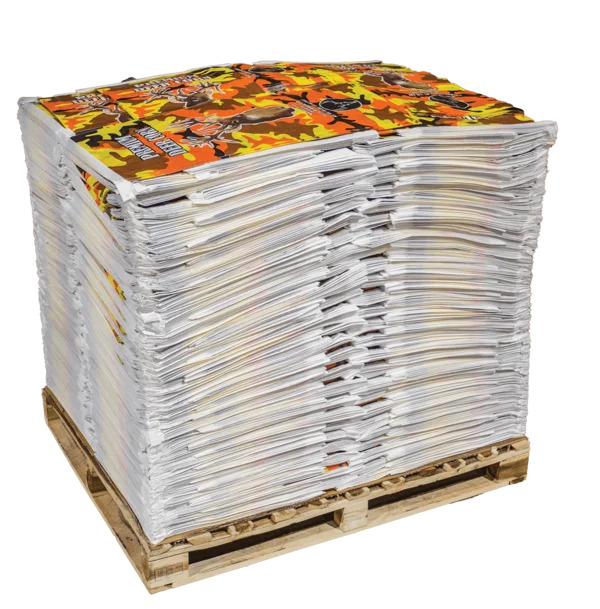
Block BOPP Bags are flat‑based, brick‑shaped industrial sacks manufactured by laminating biaxially oriented polypropylene (BOPP) film to a woven polypropylene (PP) fabric and converting the laminate into a block‑bottom geometry. The result is a package that behaves like a sturdy box when filled, but ships and stores like a flexible bag. The BOPP exterior offers a smooth, printable face with elevated scuff resistance and moisture moderation; the woven PP fabric supplies tensile and tear strength, puncture control, and long‑term stack integrity. In warehouse terms: the package stands straight, stacks tight, and resists both corner drops and conveyor abrasion.
Because the format unites shelf appeal with mechanical robustness and line efficiency, Block BOPP Bags have become a default choice in chemical powders, abrasive minerals, dry building materials, polymer resins, fertilizers, pigments, and selected feed ingredients. Valve versions dominate high‑speed dosing lines; open‑mouth variants serve legacy equipment or slower manual fills.
- BOPP‑laminated PP woven block bottom bags
- Block bottom BOPP valve sacks
- BOPP‑coated woven polypropylene brick bags
- BOPP laminated block‑shaped industrial sacks
- BOPP/PP block bottom pinch bags
- BOPP‑laminated woven poly valve bags
- Block bottom BOPP composite bags
- BOPP laminated box‑type PP sacks
- BOPP film laminated woven PP chemical bags
- BOPP‑laminated block bottom packaging for powders
Names differ by region and vendor, but the core premise stays the same: a BOPP‑faced, woven‑PP‑backed, block‑bottom sack tuned for the realities of chemical packaging and material handling. When precision counts, this structure behaves as a predictable system rather than a pile of parts.
The Materials of Block BOPP Bags
Every outcome is coded in the bill of materials. For Block BOPP Bags, the three protagonists—BOPP skin, woven PP fabric, and the lamination interface—are supported by a cast of functional features such as valve sleeves, micro‑perforations, anti‑slip strategies, and easy‑open options. Understanding why each component exists, and where each contributes, is the shortest path to reliable performance.
BOPP film (outer skin)
The BOPP film is oriented in both machine and transverse directions, giving it a high stiffness‑to‑thickness ratio and an inherently crisp lay. It offers a printable surface with excellent ink holdout, especially when reverse printed and then laminated—an approach that protects the ink within the structure. Typical gauges for industrial sacks run 18–25 μm. Treatment matters: a target surface energy (dyne level) ensures adhesion for laminating and anchorage for inks. Compared to paper faces, BOPP is less hydrophilic, so the laminate maintains cleaner surfaces in humid yards and during damp transit windows.
Woven polypropylene fabric (structural backbone)
Below the film is a lattice of oriented PP tape yarns. Fabric GSM (60–100 g/m² is common for chemical sacks) and pick count determine tensile capacity, puncture resistance, and creep control. Higher denier tapes resist sharp edges from crystalline powders (like salts or silica). Optional PP or PE coatings on the fabric can pre‑seal pinholes, smooth the texture pre‑lamination, and raise bond uniformity. UV stabilization is introduced when outdoor storage is common.
Lamination interface (how film meets fabric)
Two dominant methods bind the layers. Extrusion lamination drops a thin melt curtain—often a PP or PE tie of 8–15 μm—between BOPP and fabric and nips under pressure. Adhesive lamination uses reactive polyurethane or other systems to bond at lower temperatures, protecting delicate reverse prints or specialty films. Either approach must deliver bond strength without curl, delamination, or excessive stiffness at folds. The interface also contributes to moisture moderation and abrasion resistance during pallet moves.
Valve sleeve and functional details
Most chemical SKUs choose a corner valve. Sleeves can be PP (hot‑air weldable) or PE/PP coextrusions (heat‑sealable), with length and diameter selected to match powder flow. Micro‑perforation patterns near the top panel allow controlled air egress during fast dosing; fine powders like TiO₂ and carbon black require tighter patterns to curb sifting. Anti‑slip stripes, matte varnish zones, or textured coatings elevate static coefficient of friction (COF) for pallet stability, while slip control on the outer face preserves reasonable dynamic COF for conveyors. Tear tapes and pre‑notched panels reduce knife use at job sites.
- BOPP 20 μm // PP or PE tie 10–15 μm // Woven PP 70–90 g/m² (general‑purpose chemicals)
- Reverse‑printed BOPP 18–22 μm // Tie 10–12 μm // Woven PP 60–80 g/m² (graphics‑forward SKUs)
- BOPP gloss‑matte hybrid // Tie // Woven PP with UV package (outdoor yard storage)
What are the Features of Block BOPP Bags?
If an engineer asked what differentiates Block BOPP Bags from paper sacks or unlaminated woven bags, the replies would cluster around geometry, handling, barrier, and print. Each area pulls weight on the line and on the ledger.
Beyond the headline features, two subtleties deserve attention: the management of coefficient of friction to balance conveyor flow against pallet grip, and the choreography of seal windows to protect sift‑proof closures at speed. Get those right, and uptime follows.
What is the Production Process of Block BOPP Bags?
The conversion path from pellets and film to finished block‑bottom bags is linear but interdependent: missteps upstream echo downstream as reject spikes, edge curl, or seam inconsistencies. A pragmatic map:
- Film preparation: BOPP sourced at the specified gauge, haze, and dyne level; primers selected where needed.
- Fabric weaving: PP tape‑yarns slit, drawn, and woven to GSM/pick count; optional coatings to flatten and seal pinholes.
- Printing: Reverse gravure/flexo on BOPP with machine‑vision register control; inks chosen for chemical and UV exposure.
- Lamination: Extrusion or adhesive bonding; bond strength and curl monitored, coat weights trended.
- Tubing and side seam: Laminate formed into a tube; seam welded or sewn per equipment capability.
- Block‑bottom conversion: Folds and seals create a rectangular base; top prepared for valve insertion.
- Valve sleeve & finishes: Sleeve inserted and sealed; micro‑perfs, anti‑slip stripes, and easy‑open features added.
- Quality control: Dimensional checks, seam pull tests, dart screens, COF, print adhesion, and—if relevant—UV stability.
- Palletization: Bundles stacked with edge guards; wrap/hood recipes match COF targets to avoid deformation.
What is the Application of Block BOPP Bags?
Block BOPP Bags are at their best when loads are dense, handling is rough, graphics must remain readable, and pallet stacks must survive weeks without leaning. The following use‑case grid illustrates fit and configuration cues.
For a broader context on laminated woven solutions adjacent to this format, see laminated BOPP woven bags. That reference explains construction nuances that many teams adapt when specifying Block BOPP Bags for chemicals.
Block BOPP Bags: Essential for Chemical Packaging and Material Handling — Structured Analysis
The phrase is a claim; the analysis below turns it into a plan. Chemicals vary—coarse granules, fine powders, hygroscopic crystals, abrasive fillers—and their logistics punish packaging mercilessly. A systems view decomposes the challenge into tractable parts, then recomposes the parts into a dependable operating pattern.
Sub‑problem A — Filling speed vs. dust control
Challenge: High bags‑per‑minute targets entrain air and raise dust, contaminating seals and coding equipment. Response: Choose valve sleeves compatible with ultrasonic or thermal sealing, tune micro‑perfs to vent air without sifting, and add air knives or powder deflectors at the spout. Metric: rejects at speed, dust index at the filler, seal integrity under contamination.
Sub‑problem B — Pallet stability vs. conveyor flow
Challenge: High static COF stabilizes pallets but may slow conveyors; low COF flows quickly but risks sliding layers. Response: Matte or textured BOPP zones and anti‑slip stripes elevate static COF where bag meets bag, while tuned slip on the exterior maintains reasonable dynamic COF. Metric: static/dynamic COF windows, pallet slide incidents, jam‑related stoppages.
Sub‑problem C — Moisture exposure vs. recovery narratives
Challenge: Hygroscopic chemicals need moisture moderation, but excessive laminate mass complicates end‑of‑life. Response: Thin BOPP with right‑sized tie layers limits plastic mass; clear PP identification supports recovery where systems exist. For extreme barrier needs, prefer secondary overwrap or stretch‑hoods rather than over‑engineering the primary bag. Metric: WVTR in storage conditions, label legibility after exposure, acceptance of recovery guidance.
Sub‑problem D — Robustness vs. mass
Challenge: Downgauging saves cost and carbon but risks tears and corner splits. Response: Create recipe libraries with fabric GSM bands matched to product density and drop height; reinforce bottom folds; balance BOPP gauge vs. fabric GSM using design‑of‑experiments. Metric: dart screens, seam pull strength, drop‑test pass rates, creep deformation at week 12.
Sub‑problem E — Documentation vs. agility
Challenge: Customers expect COAs, performance maps, and change control; sourcing wants flexibility. Response: Standardize COAs, define allowable windows for BOPP gauge, fabric GSM, and coat weight, and embed QR traceability. Metric: approval time for supplier switches, audit non‑conformances, trace closure time.
- Define abuse profile, climate, and stack height by SKU.
- Choose among three core structures (BOPP//tie//woven; reverse‑printed BOPP//tie//woven; UV‑stabilized variant).
- Map seal window and sleeve parameters with actual powders.
- Set COF bands; verify again after 48–72 hours of aging.
- Run a downgauging DoE varying BOPP gauge, fabric GSM, and coat weight; lock the window.
- Publish a documentation pack (COAs, performance maps, QR traceability) and a change‑control protocol.
Technical Details and Reference Tables
The values below are indicative starting points for Block BOPP Bags. Confirm against your powders, climates, and lines.
Knowledge Reinforcement: Engineering Notes & Examples
- Barrier reality check: BOPP is not hermetic. For extremely hygroscopic salts, pair Block BOPP Bags with controlled warehousing or consider secondary stretch‑hoods.
- Valve dynamics: Sleeve angle and length influence dust and closure; run short trials to tune for each powder’s flow index.
- Stack geometry: Interlocking pallet patterns reduce columnar stress; align wrap force with COF targets.
- Outdoor storage: UV packages in film or coatings extend print life; ensure pigments are weather‑stable.
- Downgauging with discipline: Adjust BOPP gauge, fabric GSM, and fold reinforcement together; verify dart and seam performance after each iteration.
Long‑Tail Keyword Strategy
To serve discoverability while staying readable, this article naturally integrates variants such as: block bottom BOPP valve bags, BOPP laminated PP woven chemical sacks, box‑type BOPP bags for powders, brick‑shape BOPP/PP industrial sacks, BOPP laminated woven polypropylene bags for material handling, and block bottom valve packaging for chemicals. These synonyms mirror how engineers and buyers search without degrading clarity.
Frequently Asked Questions (Engineer to Engineer)
Why not use paper valve sacks? Paper excels at tactile feel and printability; barrier papers are improving. Yet for abrasive, high‑drop, or moisture‑sensitive chemicals, Block BOPP Bags typically provide stronger puncture resistance and more stable pallet geometry at similar mass.
Are these bags compatible with existing valve fillers? Yes. Most block‑bottom valve formats run on standard powder fillers with minor sleeve adjustments. Confirm seal methods (ultrasonic or thermal) against sleeve materials.
Do they recycle? The structure is predominantly polypropylene (BOPP + woven PP), supporting PP‑stream recovery where collection exists. Designs with minimal foreign layers and clear labeling improve outcomes.
What about hazardous chemicals? Many Block BOPP Bags serve non‑hazardous solids. For UN‑regulated materials, consult packaging engineers for certified constructions and tests; geometry and laminate choices may differ.
How do I prevent pallet slides? Specify static/dynamic COF windows, add anti‑slip stripes or matte zones, and validate on your floor material after 48–72 hours to capture slip migration.
A Practical Operating Checklist
- Capture product density, particle shape, and anticipated drop‑height risks.
- Choose BOPP gauge (18–22 μm is common) and fabric GSM (60–100 g/m²) to match the abuse profile.
- Select lamination method; standardize coat weight and bond tests.
- Pick valve sleeve material and length; map seal windows by SKU under dusty conditions.
- Tune COF targets and anti‑slip features for your warehouse floors and pallet heights; re‑measure after 48–72 hours.
- Run drop, seam pull, creep, and dusting audits; set acceptance criteria and trigger thresholds.
- Document COAs, print dyne levels, and QR/batch traceability; publish allowable recipe windows for sourcing agility.
- Plan downgauging steps; record performance deltas; lock the operating window in the line HMI.
- What is Block BOPP Bags?
- The Materials of Block BOPP Bags
- What are the Features of Block BOPP Bags?
- What is the Production Process of Block BOPP Bags?
- What is the Application of Block BOPP Bags?
- Block BOPP Bags: Essential for Chemical Packaging and Material Handling — Structured Analysis
- Technical Details and Reference Tables
- Knowledge Reinforcement: Engineering Notes & Examples
- Long‑Tail Keyword Strategy
- Frequently Asked Questions (Engineer to Engineer)
- A Practical Operating Checklist
“Why are Block BOPP Bags the gold standard for chemical packaging?”
This question reverberates across industries handling hazardous materials. The answer lies in their unparalleled durability, customization capabilities, and compliance with stringent safety standards—factors that make Block BOPP bags indispensable for modern chemical logistics.
At VidePak, a global leader in woven bag manufacturing since 2008, these bags are engineered to meet the evolving demands of chemical producers. With a workforce of 526 and annual sales of $80 million, the company leverages Austrian Starlinger technology and decades of expertise to deliver solutions that redefine safety and efficiency in high-risk environments.
1. Customization: Tailoring Solutions for Diverse Needs
1.1 Precision in Design and Dimensions
VidePak’s Block BOPP bags are fully customizable in size (5–50 kg capacity), thickness (90–120 GSM), and weave density (12–14 threads/cm²). For example, a German agrochemical company reduced spillage by 18% after switching to VidePak’s reinforced block-bottom bags with double-stitched seams, designed to withstand 12 N/m² tensile stress during pneumatic conveying.
1.2 Advanced Printing Technologies
VidePak employs 8-color flexographic printing and UV-resistant inks to support Pantone, CMYK, and RAL color systems. A case study with a Japanese fertilizer manufacturer showcased full-surface printing with ΔE ≤1.5 color accuracy, enhancing brand visibility while complying with Japan’s JIS Z 1707 food-grade standards.
Key Innovations:
- Anti-scuff coatings: Extend print longevity by 40% in abrasive environments.
- QR-code integration: Enables real-time tracking for hazardous material compliance (e.g., UN Model Regulations).
2. Material Integrity and Safety Compliance
2.1 Virgin PP and Barrier Technologies
VidePak uses 100% virgin polypropylene to avoid contaminants common in recycled resins. Their PE-laminated BOPP bags reduce moisture permeability by 95%, critical for hygrochemicals like calcium chloride. Third-party tests confirm zero heavy metal migration, aligning with EU REACH and FDA 21 CFR regulations.
Table 1: VidePak’s Block BOPP Bag Specifications
| Parameter | Specification |
|---|---|
| Material | Virgin PP + PE lamination |
| Thickness | 90–120 GSM |
| Load Capacity | 5–50 kg |
| Print Color Systems | Pantone, CMYK, RAL |
| Certifications | ISO 9001, EU REACH, UN Certified |
2.2 Anti-Static and Flame-Retardant Options
For explosive powders like sulfur, VidePak integrates carbon-based anti-static layers (surface resistivity ≤10⁸ Ω) and flame-retardant additives meeting ASTM D5260 standards. A 2024 partnership with a U.S. lithium battery supplier reduced fire incidents by 22% using these specialized bags.
3. Automation and Production Efficiency
VidePak’s Starlinger AD*Star looms achieve 200 bags/minute with ±0.2 mm dimensional tolerance. The multi-machine synchronization system reduces changeover time by 30%, enabling 48-hour turnaround for 10,000-unit orders. For instance, a Brazilian ethanol producer cut logistics costs by 15% using VidePak’s custom-printed FIBC bags with automated filling compatibility.
Case Study:
A Saudi petrochemical giant reported a 25% increase in palletization efficiency after adopting VidePak’s block-bottom valve bags, which align seamlessly with robotic packaging lines.
4. Market Trends and Competitive Edge
The global chemical packaging market, valued at $63.2 billion in 2024, is projected to grow at 5.3% CAGR, driven by Asia-Pacific’s agrochemical boom. VidePak dominates with:
- Global Reach: Serves 30+ countries, including EU and APAC regions.
- Sustainability: Recyclable PE coatings reduce carbon footprint by 35% vs. traditional laminates.
5. FAQs: Addressing Critical Concerns
Q: How do Block BOPP bags prevent chemical degradation?
A: The 3-layer lamination (PP + adhesive + PE) blocks UV radiation and oxygen ingress, extending shelf life by 6+ months for oxidizable compounds.
Q: Can these bags withstand extreme temperatures?
A: Yes. VidePak’s high-melt PP resin maintains integrity from -30°C to 120°C, tested per ASTM D638.
Q: What’s the ROI for customization?
A: Clients typically recoup costs within 8 months via reduced waste and compliance penalties.
6. Future Innovations: Smart Packaging
VidePak is piloting NFC-enabled bags for instant chemical composition verification, paired with Starlinger iQ³ AI systems that auto-adjust loom tension based on material batch variations.
Conclusion
Block BOPP bags are not just containers but strategic assets for chemical safety and brand integrity. VidePak’s fusion of Austrian engineering, regulatory mastery, and bespoke design positions it as the partner of choice for industries navigating complex logistical challenges.
External Resources:
- Explore how block-bottom bags optimize chemical safety.
- Learn about compliance-driven polypropylene solutions.