
Definition, aliases, and why the shape matters
Block BOPP Bags occupy a distinctive niche at the intersection of strength, print quality, and spatial efficiency. In common factory usage they may be described as BOPP-laminated woven sacks, block-bottom PP woven bags, or BOPP block-bottom bags. The core idea is simple yet powerful: combine a woven polypropylene (PP) fabric that provides the mechanical backbone with a biaxially oriented polypropylene (BOPP) film that delivers a clean printable façade, modest moisture control, and abrasion resistance. The “block” geometry—flat panels, squared edges, a true rectangular base—translates engineering into logistics. Pallets stack straighter. Warehouse faces look neater. Retail shelves display with intent rather than chance.
What gives these formats their utility? Three steady virtues: predictable handling on high-speed filling lines, robust resistance to scuff and tear during distribution, and a billboard-like surface for brand communication. These are not merely containers; they are engineered interfaces between materials science and operations management. When a plant swaps flimsy sacks for Block BOPP Bags, rejects shrink, rework slows, and forklifts move fewer leaning pallets. Form reflects function, and function reduces total cost.
Materials: what they are, what they cost, and how they work together
Material choice is the most consequential lever in the design of Block BOPP Bags. The vocabulary is familiar—PP, BOPP, PE—but the grammar matters: which layer sits where, how thick, and with what surface energy. Below we map the principal components to their roles, risks, and economic signals.
- Extruded PP tapes drawn for orientation; woven on circular or flat looms.
- High tensile-to-weight ratio; excellent abrasion resistance under conveyor handling.
- Economic anchor: commodity PP resin with stable supply; weaving adds labor/capital but enables downgauging of outer films.
- Biaxially oriented PP; high gloss or matte; excellent dot fidelity when treated.
- Moderate moisture barrier; oxygen barrier tunable via coatings or metallization.
- Economic signal: higher unit price than LDPE but lower required thickness and better shelf impact.
- LDPE/LLDPE for low SIT and generous hot tack; PP-based sealants for higher heat resistance.
- Anhydride-modified tie resins or polyurethane adhesives for cross-material bonding.
- Economic trade-off: metallocene LLDPE (premium) often earns back cost via downgauging and wider sealing windows.
Additive packages are quiet protagonists. Slip agents and anti-block define coefficient of friction (COF) and ease both roll handling and sack stacking. Antistatic agents reduce powder cling in fertilizers and minerals. UV stabilizers protect against outdoor exposure. A warning worth repeating: too much slip can migrate to the print face, sabotaging ink anchorage; too little slip increases drag at the forming shoulder and elevates stoppages. For Block BOPP Bags, balance beats extremity.
| Layer | Core role | Typical thickness / GSM | Key properties | Cost signal |
|---|---|---|---|---|
| BOPP outer (matte/gloss) | Print face, scuff resistance, modest MVTR | 15–35 μm | High clarity, stiffness, printable at ≥38 dynes | Mid-to-high vs. LDPE; pays back via reduced gauge and brand impact |
| Adhesive / tie | Bond BOPP to woven PP/PE interlayer | 1.5–3.5 g/m² coat weight | Bond strength, cure behavior, low solvent retention | Functional cost; critical to avoid delamination |
| Woven PP fabric | Structural backbone | 55–120 g/m² (fabric GSM) | Tensile/tear, abrasion durability | Commodity resin; weaving adds conversion cost |
| Inner sealant / liner | Hermeticity, grease resistance | 25–80 μm film or separate PE liner | Low SIT, hot tack, compatibility with contents | LLDPE premium recouped via line speed and seal reliability |
Feature set: what users notice, what operators measure
A feature is meaningful only if it changes outcomes. For Block BOPP Bags, outcomes live in three domains—speed, safety, and shelf. Speed belongs to line operators (fewer jams, quicker changeovers). Safety belongs to distribution (fewer ruptures, safer pallets). Shelf belongs to brands (clean graphics, crisp geometry). Each domain maps to measurable characteristics.
- Stackability and cube efficiency: the block-bottom footprint reduces slumping and increases pallet stability, enabling higher stack heights within safe deflection limits.
- Puncture and tear resistance: woven PP resists angular granules; balanced MD/CD tear avoids zipper failures; dart impact correlates with drop performance.
- Print fidelity and scuff resistance: BOPP enables rich color and low mottling; reverse printing and varnishes protect inks through the supply chain.
- Moisture behavior and barrier options: baseline BOPP reduces MVTR; inner liners or coated films address hygroscopic products; optional valves help powders vent trapped air.
- Closure flexibility: open mouth with sew or pinch, or valve configurations for high-speed fills—each with implications for hermeticity and line compatibility.
- Sustainability levers: downgauging, mono-polyolefin stacks for recycling, and PCR integration in non-food layers where odor and gel-count are controlled.
Process: from tapes to block-bottom, from print to pallet
Producing Block BOPP Bags requires choreography among extrusion, weaving, printing, lamination, forming, and quality assurance. The goal is not only to meet the drawing but to achieve repeatability under ordinary variation—shift changes, ambient swings, resin lot differences.
- Tape extrusion: PP film is extruded and slit into tapes; draw ratios build tenacity; width controls weave uniformity. Key checks: denier, tenacity, elongation, gel density.
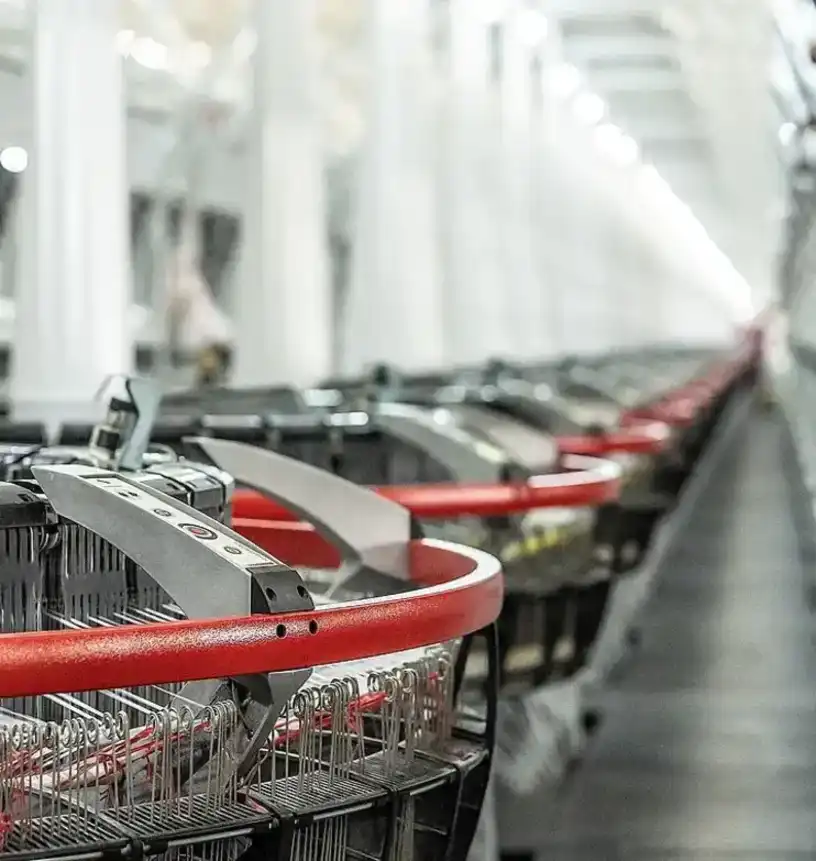
- Fabric weaving: circular/flat looms create fabric at targeted GSM and pick count; weave patterns influence tear anisotropy and breathability.
- BOPP treating and printing: corona/plasma raises surface energy; flexo/gravure prints graphics; register and color are monitored; reverse printing planned for lamination.
- Lamination/bonding: polyurethane systems (solvent-based or solventless) add bond strength; cure schedules guard against retained solvents; bond tested via peel.
- Cutting and block-bottom forming: web lengths are cut, gussets formed, bases folded into rectangular footprints; hot-melt, heat, or adhesive locks shape.
- Closure preparation: open-mouth sewing tape positioning, pinch-closure films, or valve insertion engineered for the target filler.
- Inspection, testing, and palletization: seal curves mapped; dart impact and tear tested; bundles/pallets configured with corner protection.
Applications: where the geometry earns its keep
Use-cases illuminate design decisions. Fertilizers want valves and antistatic behavior; minerals demand puncture resistance; pet foods require grease resistance and strong shelf presence; building materials need drop-hardy sacks with tidy pallets. Block BOPP Bags tailor the stack to the sector.
- Agriculture and fertilizers: NPK blends and urea are dusty and occasionally abrasive. Valve bags accelerate fills. UV stabilizers protect outdoor storage; antistatic agents reduce dust cling.
- Construction and minerals: cement, mortar, calcium carbonate, gypsum, and silica punish weak seams. Woven PP takes the blows; block bottoms keep pallets square.
- Animal nutrition and pet food: inner films with grease resistance; optional barrier enhancements; retail-grade graphics that survive transit rubs.
- Food ingredients: sugar, rice, pulses, and salt benefit from clean seals and migration-safe inks/adhesives. Optional liners manage hygroscopic tendencies.
- Household and retail fuels: charcoal briquettes and wood pellets value puncture resistance; shape retention supports attractive display cubes.
Standards, testing, and declarations that confer credibility
Assurance is the currency of professional packaging. Customers don’t simply want a bag; they want demonstrated compliance. Block BOPP Bags routinely align to a lattice of quality, safety, and performance frameworks. While specific certifications depend on market and application, the following references guide specification and audit readiness.
- Quality management: ISO 9001 for system discipline; ISO 14001 for environmental management; ISO 45001 for occupational health and safety.
- Food-contact (where applicable): FDA 21 CFR 177.1520 for polyolefins; EU 10/2011 and amendments; Regulation (EC) No 1935/2004; GMP Regulation (EC) No 2023/2006. BRCGS Packaging Materials as a scheme for site certification.
- Chemical compliance: REACH (EC) No 1907/2006; RoHS (EU) 2011/65/EU in relevant electrotechnical contexts; Proposition 65 disclosures where required.
- Mechanical and barrier testing: ASTM D882 (tensile), ASTM D1709 (dart impact), ASTM D1922 (Elmendorf tear), ASTM F88/F88M (seal strength), ASTM D3985 (OTR), ASTM F1249 (WVTR), ASTM D1894 (COF). ISTA protocols for transit robustness; ASTM D5276 for drop performance.
| Parameter | Typical window | Reference |
|---|---|---|
| Seal strength | ≥ 2.5–5.0 N / 15 mm | ASTM F88/F88M |
| Dart impact | 300–900 g | ASTM D1709 |
| COF (film/film) | 0.20–0.35 | ASTM D1894 |
| OTR (if barrier) | 0.5–10 cc/m²·day @23 °C, 0% RH | ASTM D3985 |
| WVTR | 0.5–6 g/m²·day @38 °C, 90% RH | ASTM F1249 |
| Dyne level (print side) | ≥ 38 dynes | Dyne test inks |
Sustainability through recycling and waste management
The phrase is not a slogan; it is a program. To make Block BOPP Bags more sustainable, designers weigh resin footprints, line efficiency, and credible end-of-life pathways. A kilogram saved via downgauging is useful; a kilogram saved that increases damage is not. The optimum is where mass, performance, and collection systems intersect.
System mapping: break the problem down, then build it back better
System thinking turns competing requirements into reconciled choices. Below is a compact framework to design, validate, and govern Block BOPP Bags over the next year.
- Materials and barrier: set mechanical KPIs (dart, tear, tensile) and barrier KPIs (OTR/WVTR when needed). Start mono-PP/PE; escalate to coatings only with shelf-life evidence.
- Print and brand: lock dyne targets at production and at aged intervals; specify varnish robustness; enforce color ΔE limits and barcode readability.
- Machine interface: define COF windows; standardize roll/bundle geometry; map seal curves against jaw settings; document splice quality.
- Compliance and risk: compile declarations (FDA/EU), audit frameworks (ISO/BRCGS), and change-control protocols for resin or adhesive substitutions.
- Logistics and end-of-life: standardize pallet patterns; protect corners; encode QR links to digital CoAs and recycling instructions.
- Run seal-curve DoE covering temperature, dwell, pressure; confirm hot-tack margins.
- Trend COF over storage time and climate; adapt slip packages and storage conditions.
- Pilot downgauged designs and measure drop-test deltas with real product fills.
- Trial PCR inclusion in non-food layers; monitor odor and gel counts.
- Deploy unified labels with QR-coded CoAs, ECN notices, and recycling guidance.
Professional knowledge reinforcement: numbers that steer decisions
Why do the test numbers matter? Because they predict line behavior and field survival. Seal strength and seal initiation temperature (SIT) indicate how forgiving a closure is under variable ambient conditions. Dart impact and tear values correlate with drop survivability, especially for angular granules. COF stability separates smooth runs from stop–start headaches. Dyne retention hints at ink adhesion six months from now, not merely six minutes after treatment. For Block BOPP Bags, the lab is a forecast of the warehouse.
| Metric | Why it matters | Operational implication |
|---|---|---|
| Seal strength & SIT | Predicts closure reliability under dust, vibration, and thermal drift | Reduced leakers; wider safe settings on mixed-shift lines |
| Dart impact & tear | Forecasts drop survival and rough handling tolerance | Fewer ruptures; fewer forklift cleanups; safer aisles |
| COF window | Controls web draw and stack stability | Smoother fills; lower micro-stoppage counts |
| Dyne retention | Signals durable print adhesion and varnish performance | Cleaner graphics at shelf; fewer scuff-related claims |
Risk register and mitigation playbook
Complex systems fail in patterns. The following issues recur across converters and can be curtailed with disciplined controls.
- Seal leakers: confirm hot-tack sufficiency and keep seal zones free of powder; map SIT vs. jaw temperature; increase dwell or pressure judiciously.
- Delamination: verify adhesive coat weight and cure, especially after cold storage; check ink/adhesive compatibility; monitor solvent retention.
- Print scuffing: specify tougher varnishes; validate rub resistance; check dyne on aged samples, not just fresh webs.
- COF drift: monitor additive bloom; adjust slip packages; control warehouse climate; document varnish–COF interactions.
- UV weathering: add UV stabilizers and limit outdoor exposure time; run accelerated weathering to catch brittle transitions early.
Operational economics: from resin invoices to shipped cases
The unit that matters is not the bag—it’s the shipped case that arrives intact. A resin upgrade may raise material cost per unit yet lower total cost by cutting stoppages, damage, and returns. In practice, Block BOPP Bags improve economic outcomes when three conditions hold: lines run faster, pallets fail less, and shelves communicate better. Price per kilogram is just a chapter; throughput and survivability write the book.
Twelve-month roadmap: practical steps, credible claims
A credible plan blends ambition with metrology. For the next four quarters, a converter or brand owner can advance Block BOPP Bags along the following track.
- Quarter 1: baseline seal curves; audit COF drift; catalog current GSM and gauge; identify quick wins for downgauging backed by dart and drop data.
- Quarter 2: pilot PCR in non-food layers; deploy QR-coded labels linked to digital CoAs and recycling guidance; standardize roll/bundle geometry across sites.
- Quarter 3: expand digital or hybrid printing for short-run SKUs; re-validate color and register tolerances; tune varnishes for summer logistics.
- Quarter 4: run a cross-plant capability study on key CTQs (COF, seal, dart). Close gaps with targeted SOPs and ECNs; publish a recyclability narrative grounded in actual bale performance.
In today’s packaging industry, Block BOPP Bags (Biaxially Oriented Polypropylene) have gained significant popularity due to their durability, flexibility, and aesthetic appeal. These bags, commonly used in industries such as agriculture, construction, and retail, offer various advantages, including high tensile strength and resistance to moisture. However, with growing environmental concerns and increased focus on waste management, the industry is now turning its attention to the recyclability and sustainability of packaging materials. This article will explore the role of Block BOPP sacks in waste management and recycling, particularly focusing on how the use of recyclable polypropylene (PP) materials can contribute to a circular economy. Additionally, we will look at how Block Bottom Woven Bags fit into government regulations on waste disposal and environmental protection.
Block BOPP Bags: An Overview
Block BOPP Bags are widely known for their unique structure, which offers better stability and stackability compared to traditional woven bags. These bags are primarily used for packaging dry goods, chemicals, and other bulk materials. The defining feature of Block Bottom Woven Bags is their rectangular base, which allows them to stand upright and maintain their shape even when filled with loose or granular products. This makes them ideal for industries that require efficient storage and transportation solutions.
Block Woven Bags and Block Bottom Bags are manufactured using woven polypropylene fabric, laminated with a BOPP layer that provides additional moisture resistance and enhanced printability. This combination makes the bags both durable and visually appealing, often used in high-end packaging for consumer goods.
The Importance of Recycling in the Packaging Industry
As global attention shifts toward reducing environmental impact, the packaging industry faces increasing pressure to adopt more sustainable practices. Polypropylene, the primary material used in Block BOPP sacks and other woven bags, is a thermoplastic polymer that is highly recyclable. This characteristic makes Block Bottom Woven Bags particularly valuable in promoting a circular economy, where products are designed for multiple life cycles, minimizing waste.
Recycling polypropylene offers several environmental and economic benefits:
- Reduction of Landfill Waste: Polypropylene products can take decades to decompose in landfills. By recycling PP bags, we can significantly reduce the volume of waste sent to landfills and mitigate the associated environmental risks.
- Conservation of Resources: Recycling PP materials helps conserve valuable natural resources by reducing the need for new plastic production. By incorporating recycled PP into the manufacturing process, companies can decrease their reliance on virgin materials, lowering their carbon footprint.
- Energy Savings: Recycling PP consumes less energy compared to producing new polypropylene from raw materials. This not only reduces the environmental impact but also lowers production costs, making it an economically viable solution for manufacturers.
- Economic Opportunities: Recyclable PP materials have a high resale value, creating new opportunities in the recycling industry. Companies that produce recyclable Block BOPP Bags can contribute to a growing market for recycled polypropylene, benefiting both the environment and the economy.
Government Regulations on Waste Management and Recycling
Around the world, governments are implementing stricter regulations on waste disposal and recycling to combat the environmental impact of plastic waste. Many countries now mandate that packaging products, including Block Bottom Bags, meet specific recyclability standards. In Europe, for instance, the European Union’s Packaging and Packaging Waste Directive (PPWD) sets targets for reducing packaging waste and increasing the recycling rate of packaging materials, including plastics.
In North America, similar measures have been enacted, with both Canada and the United States introducing regulations to curb plastic waste. In particular, the use of recyclable materials in packaging is becoming a legal requirement in many regions, and Block Woven Bags that comply with these standards are becoming more sought after by companies looking to reduce their environmental impact.
China, another major player in the global packaging market, has also tightened its regulations on plastic waste through its “National Sword” policy, which restricts the import of contaminated recyclable materials and emphasizes the need for domestic recycling capabilities. This has led manufacturers in China and other parts of the world to prioritize the use of recyclable and sustainable materials, such as the polypropylene used in Block BOPP sacks.
The Recyclability of Block BOPP Bags
The recyclability of Block BOPP Bags is a key advantage that sets them apart from other types of packaging materials. Polypropylene, being a thermoplastic polymer, can be melted down and reformed into new products multiple times without significant degradation in quality. This makes Block Bottom Woven Bags a sustainable option for industries that require durable and high-quality packaging solutions.
Furthermore, advancements in recycling technology have made it easier to process polypropylene waste. Specialized recycling facilities can now handle the BOPP laminate on these bags, separating the plastic layers and ensuring that both the woven PP fabric and the BOPP film are fully recyclable.
Additionally, manufacturers like VidePak, who prioritize the use of recyclable materials in their Block Woven Bags, are helping to drive the industry’s shift toward sustainability. By offering products that meet government regulations on recyclability, these manufacturers are positioning themselves as leaders in the market and appealing to environmentally conscious consumers.
Waste Management and the Future of Block BOPP Bags
As the demand for sustainable packaging solutions continues to grow, manufacturers must focus not only on the recyclability of their products but also on how these products fit into a broader waste management system. For Block Bottom Bags, waste management can be optimized through several key strategies:
- Design for Recycling: To improve the recyclability of Block BOPP sacks, manufacturers should design the bags with recycling in mind. This means using materials that are easy to separate and process and avoiding the use of non-recyclable adhesives or inks. By designing for recycling, manufacturers can ensure that their products are compatible with current recycling infrastructure.
- Extended Producer Responsibility (EPR): Many governments are adopting EPR policies that require manufacturers to take responsibility for the entire lifecycle of their products, including disposal and recycling. Companies that produce Block BOPP Bags can implement take-back programs or work with recycling partners to ensure that their products are properly recycled at the end of their life.
- Consumer Education: For recycling efforts to be successful, consumers must be informed about how to properly dispose of Block Bottom Bags. Manufacturers can include clear recycling instructions on the bags themselves or on their websites, helping consumers make responsible choices when disposing of their packaging.
Competition and Industry Standards
While many companies are now producing Block Woven Bags, not all adhere to the same sustainability and quality standards. Some competitors may use lower-quality recycled PP materials, which can compromise the strength and durability of their bags. VidePak, on the other hand, maintains stringent quality control processes, ensuring that their bags are both high-performing and fully recyclable.
Additionally, while some manufacturers may cut corners by using non-recyclable additives or inks, VidePak’s Block Bottom Woven Bags are designed with sustainability in mind, using materials that are easy to recycle without compromising the bag’s functionality or appearance.
The Path Forward for Block BOPP Bags
As environmental regulations become stricter and consumer demand for sustainable products continues to grow, the future of Block BOPP Bags lies in innovation and eco-friendly practices. Companies like VidePak are already leading the charge by producing high-quality, recyclable Block BOPP sacks that meet both industry needs and environmental standards.
By investing in sustainable materials, improving recycling processes, and adhering to government regulations, manufacturers can ensure that Block Bottom Bags remain a vital part of the global packaging landscape, contributing to a more sustainable and circular economy.
In conclusion, Block BOPP Bags offer a practical and environmentally responsible solution for industries in need of durable, high-quality packaging. With their recyclability, compliance with government regulations, and role in waste management, these bags are poised to become a staple in sustainable packaging.