
BOPP (Biaxially Oriented Polypropylene) woven bags are durable, recyclable packaging sacks made from a single polymer – polypropylene. By laminating a biaxially stretched PP film onto a woven PP fabric, these bags combine exceptional strength with a smooth printable surface. The result is a heavy-duty bag that is moisture-resistant and tear-tough, yet able to showcase vibrant graphics and branding. In fact, BOPP bags are often called “eco-friendly” because they use a single plastic type that can be recycled as one stream. Their stiffness, puncture resistance and extended UV/moisture protection mean contents stay safe and dry, whether storing rice, fertilizer or pet food. At the same time, the laminated BOPP film provides a high-quality printable canvas – images and text are printed on the underside of the clear film, locking ink beneath the surface for scratch resistance and a glossy finish. A comparison of BOPP woven bags with ordinary PP sacks reveals dramatic differences – one offers rugged, no-frills service, the other adds a polished exterior without sacrificing strength.
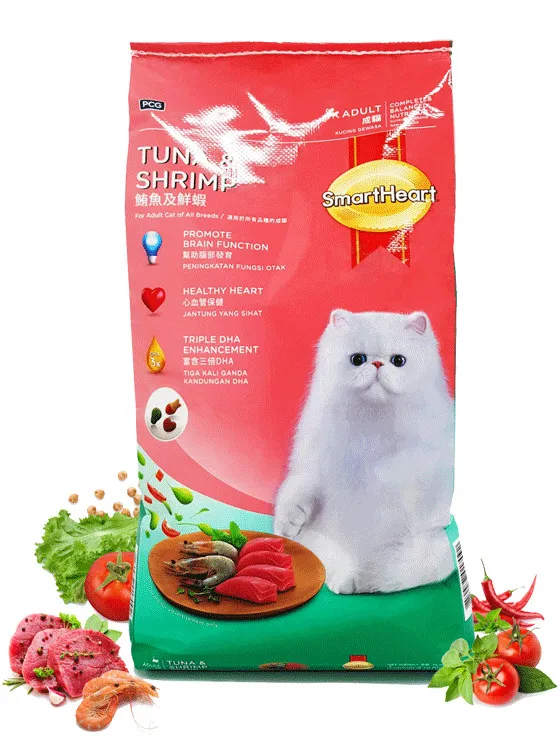
In a BOPP woven bags (as shown), the inner layer is a robust woven PP fabric that carries weight, while the outer laminated layer is a thin, biaxially-stretched PP film that carries the brand. This combination of layers creates a sack that is strong yet printable. The PP tape web provides the tensile backbone, and the BOPP film film provides clarity and moisture-barrier. Indeed, BOPP woven bags are engineered to ASTM and ISO standards – melt flow, thickness and film properties are measured to international test methods. For example, the polymer melt-flow is tested (ISO 1133), film friction is measured (ISO 8295), and BOPP strength and puncture resistance are verified by standards such as ASTM D1709. The end result is a bag that looks premium (glossy or matte as needed) and performs reliably under load.
VidePak’s BOPP Woven Bag Production
VidePak is a leading manufacturer of heavy-duty bags, including BOPP laminated woven sacks. The company sources 100% virgin polypropylene resin from top global suppliers (such as BASF and Sinopec) to ensure raw-material consistency. These premium-grade resins feed a state-of-the-art production line: extrusion of tape, weaving of fabric, lamination of film, printing, and conversion. In fact, VidePak’s modern facility uses Austrian Starlinger equipment for tape extrusion, weaving and lamination, and German W&H machines for printing and bag converting. This “all-Starlinger and W&H” lineup guarantees precise control of denier, film thickness, color registration and seals. Every process parameter – from tape uniformity to lamination nip pressure – is tightly monitored, and any deviation triggers an immediate containment plan. By standardizing on the world’s best machinery, VidePak minimizes defects and scrap, which translates to reliable product quality. In practice, this means that a typical BOPP bag from VidePak can last through stacking, shipping, UV exposure and handling, with fewer claims and more confident deployments.
Raw Materials & Equipment
VidePak’s raw material list reads like a who’s-who of polymer excellence. It uses virgin PP pellets with a melt flow index tightly controlled (MFI ~6–8 g/10min). These pellets are drawn into tapes and woven into fabric on high-precision looms. The BOPP film (15–35 µm thick) is also high-quality and pre-treated for ink adhesion. Between the fabric and film lies a PP-based tie layer that bonds them (extrusion-laminated). In other words, both layers and the bond are polypropylene-based for uniformity and recyclability. All equipment – from the tape extruders to the final sewing machines – come from Starlinger and W&H. This ensures, for example, that lamination coating is uniform and films are pre-heated correctly, and that print registration is rock-solid. VidePak even tunes its solar-powered plants to optimize energy (65% of power by solar) and includes closed-loop recycle of scrap. The overall capacity is enormous – on the order of hundreds of millions of bags per year. In short, VidePak’s BOPP bags are backed by premium resin and premium machines, scaled to meet big-volume needs.
Quality Assurance & Standards
Before any bag leaves the factory, it passes through rigorous quality gates. VidePak adheres to international standards at every step. Raw tapes and films are incoming-inspected – thickness, MFI and additives like UV stabilizers are checked against certificates. In-line, cameras and sensors monitor film tension, color registration (ΔE tolerance), peel strength of laminates and even fabric density. Any deviation beyond tight tolerances triggers an alarm. After conversion (cutting, sewing or sewing-valve fitting), finished bags undergo final testing: seam-strength tests, dimensional checks, moisture uptake, drop tests with real product, and AQL sampling per ISO 2859. Each pallet is traced back to its resin lot and film lot, so any issue can be root-caused. The point is to catch defects before shipment – as one expert noted, “the most expensive defect is the one that escapes”. Indeed, VidePak reports burst pressures, acid resistance, abrasion and UV tests far above minimum requirements. All of this leads to a BOPP bag that performs consistently year after year.
Types of BOPP Woven Bags
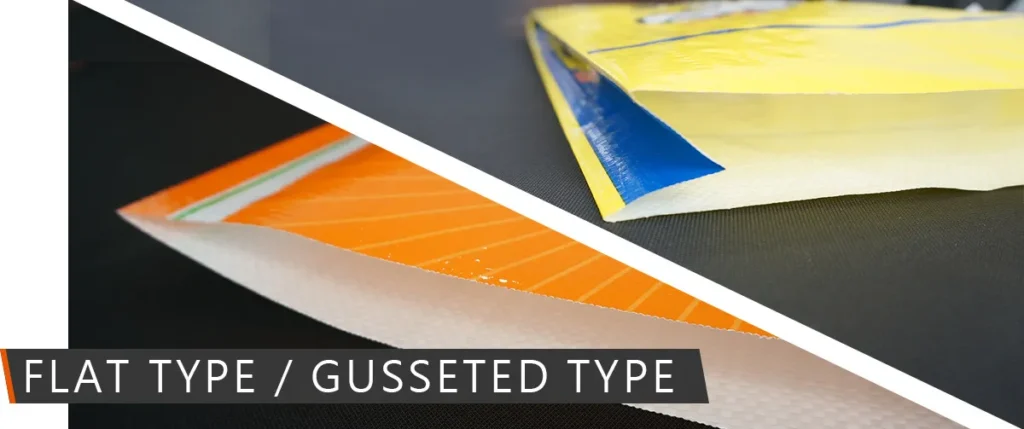
BOPP woven bags come in a range of configurations tailored to various filling lines and contents. Manufacturers typically offer the following formats:
· Valve Block-Bottom Bag
- Description: A bottom-sealed (block-bottom) bag with a fill valve on top. The block bottom provides stability on pallets, and the top valve allows automatic filling without manual stitching. These are common in cement and chemical industries where speed and dust control matter.
· Valve (Open-Mouth) Bag
- Description: An open-mouth bag (open at one end) with a sewn or taped valve for filling. The valve bag blocks air and moisture, acting as a sealed pouch after filling. It’s frequently used for flour, sugar and other goods needing an airtight barrier.
· AD★Star (Pinch-Bottom) Bag
- Description: Originally branded “AD★STAR,” this is a pinch-sealed bottom bag. Its unique fold creates a flat bottom (once pinched and stitched), offering cube stability like a block bag. These are engineered for maximum strength, often used in seeds, grains, fertilizers and animal feed.
· Pinch-Bottom Open-Mouth Bag
- Description: Similar to AD★Star but typically for retail sizes like pet food or specialty seeds. The bottom is heat-bonded or sewn with a pinch seal, preventing spillage. This format is also handy for user convenience, as the bag will self-stand and is easy to handle.
· EZ-Open Bag
- Description: A BOPP bag with special tear tapes. Often two pull-tabs (a wide and narrow one) run along the top; pulling them cleanly rips open the mouth. This feature is valued in retail products (e.g. snack foods, fertilizers) because it’s tamper-evident and easy for consumers to open. Once opened, these bags cannot be resealed, which is ideal where package integrity must be clear.
· Bottom-Stitched (Sewn) Bag
- Description: A traditional woven bag with its bottom edge stitched closed. This is the simplest style and is very robust against rough handling and moisture. If laminated with BOPP, these bottom-sewn bags resist water and dust infiltration better than plain PP sacks. They are used for granular products that need durability but not necessarily a flat bottom.
Each of these styles can be covered with BOPP film, giving them a finished look. Valve bags with reverse-printed film, for example, preserve product freshness, while pinch-bottom laminated bags maintain dryness. Manufacturers often list dozens of custom variations (easy-open stripes, anti-slip coatings, UV-block additives, inner PE liners, etc.) to meet specific needs.
Advantages of BOPP Woven Bags
BOPP woven bags combine multiple functional benefits in one package. Key advantages include:
- Exceptional Durability: The woven PP fabric core is inherently strong and tear-resistant. BOPP laminated bags can handle rough handling and heavy loads. They protect contents from moisture, UV and dirt during long shipments.
- High-Quality Printability: The outer BOPP film provides a perfectly smooth surface for printing. Inks are printed on the underside of the film, then sealed under a clear polymer layer. This means vivid, sharp graphics that won’t rub off or scratch easily. Brands can showcase complex multi-color designs and logos on BOPP bags in retail or industrial packaging.
- Barrier Performance: Thanks to the polymer film, these bags offer superior barriers to moisture, dust and contaminants compared to unlaminated PP sacks. The film layer blocks water vapor and fine powders from seeping through the weave. For example, a typical BOPP bag can absorb <1.5% moisture in 24h, well below the 3% of ordinary PP. This keeps hygroscopic products (chemicals, food) drier and fresher.
- Lightweight & Cost-Effective: BOPP bags can often be made thinner than heavy-duty PP bags while retaining strength. Because the biaxial orientation adds tensile strength, manufacturers can “down-gauge” — use less polymer per bag — without sacrificing safet. This saves material cost and shipping weight. In the right quantities, BOPP woven bags are a highly cost-effective solution, balancing performance and price.
- Versatility & Customization: The same BOPP bag can be tailored for many tasks. Bags can be glossy or matte, clear or colored. Special features like anti-slip coatings, liners, easy-open strips or UV-protective masterbatches can be added. This flexibility means one format can serve in agriculture today and in retail tomorrow – without a change of material.
- Sustainability: Since they’re mono-polymer (all PP), BOPP woven bags are recyclable through standard PP recycling streams. When returned, they can be reprocessed into new polyolefin products. Using a single material avoids complex multi-layer waste, aligning with circular economy goals.
In short, BOPP woven bags protect goods and promote brands simultaneously. They stack well on pallets (tuned coefficients of friction avoid slipping), fill quickly (controlled air venting), and endure in rain or shine. They ask: Why choose between strength and beauty? With BOPP bags, one gets both resilience and eye-catching appeal.
For example, consider how richly a printed BOPP bag can look. The image above shows a reverse-printed bag with detailed artwork. Because the print is locked under the BOPP film, the colors stay vivid even after handling. Such graphic quality persuades customers on store shelves. In comparison, a plain PP bag would only accept basic, matte prints.
Comparing BOPP Woven Bags with PP Woven Bags
How do BOPP woven bags stack up against ordinary polypropylene (PP) woven sacks? Both start with a polypropylene weave, but the extra BOPP layer creates key differences. Below we compare them by material structure, performance, cost and use-cases:
| Aspect | PP Woven Bags | BOPP Woven Bags |
| Material & Structure | Fabric made of random-aligned PP tapes woven together. (No additional film; weight carried by textile.) | Woven PP fabric laminated with a stretched, biaxial PP film. The film is oriented in machine and cross directions, improving clarity and strength. |
| Strength & Durability | Very durable; excellent for heavy-duty bulk use. Handles rough handling (grain sacks, fertilizer, construction materials). | Equally strong but optimized for tear resistance. The biaxial film adds puncture and tear strength, especially on the bag face. Provides a more uniform barrier against fine powders. |
| Moisture/Barrier | Good moisture resistance (woven PP has low water uptake) and dirt protection. | Superior barrier to moisture and contaminants. The bonded film blocks water vapor and dust far better than plain weave. Ideal for moisture-sensitive or hygiene-critical products. |
| Printability & Appearance | Can be printed, but surface is coarse (textured weave), so image sharpness is limited. Generally matte and utilitarian. | Premium print surface: smooth, flat and glossy (or matte) as required. Supports high-resolution multi-color graphics. Enhances shelf appeal with vibrant designs. |
| Cost per Bag | Lower raw cost; simpler process (no lamination). Economical for high-volume basic packaging. | Higher cost due to additional lamination step and material. Requires stretching process (adds equipment and time). However, lighter constructions and higher value per bag can justify the expense. |
| Typical Applications | Bulk or industrial needs: cement, sand, grains, fertilizer, feed (where appearance is secondary). | Consumer-facing or high-value products: premium rice, snacks, pet food, chemicals (where display and barrier matter). |
The table shows the trade-offs without declaring one “better” – each bag type has its niche. PP woven bags are the workhorses: economical and rugged for unbranded, heavy loads. BOPP woven bags are the showpieces: they protect goods while enhancing branding and extending shelf life.
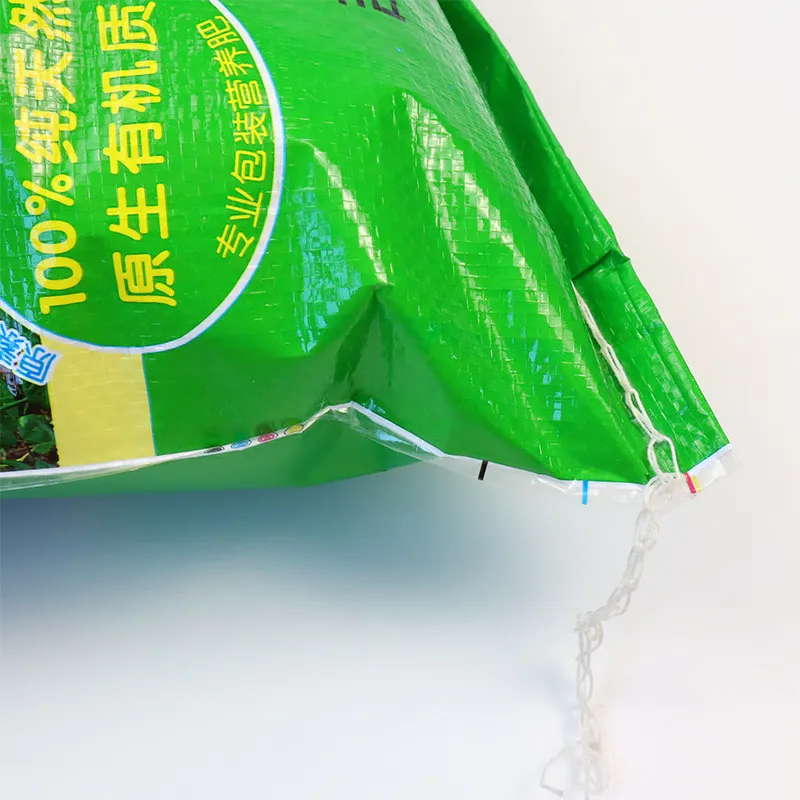
To illustrate customization, the image above shows assorted BOPP bags in various colors. BOPP film comes in clear, white, or dyed shades. This means packaging can match brand color schemes or product style. In contrast, PP sacks are usually plain white or natural PP beige, because they have a coarse weave with colorant limitations.
Table 2: Industry Applications of PP vs BOPP Bags
| Sector | PP Woven Bags (Uses) | BOPP Woven Bags (Uses) |
| Food & Grocery | Bulk staples (rice, flour, sugar) | Retail foods and snacks (cereals, candies, pet foods) |
| Agriculture | Raw seeds, grain, fertilizers (bulk storage) | High-value seeds or fertilizers requiring moisture control |
| Construction/Chemical | Cement, sand, plaster, chemicals (coarse bulk) | Rare – usually chemicals in retail packaging (with branding) |
| Retail & Branding | Minimal; used only for plain, low-cost items | Extensively for branded consumer goods (premium rice, pet food) |
This table highlights where each bag shines. For example, in construction or farm use, plain PP bags dominate because they are cheap and tough. In contrast, BOPP bags are ubiquitous in sectors like pet food and snacks, where the bag serves as a marketing “billboard” and barrier.
Across these industries, the decision hinges on priorities: Is it maximum durability at minimum cost, or is it product visibility and extra protection? BOPP woven bags were designed to answer the latter need without giving up the former.
Conclusion
BOPP woven bags represent a sophisticated evolution of traditional polypropylene sacks. They answer the perennial packaging dilemma: strength versus presentation. On one hand, they retain the toughness of woven PP; on the other, they add a sleek, high-barrier surface that can carry intricate graphics. This duality is intentional – as one industry guide puts it, “the woven substrate carries the weight, the BOPP skin carries the brand.” With their ability to protect goods from moisture, abrasion and UV, while also promoting the product inside, BOPP bags serve as a compelling middle path between plain bulk sacks and full-flexible packaging.
In application, nothing stops the brawny PP woven bag from transporting 50 kg of grain. But when the grain is high-grade rice or chemicals requiring premium handling, a BOPP bag steps in. No one format is universally “better”: rather, each excels where it’s intended. What matters is choosing the right features. Do you need extreme durability and low cost? PP woven bags win. Do you need strong barrier protection and high-quality branding? Then BOPP laminated bags make the difference.
In the end, BOPP woven bags offer a strategic advantage. They “thread the needle” by combining low weight and high strength, moisture moderation, and eye-catching reverse-printed graphics. Whether filling them with fertilizer or gourmet coffee, manufacturers know they have a packaging solution that safeguards contents and sells products – all in one.