
BOPP Laminated Valve Woven Bags: The Pinnacle of Efficient and High-Quality Packaging
When packaging must carry weight, carry a brand, and carry responsibility, BOPP Laminated Valve Woven Bags do all three—quietly, predictably, repeatedly. They marry a textile‑tough polypropylene body with a smooth BOPP skin and a self‑closing valve. Call them BOPP valve sacks, BOPP‑laminated AD*STAR‑type woven bags, or block‑bottom BOPP valve bags—different names, same promise: square stacks, clean fills, and retail‑grade panels. If you need a quick orientation to structures and options, explore BOPP Laminated Valve Woven Bags.
What are BOPP Laminated Valve Woven Bags? (Definition & Common Aliases)
BOPP Laminated Valve Woven Bags are engineered PP‑woven sacks with a block‑bottom base and a valve mouth designed for high‑speed filling and automatic self‑closure. The woven substrate—made from oriented PP tapes—provides tensile and tear strength; the biaxially oriented polypropylene (BOPP) laminate contributes a flat, printable, abrasion‑resistant face; the valve architecture governs how air escapes and how dust stays put. In catalogs and tenders you’ll meet the aliases BOPP valve sacks, BOPP‑laminated AD*STAR‑type woven bags, and block‑bottom BOPP valve bags. The vocabulary shifts by region; the architecture does not.
Horizontally, the design borrows from three worlds at once: textiles (denier, weave geometry), flexible packaging (seal windows, surface energy, COF), and material handling (stack friction, pallet geometry). Vertically, the bag follows a logical ladder—resin → tape → weave → laminate → print → conversion → QA—so failure modes are not mysteries but calculations. That is why BOPP Laminated Valve Woven Bags behave like calibrated components rather than disposable containers.
What are the Features of BOPP Laminated Valve Woven Bags?
Geometry that carries its own order. The block‑bottom creates a brick‑like footprint. Pallets build straighter, ride steadier, and cube denser. In confined warehouses and long drayage, that geometry translates to fewer leaning stacks and fewer touch‑ups.
Leakproofing by architecture, not by hope. Welded or adhesive‑pasted bottoms eliminate needle holes at the base; air escapes through controlled paths: the valve mouth and optional micro‑perforation bands positioned in the upper body. The result is paradoxical only at first glance—fast fills without dust haze.
BOPP face for graphics that arrive as printed. The 15–30 μm BOPP—clear, white, or matte—delivers a smooth print plane for rotogravure or high‑definition flexo. Dense solids, crisp micro‑text, scannable barcodes: the face resists pallet rub, belt friction, and yard handling. When a bag is handled like an object, the art must endure like a message carved in film.
Moisture and handling discipline. Laminates often include a sealant (PE/CPP ≈ 20–40 μm) that widens the heat‑seal window and lowers water vapor ingress. Outer COF can be tuned to ~0.35–0.55 for pallet grip; inner COF to ~0.18–0.30 for smooth feeding and post‑fill sealing. In monsoon or coastal lanes, optional liners and HDPE‑rich sealants add another layer of moisture restraint.
Valve choices that match fillers, not fight them. Heat‑seal valves for hermetic closure; sonic‑seal valves where heat transfer is tricky; tuck‑in for simplicity; poly‑lock lips for mechanical security before final weld. The valve is not an afterthought—it is the throttle that turns air into throughput.
Customization without chaos. Layflat widths commonly span 300–600 mm; lengths align with bulk density to hit target fills (10–50 kg). Micro‑perfs of 20–60 holes/cm² can be zoned above the product bed. Optional clear windows inside white BOPP, antiskid textures, EZ‑open features, and QR/GS1 elements complete the toolkit. Because one design seldom fits all cargoes, BOPP Laminated Valve Woven Bags scale as a family, not as a single SKU.
What is the Production Process of BOPP Laminated Valve Woven Bags?
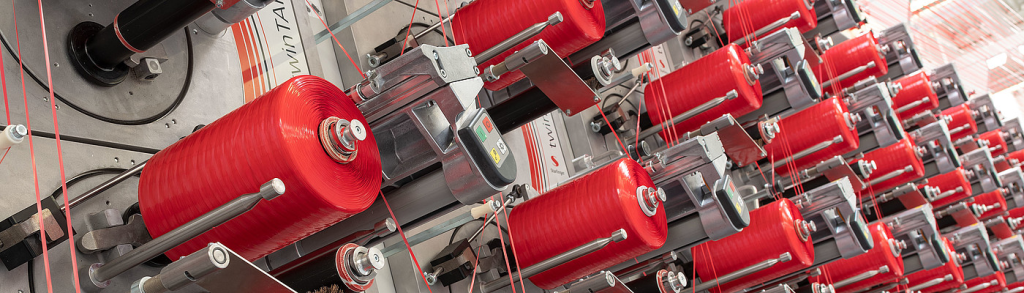
Tape extrusion & orientation. Virgin PP resin is extruded into tapes, then drawn to the target denier (≈600–1,200 D). Draw ratio and quench profile are not trivia; they build tensile strength and set elongation at break, which governs drop survival.
Weaving and fabric control. Circular or flat looms knit tapes into fabric at meshes such as 10×10 to 14×14 and GSM typically 70–110 g/m² for 10–50 kg formats. Loom tension, humidity, and pick density are monitored so the layflat width remains stable for lamination and conversion.
Lamination and surface engineering. A BOPP film (15–30 μm) is laminated to the woven substrate by extrusion coating or adhesive lamination. A sealant layer (PE/CPP ≈ 20–40 μm) may be co‑extruded or bonded to widen the sealing window. Corona treatment to ≥38 dynes keeps inks anchored; coat weight is mapped by SPC to avoid thin‑edge scuffing.
Printing. Gravure (8–9 colors) or high‑definition flexo (6–8 colors) renders photo‑grade imagery and dense solids. Registration and contrast are verified; barcode grades (ANSI/ISO) are checked where GS1 compliance matters. The goal is simple: the code that ships must be the code that scans.
Conversion to block‑bottom valve. The laminated fabric is cut, gusseted, and formed. Bottom panels are hot‑air welded or adhesive‑pasted to eliminate stitch holes. Valve patches are applied to match your nozzle geometry. Micro‑perfs—if specified—are placed as a top breathing band above the settled product level.
Closure and QA. After filling, the valve can be heat‑sealed or ultrasonically sealed. QA captures seam/peel strength, dart impact, Elmendorf tear, COF (inner/outer), dyne, and thickness maps. Lots ship with visual AQL results and, for food‑adjacent builds, material declarations. The mantra is consistent: numbers, not anecdotes.
What is the Application of BOPP Laminated Valve Woven Bags?
Cement & dry mortar mixes. Fast fill, low dust, tough panels—concrete logic for concrete powder. The block‑bottom stabilizes pallets; the BOPP face guards legibility after conveyors and straps scrape across.
Fertilizers & agro‑chemicals. Hygroscopic blends punish casual barrier design. BOPP Laminated Valve Woven Bags with HDPE‑rich sealants and optional liners hold moisture at bay; micro‑perfs release headspace air while keeping fines inside.
Animal feed & pet food. Retail‑exposed products need scuff‑proof graphics and clean seams. BOPP maintains print fidelity; welded bottoms eliminate stitch‑hole dusting. Optional handles raise shopper ergonomics without sacrificing strength.
Plastic resins, masterbatch & salts. High bulk density asks for higher GSM and antiskid exteriors. Rub‑resistant codes and QR keep identification intact through drayage and warehouse churn.
Seeds, grains & specialty flours (where materials comply). Transparent windows in white BOPP offer a peek at quality; the square base supports tall, tidy stacks that please both retail and logistics.
Across these lanes, the through‑line is consistent: BOPP Laminated Valve Woven Bags turn speed, cleanliness, and presentation into the same solution rather than competing priorities.
Why VidePak for BOPP Laminated Valve Woven Bags?
Founded in 2008 and powered by a core team with 30+ years of field experience, VidePak aligns scale with control. We run 100+ circular looms, 16 extrusion lines, and 30+ lamination/printing machines from top‑tier suppliers like W&H (Germany) and Starlinger (Austria)—equipment that makes process capability a design parameter, not a hope. Our 568 employees build export‑grade lots for the USA, Europe, Brazil/South America, Southeast Asia, Japan, Korea, Central Asia, the MENA Region, East Africa, and South Africa, with annual sales around USD 80 million. We use virgin contact layers for food‑adjacent builds, support multi‑color gravure/flexo, and document QA so every bag can trace its lineage from resin batch to pallet ID. Customization is standard; repeatability is mandatory.
Key Parameters — BOPP Laminated Valve Woven Bags
| Parameter | Typical Options / Ranges | Why It Matters |
|---|---|---|
| Fabric GSM | ~70–110 g/m² (10–50 kg formats) | Balances drop/tear resistance with fold behavior and cube stability |
| Mesh (warp × weft) | 10×10 to 14×14 | Governs porosity, lamination flatness, and valve‑area stability |
| Tape Denier | ~600–1,200 D | Drives tensile strength, creep resistance, and seam performance |
| BOPP Film | 15–30 μm (clear/white/matte) | Print fidelity; rub and abrasion resistance; window options |
| Sealant Layer | 20–40 μm (PE/CPP) | Heat‑seal latitude; moisture control; valve lip weldability |
| Valve Types | Heat‑seal / Sonic‑seal / Tuck‑in / Poly‑lock | Filling speed, self‑closure, and post‑fill security |
| Micro‑Perforation | 20–60 holes/cm² in a top band (optional) | Vents headspace air; avoids dusting near product bed |
| COF (inner/outer) | ~0.18–0.30 / ~0.35–0.55 | Smooth feeding vs. pallet grip and stack stability |
| Printing | Gravure 8–9c; Flexo 6–8c | Brand impact; barcode/QR reliability; rub resistance |
| UV Stabilization | 200–1,600 h (optional) | Yard storage and sun exposure tolerance |
| Sizes | Layflat 300–600 mm; length set by bulk density | Fits 10–50 kg fills; supports square, stable pallets |
| QA Metrics | Seal/peel strength; dart impact; Elmendorf tear; dyne; COF; thickness SPC; barcode grade | Turns claims into specifications, lots into trust |
Ranges reflect widely published export practice across peer manufacturers and platform catalogs. Final set‑points depend on product bulk density, fines %, climate, and handling severity.
- BOPP Laminated Valve Woven Bags: The Pinnacle of Efficient and High-Quality Packaging
- What are BOPP Laminated Valve Woven Bags? (Definition & Common Aliases)
- What are the Features of BOPP Laminated Valve Woven Bags?
- What is the Production Process of BOPP Laminated Valve Woven Bags?
- What is the Application of BOPP Laminated Valve Woven Bags?
- Why VidePak for BOPP Laminated Valve Woven Bags?
- Key Parameters — BOPP Laminated Valve Woven Bags
- What are BOPP Laminated Valve Woven Bags?
- Key Benefits of BOPP Laminated Valve Woven Bags
- Key Product Parameters of BOPP Laminated Valve Woven Bags
- Frequently Asked Questions (FAQs)
- 1. What industries use BOPP laminated valve woven bags?
- 2. Are BOPP laminated valve woven bags safe for food packaging?
- 3. How do I ensure the bags are of high quality?
- 4. Can these bags be customized in terms of design and size?
- 5. What makes BOPP laminated valve woven bags a better choice than regular woven bags?
- 6. Are BOPP laminated valve woven bags environmentally friendly?
- Trends and Innovations in BOPP Laminated Valve Woven Bags
In the ever-evolving world of packaging, efficiency, durability, and customization are essential factors for success. One of the most popular packaging solutions meeting these needs is the BOPP laminated valve woven bag. These bags are widely used across various industries due to their robust design, enhanced functionality, and ability to cater to specific product requirements. In this blog, we will explore why BOPP laminated valve woven bags are considered the pinnacle of efficient and high-quality packaging.
What are BOPP Laminated Valve Woven Bags?
BOPP (Biaxially Oriented Polypropylene) laminated valve woven bags are multi-layered packaging solutions made by laminating polypropylene woven fabric with a BOPP film. The laminated film offers excellent printability, making these bags ideal for marketing and branding purposes while also enhancing the bag’s mechanical properties. The “valve” feature allows for easy filling, particularly with granular or powdered products, and is designed to minimize waste and ensure smooth handling during transportation and storage.
Key Benefits of BOPP Laminated Valve Woven Bags
1. Durability and Strength
BOPP laminated valve woven bags are known for their exceptional strength. The combination of the woven polypropylene fabric and the BOPP film ensures that these bags can withstand high loads, rough handling, and the environmental conditions typically encountered during storage and transportation. The strong material makes them ideal for heavy-duty applications, including packaging fertilizers, chemicals, cement, and pet food.
2. Excellent Printability
The BOPP film allows for high-quality graphics and designs to be printed directly on the surface of the bag. The print clarity is excellent, even for complex and vibrant designs. This feature makes these bags ideal for companies that want to enhance brand visibility and improve their product’s shelf appeal. Customization options allow businesses to print logos, product details, and other marketing materials, all while maintaining a professional and attractive look.
3. Eco-Friendly
BOPP laminated valve woven bags are highly recyclable and environmentally friendly compared to single-use plastic packaging. With increasing environmental awareness and sustainability regulations, these bags provide an eco-conscious alternative that can be reused and repurposed, thus helping to minimize waste.
4. Moisture Resistance
The BOPP film layer provides excellent moisture resistance, which is particularly beneficial for products that are sensitive to water or humidity, such as chemicals, foodstuffs, and construction materials. These bags help protect the contents from dampness during storage and transportation, ensuring that the product remains in optimal condition.
5. Cost-Effectiveness
BOPP laminated valve woven bags are not only highly durable and customizable but also cost-effective. These bags provide a balance between quality and price, making them a practical choice for businesses looking for high-performance packaging that doesn’t break the bank.
6. Versatility
One of the most notable features of BOPP laminated valve woven bags is their versatility. These bags come in various sizes, shapes, and configurations, making them suitable for a wide range of products. Whether you are packaging agricultural products, building materials, or chemicals, BOPP laminated valve woven bags offer a tailored solution that meets specific needs.
Key Product Parameters of BOPP Laminated Valve Woven Bags
| Feature | Description |
|---|---|
| Material | Polypropylene (PP) fabric with BOPP film laminate |
| Size | Customizable (from small to large) |
| Weight Capacity | Up to 50 kg, depending on the application |
| Print Area | Full surface printing for logos, graphics, and labels |
| Closure Type | Valve or heat-sealed for secure filling |
| Water Resistance | High due to BOPP film layer |
| Customization | Multi-color printing, logos, product details |
| Applications | Fertilizers, grains, chemicals, construction materials, etc. |
These parameters highlight the significant advantages of BOPP laminated valve woven bags, making them a preferred packaging choice in industries ranging from agriculture to chemicals.
Frequently Asked Questions (FAQs)
1. What industries use BOPP laminated valve woven bags?
BOPP laminated valve woven bags are used across many industries. Some of the most common applications include packaging agricultural products (such as rice, flour, and seeds), chemicals, fertilizers, pet food, cement, and construction materials. Their strength, durability, and moisture resistance make them versatile enough for various environments and product types.
2. Are BOPP laminated valve woven bags safe for food packaging?
Yes, BOPP laminated valve woven bags can be used for food packaging, provided they comply with relevant food safety standards. The moisture resistance, strength, and ability to be tightly sealed make them a reliable option for packaging dry foods, grains, and powdered products. However, it’s essential to confirm that the bags are manufactured using food-safe materials.
3. How do I ensure the bags are of high quality?
To ensure the highest quality, it’s essential to choose manufacturers that use premium-grade materials and advanced technologies. For instance, using Starlinger equipment for production guarantees precision and top-tier quality. Furthermore, performing routine quality checks and ensuring the bags meet international certification standards (such as ISO 9001) can provide peace of mind regarding product reliability and performance.
4. Can these bags be customized in terms of design and size?
Yes, BOPP laminated valve woven bags are highly customizable in both size and design. Businesses can specify their exact size requirements, from small bags for consumer goods to large bags for bulk packaging. Moreover, the high-quality printing process allows for the inclusion of logos, text, and other graphic elements to enhance the bag’s appearance and branding.
5. What makes BOPP laminated valve woven bags a better choice than regular woven bags?
While regular woven bags are durable and cost-effective, BOPP laminated valve woven bags offer additional benefits such as enhanced moisture resistance, better printability for branding, and a higher level of durability due to the BOPP film layer. These added features make BOPP laminated valve bags more suitable for a broader range of applications, especially when product protection and brand visibility are important.
6. Are BOPP laminated valve woven bags environmentally friendly?
Yes, BOPP laminated valve woven bags are recyclable and reusable. As concerns about plastic waste grow, many businesses are shifting to more sustainable packaging options. These bags provide a durable alternative to single-use plastic, and their recyclability ensures a lower environmental impact.
Trends and Innovations in BOPP Laminated Valve Woven Bags
As the packaging industry evolves, several key trends are emerging that enhance the appeal of BOPP laminated valve woven bags:
1. Sustainability Focus
More companies are looking for ways to reduce their environmental footprint. BOPP laminated valve woven bags offer a more sustainable option by being recyclable and reusable. Additionally, manufacturers are increasingly using biodegradable materials to make these bags more eco-friendly.
2. Technological Advancements
Advancements in manufacturing technology have allowed for more precise and cost-effective production of BOPP laminated valve woven bags. Innovations such as ultrasonic sealing and multi-layer extrusion technology are enhancing the durability and functionality of these bags while reducing costs.
3. Smart Packaging
The integration of RFID (Radio Frequency Identification) and QR codes on BOPP laminated valve woven bags is on the rise. These innovations are helping businesses track shipments, ensure product authenticity, and enhance customer engagement through interactive packaging.
4. Customization and Personalization
With the increasing demand for unique and personalized packaging, businesses can now offer customers customized designs that align with their branding efforts. The ability to incorporate vibrant prints, logos, and graphics allows for greater differentiation in the market.
For businesses looking for advanced packaging solutions, BOPP laminated valve woven bags offer a perfect combination of durability, customization, and efficiency. With the rise of eco-friendly alternatives, these bags also represent a sustainable choice that aligns with modern packaging standards and environmental goals.
To learn more about related packaging innovations, explore how Kraft paper laminated with woven fabric is transforming the industry and meeting evolving market demands.