
BOPP-laminated polypropylene woven bags are engineered heavy-duty sacks that pair a high-strength PP fabric core with a biaxially oriented PP film lamination. This mono-polymer construction yields a durable, moisture‑barrier package with a smooth, printable exterior. Unlike plain PP sacks, laminated BOPP bags combine toughness with vibrant reverse‑printed graphics locked under a clear polymer surface. In practice, these bags resist punctures, UV, and moisture, keeping contents dry and intact during stacking and transit. Typical formats include sewn and valve open-mouth bags, pinch-bottom and block-bottom (SOS) designs, and specialty types like “easy‑open” tear-strip sacks, each tailored to fill-line and product needs. Additional features (flat vs gusseted sides, matte vs glossy finishes, micro‑perforation, anti-slip coatings, transparent windows, etc.) let buyers fine-tune performance vs. cost. VidePak’s production exemplifies this engineering: only 100% virgin PP (from BASF, Sinopec, etc.) is used to extrude and weave tapes, which are then extrusion‑laminated with a high-clarity BOPP film on Starlinger lines and printed on W&H presses. Stringent QA follows ASTM/ISO protocols – e.g. melt flow (ISO 1133/ASTM D1238), tensile and tear tests, friction tests (ISO 8295) and AQL sampling (ISO 2859) – ensuring consistency. In this report, we systematically dissect bag options (openings, bottoms, add-ons), detail VidePak’s supply chain and capacity (state‑of‑the‑art equipment and hundreds of millions of bags/year), and tabulate attributes for easy comparison. A conclusion offers guidance on selecting the right BOPP/PP woven bag based on product, line speed, and branding needs.
Materials & Construction of BOPP‑Woven Bags
BOPP (biaxially oriented polypropylene) woven bags are mono‑material sacks: they use 100% polypropylene in both the woven fabric and the lamination. The core fabric is woven from extruded PP tapes (strips), providing the tensile backbone. A thin BOPP film (typically 15–35 μm thick) is laminated on one or both sides, often with a PP tie layer to bond film to fabric. This makes the entire bag recyclable as a single stream. Typical PP fabric thickness is on the order of 80–120 μm (roughly 80–150 gsm by weight), with flexibility to customize heavier weights for higher loads. The laminated film adds moisture- and UV-barrier, yielding a watertight yet lightweight sack. During production, both sides of the film may be reverse-printed with inks (under the clear lamination) so that colors are vivid and scratch‑resistant.
Key material details include strict control of polymer grade: VidePak uses virgin homopolymer PP resin with a narrow melt‑flow index (~6–8 g/10 min). This consistency allows uniform tape extrusion and fabric strength. All layers – inner fabric, outer film, and interlayer – are polypropylene for compatibility and recyclability. Additives such as UV stabilizers or color masterbatches can be incorporated into the polymer before extrusion. After lamination, sacks undergo finishing (cutting, sewing or thermal sealing) and any post-treatments (e.g. matte coating, anti-slip coating).
VidePak’s process (extrusion → weaving → lamination → printing → converting) uses premium machinery: Austrian Starlinger extruders/looms for fabric and lamination, and German W&H presses and bag-converting lines for high-resolution printing and precise stitching. This “all‑Starlinger & W&H” lineup ensures, for example, uniform lamination coating, correct pre-heating of films, tight print registration, and stitch accuracy. In practice, a typical BOPP woven bag from VidePak can endure heavy loads, UV exposure, and rough handling far beyond minimum requirements.
Opening Types
Bags vary by how the mouth (top) is designed for filling and sealing. Four common opening styles are:
- Sewn (Stitched) Open Mouth: A simple tubular bag open at the top. After filling, the open end is manually sewn or heat‑sealed closed. (Structure & sealing: Flat woven tube, top open; filled bag is closed with stitched or heat-seal seam.) This is the most basic style: robust and economical. It requires manual closure (so not suited to high-speed lines) and offers no inherent closure during filling, so it’s best for non-dusty bulk materials like grains or minerals. It does not need a filling valve and can handle heavy loads, but provides no automatic airtight seal. (Typical uses: sand, cement (with later cementing valve maybe), fertilizers; Pros: simplicity, low cost, durable. Cons: manual sewing, potential dust escape.)
- Valve Open Mouth: An open-top bag fitted with a fill valve spout (a tubular cuff) sewn or welded into the bag wall. (Structure: Regular open-mouth tube plus an inward or outward fabric/plastic valve tube.) During filling, product is poured into the valve; after filling, the valve’s tail is either tucked in or sewn shut. The valve acts like a self-sealing pouch, keeping dust and moisture out. Valve bags allow fully automatic filling (no manual sewing) with dust control – common for cement, powdered chemicals, flour, and feed. (Pros: rapid mechanized fill, cleaner (no loose powder); Cons: higher cost/complexity, not easily re-opened or re-closed by end user.)
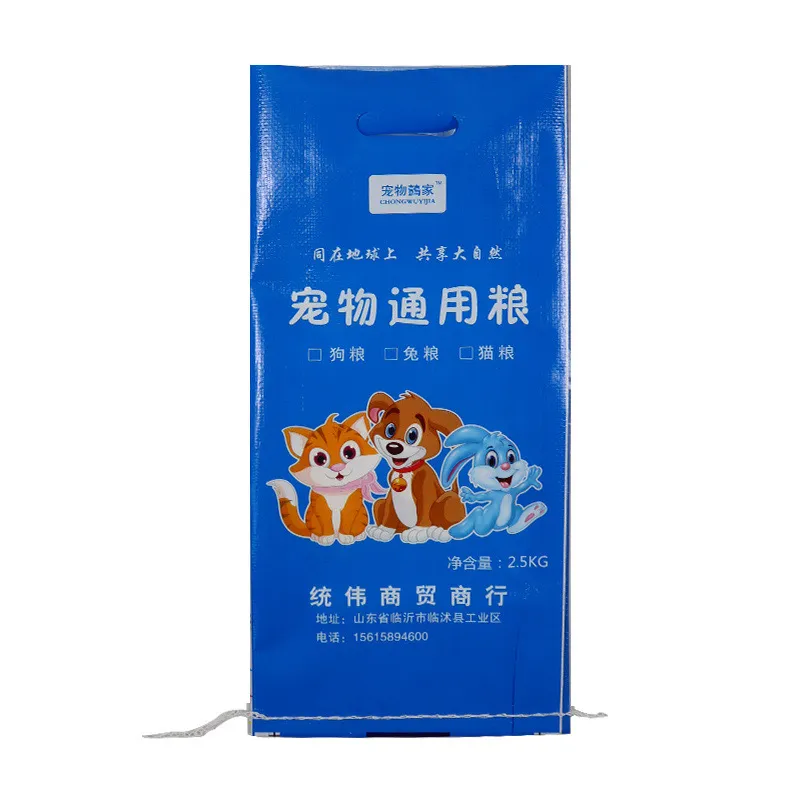
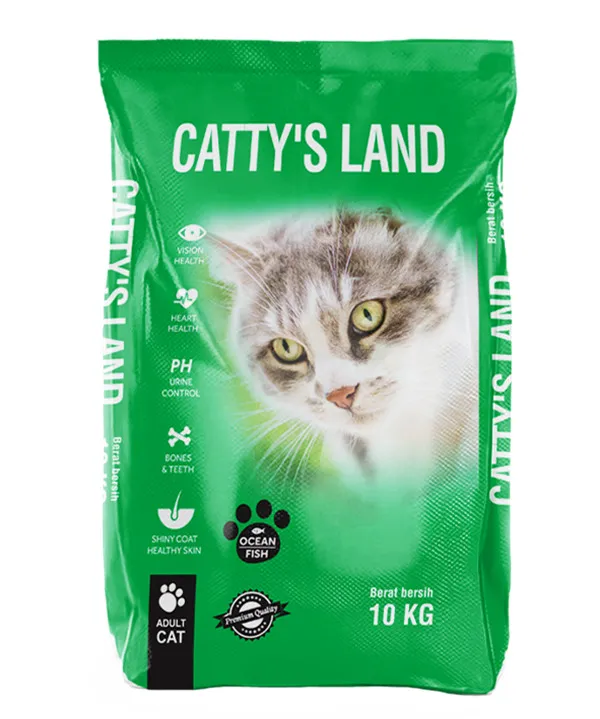
- Pinch‑Bottom Open Mouth: A flat-bottom variant similar to an “AD Star” bag. The bottom is pinched into a flat seam (often heat-sealed or stitched) that gives a self-standing base. The top is open and closes like a standard open-mouth (usually sewn). (Structure: Side gussets folded at bottom, then pinched flat and bonded/sewn.) This creates a cube-like shape and upright stability once filled. It suits medium-duty or retail packaging (e.g. pet food, specialty seeds) where self-stand and easy handling are desired. It usually requires manual top closure after fill.
- Pasted (Glue-seal) Open Mouth: An alternative to sewn top closure, where the filled bag mouth is sealed with an adhesive (paper sack convention) rather than stitching. (Structure: Open top of fabric tube; after filling, top edges are coated with paste and folded or stitched.) In practice this is rare in heavy PP bags but occasionally used as a “master bag” containing multiple smaller packages (e.g. 5–10 lb inner bags). The closure is generally folded and tacked down; some designs include extra adhesive tape.
Each opening style aligns with certain products and equipment. For example, valve-style bags shine for high-speed powder filling lines, whereas sewn or pasted bags are simpler and cheaper for solid/low-dust goods. Table 1 (below) compares these opening types by structure, sealing method, typical uses, and automation compatibility.
| Opening Type | Structure/Sealing | Typical Use & Pros | Cons | Automation |
| Sewn (Stitched) Open Mouth | Tube with top open; after fill, top is stitched or heat-sealed. | Granular solids (cement, grains, feed); Pros: Very simple, strong seam, low cost. No complex parts. | Requires manual sewing or heat-seal; dusty fill; no automatic closure. | Manual or semi-auto filling, not valve machinery |
| Valve (Open Mouth) | Tube with built-in filling valve (inner spout). | Powders (cement, flour, chemicals); Pros: Automated fill, dust/moisture barrier, resealable via tucking. | Higher cost; uses fabric valve or liner; not consumer-friendly to open. | Designed for automatic valve fillers |
| Pinch-Bottom Open Mouth | Pinch-folded flat bottom (like AD Star), top open. | Small-batch retail (pet food, seeds); Pros: Self-standing flat base, good for shelf display, stable stacking. | More complex bottom fold; top still sewn; moderate fill speed. | Fills like open-mouth (non-valve), then manual sew |
| Pasted Open Mouth (Glue Seal) | Tube with open top; after fill, top is glued/taped shut. | “Master bags” carrying smaller packages; Pros: No sewing needed, neat flat seal; can hold multiple items inside. | Slower (glue application), not waterproof unless taped; rarely used in plastic. | Manual filling; glue station (nonwoven context) |
Bottom Types
The bag bottom also comes in several engineered formats, each balancing load stability and filling needs:
- Folded (Hemmed) Seam Bottom: The most basic design. The bottom of the woven tube is folded upward (usually ~3 cm) and sewn with one or two parallel stitches. This double-layer hem reinforces the edge. It’s cheap and effective for open-mouth bags where flat-bottom performance is not needed. The gussets (if any) are not formed, so the bag rests on the folded seam. This style is best for general-purpose bulk bags with manual or small-scale filling. (Load/ Stability: moderate; bottom bears weight through stitches. Supports hand or gravity filling.)
- Block Bottom (Square/Gusseted) Bags: A square or box-shaped bottom formed by extra gusset folding. Typically the front and back panels have gussets, and the bottom panel is inserted between them, creating a rectangular base. The bottom edges are sewn or heat-sealed around the perimeter. Block-bottom bags stand upright on pallet without collapse. They carry higher loads and stack very well. Commonly used with top valves or open-mouth. (Load/ Stability: high; large area, cube stability. Good for forklift palletizing.)
- Pinch (AD Star) Bottom Bags: This bottom is made by folding the bag sides inward to form a triangular “pinch” that flattens into a bottom seam. After folding, the pinch is sewn shut. The result is a flat base (similar to block) but formed from the same tubular piece (no inserted panel). AD Star bags bear weight like block-bottom but are made on equipment that pinches instead of gusseting. They often feature two parallel bottom seams for strength. (Load/ Stability: high; flat base for stability. Often used in premium fertilizer, seed bags.)
- Hemmed Bottom with Tape: For demanding powder products, a sewn seam is covered (“hemmed”) with an extra PP tape or laminated strip. In practice, after the bottom is sewn or glued, a separate PP tape (either folded from a strip or pre-made laminated tape) is applied over the seam and sewn again. This double layer significantly improves bottom sealing (minimizing micro-leakage of dust or moisture). Manufacturers sometimes supply a roll of tape for the end user to reinforce the closure. (Load/ Stability: similar to folded bottom, but with extra leak protection. Ideal for cement and fine powders.)
Table 2 compares bottom types on structure, weight handling, and use:
| Bottom Type | Structure & Closure | Load Bearing/Stability | Filling/Stacking | Pros/Cons |
| Folded (Hemmed) Seam | Fabric bottom folded/hemmed, sewn. | Lower medium loads; relies on stitch strength. | Simple fill (top), moderate stack. | Pros: Very simple, low cost. Cons: Flat base only by fold, less stack stability. |
| Block (Box) Bottom | Inserted panel with gussets, full rectangular base, sewn edges. | High load (large base area); maximum stack stability. | Fills like open/valve; stacks tightly (especially on pallets) | Pros: Self-standing square base, space-efficient stacking. Cons: More complex bag making (extra sewing). |
| Pinch (AD Star) Bottom | Tubular bag bottom pinched flat (triangular fold) and sewn. | High load; flat-ish base. | Fills like open; stands like block once sewn. | Pros: Cube stability from one-piece bag, high strength. Cons: Specialized bottom fold, more labor. |
| Hemmed Bottom with Tape | Folded seam with an extra PP tape sewn/adhesive over it. | Moderate-high load; enhanced leak resistance. | Requires handling/pasting of tape; stacks per folded style. | Pros: Better dust/water seal, good for fine powders. Cons: Extra material and sewing (higher cost). |
Other Design Options
Beyond opening and bottom style, BOPP/PP bags offer numerous optional features to tailor performance:
- Side Configuration: Flat Side vs Gusseted. A flat bag has no side gussets (essentially a pillow shape), giving a compact profile for uniform loads. Gusseted sides (either “M” or “U” gussets) expand when filled, increasing volume and creating a boxier shape. Gussets improve load distribution and appearance (better for large/granular fill) and maximize pallet efficiency, whereas flat bags are simpler and use less material for narrow products.
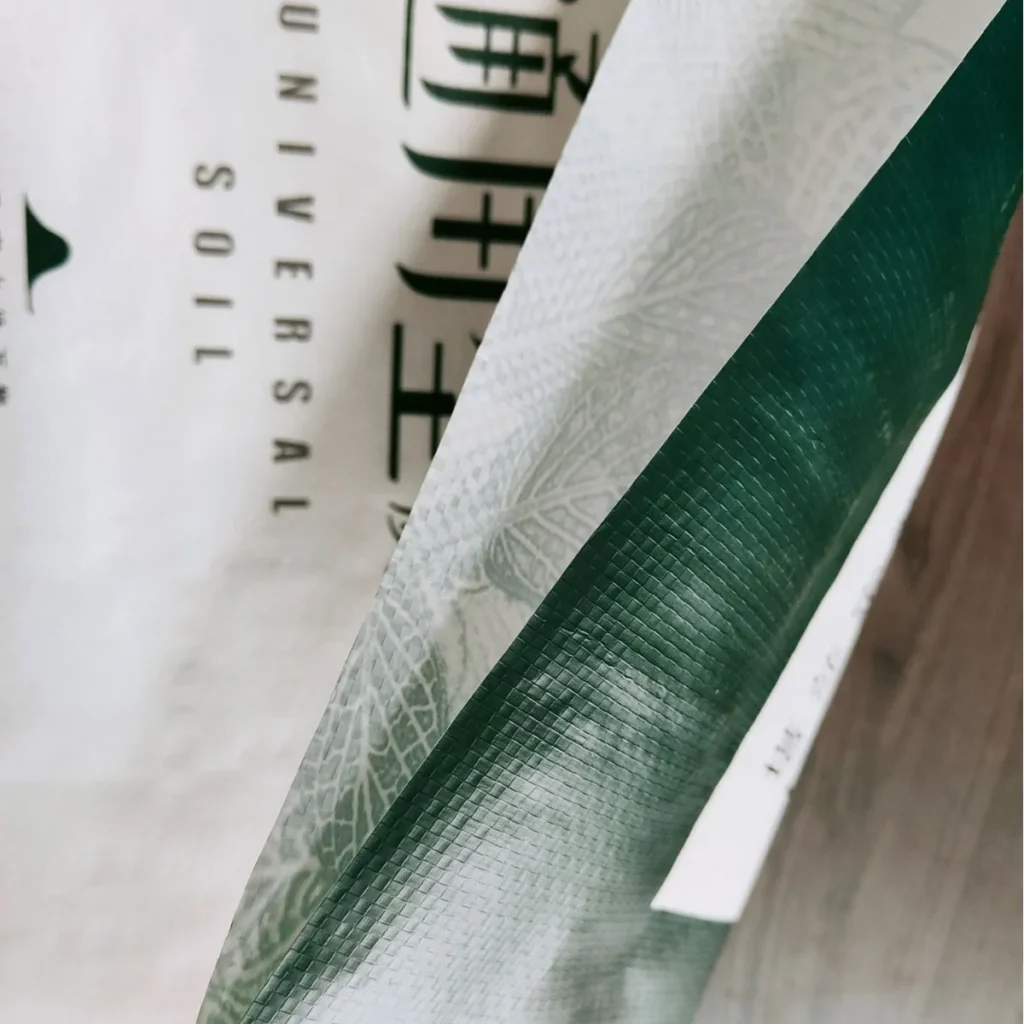
- Surface Finish: Glossy vs Matte BOPP film. BOPP lamination can be treated for high gloss (shiny) or matte (frosted) effect. Glossy bags look premium with vibrant colors; matte finishes appear more utilitarian and reduce glare. The choice depends on branding needs – glossy accentuates inks, matte can mask minor print misalignments. (Note: clear film yields maximum gloss, whereas matte coatings or additives produce a subdued surface.)
- Micro-Perforation: Tiny (hundreds of microns) holes can be punched through the fabric or laminated film for breathability. This is useful for air-sensitive agricultural products (e.g. bananas, coffee, certain grains) where gas exchange is needed. Micro-perf bags allow moisture vapor out while keeping insects/dust out. They are specified per customer needs – typically on request as a post-print perforation step. Adding perforation slightly reduces barrier performance and adds processing time, but enables packaging of fresh produce and avoids “bag bursting” from off-gassing.
- Anti-Slip Treatment: To prevent bags from sliding in stacks, manufacturers can apply a coarse textured coating or incorporate slip-resistant masterbatch. Examples include a granular or resin coating on the bag’s surface, or an anti-slip “plastic grit” mixed into the top layer. VidePak mentions anti-slip texture as a safety feature for stacking. This feature is chosen for sandy or steeply piled products (cement, seeds) and does not significantly affect weight or recyclability, but slightly raises cost.
- Transparent Window: A clear PVC or OPP window can be laminated into an area of the bag’s film (while the rest is reverse-printed). This allows visual inspection of contents (color, fill level) without opening the bag. It’s used when product identity or quality must be seen at point of handling or sale. Windows sacrifice a bit of UV and puncture protection at that spot, and add fabrication cost, but greatly improve user confidence (e.g. in retail feed bags).
Table 3 summarizes these optional features:
| Feature | Description | When to Use / Benefit | Cost/Performance Impact |
| Flat vs Gusset Side | Flat: no side gussets, uniform thickness. Gusset: side folds added (M/U gussets). | Flat for narrow loads; gussets for bulky/boxy loads (improves shape and printed info on sides). | Gusset adds ~10–20% material (side panels) but greatly increases volume and pallet stability. |
| Glossy vs Matte | Glossy: high-shine BOPP lamination. Matte: dull finish (via coating or additives). | Glossy for premium, high-impact graphics; matte for a more subdued/industrial look (common in construction/china sacks). | Matte finish adds slight cost; both preserve durability equally (matte may hide scratches better). |
| Micro-Perforation | Hundreds of tiny ventilation holes in fabric or film (pre- or post-print). | For products requiring air exchange (coffee, produce); reduces condensation. | Requires extra processing; reduces moisture barrier capability (not suitable for hygroscopic contents). |
| Anti-Slip | Coarse or coated texture on exterior surface. | For stacked pallets where slip is risk (e.g. sand, cement); improves safety and stacking friction. | Minimal weight cost; coating applies extra step (lowers speed). Overall improves handling, slight cost up. |
| Transparent Window | Clear film panel integrated into bag wall. | When visual check of contents is desired (pharmaceutical feed, color-coded grains) or regulatory requirement. | Sacrifices film barrier at window area; adds lamination step. Visual appeal and functionality vs slight risk. |
VidePak Supply Chain & Production Capability
VidePak emphasizes a vertically integrated, high‑quality supply chain. Raw Materials: Only 100% virgin polypropylene resins are used – typically high-grade homopolymer PP from leading petrochemical makers (BASF, Sinopec, Yangzi). These resins are tested (ASTM D1238 melt flow) to tight specifications before use. Premium BOPP film (15–35 μm) is likewise sourced or produced in-house and is corona- or solvent-treated for ink adhesion. Using such top‑tier inputs ensures the fabric has uniform tensile properties and the film provides consistent barrier performance. (VidePak notes that all layers and the tie adhesive are PP for uniform recyclability.) High-quality polymer gives better environmental stress crack resistance and UV stability, directly impacting bag longevity.
Equipment & Production Lines: The plant is equipped with full Starlinger + W&H lines. Key stations include PP tape extruders, stretching (orientation), high-speed looms, extrusion laminators (film coating), gravure flexo printing presses, and automated bag‑making machines (cutting, heat-sealing or sewing). For example, Starlinger extruders produce consistent tape denier; Starlinger film laminators apply even coating pressure; W&H rotary presses achieve precise multi-color printing; and sewing machines stitch seams with micron-level tension control. VidePak highlights that standardizing on these top vendors guarantees process stability (tight control of fabric density, color registration, lamination bond). The facility also incorporates sustainability: ~65% solar power use and closed-loop recycling of scrap.
This comprehensive setup yields massive capacity. The nominal output is cited as hundreds of millions of bags per year (with a brand claim of 300 million bags/year for PP woven sacks). To illustrate scale: at 20 kg per bag (common for fertilizer/cement), 300M bags would be ~6 billion kg/year (6 million tons), underscoring VidePak’s ability to fill large global contracts. The lines can be allocated to different bag types, so production can flex between, say, 25kg valve bags or smaller 10kg sewn sacks without retooling.
Standards & Testing: Quality is enforced at every stage by international standards. Raw resin batches are QA-tested (melt flow, additives) against supplier certification. In-process sensors and vision systems monitor critical parameters: film tension, lamination nip pressure, print color registration (ΔE tolerance), and fabric air-permeability. For example, digital cameras detect any offset print or flaw in real-time. After bag conversion, finished items undergo stringent checks – seam strength, dimensional accuracy, moisture uptake, drop tests with actual product, and AQL sampling per ISO 2859. Each pallet of bags is traceable to specific resin and film lots, enabling batch isolation if needed. VidePak reports that their BOPP bags exceed standard thresholds on burst/dart impact (ASTM D1709) and UV/weather resistance, delivering reliable field performance.
In summary, VidePak’s PP/BOPP woven line is a full «industry 4.0» operation: best-in-class materials, precision machinery (Starlinger extruder/looms, W&H printers), and ISO9001/ASTM/JIS‑driven QA. This yields consistent high-volume output (300M+ pieces) that professional buyers can depend on. Table 4 below outlines key supply-chain components.
| Component | Source/Brand | Function & Effect on Product |
| PP Resin (virgin) | BASF, Sinopec, Yangzi etc. | High-purity homopolymer PP. Controls melt flow and tensile strength. Ensures uniform fabric properties and recyclability. |
| BOPP Film | Copolymer/polymer film | 15–35 μm biaxially oriented PP film. Provides moisture/UV barrier and printable surface. Film thickness governs barrier rate. |
| Tie-Layer Polymer | PP adhesive layer | Extrusion-coated PP adhesive. Bonds film to fabric; must be PP-compatible for recyclability. |
| Tape Extruder | Starlinger | Melts and extrudes resin into tapes (monofilaments). Produces high-uniformity filaments for weaving. |
| Fabric Loom | Starlinger high-speed | Weaves tapes into tubular cloth. Controls weave density (GSM) and width. |
| Lamination Unit | Starlinger extruder/laminator | Laminates film to fabric via extrusion-coating or calendaring. Ensures even nip pressure and adhesion. |
| Printing Press | Windmöller & Hölscher | Multi-color flexographic or gravure printing onto BOPP film side (typically reverse-side printing). Maintains color register. |
| Bag Converting | W&H finishing machines | Cuts, folds, and seals/sews the fabric into final bag shapes. Provides sewn seams, heat seals, PE tape application, etc. |
Conclusion & Selection Advice
BOPP-laminated PP woven bags merge durability, printability, and scalability – a blend that suits heavy-duty packaging with brand considerations. When choosing a bag, buyers should match bag architecture to product and process. For bulk commodities (cement, fertilizer, grain) requiring fast filling and dust containment, valve-type or block-bottom designs are ideal. If retail display or slower lines are involved (pet food, specialty flours), pinch-bottom or easy-open variants add consumer convenience at modest capacity. Select flat tubes for simple pack-outs or gusseted for maximizing fill. Matt vs. glossy finishes are a branding call: glossy for premium appeal, matte for utility. Micro-perforation is only needed for respiring goods (fresh produce), whereas anti-slip or window add-ons serve niche logistic or marketing needs.
In summary, technical buyers should weigh strength & barrier vs cost & handling. BOPP laminated bags cost slightly more than plain PP woven, but often “pay back” by saving material (down-gauging) and reducing claims through their moisture protection. VidePak’s engineered approach and capacity (300M+ units/year) means they can supply large orders with consistent quality. Ultimately, the right choice depends on fill-line (manual vs automated), product sensitivity (moisture vs ventilation), and end-use (industrial vs retail). We recommend discussing with the supplier specific test data (burst strength, moisture ingress, etc.) for your application, and specifying only the necessary features to balance performance with economy.
Figures and Tables: Tables 1–5 above summarize key comparisons of opening types, bottom constructions, optional features, supply-chain elements, and quality tests. These are provided to aid engineers and buyers in systematically evaluating BOPP PP woven bag options in context.