
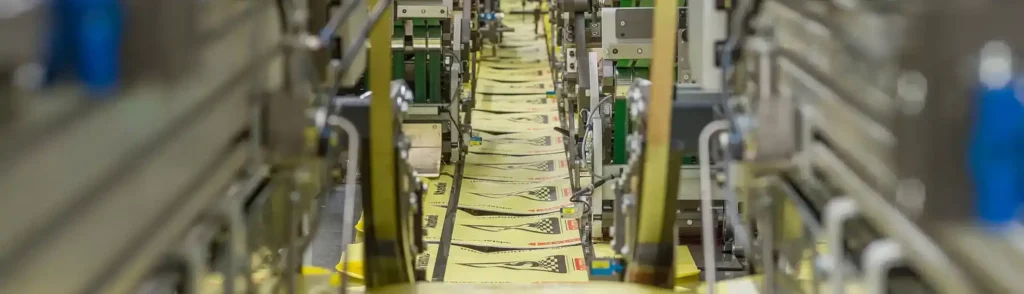
Warehouses are orchestras. Forklifts, scanners, humidity, pallets—all playing at once. If one section is out of tune, the whole piece suffers. In that orchestra, BOPP Valve Woven Bags are not merely instruments; they are the score that keeps tempo across packing, staging, transport, and storage. By treating the bag as a system—where polymer selection, textile architecture, press science, and storage discipline reinforce one another—we convert fragile stacks into dependable inventory and turn visual identity into operational clarity. For an overview of valve formats in this family, see BOPP Valve Woven Bags.
What is BOPP Valve Woven Bags?
At its simplest, BOPP Valve Woven Bags are heavy‑duty packages built on a woven polypropylene (PP) chassis with a biaxially oriented polypropylene (BOPP) laminate as the exterior print face and a self‑closing valve as the filling interface. In tenders and exporter listings you may encounter synonymous names—BOPP‑laminated PP valve sacks, composite PP valve bags with BOPP facestock, or PP woven valve bags with heat‑sealable lips—but the logic is constant: the woven core carries the load; the BOPP film preserves graphics and resists scuff; the valve geometry evacuates air during filling so the bag lands on the pallet flat, compact, and stack‑worthy.
Why does this matter beyond the packer? Because storage begins at the spout. The deaeration path of BOPP Valve Woven Bags determines void content; void content determines pallet cube; cube governs stack stability; stability influences wrap use, rework rate, and safety. A strong bag that traps air still becomes a soft stack. A beautiful print that scuffs becomes a labeling problem. A valve that self‑seals without dust becomes a shelf‑life ally. With BOPP Valve Woven Bags, the design triad—mechanical strength, graphic durability, and fill‑rate discipline—works in concert rather than conflict.
Standards give this system a shared grammar. Textile tensile is validated to ISO 13934‑1; seam performance to ISO 13935‑2; laminate puncture via dart impact to ASTM D1709; coefficient of friction (sack‑to‑sack and sack‑to‑pallet) to ASTM D1894; water‑vapor transmission on films to ASTM E96/ISO 15106; hydrostatic head on coated fabrics to ISO 811 where requested; rub fastness to ASTM D5264; barcode legibility to ISO/IEC 15416; ESD work practices at filling per IEC 61340; quality systems to ISO 9001:2015; hygiene programs to FSSC 22000 (site‑dependent); food‑contact inner films, when used, to FDA 21 CFR 177.1520 and EU 10/2011. These are not ornamental citations—they are the rules of engagement between factory floors, labs, and audit teams.
What are the features of BOPP Valve Woven Bags?
Features only matter if they neutralize failure modes that actually occur: leaning pallets, soggy corners, unreadable labels, dusty seams, slow fills. Below, we split the storage‑critical capabilities into sub‑points. Each follows a cadence—background → data reinforcement → case analysis → comparative study—so causality is explicit and decisions are defensible.
1) Valve‑led filling that pre‑stabilizes storage. The stability of a stack is set seconds before the bag touches wood. The pressure drop across the valve lip, the size and spacing of micro‑perforations, the stiffness of the mouth—these define how quickly air escapes and how evenly solids settle. Well‑profiled valves on BOPP Valve Woven Bags purge air fast without dust plumes, yielding denser, squarer packages.
Data reinforcement. Exporter ranges for 25–50 kg valve bags commonly show lay‑flat sizes around 460×760–480×780 mm; woven fabric around 80–110 g/m²; tape denier 500–1000D; BOPP/PP lamination thickness 18–30 μm. Sack‑to‑sack COF windows of 0.35–0.55 per ASTM D1894 are typical to prevent slide without jamming conveyors. Line trials correlate higher valve flow with lower top‑surface variance in pallet stacks.
Case analysis. A mineral premix facility had “leaners” in deep‑lane racking and frequent rewraps. By increasing the total open area of the valve’s micro‑perfs and switching to ultrasonic sealing for dusty SKUs, top‑surface height variation dropped by 8–12 mm. Stretch‑wrap tension could be lowered; outbound dock rework fell measurably.
Comparative study. Open‑mouth woven sacks accept flexible closures but often trap air at speed; FFS PE film is hermetic and quick but tends to slip and can puncture on deck plates; BOPP Valve Woven Bags strike the balance: high fill rates, built‑in deaeration, compact cube.
2) BOPP exterior for print survival and scanning reliability. The warehouse is not a gallery; it is abrasion, straps, and condensation. The BOPP face on BOPP Valve Woven Bags accepts fine screens and tactile varnishes, yet resists scuffing and wicking. Compliance panels, QR codes, and shelf identifiers remain legible after rough handling.
Data reinforcement. Gravure or high‑screen flexo up to 6–8 colors is standard. CIEDE2000 ΔE tolerances of ≤3–5 keep cross‑lot color harmony; rub fastness to ASTM D5264 protects high‑touch areas; barcode grades of ≥C under ISO/IEC 15416 are routine in warehouse light. Corona treatment at ≥38 dynes secures ink anchorage; laminate dart impact per ASTM D1709 confirms resilience at corners.
Case analysis. A fertilizer exporter implemented a matte‑over‑regulatory/gloss‑over‑hero split on the BOPP face. Scan errors fell, putaway cycles accelerated, and rainy‑day relabels dropped because varnish choice matched the abrasion pattern of straps and forklift touch points.
Comparative study. Paper faces print beautifully but scuff and absorb moisture; PE films shine but slip; uncoated woven PP is rugged but industrial in look. BOPP‑on‑PP provides a billboard that survives forklifts, drizzle, and time.
3) Moisture moderation without over‑building. Rain is a switch; humidity is a dial. Storage sees both. Thin BOPP/PP laminations offer splash resistance; selective liners (LDPE or PP) add a controllable vapor boundary when routes demand it. The aim is not “maximum barrier,” but the right barrier for the worst lane your product travels.
Data reinforcement. Common lamination thickness: 18–30 μm; optional liners: 60–100 μm LDPE/PP; WVTR of films measured to ASTM E96/ISO 15106; hydrostatic head for coated fabrics per ISO 811 where specified; Cobb for paper‑faced variants to ISO 535. These bands are widely published on exporter marketplaces and peer converter sites.
Case analysis. A coastal distributor of water‑soluble fertilizer introduced an 80 μm PP co‑ex liner only for monsoon lanes. FEFO rotation tightened because caking subsided; the liner‑free variant continued on inland routes, preserving cost competitiveness.
Comparative study. Multiwall paper breathes but collapses wet; FFS PE is hermetic but puncture‑ and slip‑prone; BOPP Valve Woven Bags deliver durable exteriors with just‑enough vapor control.
4) Anti‑slip engineering that protects cube. A stable stack is free storage. The coefficient of friction (COF) dictates whether stacks creep under vibration, tilt during emergency stops, or stand firm. Backside sand‑grip or textured coats on BOPP Valve Woven Bags increase COF without hampering magazine flow.
Data reinforcement. COF windows of 0.35–0.55 per ASTM D1894 are typical; plants correlate COF to rack collapse incidents and AGV emergency‑stop logs. Raising COF by 0.1–0.2 has outsized effects on safe stack height and wrap consumption.
Case analysis. A polymer pellet customer lifted sack‑to‑sack COF from ~0.32 to ~0.44 via a light sand‑grip coat. Safe stack height increased by one layer; corner boards were removed with no increase in damage rate; wrap film per pallet fell by double digits.
Comparative study. Smooth films wrap quickly but creep; paper stacks square but weakens in splash; anti‑slip coated BOPP Valve Woven Bags retain cube in mixed‑climate DCs.
5) Storage‑centric labeling and traceability. Storage is an information problem disguised as a space problem. If codes smear or sit beneath straps, inventory slows. The flat, scuff‑resistant BOPP face on BOPP Valve Woven Bags preserves 1D/2D codes; consistent valve geometry keeps panel placement repeatable across SKUs.
Data reinforcement. On‑bag codes graded to ISO/IEC 15416 (≥C) in warehouse light; rub testing to ASTM D5264 in strap paths; quiet‑zone enforcement around QR modules; inline vision systems for registration and defect capture.
Case analysis. A multi‑site blender standardized code placement to a 40×90 mm quiet zone on the BOPP face of all BOPP Valve Woven Bags. Cross‑dock scan rates hit 99%+, with fewer ID exceptions during cycle counts.
Comparative study. Dusty kraft labels peel; PE inkjet smears; gravure/flexo on BOPP stays legible for the full storage horizon.
What is the production process of BOPP Valve Woven Bags?
Production is not the art of making good bags once; it is the science of making the next ten thousand identical. Each stage below inoculates the product against a failure that would otherwise appear on a wet ramp, a dusty hopper, or a scanner tunnel.
1) Resin selection & compounding. Select PP homopolymer/copolymer with melt‑flow indices that balance tape drawability and tensile reserve. Add UV stabilizers for yard dwell, antioxidants for thermal history, slip/antistatic for surface behavior. Where food/feed contact is relevant, compile FDA 21 CFR 177.1520 and EU 10/2011 declarations for liners; trace lots to finished bags.
2) Tape extrusion & orientation. Extrude film, slit into tapes, draw to orient chains. Hold thickness/width within ±5% to stabilize downstream GSM and seam capture. Under‑draw creates stretch and mouth collapse; over‑draw embrittles folds. Inline SPC shortens the path from drift to correction.
3) Weaving (circular or flat). Convert tapes to fabric with picks‑per‑inch typically in the 10×10 to 14×14 window for 25–50 kg. End‑break detection and roll barcoding localize faults; chatter patterns signal preventive maintenance. Flat fabric eases precise graphics and block‑bottom forming; circular looms excel on speed.
4) Surface treatment & BOPP lamination. Corona treat the fabric to ≥38 dynes. Apply BOPP/PP lamination—typically 18–30 μm—to add scuff resistance, gloss control, and print holdout. Balance web temperature, nip pressure, and line speed to prevent curl; verify bond uniformity with T‑peel; confirm puncture energy with ASTM D1709.
5) Printing & graphics. Flexo on coated fabric or gravure on BOPP applies brand blocks, handling icons, nutrition/hazard panels as applicable, and machine‑readable codes. Govern color with ΔE targets and ISO 12647‑6 TVI curves; validate rub ASTM D5264; barcode grade ISO/IEC 15416. Where grease resistance is vital, specify over‑varnishes that resist oil wicking without raising COF excessively.
6) Valve forming & bag conversion. Cut, form gussets, assemble the valve sleeve. Tune micro‑perforation patterns to deaeration targets; specify heat‑seal or ultrasonic closure for dusty or moisture‑sensitive goods. Engineer seam allowances backward from worst‑case lifts and pallet compression models.
7) Inspection & testing. Apply visual AQL to ISO 2859‑1; tensile ISO 13934‑1; seams ISO 13935‑2; COF ASTM D1894; dart impact ASTM D1709; WVTR ASTM E96/ISO 15106 where specified. Maintain Cp/Cpk ≥1.33 on lay‑flat width and mouth squareness; tie results to serialized lots witnessed by third‑party labs (SGS/Intertek/TÜV).
What is the application of BOPP Valve Woven Bags?
Applications are where policies meet pallets. Each category stresses BOPP Valve Woven Bags differently—and teaches the platform how to evolve.
Fertilizers & soil amendments. Hygroscopic urea and NPK blends demand laminated exteriors for splash resistance and liners on humid lanes. Anti‑slip backs protect stacks in monsoon depots. Regulatory panels must remain readable after condensation. Specs frequently center on 80–110 g/m² fabric, 20–30 μm lamination, heat‑sealable valves, optional 60–80 μm liners, and COF windows of 0.40–0.55.
Food ingredients & feed premixes. Odors and fats challenge ink systems; compliance panels must not smear. BOPP exteriors with matte/gloss splits preserve legibility; LDPE/PP liners (60–90 μm) suit humid routes; food‑contact declarations are maintained as above.
Polymers & masterbatch pellets. Pellets vibrate in transit and are slippery by nature. Valve micro‑perfs minimize trapped air; sand‑grip backs raise COF; lamination in the 18–25 μm range protects graphics without over‑stiffening the mouth.
Construction minerals (cement additives, lime, silica). Abrasive, stain‑prone, often staged outdoors. Robust seams, higher PPI, and UV stabilization validated by ASTM G154/ISO 4892 keep labels legible after sun and rain.
Storage Playbook for BOPP Valve Woven Bags (Turning Features into Warehouse Wins)
Even the best bag underperforms in a careless warehouse. Conversely, a disciplined warehouse can make a good bag great. The following playbook converts design choices in BOPP Valve Woven Bags into predictable storage wins.
1) Climate discipline. Target 5–35 °C and 45–65% RH in ambient storage. For container export, plan desiccants on the order of indicative 50–100 g/m³ of container volume, tuned to lane climate and dwell. Keep pallets off the floor with dunnage; avoid direct sunlight to preserve the UV package.
2) Palletization logic. Zero overhang—pallet deck ≥ bag footprint—to prevent edge crush. Use interlocking patterns when COF is high; otherwise prefer column stacking with corner boards. Top sheets reduce dust and drip; ventilated wrap avoids condensation pockets after fast‑chilled door cycles.
3) Stack height & safety. Base guidance comes from compression testing and route severity. As a working range, 5–7 layers for 25–50 kg bags are common when COF ≥0.40 and deaeration is effective. If COF is below 0.38, insert slip sheets or increase anti‑slip coat; reassess after change.
4) Rotation & traceability. FEFO (First‑Expired, First‑Out) is easier when codes grade at ≥C under ISO/IEC 15416. Place codes on the BOPP face away from strap paths; enforce quiet zones around QR modules. Standardize the location—predictable placement accelerates putaway and cycle counts.
5) Handling & inspection. Train drivers to avoid tine punctures on first entry/exit; practice tap‑test checks on top layers to detect soft “pillows” early. On receipt, sample rub, scan codes, and—if drift is suspected—check COF with portable rigs. Escalate to the supplier with lot‑tied test sheets and photos; the data closes the loop.
6) Fire & housekeeping. Keep aisles clean; segregate oxidizers per local code; ground fillers per IEC 61340 if filling operations run adjacent to storage. Good housekeeping is not cosmetic; it is predictive control of risk.
Key Technical & Storage Parameters (Typical, Widely Listed Ranges)
| Parameter | Typical Range / Options | Standards & Notes | Storage Impact |
|---|---|---|---|
| Base material | PP woven fabric with BOPP/PP lamination | Resin ID 5—PP (ASTM D7611); tensile ISO 13934‑1 | Durable chassis; compatible with PP‑majority recovery streams |
| Fabric weight (GSM) | 80–110 g/m² (25–50 kg formats) | Balance tear vs. foldability; seam capture ISO 13935‑2 | Lower tare → more units per pallet while resisting deck wear |
| Tape denier | 500–1000D | Controls tensile and mouth stiffness | Stable mouth → squarer stacks and fewer spout mis‑docks |
| Lamination thickness | 18–30 μm BOPP/PP | WVTR ASTM E96/ISO 15106; dart ASTM D1709 | Scuff‑proof panels; splash resistance; label survival after handling |
| Valve type | Self‑closing; heat‑seal/ultrasonic option; tuned micro‑perfs | Leak/peel verification in supplier COA | Fewer voids → lower stack creep and faster wrap |
| Optional liner | LDPE/PP 60–100 μm as required | Food‑contact: FDA 21 CFR 177.1520, EU 10/2011 | Moisture moderation for coastal/monsoon lanes |
| COF (sack‑to‑sack) | 0.35–0.55 | ASTM D1894 | Controls slide; determines safe stack height and wrap tension |
| Size (W×H) | Valve 460×760–480×780 mm (typical) | Tolerance ±5–10 mm; Cp/Cpk ≥1.33 | Predictable pallet maps; fewer magazine jams |
| Printing | Flexo/gravure up to 6–8 colors; matte/gloss split | ΔE00 ≤3–5; rub ASTM D5264; barcode ISO/IEC 15416 | Fewer relabels; faster putaway and cycle counts |
| UV stability | Additives sized to staging exposure | ASTM G154/ISO 4892 | Labels survive outdoor dwell before racking |
| Quality systems | ISO 9001:2015; FSSC 22000 (site‑dependent) | Third‑party witnessing (SGS/Intertek/TÜV) | Faster audits; cleaner receiving inspections |
Note: Parameter bands above reflect values popularly published by exporters (Made‑in‑China/Alibaba) and peer converter sites for PP woven valve sacks. Final specifications should be tuned to bulk density, particle morphology, route climate, line speed, and palletization method. Tables are a waypoint, not a guarantee—validate with trials.
Integrated Systems View — From Packer to Pallet to Profit
It is tempting to optimize one variable at a time: faster fills this quarter, prettier prints next quarter, greener claims after that. But systems punish siloed wins. The only sustainable edge is coherence. Below is a compact synthesis of how BOPP Valve Woven Bags translate engineering choices into logistics outcomes that compound.
Data‑reinforced alignment. Treat filling parameters (valve geometry, micro‑perfs), material choices (GSM, denier, lamination, liner), and warehouse rules (COF window, stack pattern, humidity) as a single equation. If rainy season raises RH by 15 points, do not wait for caking claims—pre‑emptively add liner gauge and switch to ventilated wrap. If scan rates dip below 98%, reposition codes, add matte over regulatory panels, or adjust press curves before retailers do.
Case‑driven iteration. Keep a visible defect roster—leaners, punctures, collapsed tops, unreadable labels—with owners and countermeasures. BOPP Valve Woven Bags provide many levers: tweak valve seals; nudge COF; adjust varnish schemes; raise corona energy; specify denser stitches at stress points. Iterate in weekly sprints—warehouse metrics will repay the attention.
Comparative clarity. When stakeholders debate paper vs. film vs. woven, ask three questions that cut through rhetoric: Will it stack? Will it scan? Will it survive weather? Repeated cross‑dock trials show BOPP Valve Woven Bags answer yes without requiring capital‑intensive format changes or fragile retail workarounds.
Outcome. Safer lifts. Faster putaways. Cleaner pallets. Fewer claims. In other words, storage as a competitive advantage—unlocked by the right bag, specified with the right parameters, handled with the right discipline.
- What is BOPP Valve Woven Bags?
- What are the features of BOPP Valve Woven Bags?
- What is the production process of BOPP Valve Woven Bags?
- What is the application of BOPP Valve Woven Bags?
- Storage Playbook for BOPP Valve Woven Bags (Turning Features into Warehouse Wins)
- Key Technical & Storage Parameters (Typical, Widely Listed Ranges)
- Integrated Systems View — From Packer to Pallet to Profit
“Why are BOPP valve woven bags revolutionizing industrial storage systems?”
The answer lies in their precision-engineered yarn design and advanced manufacturing processes, which optimize durability, printability, and cost-efficiency—tailored to specific storage needs. At VidePak, leveraging Austrian Starlinger and German W&H machinery, we’ve mastered the art of balancing filament thickness (fine vs. coarse) to deliver bespoke solutions for industries ranging from agriculture to chemicals.
1. Defining Fine and Coarse Filaments in Woven Bags
In polypropylene (PP) woven bag production, filament width directly impacts performance. Industry standards classify filaments as:
- Fine filaments: 1.5–2.5 mm width, typically woven at 120–160 denier.
- Coarse filaments: 3.0–4.5 mm width, woven at 200–300 denier.
VidePak’s Starlinger circular looms achieve ±0.1 mm tolerance in filament extrusion, ensuring consistency critical for load-bearing applications. For instance, coarse filaments used in heavy-duty valve bags for cement storage require 3.2 mm width to withstand 50 kg loads without deformation.
2. Comparative Analysis: Fine vs. Coarse Filaments
2.1 Performance Metrics
| Parameter | Fine Filaments | Coarse Filaments |
|---|---|---|
| Tensile Strength | 25–30 MPa | 35–40 MPa |
| Flexibility | High (ideal for contours) | Moderate (rigid structure) |
| Surface Smoothness | 8–10 Ra (µm) | 12–15 Ra (µm) |
| Print Resolution | 1200 dpi achievable | 600–800 dpi |
| Abrasion Resistance | 5,000 cycles (ASTM D4966) | 8,000+ cycles |
| Cost per kg | $1.20–$1.50 | $0.90–$1.10 |
Data sourced from ASTM D5265 and VidePak’s 2024 Q3 material testing reports.
Case Study: A Brazilian coffee exporter reduced packaging tears by 40% using VidePak’s fine-filament bags (2.0 mm width), which accommodated irregular bean shapes without compromising print clarity for branding.
2.2 Application-Specific Recommendations
- Fine filaments: Ideal for retail-grade BOPP bags (e.g., pet food, flour) requiring high-resolution printing and lightweight design (≤25 kg loads).
- Coarse filaments: Optimal for industrial storage (e.g., fertilizers, construction materials) where tensile strength and UV resistance outweigh aesthetics.
3. VidePak’s Technological Edge: Starlinger & W&H Machinery
VidePak’s 100+ Starlinger AD*Star looms and W&H extrusion lines enable:
- Precision weaving: 200 RPM speed with <0.5% filament variation, critical for maintaining bag integrity under dynamic loads.
- Multi-layer lamination: Coarse filaments paired with 20-µm BOPP coatings achieve moisture vapor transmission rates (MVTR) of ≤1.0 g/m²/day, meeting ISO 2230 standards for hygroscopic chemicals.
Production Workflow:
- Filament extrusion: W&H lines process virgin PP resin (MFI 2–4 g/10 min) into uniform filaments.
- Weaving: Starlinger looms interlace filaments at 12 picks/cm for coarse yarns vs. 18 picks/cm for fine yarns.
- Valve integration: Automated systems attach PE-coated valves with ±0.3 mm positional accuracy, ensuring airtight seals.
4. Cost-Benefit Analysis and Market Trends
A 2024 McKinsey report highlights that fine-filament bags command a 15–20% price premium but reduce logistics costs by 8% through weight savings. Conversely, coarse-filament designs dominate the $12.3B agrochemical packaging market due to their 10-year lifespan in outdoor storage.
VidePak’s Hybrid Solution:
For a German pesticide manufacturer, we developed dual-filament bags combining 3.0 mm coarse base layers with 2.2 mm fine outer layers. This reduced material costs by 12% while maintaining 1,200 N/5 cm tensile strength—validated by TÜV Rheinland certification.
5. FAQs
Q: How does filament width affect printing quality?
A: Fine filaments enable 1200 dpi prints with ±0.1 mm registration accuracy, whereas coarse filaments limit resolution due to surface texture. VidePak’s 12-color rotary printers mitigate this via adaptive ink viscosity controls.
Q: Are coarse filaments recyclable?
A: Yes. VidePak’s coarse PP filaments are 100% recyclable (ISO 15270 compliant), with a 92% recovery rate in closed-loop systems.
6. Conclusion
The choice between fine and coarse filaments in BOPP valve bags is not merely technical—it’s strategic. VidePak’s integration of Starlinger’s precision and W&H’s material science expertise allows clients to optimize storage efficiency without trade-offs. As e-commerce drives demand for visually striking yet durable packaging, dual-filament innovations will redefine industry standards.
For insights into valve bag engineering, explore our analysis of BOPP valve bags in retail logistics, or discover how Starlinger technology enhances production precision.