
Definition and Scope: What are BOPP Woven Bags?
BOPP Woven Bags are composite packaging sacks that merge a woven polypropylene (PP) substrate with a biaxially oriented polypropylene (BOPP) film laminated to the exterior faces. The woven PP provides the structural chassis—high tensile strength at comparatively low mass, excellent resistance to tear propagation, and robust drop performance—while the BOPP film forms a protective and printable skin with low moisture transmission and strong abrasion resistance. The result is a rugged yet brand‑forward package for dense powders and granular products used across construction, agriculture, industrial minerals, chemicals, and selected consumer staples.
The value of BOPP Woven Bags lies in how each layer specializes. The fabric takes the loads; the film shields and communicates; the closure interfaces with machines. When a filled sack rides conveyors, meets clamp trucks, stacks on pallets, travels long distances, and faces variable climates, the composite works as a system: the truss‑like woven grid spreads stress, the laminated surface prevents scuffing and moisture ingress, and the seam architecture keeps geometry square. One package, many roles, coordinated by design.
Also known as (aliases):
- BOPP‑Laminated Woven Sacks
- BOPP Laminated PP Woven Bags
- Printed BOPP Woven Packaging
- Coated Polypropylene Woven Sacks
- Block‑Bottom BOPP Woven Valve Bags
- BOPP Laminated Poly Woven Valve Sacks
Constituent Materials: The Building Blocks of Performance
Every property buyers care about—tear, drop, abrasion, moisture behavior, barcode clarity, seal reliability—emerges from the chemistry and geometry of specific materials and the quality of their interfaces. To understand why BOPP Woven Bags perform as they do, we examine each layer and show where it is placed, why it is chosen, and how its cost behaves.
1) Woven Polypropylene Fabric — Structural Chassis
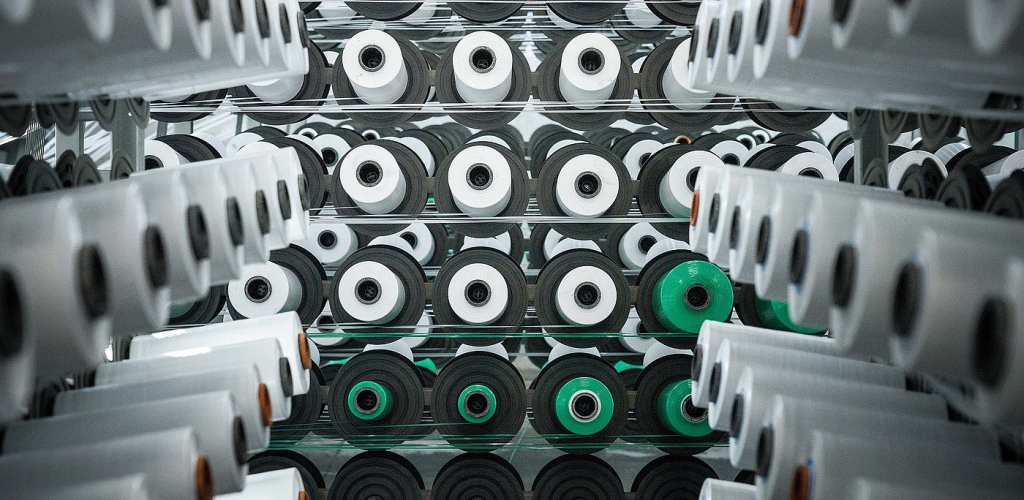
What it is. Polypropylene resin is extruded into tapes, slit, and drawn to orient molecular chains for high tenacity. Those oriented tapes are woven, typically on circular or shuttle looms, into a fabric with pick densities often between 10×10 and 14×14 per inch.
- Key properties. High tensile‑to‑weight ratio; good tear resistance as the grid redistributes local stress; low water absorption; useful fatigue resistance under repeated handling.
- Cost notes. Driven by resin price, tape denier, fabric basis weight (g/m²), and loom throughput; globally competitive in cost per unit strength.
- Placement. Forms the body panels—front, back, gussets, and commonly bottom plies—onto which the film is laminated and seams are made.
2) BOPP Film — Protective & Printable Skin
What it is. Biaxially oriented polypropylene film, typically 15–35 μm, surface‑treated (corona or flame) for adhesion. Graphics are usually reverse‑printed so the ink lives beneath the film, shielded from abrasion.
- Key properties. Reduced water vapor transmission compared to uncoated fabric; scuff resistance; gloss or matte optics with high clarity; dimensional stability that helps bags look crisp on pallets.
- Cost notes. Thickness, color count (six to ten stations common), varnish systems, and special effects (registered windows; matte/gloss contrasts) determine cost; reverse print often cuts scuff rejects and saves money downstream.
- Placement. Laminated to exterior faces for 180° to 360° graphics—front, back, possibly gussets and the block bottom.
3) Tie Layers & Adhesives — The Interface Bridge
What they are. Extrusion‑coated PP/PE tie layers at about 15–30 g/m², or solventless polyurethane adhesive systems, which couple film to fabric and must pass peel and shear tests under climate cycling.
- Key properties. Bond integrity; heat tolerance during valve heat‑seals; planarity to resist cockling.
- Cost notes. Coat weight, web tension, nip pressure, and chill roll planarity drive both performance and yield; extrusion lamination suits mono‑polymer designs.
- Placement. Invisible interlayer between BOPP and woven PP, sometimes also used on interiors to promote top heat‑sealing.
4) Optional PE Liner — Barrier Upgrade
What it is. Loose or tube‑in‑bag liners, generally 20–50 μm PE or PP/PE blends, added when hygroscopic powders or odor‑sensitive feeds require superior hermetic behavior.
- Key properties. Enhanced moisture and aroma control; enables top or valve heat‑sealing.
- Cost notes. Extra material and steps; used strategically where climate, storage length, or product chemistry justifies it.
5) Closures & Valve Components — Machine Interface
What they are. Open‑top designs closed by sewing or heat‑sealing, or valve designs with internal/external sleeves. Valves may be self‑closing via product head pressure or heat‑sealed post‑fill for dust hygiene.
- Key properties. Compatibility with air, impeller, or screw packers; dust control; weight accuracy at cut‑off.
Feature Set: From Lab Numbers to Field Outcomes
Features are only persuasive when they translate to measurable, visible benefits on the line and in the yard. The following attributes of BOPP Woven Bags are framed with their engineering basis and their commercial consequence.
| Attribute | Engineering Basis | Observed Benefit |
|---|---|---|
| Strength‑to‑weight efficiency | Oriented PP tapes; woven grid | High drop & burst at lower mass; freight savings |
| Moisture moderation | BOPP film thickness; optional liner | Less caking and clumping in humid storage |
| Graphics durability | Reverse‑print under film | Legible labels post‑transport; strong shelf presence |
| High‑speed filling | Valve geometry; micro‑perf mapping | Stable throughput; cleaner housekeeping |
| Stackability | Block‑bottom creases; antislip stripes | Tidy pallets; fewer load shifts |
Practical Card — Downgauging Without Downgrading
Because reverse‑printing protects inks, fewer scuff rejects occur. With better graphics survival and strong seams, many programs reduce fabric basis weight while still meeting drop targets—lowering resin mass and freight emissions.
Practical Card — Speed vs. Barrier
Micro‑perfs vent air for faster filling, but each hole is a potential moisture path. Mapping perforations only where needed maintains throughput while safeguarding shelf life.
Manufacturing Pathway: From Resin to Pallet
Production quality is cumulative. Each station either preserves or erodes what the prior station accomplished. Below, the canonical sequence for BOPP Woven Bags highlights dominant variables and the failure modes they suppress.
- Tape extrusion & draw. Control denier and draw ratio to hit target tenacity; filter resin to remove gels that weaken tapes.
- Weaving. Set pick density and fabric basis weight; keep loom maintenance current to avoid broken tapes and cosmetic defects.
- Film printing. Reverse rotogravure with ΔE color controls; closed‑loop register to avoid mis‑alignment; varnish for tactile finish if specified.
- Lamination. Extrusion or solventless PU; manage nip pressure, web tension, and chill roll temperatures; verify peel strength and planarity.
- Tube forming & cutting. Create clean gussets and consistent lengths; length control protects palletization patterns.
- Bottom formation. Paste or heat‑seal square bottoms; test for sift‑proof corners and upright stance.
- Valve/top preparation. Fabricate sleeves to match packer nozzles; heat‑seal compatibility as required; map micro‑perfs.
- Liner insertion (optional). Place and tack liners to prevent collapse during fast filling.
- Quality checks & palletization. Dimensional audits, drop/burst tests, peel strength checks, print adhesion verification, AQL sampling; stable pallet unitization with documented patterns.
| Process Node | Primary Risk | Mitigation / Metric |
|---|---|---|
| Tape extrusion | Denier variation; gels | Inline gauges; filtration; SPC |
| Weaving | Broken tapes; uneven picks | Loom maintenance; camera inspection |
| Printing | ΔE drift; mis‑register | Proof targets; register control |
| Lamination | Low peel; cockling | Coat‑weight control; chill‑roll planarity |
| Conversion | Sift leaks; crooked bottoms | Corner SOPs; dimensional audits |
Where BOPP Woven Bags Fit Best: Applications and Tuning
While BOPP Woven Bags are broadly versatile, their sweet spot is dense powders and granular products that demand structural security, controlled venting, and assertive labeling. Use‑case tuning matters:
- Cement, dry mortar, plasters, and grouts. Robust fabrics (≥70 g/m²), block‑bottom valve geometry, targeted perf maps; post‑fill heat‑sealing for dust reduction and tamper cues.
- Aggregates and sand modifiers. Abrasion‑tolerant faces and seams; thicker films in rough yard handling; high‑contrast icons for SKU split‑second recognition.
- Fertilizers and soil amendments. Moisture moderation via film gauge; optional liners for hygroscopic blends; resilient graphics for agronomic directions.
- Industrial minerals and chemicals. Calcium carbonate, silica, salts, TiO₂, carbon black—bags must contain fines, resist scuffing, and present legible hazard icons after long hauls.
- Animal feed and selected pet food. Food‑contact compliant inks/adhesives when required; degassing patches to avoid puffing; retail‑grade photography preserved by reverse‑print.
- Charcoal, pellets, and specialty fuels. High tear resistance with controlled air exchange; carry handles or die‑cuts where consumer convenience matters.
Framing the Claim: “BOPP Woven Bags: A Durable and Versatile Solution for the Construction Industry”
A claim persuades when it resolves into measurable criteria. For BOPP Woven Bags, durability and versatility in construction map to testable thresholds: (a) drop and burst margins at the stated payload and height; (b) graphics and barcode legibility after simulated conveyor abrasion; (c) fill‑rate stability and dust counts with matched valve sleeves; and (d) moisture performance (WVTR) under relevant humidity and UV exposure. When these thresholds are met, the phrase moves from slogan to specification.
| Criterion | Mechanism in the Bag | Operational Signal |
|---|---|---|
| Durability in logistics | Oriented tapes; quality weave; strong lamination | Low rupture rate; seams intact after drops |
| Versatility across payloads | Valve/liner options; perf maps | Stable throughput across cement, plaster, grout |
| Moisture performance | Film gauge; optional liner | No caking after humid yard dwell |
| Communication & compliance | Reverse‑print; block‑bottom faces | Readable labels; scan‑able barcodes |
Systems View: Five Nodes, One Package
A useful way to avoid local optimization is to view BOPP Woven Bags through five coupled nodes—Performance, Cost, Market, Compliance, Sustainability—and specify levers for each.
- Performance. Fabric BW, denier, and pick density set drop/tear; film gauge and perf maps set moisture vs. speed; valve sleeves align to nozzles for accurate cut‑off.
- Cost. Resin and film dominate COGS; conversion stability (peel, register, planarity) governs rework; reverse‑print reduces graphics‑related scrap.
- Market. Matte/gloss contrasts and billboard‑flat faces create at‑a‑glance differentiation on pallets and shelves.
- Compliance. Protected labels survive the journey; hazard icons and batch codes remain legible on arrival.
- Sustainability. PP fabric + BOPP film supports mono‑polymer recycling streams where available; downgauging lowers resin mass and freight emissions.
Parameter Playbook: Ready‑to‑Use Tables
| Structural & Film Parameters | Typical Range | Why It Matters |
|---|---|---|
| Fabric basis weight | 55–100 g/m² | Tensile & drop vs. resin mass |
| Tape denier | 600–1200 | Stiffness/hand vs. loom efficiency |
| Pick density | 10×10 to 14×14 | Tear propagation control |
| Film thickness | 15–35 μm (18–28 μm common) | Barrier, optics, scuff, cost |
| Lamination method | Extrusion or solventless PU | Bond reliability; mono‑polymer design |
| Conversion & Closure Options | Options | Functional Levers |
|---|---|---|
| Geometry | Side‑gusseted; block‑bottom | Stackability; billboard face |
| Top closure | Sewn; heat‑sealed | Speed vs. hermeticity |
| Valve type | Internal/external; heat‑sealable | Dust control; cut‑off accuracy |
| Micro‑perforation | Zoned patterns | Vent trapped air during fill |
| Liner | Loose or tube‑in‑bag (PE 20–50 μm) | Moisture/odor barrier |
| Quality & Test Protocols | Method | Outcome |
|---|---|---|
| Drop test | Filled bag, defined height & cycles | No rupture; manageable corner wear |
| Burst/creep | Pressurization / long hold | Stacking safety margin |
| Lamination peel | 180° peel on conditioned samples | Above spec; no delamination |
| Print adhesion | Tape pull / solvent rub | No ink lift; readable barcodes |
| WVTR | Film or structure test | Aligned to storage climate |
Risk Management & Quality Planning
Risk never disappears; it relocates. Good specifications for BOPP Woven Bags make those relocations predictable and harmless.
- Incoming materials. Verify resin MFI and moisture; confirm film surface energy; approve cylinders with color targets and register proofs.
- Process controls. Gauge coat weight; monitor peel via SPC; track ΔE and register; inspect fabric defects online.
- Final QA. Dimensional audits, pallet stability checks, transport simulation for harsh corridors.
- Field feedback. Categorize failures (corner vs. seam vs. scuff); correlate with structure; adjust specs with evidence; close the loop with suppliers.
Language, Rhetoric, and Decision Hygiene
Is a bag a container, a billboard, or a safety document? In construction, it is all three. Should it be strong yet light, protective yet breathable, glossy yet legible, fast yet accurate? Yes—parallelism here is not a flourish; it is a requirement. Antithesis clarifies trade‑offs: more barrier may slow fill; crisper graphics may add film cost; heavier fabric may stiffen seams. Repetition builds shared memory: basis weights, film gauges, peel minima, drop heights—numbers the team can recite when the forklift beeps.
From Spec to First Shipment: A Working Plan
- Define payload (cement vs. plaster vs. fertilizer), climate exposure (yard vs. indoor), and channel (jobsite distributor vs. retail).
- Choose geometry (block‑bottom valve vs. side‑gusset open top) and nominal content (25 kg, 40 kg, 50 kg, or 50 lb).
- Set structure (e.g., 70 g/m² fabric + 25 μm BOPP; extrusion lamination ≈20 g/m² tie).
- Map micro‑perfs; size valve sleeves to actual filler nozzles; pre‑agree cut‑off tolerances.
- Approve graphics with ΔE and barcode read‑rate targets; choose matte/gloss mixes by channel lighting.
- Validate on the line: throughput, dust counts, weight accuracy, pallet stability, humidity aging.
- Lock the quality plan: peel strength, drop/burst, WVTR, AQL levels; document pallet patterns and wrap specs.
Keyword Field and Long‑Tail Phrases (Naturally Interleaved)
Primary term used throughout: BOPP Woven Bags. Supporting phrases include BOPP‑laminated woven sacks, BOPP laminated PP woven bags, printed BOPP woven packaging, coated polypropylene woven sacks, block‑bottom BOPP woven valve bags, laminated poly woven valve sacks, moisture‑resistant woven PP bags, reverse‑printed BOPP PP sacks, and extrusion‑laminated woven sacks. These variants mirror how buyers and engineers search while keeping prose readable.
- Definition and Scope: What are BOPP Woven Bags?
- Constituent Materials: The Building Blocks of Performance
- Feature Set: From Lab Numbers to Field Outcomes
- Manufacturing Pathway: From Resin to Pallet
- Where BOPP Woven Bags Fit Best: Applications and Tuning
- Framing the Claim: “BOPP Woven Bags: A Durable and Versatile Solution for the Construction Industry”
- Systems View: Five Nodes, One Package
- Parameter Playbook: Ready‑to‑Use Tables
- Risk Management & Quality Planning
- Language, Rhetoric, and Decision Hygiene
- From Spec to First Shipment: A Working Plan
- Keyword Field and Long‑Tail Phrases (Naturally Interleaved)
- 1. Technical Superiority: Why BOPP Lamination Matters
- 2. Market Adaptability: Tailoring Solutions to Regional Needs
- 3. Production Excellence: Starlinger’s Role in Precision Manufacturing
- 4. Sustainability: Aligning Construction Needs with ESG Goals
- FAQs: Addressing Industry Concerns
- 5. The Future: Smart Packaging and Global Expansion
- Conclusion: Building Trust, One Bag at a Time
“Why are BOPP laminated woven bags replacing traditional packaging in the construction sector?”
Ray, CEO of VidePak, leans forward with conviction: “It’s the combination of unmatched durability, customization, and sustainability. At VidePak, we don’t just meet industry standards—we redefine them.”
This philosophy has positioned VidePak—a global leader with $80M annual revenue and 526 employees—as a pioneer in BOPP woven bag innovation. Founded in 2008, the company leverages 30+ years of expertise, Austrian Starlinger machinery, and a commitment to ESG principles to deliver solutions tailored to the rigorous demands of the construction industry. This report explores the technical superiority, market adaptability, and sustainability of BOPP woven bags, with insights into how VidePak’s strategies align with global trends.
1. Technical Superiority: Why BOPP Lamination Matters
Biaxially Oriented Polypropylene (BOPP) lamination enhances woven bags by adding critical properties for construction applications:
- Moisture Resistance: BOPP films reduce moisture permeability to <1.0 g/m²/24hr, protecting cement and dry mixes from humidity-induced clumping.
- UV Stability: UV inhibitors in BOPP extend outdoor shelf life by 60%, resisting degradation under direct sunlight (tested per ASTM G154).
- Tensile Strength: Virgin PP resin ensures warp/weft tensile strengths of ≥35 MPa and ≥30 MPa, respectively, exceeding ASTM D5035 benchmarks.
Case Study: A UAE construction firm reported zero bag failures during a 2024 desert project using VidePak’s BOPP laminated bags, attributing success to their 12 N puncture resistance and UV-stabilized coatings.
2. Market Adaptability: Tailoring Solutions to Regional Needs
VidePak’s global reach spans 45+ countries, with products customized to regional demands:
A. Quality Differentiation
- Europe: Compliance with EU REACH and OEKO-TEX® standards, emphasizing recyclability (100% PP, resin ID #5).
- Asia-Pacific: Cost-effective, high-volume solutions (e.g., 50kg cement bags with +0.1 mm thickness tolerance to prevent bursting).
- North America: Custom printing with QR codes for supply chain transparency, aligning with FDA and BRCGS requirements.
| Region | Key Demand | VidePak Response |
|---|---|---|
| Middle East | UV/Heat Resistance | BOPP films with 500+ hour weatherability |
| Southeast Asia | Moisture Protection | <0.8 g/m²/24hr permeability |
| Europe | Sustainability | 30% recycled PP blends (2025 target) |
B. Certification-Driven Trust
VidePak holds ISO 9001, ISO 14001, and SGS certifications, ensuring compliance with global safety and environmental standards.
3. Production Excellence: Starlinger’s Role in Precision Manufacturing
VidePak’s 100+ Starlinger circular looms and 30+ lamination machines enable:
- High-Speed Weaving: 200+ picks per minute (PPM), producing 12×12 strands/inch fabric—20% denser than industry averages.
- Seam Integrity: Ultrasonic welding achieves 80–100 N/cm seam strength, eliminating burst risks during pneumatic filling.
Example: A 2024 audit revealed VidePak’s defect rate of 0.3%—70% lower than competitors—due to AI-driven defect detection systems.
4. Sustainability: Aligning Construction Needs with ESG Goals
While PP is inherently recyclable, VidePak’s 2025 initiatives include:
- Energy Recovery: Starlinger’s heat-exchange systems reuse 85% of extrusion line energy, reducing carbon footprint by 15%.
- Bio-Based Additives: Trials with 20% sugarcane-derived PP aim to launch compostable bags by 2026.
Case Study: A German client reduced landfill waste by 40% after switching to VidePak’s recyclable FIBC bags for construction debris.
FAQs: Addressing Industry Concerns
Q1: How do BOPP bags handle abrasive materials like gravel?
A: VidePak’s PE-coated variants use 30-micron coatings with 12 N puncture resistance, validated by 24-hour load simulations.
Q2: Are BOPP bags cost-effective compared to traditional options?
A: Yes. Bulk production with AI-optimized material use reduces costs by 18%, while durability cuts replacement frequency by 50%.
Q3: Can bags be customized for branding?
A: Absolutely. VidePak’s high-definition printing offers 175 LPI resolution with Pantone-matched colors, enhancing brand visibility.
5. The Future: Smart Packaging and Global Expansion
The construction packaging market is projected to grow at 6.2% CAGR through 2030. VidePak’s roadmap includes:
- NFC Integration: Track inventory via embedded chips (2025 pilot).
- Regional Hubs: Expanding production in Southeast Asia and Africa to reduce logistics costs by 25%.
Conclusion: Building Trust, One Bag at a Time
BOPP woven bags are no longer mere containers—they are engineered solutions bridging durability, sustainability, and brand value. VidePak’s fusion of Starlinger precision, rigorous testing, and ESG-aligned innovation positions it as a leader in the construction sector. As Ray summarizes: “In a world of temporary structures, we deliver permanence.”
For industries seeking certified, high-performance solutions, VidePak remains the benchmark.
Note: All data reflects 2025 industry benchmarks and VidePak’s internal testing protocols.