
What are BOPP Woven Bags?
BOPP Woven Bags are polypropylene (PP) woven sacks laminated with biaxially oriented polypropylene (BOPP) film—a pairing that marries the muscle of an oriented textile with the finesse of a high‑fidelity print surface. In everyday terms, BOPP Woven Bags are the robust, image‑rich packages you see for rice, fertilizers, animal feed, seeds, specialty minerals, and retail bulk SKUs. They are also known in different markets as BOPP laminated woven sacks, BOPP laminated PP woven bags, BOPP bags, or even photo‑quality woven sacks. Different names; one purpose: a PP fabric that carries the load, and a BOPP skin that carries the story.
Why spotlight BOPP Woven Bags now? Because the brief has changed. Brands want packaging that is lighter yet tougher, prettier yet more durable, recyclable where possible yet commercially practical today. The PP fabric supplies tensile strength and tear resistance; the BOPP laminate supplies a scuff‑resistant, print‑friendly face—glossy if you like sparkle, matte if you prefer legibility. Configure the stack as a PP‑dominant mono‑material and you align with established #5 PP recycling streams where local infrastructure exists. Strength, shelf presence, and a credible end‑of‑life pathway can, in fact, coexist. For a practical snapshot of common constructions and use cases, see BOPP Woven Bags.
From a horizontal angle, BOPP Woven Bags sit between multi‑wall kraft (great breathability and warm print tone, lower wet strength) and heavy‑duty PE films (excellent sealability, higher puncture risk at the same tare). From a vertical angle, the physics cascades from polymer chemistry (isotactic PP crystallinity) → tape drawing (chain alignment) → fabric modulus (load transfer) → lamination (barrier and print protection) → converting (seams and bottoms) → pallet behavior (stack stability) → retail impact (visuals that survive the supply chain). The logic is layered, and each design choice upstream is echoed downstream.
What are the features of BOPP Woven Bags?
High strength‑to‑weight efficiency. The woven core of BOPP Woven Bags is produced from oriented PP tapes, so gram for gram the structure holds a surprising amount of load. In the 5–50 kg class—common for food staples, feed, and fertilizers—bags maintain seam integrity through fast filling, vibration settling, forklift moves, and long‑haul distribution. Where a paper sack might soften in damp air and a plain film sack might scuff, the woven‑plus‑laminate architecture keeps going.
Moisture management paired with image durability. BOPP brings a low‑porosity protective skin that reduces water ingress and shields inks from abrasion, so printed panels remain readable after pallet rub. When deaeration is critical on high‑speed lines, controlled micro‑perforation patterns can be specified: air vents during filling; artwork stays clean in transit. This balancing act—venting when you need it, barrier when you want it—is why BOPP Woven Bags have been adopted across powder and granular categories.
Shelf‑ready graphics that earn attention. Reverse rotogravure imaging on BOPP supports continuous‑tone photography, dense solids, crisp line work, and reliable barcodes/QR codes. Gloss films amplify saturation; matte films lower glare for functional panels (nutrition tables, hazard icons). Want contrast within the same design? Spot‑matte patches on a gloss field (or vice versa) create tactile and visual hierarchy without sacrificing production speed.
Format and handling flexibility. Open‑mouth gusseted sacks fit manual or semi‑automatic operations; block‑bottom “brick” shapes stack beautifully and improve cube utilization in trucks and on pallets. Options abound: easy‑open tapes for clean tear, anti‑skid textures for bag‑to‑bag friction, and transparent “windows” for product visibility where regulations permit. In practice, these details shave minutes off line changeovers and reduce rework from mis‑scans or label abrasion.
UV stability and yard resilience. UV‑stabilized tapes and films help fabrics retain tensile properties during outdoor staging. Reinforced edges and hemmed tops mitigate snagging at hooks, guides, and conveyors—small choices that prevent big warehouse messes.
Recyclability‑oriented construction. Keep the stack largely PP—fabric, tie layers, and the BOPP face—and BOPP Woven Bags can feed PP recovery streams where they exist. The single‑polymer mindset reduces sorting complexity compared with paper/PE or paper/PP laminates and keeps coatings within a compatible chemistry set.
Think laterally and you’ll see why buyers migrate to BOPP Woven Bags from paper when yards are humid, or from monolayer films when pallets slump. Think longitudinally and you’ll see how tape width affects weave density, which affects print laydown, which affects converting speeds—decisions at the micrometer scale shaping outcomes at the truck‑load scale.
What is the production process of BOPP Woven Bags?
1) PP tape extrusion & orientation. Virgin PP resin is melted, slit into tapes, then drawn (often 5:1–7:1) to align polymer chains. Annealing stabilizes that orientation. Additive packages—UV stabilizers for sun exposure, slip and anti‑block for converting—are dosed to application. The physics is elegant: stretch to strengthen, cool to set, anneal to keep.
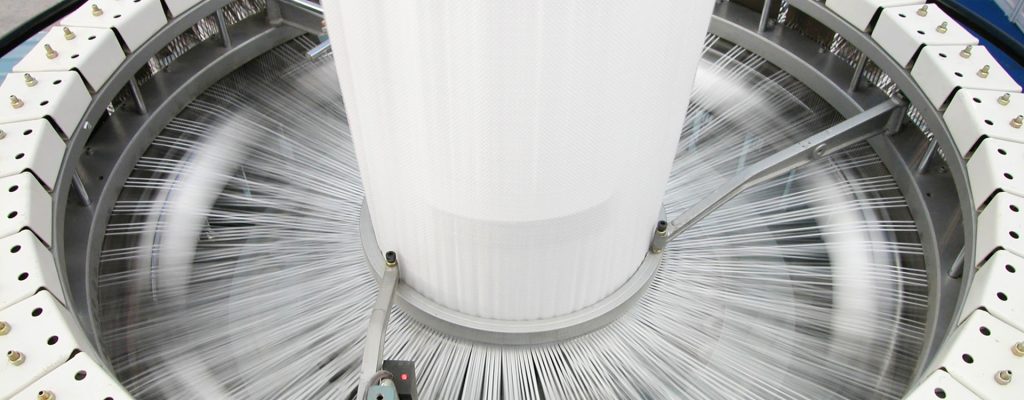
2) Fabric weaving. Tapes are woven on circular or flat looms to a target weave density (e.g., 10×10 to 14×14 threads/inch) that balances modulus, hand feel, and print support. Loom tension and pick count stability are monitored so downstream lamination and printing encounter a predictable substrate.
3) BOPP film preparation. BOPP is biaxially oriented (tenter or bubble process) to achieve stiffness, clarity, and dimensional stability. Corona treatment raises surface energy for ink anchorage. Films are specified in gloss or matte, with thickness tuned to barrier and aesthetics.
4) High‑fidelity printing. Artwork is reverse‑printed on the BOPP using multi‑color rotogravure. Because the ink sits under the film after lamination, scuff and chemical resistance improve dramatically—an advantage over surface‑printed films in rough distribution chains.
5) Extrusion lamination. A PP‑based tie layer bonds the printed BOPP to the woven fabric. Caliper uniformity governs curl and bond strength; too thick and the bag may feel boardy, too thin and print may telescope or delaminate under flex. Micro‑perforation, if required, can be introduced pre‑ or post‑lamination depending on filler and dust‑control requirements.
6) Converting. Laminated webs are cut, tubed, gusseted, and bottomed—stitched or heat‑sealed—into open‑mouth or block‑bottom forms. Easy‑open bands, anti‑skid coatings, clear windows, and tear notches are incorporated at this stage. Stitch patterns (chain/lock), seam allowances, and fold geometry are tuned to hit seam‑efficiency targets and pass drop tests.
7) Quality assurance. Routine controls include seam efficiency, tensile/burst strength, drop behavior, colorimetric ΔE against proofs, ink adhesion, coefficient of friction (bag‑to‑bag and bag‑to‑metal), and UV retention. Data loops back to extrusion, lamination, and converting so the process stays centered around specification—not just once, but week after week.
Vertically, notice how early choices ripple forward: draw ratio impacts tape fibrillation resistance; fibrillation resistance affects stitch pull‑outs; stitch pull‑outs impact drop performance; drop performance affects customer claims. Horizontally, compare that chain to alternatives: paper sacks lean on ply count and adhesive integrity; PE films lean on thickness and seal geometry. Different media, similar trade‑offs.
At VidePak, the chain is anchored by top‑tier lines from Germany’s W&H and Austria’s Starlinger. With more than 100 circular looms, 16 extrusion lines, and over 30 lamination/printing machines, capacity scales while gauge control, registration, and seam tolerances remain tight. Founded in 2008, backed by a core team with 30+ years of woven‑packaging experience, VidePak tunes draw ratios, weave densities, laminate stacks, and micro‑perf patterns to the realities of your powder, pellet, or granule—not just to laboratory ideals.
What is the application of BOPP Woven Bags?
Staple foods and retail grains. Rice, pulses, sugar, and flour benefit from moisture protection and billboard‑quality art that survives handling. Transparent window panels build consumer trust—what you see is what you get—while barcodes stay scan‑reliable.
Fertilizers and soil amendments. Granular NPK, urea, and specialty blends demand puncture resistance and weather tolerance. BOPP Woven Bags resist scuffing in bulk movement and preserve graphics even when product edges are abrasive.
Animal feed and seeds. Pellets, premixes, and seed lots prefer laminates that limit dusting and woven cores that shrug off drop shocks. Block‑bottom geometry forms square, stable pallets for tighter warehouses and straighter stacks in trucks.
Building materials and light minerals. Tile adhesive, grout, and calibrated sands call for strong seams, readable safety panels, and optional micro‑perfs for controlled deaeration on fast lines—without sacrificing print integrity.
Chemical and industrial goods. Where regulation, hazard pictograms, and traceability dominate, rotogravure on BOPP presents dense information clearly, then survives the conveyor rub test that smears lesser prints.
Across geographies—the United States, Europe, Brazil and South America, Southeast Asia, Japan, Korea, Central Asia, the MENA Region, East Africa, and South Africa—VidePak adapts fabric specs, laminate stacks, artwork, and hygiene controls to local climate and codes. With 568 employees and annual sales near US$80 million, scale meets responsiveness: enterprise rollouts without the bottlenecks.
Typical Parameters for BOPP Woven Bags
The ranges below reflect widely used, real‑world specifications in the BOPP‑laminated woven sack market. Select to match filler design, product rheology, climate, and logistics. Values are application‑dependent and customizable.
| Parameter | Typical Options / Range |
|---|---|
| Product | BOPP Woven Bags (open‑mouth / gusseted / block‑bottom) |
| Fabric (GSM) | ~70–110 g/m² woven PP (other ranges available by application) |
| BOPP Film Thickness | 15–35 μm (gloss or matte; reverse‑printed) |
| Weave Density | 10×10 to 14×14 (warp×weft, threads/inch) |
| Bag Capacity | 5–50 kg common (rice/feed/fertilizer SKUs) |
| Common 50‑kg Size | ~50 × 80 cm (±1–2 cm by filler spec) |
| Micro‑Perforation | Patterned micro‑perfs available for deaeration during filling |
| Printing | Rotogravure, up to multi‑color artwork; barcode/QR capable |
| Coefficient of Friction | ≈0.30–0.60 (bag‑to‑bag with anti‑skid options) |
| Closures | Heat‑cut/hemmed top; single/double fold bottom; chain/lock stitching |
| UV Stabilization | Options up to ≈3000 h (storage profile dependent) |
Why VidePak for BOPP Woven Bags
Process discipline meets practical customization. VidePak runs W&H and Starlinger assets that hold lamination gauge, color registration, and seam efficiency within tight bands—so week‑to‑week runs look the same and perform the same. Materials policy is straightforward: 100% virgin PP structural components by default; controlled recycled content available where regulations and performance allow. Customization is routine: multi‑color graphics, gloss/matte film stacks, micro‑perf patterns tuned to your filler, anti‑skid textures for pallet stability, and window designs to showcase product.
Scale that flexes. With more than 100 circular looms, 16 extrusion lines, and over 30 lamination/printing machines, VidePak executes multi‑SKU programs without choking your schedule. Global support spans the US, Europe, Brazil, South America, Southeast Asia, Japan, Korea, Central Asia, the MENA region, and East & South Africa. Founded in 2008 and staffed by a core team with over three decades in woven packaging, VidePak speaks both languages—the engineer’s and the marketer’s—so BOPP Woven Bags carry your product securely, carry your brand vividly, and carry your sustainability goals forward without carrying excess cost.
As the world faces mounting environmental challenges, industries are under increasing pressure to adopt sustainable practices in every aspect of their operations, including packaging. Among the various packaging solutions available today, BOPP woven bags (Biaxially Oriented Polypropylene bags) stand out as an eco-friendly alternative to traditional packaging materials. These bags not only offer durability and versatility but also embrace sustainability, helping businesses reduce their environmental footprint while maintaining efficient packaging solutions.
In this article, we will explore how BOPP woven bags are shaping the future of packaging, addressing sustainability concerns, and meeting the growing demand for eco-conscious solutions. We’ll dive into product specifications, the benefits of BOPP woven bags, and how these bags can contribute to a greener future for industries worldwide.
What Are BOPP Woven Bags?
BOPP woven bags are made from polypropylene (PP) fibers, which are woven into a strong fabric and then laminated with a layer of biaxially oriented polypropylene film. This combination of materials offers numerous advantages, including increased strength, resistance to environmental factors, and the ability to carry a wide variety of goods.
These bags are commonly used for packaging grains, chemicals, fertilizers, construction materials, and a variety of other bulk goods. The lamination process also allows for the printing of high-quality graphics, which makes BOPP woven bags suitable for both functional and promotional purposes.
Key Specifications of BOPP Woven Bags
| Feature | Specification |
|---|---|
| Material | Biaxially oriented polypropylene (BOPP) |
| Bag Type | Woven bags with laminated film |
| Dimensions | Customizable (standard sizes: 10kg, 25kg, 50kg, or bespoke) |
| Strength | High tensile strength, tear-resistant |
| Printing | Multi-color flexographic printing |
| Lamination | BOPP film lamination for durability and better graphics |
| Customization Options | Various sizes, custom printing, valve opening, gussets, etc. |
| Sustainability | Fully recyclable, eco-friendly production process |
| Applications | Grains, chemicals, fertilizers, construction materials, etc. |
| Storage Conditions | Suitable for long-term storage in various climates |
The versatility of BOPP woven bags makes them an excellent choice for a wide range of industries, from agriculture to construction and beyond. But what really sets BOPP woven bags apart is their potential to contribute to more sustainable packaging practices.
Sustainability Benefits of BOPP Woven Bags
- Recyclability
One of the most significant advantages of BOPP woven bags is their recyclability. Unlike many traditional plastic packaging materials, BOPP woven bags can be easily recycled into new products, reducing waste and contributing to a circular economy. This is an important feature as businesses and governments strive to meet sustainability goals and reduce plastic pollution. - Durability and Reusability
BOPP woven bags are known for their durability and long lifespan. This means they can be reused multiple times, further reducing the need for new packaging materials. In fact, many industries use these bags for multiple cycles of storage and transport, extending the bags’ utility beyond a single use. - Lightweight yet Strong
Despite being lightweight, BOPP woven bags are incredibly strong, allowing for the transportation of heavy goods without compromising the integrity of the bag. This strength reduces the need for excessive packaging materials and decreases transportation costs, as fewer bags are needed to carry the same amount of goods. - Energy Efficiency in Production
The production process of BOPP woven bags has become increasingly energy-efficient. Advances in technology have streamlined manufacturing processes, reducing the energy consumption and carbon emissions associated with their production. This helps businesses reduce their overall environmental impact. - Reduced Carbon Footprint
Compared to other packaging solutions, BOPP woven bags generate a lower carbon footprint. The use of recyclable materials and the reduction in packaging waste contribute to this environmental benefit, aligning with global sustainability goals and reducing the overall environmental impact. - Compliance with Environmental Regulations
As sustainability regulations tighten worldwide, BOPP woven bags offer businesses an easy way to comply with packaging regulations. These bags are fully recyclable and often meet or exceed environmental standards set by regulatory bodies, helping businesses avoid fines or penalties associated with non-compliance.
The Growing Demand for Sustainable Packaging Solutions
The global demand for sustainable packaging has skyrocketed in recent years, with consumers and businesses alike becoming more eco-conscious. Companies are increasingly expected to adopt eco-friendly packaging solutions to meet consumer preferences and align with governmental regulations on sustainability.
According to a 2023 report by the Packaging Digest, over 60% of consumers are willing to pay more for products with environmentally friendly packaging. This shift in consumer behavior has prompted many businesses to reconsider their packaging strategies, seeking out alternatives that not only meet functional requirements but also reduce environmental harm.
BOPP woven bags are perfectly positioned to meet this demand, offering both sustainability and high performance. As the demand for eco-friendly packaging continues to rise, industries that rely on bulk packaging, such as agriculture, food production, and chemicals, are increasingly adopting BOPP woven bags as a key part of their sustainability strategies.
Product Innovations in BOPP Woven Bags
In addition to the inherent benefits of BOPP woven bags, recent advancements in technology have further enhanced their sustainability. For instance, the use of biodegradable additives in the manufacturing process is becoming more common, allowing these bags to degrade more quickly if they do end up in landfills. This innovation helps to reduce the environmental impact of discarded bags, further enhancing their eco-friendliness.
At the same time, advancements in printing technology have allowed for the use of water-based inks, which are non-toxic and environmentally friendly, reducing the chemical footprint of BOPP woven bags.
FAQs About BOPP Woven Bags
1. Are BOPP woven bags environmentally friendly?
Yes, BOPP woven bags are environmentally friendly. They are fully recyclable, durable, and reusable, which helps to reduce waste and reliance on single-use packaging materials.
2. Can BOPP woven bags be used for food packaging?
Yes, BOPP woven bags can be used for food packaging, provided that they are manufactured under food-grade conditions and meet relevant regulatory standards.
3. What are the key advantages of BOPP woven bags compared to other packaging materials?
BOPP woven bags offer a combination of strength, recyclability, and cost-effectiveness. They are lightweight yet durable, making them an excellent alternative to traditional plastic or paper packaging.
4. How can BOPP woven bags contribute to sustainability goals?
By choosing BOPP woven bags, businesses can reduce their overall environmental footprint, comply with sustainability regulations, and promote recycling efforts. The bags are durable, reusable, and fully recyclable, which helps reduce packaging waste.
5. Can BOPP woven bags be customized?
Yes, BOPP woven bags are highly customizable. They can be tailored to meet specific size, color, printing, and design requirements, making them suitable for a variety of industries and applications.
Conclusion: The Future of Sustainable Packaging
BOPP woven bags represent a significant step forward in the pursuit of sustainable packaging solutions. With their high durability, recyclability, and energy-efficient production processes, they offer businesses a way to reduce their environmental footprint while still meeting the demands of modern packaging.
As consumer preferences continue to shift toward eco-friendly solutions, BOPP woven bags are poised to play a key role in shaping the future of sustainable packaging. By choosing these bags, businesses can embrace sustainability without sacrificing performance or cost-effectiveness.
For more information on how businesses can align their packaging strategies with sustainability standards, explore this article on industrial woven packaging bags. And for insights into innovations in laminated woven bags, check out VidePak’s expertise in kraft paper woven bags.