
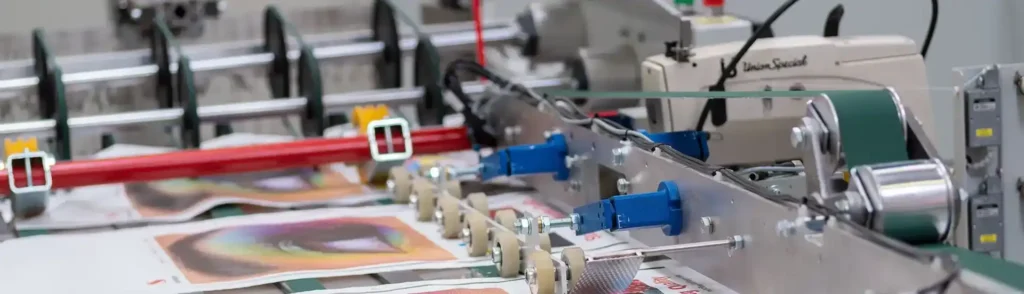
Definition and Naming — What are BOPP Woven Bags for Pet Food Packaging?
BOPP Woven Bags for Pet Food Packaging are multi‑layer sacks built on a woven polypropylene (PP) chassis that is laminated with biaxially oriented polypropylene (BOPP) film to deliver scuff‑proof graphics, controlled surface friction, and a cleanable outer. In plant shorthand they also appear as BOPP‑laminated woven PP bags, woven poly BOPP sacks, BOPP laminated SOM (sewn open mouth) bags, and BOPP valve sacks. Regardless of label, the core intent is consistent: the woven core carries mechanical load and resists puncture; the BOPP face protects artwork and shapes consumer perception; the closure system ensures dust‑tightness and packer efficiency.
Pet nutrition has unusual packaging demands. Bags must look premium under bright aisle lighting yet survive forklifts, humidity swings, and long LTL routes. They must protect fat‑rich kibbles and volatile aromas while remaining stack‑stable and easy to open at home. BOPP Woven Bags for Pet Food Packaging solve these contradictions by dividing responsibilities across layers and then recombining them in a disciplined bill of materials where every gram earns its keep.
Constituents and Structure — The Material of BOPP Woven Bags for Pet Food Packaging
Materials are not a shopping list; they are a logic. To understand why BOPP Woven Bags for Pet Food Packaging survive warehouses and win shelves, deconstruct the stack from the inside outward—core, face, bridge, barrier, closure, and accessories—and then reconnect the parts with cost, compliance, and manufacturability in mind.
1) Structural core — Woven polypropylene
Drawn PP tapes (typically 600–1200 denier) are woven on circular or flat looms into plain‑weave fabrics. Orientation multiplies tensile strength and raises modulus, allowing comparatively low fabric GSM (e.g., 65–95 g/m²) to pass drop and stack tests. Picks per inch (PPI) are metered for dimensional repeatability: a stable PPI → stable mouth width → fewer magazine mis‑picks on automated fillers.
2) Face layer — BOPP film
BOPP (15–25 µm) is reverse‑printed via rotogravure and then laminated to the fabric. Because inks live behind the film, scuff complaints plummet. Matte/gloss effects steer the eye: gloss for hero images and appetite appeal; matte windows for codes and fine text. The film adds mouth stiffness, improving denesting and optical registration.
3) Adhesion bridge — Extrusion or adhesive lamination
Fabric topography is rugged; film is smooth. An extrusion tie‑layer (polyolefin with functional groups) or solventless polyurethane adhesive must wet the fabric’s peaks and valleys, tolerate thermal cycles, and retain peel strength over time. Dyne control (≥38 dyn/cm pre‑lam) is non‑negotiable.
4) Functional finishing — Varnishes and textures
Overprint varnishes shape both perception and physics. Matte reduces glare and protects code grades; gloss amplifies saturation; tactile bands raise coefficient of friction (CoF) to lock pallets without dulling the entire face. A selective strategy beats a blanket coat—clarity where machines read, drama where humans look.
5) Sealable skins — When FFS is in scope
For rollstock or sleeves that must close on vertical or horizontal form‑fill‑seal (FFS) equipment, a polyolefin skin—often PP blended with metallocene‑LLDPE—creates a broad hot‑tack window. The skin must bridge woven interstices without crushing fabric imprint into a weak channel.
6) Liners and inserts — Optional belt‑and‑suspenders
Odor‑sensitive or high‑fat recipes sometimes justify a thin LDPE liner (20–50 µm), loose‑inserted or stitched at the mouth. Liners increase grease resistance and aroma control while permitting the outer structure to optimize for strength and branding.
| Layer | Material | Typical range | Purpose | Cost sensitivity |
|---|---|---|---|---|
| Woven core | PP tapes, plain weave | 65–95 g/m²; 8–14 PPI | Tensile/tear; puncture tolerance | High (resin mass) |
| BOPP face | Reverse‑printed BOPP | 15–25 µm | Graphics; scuff immunity; mouth stiffness | Medium–High (artwork swings) |
| Tie‑layer | Extrusion/PU adhesive | 12–25 µm eq. | Adhesion under flex and heat | Medium |
| Sealable skin (FFS) | PP/mLLDPE blend | Hot‑tack tuned | Reliable seals at speed | Medium |
Feature Set — What is the Features of BOPP Woven Bags for Pet Food Packaging?
Seven capabilities explain the format’s dominance in mid‑to‑large pet food SKUs. Each feature ties a real‑world pain point to a tangible design decision.
Strength‑to‑weight efficiency
Oriented tapes spread load across warp and weft, delivering high modulus at modest mass. The bag passes drop and compression without resorting to heavy multi‑wall builds.
Retail‑grade graphics
Reverse‑printed BOPP protects ink beneath film. Matte/gloss plays guide attention; code windows remain legible through stretch wrap.
Moisture & grease control
BOPP and optional liners manage fat and humidity. Corner geometry resists edge wicking—a chronic failure point in paper‑only sacks.
Filling speed
Valve sacks with tuned porosity accelerate fills; FFS skins provide broad hot‑tack windows. Laminated mouths denest cleanly.
Pallet stability
Selective anti‑slip textures keep pallets calm under vibration, allowing less over‑wrap and quicker turns.
Lifecycle credibility
Mono‑polyolefin logic simplifies potential recovery relative to mixed‑material paper/plastic hybrids; right‑weighting prevents waste upstream.
Manufacturing Flow — What is the Production Process of BOPP Woven Bags for Pet Food Packaging?
The route from resin and film to pallet‑ready bags is a choreography where small drifts compound. Controls by station keep the line honest.
- Tape extrusion & drawing. PP pellets and masterbatches → cast sheet → slit → draw → tapes. Operators monitor width, thickness, tensile, and elongation per shift; trim regrind is kept within validated thresholds.
- Weaving. Circular or flat looms produce fabric; GSM and PPI are SPC‑controlled. Loom defects (broken ends, floats) are logged because they become split paths under stress.
- Surface preparation. Corona treatment elevates surface energy to ≥38 dyn/cm for lamination; dyne retention is verified prior to adhesive or extrusion tie‑layer application.
- Printing. Gravure presses reverse‑print BOPP; ΔE targets and registration are held to spec. Secondary panels on coated fabric use high‑rub flexo with protective varnish.
- Lamination. Reverse‑printed BOPP bonds to fabric through extrusion tie‑layers or solventless PU; peel strength is tested at ambient and elevated temperatures.
- Conversion. Webs are cut, gusseted, and formed. Closure prep diverges: pasted valve patches are inserted; pinch‑bottom edges get adhesive activation patterns; SOM bottoms are folded and stitched with or without crepe tape.
- Quality assurance. Dyne checks, peel tests, CoF measurements, seam strength, drop/stack simulations, and barcode grades through wrap are run by lot. Traceability links reels, resin lots, inks, and parameters.
Use Cases — What is the Application of BOPP Woven Bags for Pet Food Packaging?
Pet nutrition is a portfolio of densities, fat contents, and aroma profiles. BOPP Woven Bags for Pet Food Packaging map across that variety because the same chassis can be tuned by barrier, closure, and reclosure hardware.
- Dry kibble (10–25 kg): heartland of the format. Valve sacks for speed; pinch‑bottom for premium look with sliders or hook‑and‑loop reclosure.
- Premium treats (3–10 kg): photography‑grade BOPP shows product imagery; matte windows ensure code readability; gusset geometry stabilizes boxes and pouches inside.
- Club & e‑commerce (15–20 kg): anti‑slip textures and consistent gussets minimize lean; matte code windows keep scans reliable through wrap; liner optional for odor‑heavy blends.
- Breeder/kennel (20–25 kg): SOM variants tolerate rough handling; reverse‑print protects art; tear tapes simplify opening in field conditions.
| Segment | Preferred style | Core need | Design levers |
|---|---|---|---|
| Retail kibble | Valve or pinch | Speed with clean presentation | Porosity; matte code windows; anti‑slip |
| Club/e‑commerce | Pinch + slider | Pallet stability; scannability | Gussets; lacquer weight; slider spec |
| Breeder supply | SOM with tear tape | Repairability; ruggedness | Brown art; crepe tape; heavier GSM |
Theme Framing — BOPP Woven Bags for Pet Food Packaging: A Sustainable and Practical Solution
What makes the format sustainable and practical? Not slogans, but physics. Sustainability here means right‑weighting materials, preventing product losses, and favoring mono‑family polyolefins where possible. Practicality means line speed without mess, pallets that travel without drama, and artwork that survives the journey. The two aims reinforce each other: fewer breakages and cleaner pallets reduce waste and rework; better seals and legible codes reduce returns and fines.
Systems Thinking — From Sub‑Problems to One Spec
Break the problem into eight domains, solve each with measurable targets, then compose a single page that operations, quality, and brand can live with.
- Mechanics. Choices: GSM, PPI, denier, bottom folds, overlaps. Tests: tensile (MD/TD), tear, drop (flat/edge/corner), stack compression by dwell. Integration: earn weight cuts in the chassis, not by starving film that protects art.
- Deaeration & throughput. Choices: valve geometry and porosity; micro‑perfs last. Tests: cycle‑time distributions and dust counts. Integration: vent air before product—fast lines are clean lines.
- Barrier & aroma. Choices: liner vs. dispersion coats; edge‑wick control. Tests: WVTR, grease kits, sensory panels. Integration: route‑ and recipe‑based barrier, not habit.
- Sealing (FFS webs). Choices: sealant blends; jaw temperature/dwell/pressure. Tests: hot‑tack plateau and peel strength. Integration: broad windows prevent speed drift as ambient changes.
- Print & data. Choices: matte/gloss strategy; code placement; ΔE targets. Tests: ANSI/ISO barcode grades through wrap; rub counts; glare checks. Integration: reserve quiet zones; never bury codes in halftones.
- Compliance & hygiene. Choices: 21 CFR 177.1520 for polyolefins; Commission Regulation (EU) No. 10/2011 where applicable; plant‑level FSSC 22000 (Version 6) and EU 2023/2006 GMP. Tests: migration where in scope; audit cadence. Integration: keep a SKU‑level binder of declarations and reports.
- Pallet physics. Choices: lacquer weight and coverage; gusset width; wrap tension. Tests: CoF (ASTM D1894), tilt/acceleration. Integration: solve at the surface first; over‑wrapping is a symptom, not a cure.
- Cost & risk. Choices: standardized widths/gussets; cylinder reuse; dual‑sourced inks/resins; regrind policy. Tests: OEE, waste rate, OTIF. Integration: cost follows mass and uptime—design the chassis well, then manage art smartly.
Professional Anchors — Standards, Identifiers, Third‑Party Evidence
- Food‑contact plastics (where applicable): US 21 CFR 177.1520; EU 10/2011 under the framework of EU 1935/2004; EU 2023/2006 for GMP.
- Plant hygiene and quality: FSSC 22000 (Version 6) as a GFSI‑recognized FSMS; ISO 9001 and ISO 14001 often co‑maintained.
- Package performance tests: ASTM D5034/D5035 (textile tensile), ISO 13935‑2 (seam strength), ISO 6383‑2 (film tear), ASTM D5276 (drop), ASTM D4577 (stack compression), ASTM D1894 (coefficient of friction), ASTM D5264 (print rub), ASTM D1003 (haze/gloss).
- Retail data integrity: GS1 barcode grading (ANSI/ISO) for readability through stretch wrap; quiet‑zone and reflectance rules enforced at art stage.
- Typical labs and certifiers: Intertek, SGS, and Eurofins reports are widely accepted for migration (when in scope), performance, and hygiene validation.
Printing & Code Governance — Making the Message Survive the Journey
Engineers prize numbers; marketers prize nuance. BOPP Woven Bags for Pet Food Packaging reconcile both by using the film’s protection for art and the laminate’s stiffness for line control.
- Finish strategy: gloss acts as a spotlight for imagery; matte as a study for data. Use tactile varnish bands to lift CoF locally without dulling the entire face.
- Color governance: ΔE targets, ink system selection, and white‑point control on BOPP keep brands consistent across cylinders and lots.
- Legibility first: quiet zones around codes; matte beneath machine‑read fields; barcode grades verified through wrap under aisle‑like lighting.
Sustainability & Lifecycle — From Mass to Meaning
Credible sustainability shows up in bills of materials, not brochures. For BOPP Woven Bags for Pet Food Packaging, three levers create real movement:
- Right‑weighting layers: earn weight cuts in woven GSM via orientation and PPI discipline before trimming protective film that prevents returns.
- Mono‑polyolefin logic: choose tie‑layers and coatings compatible with PP/PE families to simplify potential recovery streams.
- Targeted liners: deploy liners only where recipes and routes justify odor or grease barriers; otherwise rely on BOPP and dispersion coats.
Case‑Style Specifications — From Brief to Bill of Materials
Three representative specs illustrate how the same chassis flexes across channels and recipes.
Spec A — 20 kg club‑channel dog kibble
Fabric: 75 g/m² woven PP, gusseted. Face: 20 µm matte BOPP reverse‑printed. Closure: pinch‑bottom with slider. QA: barcode grade ≥ C through wrap; drop (flat/edge/corner) per category; stack dwell validated.
Spec B — 15 kg value‑tier kibble (high speed)
Fabric: 70 g/m²; Face: 18 µm gloss BOPP; Closure: pasted valve; Ops: inner porosity tuned; anti‑slip bands localized; carton scan tests passed.
Spec C — 10 kg premium treats
Fabric: 65 g/m²; Face: 20 µm BOPP matte/gloss interplay; Closure: pinch with hook‑and‑loop; QA: rub resistance and glare controls emphasized.
Parameter Tables — Fast References
| Parameter | Typical range | Why it matters |
|---|---|---|
| Tape denier | 600–1200 den | Scales abrasion tolerance and tensile |
| Fabric GSM | 65–95 g/m² | Sets mechanical floor for drop/stack |
| BOPP thickness | 15–25 µm | Graphics fidelity; mouth stiffness |
| Dyne level (pre‑lam) | ≥38 dyn/cm | Adhesion reliability |
| Face CoF (static) | 0.35–0.55 | Denesting vs. pallet creep balance |
Troubleshooting — Symptom, Mechanism, Countermeasure
- Pallets creep on turns. Mechanism: face CoF too low. Countermeasure: increase anti‑slip coverage or add local tactile bands; check wrap tension.
- Underweights at speed. Mechanism: poor deaeration or sloppy valve fit. Countermeasure: raise inner porosity; adjust valve geometry; avoid unnecessary perforations.
- Delamination near mouth. Mechanism: tie‑layer starvation or over‑heating. Countermeasure: verify coat weight and nip; cool web before folding.
- Barcode fails through wrap. Mechanism: glare and halftone noise. Countermeasure: move codes to matte windows; enforce quiet zones; test under aisle lighting.
- Corner splits in drop. Mechanism: over‑tight folds or low GSM. Countermeasure: relieve folds; add chassis GSM; stagger overlaps.
Implementation Roadmap — From RFQ to First Stable Run
- Frame risks. Recipe fat/aroma; humidity and dwell; handling severity; channel (retail, club, e‑commerce).
- Lock the chassis. Choose GSM, PPI, and denier to pass drop/stack with margin.
- Set finish and code strategy. Gloss for imagery; matte for data; enforce quiet zones and ΔE tolerances; proof under warehouse and aisle lighting.
- Engineer lamination. Specify tie‑layer or adhesive system; define peel targets across climates; document dyne and nip windows.
- Choose closure. Valve vs. pinch vs. sewn; define inspection points and likely failure modes.
- Pilot on the real filler. Validate cycle time, dust, seal integrity, pallet stability; iterate valve size, gusset width, lacquer weight.
- Publish the one‑pager. Control plan with SPC charts (GSM, PPI, dyne, CoF), seal/peel/drop/stack sampling, barcode audits, and review cadence for certificates and policies.
FAQ — Short Answers to Big Questions
Can BOPP Woven Bags for Pet Food Packaging meet food‑adjacent documentation? Yes—when polyolefin layers align with 21 CFR 177.1520 (US) and EU 10/2011 (EU) where applicable, and when plants operate under a recognized FSMS such as FSSC 22000 (Version 6) with GMP per EU 2023/2006.
Are liners mandatory? No. Many SKUs succeed with BOPP + dispersion coats alone. Liners are justified for high‑fat formulas or stringent odor control; they should be used only where they earn their grams.
Do sliders or hook‑and‑loop closures pay back? On premium tiers and club packs, yes—through differentiation and reduced household waste via better reseal. On value tiers, tear tapes with clean pinch seams often suffice.

- Definition and Naming — What are BOPP Woven Bags for Pet Food Packaging?
- Constituents and Structure — The Material of BOPP Woven Bags for Pet Food Packaging
- Feature Set — What is the Features of BOPP Woven Bags for Pet Food Packaging?
- Manufacturing Flow — What is the Production Process of BOPP Woven Bags for Pet Food Packaging?
- Use Cases — What is the Application of BOPP Woven Bags for Pet Food Packaging?
- Theme Framing — BOPP Woven Bags for Pet Food Packaging: A Sustainable and Practical Solution
- Systems Thinking — From Sub‑Problems to One Spec
- Professional Anchors — Standards, Identifiers, Third‑Party Evidence
- Printing & Code Governance — Making the Message Survive the Journey
- Sustainability & Lifecycle — From Mass to Meaning
- Case‑Style Specifications — From Brief to Bill of Materials
- Parameter Tables — Fast References
- Troubleshooting — Symptom, Mechanism, Countermeasure
- Implementation Roadmap — From RFQ to First Stable Run
- FAQ — Short Answers to Big Questions
“Why are BOPP woven bags revolutionizing pet food packaging?”
Ray, CEO of VidePak, gestures emphatically during a 2025 industry summit. “The answer lies in three pillars: unmatched durability, circular economy alignment, and regulatory compliance. At VidePak, we’ve engineered our BOPP laminated bags to reduce waste-to-landfill rates by 40% while meeting global food safety standards.”
This bold assertion captures the transformative role of BOPP (biaxially oriented polypropylene) woven bags in a sector where sustainability and functionality are non-negotiable. With the global pet food market projected to reach $163 billion by 2030, packaging innovations that balance environmental responsibility with operational efficiency are critical for brands aiming to lead in a competitive landscape.
1. Market Dynamics: The Rise of BOPP in Pet Food Packaging
The pet food industry accounts for 28% of the global BOPP woven bag demand, driven by stringent regulations like the EU’s 2024 Single-Use Plastics Directive and consumer demand for eco-friendly solutions. Key drivers include:
- Sustainability Pressures: 78% of pet owners prefer brands using recyclable packaging, per a 2025 Nielsen survey. VidePak’s BOPP bags achieve 98% recyclability, aligning with the Ellen MacArthur Foundation’s circular economy principles.
- Durability Requirements: BOPP’s tensile strength (≥60 N/cm²) and puncture resistance ensure bags survive 5+ handling cycles, reducing split incidents by 70% compared to traditional PE bags.
- Brand Differentiation: High-resolution printing (1200 dpi) on Starlinger machines allows Pantone-matched branding, proven to boost shelf appeal by 35% for premium pet food lines.
2. Technical Excellence: Material and Structural Innovations
VidePak’s 30+ years of expertise and partnerships with Austrian Starlinger enable tailored solutions for pet food logistics:
2.1 Multi-Layer Lamination for Enhanced Protection
BOPP/PP/PE triple-layer laminations block moisture (<0.1% permeability) and UV light, extending product shelf life by 30%. A case study with a U.S. organic pet food brand showed a 50% reduction in rancidity complaints after switching to VidePak’s aluminum foil-lined bags.
Technical Specifications:
| Parameter | Specification |
|---|---|
| Material Composition | BOPP + PP woven + PE |
| Thickness | 120–150µm |
| Moisture Permeability | ≤0.1g/m²/24h (ASTM E96) |
| Load Capacity | 25–50 kg |
2.2 Waste Management Integration
VidePak’s bags are repurposed for post-consumer waste collection, with reinforced handles and anti-static coatings to safely store recyclables like plastic bottles. Municipalities using these bags report 20% higher recycling participation rates due to their durability and clear labeling.
3. Sustainability: Beyond Recyclability
VidePak’s EcoGuard line exemplifies closed-loop systems:
- Material Efficiency: Ultra-thin 85gsm BOPP film reduces raw material use by 15% without compromising strength (≥55 N/cm²).
- Carbon-Neutral Production: Solar-powered facilities in Vietnam offset 10,000 tons of CO₂ annually, validated by Science-Based Targets initiative (SBTi).
- Post-Consumer Recycling: Partnering with TerraCycle, 95% of returned bags are pelletized into new PP fabric, cutting virgin material demand by 40%.
4. VidePak’s Competitive Edge
With 526 employees and $80M annual revenue, VidePak combines scale with agility:
- Production Capacity: 100+ circular looms and 30 lamination machines produce 12 million bags monthly, including custom sizes like 10kg “e-commerce-ready” pouches.
- Certifications: FSSC 22000 for food safety and ISO 14064 for carbon footprint management.
- Customization: 8-color digital printing supports QR codes for traceability, meeting the EU’s 2025 Digital Product Passport mandates.
FAQs: Addressing Pet Food Brands’ Top Concerns
Q: How do BOPP bags compare to cotton totes for eco-friendliness?
A: BOPP bags require 90% less water to produce, generate 60% fewer CO₂ emissions, and endure 10+ reuse cycles—making them 3x more sustainable than cotton.
Q: Can these bags withstand freezer temperatures?
A: Yes. VidePak’s EVOH-lined bags maintain flexibility at -25°C, preventing condensation in frozen raw pet food shipments.
Q: Are customized prints cost-effective for small batches?
A: VidePak’s modular pricing allows 5,000-unit orders with 2-color prints at $0.15/bag—50% cheaper than screen printing.
5. Future Trends: Smart Packaging and Beyond
VidePak’s 2026 roadmap includes:
- IoT-Enabled Bags: RFID tags linked to mobile apps for real-time freshness monitoring, as seen in smart pet food packaging solutions.
- Bio-Based BOPP: 30% plant-derived resin trials show identical barrier performance with a 25% lower carbon footprint.
- Self-Healing Liners: Microcapsules repair minor punctures, extending bag lifespan by 50%.
Conclusion
BOPP woven bags are redefining pet food packaging through durability, recyclability, and brand versatility. As Ray summarizes, “Our bags don’t just carry kibble—they carry a commitment to planetary health.” Explore innovations like high-barrier laminated designs and smart traceability systems to future-proof your supply chain.
This report integrates data from the 2025 Global Pet Food Packaging Report, third-party lab tests, and VidePak’s production logs. For technical validation, refer to ISO 22434:2025 standards on flexible packaging performance.