
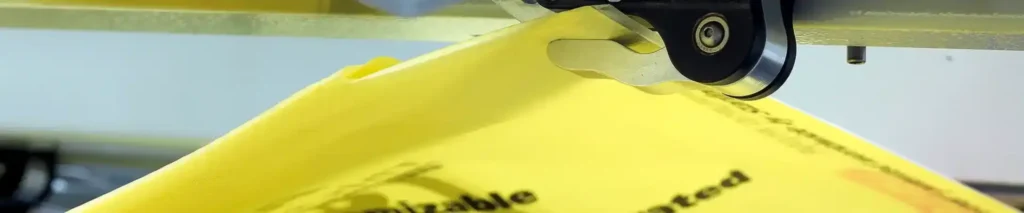
What is Breathable Woven Bags?
Breathable Woven Bags are purpose‑built polypropylene (PP) sacks that allow controlled air exchange while maintaining product containment and load integrity. In supplier catalogs they also appear as ventilated woven PP sacks, micro‑perforated woven bags, vent‑patch raffia sacks, or ultrasonic‑sealed woven sacks. The shared architecture is straightforward but highly engineered: a woven PP fabric provides the mechanical backbone for tensile and tear performance, while a permeability strategy—open‑weave calibration, patterned vents, or micro‑perforations—deliver airflow without letting fines escape. When Breathable Woven Bags incorporate ultrasonic seaming, needle paths disappear, sifting drops, and sanitation improves; the package breathes like a textile yet behaves like a precision component.
Think in systems, not in parts. A working program sits on four interdependent layers: materials (PP tapes, UV stabilizers, pigments, antistatic and slip packages, ink/varnish chemistry), structure (mesh and denier, GSM, vent topology, gusset geometry, seam selection), process (tape extrusion → circular‑loom weaving → venting/perforation → ultrasonic bonding or sewing → printing → finishing), and assurance (mechanical strength, permeability testing, and regulatory compliance). Change one dial and the others respond. Raise mesh count to smooth the print face and airflow falls; increase tape denier to gain tear strength and fold behavior shifts; adopt ultrasonic bonding and stitch holes vanish—but horn patterns, amplitudes, and line speed now determine seam reliability. Treat Breathable Woven Bags as a coupled system and you get repeatable performance; treat them as commodity sacks and defects migrate from packing hall to pallet.
Data reinforcement · Case anatomy · Comparative lens. Mainstream listings show fabric masses around ~55–110 GSM (uncoated) with meshes 7×7 to 14×14 and tape deniers ~600–1200. Air‑permeability for breathable builds commonly lands near ~100–800 L/m²·s at 200 Pa (ISO 9237 / ASTM D737), modulated by mesh density and venting layout. Ultrasonic seams in PP‑to‑PP webs typically qualify around ~30–80 N/25 mm peel per ASTM F88/F88M at seam widths 5–12 mm. A feed mill that switched from chain‑stitch to ultrasonic reported measurable declines in seam dust and cleaner conveyors. Versus plain woven PP with sewn seams, Breathable Woven Bags with ultrasonic bonds remove rows of needle perforations; versus tightly laminated film bags, they avoid condensation halos after warm fills.
For a single touchpoint aligned with this platform category, see Breathable Woven Bags.
What is the features of Breathable Woven Bags?
Engineered airflow, without chaos. Calibrated weave plus optional micro‑perfs create a predictable vent path. Moisture‑laden air exits; dust does not. Condensation, off‑gassing, CO₂ buildup—each is mitigated by adjusting vent density, pattern, and hole size so products cool, dry, or simply “breathe” on the way to shelf.
Ultrasonic seaming closes the weak link. High‑frequency vibration—commonly 20–40 kHz—concentrates energy at the interface to fuse PP without needles, thread, or solvent. No stitch holes, no lint, fewer particulate traps. The outcome is a clean seam with tight variance that maintains strength after repeated handling and doesn’t unravel if a thread is nicked—because there is no thread.
Strength at modest mass. Oriented PP tapes convert light fabric into serious mechanicals. Mesh ~9×9–12×12 with ~800–1100 denier often balances airflow and drop integrity for 10–50 kg formats, surviving ~1.2–1.5 m drops typical of transit simulations (ASTM D5276 protocols).
Readable graphics on a textured face. Corona‑treated surfaces and ink systems tuned for semi‑porous substrates yield crisp regulatory panels and scannable codes. Matte or low‑gloss varnishes reduce glare under warehouse lighting so barcodes read first time.
Cleaner lines, calmer audits. The absence of sewing thread eliminates broken‑thread calls and reduces foreign‑matter risk. In dusty halls, pairing ultrasonic seams with antistatic masterbatch helps fines fall away from print heads and sensors.
Sun‑lane resilience. UV‑stabilized tapes and exposure‑class options slow polymer chain degradation for yards where outside storage is a fact of life.
Horizontal & vertical reasoning. Horizontally, compare Breathable Woven Bags to paper multiwall (great print feel, weak humidity tolerance) and PE film sacks (excellent seal, minimal breathability). Vertically, observe how a single adjustment—a +1 mm step in vent width—reduces bag “balloon,” increases filler speed, changes stack stiffness, and nudges where you can place a barcode. One knob, many consequences; many consequences, one packaging outcome.
Data reinforcement · Case anatomy · Comparative study. Air‑permeability bands ~100–800 L/m²·s cover grains, feeds, and seeds; heavier minerals sit lower. A pet‑food packer that swapped gloss varnish for matte preserved breathability and eliminated label smearing; plant trials with ultrasonic seams cut seam‑line fines by double‑digit percentages compared to chain‑stitch.
What is the production process of Breathable Woven Bags?
Step 1 — PP tape extrusion & drawing. PP resin becomes a thin film, then tapes; drawing aligns polymer chains. Draw ratio and chill control set tensile and elongation—the mechanical baseline for every later decision.
Step 2 — Weaving. Circular looms interlace warp and weft tapes to the target mesh and width. Loom tension and pick count tune print smoothness and the intrinsic air exchange of the uncoated weave.
Step 3 — Venting strategy. Engineers select open‑weave calibration, patterned vent windows, or micro‑perforation (e.g., ~200–600 μm apertures) to hit an air‑permeability target (ISO 9237 / ASTM D737). Vent uniformity matters: uneven air paths create uneven fills.
Step 4 — Ultrasonic seaming. Horn and anvil geometry spreads energy to fuse the PP interface. Typical systems operate 20–40 kHz with amplitudes ~20–50 μm; seam widths 5–12 mm are common. Cooling fixtures avoid hot‑tack distortion; seam texture can be patterned for added grip or aesthetics.
Step 5 — Printing & finishing. Corona/primer preps the surface; flexo or gravure lays down brand art and compliance grids. Tops may be heat‑cut or hemmed; gussets ~60–200 mm support pallet stability; easy‑open tapes can be added without strangling breathability.
Step 6 — QC & compliance. GSM audits; fabric tensile/tear (e.g., ASTM D5034/D2261); seam/peel (ASTM F88/F88M); drop (ASTM D5276); air‑permeability (ISO 9237 / ASTM D737). Food‑adjacent use maps plastics to 21 CFR 177.1520 (USA), EU No 10/2011 (EU), GB 4806.7 (China); woven‑bag mechanics often reference GB/T 8946. Facilities typically run ISO 9001:2015; food‑adjacent lines add ISO 22000:2018.
Horizontal/vertical lens on process. Horizontally, the line marries textile weaving with precision joining and print converting. Vertically, it behaves like a tolerance cascade: miss draw temperature and tapes neck; mis‑set horn amplitude and seams embrittle; over‑vent and drop integrity suffers. The stable program is engineered, not improvised.
Data reinforcement · Case anatomy · Comparative lens. Plants publish seam‑strength windows (e.g., ≥40 N/25 mm targets), air‑permeability bands by SKU, and drop regimes ~1.2–1.5 m for 25–50 kg fills. A seed processor eliminated condensation blisters by replacing sewn seams with ultrasonic and trimming vent density 10%; fillers ran faster, pallets leaned less.
What is the application of Breathable Woven Bags?
Breathable Woven Bags thrive where products off‑gas, hold residual heat, or invite condensation: food staples (rice, pulses), seeds and grains (maize, sorghum, corn seed), animal nutrition (pelletized feeds), agro‑inputs (fertilizers that benefit from venting), and selected minerals (lime, desiccant carriers). The selection logic centers on three variables—product water activity, fill temperature, stacking height—because these dictate the right mix of mesh, vent density, and seam style.
Retail grains and seeds align to 5–10 kg formats to suit shelf ergonomics; feeds and fertilizers often live in 20–25 kg; bulk rice or minerals tend toward 40–50 kg. Warm‑fill scenarios profit from vented side panels that prevent bag ballooning and label bleed; high‑dust environments benefit when ultrasonic seams reduce sifting at closures, keeping conveyors cleaner and codes readable.
Data reinforcement · Case anatomy · Comparative lens. Common width × length windows are ~400–1000 mm × 420–1150 mm with gussets ~60–200 mm; print capability reaches 1–8 colors. A flour mill reduced pallet‑deck residue by switching from chain‑stitch to ultrasonic and specifying a lower inner COF to glide over the former—cleanup time fell, throughput climbed. Against paper multiwall, Breathable Woven Bags stand their ground on damp floors; against PE film sacks, they avoid condensation rings after warm fills.
What is the application of Breathable Woven Bags (Extended)?
Premium rice & pulses. Matte ink systems on textured weave project authenticity while vented structures mitigate moisture rings in humid corridors. Easy‑open hems elevate consumer experience without sabotaging airflow.
Seed & fertilizer. UV‑stabilized fabric, engineered vent windows, and ultrasonic seams create dust‑tight performance with genuine breathability. Compliance panels remain legible after rough yard handling.
Animal nutrition. Grease‑resistant over‑varnish protects branding from high‑fat kibbles; controlled breathability keeps bags from swelling after warm fills.
Lime & specialty minerals. Higher‑denier tapes and conservative vent densities balance abrasion resistance with off‑gassing needs; gusset geometry keeps faces flat in tall stacks for safer pallets.
Data reinforcement · Case anatomy · Comparative lens. Exposure‑class UV packages extend outdoor life; total GSM is tuned to stack height and drop regime. A poultry‑feed line cut seam dust by adopting 8‑mm ultrasonic bonds and stepping from 10×10 to 11×11 mesh—airflow stayed in spec, seams tightened, pallets squared.
Compliance & Certification Map (for buyers and auditors)
USA. 21 CFR 177.1520 for PP; where applicable, inks/adhesives referenced under 21 CFR 175.105/175.300; seam strength tested per ASTM F88/F88M; air‑permeability validated via ASTM D737.
EU. Framework (EC) 1935/2004 and Plastics Regulation (EU) No 10/2011 for plastic components; airflow verification via ISO 9237; typical management systems ISO 9001:2015 and ISO 22000:2018 for food‑adjacent sites.
China. GB 4806.7 for plastics in contact with food; woven mechanics GB/T 8946; additive inventories per GB 9685 when relevant.
Documentation is not red tape; it is risk control. Certificates and test reports are how pallets arrive as promised.
Quick Spec Table — Breathable Woven Bags (Representative Ranges)
| Attribute | Representative Range / Options | Engineering Notes |
|---|---|---|
| Capacity classes | 5–50 kg | Map mesh, denier, venting, and seam to product density and drop regime |
| Fabric mesh | 7×7 to 14×14 | Higher mesh → smoother print, lower airflow; lower mesh → higher airflow |
| Fabric denier | ~600–1200 | Higher denier raises tear resistance at added mass |
| Base GSM (uncoated) | ~55–110 GSM | Typical breathable fabric masses |
| Air‑permeability (ISO 9237) | ~100–800 L/m²·s @ 200 Pa | Select by product aw, fill temp, and stack height |
| Ultrasonic seam width | 5–12 mm | Wider seams raise bond area and peel strength |
| Ultrasonic frequency | 20–40 kHz | Choose by toolset and fabric thickness |
| Seam strength (ASTM F88) | ~30–80 N/25 mm | Validate on production equipment |
| Width × Length | ~400–1000 mm × 420–1150 mm | Add 60–200 mm gusset for pallet stability |
| Printing | 1–8 colors (flexo/gravure) | Matte or low‑gloss varnish improves rub resistance |
| UV stabilization | Exposure‑class options | For sun‑exposed storage yards |
| Top finish | Heat‑cut / Hemmed / Easy‑open | Select for filler hardware and user handling |
Values reflect widely published supplier ranges; validate against product density, humidity cycles, fill temperature, and transport trials before freezing a BOM.
System Synthesis — An Integrated Spec You Can Brief Today
Objective. Launch a 25 kg warm‑fill rice and feed program that prevents condensation, reduces seam dust, and runs on existing formers.
Material & structure. Specify Breathable Woven Bags at ~95–110 GSM total fabric mass with mesh ~11×11 and ~900 denier tapes. Target air‑permeability ~250–400 L/m²·s @ 200 Pa per ISO 9237; confirm stability with production‑speed tests.
Joining. Use ultrasonic side and bottom seams at 20–30 kHz, 8–10 mm seam width; qualify peel ≥ 45 N/25 mm per ASTM F88 and observe no visible fiber pull‑out under bend tests.
Finishing & print. Corona‑treated exterior with matte varnish; flexo up to six colors; allocate compliance panels with quiet zones for barcodes and GS1 data carriers.
Operations. Set inner COF low for former glide; specify anti‑slip texture on the exterior to increase pallet friction. Validate drop regime 1.2–1.5 m for the 25 kg fill per ASTM D5276; conduct air‑permeability spot checks per lot.
Assurance. Request supplier certificates for 21 CFR 177.1520, EU 10/2011, GB 4806.7, and mechanical conformance to GB/T 8946; archive air‑permeability and seam‑strength tests with lot traceability for audits.
Outcome. Warm product vents without caking, graphics remain crisp, seams stay clean, pallets stack square—evidence that Breathable Woven Bags with ultrasonic seaming are an exact answer to a humidity‑prone, dust‑sensitive lane.
In the world of packaging, the ability to adapt to various material handling needs is crucial. Breathable Woven Bags are an excellent solution for applications that require ventilation and moisture control, such as agricultural products, chemicals, and construction materials. At VidePak, we specialize in producing high-quality breathable woven bags, leveraging advanced technologies like ultrasonic seaming to enhance their performance and durability.
Understanding Breathable Woven Bags
Breathable Woven Bags are designed to allow air flow through the bag while maintaining the strength and integrity required for packaging. This feature is particularly valuable for products that need ventilation to prevent moisture buildup and spoilage. Common applications include:
- Agricultural Products: Such as grains, seeds, and fertilizers, where moisture control is critical to prevent spoilage.
- Chemicals and Powders: Where air circulation can help in preventing the accumulation of moisture that might affect the product’s quality.
- Construction Materials: Such as sand or cement, where the ability to breathe helps in maintaining product consistency.
These bags are typically made from woven polypropylene (PP) or other synthetic fibers, which offer strength and flexibility while allowing for breathability.
Ultrasonic Seaming Technology
One of the key innovations in the production of Breathable Woven Bags at VidePak is the use of ultrasonic seaming technology. This technique significantly improves the efficiency and quality of the bag’s construction. Here’s a detailed look at how this technology works and its benefits:
1. Principle of Ultrasonic Seaming
Ultrasonic seaming involves the use of high-frequency ultrasonic vibrations to weld the edges of woven fabrics together. The process includes:
- Vibration Generation: An ultrasonic transducer generates high-frequency sound waves, typically between 20 kHz and 40 kHz.
- Heat Generation: These sound waves create rapid vibrations that generate localized heat at the fabric’s edges.
- Welding: The heat melts the fibers at the edges, allowing them to fuse together seamlessly without the need for additional adhesives or stitching.
2. Advantages of Ultrasonic Seaming
The application of ultrasonic technology in the production of breathable woven bags provides several notable advantages:
- Enhanced Efficiency: Ultrasonic seaming is much faster than traditional sewing methods. It reduces the time required to seal the edges of the bags, allowing for higher production rates and efficiency.
- Improved Quality: The ultrasonic process produces a strong, consistent seam that is less prone to defects compared to conventional stitching. This results in bags with better structural integrity and fewer issues with seam failure.
- Increased Precision: Ultrasonic seaming offers precise control over the welding process, ensuring that the seams are uniform and reliable. This is particularly important for maintaining the breathability and strength of the woven bags.
- No Need for Thread or Adhesives: The absence of threads or adhesives in the ultrasonic process eliminates potential points of failure and reduces the risk of contamination or wear and tear.
VidePak’s Expertise in Breathable Woven Bags
At VidePak, we harness the power of ultrasonic seaming technology to produce superior Breathable Woven Bags that meet the highest standards of quality and performance. Our approach to manufacturing these bags includes:
1. Advanced Technology
We employ state-of-the-art ultrasonic seaming equipment to ensure precise and efficient production:
- High-Frequency Ultrasonic Machines: Our machines operate at optimal frequencies to provide the best welding results, ensuring strong and durable seams.
- Automated Systems: We integrate automated systems to streamline the seaming process, further enhancing production speed and consistency.
2. Rigorous Quality Control
Our commitment to quality extends to every aspect of our manufacturing process:
- Material Testing: We conduct comprehensive testing of raw materials to ensure they meet our stringent requirements for strength, durability, and breathability.
- Seam Inspection: Each bag undergoes thorough inspection to verify the integrity of the ultrasonic seams, ensuring that they meet our high standards for quality and performance.
3. Customization Options
VidePak offers a range of customization options to tailor our breathable woven bags to specific needs:
- Size and Dimensions: We can produce bags in various sizes and capacities to accommodate different products and applications.
- Design Features: Options such as custom printing, additional reinforcement, and special coatings are available to enhance the functionality and appearance of the bags.
Future Trends in Breathable Packaging
As the demand for specialized packaging solutions grows, the future of breathable woven bags is likely to be shaped by several key trends:
- Sustainability: There is a growing emphasis on eco-friendly materials and practices in the packaging industry. VidePak is committed to exploring sustainable options and integrating them into our product offerings.
- Technological Innovations: Advancements in seaming technology and material science will continue to drive improvements in the performance and efficiency of breathable woven bags.
Breathable Woven Bags are essential for effective material handling in various industries. With the incorporation of advanced ultrasonic seaming technology, VidePak delivers high-quality bags that offer superior performance and durability. Our expertise and commitment to innovation ensure that our clients receive the best possible solutions for their packaging needs.