
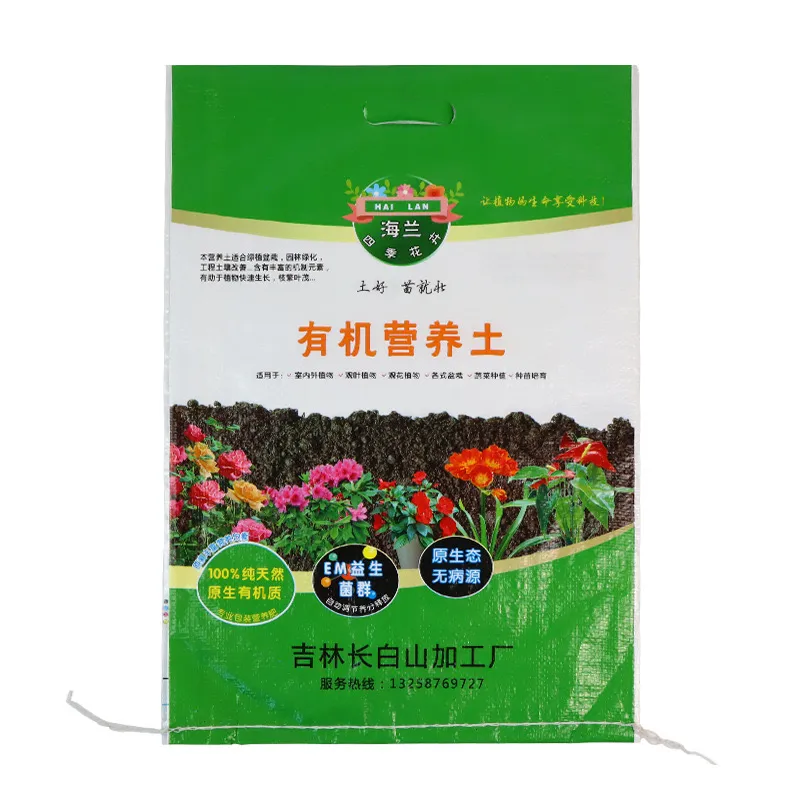
What Are Breathable Woven Bags? Scope, Purpose, and Aliases
Breathable Woven Bags are engineered polypropylene (PP) fabric sacks designed to admit controlled airflow while maintaining the mechanical strength, tear resistance, dimensional stability, and pallet discipline required in 5–50 kg logistics. In practice, they are woven PP (raffia slit film or monofilament) structures—optionally micro‑perforated and optionally laminated—converted into open‑mouth, gusseted, valve, pinch‑bottom, or block‑bottom forms. The design brief is deceptively simple: vent displaced air quickly during high‑speed filling, equilibrate moisture vapor during storage, and yet keep solids inside, labels readable, and pallets square. When they work, lines run faster; when they fail, the entire supply chain—operators, forklifts, even finance—feels the drag.
Common aliases seen across tenders, catalogs, and plant SOPs include: (1) Breathable PP Woven Bags; (2) Ventilated Woven Sacks; (3) Air‑Permeable PP Bags; (4) Micro‑Perforated Woven Bags; (5) Monofilament Breathable Bags; (6) Breathable Raffia Sacks; (7) Permeable Polypropylene Woven Sacks. Labels vary; the physics does not.
Why do Breathable Woven Bags matter? Because logistics doesn’t reward slogans—it rewards seconds saved, losses avoided, and codes that scan. Trapped air inflates pillows, delays weighers, and blows fines toward operators. Sealed films rebound on conveyors. Humidity locked inside packaging breeds caking, off‑odors, or microbial threats in susceptible goods. By offering a controlled pathway for air and vapor, Breathable Woven Bags shift that physics in your favor. They vent fast, settle cleanly, stack with discipline, and continue working after forklift clamps, pallet edges, and rough ground try to undo them. What looks like “just a bag” is, in truth, a tuned component in a larger control system of throughput, safety, and shelf‑life.
The Materials of Breathable Woven Bags: Tapes, Fabrics, Perfs, Coats, and Liners
A Breathable Woven Bag is a stack of functions expressed through materials and interfaces. Each layer or setpoint addresses a distinct failure mode: trapped air at fill, humidity creep during storage, liquid splash during transport, abrasion on conveyors, or barcode scuffing at the depot. Because airflow and strength compete for space in the same structure, the craft is in balancing porosity with mechanical integrity, and doing so repeatably at industrial speed.
Woven PP Fabric (Structural Backbone)
PP pellets are extruded into slit‑film tapes or monofilament strands, drawn for molecular orientation, and woven on circular or flat looms. Typical fabric mass ranges 60–110 g/m² for 10–50 kg fills, with tape denier ~700–1200D and picks‑per‑inch (PPI) tuned to target strength and baseline porosity. Monofilament meshes deliver higher intrinsic airflow; raffia fabrics lean on PPI and post‑process micro‑perfs to reach the same vent rate.
Color masterbatch sets optical behavior: natural (translucent) for window zones, white for high‑contrast print. UV masterbatch extends yard life to 6–12 months depending on latitude, exposure, and wrap practices.
Micro‑Perforation & Vent Schemes (Airflow Control)
Laser micro‑perfs apply small, repeatable apertures post‑lamination or on coated fabric; density (holes/m²), diameter, and pattern orientation govern vent rate without creating tear paths. Needle‑perfs are cost‑effective for coarse powders and pellets. Valve formats often add one‑way vent patches at the valve pocket that open during fill and close under back‑pressure.
For some SKUs, fabric porosity alone suffices; the avoidance of perfs preserves barrier against rain‑side splash.
Coatings & Laminates (Balancing Barrier with Breathability)
A clear PP coating (~18–30 μm) fills interstices to control dust and produce a printable face while still allowing engineered vent windows. BOPP lamination (18–25 μm, reverse‑printed) protects artwork and contributes to moisture discipline; perforated lamination or hybrid windows preserve breathability where needed. Functional coats tune outer COF (0.35–0.60) for pallet physics and add matte/soft‑touch for glare management.
Trade‑off: more coating means cleaner faces and lower WVTR, but less breathability. Vent geometry becomes the counter‑lever.
Liners & Selective Barriers (Climate and Sensitivity)
LDPE/LLDPE liners (25–50 μm) serve hygroscopic goods (e.g., gypsum, some seeds). In a Breathable Woven Bag, the liner may be discontinuous or slot‑vented: vent enough to avoid ballooning and condensation, cap MVTR enough to keep spec. Paper interleaf or breathable films are niche aids for produce or biomass where condensation must be wicked rather than trapped.
Sleeves and closures—PE film, PP‑coated fabric, or composites—set nozzle coupling, back‑pressure self‑closure, and leak risk.
Inks, Varnishes, and Additives
Reverse‑print inks under BOPP or high‑holdout flexo on coated fabric deliver high‑fidelity graphics; ΔE discipline keeps brands consistent. UV stabilizers extend yard life; antistats reduce fines adhesion and ease depalletizing. Antimicrobial top‑coats are rare but possible in certain food/feed corridors.
Recyclate strategy: where rules and performance permit, post‑industrial PP can enter non‑critical layers while keeping the mono‑polyolefin architecture preferred by PP recovery streams.
How the stack breathes: during fill, fabric porosity and engineered perfs give displaced air preferential exits; during storage, the same channels allow humidity to equilibrate. The art is to offer “just enough pathway”—neither ballooning nor soggy micro‑climates, neither dust plumes nor suffocating seals.
Features That Matter: From Fill Speed to Pallet Physics
Operations, quality, and finance do not buy adjectives—they buy outcomes. Breathable Woven Bags deliver across six outcome clusters: speed, cleanliness, moisture discipline, toughness, stack stability, and brand/compliance surface.
- Fast, clean filling: calibrated airflow shortens settle time and reduces blowback. Gravity, air‑pack, or impeller fillers reach target cycle times without “pillow” rebounds.
- Moisture discipline without suffocation: the goal isn’t hermetic; it’s right‑sized exchange. Goods that respire (produce), outgas (charcoal), or retain process moisture (some fertilizers) avoid condensation and souring; powders that cake under humidity avoid trapped micro‑climates.
- Mechanical toughness at sensible mass: woven tapes outperform monolayer films or multiwall paper for tear/puncture at similar weight. Corners survive clamp trucks; faces wipe clean after splash.
- Stack discipline: COF windows (0.35–0.60) and square geometry reduce layer creep and tilt. Bags de‑puff after fill, letting pallets cube efficiently and ride safely.
- Brand and compliance surface: BOPP reverse printing and high‑holdout flexo protect graphics and codes under abrasion, sunlight, and rain‑side grit.
- Climate adaptability: inland warehouses with seasonal humidity, coastal depots with salt spray, open‑deck trucking in rainy seasons—each finds a tuned build by mixing perf density, liner continuity, UV dosage, and seam strategy.
Rhetorical check: Do you want ballooned “pillows,” OSHA‑bait dust clouds, and barcodes that won’t scan? Or do you want bags that couple in seconds, settle like bricks, and arrive with labels intact? The answer writes its own purchase order.
Production of Breathable Woven Bags: From Resin to Pallet (Starlinger & W&H)
VidePak designs for repeatability, not heroics. Geometry, tension, and register are non‑negotiable, which is why the equipment baseline is Austrian Starlinger (tape extrusion, weaving, coating/lamination, block‑bottom formation) and German W&H (Windmöller & Hölscher) for web handling and printing. Capability narrows the defect window: fewer weak corners, fewer off‑square bottoms, fewer mis‑registered panels.
Front‑End: Raw Materials and Incoming Verification
- PP resins: choose homopolymer for stiffness/tensile; impact copolymer for cold‑route toughness. Verify MFI, density, moisture, ash, and pellet contamination; lot‑trace COAs.
- BOPP films: check gauge tolerance, haze, gloss, and post‑corona surface energy. Inspect winding and edges—bad rolls make bad laminates.
- Coats, liners, ties: validate bond strength post‑conditioning; confirm slip levels; map seal windows for valve sleeves.
- Inks/varnishes: align ΔE targets; run scuff rubs against representative conveyors; ensure barcode durability.
- Additives: dose UV masterbatch and antistats to spec; ensure compatibility with intended recycling streams.
Core Manufacturing Stages
- Tape extrusion & orientation (Starlinger): extrude, slit, draw PP tapes; control chill‑roll temperature and draw ratio; manage edge‑trim refeed to maintain tensile targets and optical cleanliness.
- Weaving (Starlinger): set warp tension and PPI; control plant humidity to tame static and lower ends‑down events; monitor fabric porosity bands for breathability targets.
- Coating or lamination: apply clear PP coating or laminate reverse‑printed BOPP; hold corona strength, nip pressure, and temperature profiles. If breathable zones sit under lamination, apply laser/needle perfs in controlled patterns.
- Printing (W&H): reverse‑print BOPP using 6–8 colors; manage ink viscosity and drying; inline cameras track registration and barcode readability.
- Tube forming & valve insertion: convert webs to tubes; insert corner valves sized to filler nozzles; design for self‑closure at operating back‑pressure; add vent patches or micro‑perf windows as fill‑speed levers.
- Bottom formation: fold and heat‑seal or ultrasonically fuse corners; cool under pressure for square footprints and leak‑resistant turns.
- Final trim, counting, palletizing: optical counters prevent off‑counts; alignment fences reduce skew; wrap to a specified containment force to arrest layer creep.
Back‑End QC and Lot Release
- Dimensions & geometry: length, width, gusset, valve pocket, squareness, corner integrity.
- Seams & seals: peel/shear, ultrasonic fusion audits, pinhole counts at gusset turns.
- Fabric mechanics: tensile, tear, burst; COF for conveyors/pallets; drop/vibration for transport simulation.
- Breathability & barrier: airflow/porosity (CFM or Gurley), WVTR where specified, hydro‑resistance for splash‑risk routes.
- Print/optical: color ΔE, registration, rub resistance; barcode/QR readability after vibration.
- Aging: UV exposure windows, cold‑drop for winter routes, heat/humidity conditioning for tropical corridors.
Outcome: lots behave the same in January and July, inland warehouses and coastal depots alike. Operators see faster coupling, finance sees fewer claims, auditors see stable documentation.
Applications in Logistics and Transportation: Where Breathable Woven Bags Win—And Why
From construction powders to produce, Breathable Woven Bags win whenever air must leave quickly, moisture must equilibrate, and stacks must behave like engineered bricks. Use cases include:
- Construction and minerals: cement blends, dry‑mix mortars, gypsum, silica sand, decorative stones. Fast venting prevents ballooning on high‑speed fillers; abrasion resistance keeps labels legible after site handling. For rainy seasons, combine sealed corners or liners with perf windows.
- Agriculture and staples: rice, pulses, seeds, grain. Residual field moisture and respiration argue for breathable bags that reduce condensation and mildew across day–night thermal cycles. Antistats and UV dosage protect seed integrity during outdoor staging.
- Fresh produce and biomass: onions, potatoes, garlic; pellets and briquettes. Ventilated sacks avoid “sweating” and odor buildup, enabling gentle exchange without exposing contents to splash.
- Pet food and animal nutrition: coated fabric + BOPP with calibrated micro‑perfs lets trapped air escape while preserving aroma and oil barrier—retail graphics plus industrial cadence.
- Chemicals and specialty minerals: calcium carbonate, treated pigments, adsorbents. Breathable builds minimize condensation yet keep dust discipline; where corrosive risks exist, add barrier coats or slot‑vented liners.
- Retail garden and outdoor: charcoal, mulch, bark, soil amendments. Breathable faces shed splash and mud, then wipe clean; UV‑stable panels keep brands recognizable after weeks outside.
Related packaging options that often sit adjacent to breathable SKUs in a portfolio:
- High‑graphics solutions described in advanced BOPP woven bag printing for billboard‑grade faces.
- Process control insights in the science behind pasted valve bags when valve formats are preferred.
- Emergency and infrastructure use cases in flood‑control woven packaging and versatile valve bag applications.
- Barrier‑intensive niches in aluminum‑foil composite innovations when hermetic or light‑shielding layers are mandatory.
- Bulk handling alternatives in FIBC bags for chemical products above the 500 kg class.
- Automation paths in FFS roll woven bags for lines migrating toward tubular film systems.
How VidePak Controls and Guarantees Quality
Quality is a loop—design, run, measure, improve—not a slogan. VidePak’s assurance model for Breathable Woven Bags rests on four pillars and is documented end‑to‑end.
- Standards‑aligned design, production, and testing: acceptance criteria reference mainstream norms (ISO/ASTM/EN/JIS). Process setpoints—draw ratios, PPI, coating weight, lamination pressure, perforation density, seal temperatures—are defined and audited. Testing cadence covers incoming verification, in‑process SPC, and lot‑release audits (dimensions, mechanics, porosity/airflow, MVTR as applicable, COF, print ΔE, barcode readability).
- 100% virgin raw materials from tier‑1 suppliers: new PP, masterbatch, BOPP, inks, and liners arrive with auditable COAs. Random sampling confirms MFI, haze, bond strength, contamination limits, and liner continuity where used. Internal regrind—if permitted—stays confined to non‑critical layers under tight control.
- Best‑in‑class equipment pedigree: Starlinger governs tape uniformity, loom stability, coating/lamination control, and consistent block‑bottom forming; W&H delivers register stability and color accuracy across long runs. Capability cuts weak corners, off‑square bottoms, and mis‑registered art at industrial speeds.
- Comprehensive inspection & sampling: incoming checks, in‑process fabric/bond/seal tests, finished audits, AQL‑based sampling, and periodic transport simulations on random pallets. Non‑conformities trigger CAPA with root‑cause analysis and SOP/tooling updates.
Result: faster coupling for operators, fewer claims for finance, cleaner documentation for auditors—across seasons, routes, and depots.
Systems Thinking: Decompose the Choice, Recombine the Specification
A credible specification translates behavior into numbers. Use this four‑axis framework to break down choices and recombine them into a coherent, testable spec for Breathable Woven Bags.
Axis A — Material Behavior → Porosity & Barrier Strategy
- Fine powders trap air: calibrate micro‑perfs plus coated fabric to maintain dust discipline.
- Hygroscopic blends: slot‑vented liners or heavier coating under perfed lamination cap MVTR while allowing fill‑time venting.
- Abrasive granules: raise GSM, reinforce corners, prefer needle‑perfs that avoid film‑edge tear paths.
Axis B — Filler Capability → Valve Geometry & Venting
- Gravity vs. air‑pack vs. impeller: nozzle dynamics and weigh‑system response decide sleeve size, stiffness, and perf density.
- Target cycle time: venting is the lever—too little, you balloon; too much, you compromise barrier. Trial to the minimum that meets speed.
- Clean cutoff: sleeve geometry must prevent blowback “horns” while enabling back‑pressure self‑closure.
Axis C — Logistics Context → Cube, COF, UV Months
- Pallet pattern: fit L×W×G to lift layer counts with minimal overhang; specify outer COF (0.35–0.60) for conveyors and floors.
- Route exposure: open‑deck trucking and coastal spray argue for waterproof corners/liners with localized perf windows; covered depots allow lighter barrier.
- Wrap containment force: set targets to prevent layer creep without crushing the cube.
Axis D — Brand & Compliance → Substrate & Code Plan
- Substrate: reverse‑printed BOPP for photoreal panels, or coated fabric for rugged flexo; matte/gloss mixes protect readability under glare.
- Data carriers: keep barcodes and QR out of fold/impact zones; verify readability after vibration and scuff simulation.
- Regulatory slabs: reserve durable, low‑scuff zones for hazard icons and multilingual instructions.
Specification Tables and Engineering Aids
| Parameter | Typical Options / Targets | Why It Matters |
|---|---|---|
| Nominal fill weight | 5 / 10 / 20 / 25 / 40 / 50 kg | Drives bag size, GSM, and bottom geometry |
| Fabric GSM | 60–110 g/m² | Balances strength, abrasion, and cost for pallet density |
| Tape denier | 700–1200D | Tensile/tear behavior; loom stability; optical neatness |
| Base porosity | Fabric CFM band or Gurley seconds | Anchors airflow absent perfs; affects fill time |
| Perf density | Hole count/m² and diameter band | The “speed” knob; too much compromises barrier |
| Coating thickness | 18–30 μm (clear PP) | Dust/moisture control; print holdout |
| BOPP film | 18–25 μm; gloss/matte | Graphics quality; scuff resistance; barrier |
| Valve sleeve | PE film or PP‑coated fabric | Nozzle coupling, self‑closure, leak control |
| Vent scheme | None / micro‑perfs / vent patches | Fill speed vs. barrier trade‑off |
| Liner | LDPE/LLDPE 25–50 μm (optional) | Low MVTR for hygroscopic goods |
| Outer COF | 0.35–0.60 | Pallet stability and conveyor behavior |
| UV stability | 6–12 months | Outdoor yard resilience |
| Printing | Flexo/gravure 6–8 colors typical | Brand impact and code durability |
Breathability vs. Barrier: Indicative Decision Matrix
| Scenario | Dominant Risk | Preferred Strategy | Notes |
|---|---|---|---|
| Inland warehouse, seasonal humidity | Vapor diffusion | Coated fabric + perfed BOPP; vent for speed | Balance WVTR against line cadence. |
| Open‑deck trucking in rainy season | Splash/pooling | Slot‑vented liner + sealed corners; minimal perfs | Prioritize seam integrity and corner strength. |
| Coastal depots and quayside staging | Wind‑driven rain, salt spray | Waterproof corners; UV‑stable faces; localized perf windows | Monitor UV months to protect faces and codes. |
| High‑speed fillers, dusty powders | Trapped air & dust | Micro‑perfs + controlled valve stiffness | Test to the minimum vent density that meets speed. |
Failure Modes and Line Controls (Targeted Mini‑FMEA)
- Extrusion & drawing: gauge bands, gels, tape fibrillation → lock MFI window; clean die lips; control chill‑roll; manage edge‑trim refeed.
- Weaving: mis‑picks, broken tapes, loom marks → maintain warp tension, PPI, and humidity; deploy ends‑down monitors; audit porosity bands.
- Coating/lamination: poor adhesion, curl, haze → verify corona; hold nip/temperature; align webs; measure bond strength post‑conditioning.
- Perforation: oversized or mis‑registered holes → calibrate laser energy or needle arrays; run burst/tear checks; map airflow uniformity across webs.
- Printing: color drift, ghosting, scuffing → control viscosity/anilox or cylinder pressure; inline ΔE/barcode vision; specify rub tests.
- Valve & bottom: weak corners, open valves, pinholes at gussets → tune seal temperature/pressure/dwell; optimize corner geometry; consider ultrasonic fusion for waterproof ends.
- Packout: off‑count, skewed stacks → optical counting; alignment fences; specified wrap containment to prevent layer creep.
Cost and ROI: Price per Bag vs. Cost per Delivered Ton
Unit price is not a business case; system cost is. When comparing Breathable Woven Bags against non‑breathable films or paper, model throughput (seconds per bag), damage and returns (leakers, scuffed codes), freight and storage (cube and COF), inventory and obsolescence (shared architectures), and brand equity (readable, resilient panels). Two pallets of live data—a fill‑time histogram, weight variance, dust index, leak rate, ΔE drift, stack tilt—beat a dozen opinions and a hundred catalog promises.
Practical tip: run head‑to‑head trials. Let the stopwatch, the scale, the light booth, and the pallet stability score decide your BOM—not instinct, not inertia.
Comparative Lens: Breathable Woven Bags vs. Alternatives
- Versus multiwall paper sacks: paper breathes but loses strength when wet and scuffs quickly; woven PP preserves breathability options and adds outdoor resilience and abrasion resistance.
- Versus monolayer film bags: films can be clear and inexpensive but struggle with puncture/tear at 10–50 kg; breathable woven structures outperform on forklift‑side abuse with modest weight penalty.
- Versus opaque woven poly sacks: the same backbone with engineered airflow and superior branding via BOPP; fewer mis‑picks and faster QA.
- Versus PE FFS tubular film: FFS delivers dust‑tight automation but demands capital and rigid layouts; breathable woven keeps ergonomic handling, vent speed, and cube advantages in many 10–50 kg corridors. See FFS roll woven bag variations for automation paths.
- Versus bulk bags (FIBC): FIBC take over above ~500 kg; for 10–50 kg packaging, Breathable Woven Bags remain ergonomic and retail‑capable. For bulk chemical logistics, compare with FIBC bag guidance.
Implementation Plan: From RFQ to First Truckload
- Requirements workshop: document product behavior (particle size, hygroscopicity, respiration/outgassing), target fill weight, cycle time, storage climate, pallet pattern, route exposure, and artwork/compliance needs.
- DFM & proposal: VidePak proposes GSM, perf density, film/coating finish, valve geometry, venting, and liner options; validates within Starlinger/W&H capability windows.
- Pre‑production samples: white or printed; run on your filler and along your distribution path; capture baseline metrics.
- Line trials: tune venting, sleeve stiffness, and seal parameters; evaluate fill time, leak rate, MVTR/porosity checks, ΔE, barcode, and stack stability.
- Spec sign‑off: freeze parameters; issue golden samples and QC matrices.
- First mass run: full QC plus transport simulation; ship with traceable lot records.
- Continuous improvement: KPI reviews, artwork refreshes, controlled changes, and feedback loops.
Reality check: specifications live in the field, not on paper. If a parameter does not move a metric you care about—speed, loss, readability, stability—it is decoration. Trim it.
Frequently Asked Questions
Q1: Can Breathable Woven Bags run on both gravity and air‑pack fillers?
Yes. Valve geometry and vent patterns are tuned to nozzle dynamics and target cycle time.
Q2: Are they recyclable?
In many regions, yes, as mono‑polyolefin builds (PP fabric + PP/BOPP/PE). Verify local recovery and take‑back streams.
Q3: Do we always need liners in breathable builds?
No. Use liners for very low MVTR targets or routes with direct splash risk; otherwise coatings and perfed laminations often suffice.
Q4: How many colors can we print and still keep breathability?
Six to eight are routine on gravure/flexo. Breathability depends on fabric/lamination and perf scheme, not color count.
Q5: What drives lead time?
Artwork approval, plate/cylinder prep, film procurement, and specialty vent patches. Disciplined onboarding shortens cycles.
Extended Keyword Map and Long‑Tail Phrases
Primary keyword repeated intentionally: Breathable Woven Bags. Close variants used throughout: Breathable PP Woven Bags, Ventilated Woven Sacks, Air‑Permeable PP Bags, Micro‑Perforated Woven Bags, Monofilament Breathable Bags, Breathable Raffia Sacks, Permeable Polypropylene Woven Sacks, breathable woven bags for logistics, breathable woven bags for transportation, breathable woven sacks for agriculture and construction.
November 27, 2025
- What Are Breathable Woven Bags? Scope, Purpose, and Aliases
- The Materials of Breathable Woven Bags: Tapes, Fabrics, Perfs, Coats, and Liners
- Features That Matter: From Fill Speed to Pallet Physics
- Production of Breathable Woven Bags: From Resin to Pallet (Starlinger & W&H)
- Applications in Logistics and Transportation: Where Breathable Woven Bags Win—And Why
- How VidePak Controls and Guarantees Quality
- Systems Thinking: Decompose the Choice, Recombine the Specification
- Specification Tables and Engineering Aids
- Breathability vs. Barrier: Indicative Decision Matrix
- Failure Modes and Line Controls (Targeted Mini‑FMEA)
- Cost and ROI: Price per Bag vs. Cost per Delivered Ton
- Comparative Lens: Breathable Woven Bags vs. Alternatives
- Implementation Plan: From RFQ to First Truckload
- Frequently Asked Questions
- Extended Keyword Map and Long‑Tail Phrases
In the fast-evolving world of global and domestic logistics, efficient packaging solutions are essential. One of the most effective options for packaging in various industries is the Breathable Woven Bags, also known as woven sacks. These bags offer a unique combination of durability, ventilation, and convenience, making them perfect for a wide range of goods, from agricultural products to heavy-duty construction materials. Their breathability ensures that the contents remain in optimal condition by allowing air to circulate, preventing moisture buildup, and preserving freshness during transportation and storage.
In this blog, we will explore the characteristics and advantages of Breathable Woven Bags, particularly in the context of logistics and transportation. We will also dive into the design considerations that make these bags efficient for handling, stacking, and storage management, offering insights into how packaging can enhance the overall logistics experience.
What Are Breathable Woven Bags?
Breathable Woven Bags are manufactured using polypropylene (PP) or other similar materials, creating a fabric structure with small perforations or gaps between the woven fibers. These perforations allow air to circulate inside the bag, which makes them suitable for products that require ventilation, such as fresh produce, grains, and construction materials like cement and sand. Unlike regular woven bags, which are designed to be airtight and moisture-proof, Breathable Woven Bags are intended for materials that need to “breathe” during storage and transit.
The following table provides a quick overview of the technical specifications and typical features of Breathable Woven Bags:
| Parameter | Description |
|---|---|
| Material | Polypropylene (PP), HDPE (optional) |
| Weight Capacity | 10-50 kg, depending on the bag type |
| Breathability | High, with perforations allowing airflow |
| Moisture Resistance | Moderate, but not entirely waterproof |
| Tear Resistance | Excellent, suitable for heavy-duty materials |
| Customizability | Available in various sizes and colors |
| Reusability | High, depending on the material and application |
The Role of Breathable Woven Bags in Transportation and Logistics
Efficient packaging in logistics is not only about protecting the contents but also about improving the ease of handling, transportation, and storage. Breathable Woven Bags play a crucial role in these aspects for several reasons:
- Protection of Goods:
One of the primary concerns in logistics is ensuring the goods remain in pristine condition from the point of origin to the destination. Breathable woven sacks, particularly when used for transporting agricultural products or materials that release moisture, allow airflow, preventing mildew, mold, or spoilage caused by trapped moisture. This feature is highly beneficial for international and domestic transportation, where goods might be in transit for extended periods. - Durability and Strength:
Breathable Woven Bags are designed to be highly durable, making them suitable for carrying heavy goods. Their high tear resistance ensures they can withstand rough handling during transportation, loading, and unloading. This durability minimizes the risk of damaged packaging, which could lead to product loss or contamination. - Convenient Handling and Loading:
When it comes to logistics, the design of the packaging plays a key role in how easily goods can be loaded, transported, and unloaded. Breathable Woven Bags can be customized with features that improve their ease of use, such as:
- Handles or straps: For easier manual carrying and lifting.
- Flat bottom designs: Ideal for stable stacking during storage and transport.
- Clear labeling or color coding: Simplifies identification and inventory management.
- Stackability for Storage:
The ability to stack bags efficiently is vital in both warehouses and during transportation in shipping containers or trucks. Breathable Woven Bags can be designed with features such as a block-bottom construction, which allows them to sit flat when filled, providing optimal stability during stacking. This helps to make the most of available space, whether in storage or on a transport vehicle. - Environmental Considerations:
With the growing emphasis on sustainability in logistics, Breathable Woven Bags offer eco-friendly advantages. These bags are reusable and recyclable, reducing waste in the supply chain. Moreover, they can be made from recycled polypropylene, contributing to a circular economy where packaging materials are reprocessed and used multiple times.
Convenience Features for Efficient Logistics
To fully leverage the benefits of Breathable Woven Bags in transportation and logistics, certain convenience features can be incorporated into the design. These features not only protect the goods but also enhance the handling, stacking, and storage of the packages.
1. Handles and Lift Straps
Handles or lift straps make Breathable Woven Bags easier to carry by hand or with machinery like forklifts. These additions are particularly useful in warehouses where manual handling is frequent, or when the bags are intended for retail or end-user environments.
2. Flat-Bottom Design for Stable Stacking
The flat-bottom design of many Breathable Woven sacks improves the stability of the bags when stacked on pallets. Stable stacking reduces the risk of bags falling or collapsing during transit, which could lead to damaged goods. This feature is especially valuable for goods that need to be stored in large quantities before distribution.
3. Customizable Sizes for Various Goods
Not all goods require the same packaging. Customizable sizes allow Breathable Woven Bags to cater to different weight capacities and types of products. This flexibility ensures that the right bag size is used for specific goods, improving both space utilization and the protection of the contents.
4. Barcode and Labeling Options for Better Tracking
In logistics, accurate tracking of goods is essential for ensuring the smooth flow of inventory. Breathable Woven Bags can be equipped with barcodes, labels, or color-coding systems, making it easier to identify and track the bags throughout the supply chain. This feature also aids in warehouse management by streamlining the process of sorting and retrieving products.
| Convenience Feature | Benefit |
|---|---|
| Handles and Lift Straps | Easier manual handling and loading |
| Flat-Bottom Design | Improved stability for stacking and storage |
| Customizable Sizes | Optimized packaging for various product types |
| Barcode and Labeling | Enhanced tracking and inventory management |
Applications in Logistics: Protecting Goods and Facilitating Handling
Breathable Woven Bags are particularly useful for transporting goods that benefit from air circulation or those that need to maintain a certain moisture level during transit. Some of the most common applications in logistics include:
1. Agricultural Products:
Products like grains, seeds, and vegetables need to remain dry and fresh during transportation. Breathable Woven Bags allow moisture to escape, preventing spoilage while keeping the products safe from contamination. These bags are widely used in both domestic and international transportation of agricultural goods.
2. Building Materials:
Construction materials, such as cement, gypsum, and sand, can also be transported in Breathable Woven Bags. The breathability of the bags ensures that moisture does not build up inside the packaging, which could otherwise lead to clumping or spoilage of the materials.
3. Postal and Courier Services:
In the fast-growing e-commerce sector, Breathable Woven sacks are increasingly used as an alternative to traditional plastic packaging for couriers and parcel delivery. These bags offer greater strength and durability, especially for heavy or bulk shipments. Their flexibility allows for easier storage and transportation, particularly in distribution centers where goods are frequently loaded and unloaded.
Choosing the Right Breathable Woven Bag
When selecting the right Breathable Woven Bag for your logistics needs, several factors should be considered:
- Weight Capacity: Determine the weight of the products being transported to select the appropriate bag size and material strength.
- Breathability: Assess the level of ventilation needed for the products. Agricultural products, for instance, may need more ventilation compared to construction materials.
- Handling Requirements: If manual handling is involved, consider bags with handles or straps. For larger loads, ensure the bags are compatible with forklifts or other lifting equipment.
- Environmental Impact: If sustainability is a priority, opt for Breathable Woven Bags made from recycled or recyclable materials. This can help reduce the overall carbon footprint of your logistics operations.
Conclusion
Breathable Woven Bags offer numerous advantages for logistics and transportation applications. Their unique combination of strength, durability, and breathability makes them ideal for industries ranging from agriculture to construction. By incorporating convenience features such as handles, flat-bottom designs, and customizable sizes, these bags can greatly enhance the efficiency of handling, stacking, and storage in logistics operations.
At VidePak, we are committed to providing high-quality Breathable Woven Bags that meet the specific needs of our customers. Whether you are looking for packaging solutions for agricultural goods, building materials, or courier services, our extensive range of products can be customized to ensure optimal performance and convenience.
With the growing importance of sustainability in logistics, Breathable Woven Bags offer an eco-friendly solution that can be reused and recycled, reducing waste and contributing to a greener supply chain. By choosing the right design and features, businesses can optimize their packaging to not only protect their goods but also streamline the entire logistics process.