
- Premium Raw Materials from Top Suppliers
- Advanced Production Facilities and Equipment
- Comprehensive Quality Control and International Standards
- Massive Production Capacity and Supply Reliability
- Key Features and Benefits of VidePak PE Valve Bags
- Versatile Applications Across Industries
- Global Market Presence and International Standards
- Competitive Advantages of VidePak PE Valve Bags
- Sustainability and Environmental Responsibility
- Comprehensive Customer Support and Technical Services
- Conclusion: Choose VidePak for Superior Valve Bag Solutions
VidePak is a premier industrial packaging company in China, specializing in heavy-duty polyethylene (PE) valve bags. Founded in 2008 with over 20 years of expertise, VidePak provides premium bulk packaging solutions to customers around the globe. By sourcing only high-quality raw materials, investing in state-of-the-art manufacturing equipment, and strictly following international production standards, VidePak ensures that every PE valve bag it produces is durable, reliable, and ready for demanding industrial use.
In the following sections, we will explore how VidePak’s commitment to quality at every step—from material selection to final inspection—makes it a top choice for industries like chemicals, cement, food ingredients, and animal nutrition. We will also highlight the key features of VidePak’s PE valve bags and explain why these products excel in fast, low-dust filling and secure transport of powders, granules, and pellets.
Premium Raw Materials from Top Suppliers
The strength, flexibility, and barrier properties of a valve bag all start with its raw material. VidePak exclusively sources high-grade polyethylene resin from top international and domestic suppliers. For example, the company procures LDPE, LLDPE, and MDPE granules from industry-leading brands such as BASF, Sinopec, and Yangzi (Sinopec Yangzi Petrochemical). These partners are known for producing resins with consistent molecular quality and purity. By using virgin (100% new) polymer from these top-rated suppliers, VidePak avoids the variability and contaminants that can come from mixed or recycled inputs.
Because the resin originates from reputable chemical manufacturers, VidePak’s PE films exhibit uniform melt characteristics and very few defects. This means the resulting valve bags better resist punctures, abrasions, and moisture. In practical terms, customers get a bag that will hold their product securely from the packing line all the way to the pallet and beyond. The premium resin supply chain also simplifies compliance with global food-contact and industrial regulations, since VidePak can provide full material certifications for audits.
Key benefits of using high-quality resin include:
- Consistent Bag Strength: High-purity LDPE/LLDPE blends from BASF and Sinopec ensure each bag film has reliable tensile strength and elongation. This consistency prevents weak spots or tears during high-speed filling and handling.
- Enhanced Barrier Performance: Quality polymers yield films with fewer pinholes or gauge variations. VidePak can tailor film thickness (gauge) and layer structure to optimize moisture and dust barrier properties, protecting sensitive powders and chemicals in humid environments.
- Regulatory Confidence: By choosing well-documented resin suppliers, VidePak simplifies compliance for customers. Certificates of Analysis (CoAs) for the raw PE are provided with each shipment, allowing customers to verify that the material meets international standards (such as EU food-contact regulations or US FDA requirements).
- Environmental Responsibility: Using virgin resin gives consistent processing and minimizes waste in production. Additionally, VidePak can incorporate pre-approved recycled content when requested, balancing cost and sustainability without compromising performance.
Advanced Production Facilities and Equipment
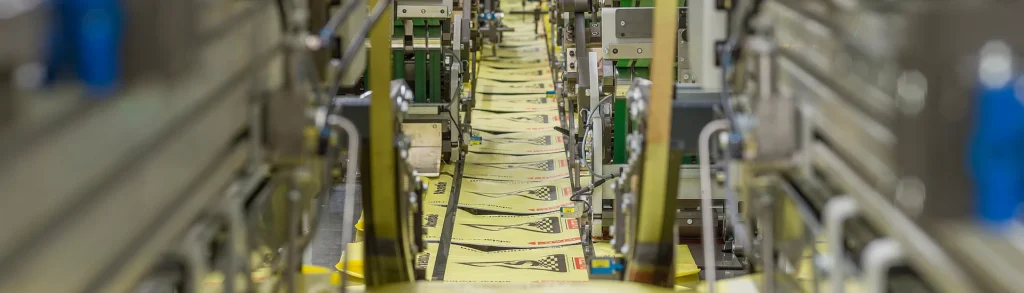
VidePak’s manufacturing facility is designed to deliver high-volume, consistent production of valve bags. The plant features a complete in-house production line that covers every step of manufacturing: from polymer melting and film extrusion, to printing and bag forming. Because all processes are under one roof, VidePak maintains tight control over quality and lead times, ensuring each batch meets exact specifications.
Critical pieces of equipment in VidePak’s production line include German Windmöller & Hölscher (W&H) bag machines. W&H is a world-leading manufacturer of high-speed packaging machines, renowned for precision and reliability. By investing in these advanced machines, VidePak achieves consistent bag dimensions, precise valve assembly, and efficient heat or ultrasonic welding. The use of W&H and Starlinger technology also means VidePak can quickly ramp up production capacity to meet urgent, large-volume orders without sacrificing product quality.
Several key aspects of VidePak’s production capabilities include:
- Film Blowing & Extrusion: The facility houses multi-layer blown film lines that combine LDPE/LLDPE/MDPE layers as needed. This enables VidePak to produce mono-layer or co-extruded films, tailoring thickness (up to 300 μm) and barrier performance for each application. Co-extrusion allows for protective layers to be added without adhesives, which is vital for reverse-printed bags.
- High-Speed Bag Making: VidePak’s W&H valve bag lines automatically form, weld, and cut bags at high throughput. Automated valve insertion and optional sealing (tuck-in, hot-melt or sonic seal) enable rapid, low-dust production. The machines ensure tight tolerances so each bag mates perfectly with standard filling spouts, minimizing filling errors.
- Printing & Customization: Full-color flexographic presses apply branding and regulatory text onto the film. VidePak offers both surface print (direct on outer film) and reverse print (graphics protected between film layers). Surface printing is cost-effective for simple designs, while reverse printing yields a glossy, scuff-resistant finish ideal for premium or abrasive applications.
- Complete Equipment Suite: In addition to film lines and baggers, the factory includes a dedicated quality laboratory with equipment for tensile/elongation testing, drop-test towers, seal-strength testers, and friction testers. This means that every produced film and bag can be inspected or tested in-house before shipping.
Thanks to this integrated manufacturing setup, VidePak controls every detail from raw resin through to the finished bag. This holistic approach minimizes variations that can happen when steps are outsourced. The result is a highly reliable product that meets demanding industrial standards and performs predictably on customer packaging lines.
Comprehensive Quality Control and International Standards
VidePak’s commitment to quality is evident in its robust testing and compliance processes. All manufacturing steps meet or exceed widely recognized international standards. For example, film samples and finished bags are routinely tested using methods equivalent to ASTM standards and ISO guidelines. Key performance criteria include film tensile strength and elongation (analogous to ASTM D882), film impact or tear toughness (ASTM D1709 falling dart test), and filled-bag drop tests (ISO 7965-2) to simulate real-world handling. By conducting these tests at multiple stages, VidePak ensures that even under heavy use the bags will perform as expected.
Every batch of VidePak bags undergoes multiple quality gates:
– Incoming Raw Material Inspection: Each lot of resin is verified for melt index, density, and purity before production begins. Supplier certificates (from BASF, Sinopec, Yangzi, etc.) are checked against VidePak’s internal standards to confirm consistency.
– Inline Monitoring: During film and bag production, critical parameters are measured continuously. Automated thickness gauges check film gauge across each roll, and high-resolution cameras or manual oversight ensure printing is sharp and color-consistent.
– Finished Bag Testing: Sample bags from each run are filled with a standard weight and subjected to drop tests and pressurized air tests. Seal strength (for both valve and bottom welds) is measured, and filled-bag drop tests (face, edge, and corner orientations per ISO 7965-2) confirm the bag’s durability. Coefficient-of-friction (COF) measurements verify that any embossing or sanded finish provides the expected anti-slip performance on pallets.
– Traceability: VidePak maintains detailed records for each production lot. Every bag can be traced to its specific raw material batch, machine settings, and operator logs. Full documentation (test reports, Certificates of Analysis, production records) accompanies each shipment to support customer audits and quality assurance.
By adhering to global testing protocols and maintaining strict quality procedures, VidePak’s PE valve bags earn the trust of international customers. These thorough inspections ensure that every pallet of bags leaving the factory meets the promised performance in real-world use. As a result, customers experience fewer rejects, fewer production stoppages, and greater confidence in their packaging supply chain.
Massive Production Capacity and Supply Reliability
VidePak’s factory is built for volume. With an annual output on the order of 500 million PE valve bags, the company can easily fulfill large orders and accommodate rapid growth in demand. This massive production capacity is supported by multi-shift operations and a well-structured manufacturing plan. Key advantages include:
- Scale and Efficiency: By running multiple advanced film extrusion and bag-making lines in parallel, VidePak achieves high throughput and operational redundancy. Even if one line is down for maintenance, others continue to produce, ensuring orders stay on schedule.
- Short Lead Times: Large in-house capacity means VidePak can respond quickly to urgent orders. Standard or custom valve bags can often be shipped in weeks, not months, after order confirmation. This is a competitive edge in industries where packaging needs can spike unexpectedly.
- Consistent Supply: VidePak maintains stock of standard bag sizes, specialized films, and critical components. Reliable sourcing from BASF, Sinopec, and other tier-1 suppliers ensures the resin supply is secure, even when global market prices fluctuate. Customers benefit from stable prices and timely deliveries.
- Scalability: The plant layout allows room for expansion. As demand grows, VidePak can add equipment and shifts to further boost annual production. This scalability gives customers confidence that their supply can grow with their business.
- Cost Advantage: High-volume manufacturing spreads fixed costs over more units. VidePak passes on these savings to customers through competitive pricing, all without compromising quality or service.
In practice, this scale translates into peace of mind for buyers worldwide. Bulk distributors, contract packers, and OEMs working with VidePak never have to worry about stockouts or sudden price hikes due to limited production. Whether the need is for tens of thousands of bags per month or tens of millions per year, VidePak has the infrastructure to deliver on time, every time.
Key Features and Benefits of VidePak PE Valve Bags
VidePak’s PE valve bags incorporate proven design features that make them ideal for heavy-duty packaging. These features deliver clear advantages in filling speed, dust control, handling strength, and branding:
Rapid, Low-Dust Filling
Each VidePak valve bag includes an internal tubular sleeve (valve) at the corner for fast, automated filling. When hooked to impeller, screw, or air fill systems, the valve streamlines the flow of powder or granules into the bag. After filling, the weight of the material and residual pressure cause the sleeve to collapse, minimizing dust escape. For particularly fine or dusty products, VidePak offers micro-perforation maps on the film. Tiny laser-cut holes (typically 50–150 μm in diameter) let trapped air escape quickly during filling without letting product leak out. The result is faster fill times and cleaner work environments.
Self-Sealing Valve Design
VidePak provides multiple valve styles to match different filling setups and dust-sensitivity levels:
– Tuck-In Sleeve: A simple folded sleeve that seals by gravity and internal pressure. Ideal for general-purpose use with moderate dust control.
– Hot-Melt / Thermo-Seal Valve: A pre-applied adhesive bead inside the sleeve allows the bagger to heat-seal the valve immediately after fill. This creates a semi-hermetic closure, perfect for very fine powders or when storage may involve humidity.
– Sonic/Ultrasonic Seal: For the highest seal integrity, an ultrasonic station can weld the sleeve shut after filling. Ultrasonic sealing adds no extra materials (glue) and yields a near-airtight closure, safeguarding hygroscopic products like flour, gypsum, or salt.
– Self-Closing Sleeve: For coarse materials (grains, pellets, or sands), the sleeve itself closes under material weight and vibration, providing dust protection without any additional steps.
By offering these valve options, VidePak ensures each customer can choose the right balance of cleanliness, speed, and equipment compatibility. In all cases, the valve design eliminates the need for manual patching or tying, speeding up packer throughput.
Robust Block-Bottom Construction
Unlike simple pillow-style bags, VidePak’s PE valve bags feature a welded block-bottom base. This design folds and welds the film into a flat, square bottom panel with reinforced corners. The result is a bag with a broad, stable foundation and vertical sidewalls. Block-bottom bags remain upright during filling and stacking, greatly improving pallet stability and preventing leaning or shifting stacks during transport.
The entire base is formed by continuous high-strength welds. These seamless welds create edges that are puncture- and leak-resistant. If a block-bottom bag is accidentally dropped or handled roughly, the welded bottom holds the bag together and keeps contents secure. In practice, this translates to fewer broken bags and reduced product losses, especially under tough conditions. VidePak’s precision welding ensures that every block-bottom bag delivers this extra reliability in real-world use.
Adjustable Barrier and Moisture Protection
Different products have different barrier requirements. VidePak can adjust the film structure to meet specific needs:
– Thickness (Gauge): Typical bag film thickness ranges from 100 to 300 μm. Heavier gauges add extra puncture and moisture resistance for abrasive or wet materials. For example, coarse minerals or cement may use 200–300 μm film, while lighter materials like starch powders can use thinner film to save cost.
– Polymer Blend Layers: VidePak co-extrudes layers of LDPE, LLDPE, and MDPE to optimize performance. A stiff MDPE skin layer can resist punctures from sharp grains, while a stretchy LDPE core provides toughness. Tie-layers are used to bond reverse-printed inks or additional barrier films without compromising recyclability.
– Seam Integrity: Using continuous welded lap seals and reinforced weld toes, VidePak minimizes moisture wicking along seams. This is critical for outdoor storage or transit in humid climates. For extreme cases, VidePak can apply an extra plastic patch inside the valve (an inner-lap valve seal) to further block water ingress.
– Film Additives: VidePak can incorporate UV stabilizers into the polyethylene for outdoor durability, or antistatic agents to reduce dust clinging during filling.
Through this tunable barrier strategy, VidePak provides valve bags that keep the packed product fresh and free-flowing. Customers experience fewer clumping or caking issues because humidity is kept out. The right gauge and blend selection also means that even abrasive materials won’t puncture the bag, reducing on-site waste.
Large Print Area for Branding and Compliance
VidePak’s valve bags offer a large printable surface on both the front and back faces. Customers can choose: – Surface Printing: Inking the outside of the bag for cost-effective color graphics and logos. – Reverse Printing: Printing on the inner face of a co-extruded film, with graphics viewed through a clear outer layer. Reverse printing yields a glossy, scuff-resistant finish, protecting artwork during handling.
VidePak’s modern printing presses can produce 1–8 colors. The generous bag faces allow for vivid branding, regulatory information, and traceability marks. For example, containers often incorporate GS1-standard 2D barcodes (DataMatrix or QR codes) for lot tracking and serialization. VidePak can reserve high-contrast “quiet zones” for scannable codes and print fine text (lot numbers, dates) inline. This turns each bag into a mobile advertisement and a fulfillment certificate, ensuring end-users can identify contents, origin, and safety instructions.
Mono-Material, Recyclable Design
Sustainability concerns are increasing worldwide. VidePak’s PE valve bags are made from mono-material polyethylene (PE) to align with recycling programs. In markets that support film recycling (#2 LDPE streams), these bags can be collected and reprocessed. Even where recycling is limited, PE’s lower unit weight (compared to multi-ply paper bags) translates to smaller transport carbon emissions per filled bag.
Because the entire structure is PE, there are no mixed substrates to separate. VidePak can also offer options with pre-approved recycled content, balancing environmental goals and performance. For food-related applications, the chosen PE grades and inks comply with FDA, EU, and other regional standards (for example, EU Regulation 10/2011 for plastics), ensuring safety without introducing contaminants that would complicate recycling.
By focusing on a single recyclable material and efficient design, VidePak’s valve bags help customers reduce their packaging footprint. At the same time, they retain the strength and barrier properties that protect valuable product.
Each of these design features – from valve style to print options – is part of VidePak’s modular approach. By combining the right features for each application, VidePak’s PE valve bags solve common packaging challenges: fast filling, effective dust control, moisture protection, secure handling, and clear communication through print.
Versatile Applications Across Industries
VidePak’s PE valve bags serve a wide range of markets, thanks to their robust construction and flexible design. End-users across the globe rely on these bags for packaging various bulk products:
- Cement and Construction Materials: The high strength and moisture resistance of co-extruded PE bags make them ideal for cement, gypsum, lime, and other building powders. VidePak’s welded block-bottom design keeps stacks stable on construction sites and in transit, while heavy gauge films withstand forklift scrapes.
- Minerals and Sand: Silica sand, calcium carbonate, silica flour, activated carbon, and other mineral fillers are commonly packed in PE valve bags. The PE film resists abrasion from sharp particles much better than paper, and controlled micro-venting reduces dust during filling.
- Chemicals and Fertilizers: Plastic resin pellets (e.g., PE, EVA, PP), fertilizers (NPK, urea, ammonium sulfate), and industrial chemicals (salt, soda ash, calcium chloride) benefit from the sealed valve and barrier layers. Moisture-sensitive formulations remain dry, extending shelf life and reducing quality issues.
- Food Ingredients: Certain food-grade powders—flour, starch, sugar, spices, milk powder—use PE valve sacks, especially when moisture protection and hygiene are priorities. (For these uses, VidePak uses FDA/EU-compliant materials and food-safe printing inks.) The tight closure and clean interior film also prevent contamination.
- Animal Nutrition: Feed kibbles, pet food, and premixes are packed in these bags in many regions. The smooth film interior prevents product from catching, and the valve system allows rapid refilling of feed hoppers. Anti-slip finishes (like embossing) help tall pallet loads of feed remain stable.
- Energy Pellets and Biomass: Wood pellets, charcoal, and biomass granules are packaged in heavy-gauge PE valve bags. The durable film holds the weight of dense pellets, and ventilated designs prevent swelling or mold during storage.
In each of these applications, the common theme is the need for fast filling and secure transport. VidePak’s valve bags are engineered to be filled quickly on automated lines, saving labor costs. Once filled, their welded seams and high puncture resistance protect the contents during rough handling or outdoor storage. For example, a mineral processing plant shipping bags overseas might choose reverse-printed 200 μm bags with ultrasonic-sealed valves to survive humid ocean conditions. A flour mill packaging food might select 160 μm bags with tuck-in valves and dense micro-perfs to minimize dust.
This versatility has made VidePak’s PE valve bags a popular choice worldwide, from large-scale cement factories in Asia to chemical plants in Europe and grain terminals in the Americas. The company’s experience with diverse industries ensures that it understands the practical challenges of each sector and can tailor solutions accordingly.
Global Market Presence and International Standards
While VidePak is based in China, it operates with a global perspective. The company exports PE valve bags to customers in Asia, Europe, North America, Africa, and Latin America. This broad reach is supported by compliance with international standards and the ability to adapt products to regional requirements. Key aspects include:
- Worldwide Certifications: VidePak’s facilities maintain ISO 9001 quality management certification. The PE valve bags can be produced with materials and inks that meet international regulations, such as FDA food-contact standards or EU Directive (EU) 10/2011 for plastics. For markets requiring specialized markings, VidePak can incorporate CE marking, UN codes (for hazardous chemicals), or other region-specific labels onto the bags.
- Multi-Region Support: To serve global customers efficiently, VidePak coordinates shipments via major ports and trusted logistic partners. Large-scale inventory planning and frequent ocean or air shipments ensure that customers in different regions experience similar lead times.
- Bilingual Documentation: VidePak provides English-language documentation (technical datasheets, quality certificates, artwork proofs) alongside any local-language requirements. This includes translation of bag specifications, test results, and user instructions to meet import regulations.
- International Collaboration: VidePak frequently collaborates with overseas customers and packaging consultants to fine-tune bag designs. By listening to feedback from global clients, the company continuously improves product specifications. This customer-centric approach helps VidePak capture nuanced requirements of different markets and industries.
Because of this global approach, customers using VidePak’s PE valve bags can trust that the products meet or exceed the expectations of their own markets. Whether it’s a European chemical producer, a South American flour mill, or a Middle Eastern building-materials distributor, VidePak ensures that the bags are engineered and documented for international success.
Competitive Advantages of VidePak PE Valve Bags
In a market with many packaging suppliers, VidePak distinguishes itself through several key advantages:
- Top-Tier Materials: While some manufacturers may source generic or mixed-grade resin, VidePak insists on brand-name PE from BASF, Sinopec, and Yangzi. This translates to consistent bag quality and lower defect rates, especially under heavy use.
- Cutting-Edge Equipment: VidePak’s use of German W&H and Austrian Starlinger machinery puts it ahead of competitors using older or less precise machines. The result is tighter tolerances, cleaner welds, and higher production speeds. Customers benefit from fewer production hiccups like valve misfeeds or seal failures.
- Rigorous Quality Control: Every batch of VidePak bags undergoes comprehensive testing. Suppliers without in-house labs might overlook subtle issues, but VidePak’s customers enjoy lower complaint rates and smoother fill-line operations thanks to these checks.
- Scale and Reliability: Many local bag makers struggle with very large orders or rush deadlines. VidePak’s half-billion-unit annual capacity means it can handle bulk contracts easily. Large scale also provides cost efficiencies that VidePak can pass on as competitive pricing.
- Customization Flexibility: VidePak offers more customization options (printing, bag dimensions, valve type, ventilation pattern, anti-slip finishes, etc.) than generic commodity bag producers. This allows tailoring the bag to specific product needs and branding goals.
- Global Support: With experience exporting worldwide, VidePak supports clients through the entire process—from initial specification to after-sales service. This level of service ensures international buyers have a trusted partner for ongoing packaging needs.
Overall, these advantages mean that working with VidePak is a lower-risk choice for packaging buyers. Customers get the peace of mind that comes with reliable delivery, consistent quality, and a supplier who understands the complexities of heavy-duty bulk packaging.
Sustainability and Environmental Responsibility
VidePak recognizes the growing importance of sustainability in packaging. The company has designed its PE valve bags with environmental considerations in mind:
- Mono-Material Design: All layers of VidePak’s valve bags are polyethylene, avoiding mixed materials that are harder to recycle. PE is one of the most recyclable plastics (#2 or #4). Where film recycling programs exist, used bags can be fed back into the system. Even if recycling is not available everywhere, mono-material design keeps disposal simple.
- Lightweight Efficiency: VidePak optimizes film gauge and bag design to achieve necessary strength with minimal material. Lighter bags mean more units can fit per truckload, reducing transportation emissions per bag. The lower weight also translates to reduced material usage overall.
- Energy-Efficient Production: The German W&H and Austrian Starlinger equipment used by VidePak are engineered for energy savings. Precise controls and efficient motors reduce power consumption. Quick-set color changes and minimal extruder scrap also conserve resources.
- Waste Management: Any edge trim or production scrap is collected and recycled in-house whenever possible. Off-spec or start-up film is regranulated and used for non-critical products. VidePak aims to minimize landfill waste by maintaining a strict scrap recycling program.
- Eco-Friendly Materials: For food and personal-care applications, VidePak can source PE resins and inks that comply with food-contact regulations without using heavy metals, PVC, or other problematic additives. This makes end-of-life recycling safer, as the material stream remains free of contaminants.
- Certifications and Compliance: VidePak operates under ISO 14001 (environmental management) in addition to its quality certifications. The company can also provide documented recycled content percentages, carbon footprint estimates, or other sustainability metrics for large buyers who need them.
By focusing on recyclable materials and efficient production, VidePak’s PE valve bags support customers’ environmental goals. Many companies prefer mono-material packaging because it simplifies recycling and reduces landfill waste. VidePak collaborates with clients to ensure packaging choices align with both performance needs and environmental commitments.
Comprehensive Customer Support and Technical Services
VidePak is not just a bag supplier — it partners with customers to ensure packaging success. This partnership comes with extensive support services:
- Technical Consultation: Before production, VidePak’s packaging engineers analyze the customer’s filling equipment, product properties, and logistics requirements. They recommend the optimal bag specifications (valve type, film gauge, perforation pattern, etc.) to match those conditions.
- Sample Trials: VidePak can send prototype bags for trial runs on the customer’s filling lines. The team works closely with packer operators to fine-tune valve fit, pre-creases, embossing, or printing until the bags run flawlessly at target line speeds.
- Documentation and Certification: For every order, VidePak provides a certificate of analysis for the raw materials and a quality inspection report for the finished bags. This includes lab results for film tensile, impact, drop performance, and any requested compliance certificates (such as FDA/EU for food contact).
- Responsive Service: Serving global markets, VidePak maintains an English-speaking customer service team. Inquiries are handled promptly, and order status is communicated clearly. If an issue arises (e.g., a bag run misses spec), VidePak offers remote troubleshooting or can dispatch technical staff if needed.
- After-Sales Feedback Loop: VidePak actively collects feedback on bag performance in real-world use. If customers experience any packaging challenges (like dust escape or handling issues), VidePak investigates and can adjust the design or process to solve the problem. This continuous improvement cycle helps customers maintain high line efficiency and low return rates.
Through these comprehensive services, VidePak ensures customers get exactly the right valve bag for their needs and that any challenges are solved quickly. This level of partnership and responsiveness differentiates VidePak from faceless suppliers — customers know they have a dedicated team on their side.
Conclusion: Choose VidePak for Superior Valve Bag Solutions
In summary, VidePak’s PE valve bags represent the highest standard of performance and reliability in bulk packaging. By combining top-tier materials (BASF, Sinopec, Yangzi resins), world-class equipment (German W&H, Austrian Starlinger), and rigorous quality control, VidePak delivers valve bags that outperform ordinary options. These bags are designed to fill faster, seal tighter, and stack sturdier, all while carrying large volumes reliably across complex supply chains.
Business customers will appreciate the clear advantages VidePak offers: – Proven Quality: Every bag is backed by lab-tested performance and certified materials, reducing waste and customer complaints. – High Productivity: Fast, automated filling and smooth handling save labor and time on every pack line. – Global Support: An experienced team ensures your unique requirements are met, no matter where you operate. – Flexible Supply: With hundreds of millions of bags produced annually, VidePak can scale with your demand and avoid stockouts.
Whether you need standard PE valve bags for commodity products or a fully customized solution (specific printing, anti-slip textures, reinforced valves, etc.), VidePak can deliver. The company’s decade-long expertise means it understands both the technical details and the business implications of quality packaging. By choosing VidePak, customers invest in fewer disruptions and more efficient operations.
Ultimately, VidePak’s commitment is to be more than just a supplier; it aims to be a trusted partner in packaging. Every PE valve bag leaving VidePak carries the promise of engineered quality, ensuring your product arrives safely and impressively at its destination. With its stringent standards and passion for heavy-duty bags, VidePak stands ready to support your packaging needs around the world.