
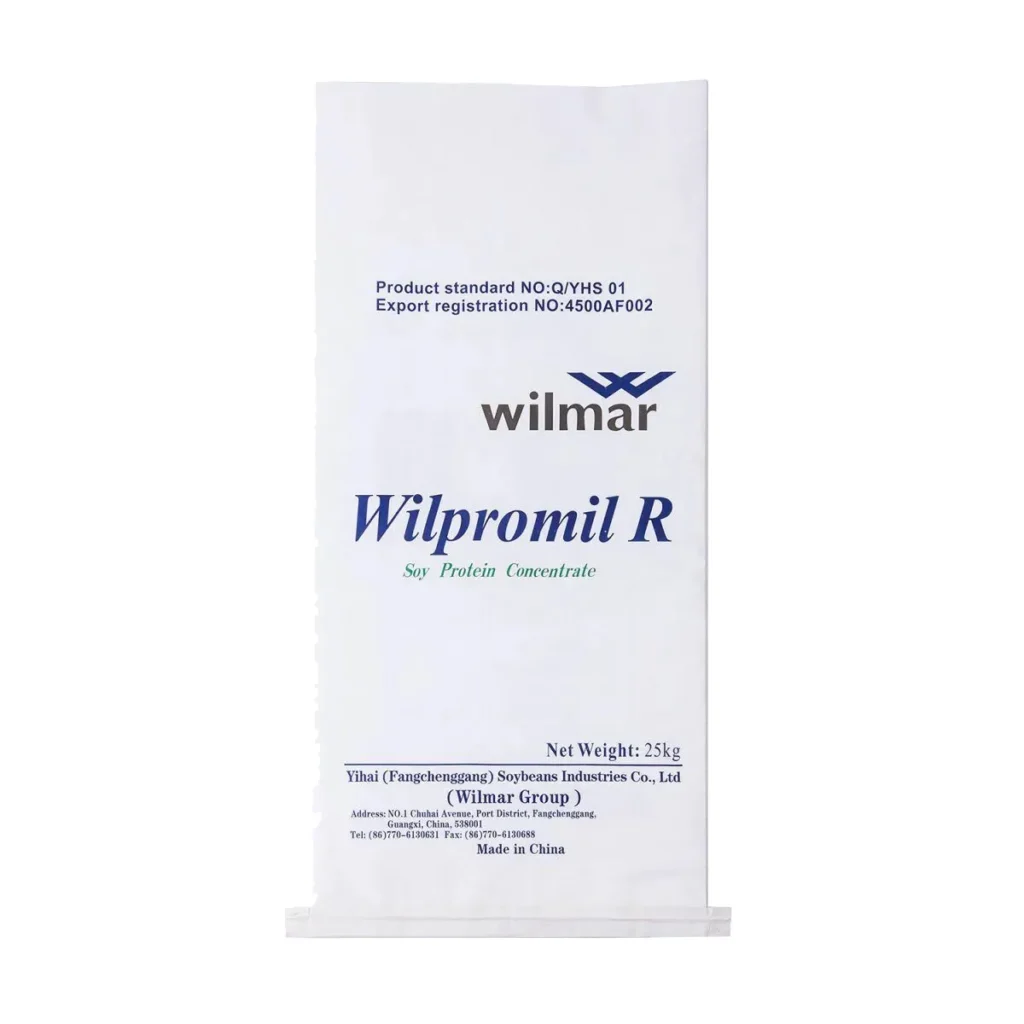
- What Are Kraft Paper Woven Bags?
- Why Kraft Paper Woven Bags Fit Real‑World Operations
- How the Lamination Works: Paper + Woven PP in One Composite
- Choosing Between Kraft Paper Woven Bags and All‑Kraft Sacks
- Printing on Kraft Paper Woven Bags: Durable Color, Crisp Codes
- Quality Control That Prevents Burst and Fade
- Valve Options and Block‑Bottom Geometry: Fast Fill, Clean Floors, Stable Pallets
- Data You Can Use: Realistic Specification Ranges
- Equipment Ecosystem: Why Starlinger and W&H Often Appear in Specifications
- A Practical Selection Framework: Problem → Method → Result → Discussion
- Frequently Asked Questions About Kraft Paper Woven Bags
- Horizontal and Vertical Thinking for Kraft Paper Woven Bags
- What Products Fit Kraft Paper Woven Bags Best?
- Why Block‑Bottom Geometry Transforms Kraft Paper Woven Bags on the Line
- The Role of Dimensional Precision in Kraft Paper Woven Bags
- Benefits of Adopting Kraft Paper Woven Bags for Industrial Distribution
- Exploring Customization in Kraft Paper Woven Bags
- Standard Sizes and Specifications for Heavy‑Duty Kraft Paper Woven Bags
- Performance Features that Elevate Kraft Paper Woven Bags
- How to Select a Reliable Kraft Paper Woven Bags Supplier
- Evaluating the Quality of Kraft Paper Woven Bags
- Lamination & Conversion Techniques for Precision Kraft Paper Woven Bags
- Kraft‑Paper Lamination vs. Alternatives Inside the Kraft Paper Woven Bags Universe
- Understanding the Lamination‑to‑Valve Process in Kraft Paper Woven Bags
- Learn More and See Options for Kraft Paper Woven Bags
- References
What Are Kraft Paper Woven Bags?
What exactly are Kraft Paper Woven Bags? In plain terms, they are hybrid industrial sacks that bond a kraft paper face to a woven polypropylene (PP) fabric core. The outer paper delivers a natural, print‑friendly surface; the inner woven structure supplies high tensile strength and tear resistance. Across markets you will also encounter aliases such as paper‑laminated woven bags, paper‑poly composite sacks, PP woven paper valve bags, paper‑poly valve sacks, or paper‑laminated PP sacks. Different names, one concept: a paper exterior married to a woven PP backbone to create a rugged, brandable container for bulk goods.
What makes Kraft Paper Woven Bags distinctive? Think of a toolkit in one package: mechanical strength well above their mass, puncture toughness against forklift tines and conveyor edges, and superior stack stability when configured as block‑bottom valve sacks. The paper face accepts crisp flexographic or offset printing, clean lot coding, and subdued matte optics that photograph well and scan reliably. The woven core tolerates humidity and rough handling better than multi‑wall paper alone. Add optional PE barriers, micro‑perforation maps for deaeration, and anti‑slip textures for pallet grip, and you have a versatile platform.
How are Kraft Paper Woven Bags produced? The manufacturing process follows a staged sequence. First, PP resin is extruded into tapes and oriented to achieve strength; those tapes are woven into flat or circular fabric at target GSM and mesh. In parallel, sack‑kraft is prepared at the specified basis weight and moisture content. The two webs are then joined—most commonly by extrusion lamination using molten LDPE/LLDPE (or PP‑tie) as the bonding layer, or by solventless polyurethane adhesive lamination when lower heat is required. Printing is applied to the kraft face by flexo or offset; the laminated web is then converted: cut to length, gusseted, and formed into block‑bottom geometry with hot‑air or ultrasonic systems. A valve sleeve—internal or extended—is inserted for fast, clean filling. Finished bags go through seam tests, valve checks, count verification, and palletization.
What do people actually put inside Kraft Paper Woven Bags? The list is long and practical: cement and dry mortar, gypsum and plaster, fertilizers and soil amendments, animal feed and pet food, grains and flour, salt and sugar, plastic resins and pellets, minerals and powdered chemicals. In short: whenever the product is free‑flowing, the route is demanding, and the brand needs to speak clearly, Kraft Paper Woven Bags earn their keep. For a product overview and options, see Kraft Paper Woven Bags.
Why Kraft Paper Woven Bags Fit Real‑World Operations
Packaging on paper looks simple. On a line, it is consequential. A plant manager worries about filling speed and dust; a logistics lead worries about pallet stability; a marketer worries about color fidelity; a buyer worries about warranty and repeatability. Kraft Paper Woven Bags sit where those concerns intersect. They are strong yet light, printable yet durable, modular yet standardized. Change one lever—coat weight, kraft grammage, valve geometry, micro‑perfs—and multiple outcomes move together: OEE, claims, shelf presentation, even the number of stretch‑wrap turns.
Ask yourself: must the sack look like paper but behave like plastic? Should it stack like a brick yet open with a single tear strip? Can a matte face co‑exist with photo‑true graphics? Kraft Paper Woven Bags make these trade‑offs navigable rather than painful. That is why they displace all‑kraft in humid lanes, and why they stand beside BOPP‑laminated sacks in retail‑visible categories.
How the Lamination Works: Paper + Woven PP in One Composite
Lamination is not glue; it is engineering. When kraft meets woven PP, five variables dominate: substrate quality, surface energy, bonding method, thermal profile, and nip pressure. Control them and the web is flat, strong, and printable. Ignore them and you get curl, wave, delamination, and register drift.
Substrate quality. Sack‑kraft typically sits in the 70–120 g/m² range; higher grammage stiffens the face and improves laydown of large solids, while lower grammage reduces curl and cost. Woven fabric often targets 65–120 g/m² with meshes around 7×7 to 14×14 and deniers from 700D to 1000D for 25–50 kg sacks. The paper’s moisture must be conditioned (≈6–8%) so that lamination heat does not lock in dimensional stress. PP fabric may receive corona treatment to raise surface energy when adhesive lamination is selected.
Bonding method. In extrusion lamination, a molten LDPE/LLDPE curtain is cast between paper and fabric and immediately quenched on a chill roll. Proper temperature and line speed deliver both wetting and bond strength at practical coat weights (e.g., ~18–30 g/m²). In adhesive lamination, a solventless PU forms the bond at lower thermal load and gives fine control of the bond line—useful for specialty papers where a softer hand is desired.
Thermal and nip control. Too hot or too hard and paper fibers crush, leaving gloss bands; too cool or too light and wet‑out fails, producing low peel strength. Line tension and edge guiding maintain registration so that later printing and bag forming align with the valve corner and bottom panels.
When these threads are woven together—literally and figuratively—the result is a flat, curl‑free composite that prints like paper and performs like woven plastic. That is the promise of Kraft Paper Woven Bags.
Choosing Between Kraft Paper Woven Bags and All‑Kraft Sacks
If all‑kraft already looks authentic and prints beautifully, why change? Because beauty must survive forklifts, rain, and time. Consider three angles—mechanics, moisture, and marketing—and then a fourth: money.
Mechanics. The woven core in Kraft Paper Woven Bags dramatically increases tear propagation resistance and puncture toughness. Butt‑drops are more forgiving, and fork‑tip nudges are less catastrophic. In export lanes and coastal climates, that margin matters.
Moisture. Extrusion‑laminated structures (paper//PE‑tie//PP) hold their wet strength far better than multi‑wall paper. Micro‑perfs can be tuned to vent entrained air without turning the sack into a dust generator. Where hygroscopic powders are involved, an inner PE liner or a higher coat weight creates a more robust barrier.
Marketing. Paper faces carry a natural, matte language that resonates in retail and simplifies lot coding. Compared with high‑gloss BOPP, kraft reads as artisanal or technical rather than cosmetic. For brands that want authenticity and function, Kraft Paper Woven Bags strike a persuasive balance.
Money. Unit prices may be a step above all‑kraft. But fewer burst claims, fewer rewraps, and fewer returns often make the total cost of ownership lower. One bent pallet avoided can pay for a lot of grams per square meter.
A short vignette captures the trade‑off. A dry‑mix producer shipping 25‑kg sacks through monsoon seasons moved from triple‑wall paper to Kraft Paper Woven Bags with hot‑air welded bottoms and internal sonic‑seal valves. Claims fell; pallets stood straighter; colors arrived unscuffed; production managers, for once, stopped complaining about sacks.
Printing on Kraft Paper Woven Bags: Durable Color, Crisp Codes
Printing on paper should be easy; printing that survives bulk handling is not. The kraft face of Kraft Paper Woven Bags enables high‑contrast graphics on flexo or offset, but durability comes from choices below the ink.
Ink set and overprint. Low‑odour, low‑migration inks keep taint risks in check for food‑adjacent goods. A matte overprint varnish in high‑rub zones reduces scuff, especially where sacks meet conveyor sidewalls or warehouse floors. Manage ΔE tolerances across reprints so color families remain consistent across SKUs.
Reverse‑print option. Where rub resistance is paramount, a reverse‑printed BOPP ply laminated to the woven fabric can be used in the same conversion stream as paper‑faced variants. The ink hides behind the film, protected from abrasion, while the rest of the sack’s architecture (valve, bottom, micro‑perfs) remains familiar.
Functional legibility. Barcodes and data‑matrix codes prefer high‑opacity whites and controlled gloss. Matte kraft faces often scan better under retail lighting than glossy films. Many buyers specify minimum contrast ratios for code windows, and Kraft Paper Woven Bags meet them with ease when artwork and substrate are aligned.
Quality Control That Prevents Burst and Fade
Quality is not a slogan; it is a loop. For Kraft Paper Woven Bags, that loop begins with materials and ends with verification.
Virgin inputs policy. Using 100% virgin PP and PE in tapes, coatings, and sleeves stabilizes tensile properties and sealing windows. Virgin sack‑kraft from long‑fiber softwood pulps contributes tear resistance and controlled porosity for both printing and deaeration. Where regrind is used in non‑critical layers, it is quarantined behind lab approvals.
Positive tolerance on thickness and grammage. A bag never bursts because it was slightly heavier than spec. It bursts because it was lighter. Positive tolerance policies target actual coat weights, film gauges, and paper grammage at or above nominal—never below. Process control charts make it visible.
Mechanical verification. Seam strength and dimensional checks align with established standards for woven sacks. Free‑fall drop tests confirm that filled sacks survive shipping shocks. Film tensile and dart impact tests ensure valve sleeves and lamination plies resist tearing at the weld.
Print durability. Sutherland rub testing and controlled color measurement keep branding legible after real handling. Where high‑rub environments are expected, matte OPV and protected code windows are non‑negotiable.
Close the loop with documentation: supplier CoAs for kraft grammage and polymer MFR; internal SPC for lamination temperature and pressure; retain samples by lot. The result is a bag that behaves the same way week after week.
Valve Options and Block‑Bottom Geometry: Fast Fill, Clean Floors, Stable Pallets
In a filler’s world, valves are not decorative. They regulate how powder enters, how air escapes, and how a sack closes. Kraft Paper Woven Bags accept several valve styles to suit different products and lines.
Closure choices. Tuck‑in sleeves win on simplicity and repairability for semi‑automatic lines. Sonic‑seal sleeves (ultrasonic/hot‑air) close automatically and hygienically on high‑speed lines, provided the sleeve film matches the energy window. Self‑closing internal sleeves collapse under product head and may be reinforced with a hot‑melt patch.
Geometry choices. Internal sleeves live within the wall and offer the best sift‑proofing for fine powders. Extended sleeves protrude for quick docking on legacy rotary packers. Reduced valves leave less residual air, useful when micro‑perfs in the body handle most of the deaeration.
Block‑bottom conversion. A flat, square base stacks like bricks. Hot‑air welded corners resist blow‑outs; a re‑entrant bottom fold reduces rocking. Combined with anti‑slip textures—embossed stripes on the paper face or grit varnishes—pallet stability improves without over‑wrapping.
When valves and bottoms are engineered together, line speeds climb, dust falls, and pallets stop leaning. That is operational peace of mind in a brown paper suit.
Data You Can Use: Realistic Specification Ranges
Numbers turn preference into specification. When scoping Kraft Paper Woven Bags, many buyers start with the following ranges and tune up or down:
- Capacity & dimensions: 20–50 kg common; body widths 350–610 mm; lengths 440–920 mm; bottom widths 90–180 mm; valve at top‑left or top‑right (face view).
- Fabric: 65–120 g/m², meshes 7×7 to 14×14, deniers 700D–1000D for heavy‑duty sacks; UV masterbatch for yard exposure.
- Paper: 70–120 g/m² sack‑kraft; moisture conditioned ≈6–8% before lamination; ribbed or smooth surfaces per brand language.
- Lamination: PE coat weights ~18–30 g/m² for extrusion bonds; or solventless PU adhesive with controlled coat weight for lower heat input.
- Printing: Flexo on kraft 2–6 colors for most SKUs; reverse‑gravure 8–10 colors on film‑faced variants when photographic imagery is required.
- Valves: internal/extended/reduced; tuck‑in or sonic‑seal closure; sleeve films matched to ultrasonic dwell profiles.
- Deaeration: micro‑perforation counts mapped to particle size and bulk density; higher counts for fine powders that trap air.
These are not commandments. They are the places where many successful projects begin.
Equipment Ecosystem: Why Starlinger and W&H Often Appear in Specifications
Stable parts come from stable processes. Kraft Paper Woven Bags benefit when both the woven side and the paper side run on reputable platforms.
On the woven front, Austrian‑built lines are well known for consistent tape orientation and fabric GSM control; block‑bottom valve sack conversion systems in this ecosystem have a long record in cement and dry‑mix. On the paper side, German sack conversion platforms and high‑precision flexographic/gravure presses deliver clean register, accurate cut‑offs, and repeatable valve insertion. The badge on the nameplate is not a miracle, but it is a proxy for capability, spare‑parts support, and service know‑how. In audits, that counts.
A Practical Selection Framework: Problem → Method → Result → Discussion
Problem: sacks burst during butt‑drops in humid seasons.
Method. Move from multi‑wall paper to Kraft Paper Woven Bags with positive tolerances on fabric GSM and PE coat weight. Engineer micro‑perfs to vent entrained air; specify hot‑air welded block‑bottoms and an internal sonic‑seal valve.
Result. Lower burst incidents, cleaner aisles, fewer rewraps, calmer customers.
Discussion. Humidity weakens paper fibers; woven cores maintain strength. The price increase per bag is offset by avoided damage and labour.
Problem: graphics scuff on conveyor sidewalls, barcodes fail scans.
Method. Keep the kraft face but add a matte overprint varnish in high‑rub zones; alternatively, use a reverse‑printed film face on the same woven core. Raise white opacity under code windows and manage ΔE tolerances.
Result. Fewer reprints and returns; better scanner read rates; a more consistent shelf presence.
Discussion. The decision is not “paper or film forever,” but “paper where it’s seen, protection where it’s rubbed.” The composite architecture allows both.
Problem: pallets lean and collapse in transit.
Method. Upgrade to block‑bottom geometry with a re‑entrant fold and anti‑slip textures; review wrap pattern and pallet sheet friction.
Result. Straighter stacks, taller loads, less damaged goods.
Discussion. Stability is a system property: base stiffness, face friction, wrap tension, and route severity all contribute. Bags cannot fix bad pallets, but good bags make good pallets better.
Problem: variability between lots from different suppliers.
Method. Standardize on test plans for seam strength, drop performance, film tensile/impact, and print rub. Require supplier CoAs and retain samples; run SPC on your own lamination and conversion settings.
Result. Fewer surprises; faster root‑cause analysis; tighter procurement comparability.
Discussion. What gets measured gets controlled; what gets documented gets trusted.
Frequently Asked Questions About Kraft Paper Woven Bags
Are Kraft Paper Woven Bags food‑safe? They can be, when the PP/PE contact layers and inks comply with relevant food‑contact regulations and when hygiene practices are documented. Many millers run flour or premixes in this format precisely for that reason.
Can they achieve high‑resolution imagery? Yes. The kraft face prints crisply via flexo or offset; for photographic work, a reverse‑printed film face laminated to the same woven core is common.
Do they recycle easily? End‑of‑life pathways depend on local systems. Hybrid paper‑poly structures may require specialized handling, while mono‑PP variants (paper‑free) align with polymer recycling streams. Many buyers make the decision at a regional level.
How fast can they run? With the right sleeve and sealing profile, modern block‑bottom lines for Kraft Paper Woven Bags achieve around 100 bags per minute. Real speeds depend on product aeration behavior and the match between valve and spout.
What dimensions are typical? For 25‑kg valve sacks: widths roughly 450–520 mm, lengths 720–820 mm, bottoms 100–140 mm. But every filler and pallet pattern suggests a different optimum.
Do I need anti‑slip? If you stack high, turn fast, or wrap lightly, yes. Embossed paper textures or grit varnishes add friction without adding much weight.
Is a liner necessary? For hygroscopic powders or long, wet routes, a PE liner or higher lamination coat weight is prudent. For dry routes and granular products, the composite alone often suffices.
Horizontal and Vertical Thinking for Kraft Paper Woven Bags
Horizontal thinking compares needs across functions—graphics, barrier, mechanics, automation, and regulation—so that a choice in one area does not sabotage another. Vertical thinking drills from portfolio to parameter: from “paper or film face?” to “90 g/m² kraft or 80?”; from “sonic‑seal or tuck‑in?” to “what dwell and film gauge?” In practice, the two lenses work together. You sketch the landscape wide, then you adjust the screws deep. That is how Kraft Paper Woven Bags are tuned from commodity to competitive advantage.
What Products Fit Kraft Paper Woven Bags Best?
Kraft Paper Woven Bags are purpose‑built for free‑flowing solids that demand both rugged handling and readable branding. Think cement and dry mortar, gypsum, fertilizers, salts, grains, flour, pet food, plastic resins, minerals, and powdered chemicals. Horizontally, compare logistics worlds: outdoor yards call for UV‑stabilized fabric and anti‑slip faces; export routes ask for scuff‑resistant print and stable pallets; food‑adjacent goods require compliant contact layers and clean inks. Vertically, tune inside this family: finer powders need more micro‑perforation and a tighter valve, while coarse granules tolerate fewer perfs and favor extended sleeves for faster docking. One category, many dials.
Why Block‑Bottom Geometry Transforms Kraft Paper Woven Bags on the Line
A flat base turns a soft sack into a brick. Block‑bottom conversion in Kraft Paper Woven Bags yields self‑standing packages that nest, interlock, and resist leaning. The geometry improves cube utilization, reduces wrap consumption, and simplifies robotic pick‑and‑place. Method: crease the bottom, form the square base, and hot‑air weld corners for sift‑proof strength. Result: straighter pallets, higher stack heights, cleaner warehouses. Discussion: stack stability is systemic—bag stiffness, outer friction, pallet sheet texture, and wrap pattern interact—yet block‑bottom geometry is the keystone that lets all other adjustments work.
The Role of Dimensional Precision in Kraft Paper Woven Bags
Precision sounds fussy until a sleeve misses the spout or a barcode sits on a fold. In Kraft Paper Woven Bags, repeatable width, length, bottom width, and valve location keep filling smooth and printing legible. Method: SPC on cut length and gusset depth; register control from lamination to print to conversion; color targets held within ΔE tolerances. Result: fewer mis‑docks, cleaner codes, tighter weight control. Discussion: dimensional drift is cumulative; a millimeter at the top and a millimeter at the bottom become a jam on the line. Precision is not luxury—it is uptime.
Benefits of Adopting Kraft Paper Woven Bags for Industrial Distribution
Why switch formats? Because Kraft Paper Woven Bags combine a print‑friendly kraft face with a woven PP backbone. Expect lower burst rates in humid seasons, better pallet integrity in long routes, and cleaner floors around the filler. They also present a matte, natural brand language while keeping dust inside and moisture outside. The payoff arrives as fewer claims, fewer rewraps, and fewer returns—value that hides inside every pallet.
Exploring Customization in Kraft Paper Woven Bags
Customization is not vanity; it is fit. Options span kraft grammage (70–120 g/m²), fabric GSM (65–120 g/m²), micro‑perf maps, anti‑slip textures, valve geometry (internal, extended, reduced), and closure style (tuck‑in or sonic‑seal). Horizontally, align these with sector needs—dry‑mix wants deaeration, pet food wants scuff resistance, flours want migration control. Vertically, drill to parameters—coat weight for barrier vs. flex‑crack, valve sleeve film to match ultrasonic energy, artwork windows for lot coding. The right “stack” turns Kraft Paper Woven Bags from packaging into process tooling.
Standard Sizes and Specifications for Heavy‑Duty Kraft Paper Woven Bags
Common 25–50 kg SKUs run body widths around 350–610 mm, lengths 440–920 mm, and bottom widths 90–180 mm. Fabric meshes of 7×7 to 14×14 and deniers of 700D–1000D deliver strength; kraft faces at 70–120 g/m² balance rigidity with curl control. Printing typically spans 2–6 colors on kraft; photo‑grade imagery uses reverse‑printed film on the same woven core. These are starting points, not ceilings—document them in your RFQ so every vendor quotes the same thing.
Performance Features that Elevate Kraft Paper Woven Bags
Which tweaks move the needle? Micro‑perfs sized to powder behavior cut fill times and ballooning. Matte OPV on rub zones preserves graphics against conveyor scuff. Anti‑slip textures reduce pallet creep. UV masterbatch protects outdoor stacks. Hot‑air welded bottoms reduce sifting versus sewn seams. Each upgrade is small; together, Kraft Paper Woven Bags feel like a new machine.
How to Select a Reliable Kraft Paper Woven Bags Supplier
Start with evidence, not adjectives. Ask for ISO 23560 test data (seam strength, dimensions), drop results on filled sacks, film tensile/impact for valve sleeves, and Sutherland rub values for print durability. Inspect color management—a green on kraft should match green on film within agreed ΔE. Tour the lamination and conversion lines; stability of heat, nip, and register is a leading indicator of stability in your warehouse. Finally, discuss change control and traceability. A supplier that can trace a defect to a roll, shift, and setting is a supplier you can trust.
Evaluating the Quality of Kraft Paper Woven Bags
Quality lives in the lab and on the floor. Lab: seam tensile, butt/side/flat drops, valve pull‑out, film D882/D1709, and print rub. Floor: real‑time spout docking rates, dust escape, pallet lean, barcode read rates. Use both lenses. Method: accept lots against documented thresholds and retain samples; run pilot fills on your own line before large POs. Result: fewer surprises, faster root‑cause analysis. Discussion: what you measure improves; what you simulate on your filler becomes reliable in your network.
Lamination & Conversion Techniques for Precision Kraft Paper Woven Bags
Two families dominate lamination. Extrusion lamination casts a molten LDPE/LLDPE tie between kraft and woven fabric; it offers strong bonds, practical barrier, and solvent‑free simplicity. Adhesive lamination—often solventless PU—runs cooler and gives fine control of feel and bondline, helpful for specialty papers. Conversion then turns web into structure: register‑aligned cutting, gusset formation, block‑bottom pre‑creasing, hot‑air welding, and valve insertion (internal or extended). Keep thermal and nip windows tight; mis‑set one variable and you buy curl, cockle, or delamination. Set them right and Kraft Paper Woven Bags run day after day without drama.
Kraft‑Paper Lamination vs. Alternatives Inside the Kraft Paper Woven Bags Universe
Not every SKU needs the same face. Paper‑faced Kraft Paper Woven Bags give natural appearance and easy lot coding; film‑faced cousins (reverse‑printed BOPP) deliver photo‑grade imagery and top‑tier rub resistance; paper‑free mono‑PP versions serve polymer‑only recycling goals. Horizontally, match face to channel: retail‑visible brands lean paper or matte film; dusty, abrasive lanes favor film; export under tarps leans toward higher barrier. Vertically, adjust coat weight, film gauge, and varnish to hit the sweet spot between look, life, and line speed.
Understanding the Lamination‑to‑Valve Process in Kraft Paper Woven Bags
From roll to pallet, the journey is sequential. Prepare substrates (kraft moisture ≈6–8%, fabric GSM on target). Bond by extrusion or adhesive lamination with controlled temperature and nip. Print on kraft via flexo or offset; manage color and trap. Convert: cut length, gussets, block‑bottom pre‑crease, hot‑air corner welds. Insert valve: internal for sift‑proofing fine powders; extended for easy docking on legacy packers; reduced to limit residual air. Map micro‑perfs to bulk density. Final checks: seam strength, valve seal, count, and pallet pattern. The method is methodical because the result must be predictable.
Learn More and See Options for Kraft Paper Woven Bags
For configurations, dimensions, and printing choices, explore Kraft Paper Woven Bags. Use this as a catalog, but treat your specification as a living document that connects your product, your filler, and your route.
References
ISO 23560:2015 — Woven polypropylene sacks — Characteristics and test methods.
ASTM D5276 — Drop test of loaded containers by free fall.
ISO 7965 (Part 1) — Packaging — Drop test — Paper sacks (vertical impact).
ASTM D882 / ASTM D1709 — Tensile and impact for plastic films.
ASTM D5264 — Sutherland Rub test for printed materials.
TAPPI T 410 — Basis weight (grammage) of paper and paperboard.
FDA 21 CFR 177.1520 — Olefin polymers for food contact.
EU Regulation No. 10/2011 — Plastic materials intended to contact food (OML guidance).