
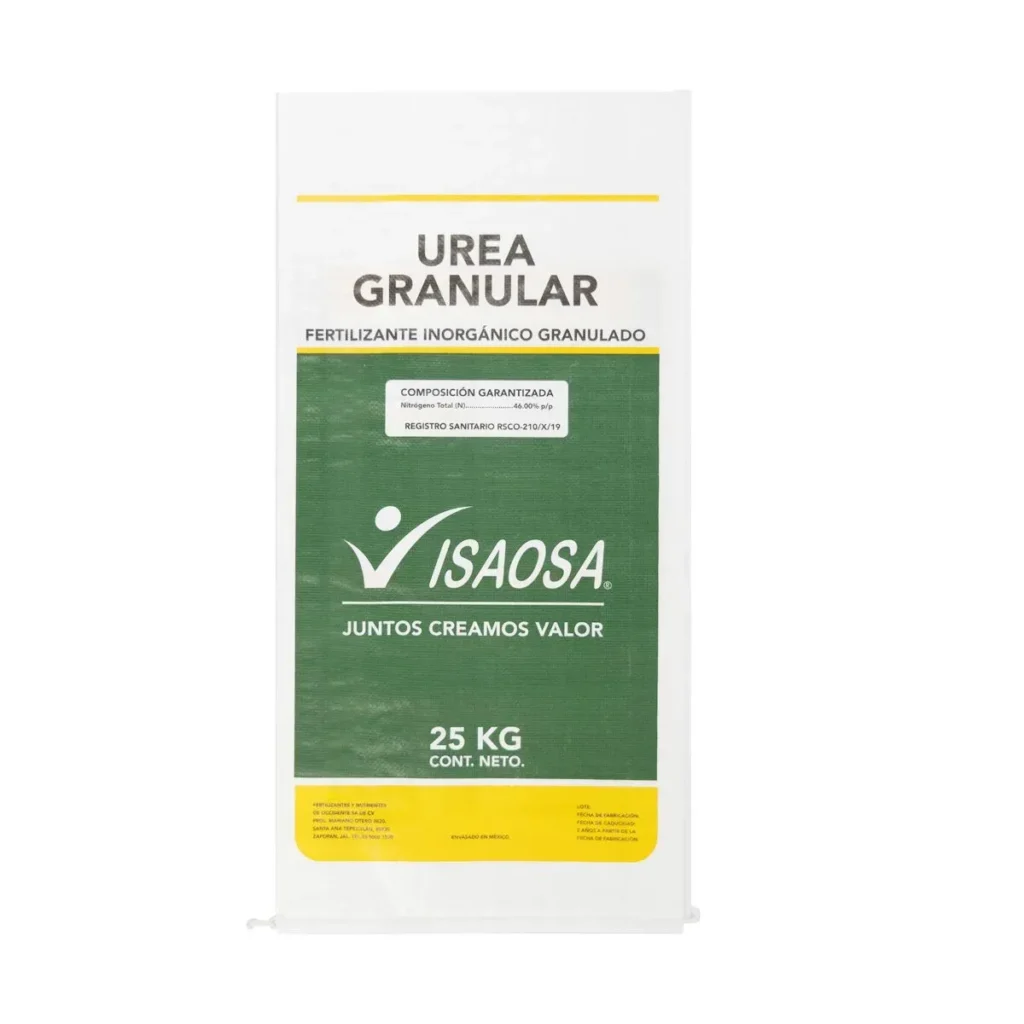
Polypropylene woven bags have become indispensable in heavy-duty packaging. These durable yet lightweight fabric sacks—made from highly oriented polypropylene (PP) tapes—offer an exceptional combination of strength, flexibility, and cost efficiency. In sectors from agriculture to construction, they carry more than just products; they carry the promise of safe delivery. As of 2025, our company is recognized among the top ten polypropylene woven bag manufacturers in China, a testament to our technological leadership and unwavering commitment to quality.
In this comprehensive guide, we delve into the structure, manufacturing, and application of PP woven bags, while emphasizing how we ensure product quality and consistency. We detail each step of production—from using premium-grade PP resin sourced from industry leaders like Sinopec and BASF to weaving on advanced Starlinger lines—and how we adhere to international standards such as ASTM for testing. By outlining our rigorous material selection, process control, and finished-product inspection procedures, we illustrate why our bags consistently deliver on performance expectations. This thorough approach ensures that our products continue to set the benchmark for reliability in 2025 and beyond.
What Are Polypropylene Woven Bags?
Polypropylene woven bags (also known as raffia bags or PP sacks) are industrial containers made by weaving narrow strips of stretched polypropylene into a fabric. This woven fabric is then cut and formed into open-mouth or valve-style sacks, typically sealed with stitches, tape, or heat welds. During production, PP tapes are extruded and then drawn (stretched) to align their polymer molecules. The result is a textile with very high tensile strength in both warp and weft directions, far exceeding the strength of loose plastic film at a comparable weight.
The key appeal of PP woven bags lies in this strength-to-weight balance. For example, a fabric weighing only around 60–80 grams per square meter (gsm) can support a 50-kg load. The fabric also has low elongation (it doesn’t stretch much), so stacks of filled bags stay square and stable under heavy loads. In addition, polypropylene is chemically inert and moisture-resistant, so the bags do not mildew or degrade when holding food products or chemicals. With optional additives, they can resist ultraviolet light and abrasion, protecting the contents in harsh environments.
PP woven bags are versatile. They can be made plain or with coatings and laminations, and can include features like micro-perforation or inner liners. Common formats include:
– Open-mouth sacks: The simplest form, with the top folded and stitched or welded closed.
– Valve (fill-spout) sacks: Bags with a fill valve for automatic rotary filling; the bottom is sealed first, then the valve at the top is used for filling.
– Block-bottom (square-bottom) bags: These form a brick-shaped base for very stable stacking; sides and bottom are welded.
– FIBC jumbo bags: Very large woven containers (not covered in detail here).
Essentially, if you need to package a dry, free-flowing solid (like grains, minerals, or cement) in volumes from about 5 kg up to 50 kg, a polypropylene woven bag is often the solution of choice. Its ease of filling, ability to carry high-precision printed designs, and exceptional durability have made it the workhorse of global bulk logistics.
Material Composition and Construction
Every polypropylene woven bag begins with the PP tape that makes up its fabric. The primary components and features of the material are:
- Oriented Polypropylene Tape: We extrude virgin polypropylene resin into a thin film and then slit it into narrow tapes. These tapes are passed through heated rollers that stretch them, aligning the polymer chains in the tape’s length. This orientation greatly increases tensile strength and stiffness. Typical tape deniers (thicknesses) range from 600 to 1000 D for heavy-duty bags. Coarser, heavier tapes produce very strong fabric, while finer tapes yield lighter weight with slightly lower strength. By selecting the appropriate denier and draw ratio, we balance strength versus flexibility.
- Weave Pattern and Mesh: The tapes are woven on looms, interlacing warp (lengthwise) and weft (crosswise) tapes. A common weave density is 8×8 to 12×12 picks per inch (warp × weft). A tighter weave (higher pick count) provides greater burst resistance and better retention of fine powders, at the cost of using a bit more material. We typically produce fabrics in the 60–90 gsm range for 25–50 kg bags; very heavy bags (like 50 kg of coarse sand) might use up to 100+ gsm. The mesh can be tuned: for instance, 8×8 mesh (lower density) might suffice for large grains, whereas 12×12 mesh is chosen when leak-tightness for fine powders is critical.
- Coatings and Laminations: Many PP woven bags receive a thin plastic coating or a laminated film. A typical coating is 15–30 gsm of polyethylene (PE) or polypropylene (PP) extruded onto the fabric. This coating fills the tiny voids between tapes, creating a moisture barrier and allowing for heat sealing of seams. Uncoated fabric is breathable and lighter, which is useful for grains or products that should not trap moisture. Alternatively, we can laminate a printed BOPP (biaxially-oriented PP) film onto the fabric. BOPP lamination adds surface rigidity and gives a glossy surface for high-definition printing, protected under the film layer. Coated/layered options are chosen based on moisture, dust, and branding needs.
- Inner Liners: When maximum protection is needed (for example, with food, chemicals, or moisture-sensitive powders), we include inner liners made of PE film (usually LDPE or LLDPE). For a standard 25 kg bag, a 50-micron liner is common. The liner is inserted before filling and heat-sealed along the mouth or gusset. This double-barrier system prevents moisture ingress and dust egress. We offer different liner compositions (even multilayer films with gas barriers like EVOH) depending on the cargo’s requirements.
- Additives and Stabilizers: To tailor performance, we add functional compounds. UV stabilizers (which extend outdoor life to hundreds or thousands of sunlight hours) are compounded into the resin so the bags won’t become brittle in sunlit storage. Slip or anti-slip agents may be added to control the friction of stacked bags (important for pallet stability). Antistatic additives (or even woven conductive fibers) can be used for packaging powders that are flammable or that cling. Food-grade bags use masterbatches and inks certified for hygiene. In every case, we match additives to application: for instance, a cement bag might have 200–400 hours of UV protection added, while a rice bag might include a natural color and no UV because it will be stored indoors.
Together, these materials form the bag. A typical specification might be: fabric 70 gsm, mesh 10×10, PE coating 20 gsm, PE liner 50 µm, UV additive for 600 h, 6-color flexo print on coating. By choosing the right combination of fabric weight, mesh, coatings, and additives, each polypropylene woven bag is engineered to meet the physical needs of its contents.
Manufacturing Process of Polypropylene Woven Bags
Producing PP woven bags is an intricate, multi-stage workflow. Each step—from raw polymer to palletized sacks—is controlled for maximum consistency:
- Raw Material Inspection: We start with virgin PP resin pellets from top suppliers like Sinopec and BASF. Each supplier batch includes a Certificate of Analysis (COA) detailing melt flow index (MFI), density, and additive levels. Upon delivery, we sample and test the resin for melt flow, density, and purity. Masterbatch additives (UV, color, slip agent, etc.) and BOPP films are likewise checked for proper characteristics. Any material that fails to meet our specifications is rejected. This ensures that the extrusion process begins with uniform, high-quality inputs.
- Tape Extrusion and Stretching: Approved resin is fed into precision extruders. The molten polymer is formed into thin sheets which are quickly cooled. These sheets are slit into narrow tapes. Immediately after extrusion, the tapes pass through a series of heated draw rollers that stretch them (typically 4–8 times lengthwise). This draw ratio is carefully controlled: it aligns the PP polymer chains, raising tensile strength and reducing elongation. We continually monitor tape thickness and denier uniformity during this stage. High-end equipment (such as Starlinger extruders) provides very tight tolerances on film thickness and draw uniformity, helping ensure each tape batch matches the next.
- Warping and Weaving: The produced tapes are then wound onto beams for weaving. Our plant uses circular looms (for seamless tubular bags) and flat looms (for side-seamed bags) to convert the tapes into fabric. On the looms, warp tapes run continuously while weft tapes are fed in across them. Automatic looms maintain precise pick density and tension. Modern looms can run at high speed (hundreds of picks per minute) while keeping warp tension uniform, which prevents weak spots in the fabric. We inspect the fabric in real-time: sensors and cameras spot any broken tapes or weaving errors, and the line will stop if a defect threshold is exceeded. The result is a continuous roll of woven PP fabric with consistent mesh and weight.
- Coating or Lamination (Optional): If the bag design calls for it, the woven fabric is next sent through a coating or lamination process. In extrusion coating, we apply molten PE or PP onto one side of the fabric, typically adding 20–30 gsm. The coated fabric then passes through chill rolls to bond the film. We control coat weight through adjustable die gap and nip pressure, verifying uniform coating by weight meters. Alternatively, BOPP lamination involves heat-pressing a thin PP film onto the fabric. Both methods create a barrier layer; choice depends on whether weldability (extrusion coat) or print quality (BOPP film) is the priority.
- Printing: After coating, the fabric is printed. For coated or PE-coated fabric, we use flexographic presses to apply branding and product information. We can print up to 6–8 colors in register. For BOPP-laminated fabric, we often use reverse gravure or high-definition flexo under the film for superior graphics and durability. Each print job starts with rigorous color calibration. Post-print, we inspect for color density and registration accuracy. Only fabric meeting visual and color criteria moves on to bag forming.
- Cutting and Forming: Printed rolls are then cut into bag panels. A bag cutting machine (cold or hot knife) cuts the continuous web to the specified width and length. Bottom gussets or side gussets are creased or cut as needed. For block-bottom or valve bags, the fabric (often in a tube) is folded and the bottom formed. Precision die-cutting ensures edges are straight and dimensions are accurate. The cut pieces form the open sacks that will receive closures.
- Mouth Preparation: Before sealing, the bag mouth is prepared. Machines fold the top edge over itself by a set amount (for example, a 30 mm hem). This fold hides the raw edge and sets the geometry for sewing or welding. If needed, we insert tearable tapes or perforations during this step. An even, flat fold is critical for a strong closure; we adjust folding machines carefully to avoid wrinkles or gaps.
- Closure (Sewing or Welding): Now the bags are closed according to their design:
- Fold-Over Stitching: A double-chain stitch runs through the folded mouth. Computerized sewing machines with controlled tension execute this rapidly (often 20–25 m/min). We use strong PP thread that melts above the bag’s operating temperature. The stitch density (typically 3–4 stitches/cm) is set to balance strength and cost.
- Tape-Over-Sew: In this method, a strip of woven tape (usually 50–60 mm wide, PP-based) is laid over the folded mouth before stitching. The needle then sews through both the bag and the tape. This creates a dust-proof bridge over the seam perforations. Our equipment places and sews the tape in one pass. The tape materials and threads are all polypropylene, keeping the bag essentially one polymer type for recycling.
- Hybrid (Liner Seal + Sewn Exterior): When an inner liner is present, first a hot-air sealer fuses the liner film across the bag mouth, creating an airtight inner seal. Then the outer bag mouth is folded, taped, and sewn as above. This dual closure is ideal for fine powders or moisture-sensitive goods.
- Welded Block-Bottom (Open-Mouth or Valve): For block-bottom or valve bags, we forego sewing and instead use hot-air welding. The folded edges are pressed between heated elements, melting a 3–5 mm band of PP to form a seam. Welding eliminates needle holes and provides maximum dust and moisture containment. We precisely control weld temperature and speed (monitored by sensors) to achieve peel strengths matching the fabric.
Regardless of method, each closed bag is given a quick inspection to confirm seam integrity. If a sewing thread slips or a weld falters, the machine automatically stops and flags the issue for correction.
- Finished Inspection and Palletizing: Completed bags move to final inspection. Here, random samples from the production lot are pulled for thorough testing (see Quality Assurance below). At minimum we check weight (bag and intended fill), dimensions, seam uniformity, and print clarity. Approved bags are then counted and stacked into pallets according to the customer’s pattern (e.g. 5×10 layers). We often apply anti-slip sheets or stretch wrap to stabilize pallets for shipment. Every pallet is labeled with production details for traceability.
Throughout this process, we maintain detailed records. Machine settings, inspection data, and any adjustments are logged for each production run. By enforcing strict control at every step—from the resin in the hopper to the stack on the warehouse floor—we ensure our polypropylene woven bags meet every specified criterion.
Key Features and Advantages
Polypropylene woven bags excel because their structure combines strength with practicality. Their core features include:
- High Strength-to-Weight Ratio: The oriented PP fabric delivers high tensile and burst strength at minimal weight. For example, a properly made 50-kg bag often withstands over 500 kPa of internal pressure. The material’s inherent stiffness lets a thin layer of fabric support heavy loads. This means more payload per bag and lower packaging cost per unit of cargo.
- Tear and Puncture Resistance: The woven tapes interlock to resist tears. If a tear starts, the aligned fibers stop its spread. This resistance is crucial for rough contents (like sharp aggregates or minerals) where paper or film bags would fail. Even when sat on by forklift forks, a PP woven bag will often shrug off puncture that would ruin other bags.
- Low Elongation and Stable Stacks: PP woven fabrics stretch very little under load. This low creep means stacked bags do not bulge or flatten excessively. Bags stay more cube-like, optimizing pallet height and stability. In practice, palletized loads of cement or grain in PP bags remain square and don’t “mushroom” outward like some other sacks.
- Customizable Barrier Properties: Uncoated fabric is naturally porous, which can be advantageous (e.g. letting grains breathe). When a barrier is needed, the thin PE or PP coating effectively seals the material. Additional liners can block humidity and odor. Thus the same basic fabric can be tailored from highly breathable to nearly impermeable.
- Durability: Polypropylene resists rot, mildew, and most chemicals. Our UV-stabilized bags can sit outdoors in the sun for months without cracking. Unlike paper bags, these won’t dissolve or degrade if they get wet. The bags also resist abrasion and tearing in conveyors and trucks.
- Lightweight and Efficient: A PP woven bag often weighs half or less than a comparable paper bag of the same capacity. This reduces transportation of empty bags. They also stack flat when empty, saving warehouse and truck space. Combined with high production speeds, these bags are a very cost-effective bulk packaging solution.
- Clean Handling and Printability: The smooth coated surfaces allow high-resolution printing. We regularly produce 6-8 color logos that withstand handling abrasion. Tape-over-sew and welded closures leave a neat finish, which is important for food-grade or retail-display bags. The polypropylene fabric does not shed dust, keeping pallets and filling machines cleaner.
- Versatility: PP woven bags can handle free-flowing solids from pet food to chemicals to agricultural products. They work with most filling machines—gravity fillers, rotary valves, net-weighers, etc.—at high speeds. We have examples from small 10-kg organic rice bags to large 50-kg cement sacks. Accessories like tear-open loops, pull tabs, or stripe markings can be added for convenience.
In summary, polypropylene woven bags combine strength, economy, and adaptability. Their features can be tuned precisely (via material and closure choices) to match the needs of each cargo. This flexibility is why they are so widely used across industries.
Common Applications
Polypropylene woven bags find uses in virtually every sector dealing with dry bulk materials. Typical applications include:
- Construction Materials: Cement, dry mortar, sand, gypsum, and wall plasters often come in PP woven sacks. Cement plants favor 50-kg valve bags with welded or tape closures, for example. The moisture-resistance of coated PP prevents the product from hardening prematurely. Even additives like waterproofing compounds or gypsum sheets may be packed in PP woven bags for durability.
- Agricultural Fertilizers and Seeds: Fertilizer (urea, NPK, ammonium phosphates) producers commonly use 25–50 kg PP bags. Many fertilizers require sealed, coated bags and often inner liners to keep moisture out. Seed companies use uncoated or micro-perforated bags (for controlled breathability) so seeds stay dry but not caked. Grain, rice, wheat, and bean packing also use PP woven bags, often with bright printing for branding.
- Food and Feed Products: Flour, sugar, rice, pulses, starches, and animal feed pellets are frequently bagged in PP woven sacks. Food-grade versions use sanitary liners and food-safe inks. BOPP-laminated bags with vivid prints are popular in retail or wholesale food markets. For bulk feeds and pet food, the toughness of PP bags protects against tears from packaging machinery and transport.
- Chemicals and Minerals: Chemical powders (plastic resins, minerals, salts, catalyst powders) use robust PP bags. These often include coatings and liners to handle abrasives or hygroscopic substances. Heavy loads (40–50 kg) of materials like titanium dioxide, calcium carbonate, or plastic pellets rely on the high strength of the woven fabric.
- Powdered Goods: Fine powders like flour, gypsum, detergents, or industrial chemicals benefit from tape-over-sew or hybrid closures to minimize dust. The inner liner seal is particularly important for hygroscopic or high-value powders to maintain purity.
- Sandbags and Industrial Goods: Even applications like flood-control sandbags or horticultural soils use PP woven bags for their weather resistance. Recyclers and waste-handling may use specialized PP sacks for materials like scrap plastics or wood chips.
In short, if a product is a free-flowing solid between roughly 5 and 50 kg, a polypropylene woven bag is a likely candidate. Its use spans from heavy-duty construction materials all the way to consumer-facing food products. The choice of fabric weight, closure, and finishing options are made according to the product’s handling and storage conditions.
Closure Systems and Sealing Methods
How the bag mouth is closed is critical to performance. We use four main closure types, chosen by application:
Fold-Over Stitching (Plain Sew)
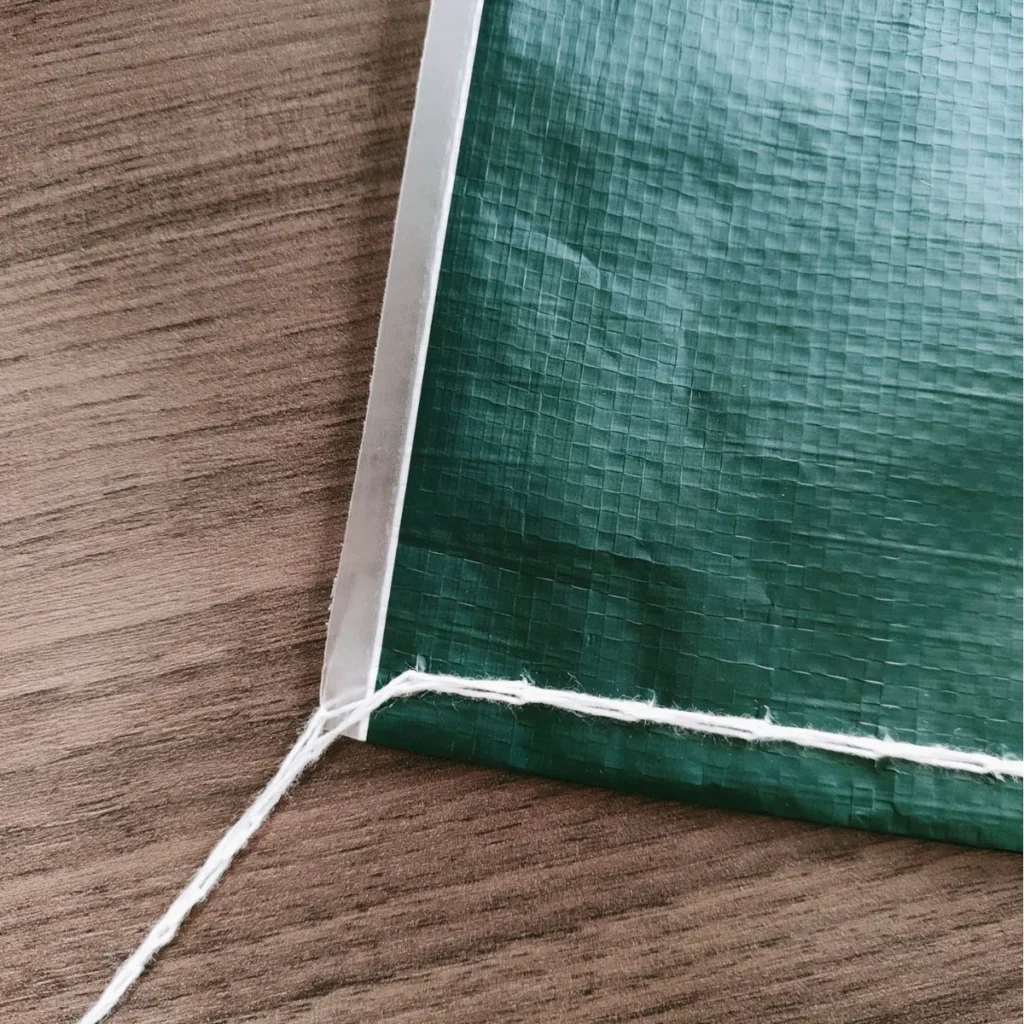
The top of the bag is folded 20–35 mm inward, then secured with a two-thread chain stitch. This classic hemmed stitch spreads stress across the fold and prevents fraying. It is quick, reliable, and the most economical closure.
– Strength: Durable for coarse goods; the chain stitch can carry over 90% of fabric strength if done correctly.
– Limitation: Needle perforations in the fabric allow very fine dust to escape and can let moisture wick.
– Use Case: Bulk granules, grains, animal feed, and products where speed and low cost are priorities and a small amount of dust leakage is tolerable.
Tape-Over-Sew (Fold-Over + Tape)
This builds on plain sewing by adding a sealing tape. After folding the mouth, a woven PP or PE tape (usually 50–60 mm wide) is laid over the fold, then sewn through both layers. The tape covers the needle holes, dramatically reducing dust escape.
– Strength: Provides a continuous bridge over the seam; seam pull strength is similar to plain sew plus tape reinforcement.
– Benefit: Much less powder escapes; the bag has a cleaner appearance. It also improves stacking by adding a stiff strip at the top.
– Use Case: Fine powders (flour, mineral chemicals, cement additives), food-grade bags, and any application where dust control and bag aesthetics matter.
Hybrid Closure (Heat-Sealed Liner + Sewing)
For the highest hygiene and leak protection, we seal the inside liner and then close the outer bag. The inner PE liner (if used) is heat-fused across the mouth (hot-air sealing) to create an airtight pouch. Then the outer bag is folded, taped, and sewn.
– Strength: Combines an airtight inner seal with a strong outer seam. The result is excellent retention of contents and moisture.
– Complexity: Requires precise liner sealing equipment and careful alignment. Slightly slower than tape-over-sew due to extra steps.
– Use Case: Hygroscopic or odor-sensitive goods (sugar, flour, powdered detergents), food ingredients, and high-value chemicals. Anywhere that contamination or moisture must be absolutely minimized.
Block-Bottom Welding (Open-Mouth or Valve)
These are special forms where all seams (bottom and top) are welded instead of stitched. The bag bottom is shaped like a brick (square), and sides are welded. A fill spout (for valve bags) may be left open on top. No sewing is involved.
– Strength: With no needle holes, this closure is the most dust-proof and water-resistant. Welded seams can hold near the full strength of the fabric if done correctly.
– Use Case: Cement, dry mortar, fine minerals, and any high-speed filling line application. Valve-type welded bags go on rotary filling machines at extremely high output. Square-bottom welded bags stack more efficiently. They excel where dust control and high throughput are critical.
For each closure style, we adjust parameters (stitch density, tape width, weld temperature) to meet performance targets. Regardless of type, every closed bag undergoes inspection: stitches are checked for proper tension and uniformity, and welded seams are tested for peel strength. By matching the right closure to the product’s needs, we deliver both efficiency on the filling line and reliability in handling.
Quality Assurance and Control
Ensuring the highest quality and consistency is our guiding principle. We implement rigorous quality control at every stage of production:
Raw Material Verification
- Top-Grade Resins: We use only virgin (100% new) polypropylene from premium suppliers like Sinopec and BASF. Each lot arrives with certificates detailing melt flow index, density, and additive content. In our lab, we verify these key parameters before releasing the resin for extrusion. This ensures that the polymer behavior is consistent (e.g. proper draw during tape extrusion) from batch to batch.
- Certified Additives and Films: UV masterbatches, colorants, liners, and BOPP films are tested upon receipt. We measure film thickness (gauge), check UV curing levels (surface tension dyne level), and inspect for flaws. Any material out of spec is quarantined.
- Traceability: Every raw material lot number is logged. Later, if an issue arises, we can trace which bag production runs used that material. This transparency helps us quickly address problems and reassure customers.
Advanced Production Equipment
- State-of-the-Art Machinery: We have invested in high-performance equipment, including Starlinger extrusion and weaving lines, which are industry leaders in uniformity and speed. These machines maintain tight tolerances on tape width and draw ratio, and produce consistent fabric picks. We also use automated sewing and welding lines with electronic controls to keep tension and heat settings exact.
- Process Control: Critical parameters are monitored continuously. For example, the tension on warp tapes, the width of fabric, and the coating thickness are tracked by sensors. Data is recorded so we can see trends. If a machine parameter drifts (say fabric GSM starts to decrease slightly), operators adjust immediately or shut down to correct it. This statistical process control keeps production stable.
- Calibration and Maintenance: We follow scheduled calibration for all measuring devices (scales, gauges, pull testers) and preventive maintenance on machines. Every week, we run test fabrics to confirm looms are weaving correctly, and we test extruder output for consistent melt-flow. This upkeep prevents unseen errors.
Adherence to Standards
- ASTM and ISO Testing Protocols: We align our quality tests with international standards. For tensile strength and elongation, we follow ASTM D5035 strip test methods. Burst (Mullen) tests and drop impact tests mimic ASTM D3786 or ISO equivalents. Seam strength is evaluated under protocols similar to ASTM F2281. Aligning with these standards helps ensure our products meet global buyer requirements.
- Internal Benchmarks: In many cases, our own standards are even stricter. For example, if an ASTM guideline calls for 10 N/cm seam strength, we might require 12 N/cm in our QC to add a safety margin. We document acceptance criteria (tolerances for dimensions, strength, weight) for every bag style.
- Certifications: We maintain an ISO 9001-certified Quality Management System, which enforces consistent documentation and corrective action processes. While ISO 9001 is a general quality standard, it ensures that our processes – from order entry to dispatch – are conducted methodically and traceably.
In-Process and Final Inspection
- In-Process Checks: During production, operators sample the product hourly. They verify fabric GSM, check a few seam pull samples, and inspect print quality. If a dimension or strength dips out of range, the run is paused until corrected. These frequent checks keep us within the targeted quality window.
- Finished Product Testing: Before any batch ships, we perform comprehensive tests on sample bags:
- Tensile and Tear: Samples are cut and tested to confirm warp/weft tensile strength and tear resistance.
- Burst Pressure: Using an inflatable burst tester, we measure how much pressure the bag can withstand. This confirms the overall integrity of the fabric.
- Drop/Impact Test: Filled bags are dropped from 1–1.2 meters (as per agreed protocol) in different orientations to simulate handling. They must show no ruptures or significant seam failure.
- Leak/Dust Test: For powder-packed bags, we shake or pressurize them to detect any dust leaks from stitches or fabric.
- Dimensional and Weight Check: We verify bag dimensions, layer count, and ensure bag weight is within tolerance.
- UV/Aging (if applicable): For bags rated for outdoor storage, we perform accelerated UV and heat aging tests on fabric samples to check for embrittlement.
Each test has a pass/fail standard. If a sample fails, the entire batch is held for investigation. We never ship product that hasn’t cleared these final checks. All test results are logged in a quality record for traceability.
Production Capacity and Consistency
Our manufacturing scale—over 300 million bags per year—requires that quality not suffer as volume grows. We achieve this by:
– Dedicated Lines: We often assign specific production lines to specific bag types or weights. This minimizes changeovers and lets the line run “steady” longer, improving consistency.
– Skilled Operators: Our operators are experts in PP bag production. Through training programs, they learn to recognize even subtle issues (like a slight weave irregularity or stitch tension change) and fix them before defects occur.
– Continuous Improvement: We track process data (defect rates, yields, downtime) over time. If we notice a trend (say, a small rise in torn edges), our engineering team investigates the root cause and updates procedures. This cycle of measurement and refinement keeps improving product quality with scale.
Ensuring Consistency and Reliability
Beyond these steps, we manage quality through organizational discipline:
– Documentation: Every product specification is documented: raw materials, machine settings, QC checks. When a customer orders a repeat bag, we retrieve the exact “recipe” for that bag type. Operators follow documented processes rather than improvising.
– Supplier Collaboration: We work closely with resin and additive suppliers. If we detect a subtle difference in a resin lot (say, a change in MFI), we communicate it and adjust our process to compensate. Likewise, we keep equipment vendors (like Starlinger) in the loop for technical support on process optimization.
– Customer Feedback: We actively gather feedback from our customers (returns, complaints, or compliments). This feedback loops back into our quality program. For example, if a customer reports occasional seam failure on a particular bag under real use, we re-test that bag and tighten any parameters needed.
By integrating top-tier raw materials, advanced equipment, and exhaustive testing with a quality-first culture, we ensure every bag we produce meets its intended performance. From minute tape uniformity to final pallet stability, every factor is controlled. The result is polypropylene woven bags that consistently perform at the high standards our customers require.
Conclusion
Polypropylene woven bags are a mature, highly engineered packaging solution. Their woven architecture provides unmatched strength, durability, and adaptability for bulk goods. However, delivering on these promises requires meticulous control at every step. Our approach—using 100% virgin resins from Sinopec and BASF, running production on high-performance Starlinger lines, and enforcing comprehensive ASTM-aligned testing—ensures that our bags live up to their reputation.
When you choose our PP woven bags, you get the benefit of rigorous quality assurance: tested raw materials, precision manufacturing, and exhaustive final inspections. Each bag is a product of a system designed to eliminate weak links. In an industry where failure means spillage, delays, or product loss, this level of reliability is invaluable. That is how we, as a top-10 Chinese manufacturer in 2025, guarantee consistent product quality and deliver containers that customers can trust through every shipment.