
What are PP Bags?
PP Bags—short for polypropylene bags—are a family of industrial packaging formats engineered around a polypropylene backbone and tailored into multiple constructions to fit specific products, filling equipment, and route risks. One polymer family, many engineering paths; one toolkit, many outcomes. Depending on structure and use case, PP Bags may also be described as PP woven bags, BOPP‑laminated PP bags, PP valve bags, PP mesh/leno bags, or PP FFS (form‑fill‑seal) tubular film bags. Many aliases, one intent: keep dense powders and granules contained, keep labels scannable, keep lines running.
In an era that prizes consolidation over chaos, PP Bags operate as a comprehensive one‑stop solution. Buyers don’t want a parts list; they want a system: materials that protect, geometries that stack, surfaces that scan, and a manufacturing cadence that scales. From a horizontal lens, PP Bags bridge the classic divide between multi‑wall paper (warm print feel, lower wet strength) and monolayer PE film (excellent hermeticity, modest puncture resistance at equal tare). From a vertical lens, the logic is sequential: resin grade → tape tenacity → weave flatness → laminate integrity → seam efficiency → pallet stability → claims rate. Change the draw ratio by a notch and, six links downstream, your columns stand straighter. That’s not a slogan; that’s physics paying rent. For category context, explore PP Bags.
What are the features of PP Bags?
Strength‑to‑weight that stacks straight. Woven, oriented PP tapes act like micro‑trusses. Even at modest grammage, PP Bags absorb chute impacts, tolerate clamp handling, and shrug off conveyor rub—exactly what 25–50 kg industrial SKUs demand.
Customizable faces for real‑world readability. Specify BOPP lamination (~15–35 µm) when photo‑grade art and solvent‑rub resistance matter, or choose PE extrusion coating (~20–35 µm) for rugged, high‑line‑count flexo. Matte windows mute glare in scan tunnels; gloss bands add retail pop. Either way, GS1/QR codes decode on first pass when dyne levels and registration sit inside spec.
Formats for every filler. Open‑mouth gusseted sacks for manual and semi‑auto lines; block‑bottom valve bags for closed, dust‑controlled dosing; FFS tubular film for automated speed; mesh/leno versions for airflow where products cure or off‑gas heat. One family, many form factors.
Moisture behavior you can tune. Laminations reduce porosity; loose LDPE/HDPE liners (20–80 µm) add hygiene or vapor control for hygroscopic goods. Need rapid deaeration during fast fills? Engineered micro‑perforation maps vent air without turning the warehouse cloudy.
Pallet discipline by design. Block‑bottom geometry, anti‑skid textures (target bag‑to‑bag COF ≈ 0.35–0.55), and repeatable seam programs keep stacks square from bay to berth. The result is visible: neater columns, calmer trailers, fewer load shifts.
ESG‑aligned material logic. A poly‑centric build—PP fabric + PP/PE tie layers + BOPP/PE faces—keeps PP Bags aligned with PP (#5) recovery where infrastructure exists, simplifying sorting versus mixed‑material sacks. When markets seek a paper cue, kraft‑laminated PP hybrids provide the look without surrendering mechanics.
Global compliance mindset. Ink, adhesive, and film selections can align with EU 10/2011, FDA 21 CFR, GB 4806, and other regimes. Labels aren’t just pretty; they are auditable—quiet zones, contrast ratios, and placement held inside tolerance.
A simple contrast worth repeating: paper breathes but wilts; film seals but scuffs; PP Bags hold their shape, keep their face, and tell the scanner the truth—strong inside, smart outside.
What is the production process of PP Bags?
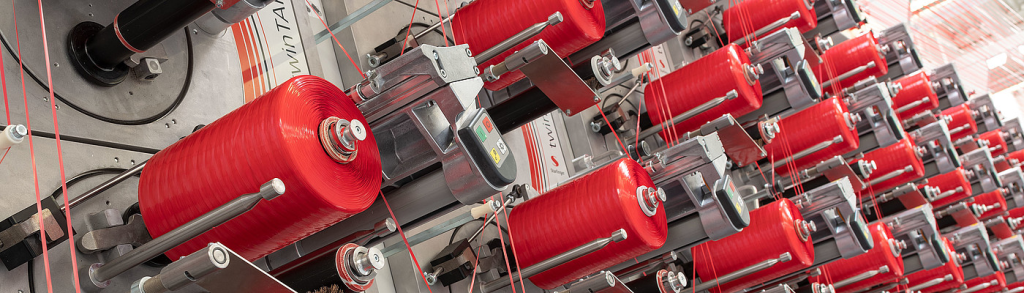
1) PP tape extrusion & orientation. Virgin polypropylene is melted, slit, and drawn—typically 5:1–7:1—to align polymer chains; annealing locks tenacity. UV stabilizers plus slip/anti‑block packages are dosed to the service profile. Better draw → higher modulus → fewer split corners.
2) Fabric weaving (woven variants). Tapes run on circular or flat looms to a target weave density—commonly 10×10 to 14×14 threads/inch. Controlled tension and pick count deliver the surface flatness that laminators and printers require for tight bonds and crisp registration.
3) Surface engineering.
- BOPP lamination (≈ 15–35 µm): reverse‑printed film bonded via PP‑based tie layers to shield artwork and raise rub resistance.
- PE extrusion coating (≈ 20–35 µm): creates a heat‑sealable, low‑porosity skin compatible with high‑line‑count flexo.
- Uncoated mesh/leno: open‑area 25–45% for airflow; color‑coded yarns for stream separation.
- FFS tubular film: HDPE/MDPE/LLDPE blends (≈ 80–200 µm) tuned for dart impact and broad seal windows.
4) Printing & identification. Flexographic or rotogravure platforms deliver dense solids, micro‑type, and machine‑readable codes. Registration control is functional, not cosmetic: GS1 quiet zones and hazard diamonds must land exactly where scanners and auditors expect them.
5) Converting & forming. Tubing, gusseting, and block‑bottom forming establish geometry; bottoms are stitched (chain/lock) or heat‑sealed depending on laminate stack. Valve sleeves are sized to spout diameter and line pressure for flow, deaeration, and self‑closing behavior. Tops finish heat‑cut or hemmed; easy‑open tapes reduce knife use at point of consumption.
6) Liner insertion & vent strategy. Hygiene‑critical SKUs receive loose LDPE/HDPE liners (20–80 µm). Zoned pin/laser micro‑perfs support fast fills without post‑fill dusting or barcode smearing.
7) Quality assurance. Routine controls include tensile/burst, seam efficiency, color ΔE vs. proof, COF (ASTM D1894), barcode verification, UV retention, and drop behavior (commonly 0.8–1.2 m with conditioned loads). SPC charts keep lamination caliper and registration centered; nonconforming lots are quarantined, root‑caused, and closed via corrective actions.
VidePak’s toolchain & scale. Since 2008, VidePak has run this choreography on top‑tier German W&H and Austrian Starlinger assets. Capacity—>100 circular looms, 16 extrusion lines, and >30 lamination/printing machines—means multi‑SKU rollouts without bottlenecks. We default to 100% virgin raw materials, support multi‑color printing, and align draw ratios, weave density, laminate caliper, valve geometry, and COF targets with your actual powders, pellets, and routes.
What is the application of PP Bags?
Agricultural staples & seed. Rice, maize, wheat, pulses, and seed lots need moisture moderation and traceability. PP Bags—open‑mouth or block‑bottom—protect grain integrity while GS1/QR codes stay scan‑reliable from mill to market.
Fertilizers & soil amendments. Hygroscopic NPK and urea benefit from laminated faces, liners, and anti‑skid finishes. Square pallets survive humid depots; UV‑stable tapes preserve mechanicals during yard staging.
Chemicals & intermediates. Resins, pigments, masterbatch, mineral fillers—dense goods that punish weak seams—fit PP Bags with woven backbones and scuff‑tough print faces; valve formats curb airborne fines around intake pits.
Construction materials & minerals. Cement, grout, gypsum, and calibrated sands demand edge integrity and readable safety panels. PP Bags maintain shape and legibility after long conveyor paths and clamp handling.
Waste & recycling logistics. RDF pellets, ash, lime, and sorting residues ship denser with block‑bottom valve bags; FFS tubular film maximizes automation; color‑banded BOPP faces accelerate bay checks.
Food & feed (where compliant). Salt, sugar, premixes: pair PP Bags with liners and hygiene controls; matte art reduces glare; dosing charts and barcodes stay crisp.
Mesh‑friendly niches. For briquettes, pellets, flakes, and chips that need airflow, PP Bags in leno/raschel mesh keep stacks cooler and inspections faster.
Across geographies—the United States, Europe, Brazil & South America, Southeast Asia, Japan, Korea, Central Asia, the MENA Region, East Africa, and South Africa—VidePak localizes GSM, film thickness, valve geometry, COF targets, and artwork to climate, regulation, and route risk. Our global cadence is powered by 568 employees and annual sales near US$80 million.
Typical Parameters for PP Bags
The ranges below reflect widely used, real‑world specifications referenced across Made‑in‑China/Alibaba listings and peer implementations. Select to match filler design, product rheology, climate, and logistics. Values are application‑dependent and customizable.
| Parameter | Typical Options / Range |
|---|---|
| Product | PP Bags (open‑mouth / block‑bottom valve / mesh‑leno / FFS tubular film) |
| Woven Fabric (GSM) | ≈ 70–110 g/m² PP fabric (application‑dependent) |
| Weave Density (woven) | 10×10 to 14×14 (warp×weft, threads/inch) |
| Lamination / Coating (woven) | BOPP 15–35 µm (reverse‑printed) or PE 20–35 µm extrusion coat |
| Mesh Open‑Area (mesh variant) | ≈ 25–45%; mesh count ≈ 2.5–6 openings/cm |
| FFS Film Gauge (tubular PE) | ≈ 80–200 µm HDPE/MDPE/LLDPE blends |
| Common Bag Size (50 kg woven) | ≈ 50 × 80 cm (±1–2 cm by filler spec) |
| Valve Opening (valve variant) | ≈ 10–17 cm (matched to spout & aeration needs) |
| Micro‑Perforation | Zoned pin/laser maps for fast‑fill deaeration |
| Coefficient of Friction (bag‑bag) | ≈ 0.35–0.55 with anti‑skid textures |
| Printing | Flexographic (PE face) or rotogravure (BOPP); barcode/QR capable; matte/gloss zoning |
| UV Stabilization | Options up to ≈ 3,000 h (storage profile dependent) |
| Liner Options | LDPE/HDPE 20–80 µm loose liners for hygiene/moisture control |
| Drop Test Reference | 0.8–1.2 m (load‑ & spec‑dependent), conditioned samples |
Why VidePak for PP Bags
- Engineering depth. We align draw ratios, weave density, laminate caliper, seam geometry, valve sleeve design, vent maps, COF targets, and barcode zones with your product’s flow behavior and your filler hardware—so seals hold, pallets square, and labels scan.
- Equipment pedigree. Top‑tier W&H and Starlinger platforms underpin gauge control, color registration, and seam efficiency—run after run, region after region.
- Capacity that scales. >100 circular looms, 16 extrusion lines, >30 lamination/printing machines—designed for global, multi‑SKU programs without bottlenecks.
- Customization & materials. 100% virgin raw materials by default; multi‑color printing; windows, valves, liners, mesh counts, and UV packages tailored to climate, code, and route risk.
Partner with VidePak to turn PP Bags into a coherent, end‑to‑end toolkit—one supplier, many solutions, real control from specification to shipment.
- What are PP Bags?
- What are the features of PP Bags?
- What is the production process of PP Bags?
- What is the application of PP Bags?
- Typical Parameters for PP Bags
- Why VidePak for PP Bags
Polypropylene (PP) bags are versatile, durable, and customizable solutions widely used across industries, from agriculture to construction. As businesses look for efficient packaging solutions, polypropylene bags—whether woven or laminated—offer a comprehensive range of choices, each with unique benefits and applications. This article explores the diversity of materials used in PP bags and the production techniques behind them, providing an in-depth overview of the various types of PP bags available today.
Material Diversity in PP Bags
Polypropylene bags are primarily made from high-quality PP resin, which can be processed in various ways to create bags that meet specific requirements. The material used influences the bag’s strength, flexibility, resistance to moisture, and suitability for different environments. Below is a breakdown of common materials used in PP bag production:
| Type of Material | Key Properties | Applications |
|---|---|---|
| BOPP (Biaxially Oriented Polypropylene) | High strength, transparency, excellent printability | Food packaging, retail packaging, agricultural products |
| Kraft Paper Laminated with PP | Robust, eco-friendly, resistant to wear | Construction, fertilizers, chemicals, and bulk products |
| Polypropylene Woven Fabric | Strong, breathable, and flexible | Bulk goods, construction, and agriculture |
| FFS (Form-Fill-Seal) Tubular PP | High-speed production, customizable shapes | Industrial applications, food packaging |
| Jumbo Woven Bags | Large capacity, durable, moisture-resistant | Bulk material transport, agriculture, and industrial products |
| Valve Bags | Tight seal, easy filling | Agricultural feed, chemicals, and construction |
Each type of PP bag material is chosen based on the packaging requirements, including strength, barrier properties, moisture resistance, and the ability to handle specific loads. For instance, BOPP bags are perfect for retail packaging due to their visual appeal and printability, while Kraft Paper Laminated PP bags provide added durability and eco-friendliness for industrial use.
Production Techniques: The Art of Creating Strong, Durable, and Customizable PP Bags
The manufacturing process of PP bags involves several stages, each of which impacts the final product’s performance, durability, and cost. Let’s dive into the common production techniques:
1. Woven Fabric PP Bags
Woven PP bags are produced by weaving polypropylene fibers into a sturdy fabric that offers high tensile strength and flexibility. These bags are used in a range of applications, from carrying agricultural products to storing chemicals.
The key production stages include:
- Extrusion: Polypropylene pellets are melted and extruded into thin fibers.
- Weaving: The fibers are woven together using specialized looms to form a fabric.
- Lamination (optional): In some cases, woven fabric is laminated with other materials such as BOPP film for added durability and barrier properties.
2. BOPP Laminated PP Bags
The production of BOPP laminated PP bags involves several advanced processes:
- Extrusion of PP Film: First, the polypropylene resin is extruded to create a flat film.
- Biaxial Orientation: The film is stretched in both directions (horizontal and vertical) to improve strength and transparency.
- Lamination: The BOPP film is then laminated to woven PP fabric to improve the bag’s surface, making it printable for branding and design purposes.
3. FFS (Form-Fill-Seal) Tubular PP Bags
FFS bags are manufactured through a continuous process that allows for high-speed production. The steps include:
- Film Extrusion: PP resin is melted and formed into a tubular film.
- Forming: The film is shaped into a tubular form that will become the bag.
- Filling and Sealing: The bags are filled with the product and sealed automatically.
These bags are ideal for mass production and are commonly used in food packaging due to their speed and flexibility.
4. Jumbo Woven PP Bags
Jumbo bags are large capacity bags typically used for bulk material handling. Their production process includes:
- Weaving of Strong Polypropylene Fabric: Similar to woven PP bags but with thicker and stronger fibers to handle large volumes.
- Seam Welding or Sewing: The edges of the fabric are welded or sewn to create a sturdy, load-bearing bag.
Key Advantages of PP Bags
PP bags offer numerous benefits, making them an ideal choice for packaging in many industries:
- Durability: PP bags are known for their robustness and ability to withstand rough handling.
- Customization: Whether it’s size, color, or printing, PP bags can be tailored to meet specific requirements.
- Cost-Effective: They provide a low-cost, efficient solution for bulk packaging.
- Eco-Friendly Options: With increasing consumer demand for sustainable practices, Kraft Paper Laminated PP Bags are gaining popularity as an eco-friendly solution for industries seeking environmentally responsible alternatives.
FAQs About PP Bags
1. What are the differences between BOPP and Kraft Paper Laminated PP Bags?
BOPP bags are highly transparent and offer excellent printability, making them suitable for retail packaging. Kraft paper laminated PP bags are stronger, more durable, and provide additional protection against moisture and wear, making them ideal for industrial and bulk packaging.
2. How can PP bags be customized?
PP bags can be customized in a variety of ways:
- Size: Bags can be made to fit specific quantities or dimensions.
- Printing: Full-color printing allows for branding and design.
- Additives: For specific needs, such as UV resistance, anti-static properties, or moisture resistance, additives can be incorporated into the production process.
3. Are PP bags recyclable?
Yes, polypropylene bags are recyclable. However, their recycling process can vary depending on the bag type and location. Some PP bags, especially woven ones, can be recycled back into usable plastic materials.
4. Can PP bags be used for food packaging?
Yes, many types of PP bags, such as FFS Tubular Bags, are safe for food packaging. However, it is essential to ensure that the bags meet food safety standards, such as being free from harmful chemicals.
5. What industries use PP bags the most?
PP bags are used across various industries, including:
- Agriculture: For storing and transporting grains, seeds, fertilizers, and feed.
- Chemicals: For packaging powders, granules, and other chemicals.
- Retail: For consumer goods like pet food, groceries, and other packaged items.
- Construction: For transporting bulk materials such as sand, cement, and gravel.
Latest Trends in PP Bag Production
As the demand for sustainable packaging grows, the eco-friendly options within the PP bag industry are on the rise. One significant trend is the shift toward using recycled PP materials, which not only reduces waste but also cuts down on the energy required to produce new PP resins. Another exciting development is the use of multilayer films that provide greater strength and improved moisture barriers.
In addition, custom printing technologies have evolved, offering more advanced options such as flexographic printing for high-resolution designs. As businesses look for ways to differentiate their products, the ability to print high-quality, vibrant designs on PP bags is becoming increasingly important.
Conclusion
Polypropylene bags offer a comprehensive, one-stop solution for a variety of industries, thanks to their material diversity and advanced production techniques. From the high transparency of BOPP bags to the industrial strength of Kraft Paper Laminated PP bags, businesses can choose the ideal product for their needs. With customizations available in size, strength, and design, these bags offer cost-effective, durable, and sustainable packaging solutions.
For more insights into the versatility and applications of PP bags, you can read about the role of Kraft Paper Laminated PP bags in packaging or explore the advantages of industrial woven bags in flood protection.