
What Are Custom Printed Woven Bags?
Custom Printed Woven Bags are engineered, load‑bearing flexible sacks produced from woven polymer tapes—predominantly polypropylene (PP)—and purpose‑designed to both contain bulk solids and communicate essential information about them. In practice, these containers span a spectrum: from compact open‑mouth sacks in the 10–50 kg bracket to large‑format flexible intermediate bulk containers (FIBCs) carrying hundreds or thousands of kilograms. They also go by familiar aliases—printed PP woven bags, printed poly woven sacks, laminated BOPP woven bags, printed valve sacks, printed big bags—yet the single idea remains constant: a durable woven body plus an information‑rich print surface that survives abrasion, stacking, weather, and time.
Why naming matters
The phrase Custom Printed Woven Bags signals two commitments: tailored print that encodes brand, warnings, and machine‑readable marks; and woven mechanics that protect product value. When the print tells the operator what to do—and the fabric lets the package do it safely—the result is fewer errors, cleaner sites, and lower total cost of ownership.
Are they just containers with logos? No. The printed layer is not decorative; it is functional. It carries hazard pictograms and handling instructions; it hosts QR or DataMatrix codes that unlock batch dossiers; it can even integrate watermark fields experimented with for optical recognition. In short, the bag is a container and a mobile signboard; it is a structural envelope and a decision surface.
Materials of Construction: Resins, Layers, Inks, and the Way They Interlock
Every architecture choice in Custom Printed Woven Bags balances performance with cost and recyclability. Below, the materials are mapped to the functions they enable: structure, information, barrier/hygiene, closure, and end‑of‑life.
Structural fabrics
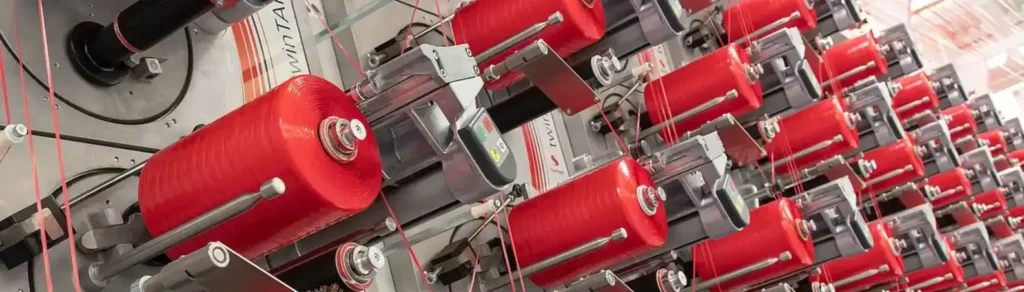
Polypropylene (PP) woven fabric remains the backbone for most woven sacks because of its low density (~0.90 g/cm³), high tensile‑to‑weight ratio, low moisture uptake, and broad chemical compatibility. Manufacturing follows a repeatable sequence: film extrusion → slitting → tape drawing (usually 5–7×) → weaving on circular or flat looms → heat setting. For 10–50 kg bags, 70–140 gsm dominates; for printed FIBCs and heavy service, 160–240+ gsm is common. Picks per inch (typically 10–16) and tape denier (700–1,800D) tune puncture behavior and long‑term creep.
Where special heat or abrasion profiles exist, polyester or nylon occasionally appears in threads or reinforcements. Use such hybrids selectively to preserve mono‑material recyclability unless the use case makes them indispensable.
Print‑ready surfaces
Two approaches anchor durable graphics. PP extrusion coatings at 20–40 g/m² seal the weave and create a receptive surface for flexo inks while staying within the polyolefin family. BOPP laminations at 15–35 µm supply a hard, scuff‑resistant face for photographic branding and high‑contrast warning panels. Matte laminates reduce glare; gloss amplifies shelf impact. Adhesive choice and tie‑layer chemistry influence recyclability and heat tolerance.
Surface energy is managed by corona or plasma treatment—keep it at ≥38 dyn/cm—and verified with dyne checks or inline sensors to avoid ink pick‑off and ghosting.
Ink & varnish systems
Solvent flexo/gravure still leads on rub resistance and weathering. Water‑based flexo has strengthened for lower VOC footprints but benefits from primers and controlled corona levels. Digital (UV/inkjet) enables variable data and seasonal artwork; verify cure to eliminate residual odor, and specify abrasion shields or over‑varnish where routes are harsh.
Code readabilityContrast ≥ 70%Module ≥ 6–8 mm
Barrier & hygiene
PE liners—LDPE/LLDPE blends for sealability and toughness, HDPE where stiffness and slightly lower WVTR help—are specified when moisture, oxygen, or cleanliness matter. Gauges: 40–120 µm for small sacks, 75–200 µm for FIBC liners. Add antistatic masterbatch for dust safety; use EVOH co‑ex when oxygen sensitivity demands it. Form‑fit liners improve discharge; tubular liners fit simpler, lower‑risk flows.
Closures & valves
Open‑mouth seams are stitched (single/double chain or safety stitch) with SPI and thread denier matched to fabric gsm. Valve sleeves—paper, film, or woven PP—enable high‑speed, dust‑controlled filling. Auto‑close film petals or post‑fill heat/ultrasonic steps secure the product and reduce housekeeping.
Key Features: What Custom Printed Woven Bags Actually Do Better
When performance is measured not in lab slogans but in plant stops avoided, pallets saved, claims prevented, and scans that just work, Custom Printed Woven Bags show their value. Below are the capabilities that distinguish them in real operations.
Strength‑to‑weight with safety margins
High SWL at low tare mass is the defining mechanical win. For small sacks, seam efficiency and corner stress management drive drop performance. For large printed FIBCs, loop‑root load transfer and panel creep control dominate. Safety factors of 5:1 (single trip) and 6:1 (heavy duty/limited reuse) are customary. But strength is more than gsm; stitch architecture, tape tenacity, and baffle anchoring alter where and how failures initiate.
Print durability as a safety device
Scuffed icons and blurred barcodes are not cosmetic failures—they are operational risks. On cement or fertilizer routes, BOPP laminates with solvent gravure deliver the highest rub classes, while coated fabrics plus low‑odor flexo and over‑varnish meet demanding thresholds with lower material mass. The objective is simple: keep warnings readable after forklifts, conveyors, and stack friction have had their say.
Information density & machine legibility
As EPR and recycling rules intensify, the bag becomes a mobile standard‑operating‑procedure. Color bands map to streams; QR links route to batch dossiers; optional optical marks are piloted for automated recognition. Typography must survive distance; contrast must beat dust; code zones must avoid seam scrape paths. Design is data discipline expressed in pixels.
Barrier, hygiene, and odor control
Liners with double‑fin seals curb moisture ingress and reduce caking for hygroscopic goods. For food or feed chains, hygienic conversion areas and low‑odor inks protect perception and compliance. Where oxygen sensitivity exists, EVOH co‑ex liners hold quality without over‑specifying the outer fabric.
Ergonomics that prevent small accidents
Loop style and length influence swing and clearance during lifts. Mouth diameters and skirt systems govern filler coupling. Reflective tapes and high‑contrast panels support night operations. A few millimeters in loop length or a couple of degrees in valve angle can make the difference between a clean fill and dust blowback.
ESD classifications for real risks
Combustible dusts and solvent vapors change the rules. Type A/B/C/D systems per IEC/EN 61340‑4‑4 define how charge is handled. Type C requires reliable grounding; Type D dissipates without leads but demands compatible liners and clean environments. Training is the control variable that binds the physics to the plant.
From Resin to Release: How Production Really Works
The production chain is an orchestra. When one section plays out of tune—tape gauge drift, under‑treated surfaces, mis‑set sealing jaws—the whole concerto falters. The path below emphasizes the handoffs that most often create defects and the controls that prevent them.
- Tape extrusion & drawing. PP pellets are melted and extruded as a film, slit into tapes, then drawn 5–7× to align chains. Target melt flow ~2–4 g/10 min balances drawability with tenacity. Chill rolls at ~25–35 °C and stable line tension suppress fibrillation and gauge bands.
- Weaving & heat setting. Circular looms (tubes) or flat looms (panels) interlace tapes at 10–16 ppi. Heat setting fixes dimensions before coating/printing, reducing shrink‑wrinkles and improving print registration.
- Coating/lamination & surface energy. Extrusion coating (20–40 g/m²) seals pores; BOPP lamination (15–35 µm) adds rub fidelity. Maintain ≥38 dyn/cm via corona/plasma; verify periodically to avoid ink pick‑off, banding, and barcode failures.
- Printing & curing. Flexo/gravure apply artwork and codes. Anilox cell volume (BCM), ink viscosity windows, and dryer curves are tuned to rub class targets. Digital runs are proofed for cure and abrasion; odor checks are added for consumer‑facing bags.
- Conversion & closures. Panels are cut; seams stitched; loops integrated with reinforcement patches; tops and bottoms assembled. Valve sleeve angle/length are matched to packer nozzles; auto‑close petals or heat/ultrasonic steps secure contents.
- Liner fabrication & insertion. Blown/cast film lines produce tubular or form‑fit liners. Seal recipes aim for peel‑mode failure (typically 12–18 N/15 mm). Bubble or dye tests catch pinholes on critical SKUs; antistatic levels are verified for ESD‑classified bags.
- QA & release. Dimensional checks, drop tests (small sacks), top‑lift/stacking (FIBCs), seam efficiency audits, Sutherland rub, barcode/QR verification after abrasion, liner seal peel strength, and WVTR for moisture‑sensitive lines. Every test maps to a lot code; every lot carries a document pack.
Applications: Where the Architecture Pays for Itself
Custom Printed Woven Bags serve many verticals, but each imposes its own hazards and documentation patterns. Below, application‑specific emphases reveal how materials and print choices translate to fewer claims and cleaner audits.
Chemicals & mineral fillers
Calcium carbonate, titanium dioxide, silica, soda ash, pigments. Abrasion is high; dust management is non‑negotiable; ESD classification becomes relevant as particle size drops. Use coated or BOPP‑laminated exteriors for rub‑hard artwork; specify Type C/D with compatible liners where powders and vapors meet.
Construction materials
Cement, mortar, grout, gypsum. Valve sleeves speed filling and cut dust blowback; square, scuff‑safe print keeps hazard icons legible at job sites. Moisture strategy varies by climate; UV stabilization protects during outdoor staging.
Agriculture & fertilizers
Urea, NPK blends, seeds, soil conditioners. Moisture is the enemy; liners with firm seal recipes reduce caking. High‑contrast agronomic guidance and hazard icons simplify safe use in the field.
Food & feed ingredients
Sugar, salt, starches, rice, flour, milk powder, pet food premixes. Hygiene rules require clean conversion and material declarations. Low‑odor inks and coatings protect sensory profiles; traceability must survive handling.
Recycling & plastics
PET flakes, PP/PE regrind, virgin pellets. Color coding aids stream sorting; durable barcodes keep inventory honest; repeated handling calls for robust loop roots and edge protections.
Retail & promotional programs
Reusable display sacks and donation campaigns prioritize photorealistic graphics and pleasant hand‑feel. BOPP matte laminates control glare; stitched handles are spec’d for comfort and safety.
A Practical Walkthrough From Keyword to Specification
The expression Custom Printed Woven Bags promises breadth, but plants need specificity. The storyboard below converts context into one auditable, executable specification.
Step A — Define product and hazards
- State: powder vs. granule; PSD; bulk density; cohesion (ffc where available).
- Sensitivity: moisture gain; oxygen/odor pickup; ignition risk from electrostatics; UV exposure bands.
- Process: filler type (gravity, screw, impeller/air), fill temperature, target cycle time, discharge method.
- Logistics: pallet pattern/height; warehouse climate; transport mode; outdoor dwell probability and duration.
Step B — Map hazards to building blocks
- Strength → fabric gsm/denier; seam type and SPI; loop geometry; baffles for cubic stability.
- Barrier/hygiene → liner resin and gauge; coating/lamination weight; seal recipe; clean conversion.
- Information integrity → print method; ink/varnish; code specs; abrasion‑safe placement.
- ESD → A/B/C/D classification; liner resistivity; grounding/humidity controls.
- Recyclability → mono‑polyolefin stack; liner separability; low‑ash adhesives/inks.
Step C — Choose constructions by segment
- Non‑hygroscopic minerals: coated woven PP; open/skirt top; flat bottom; optional baffles.
- Hygroscopic fertilizers: coated PP + form‑fit LLDPE 100–150 µm; skirt top; discharge spout with safety petals; UV‑stable exterior.
- Food/feed: woven PP with certified food‑contact liner; low‑odor inks; hygienic conversion; pinch/heat‑seal for tamper evidence.
- ESD‑sensitive powders: Type C grounded or Type D dissipative systems; compatible liners; trained operators.
Step D — Validate with tests & documentation
- Mechanical: top‑lift/stacking/drop/seam strength.
- Barrier: WVTR (ASTM F1249 / ISO 15106‑2); seal peel strength; pinhole/leak tests.
- Information: Sutherland rub class; barcode/QR verification after abrasion & UV exposure.
- ESD: IEC/EN 61340‑4‑4 classification with liner pairing; continuity checks for Type C.
- Compliance: ISO 9001 current; BRCGS or FSSC 22000 where hygienic conversion applies; liner DoCs (e.g., FDA 21 CFR 177.1520 where relevant).
Step E — Manage change & traceability
- Record resin/masterbatch lots; control adhesive/tie‑layer changes.
- First‑article approval for geometry shifts; 60‑day prior notice clauses.
- QR‑coded batch traceability; certificate calendar with ≤12‑month refresh.
Standards & Identifiers You Will Be Asked For
- ISO 21898:2024 Design/tests for non‑dangerous goods FIBCs; labels SWL & safety factor; offers UV guidance.
- IEC/EN 61340‑4‑4 ESD classification & tests for Types A/B/C/D and compatible liners.
- UN Model Regulations (Rev. 24, 2025) For dangerous goods using woven plastics (5H1/5H2) or FIBCs (13H1–13H4).
- BRCGS Packaging Materials — Issue 6 Hygiene/GMP discipline for plants in food/feed supply chains.
- ISO 9001:2015 Quality systems baseline for converters and film/adhesive suppliers.
- ISO 18604 Packaging & environment — material recycling; supports mono‑PP recyclability claims.
- FDA 21 CFR 177.1520 U.S. food‑contact references for olefin polymers in liners.
Engineering Data Tables
| Segment | Body style | Fabric gsm | Top | Bottom | Liner | Baffles | ESD |
|---|---|---|---|---|---|---|---|
| Non‑hygroscopic minerals | 4‑panel PP | 180–220 | Open / skirt | Flat | None | Optional | A |
| Hygroscopic fertilizers | U‑panel PP, coated | 180–220 | Skirt | Spout + safety petals | LLDPE 100–150 µm | Optional | B |
| Food powders | 4‑panel PP | 180–220 | Fill spout + dust flap | Discharge spout | Form‑fit 100–150 µm (food‑grade) | Yes | B/C |
| Abrasive pigments (TiO₂) | Circular PP | 200–240 | Fill spout | Discharge spout | Conductive/dissipative | Yes | C/D |
| Pellets & flakes | 4‑panel PP | 160–200 | Skirt | Flat or spout | Tubular 100 µm (optional) | Optional | A |
| Test | Method/Reference | Typical target |
|---|---|---|
| Top‑lift (FIBC) | ISO 21898:2024 | Pass at design safety factor (5:1 or 6:1) |
| Stacking/compression | ISO 21898 guidance + SOP | 30–60 days at design load; deformation within limits |
| Drop (small sacks) | Company SOP (ASTM logic) | 5–10 drops @ 0.8–1.2 m; no rupture |
| UV exposure | ISO 21898 guidance | Stabilization aligned to outdoor dwell (e.g., 200–300 h eq.) |
| Liner WVTR | ASTM F1249 / ISO 15106‑2 | ≤2–5 g/m²·day @ 38 °C/90% RH (product‑specific) |
| Seal peel strength | Internal SOP (N/15 mm) | 12–18 N/15 mm; peel‑mode failure |
| ESD resistance | IEC/EN 61340‑4‑4 | Meets class; liner pairing confirmed |
Cost of Quality & Total Cost of Ownership
Lowest unit price can become highest landed cost once claims, downtime, and detention are counted. In Custom Printed Woven Bags, four levers drive total cost of ownership:
- Product protection. Small liner gauge increases (20–40 µm) during humid seasons often cut caking complaints materially.
- Uptime and fill performance. Valve sleeve angle/length and spout fit drive dust and weighment errors; geometry wins out over brute gsm increases.
- Stacking stability and cube. Baffles and disciplined base dimensions reduce lean/collapse; corner boards blunt pallet‑edge puncture.
- Documentation cadence. Expired certificates and vague DoCs create customs holds. A 12‑month refresh calendar is cheap insurance.
Troubleshooting Matrix
| Symptom | Likely cause | Corrective action |
|---|---|---|
| Seam splits in stack | Low gsm; weak stitch pattern or SPI | Increase gsm; switch to safety stitch; audit SPI |
| Loop tear‑out | Insufficient root reinforcement; wrong thread denier | Add patches; raise thread denier; distribute load via seam design |
| Valve dusting | Sleeve too short/steep; weak auto‑close | Adjust angle/length; add film petals; tune packer air curve |
| Moisture caking | Thin liner; poor seals; humid storage | Raise gauge; double‑fin seal; climate control |
| Liner pinholes | Handling across sharp edges; poor staging | Deburr fixtures; blue‑glove rules; revise liner SOP |
| Print rub‑off | Low surface energy; under‑cured inks | Increase corona; adjust dryer; add over‑varnish |
| Static discharges | Wrong ESD class or incompatible liner | Specify Type C/D; enforce grounding (C) or liner pairing (D) |
Procurement‑Ready Specification (Template)
Title: Custom Printed Woven Bags — 25–50 kg valve sack, coated PP with heat‑sealable sleeve
Scope: Dry mineral powder; indoor storage ≤60 days; stack pattern 5×5; forklift handling
Body: Woven PP 100 gsm; coating 30 g/m² exterior; weave 12 ppi; white substrate for high‑contrast print
Valve sleeve: PE film 90 µm; length 140 mm at 30°; auto‑close petals; heat seal post‑fill
Seams: Bottom double chain; SPI 9–10; thread PP 1,000–1,200D; edge bindings as specified
Print: 4‑color flexo (low‑odor); barcode/QR contrast ≥70%; rub class ≥200 Sutherland cycles
Tests: Drop 10× @1.0 m; base peel (if square‑bottom) ≥25 N/25 mm; valve seal peel 14–18 N/15 mm (peel failure); WVTR per product target
Compliance: ISO 9001 current; BRCGS Packaging Materials (if hygienic conversion applies); liner DoC referencing FDA 21 CFR 177.1520; ESD classification if required
Change control: 60‑day notification for resin/additive/geometry changes; first‑article approval on critical parameters
Traceability: Lot/date/line code; QR link to batch dossier
Two Short Field Cases
Case 1 — Hygroscopic starch (25 kg valve sack)
Issue: 2.1% caking complaints in rainy season; barcode scan failures from rub.
Intervention: Sleeve 70→100 µm; double‑fin seal; moved barcodes away from seam scrape paths; +10 g/m² exterior coating.
Outcome: Complaints down to 0.3%; scans improved by 80%; OEE +1.8% via fewer cleanups and reprints.
Case 2 — Abrasive mineral filler (FIBC, 1,250 kg)
Issue: Scuff erased hazard icons and lot codes; residue at discharge.
Intervention: Higher rub‑class inks; over‑varnish; +10 g/m² coating; conical discharge; form‑fit liner.
Outcome: Legibility preserved after 1,500 km; reduced residue; simpler audits.
Extended FAQ
Are these bags better than drums or octabins? It depends on the hazard and the handling. For free‑flowing solids that benefit from collapsibility, quick changeovers, and high cube efficiency, Custom Printed Woven Bags are typically superior. For fragile goods needing rigid protection—or for liquids—rigid formats lead.
Can recycled PP be used in the fabric? Yes, in non‑food and non‑critical zones, provided drawability and tenacity targets are met. Keep recycled content away from loop load paths unless validated by lift tests.
Do form‑fit liners always win? Not always. Form‑fit excels with cohesive powders and strict cleanliness goals. Tubular liners are economical for pellets and granules that already discharge cleanly.
Which print system lasts longest? Solvent gravure/flexo on BOPP usually wins on abrasion. Water‑based flexo can match with primers and over‑varnish; digital needs cure checks and strategic abrasion shields.
How do we set WVTR targets? Start from sorption isotherms and allowable moisture gain; back‑solve to package‑level WVTR; verify with ASTM F1249/ISO 15106‑2 at relevant climates.
Is UV stabilization necessary indoors? Less critical, but staging and transport often include sunlight. Minimal stabilization and light coatings are affordable insurance for print and polymer integrity.
A 90‑Day Action Plan
- Audit failure modes. Classify by moisture, seam, loop, discharge, ESD, labeling, scanning. Without names, there is no cure.
- Pilot DOE on gsm × reinforcement. Two gsm levels × two seam/loop variants across representative routes; measure lift margin, drops, stack geometry, scan durability.
- Run a liner gauge A/B. Add +20–40 µm on humid‑season routes; track caking and leakage.
- Verify ESD discipline. For Type C, install/inspect grounding points; for Type D, verify liner pairing and retrain operators.
- Refresh documents. ISO/BRCGS/FSSC certificates ≤12 months; liner DoCs; ESD reports; purchase orders with change‑control clauses.
From Threads to Throughput: Integrating the Strands
The reliability of Custom Printed Woven Bags emerges when four strands are braided deliberately: mechanical strength, barrier & hygiene, information integrity, and—where applicable—ESD safety. Gsm and loops carry; liners and seals preserve; inks and codes guide; resistivity and grounding protect. When these strands are specified together and proven with current certificates and test data, the bag ceases to be a consumable and becomes part of your plant’s process capability—predictable, auditable, economical.
Internal link for further reading: Custom Printed Woven Bags
Custom printed woven bags are transforming how businesses package their products, offering both functional and promotional benefits. Their popularity is driven by advancements in materials and manufacturing processes, which allow for enhanced customization and durability. This article delves into the benefits of custom printed woven bags and explores the materials and production techniques that distinguish them from other packaging solutions.
Advantages of Custom Printed Woven Bags
Custom printed woven bags serve as a versatile packaging option, providing numerous advantages over traditional packaging materials. These bags are not only durable but also offer excellent printability, making them ideal for brand promotion. The ability to customize these bags with various designs, logos, and colors allows businesses to create a distinctive brand identity and attract consumer attention.
Woven bags are commonly used in industries such as agriculture, construction, and retail. Their strength and flexibility make them suitable for packaging heavy or bulk items. Additionally, custom printing enhances the bag’s visibility, which can lead to increased brand recognition and customer loyalty.
Compared to other packaging options, woven bags offer superior strength and durability. They are designed to withstand rough handling and environmental conditions, which is crucial for products that require robust packaging solutions. Moreover, the use of woven fabric allows for a higher load capacity and greater resistance to tears and punctures.
Materials Used in Woven Bags
The choice of materials used in woven bags significantly impacts their performance and suitability for different applications. Some of the most common materials include Polypropylene (PP), Polyethylene (PE), Polyvinyl Chloride (PVC), and Aluminum Foil. Each material has unique properties that affect the bag’s durability, flexibility, and cost.
- Polypropylene (PP): PP is one of the most widely used materials for woven bags due to its strength, resistance to moisture, and cost-effectiveness. PP woven bags are commonly used for packaging grains, chemicals, and other bulk products. They offer excellent print quality, which is ideal for custom branding. The material is also recyclable, aligning with environmental sustainability efforts.
- Polyethylene (PE): PE woven bags are known for their flexibility and resistance to various chemicals. These bags are often used in the packaging of agricultural products, such as fertilizers and seeds. While PE bags are generally less durable than PP bags, they offer better resistance to moisture and environmental factors.
- Polyvinyl Chloride (PVC): PVC woven bags are less common but offer a high level of durability and protection against environmental elements. They are often used for packaging products that require an extra layer of protection, such as pharmaceuticals or hazardous materials. However, PVC bags can be more expensive and less environmentally friendly compared to other options.
- Aluminum Foil: Aluminum foil is used in laminated woven bags to provide a barrier against moisture, light, and oxygen. This makes it suitable for packaging sensitive products, such as food items and pharmaceuticals. The foil layer is typically combined with other materials to enhance the bag’s performance and protection.
Extrusion and Co-Extrusion Processes
The manufacturing process plays a crucial role in determining the quality and functionality of woven bags. Extrusion and co-extrusion are two key techniques used in the production of these bags.
- Extrusion: This process involves melting and shaping plastic polymers into continuous sheets or films. In the case of woven bags, extrusion is used to create the base fabric. The plastic material is melted and forced through a die to form a flat sheet, which is then woven into fabric.
- Co-Extrusion: Co-extrusion is a more advanced technique that involves the simultaneous extrusion of multiple layers of plastic materials. This process allows for the production of multi-layered films with varying properties. For example, a co-extruded film might include a layer of aluminum foil for added protection, combined with layers of PP or PE for strength and flexibility.
Co-extrusion offers several advantages, including improved barrier properties, enhanced durability, and the ability to customize the bag’s performance based on specific needs. This technique is particularly useful for producing high-quality, printed woven bags that require both strength and protection.
Industry Comparison
When comparing custom printed woven bags to other packaging solutions, several factors come into play, including cost, performance, and environmental impact. While woven bags offer superior durability and customization options, they may be more expensive than simpler packaging materials like paper or plastic films.
Competitors in the packaging industry, such as companies specializing in paper or plastic bags, often highlight the environmental benefits of their products. For instance, paper bags are biodegradable and recyclable, while plastic bags can be made from recycled materials. However, woven bags, especially those made from PP, are also recyclable and can be produced with minimal environmental impact when managed properly.
In terms of performance, woven bags generally outperform paper and single-layer plastic bags in terms of strength and load capacity. They are particularly well-suited for heavy or bulk items, making them a preferred choice for industries with demanding packaging requirements.
Conclusion
Custom printed woven bags represent a versatile and effective packaging solution, combining durability with branding opportunities. The choice of materials and production processes, such as extrusion and co-extrusion, significantly influences the bag’s performance and suitability for various applications. As businesses continue to seek innovative packaging solutions, woven bags remain a valuable option for enhancing brand visibility and ensuring product protection.