
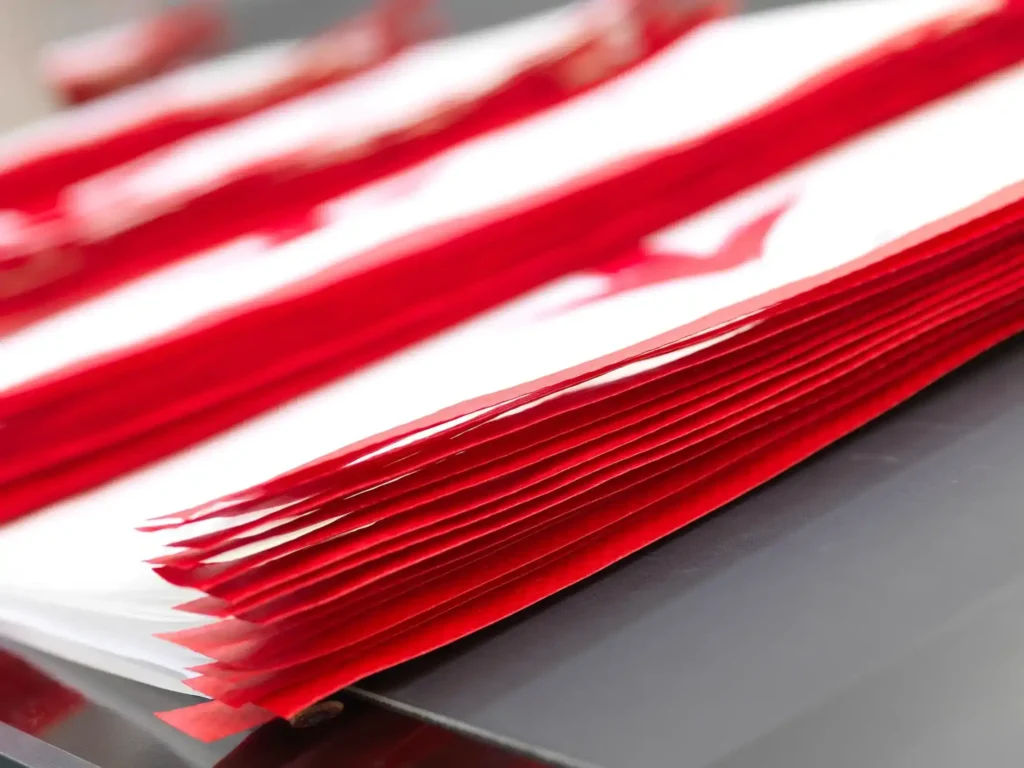
What are Custom Printed Woven Bags?
Custom Printed Woven Bags—also called custom-printed PP woven sacks, branded polywoven debris bags, or tailored construction-waste sacks—are rugged carriers fabricated from oriented polypropylene (PP) tapes woven into a high‑tenacity fabric and then finished with site‑specific graphics, colorways, and machine‑readable identifiers. In everyday terms, they are the workhorses of demolition and refurbishment workflows: built to hold rubble, offcuts, plaster dust, damp aggregates, and mixed inert loads, while functioning as mobile signage that accelerates routing and simplifies compliance.
The difference from generic rubble sacks is not cosmetic; it is systemic. The same abrasion‑tolerant surface that shrugs off concrete shards also carries large‑format warnings, skip codes, recycling icons, and QR/GS1 barcodes. With Custom Printed Woven Bags, identification lives on the package, not on a detachable label. As a result, job sites see fewer mis‑sorts, faster gatehouse checks, and shorter cross‑dock dwell times.
What are the features of Custom Printed Woven Bags?
To make sense of the feature set, think in systems. Four interacting pillars determine real‑world outcomes: mechanical integrity, usability & ergonomics, dust & moisture behavior, and print‑driven identification. Optimizing one pillar in isolation often displaces the bottleneck; balancing all four creates flow.
Pillar 1 — Mechanical Integrity
Background. Demolition fragments are unforgiving: brick shards, tile edges, timber screws, rebar nubs. Bags must resist puncture, survive edge drops, and tolerate forklift bumps without ballooning mass or cost.
Design levers. Woven PP tapes around 700D–1200D, set in fabrics of roughly 8×8 to 12×12 picks/inch, deliver high strip tensile and controlled elongation for 10–50 kg fills. Double‑turned bottoms and overlock/chain‑stitch seams distribute impact energy, while a reinforced drag zone slows seam peel when bags are pulled across rough concrete. Anti‑slip overprints increase the bag/bag and bag/pallet coefficient of friction (COF), which calms stacks on smooth warehouse decks and tail lifts.
Data reinforcement. Strip tensile/elongation correlates to ISO 13934‑1 or ASTM D5035; tear to ISO 13937; drop survivability to ISO 2206/2248 at 0.8–1.2 m (25 kg reference); stacked compression to ASTM D642. COF is benchmarked via ASTM D1894 on the actual pallet interface you use.
Case analysis. A refurbishment contractor swapped brittle film sacks for Custom Printed Woven Bags built with 900D tapes and double‑turned bottoms. Across six weeks, split‑bag incidents on stair carries dropped by ~28%. With an added anti‑slip band, cross‑dock re‑stacking time fell measurably because pallets held their geometry under vibration.
Comparative study. Versus multiwall paper sacks, woven PP offers superior wet strength and puncture tolerance during rainy staging or when sharp masonry is common. Versus FIBCs, Custom Printed Woven Bags deliberately occupy the hand‑carried tier (10–50 kg), enabling faster loading cycles at lower unit cost.
Pillar 2 — Usability & Ergonomics
Background. On ladders and ramps, speed equals safety. The fewer awkward movements, the fewer near‑misses.
Design levers. Open‑top throats accept shovels and dustpans without nozzle alignment. Optional EZ‑open tear tapes reduce knife use at disposal points. Closure flexibility supports different crew styles: cable ties for speed, sewn + crepe for transport robustness, and heat‑seal on lightly coated versions for better fines control. Color tracer yarns and matte print panels improve stream coding (e.g., red = masonry, yellow = timber) and barcode legibility in mixed lighting.
Data reinforcement. Barcode grading to ISO/IEC 15416; panel gloss suppressed at 60° for scanner reliability; print rub endurance to ASTM D5264. Crew time‑and‑motion logs are used to compare chute‑feed versus shovel‑feed cycles per bag.
Case analysis. A hospital renovation introduced large route identifiers and matte code panels on Custom Printed Woven Bags. Intake scanning time shortened because barcodes consistently graded ≥3.0 even in low, oblique dawn light.
Comparative study. Stand‑up pouches are tidy but slow to load with rubble. Braided sacks without anti‑slip are quick to deploy but skid on pallets. The tuned open‑top woven format splits the difference: broad throat for speed, controlled friction for stack stability.
Pillar 3 — Dust & Moisture Behavior
Background. Gypsum fines, plaster dust, sawn timber flour, and damp aggregates challenge housekeeping and compliance. “Zero dust” is unrealistic; the target is acceptable emissions at workable loading speeds.
Design levers. Zoned micro‑perforations above the product headspace release trapped air during rapid fills while limiting sifting. Light PE coatings enable heat‑seal throats and wipe‑down hygiene; partial liners at the top corral fines without suffocating damp loads. UV‑stabilized tapes (target exposure 200–300 kLy) reduce sun‑brittle failures in open yards.
Data reinforcement. WVTR for any film/liner elements to ASTM F1249; UV endurance to ASTM G154 / ISO 4892‑3; dust capture via simple gravimetric checks in your site SOP. Measured sweep minutes per truck are a key KPI.
Case analysis. After adding a 40 μm partial liner ring and trimming the perforation count, a plaster crew hauling in Custom Printed Woven Bags reported visibly cleaner truck decks; sweeping minutes per load went down and transfer-station complaints eased.
Comparative study. Tight‑weave woven sacks suppress dust but trap moisture in washed aggregates; breathable mesh vents well but leaks fines. With a zoned‑weave Custom Printed Woven Bags build plus optional partial liner, you tune that trade SKU by SKU.
Pillar 4 — Print‑Driven Identification & Communications
Background. On busy sites, color and typography are as operational as strength. Wayfinding is a safety tool.
Design levers. High‑saturation graphics act like optical barcodes for five‑meter verification. QR/GS1 codes and waste‑stream icons aid traceability and audit readiness. Matte panels preserve regulatory text and hazard pictograms; stitched label pockets protect critical documentation. Process control to ISO 12647 holds colors across suppliers and seasons; ΔE SPC prevents drift that could confuse crews.
Data reinforcement. Print rub durability to ASTM D5264; barcode/QR verification to ISO/IEC 15416/15415; heavy‑metals totals in inks per EU 94/62/EC (<100 ppm aggregate). Field measures include mis‑pick counts and rework time at skips.
Case analysis. A municipal program standardized five colorways (masonry, timber, metals, gypsum, mixed). Mis‑picks at skips fell ~30% in month one because crews verified stream by color at a glance—even when stretch wrap obscured smaller codes.
Comparative study. Stick‑on labels peel; full‑gloss laminates scuff and glare. Integrated print on matte zones gives scuff‑tolerant readability that survives conveyors and weather.
Data Reinforcement
ISO/ASTM anchors underpin claims: tensile (ISO 13934‑1 / ASTM D5035), tear (ISO 13937), drop (ISO 2206/2248), compression (ASTM D642), COF (ASTM D1894), rub (ASTM D5264), UV (ASTM G154 / ISO 4892‑3).
Case Analysis
Field pilots track: split‑bag incidents, sweep minutes per truck, pallet re‑stacking, barcode grades, mis‑picks, and UV‑related rejections. These KPIs quantify value beyond unit price.
Comparative Study
Paper sacks are quiet and low‑glare indoors; mesh sacks vent well outdoors; FIBCs scale to bulk lifts. Custom Printed Woven Bags target the fast, hand‑carried mid‑mass tier.
What is the production process of Custom Printed Woven Bags?
Performance is not a single decision; it’s a chain. Resin → tape extrusion & orientation → weaving → stabilization → printing/coatings → cutting & sewing → finishing & QA. Each link sets constraints the next must respect.
- Resin & masterbatch. High‑grade PP with antioxidant and UV packages forms the baseline. Color masterbatches are documented against REACH (EC) 1907/2006 and EU 94/62/EC heavy‑metals totals. Tracer yarn colors are defined early so stream coding is consistent from day one.
- Tape extrusion & orientation. Film casting, slitting, and drawing set denier (700D–1200D typical for demolition streams) and elongation profile. Rounded tape edges reduce nick initiation at seams; draw‑ratio and oven profiles are logged for repeatability.
- Weaving. Flat or circular looms build ~8×8 to 12×12 picks/inch fabrics. Tighter weave improves burst resistance and print smoothness; looser weave encourages venting for damp loads. Mixed zones can be specified—denser body, more open headspace—for dust‑versus‑vent tuning.
- Stabilization. Heat setting locks dimensions and mitigates shrink at heat‑seal stations. Validation ensures treatment does not collapse intended venting or distort matte print bands.
- Printing & functional layers. Matte print panels for codes; anti‑slip overprints to tune COF; light PE coatings for heat‑seal/wipe‑down. Ink systems are selected for low odor and compliance documentation. Color control follows ISO 12647 with ΔE SPC limits.
- Cutting & sewing. Heat‑cut tops reduce fray; overlock or chain‑stitch seams with specified stitch density; double‑turned bottoms for drag‑heavy routes. Thread tex and needle spec are part of the drawing to stabilize seam efficiency.
- Finishing & QA. Drop tests, compression tests, tensile/tear, COF on your actual pallets, UV exposure checks, and barcode grading after rub cycles. Retained samples are linked to Certificates of Analysis under ISO 9001 traceability.
What is the application of Custom Printed Woven Bags?
Custom Printed Woven Bags slot into four recurring use‑cases; each requires a tuned balance of denier, weave, closure, and print logic.
- Demolition debris. Bricks, tiles, plaster. Specify 800–1000D denier, double‑turned bottoms, anti‑slip bands; cable‑tie closure for speed.
- Site housekeeping. Mixed light waste and timber offcuts. Mid‑denier fabrics with matte print bands for route labels; tracer yarns for stream coding.
- Damp aggregates. Washed sand/gravel. Slightly looser weave or localized venting; partial liners limited to the throat if fines control is required.
- Gypsum & cement residues. Coated variants with heat‑seal closure; localized perfs above headspace; stitched label pockets for hazard/disposal guidance.
Reference ranges from peer catalogs and supplier datasheets: common fills at 10/20/25/40/50 kg; bag sizes like 45×75 cm and 50×80 cm for 25–50 kg (measured flat; tolerance ±10 mm). COF is tuned via anti‑slip overprint; UV target 200–300 kLy when pallets stage outdoors.
Case Analysis
Standardizing Custom Printed Woven Bags across three subcontractors cut cross‑dock rework. Pallets from different vendors behaved the same because COF and seam programs were harmonized, while print layouts were locked to shared ΔE tolerances.
Comparative Study
Where indoor dust control dominates, valve sacks or tight‑weave coated bags can win. Outdoors and on mixed rubble, the open‑top woven format is faster to load and simpler to inspect; custom print keeps streams clear without extra labels.
Typical Specifications & Test Methods (reference ranges)
| Parameter | Typical Range / Option | Method / Note |
|---|---|---|
| Capacity | 10–50 kg (common 25/40/50 kg) | ISO 2206/2248 drop orientations |
| Dimensions | 45×75 cm; 50×80 cm; custom (flat, ±10 mm) | Supplier drawings; incoming QA |
| Tape denier | 700D–1200D (warp/weft) | ISO 13934‑1 / ASTM D5035 |
| Fabric density | ~8×8–12×12 picks/inch | Correlate to tensile & venting |
| Bottom style | Double‑turned; sewn + crepe | Seam efficiency vs strip strength |
| Closure | Cable tie; sewn; heat‑seal on coated fabric | Plant SOP validation |
| COF (bag/corrugate) | ≈0.4–0.6 | ASTM D1894 |
| Coating | Light PE coating optional | WVTR by ASTM F1249 if films/liners used |
| UV stability | Target 200–300 kLy | ASTM G154 / ISO 4892‑3 |
| Print & rub | Matte panels; stitched pockets; ΔE SPC | ISO 12647; ASTM D5264; ISO/IEC 15416 |
| Compliance | ISO 9001:2015; ISO 14001:2015; ISO 45001:2018; REACH; EU 94/62/EC | Certificates & DoC |
Professional Knowledge Reinforcement
- Quality & environment. ISO 9001:2015; ISO 14001:2015.
- Occupational health & safety. ISO 45001:2018 in manufacturing.
- Materials & stewardship. REACH (EC) No. 1907/2006 SVHC monitoring; EU Packaging Directive 94/62/EC heavy‑metals total <100 ppm.
- Performance anchors. ISO 13934‑1 / ASTM D5035 (tensile), ISO 13937 (tear), ISO 2206/2248 (drop), ASTM D642 (compression), ASTM D1894 (COF), ASTM D5264 (rub), ASTM F1249 (WVTR where films/liners are used), ASTM G154 / ISO 4892‑3 (UV).
Integrated Solution Blueprint (System Synthesis)
- Map risk → choose fabric & seam. Abrasive rubble: 900–1000D, double‑turned bottoms, reinforced drag zone. Damp aggregates: 700–900D with localized venting. Indoor dust control: coated fabric + heat‑seal throat.
- Engineer for the lane. Validate COF on your pallet films (target ≈0.5); run drop tests at 0.8–1.2 m across orientations; confirm barcode grades after rub; set UV targets for outdoor staging.
- Lock the print program. Assign stream colors; enforce ΔE tolerances; specify matte zones for codes; require barcode grade ≥3.0 after simulated handling.
- Govern change. First‑article approvals (denier, picks/inch, seam diagram, anti‑slip coat weight); retained samples per lot; change‑control gates on resin, masterbatch, weave, ink, coating, and thread.
- Measure outcomes. Track split incidents, pallet leans, sweep minutes per truck, mis‑sorts by color coding, barcode grades, and UV‑related rejections. Review quarterly with suppliers to iterate.
Why VidePak
Custom Printed Woven Bags from VidePak are not catalog averages. We tune denier, weave, seams, coatings, and print logic to your debris profile, climate, and route. Operator empathy runs through the spec—wide throats for shovel loads, EZ‑open options for gloved hands, anti‑slip for sloped ramps, matte panels for dawn scanners. Governance is built in: documentation packs and retained‑sample discipline aligned with ISO frameworks and regional chemical‑stewardship norms, so audits and border checks are predictable rather than dramatic.
Want the technical baseline behind the fabric itself? Explore the parent substrate here: Custom Printed Woven Bags.
Call to Action
Share your waste‑stream mix, target fill mass, climate, and route conditions. We will return a Custom Printed Woven Bags specification—fabric density, denier, seam program, closure method, anti‑slip target, and print/label strategy—plus a validation matrix (drop/compression/COF/UV/barcode/dust) that your crew can run without pausing the site.
In the construction industry, effective waste management is essential for maintaining a safe and organized worksite. Custom Printed Woven Bags are emerging as a versatile solution for handling and transporting construction waste, offering both functionality and branding opportunities. At VidePak, we specialize in producing Custom Printed Woven Sacks that not only meet the rigorous demands of waste management but also provide the added benefit of customized branding. This combination makes them an ideal choice for construction projects where both performance and visibility are crucial.
The Role of Custom Printed Woven Bags in Construction Waste Management
Custom Printed Woven Bags serve a dual purpose in construction waste management. They are designed to handle a variety of waste materials while simultaneously offering a platform for branding and communication. This versatility is particularly valuable in construction settings where the management and identification of waste materials are critical.
Handling Construction Waste Efficiently
Construction sites generate a diverse range of waste, including concrete debris, wood scraps, metal offcuts, and packaging materials. Printed Woven Bags are designed to handle these materials effectively, providing a reliable solution for managing the volume and weight of waste generated during construction projects.
- Durability and Strength: Our Printed PP Bags are made from high-strength polypropylene (PP) fibers, which offer superior durability and resistance to tearing and punctures. This strength ensures that the bags can withstand the rough handling and heavy loads typical of construction waste, minimizing the risk of bag failures.
- Ease of Use: The design of Custom Printed Woven Sacks facilitates easy filling and handling. The open top allows for quick loading of waste materials, while the block bottom provides stability and prevents the bag from tipping over. This ease of use contributes to more efficient waste management processes on-site.
- Stackability: The flat, block-bottom design of these bags enables them to be stacked securely, optimizing storage and transportation. This feature is particularly useful on construction sites where space is often limited, allowing for better organization and reduced clutter.
Branding and Identification
In addition to their practical uses, Printed BOPP Woven Bags offer valuable branding opportunities. Custom printing allows construction companies to enhance their visibility and promote their brand while effectively managing waste.
- Brand Visibility: Custom printing on woven bags provides a platform for displaying company logos, project names, and other branding elements. This not only helps in building brand recognition but also provides a professional appearance that reflects positively on the company.
- Waste Identification: Custom prints can be used to label bags with specific waste categories, such as “wood debris,” “metal scrap,” or “concrete.” This labeling helps in sorting and managing waste more efficiently, ensuring that materials are directed to the appropriate disposal or recycling facilities.
- Regulatory Compliance: In some regions, construction sites are required to manage and document waste according to specific regulations. Custom printed bags can include necessary information and instructions, helping to ensure compliance with local waste management regulations.
Customization Options for Enhanced Performance
At VidePak, we offer a range of customization options for Custom Printed Woven Bags to meet the specific needs of construction projects. These options enhance the performance and functionality of the bags, making them even more effective for managing construction waste.
Material Choices
- BOPP Laminated Bags: For added durability and moisture resistance, we offer bags with a Biaxially Oriented Polypropylene (BOPP) laminate. This coating improves the bag’s strength and protects against environmental factors, making it suitable for use in various weather conditions.
- Reinforced Bags: For particularly heavy or abrasive materials, we can reinforce the bags with additional layers of woven polypropylene or other materials. This reinforcement provides extra strength and ensures that the bags can handle demanding applications.
Printing Techniques
- High-Quality Printing: We use advanced printing techniques to ensure that custom designs are clear, vibrant, and durable. Our printing process bonds the ink deeply into the fabric, ensuring that it remains legible and visually appealing even after extended use.
- Custom Sizes and Shapes: We can produce Custom Printed Woven Sacks in a variety of sizes and shapes to accommodate different types of waste materials and project requirements. This customization ensures that the bags fit perfectly within the project’s waste management system.
Environmental Considerations
Sustainability is an important consideration in the production and use of Printed Woven Bags. At VidePak, we are committed to minimizing the environmental impact of our products and promoting responsible waste management practices.
- Recyclable Materials: The polypropylene used in our bags is recyclable, contributing to a more sustainable approach to packaging. By choosing recyclable materials, we help reduce the environmental footprint of construction waste management.
- Waste Reduction: Efficient waste management using custom printed bags can contribute to waste reduction by facilitating proper sorting and recycling. By clearly labeling waste categories, we help ensure that materials are directed to appropriate recycling facilities, reducing the amount of waste that ends up in landfills.
The VidePak Commitment to Quality
At VidePak, we are dedicated to delivering high-quality Custom Printed Woven Bags that meet the specific needs of the construction industry. Our commitment to quality is evident in every aspect of our products, from the selection of materials to the precision of printing and customization.
We work closely with our clients to understand their requirements and provide tailored solutions that enhance the efficiency and effectiveness of their waste management processes. Our state-of-the-art manufacturing facilities and rigorous quality control procedures ensure that every bag we produce meets the highest standards of performance and durability.
Innovative Solutions for Waste Management
As the construction industry continues to evolve, so do the demands for effective waste management solutions. At VidePak, we are constantly exploring new ways to improve our products and stay ahead of industry trends. Our focus on innovation ensures that our Printed BOPP Woven Bags remain at the forefront of waste management technology, providing our clients with cutting-edge solutions that address their evolving needs.
Final Thoughts
Custom Printed Woven Bags offer a practical and versatile solution for managing construction waste while providing valuable branding and identification benefits. At VidePak, our Custom Printed Woven Sacks are designed to meet the demanding requirements of the construction industry, combining durability, functionality, and customization options to enhance waste management processes. With our commitment to quality and innovation, we provide our clients with the tools they need to manage waste effectively, support their brand, and contribute to a more sustainable future.