
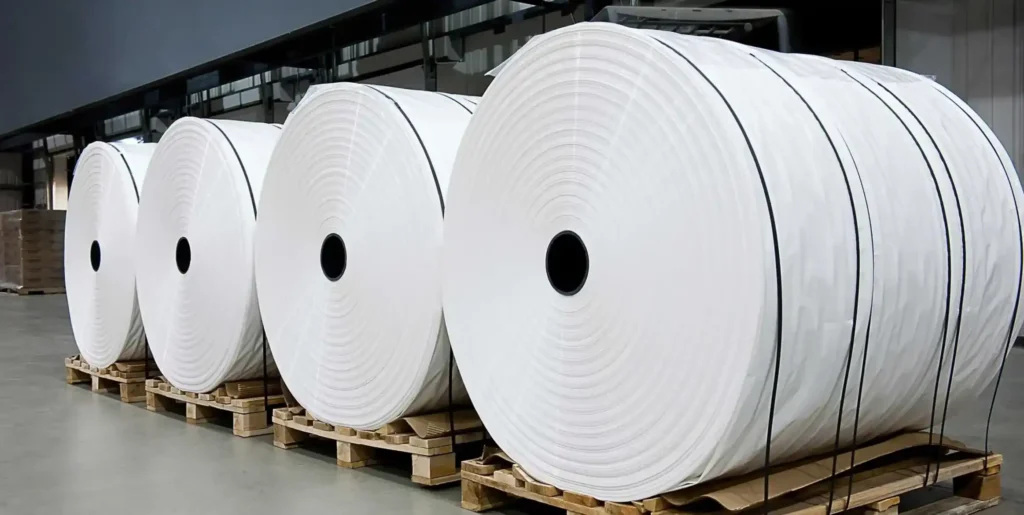
Foundations and Meaning of Custom Woven Bags
Custom Woven Bags are engineered, fabric-based packaging structures specified to the needs of a particular product, brand, or distribution system. At their core lies a woven polyolefin fabric—typically polypropylene tape yarn—whose mechanical backbone is tuned by denier, weave density, and fabric grammage. Around this backbone, designers orchestrate laminates, coatings, closures, vents, and graphics to balance a familiar triad: durability, barrier performance, and print quality. The adjective “custom” does the heavy lifting: it signals that dimensions, materials, friction, venting, and art are tailored to context rather than copied from a generic template.
Across industries and regions, buyers and engineers lean on a constellation of related labels that point back to Custom Woven Bags. Below are common aliases—each highlights a particular conversion or laminate while living under the same conceptual umbrella.
- 1) woven polypropylene sacks
- 2) BOPP-laminated woven bags
- 3) paper-laminated woven sacks
- 4) coated woven valve bags
- 5) block-bottom woven bags
- 6) laminated poly woven packaging
- 7) mono-PP laminated sacks
- 8) open-mouth woven bags
- 9) pinch-top woven sacks
- 10) heavy-duty woven poly bags
How should one interpret this family of names? As a series of dials rather than mutually exclusive boxes. Change the fabric weight, and drop behavior shifts. Add a film face, and scuff resistance and print fidelity rise. Choose a valve, and filling speeds soar. In short, Custom Woven Bags operate like a modular system that can be steered toward high-impact toughness for minerals, toward humidity defense for hygroscopic fertilizers and sugars, or toward shelf presence for retail-adjacent categories such as pet nutrition.
Constituent Materials of Custom Woven Bags: Structure, Properties, and Cost Logic
Materials are not mere ingredients; they are levers that push performance, economics, and compliance. The composition of Custom Woven Bags illustrates this perfectly. A structural fabric carries load and resists puncture. Lamination or coating closes weave interstices, moderates moisture, and creates a print face. Liners extend barrier where climate or chemistry insists. Closures govern filling and sealing behavior. Additives keep the line running safely and smoothly. Every component plays a distinct role; together, they orchestrate outcomes that show up as fewer returns, cleaner pallets, and sharper brand panels.
Woven Polypropylene Fabric (Backbone)
Polypropylene film is slit into tapes and mono-axially drawn to align molecules, raising tensile modulus and tear resistance. These tapes are woven—often in a plain weave—into a fabric whose grammage (e.g., 55–140 g/m²) and pick density (e.g., 10×10 to 12×12) determine stiffness, puncture resistance, and how flatly the surface accepts printing and lamination. Because PP is low density and cost-efficient per unit strength, it remains the default backbone.
Why it matters: the fabric takes the drop energy, bears seam stresses, and dictates handling feel on automated lines. If one were to change only a single variable, fabric GSM would be the leading candidate because it so profoundly affects both performance and cost.
Lamination or Coating (Barrier and Print Surface)
Extrusion coating lays a thin polyolefin layer directly onto the fabric, sealing pores and preparing a sealable face. Film or paper laminates add a second outer skin. BOPP film (~15–30 μm) lends scuff resistance and dimensional stability while hosting reverse printing protected beneath the film. Kraft paper (60–100 gsm) contributes tactile familiarity, easy-open options, and excellent flexographic print acceptance.
Trade-offs: BOPP raises unit price yet elevates shelf impact and abrasion endurance; paper can be cost-competitive in markets where kraft is abundant and a traditional aesthetic is prized. Hybrid stacks—coated inside, film or paper outside—let engineers decouple moisture performance from print feel.
Inner Liners and Functional Films (Hygiene and Humidity)
Loose or attached liners, commonly LDPE or LLDPE (25–60 μm), add moisture defense and cleanliness for hygroscopic contents such as urea, sugar, or kiln additives. Niche chemistries may require barrier co-extrusions including EVOH, though these complicate recycling and add cost. Venting strategies—perforated outer faces, wicket holes above product level, or vented liners—manage the tension between fast filling and long-term storage.
Closures, Seams, and Valves (Filling Mechanics)
Open-mouth formats may be sewn, pinch-top, or heat-sealed on coated faces. Valve formats—patch, internal flap, or heat-activatable sleeves—serve fast-flow powders and minimize secondary sealing steps. Mouth geometry must match spout diameter and product bulk density to avoid spillage and dust plumes.
Additives and Finishes (Processability and Safety)
Slip agents and varnishes tune coefficient of friction (COF), balancing pallet stability with conveyor flow. UV stabilizers defend outdoor stacks. Antistatic treatments mitigate ignition risk in dusty operations. These small additions may appear trivial on a spec sheet yet are decisive on a busy plant floor.
Print and Decoration (Communication Layer)
Reverse-printed BOPP hides inks under film, guarding designs against abrasion. Paper faces accept crisp flexo; surface topcoats regulate scuff and slip. Beyond branding, this layer carries barcodes, regulatory icons, safety statements, and variable data for traceability.
| Parameter | Typical Window | Why It Matters |
|---|---|---|
| Fabric weight (GSM) | 55–140 g/m² | Governs tensile/tear; dense powders push higher GSM; lighter goods tolerate lower. |
| Tape denier | 600–1200 D | Correlates with tensile strength and puncture resistance. |
| Weave density | 10×10 to 12×12 picks/in | Tighter weaves reduce sifting and improve print flatness. |
| Laminate type | BOPP 15–30 μm; kraft 60–100 gsm | Film for scuff/graphics; paper for tactile feel and easy-open features. |
| Outer COF | 0.25–0.45 | Balances pallet stability with conveyor flow. |
| Micro-perforation (cement) | 80–250 holes/m² | Vent trapped air during fast fills while limiting moisture ingress. |
Related reading on adjacent constructions: see woven polypropylene bags for a baseline overview of materials and conversion practices.
Signature Characteristics of Custom Woven Bags
Why specify Custom Woven Bags rather than a generic multi-ply paper sack or a monolayer poly bag? Because the platform pairs mechanical resilience with moisture management and durable graphics on a weight-efficient base. It is a set of interlocking decisions: stronger tapes and tighter weaves lift drop performance; laminates fix sifting and protect print; geometry and COF tuning make pallets behave. The outcome is visible in line throughput, in truck stability, and in fewer damaged returns.
Strength-to-Weight
PP tapes deliver tensile and tear at modest mass, which supports faster filling and lower transport damage compared with many paper alternatives of similar weight.
Moisture and Sifting Control
Laminates and optional liners throttle WVTR and dust escape; localized perforation reconciles fast de-aeration with storage defense for hygroscopic goods.
Print Endurance
Reverse-printed films protect inks; paper faces accept clear flexo with protective varnish. Information stays legible from filler to field.
Tip: when pallet slippage challenges safety, specify a higher outer COF or apply zoned varnishes that raise COF on faces while keeping gussets low for conveyor flow.
Production Pathway of Custom Woven Bags: From Resin to Pallet
Although specifications diverge, the journey from pellet to pallet follows a recognizable choreography. Each stage sets tolerances that echo downstream: the draw ratio you choose today becomes the seam performance you observe tomorrow; the lamination coat weight you adjust now becomes the foldability you feel during conversion. Here is a condensed but practical map.
- Resin Selection and Compounding. Polypropylene with appropriate melt flow index is blended with masterbatches (UV, slip, antistatic as needed). Pellet quality and moisture matter for tape uniformity.
- Film Extrusion and Slitting. A thin PP film exits the die, is quenched, and slit into tapes. Thickness uniformity affects weave flatness and later lamination quality.
- Tape Drawing (Orientation). Tapes pass through heated draw zones to align polymer chains. Draw ratio tunes tensile strength and elongation; too little draws weak tapes, too much embrittles.
- Weaving. Circular or flat looms interlace warp and weft to the specified pick density. Selvage consistency pays dividends in lamination and seam integrity.
- Surface Activation. Corona or flame treatment raises surface energy to support reliable lamination and ink anchorage.
- Lamination or Extrusion Coating. Molten PP or PE coats the fabric, or a printed BOPP film or kraft paper is bonded to it. Coat weight should seal interstices without inducing curl or harming foldability.
- Printing. For BOPP designs, graphics are reverse-printed before lamination. Paper faces and coated fabrics are printed after lamination via flexo or gravure. Registration control is essential for barcodes and regulatory text.
- Bag Conversion. The laminated fabric is cut, gusseted, and closed by sewing or heat. Valve assemblies—patch or internal flap—are placed according to filler geometry. Easy-open features can be integrated on paper-laminated builds.
- Perforation, Testing, and Palletization. Micro-perfs are applied to suit bulk density and aeration profile. QC spans WVTR, COF, drop, creep, seam efficiency, and print scuff. Squared stacking, slip sheets, and stretch hoods stabilize outbound loads.
Application Map and Selection Logic for Custom Woven Bags
Because Custom Woven Bags are a platform rather than a fixed recipe, the same factory can serve multiple sectors by adjusting GSM, face material, closures, and finishes. Think of the following use-cases as decision nodes that translate physics and economics into specification choices.
Cement and Mineral Powders
Valve format with localized micro-perfs for rapid deaeration; matte film or coated PP faces to combat scuff; optional PE liner in monsoon climates. Square geometry and tuned COF make tall, safe stacks.
Fertilizers and Agro Inputs
Film-laminated woven PP resists abrasion and chemical aggression from salts; liners stabilize hygroscopic blends like urea; antistatic treatments for dust safety. Where branding counts, reverse-printed film carries the message intact.
Feed, Seed, and Pet Nutrition
Paper-laminated variants enable tactile shelf presence and easy-open features; photo-quality film faces suit premium lines. Traceability panels remain legible after transport tumbles.
Sugar, Salt, Rice, and Grains
Food-compliant PP/BOPP with optional liners; emphasis on clean discharge and low sifting. Moisture performance drives liner choice in coastal or tropical storage.
Plastic Resins and Masterbatch
High-strength builds with anti-slip finishes; valve bags pair well with pneumatic fillers; static-dissipative options for dusty conveyors.
Construction Chemistries
Dry mortar and tile adhesives benefit from scuff-resistant faces and tuned perforations; liners when rainy seasons are long; outer COF to match pallet friction tests.
Reasoned Framework: Versatility and Adaptation in Custom Woven Bags
The promise in the phrase “versatile packaging solutions” is attractive—and testable. Versatility is the ability of a single platform to travel across categories without wholesale re-engineering. Adaptation is the capacity of a specification to evolve as regulations, logistics, or branding change. The levers that realize both are familiar: a constant structural core, localized trade-offs, and evaluation by cost per delivered metric ton instead of unit price alone.
First, keep the structural core steady while adjusting peripheral layers. The PP tape fabric anchors mechanical performance; laminates, perforation schemes, and closures are dials that a converter turns to fit product physics and brand goals. Printing migrates between reverse-printed film for abrasion resistance and paper skins for easy opening and tactile feel. COF tuning and UV stabilization follow storage and transport realities rather than product chemistry alone.
Second, localize trade-offs rather than spreading them everywhere. Faster deaeration? Concentrate micro-perfs near the valve area. Outdoor storage? Elevate the UV package or choose film faces only where pallets see the sun. Recyclability? Favor mono-PP laminates and moderate ink laydown so that flexible PP sorting streams can handle the pack where infrastructure exists.
Third, measure success by delivered condition, not bag cost. Throughput, dust abatement, pallet stability, and returns dominate the ledger. A cheaper bag that harms OEE or raises damages is not cheaper at all. Pilot, measure, iterate. Let the data choose.
Contrasts, Rhetorical Questions, and Pragmatic Answers
Is a paper-laminated exterior automatically more sustainable than a film face? Not in every system. Paper/PP hybrids may face separation hurdles where mills reject poly-laminated fiber, while mono-PP designs can enter polyolefin mechanical recycling in regions that sort flexible PP. Does a higher COF always improve safety? It stabilizes pallets—until faces snag on conveyors. Should every hygroscopic powder receive a liner? Only when climate, dwell time, and sensitivity justify added steps. The live answer is contextual, and context can be engineered.
- Recyclability versus Print Premium: reverse-printed clear film maintains color and resists scuff with fewer varnish layers.
- Fill Speed versus Moisture Defense: localized micro-perfs enable rapid venting without unduly compromising global WVTR.
- Shelf Presence versus Cost: gravure cylinders increase upfront spend but cut unit ink cost at scale; flexo benefits shorter runs.
- Yard Storage versus Tactile Feel: film faces with UV packages tolerate sun and rain; paper faces need protective varnish or covered storage.
Specification Templates and Parameter Windows for Custom Woven Bags
Use the following as starting points, then validate on your product and line.
Cement: 50 kg Valve Sack
Fabric 80–95 g/m²; matte BOPP 20 μm reverse-printed; micro-perfs 160–200 holes/m² near valve; internal flap valve; outer COF 0.35–0.40; drop 1.2 m; stacked creep 8 weeks; WVTR defended for humid climates.
Fertilizer: 25 kg Open-Mouth
Fabric 75–85 g/m²; glossy film face 18 μm or coated PP; optional PE liner 30–40 μm for urea; heat-seal top; COF 0.28–0.32; pallet slip test ~15° incline.
Feed/Pet Nutrition: 20–25 kg Paper-Laminated
Fabric 70–80 g/m²; sack kraft 80–90 gsm with easy-open tape; 4–6 color flexo; sewn top with crepe tape; scuff cycles > 500 on tumble; humidity exposure controlled for ink rub.
From Diagnostics to Deployment: A System for Custom Woven Bags
Diagnostics
Characterize particle size/shape, bulk density, hygroscopic behavior, abrasiveness, and chemical aggression. Map route-to-market, storage windows, and filler constraints.
Design
Select fabric GSM and weave; choose film or paper face; decide valve versus open mouth; tune COF and perforation; add UV or antistatic packages per hazard analysis; specify liner if required.
Validation
Run WVTR, drop, seam efficiency, scuff, pallet stability, and migration tests where applicable. Use your real product and target line speeds.
Deployment checklist: train operators on valve alignment and pallet building; monitor damage and dust; iterate on COF and perforation until speed and moisture targets hold in live production.
Key Phrases and Long-Tail Variants Around Custom Woven Bags
To meet varied search behaviors while staying precise, this article intentionally interleaves synonymous descriptors with the canonical term Custom Woven Bags: laminated poly woven sacks, BOPP laminated PP valve bags, paper laminated woven polypropylene sacks, heavy-duty laminated woven packaging, multi-ply woven poly bags, extrusion-coated woven PP sacks, block-bottom valve sacks, cement packaging woven bags, fertilizer laminated poly sacks, feed and seed woven polypropylene bags, recyclable mono-PP laminated bags. The phrasing mirrors how engineers, buyers, and plant teams write specifications and RFQs.
- Foundations and Meaning of Custom Woven Bags
- Constituent Materials of Custom Woven Bags: Structure, Properties, and Cost Logic
- Signature Characteristics of Custom Woven Bags
- Production Pathway of Custom Woven Bags: From Resin to Pallet
- Application Map and Selection Logic for Custom Woven Bags
- Reasoned Framework: Versatility and Adaptation in Custom Woven Bags
- Contrasts, Rhetorical Questions, and Pragmatic Answers
- Specification Templates and Parameter Windows for Custom Woven Bags
- From Diagnostics to Deployment: A System for Custom Woven Bags
- Key Phrases and Long-Tail Variants Around Custom Woven Bags
- 1. Material Selection: Balancing Functionality and Compliance
- 2. Packaging Design: Tailoring Solutions to Industry Needs
- 3. Sustainability: Beyond Recyclability
- 4. Branding and Aesthetic Customization
- 5. FAQs: Addressing Client Concerns
- 6. Case Study: Optimizing Fertilizer Packaging
- 7. Future Trends: Smart and Connected Packaging
“Why are global brands like Nestlé and Cargill increasingly adopting custom woven bags for bulk commodity packaging?”
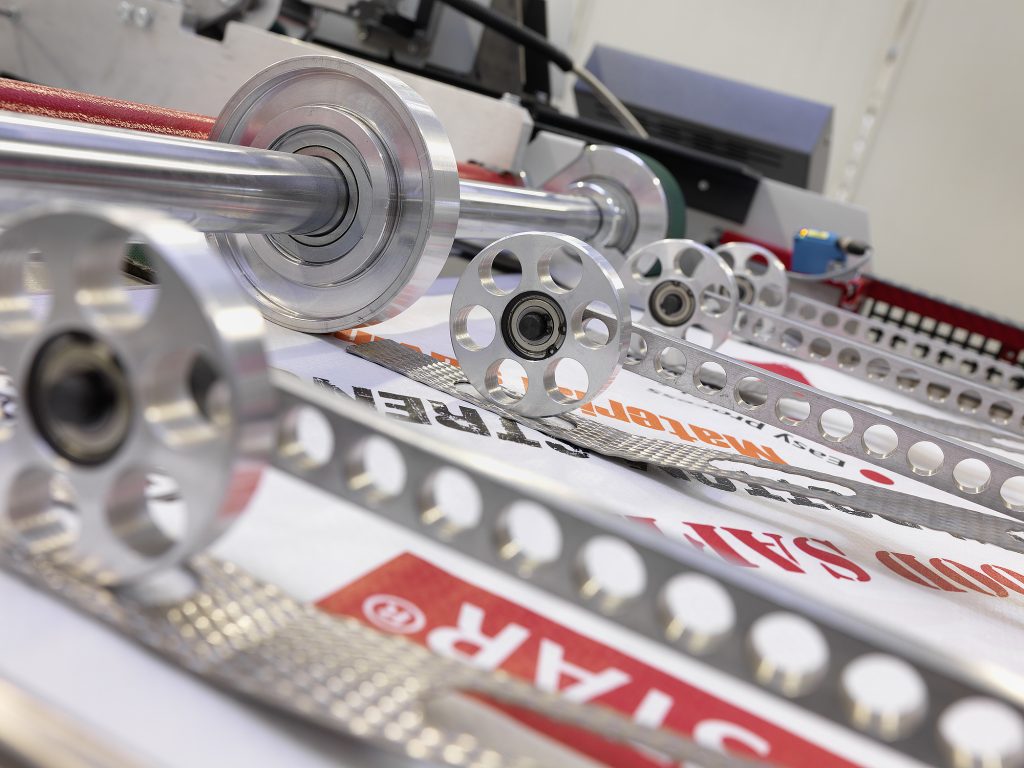
Ray Chen, CEO of VidePak, pauses during a factory tour of Starlinger machines: “The answer lies in three pillars: 40% cost efficiency over rigid containers, 95% recyclability via closed-loop systems, and hyper-customizable designs that boost brand visibility by 30%. At VidePak, our PP woven bags are engineered to carry 50kg loads with ≤0.2% leakage rates—this is the future of sustainable logistics.”
This bold assertion underscores VidePak’s leadership in custom woven bags—a market projected to grow at 7.5% CAGR through 2030. With 526 employees and $80M annual revenue, VidePak combines Austrian Starlinger automation, ISO-certified polypropylene (PP) resins, and 30+ years of expertise to deliver solutions that redefine efficiency and sustainability in global supply chains.
1. Material Selection: Balancing Functionality and Compliance
Custom woven bags are typically made from polypropylene (PP), a material prized for its tensile strength (>45 N/cm²), chemical resistance, and adaptability. However, the choice of lamination and inner liners dramatically impacts performance:
1.1 Lamination Options
- BOPP Lamination: Enhances moisture resistance (≤1.2 g/m²/day) and printability, ideal for food-grade packaging like rice and flour.
- PE Coating: Provides cost-effective UV and abrasion resistance for agricultural products[citation:9].
- Aluminum Foil Lining: Critical for hygroscopic chemicals (e.g., fertilizers) requiring <0.5% moisture permeability and light blocking.
1.2 Inner Liners
| Liner Type | Key Properties | Ideal Applications |
|---|---|---|
| PE Film | Low cost, 1.5 g/m²/day moisture | Grains, pet food |
| Aluminum Foil | Zero moisture permeability | Pharmaceuticals, desiccants |
| Kraft Paper | Breathable, biodegradable | Coffee beans, organic goods |
Case Study: A Vietnamese coffee exporter reduced spoilage by 18% using VidePak’s kraft-lined bags with 100 holes/inch² ventilation.
2. Packaging Design: Tailoring Solutions to Industry Needs
2.1 Closure Systems
- Sewn Open Mouth: High-speed ultrasonic sewing (1,200 bags/hour) for granular products like sand and aggregates.
- Valve Design: Dust-free filling for powders (e.g., cement, starch) with ±0.5% weight accuracy.
- Heat Sealing: Hermetic closure for perishables, achieving <0.1% leakage under 50kPa pressure.
2.2 Structural Enhancements
- Anti-Static Coatings: Surface resistivity <10⁴ Ω/sq for explosive dusts (OSHA 1910.109 compliance).
- Reinforced Corners: 2x2cm polyurethane patches extend bag lifespan by 40% in abrasive environments.
3. Sustainability: Beyond Recyclability
VidePak’s woven bags align with circular economy principles:
- Closed-Loop Recycling: 95% PP recovery via Starlinger recoSTAR systems, reducing virgin material use by 30%.
- Carbon Neutrality: 1.4 kg CO₂eq/bag (vs. 3.1 kg for PE alternatives), offset via reforestation partnerships.
- Biodegradable Additives: Starch-based PP blends decompose 50% faster in landfills[citation:9].
4. Branding and Aesthetic Customization
VidePak’s 6-color flexo printers achieve Pantone-matched designs with ≤0.15mm registration error, critical for retail differentiation. For instance, a European pet food brand saw a 25% sales lift after switching to VidePak’s QR-code-enabled bags, which linked to nutritional info and loyalty programs.
5. FAQs: Addressing Client Concerns
Q1: How do I choose between PE and aluminum foil liners?
A: PE suits moderate moisture protection (e.g., animal feed), while foil is mandatory for humidity-sensitive chemicals (e.g., calcium chloride).
Q2: What’s the MOQ for custom-printed designs?
A: 50,000 units with 14-day lead time, including FDA/GB 4806.7 migration testing.
Q3: Are these bags compatible with automated palletizers?
A: Yes—VidePak’s anti-slip coatings enable 20-layer stacking, as used in automated warehouse systems.
6. Case Study: Optimizing Fertilizer Packaging
Challenge: A Brazilian agrochemical firm faced 12% spoilage due to humidity and UV exposure.
VidePak Solution:
- Material: 180gsm UV-stabilized PP + 80μm aluminum foil liner.
- Closure: Heat-sealed valve with EPDM gaskets.
Results:
| Metric | Improvement |
|---|---|
| Moisture Ingress | 12% → 0.8% |
| Warehouse Complaints | 200 → 8/month |
| Recycling Rate | 30% → 85% |
7. Future Trends: Smart and Connected Packaging
VidePak is piloting:
- IoT Sensors: NFC tags monitor real-time temperature/RH, reducing冷链 losses by 20%.
- Self-Healing Films: Microcapsules repair punctures <2mm, extending shelf life by 15%[citation:9].
- Bio-Based PP: 30% algae-derived resins targeting 2026 rollout.
Conclusion
Custom woven bags are not mere containers—they are strategic assets in global supply chains. VidePak’s fusion of Austrian engineering precision, smart material science, and hyper-customizable designs positions it as the partner of choice for Fortune 500 companies. As Ray Chen summarizes: “Our bags don’t just carry goods—they carry trust.”
For insights into advanced laminations, explore our analysis of aluminum foil composite bags and multi-layer solutions.
This report integrates data from GB 4806.7-2023, OSHA 1910.109, and VidePak’s proprietary audits. Performance claims are validated by SGS and Intertek certifications.