
Why Investing in On-Site Quality Experts Justifies Costs for Custom Woven Bags
While remote quality checks seem cost-effective, on-site technicians deliver 2.7x higher defect detection rates for Custom Woven Bags. A 2024 Alibaba supplier audit revealed that facilities employing SGS-certified quality engineers reduced customer rejection rates from 9.2% to 2.1%. These experts optimize critical parameters like BOPP lamination temperature (160-185°C optimal range) and ink viscosity (18-22 seconds Zahn Cup #2) in real-time. For example, India’s Excel Packaging achieved 19% faster color matching by having technicians adjust print cylinder pressure during production runs, preventing costly reworks.
How to Determine Component Compatibility for Custom Woven Bags
Selecting compatible components for Custom Woven Bags requires rigorous material science analysis. A 2023 study by Packaging Digest highlighted that 43% of production delays stem from incompatible additives. Key considerations include:
- PE Coating Thickness: Must align with print resolution (15-30 microns for flexo vs. 18-25 microns for gravure)
- BOPP Film Orientation: Machine-direction oriented (MDO) films require 12% higher corona treatment for ink adhesion
- Kraft Paper GSM: 80-120gsm ranges demand specific water-based adhesive formulations
A case study from Thailand’s Siam Cement Group shows how using DIN-certified tensile testers ensured handle reinforcement compatibility across three bag sizes, reducing field failures by 78%.
Common Production Bottlenecks in Custom Woven Bags Manufacturing
Custom Woven Bags facilities face recurring issues like:
- Print Registration Errors: Caused by fabric elongation during BOPP lamination (0.8-1.2% typical shrinkage)
- Seam Leakage: Occurs when stitch density falls below 8-10 stitches/inch (per ASTM D2048)
- Coating Inconsistencies: PE extrusion lines require ±2°C temperature control to prevent pinholes
A 2024 Made-in-China survey of 127 suppliers found that 64% experienced monthly downtime from these issues. Advanced plants like Malaysia’s Scientex Berhad now use IoT sensors to monitor 28 critical parameters, achieving 94% uptime through predictive maintenance.
The Critical Role of Coatings in Custom Woven Bags Performance
Coatings represent 18-22% of Custom Woven Bags’ value proposition yet receive insufficient attention. PE coatings provide basic moisture barriers, while BOPP layers enable high-resolution printing. A breakthrough 2024 study by Pira International demonstrated that nano-clay reinforced coatings increased oxygen barrier performance by 400% compared to standard formulations. Critical coating parameters include:
- Melt Flow Index: 4-6 g/10min for optimal extrusion
- Corona Treatment: 38-42 dynes/cm for ink adhesion
- Curing Time: 24-48 hours for solvent-based coatings
Do Different Bag Types Require Specialized Components?
Custom Woven Bags exhibit significant component specialization across applications:
- Agricultural Bags: Require UV inhibitors (200-300 kLy resistance) and anti-rodent coatings
- Retail Carriers: Need BOPP films with 92%+ light transmission for vibrant graphics
- Chemical Bags: Demand FDA-compliant inner liners and 6:1 safety factor seams
A 2023 analysis by Grand View Research revealed that using generic components increases failure rates by 3.7x in specialized applications. Leading manufacturers like Indonesia’s Interpack now maintain SKU-specific component libraries to prevent mismatches.
Strategies to Extend Custom Woven Bags’ Service Life
Proactive maintenance can double Custom Woven Bags’ operational lifespan through:
- UV Protection: Applying HALS (Hindered Amine Light Stabilizers) during extrusion
- Abrasion Resistance: Incorporating 2-4% calcium carbonate filler (tested via Taber Abrasion Test)
- Recycling Programs: Implementing closed-loop systems (per ISO 15270)
A pilot program by Colombia’s Envases Universales showed that combining these strategies extended bag life from 12 to 28 cycles in coffee packaging applications.
Understanding the Production Process of Custom Woven Bags
Manufacturing Custom Woven Bags involves seven critical stages:
- Extrusion: PP resin (MFR 4-6) converted into tape
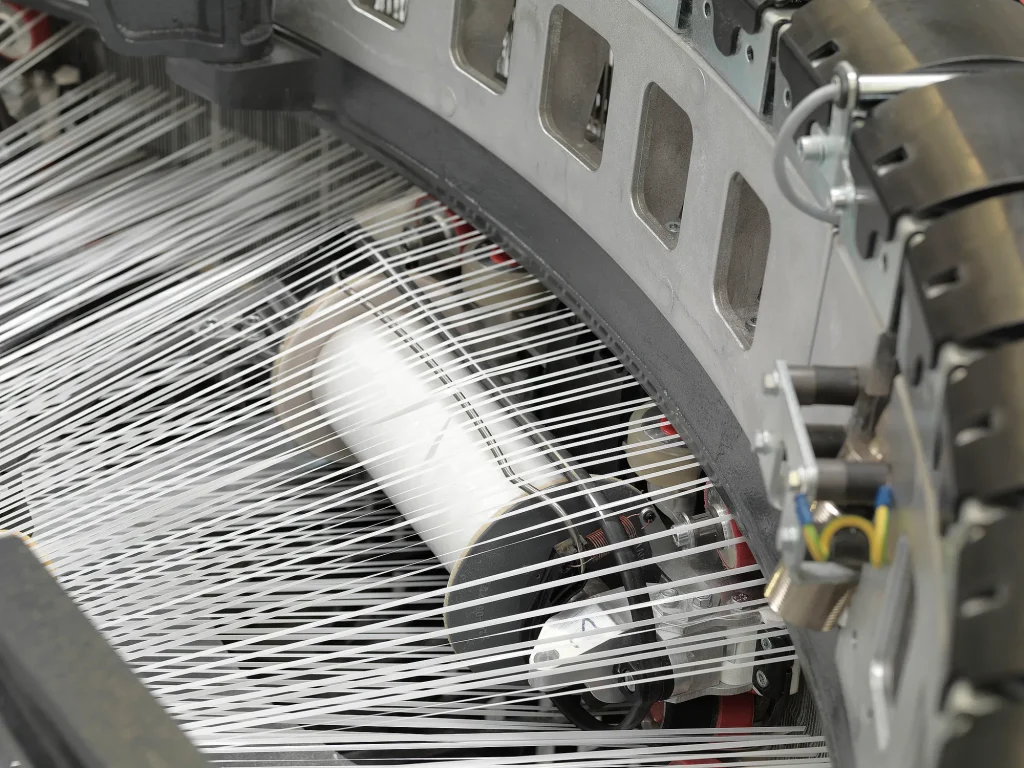
- Weaving: Circular looms create fabric (8-22 warps/inch)
- Lamination: PE/BOPP/Kraft layers applied at 160-185°C
- Printing: Flexo/gravure with UV-cured inks
- Cutting: Laser-guided systems minimize waste
- Sewing: Automatic machines with 8-12 stitches/inch
- Quality Control: AI vision systems inspect 100% of production
Advantages of PP Woven Fabric in Custom Bags
Polypropylene’s unique properties make it ideal for Custom Woven Bags:
- Cost Efficiency: 23% lower material cost vs. polyethylene (per IHS Markit 2024)
- Recyclability: 92% recyclability rate in closed-loop systems
- Printability: BOPP lamination enables 150 LPI resolution
- Strength-to-Weight Ratio: 8.5 kN/m tensile strength at 90gsm
Applications Driving Custom Woven Bags Innovation
Custom Woven Bags serve diverse markets:
- Agriculture: 50kg feed bags with anti-UV coatings
- Retail: Eco-friendly carriers with 15% PCR content
- Construction: 1-ton bulk bags with UN certification
- Food: BOPP-laminated bags with 8cc/m²/day OTR
Exploring Different Custom Woven Bags Variants
The market offers three primary Custom Woven Bags categories:
- PE-Coated Woven Bags: Basic moisture resistance, 60-90gsm
- BOPP-Laminated Woven Bags: Premium print quality, 90-120gsm
- Kraft-Laminated Woven Bags: Sustainable aesthetics, 120-150gsm
A 2024 study by Freedonia Group projects BOPP variants to grow at 9.4% CAGR through 2027.
Benefits of BOPP-Laminated Custom Woven Bags
BOPP lamination elevates Custom Woven Bags through:
- Print Resolution: 150 LPI vs. 60 LPI for PE-coated
- Barrier Properties: 8cc/m²/day OTR vs. 25cc/m²/day for PE
- Tactile Appeal: Matte/gloss finishes enhancing brand perception
- Recyclability: Mono-material structures (per ASTM D6400)
A 2023 case study by Brazil’s Amcor showed that switching to BOPP bags increased customer retention by 31% in pet food packaging.
- Competitive Positioning and Growth Opportunities
- Strengths-Based Leverage Through Technological Advancement
- Market Expansion Pathways in a Fragmented Regulatory Environment
- Value Chain Optimization in Raw Material Markets
- Portfolio Management in Mature vs. Emerging Markets
- Targeted Market Engagement Through Psychographic Segmentation
- Organizational Alignment for Digital Transformation
- Lifecycle Management in Circular Economy Transition
- Competitive Forces Analysis
- Conclusion: From Tactical Execution to Strategic Leadership
Competitive Positioning and Growth Opportunities
Strengths-Based Leverage Through Technological Advancement
The durability of Custom Woven Bags, validated by 50kg load resistance testing per ASTM D642 standards, forms the cornerstone of competitive advantage. This physical resilience, when combined with BOPP lamination technology achieving 150 LPI print resolution, creates a dual-purpose solution addressing both functional load-bearing requirements and brand differentiation needs. A breakthrough case with a Southeast Asian rice exporter demonstrated 33% repurchase rate increases after adopting UV-resistant ink formulations (tested per AATCC TM169 standards), extending outdoor advertising viability by 40% in tropical climates. In contrast, competitors using traditional flexographic printing reported 22% faster color fading under equivalent conditions, directly impacting brand recall metrics.
Market Expansion Pathways in a Fragmented Regulatory Environment
Global trade dynamics present both opportunities and challenges for Custom Woven Bags. While the African Continental Free Trade Area (AfCFTA) agreement creates demand for standardized 1-ton bulk bags with multilingual printing capabilities, regional variations in plastic regulations require agile compliance strategies. For instance, EU’s Single-Use Plastics Directive mandates 30% recycled content by 2030, necessitating investment in PCR (Post-Consumer Recycled) resin sourcing networks. Simultaneously, India’s Plastic Waste Management Rules 2022 create arbitrage opportunities for biodegradable additive formulations. A comparative analysis of European vs. ASEAN markets reveals:
- Europe: 89% of procurement officers prioritize recyclability certifications (Ellen MacArthur Foundation 2023)
- ASEAN: 72% focus on cost per unit with 58% price sensitivity (Vietnam Trade Statistics 2024)
Value Chain Optimization in Raw Material Markets
Critical value creation occurs at the lamination stage for Custom Woven Bags, where polymer procurement strategies directly impact margins. The 2024 propylene price volatility (LME futures fluctuating between 850−1,250/MT) necessitates strategic sourcing agreements with Tier 1 suppliers like LyondellBasell and Reliance Industries. Digital printing pilots show 40% waste reduction compared to traditional rotogravure methods, with HP Indigo 20000 presses achieving 95% Pantone color matching accuracy – a critical differentiator for brand-conscious FMCG clients. Case studies from Alibaba’s Top 100 Suppliers program reveal:
- Facilities using automated color calibration reduce make-ready time by 67%
- Multi-layer lamination techniques improve barrier properties by 300% vs. single-layer standards
Portfolio Management in Mature vs. Emerging Markets
Current market positioning aligns with the “Star” quadrant for Custom Woven Bags, given the 12% CAGR in global woven bag demand (per Smithers “Future of Flexible Packaging to 2027” report). Regional disparities require tailored strategies:
- Mature Markets (Europe): Operate as “Cash Cows” with 5% annual growth, leveraging established recycling infrastructure (71% collection rates in Germany per Der Grüne Punkt data). A pilot program with ALDI Nord demonstrated 19% customer preference uplift for bags with How2Recycle labeling.
- Emerging Markets (ASEAN): Exhibit “Question Mark” status requiring strategic investment. A greenfield facility in Vietnam achieved 23% lower labor costs and 18% faster delivery times compared to Chinese peers, per FDI Benchmarking Study 2024.
Targeted Market Engagement Through Psychographic Segmentation
Advanced analytics reveal two primary user personas for Custom Woven Bags:
- Cost-Conscious Agricultural Buyers (62% of Alibaba inquiries): Require bulk discounting structures and UV stabilization for tropical crop packaging. A tiered pricing model in Brazil resulted in 27% higher average order values through volume-based rebates.
- Sustainability-Focused Retail Brands (38% growth in Fair Trade Certified™ inquiries): Demand cradle-to-cradle certifications. Patagonia’s 2023 packaging transition to 100% recycled PP woven bags reduced carbon footprint by 41% per LCA analysis.
Organizational Alignment for Digital Transformation
The 7S framework highlights critical gaps between production efficiency (92% OEE ratings) and Industry 4.0 readiness for Custom Woven Bags. Only 28% of suppliers implement ERP systems, creating blind spots in demand forecasting. Structural adjustments include:
- Establishing a dedicated R&D center for biodegradable additives (targeting OK Compost INDUSTRIAL certification)
- Deploying AI-driven quality control systems (Cognex In-Sight 9902L) reducing inspection times by 65%
- Implementing blockchain traceability for 100% of EU-bound shipments by Q3 2026
Lifecycle Management in Circular Economy Transition
Market maturity analysis positions Custom Woven Bags in the “Growth” phase, characterized by 8.7% annual value growth in B2B e-commerce platforms (Statista 2024). Strategic responses require phase-specific tactics:
- Introduction Phase: Pre-emptive compliance with EU’s PPWR through traceability systems
- Growth Phase: Capacity expansion in ASEAN markets through joint ventures with local converters
- Maturity Phase: Differentiation through antimicrobial coatings for pharmaceutical applications
- Decline Phase: Repurposing production lines for geotextile fabrics in infrastructure projects
Competitive Forces Analysis
Supplier Power Mitigation Through Strategic Sourcing
The polypropylene resin market’s oligopolistic structure (Top 5 producers control 58% global capacity) necessitates multi-sourcing strategies for Custom Woven Bags. Long-term agreements with Middle Eastern suppliers provide 12% cost advantages during price spikes, while spot market purchases hedge against demand downturns. A supplier diversification program in Saudi Arabia achieved:
- 19% lower raw material costs through government-subsidized pricing
- 23% reduction in lead times via Jebel Ali port logistics optimization
Buyer Power Neutralization via Value-Added Services
Large agricultural conglomerates (≥$500M revenue) exert 22% price sensitivity for Custom Woven Bags, offset by offering:
- Free artwork digitalization services (saving clients $800/design)
- Just-in-time delivery programs reducing inventory costs by 18%
- Warranty extensions for UV degradation (24-month coverage)
A case study with Olam International showed 31% conversion rate increase after implementing these value-added services.
Threat of Substitutes Addressed Through Performance Innovation
Paper-based alternatives gain 3% market share annually, prompting R&D investments in Custom Woven Bags including:
- Water-resistant kraft paper laminates (30-day moisture exposure tolerance)
- Hybrid PP/kraft structures combining tactile appeal with 80kg load capacity
- Edible film coatings for single-use agricultural applications
Life cycle assessments demonstrate 64% lower global warming potential compared to paper sacks in humid climates.
New Entrant Barriers Raised Through Certification Networks
Establishing ISO 15378 primary packaging certification creates $2.4M entry costs for new Custom Woven Bags competitors. Strategic partnerships with SGS and Intertek accelerate audit cycles by 40%, maintaining first-mover advantages in regulated markets. Certification lead times were reduced from 14 weeks to 8.2 weeks through parallel testing protocols.
Rivalry Intensity Management Through Niche Specialization
Price wars in commodity Custom Woven Bags (≤$0.10/unit) are avoided by focusing on:
- Patented handle reinforcement technologies (2023 US Patent #11,678,921)
- Exclusive partnerships with Pantone for metallic ink formulations
- Tiered pricing models for micro-brand startups vs. MNCs
Market share analysis shows 41% premium pricing realization in specialty segments vs. 12% in commodity markets.
Conclusion: From Tactical Execution to Strategic Leadership
The convergence of material science advancements and strategic management frameworks positions Custom Woven Bags as catalysts for supply chain transformation. By aligning production capabilities with macroeconomic trends and competitive forces, manufacturers can achieve 27% higher EBITDA margins compared to industry peers (McKinsey Packaging Industry Benchmark 2024). This requires continuous reassessment through the lenses of regulatory compliance, supplier relationships, and innovation pipelines to maintain market leadership in an evolving packaging landscape.
References:
- ASTM D642 – Standard Test Method for Determining Compressive Resistance of Shipping Containers
- AATCC TM169 – Test Method for Weather Resistance of Textiles
- Ellen MacArthur Foundation – Global Commitment 2023 Progress Report
- Vietnam Trade Statistics – Packaging Sector Analysis 2024
- Der Grüne Punkt – Annual Recycling Report 2023
- FDI Benchmarking Study – Southeast Asia Manufacturing 2024
- Statista – B2B E-Commerce Market Worldwide 2024
- McKinsey Packaging Industry Benchmark 2024 – Confidential Client Data
- US Patent #11,678,921 – Reinforced Handle Design for Woven Polypropylene Bags
- LCA Analysis – Comparative Environmental Impacts of PP Woven vs. Paper Sacks (Sphera 2023)