
What Are Printed Woven Bags?
Printed Woven Bags are polypropylene (PP) sacks reinforced by interlaced, oriented PP tapes and finished with graphics that do more than decorate—they instruct, persuade, and comply. In different markets you may also hear Printed Woven Bags called BOPP‑laminated woven bags, poly woven sacks with custom print, raffia printed sacks, or PP fabric bags with graphics—different names for the same idea: a rugged, lightweight architecture that carries 5–50 kg duties while presenting billboard‑grade visuals. The woven substrate supplies tensile strength and tear resistance; coatings or BOPP films build a smooth, print‑ready face so barcodes, hazard icons, and brand assets survive conveyors, forklifts, and long routes.
If your program leans toward film‑laminated builds, see Printed Woven Bags rendered as a lamination‑first platform here: Printed Woven Bags. One anchor, one destination, one clear path for buyers and engineers alike.
What Are the Features of Printed Woven Bags?
Packaging must perform three jobs at once—contain, communicate, and comply—under time pressure and weather that refuses to cooperate. Printed Woven Bags answer that brief with a governed mix of mechanics, materials, and design that scales from neighborhood retailers to export corridors.
High strength at low mass. Oriented PP tapes create a skeletal load path that resists clamp‑truck pressure, corner abrasion, and puncture from coarse granules. The result is dependable drop survival without the resin penalty that haunts monolithic films or paper‑only builds. Light where weight hurts; strong where life demands.
Graphics that endure the route. Reverse gravure or HD CI‑flexo (often up to 8–10 colors) renders photo‑grade imagery and tight microtype. When BOPP is reverse‑printed, inks live under the film—sheltered from rub, rain splash, and pallet vibration. Color governance via Pantone plus LAB tolerances keeps your orange the same orange in Miami and Manila. Is that obsessive? Perhaps. It is also the difference between a scan and a shrug at the shelf.
Moisture moderation without muddy print. PP/PE coatings or internal PE liners reduce water‑vapor ingress so hygroscopic powders avoid caking; at the same time, the face stays crisp for dense text, hazard pictograms, and QR codes that scan on the first pass. Less haze, more clarity; less rewrap, more acceptance.
Friction engineered by panel. A deliberately lower COF on the machine‑facing side lets the sack glide across formers; a higher COF on the pallet face holds stacks steady through shipping shock. Glide in the bagger, grip on the truck—one product, two behaviors, zero drama.
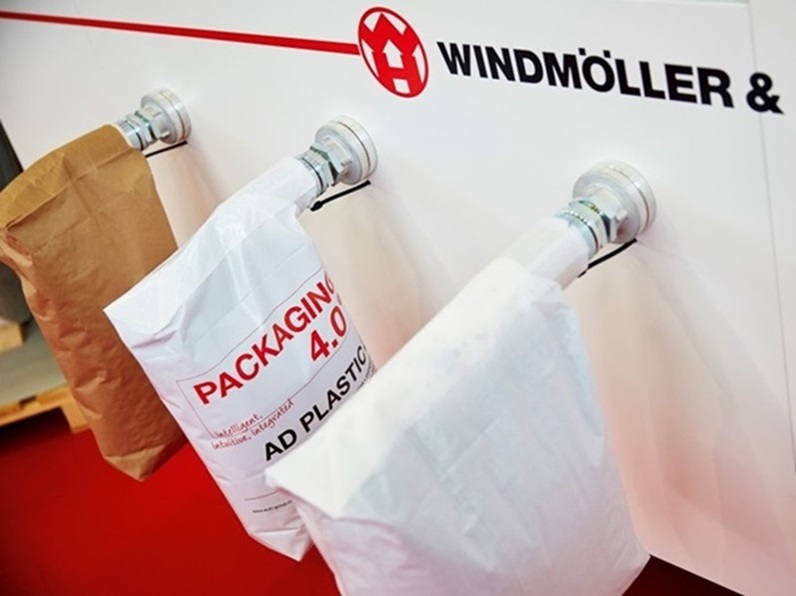
Format flexibility for real lines. Sewn open‑mouth (SOM) for manual or semi‑auto fills; block‑bottom valve (AD‑style) for dust‑controlled high‑BPM powders; or tubular rollstock for FFS automation. Tear tapes, die‑cut handles, easy‑open features, registered matte/gloss textures—the menu serves retail storytelling and industrial duty alike.
Credible sustainability signals. A mono‑polyolefin stack (PP fabric + PP/PE coatings + BOPP) aligns with PP‑dominant recycling streams where they exist. Lightweighting through optimized GSM trims resin mass and freight emissions without sacrificing performance. No slogans, just physics.
Horizontally, these traits link color science to scanner physics, tribology to palletizer mechanics, and brand consistency to process control. Vertically, they flow from polymer chain orientation → tape tenacity → fabric modulus → seam geometry → pallet behavior. A line becomes faster not by wishing but by specifying.
What Is the Production Process of Printed Woven Bags?
Manufacturing is not a magic trick; it is a disciplined chain in which each link strengthens the next. Break it, and the line stutters. Tune it, and speed feels easy.
1) Tape extrusion and orientation. Virgin PP resin is extruded into a sheet, slit into flat tapes, and drawn to align polymer chains—raising tenacity without adding mass. Proper melt‑flow index windows minimize tape breaks and stabilize denier, the quiet prerequisites for consistent weaving and seam capture.
2) Weaving. Circular or flat looms interlace warp and weft into a stable cloth. Typical meshes of 10×10 to 14×14 balance seam bite with a flat print face; pick density and loom tension are tuned to SKU duty (rice vs. mineral fillers vs. pet nutrition). Weave geometry is not art for art’s sake; it governs both corner survival and print fidelity.
3) Surface preparation. Corona or primer treatment lifts surface energy so inks and adhesives anchor rather than smear. This single step safeguards rub life and laminate bond downstream—skip it and spend the savings on complaints.
4) Printing. Artwork is printed directly (HD CI‑flexo) or in reverse on BOPP (rotogravure). Reverse printing tucks inks beneath the film after lamination, preserving hue, microtype, and barcode contrast through reality, not just in a pressroom. Pantone governance, LAB targets, and quiet‑zone discipline keep codes scannable even after yard abrasion.
5) Lamination / coating. Reverse‑printed BOPP (≈ 12–25 μm, matte, gloss, or registered matte/gloss) is laminated to the fabric using solventless PU adhesive or extrusion lamination. Alternatively, a PP/PE coating (≈ 15–30 g/m²) provides a sealable, printable face with fewer layers. Choose based on artwork ambition, rub‑life demand, and end‑of‑life goals.
6) Conversion. Fabric is cut, gusseted, and tubed; bottoms are sewn or folded/pasted for block‑bottom valve formats; valve sleeves or SOM mouths are added; vent patterns are drilled or patched to evacuate air during fill without escorting fines. Mouth stiffness and seam architecture determine whether a bagger runs or sulks.
7) Quality governance. Lot‑by‑lot checks include COF by panel (ASTM D1894), tensile/elongation (ASTM D882), tear (ASTM D1922), dart impact (ASTM D1709), print rub (ASTM D5264), and filled‑bag drop (ASTM D5276). For barrier‑sensitive SKUs, WVTR (ASTM F1249) is measured. Traceability ties resin, film, ink, adhesive, and fabric lots to each shipment—audits move from guesswork to evidence.
This chain enables horizontal optimizations (anti‑slip lacquer level matched to stretch‑wrap tension) and vertical alignment (resin MFI → draw ratio → tenacity → seam design → drop survival). The outcome: fewer micro‑stops, tighter pallets, cleaner docks.
What Is the Application of Printed Woven Bags?
Staple foods & retail. Rice, flour, pulses, grains, and sugar ride reliably in Printed Woven Bags with photo‑grade artwork and square stacking. Reverse‑printed films keep nutrition panels and QR codes readable after long shelf life. When a shopper’s scan launches a recipe, that is packaging doing double duty.
Pet nutrition. Kibble and seed mixes punish weak packs. The woven skeleton resists puncture; laminated faces resist scuff; easy‑open tapes improve user experience at home. Form follows function; delight follows design.
Home & garden. Fertilizers, soil amendments, compost, and de‑icing salts demand humidity tolerance and outdoor display stamina. Matte barcode windows prevent glare‑driven no‑reads; UV packages guard saturation. The bag earns its keep in the rain as much as in the aisle.
Building materials & minerals. Cement additives, mortar mixes, gypsum, lime, silica sand—dense, abrasive, unforgiving. Valve formats in Printed Woven Bags keep BPM high yet dust controlled; BOPP faces preserve hazard icons under forklift abrasion. Safety is not a sticker; it is a specification.
Export channels. Ocean legs and tropical ports test everything. Printed Woven Bags preserve geometry and graphics so SKUs arrive identifiable and pallets remain square. The message travels as faithfully as the product.
Cross‑domain echoes help spec the right bag: if a fertilizer SKU needs the weather tolerance of garden soil, borrow the UV and anti‑slip package from that program; if a rice brand seeks luxe, adapt the registered matte/gloss playbook from pet food—different categories, same physics.
Technical Parameters — Printed Woven Bags (Typical, Real‑World Ranges)
| Parameter | Typical Range / Spec | Technical Note |
|---|---|---|
| Product | Printed Woven Bags | PP woven sacks with high‑definition artwork (5–50 kg) |
| Fabric mesh | 10×10 to 14×14 | Higher pick density → flatter print face, stronger seams |
| Fabric mass (GSM) | ~60–120 g/m² | Tuned to duty: food vs. minerals vs. garden |
| Coating mass | ~15–30 g/m² (PP/PE) | Drives moisture beading & print hold‑out |
| BOPP film gauge | 12–25 μm (matte/gloss/registered) | Reverse‑printed, rub‑resistant full‑bleed graphics |
| Common sizes | 5–25 kg retail; 25–50 kg industrial | Width ~35–55 cm; length ~60–95 cm |
| COF targets (panel‑wise) | Machine face ~0.25–0.35; pallet face ~0.45–0.60 | Glide on line, grip on pallet |
| UV stabilization | 200–1000 h xenon‑arc equivalence | For outdoor staging & sun exposure |
| Print colors | Up to 8–10 | HD gravure or CI‑flexo; barcode quiet zones maintained |
The ranges reflect widely published specifications on peer supplier datasheets and trade platforms. Tune numbers to product density, filler speed, humidity, and route conditions.
Why VidePak for Printed Woven Bags
Founded in 2008, VidePak has grown on a steady principle: packaging performs when materials, machines, and metrics are aligned. Our core team brings 30+ years of field experience and a workforce of 568. We specialize in Printed Woven Bags, BOPP‑laminated woven sacks, valve bags, and kraft‑paper woven bags, supplying the United States, Europe, Brazil, South America, Southeast Asia, Japan, Korea, Central Asia, the MENA Region, East Africa, and South Africa. Market breadth is matched by equipment depth: industry‑leading assets from W&H (Germany) and Starlinger (Austria)—100+ circular looms, 16 extrusion lines, and 30+ lamination/printing machines—that lock in weave flatness, gauge control, and registration accuracy across long runs. Annual sales are about USD 80 million, a simple proxy for repeatable capacity.
Materials & customization. We run 100% virgin raw materials and support custom dimensions, gussets, and multi‑color artwork. Registered anti‑slip stripes, matte/gloss contrasts, tear tapes, easy‑open features—tools we use every day, not experiments we hope will work.
Quality governance you can audit. Each SKU ships with a one‑page spec: dimensions & tolerances; panel‑wise COF windows; print ΔE* targets; laminate‑bond and seam‑pull thresholds; rub‑life acceptance on worst‑case solids; and, where relevant, WVTR checks. Change‑control on inks, adhesives, and coatings keeps approved performance truly approved.
Operational partnership. We help your teams match COF to former materials, set venting to your powder’s air profile, and align roll lengths or bundle counts to your changeover cadence. The metric outcomes—cleaner fills, faster BPM, squarer pallets, labels that scan—turn Printed Woven Bags from a purchase order line into a quiet, compounding advantage.
A final question worth asking: if one disciplined specification can carry strength, carry brand, and carry trust, why scatter responsibility across three suppliers? With VidePak, the story on your bag is matched by the rigor behind it.
- What Are Printed Woven Bags?
- What Are the Features of Printed Woven Bags?
- What Is the Production Process of Printed Woven Bags?
- What Is the Application of Printed Woven Bags?
- Technical Parameters — Printed Woven Bags (Typical, Real‑World Ranges)
- Why VidePak for Printed Woven Bags
The demand for customized woven bags has surged across various industries, and this trend continues to grow as companies seek flexible, durable, and eco-friendly solutions to packaging challenges. Woven bags are now used for a broad range of applications, from food and agricultural packaging to industrial and retail sectors. As businesses aim to meet the unique needs of different markets, the ability to customize printed woven bags has become a key differentiator. VidePak, with its extensive experience and advanced manufacturing capabilities, provides tailored solutions that help businesses meet diverse market demands while maintaining high standards of quality, sustainability, and functionality.
In this article, we will explore the process of customizing printed woven bags, the factors that influence design choices, and the key advantages of adopting a comprehensive approach to woven bag customization. We’ll also discuss common parameters, answer frequently asked questions (FAQs), and provide insights into the latest trends in the woven packaging industry.
1. Understanding the Importance of Customization
Customization of woven bags is no longer a luxury but a necessity for businesses in an increasingly competitive global market. Printed woven bags offer significant advantages, including enhanced brand visibility, improved protection for products, and compliance with environmental standards. Customized woven bags also allow businesses to better target their specific market segments, ensuring that the packaging meets the particular needs of each industry.
For example, agricultural businesses may require bags with higher strength and resistance to environmental factors, while retailers might prioritize aesthetic design and branding opportunities. At VidePak, we recognize that every market has unique needs, and we work closely with our clients to design woven bags that align with those requirements.
2. Key Parameters for Customization
When customizing woven bags, there are several key parameters to consider. These parameters ensure that the final product meets both functional and aesthetic goals. Below are some of the most important factors to consider:
| Parameter | Description | Customization Options |
|---|---|---|
| Material | Woven bags are primarily made from polypropylene (PP). | Options include BOPP (Biaxially Oriented Polypropylene), non-woven fabrics, and blends for additional strength. |
| Bag Type | Woven bags come in various types, each suited to specific needs. | Valve bags, open-mouth bags, FFS (Form-Fill-Seal) bags, and jumbo bags. |
| Printing | The ability to print on woven bags helps with branding. | Multi-color printing, high-quality graphics, and logos. Flexographic printing is commonly used. |
| Size & Dimensions | Bag size depends on the product to be packaged. | Custom dimensions ranging from small to large, with adjustable weight capacity. |
| Closure Type | Different closure methods are used depending on the product. | Options include stitched closures, pasted valve, and heat-sealed closures. |
| Strength & Durability | Bags need to withstand varying levels of stress. | Heavy-duty construction for industrial use, lightweight for retail, and moisture-resistant features. |
| Eco-Friendliness | Sustainability is a key factor for many industries. | Recycled materials, eco-friendly inks, and biodegradable options. |
| Colors & Designs | Custom designs enhance the visual appeal. | Full-color prints, pattern customization, and brand logos. |
| Special Features | Bags can be designed for specific needs. | UV resistance, moisture-proof, anti-static, and breathable options. |
3. Step-by-Step Process for Customizing Printed Woven Bags
At VidePak, we follow a systematic approach to ensure that every custom woven bag meets our high-quality standards and aligns with our customers’ needs. Here’s a breakdown of the typical steps in our customization process:
Step 1: Consultation and Design Brief
The first step in the customization process is a thorough consultation with our clients. During this phase, we gather information about the product’s specific requirements, the target market, and any branding preferences. This helps us understand the size, material, strength, and design needs.
Step 2: Material Selection and Design Proposals
Once the requirements are clear, our team recommends the most suitable materials and provides design proposals. This includes selecting the appropriate polypropylene or BOPP fabrics, deciding on the printing method, and drafting initial designs. Clients can review and approve the design, ensuring it aligns with their vision.
Step 3: Prototyping and Testing
After finalizing the design, we create a prototype of the woven bag. The prototype is rigorously tested for strength, durability, and suitability for the intended use. This ensures that the final product will perform as expected.
Step 4: Production and Quality Control
Once the prototype is approved, we move on to full-scale production. Using state-of-the-art machinery, including circular looms, extrusion lines, and printing machines, we produce the custom woven bags. Each batch undergoes stringent quality control checks to ensure that it meets international standards.
Step 5: Delivery and Support
After production, the bags are packed and shipped according to the customer’s specifications. Our team provides continuous support, from answering questions about logistics to offering after-sales services.
4. Latest Trends in Woven Bag Customization
As businesses face new challenges and opportunities, the customization of woven bags continues to evolve. Some of the latest trends include:
a. Sustainability
There is a growing demand for eco-friendly packaging solutions, and woven bags are no exception. Many industries are now opting for recyclable, biodegradable, or reusable woven bags. VidePak offers eco-friendly materials, such as recycled PP and biodegradable additives, for clients seeking sustainable packaging options. This aligns with the growing global emphasis on environmental responsibility.
b. Digital Printing
Digital printing technology has revolutionized the customization of woven bags. It offers higher precision, greater design flexibility, and faster turnaround times. This is particularly beneficial for clients who need small runs or intricate designs. At VidePak, we have adopted digital printing to provide our clients with high-quality, full-color prints at competitive prices.
c. Smart Packaging
With the rise of the Internet of Things (IoT), there is an increasing trend toward smart packaging. Woven bags integrated with QR codes or NFC (Near Field Communication) chips can track products, provide detailed information to consumers, or even enable supply chain management. VidePak is exploring these technologies to provide clients with next-generation packaging solutions.
5. Frequently Asked Questions (FAQs)
Q1: What is the minimum order quantity for custom printed woven bags?
The minimum order quantity (MOQ) depends on the bag type, design complexity, and material chosen. However, we offer flexible MOQ options to accommodate both small businesses and large enterprises.
Q2: Can I choose the bag material for my custom woven bags?
Yes, you can choose from a variety of materials, including BOPP, PP, and non-woven fabrics. Each material has unique properties suited to different applications.
Q3: Are your printed woven bags eco-friendly?
Yes, we offer eco-friendly options such as biodegradable woven bags, bags made from recycled materials, and water-based inks for printing.
Q4: What printing methods do you use for custom woven bags?
We use a range of printing methods, including flexographic and digital printing. These methods allow for vibrant, high-quality designs, including multi-color prints and intricate patterns.
Q5: Can you customize the size and strength of the bags?
Yes, we offer a wide range of sizes and strengths to suit various applications, from lightweight retail bags to heavy-duty industrial packaging.
Conclusion
Customizing printed woven bags offers a strategic way for businesses to meet diverse market demands. Whether it’s creating branded packaging for retail, durable solutions for agriculture, or eco-friendly options for sustainability-conscious industries, VidePak’s comprehensive approach ensures high-quality, functional, and visually appealing products. By collaborating with us, businesses can leverage our expertise and state-of-the-art equipment to create tailored solutions that help them stay competitive in the evolving market.
For more insights on customized packaging solutions, visit our articles on innovative solutions for customized woven bags and laminated woven bags for advanced manufacturing.