

- What are FIBC Bags? Aliases, features, process, and uses
- Why choose FIBC Bags? Problem → solution → result
- A systems map for specifying FIBC Bags
- Manufacturing process—step by step with the “why” behind each step
- Mechanical architecture of FIBC Bags—what carries the load and why it fails
- Inlet and outlet architectures—what changes and when to choose which
- Liners and barriers inside FIBC Bags—moisture, oxygen, and aroma in numbers
- Safety frameworks that shape FIBC Bags
- Data reinforcement · case narratives · comparative lenses
- Product parameters and options (summary table)
- Integrating choices into one specification for FIBC Bags
- Practical guidance for buyers—the questions that lead to the right FIBC Bags
- Where to learn more about FIBC Bags
- Introduction — What are FIBC Bags, what are they called elsewhere, what are their features, how are they made, and what are they used for?
- Problem — Why industrial shippers reach for FIBC Bags only after pain forces change
- Method — A systems approach to specifying FIBC Bags
- Method — Subproblem 1: Mechanical envelope for FIBC Bags
- Method — Subproblem 2: Containment and cleanliness within FIBC Bags
- Method — Subproblem 3: Inlets, outlets, and the choreography of flow in FIBC Bags
- Method — Subproblem 4: Flow behavior and stability inside FIBC Bags
- Method — Subproblem 5: Compliance, documentation, and operator confidence for FIBC Bags
- Results — What changes when operations adopt FIBC Bags deliberately
- Discussion — Horizontal comparisons and vertical trendlines for FIBC Bags
- Discussion — Sustainability, governance, and people behind FIBC Bags
- Method in practice — a compact, end‑to‑end specification logic for FIBC Bags
- References
What are FIBC Bags? Aliases, features, process, and uses
FIBC Bags are large, flexible containers designed to store and transport bulk solids safely and efficiently. In practice you will also hear them called flexible intermediate bulk containers, bulk ton bags, jumbo bags, super sacks, and PP woven bulk bags. The core idea is straightforward yet powerful: a woven polypropylene (PP) shell provides the mechanical backbone, while optional liners and closures shape barrier performance and cleanliness. The result is a container that can carry hundreds of kilograms—often up to a metric ton—using forklifts, hoists, or pallet jacks, with a footprint that fits standard pallets and a body that collapses for return logistics.
Key features of FIBC Bags: high strength‑to‑weight ratio from drawn PP tapes; configurable safe working loads (typical SWL 500–2000 kg) with common safety factors of 5:1 (single trip) and 6:1 (multi‑trip); customizable inlets (open top, skirt/duffle, filling spout) and outlets (flat bottom, discharge spout, conical discharge, duffle bottom); optional liners for moisture, oxygen, or aroma control; baffle options for cubic stability; and print surfaces for traceability or branding. Add to that the advantages of collapsibility, easy handling, and compatibility with dust extraction and automated fillers, and FIBC Bags become a logistics workhorse.
Production process in plain steps: PP resin → tape extrusion & drawing → weaving (flat or circular) → optional coating/lamination → printing → cutting & identity marking → sewing and loop integration → inlet/outlet formation → liner insertion (if specified) → in‑process tests → final audit and baling. Across these stages, quality control tracks denier, weave density, coat‑weight, seam tensile, and dimensional tolerance to ensure repeatable performance.
Where FIBC Bags are used: chemicals and additives, food ingredients (sugar, starch, milk powder), agricultural products (grains, seeds, fertilizers), plastics (resins, masterbatch), minerals (TiO₂, CaCO₃, silica), construction materials (cement, sand), and metals (powders and alloying agents). Whenever you need to move bulk solids economically and safely, FIBC Bags make a compelling case.
Why choose FIBC Bags? Problem → solution → result
Bulk solids create headaches: fine powders leak through seams; hygroscopic products absorb moisture and cake; awkward densities waste pallet space; fast filling stirs up dust and static. Add the variability of routes—dry docks, humid warehouses, long ocean legs—and a simple sack becomes a complex choice.
Problem: product loss, unsafe handling, and inefficiency across the fill–ship–empty cycle. Labels peel; pallets tilt; discharge stalls; audits frown. Who needs that?
Solution: match the bag to the physics. With FIBC Bags, the fabric GSM and weave give the structure; the inlet and outlet architecture control dust and flow; liners tune moisture and aroma barriers; baffles improve cubic stability; ESD classifications (Type A/B/C/D) address electrostatics where atmospheres require it. In short, a modular toolkit.
Result: cleaner docks, faster receiving, safer discharge, fewer returns, and more predictable operations. The math of waste, rework, and complaints bends in your favor when FIBC Bags are engineered rather than improvised.
A systems map for specifying FIBC Bags
Better outcomes come from better questions. Divide the specification into solvable sub‑problems, then integrate:
- Mechanical envelope — What SWL/SF, footprint, and loop style match your handling equipment and pallet plan?
- Containment & cleanliness — What liner, coating, and seam strategy keep dust in and water out?
- Inlet & outlet architecture — How will you fill, vent, and discharge at speed without residue?
- Flow & stability — Do you need conical bottoms, baffles, or anti‑slip surfaces for stubborn powders and tall stacks?
- Compliance & documentation — What standards (ISO 21898, UN 13H, IEC 61340‑4‑4 for ESD types) and COA data do your auditors require?
Solve each, then stitch the answers into a drawing, a bill of materials, and a test plan. That is how FIBC Bags go from commodity to designed component.
Manufacturing process—step by step with the “why” behind each step
Resin and inbound QA. Everything downstream inherits the resin’s behavior. Melt flow index (MFI) tunes extrudability; stabilizer packages protect against UV and heat. We verify certificates, run quick‑melt checks, and retain samples. Choosing the wrong resin? It shows up later as uneven drawing or brittle tapes.
Tape extrusion & drawing. Polypropylene is extruded into sheets, slit into tapes, then drawn at controlled ratios. Drawing aligns polymer chains, raising tensile strength dramatically. Online tension, temperature, and width sensors flag drift—essential because denier variability becomes fabric variability becomes seam failures. This is where the strength‑to‑weight advantage of FIBC Bags is earned.
Weaving (flat or circular). Tapes become fabric on looms. Picks per inch and warp–weft balance set porosity and strength. For Type C fabrics, conductive yarns form a grounded grid; for Type D fabrics, static‑dissipative additives are embedded. Even if you’re not buying ESD builds, consistent weaving means consistent load paths, stitch performance, and print laydown.
Coating & lamination. Extrusion‑coated PE reduces sifting and improves weatherability; BOPP or PET laminates deliver high‑definition print surfaces and extra barrier. Coat‑weight uniformity matters because thin spots invite leak paths. In FIBC Bags, a little coating in the right place prevents a lot of housekeeping later.
Printing. Flexo or gravure adds legibility—bin codes, safety icons, QR, brand. Color tolerance (ΔE) and adhesion tests ensure codes stay readable after a long haul. Printing is not vanity; it is traceability.
Cutting & panel identity. Automated cutters trim panels to spec; barcodes tie each set to fabric lots. This identity thread lets you answer the auditor’s toughest question: “Which lot did this bag come from, and what were its test results?”
Sewing & loop integration. Stitch geometry (double‑needle lockstitch, chainstitch where appropriate), thread tex size, and reinforcement patches determine how forces move from the body into the loops. Cross‑corner loops spread loads and stabilize lifts; sleeve lifts suit cranes. Seams around outlets receive extra stitch density and sometimes seam tape to reduce peel.
Inlet & outlet formation. The top defines how you fill: open top for quick dumps; filling spout for closed systems; duffle top for flexibility and dust control. The bottom defines how you empty: flat plate for cut‑and‑tilt; discharge spout for controlled flow; conical discharge for arch‑prone powders; duffle bottom for fast, clean total release. Each choice changes cycle time, residue, and housekeeping.
Liner insertion (when specified). Loose, tabbed, glued, or cuffed liners prevent product–fabric contact and manage barrier (moisture/oxygen/aroma). For ESD and dangerous goods builds, the liner must not insulate the product unintentionally; conductive liners bond into the grounding circuit.
Testing & audit. Mechanical: top lift, cyclic top lift, stack, and drop per ISO 21898; UV exposure when outdoor staging is expected. Cleanliness: dust leakage/sift tests. Barrier: WVTR/OTR of liners (ASTM F1249 / D3985) when shelf life depends on it. Electrostatics: IEC 61340‑4‑4 resistance to ground for Type C; charge‑decay for Type D. The COA tells the story lot by lot.
Mechanical architecture of FIBC Bags—what carries the load and why it fails
Fabric GSM and denier. Strength scales with denier and draw ratio; cost scales with GSM. The art is enough GSM for safety without needless resin. Typical working windows: 160–240 g/m² for heavy‑duty single‑trip builds (varies by body size), with tapes in ~1000–1500 denier ranges.
Seams. Failures often begin at seams, not in the fabric. Double‑fold, double‑stitch at critical joints helps, as do generous radii around outlets and reinforcements where loops meet the body. Puncture events often occur at bag–hopper interfaces; reinforced skirts and spout sleeves absorb abrasion.
Loops. Four standard loop styles dominate—side‑seam, cross‑corner, corner‑to‑corner, and sleeve. Cross‑corner loops favor forklift tines that don’t align perfectly; sleeve lifts shine in gantry operations. Loop length and angle affect ergonomic reach; over‑long loops look friendly but can whip.
Baffles. Internal baffles (sewn or glued) create a cube out of a sack, protecting pallet walls and improving warehouse density. They also promote mass flow by taming body bulge so hoppers mate reliably. The trade‑off: more sewing, more edges; quality matters.
Inlet and outlet architectures—what changes and when to choose which
Open top. A simple hemmed or reinforced rim. Fast, obvious, forgiving. Use it where dust is minimal or where the filling environment is already contained. Downside: no control over air entrainment; not ideal for fine powders.
Duffle (skirt) top. A fabric skirt that ties around the filler, good for mixed SKU plants and dusty products. It flexes with different spout sizes, a friend to contract packers.
Filling spout. A cylindrical inlet—clean, contained, and meter‑friendly; mates with standard fillers and dust capture.
Flat bottom. No outlet: the bag is tilted or cut. Highest base strength, maximum simplicity, minimum accidental opening risk. Suits long storage or security‑sensitive materials, but slow on the line.
Discharge spout. The workhorse outlet. With iris or petal safety closures, it lets operators meter flow and close mid‑stream. Residue can collect at corners; a little bag shaking may be required.
Conical discharge. A tapered base that funnels stubborn powders, reducing arching and ratholes. Saves hammering, saves time.
Duffle bottom. Full‑open skirts dump everything quickly—ideal for resins, aggregates, and rapid changeovers. Needs clearance and good dust capture.
Choice by scenario: precise batching → discharge spout with iris; cohesive powders → conical discharge; fast dump with near‑zero residue → duffle bottom; secure storage or tilt unloading → flat bottom. In every case, the “best” option is the one that shortens your real bottleneck.
Liners and barriers inside FIBC Bags—moisture, oxygen, and aroma in numbers
PE liners (LDPE/LLDPE/HDPE) are tough, sealable, and effective against water vapor. Thickness matters: 50–80 μm for humid routes; 30–40 μm for drier lanes. Metallized PET/PE and foil/PE laminates add oxygen/light barrier for aroma‑rich or nutrient‑sensitive goods—pet food, milk powder, flavor blends.
How do we talk about barrier without a lab? With standard measures. WVTR (ASTM F1249) quantifies water vapor passage; OTR (ASTM D3985) quantifies oxygen ingress. Multiply the film’s per‑area rates by your bag’s effective area to estimate daily ingress. That number predicts caking, staling, and color fade—and determines whether the liner is a cost or an investment.
Integration details. Loose liners are cost‑effective but can shift; tabbed or glued liners stay where they should. Inner heat seals create hermeticity before outer stitching. For ESD Type C builds, conductive liners bond into the grounding circuit to avoid charge isolation of product.
Safety frameworks that shape FIBC Bags
ISO 21898 sets the mechanical playbook—top lift, cyclic lift, stack, drop, and UV aging protocols—so “1‑ton” is not just a label. UN 13H1/13H2/13H3/13H4 markings address transport of dangerous goods (coated/uncoated, with/without liner). Where explosive atmospheres exist, IEC 61340‑4‑4 defines ESD Types A/B/C/D; IEC TS 60079‑32‑1 and NFPA 77 guide bonding, grounding, and safe filling velocities. For food contact, material choices align with 21 CFR 177.1520 and EU 10/2011 migration frameworks when applicable. These aren’t checkboxes; they are your permit to operate.
Data reinforcement · case narratives · comparative lenses
Data reinforcement. Plants that switch from coated sacks to FIBC Bags with matched outlets report measurable gains: reduced emptying time for stubborn powders with conical discharges; fewer housekeeping hours around fillers when duffle tops tie to dust collars; lower claims when liners match route humidity. Numbers differ by site, but the pattern repeats because the physics repeats.
Case narrative—resin distributor. A packaging hub moved from mixed pallet stacks of paper sacks to baffle‑style FIBC Bags with discharge spouts. Pallet stability improved, SKU identification got clearer with QR and large print, and bulk unloading cut dwell time at compounding lines. The biggest surprise? Fewer forklift incidents, thanks to improved visibility and defined loop positions.
Case narrative—starch exporter. Humid monsoon routes used to turn 25‑kg sacks into lumps. Switching to FIBC Bags with 60 μm PE liners and duffle tops provided two wins: less caking after ocean legs and quicker receiving at the destination mill, where operators could dump directly into enclosed hoppers.
Comparative lens—paper vs poly woven. Paper sacks print beautifully but hate humidity; monolayer poly film sacks seal tightly but can slip on pallets and stretch under sharp-edge loads. FIBC Bags sit between: structural woven tapes, tailored closures, optional barrier, strong pallet behavior. When a plant handles multiple powders with different personalities, versatility beats specialization.
Product parameters and options (summary table)
| Parameter | Typical options/ranges | Why it matters |
|---|---|---|
| Safe Working Load (SWL) | 500–2000 kg common; higher by design | Aligns with hoists, forklifts, and pallet plans |
| Safety Factor (SF) | 5:1 single trip; 6:1 multi‑trip | Governs re‑use potential and test regime |
| Body size | 85–110 cm footprints; height 90–140 cm | Matches density to volume and truck cube |
| Fabric | Woven PP, coated/uncoated, UV stabilized | Strength, weathering, dust control |
| Weave & GSM | ~10×10 to 14×14; ~160–240 g/m² (indicative) | Controls porosity and seam performance |
| Loops | Side‑seam, cross‑corner, corner‑to‑corner, sleeve | Handling compatibility and ergonomics |
| Top | Open; duffle; filling spout | Dust control and filler interface |
| Bottom | Flat; discharge spout; conical; duffle bottom | Flow rate, residue, changeover speed |
| Baffles | Sewn/glued internal baffles | Cubic stability and warehouse density |
| Liner | PE 30–80 μm; MetPET/PE; Foil/PE | Moisture, oxygen, and aroma control |
| ESD type (if needed) | A/B/C/D per IEC 61340‑4‑4 | Electrostatic safety in explosive atmospheres |
| Testing | ISO 21898 (lift/stack/drop/UV); WVTR/OTR as needed | Verifies mechanical and barrier claims |
| Documentation | COA with tensile, seams, dimensions, ESD data (if applicable) | Traceability and audit readiness |
Values are engineering windows that get tuned to your product density, climate, and line speed. The right numbers are the ones that survive your factory trial.
Integrating choices into one specification for FIBC Bags
A workable spec reads like a conversation between chemistry and logistics. Example:
- Use case: food‑grade sucrose, humid route, enclosed fillers, precise batching.
- Bag: 1000 kg SWL, SF 6:1, body 95×95×120 cm, coated woven PP, cross‑corner loops.
- Top: filling spout Ø 350×500 mm with dust skirt; Bottom: discharge spout Ø 300×500 mm with iris.
- Liner: 60 μm PE, tabbed; inner heat seal before stitching.
- Baffles: sewn baffles for cubic stability.
- Testing: ISO 21898 mechanical; WVTR check of liner; ΔE control on print; COA required.
- SOP: spout tie sequence, liner seal protocol, dust collar setting, pallet pattern.
This specification ties choices to outcomes—flow control, hygiene, and stack stability—so the bag works the first time, not the third.
Practical guidance for buyers—the questions that lead to the right FIBC Bags
- What is your product’s density, particle size, and flow behavior? Does it cake? Does it dust?
- Which filling method and line speed do you run? Do you need de‑aeration or dust collars?
- What discharge behavior do you expect—fast dump, precise metering, or hands‑off automation?
- What environmental exposures exist (UV, rain, salt air)? Any long outdoor staging?
- Do you need barrier (humidity, oxygen, aroma)? If yes, what shelf life is required?
- Are there regulatory constraints (UN 13H, food contact, ESD type) or customer audits to pass?
- What documentation is mandatory—COA, test certificates, traceability lot codes?
Write the answers down. They become your drawing, your purchase order, and eventually your fewer‑headaches‑per‑month metric.
Where to learn more about FIBC Bags
For a concise architecture overview and typical options, see the anchor resource FIBC Bags. It summarizes common builds and helps align internal teams before you step into a plant trial—or a cross‑functional meeting.
Introduction — What are FIBC Bags, what are they called elsewhere, what are their features, how are they made, and what are they used for?
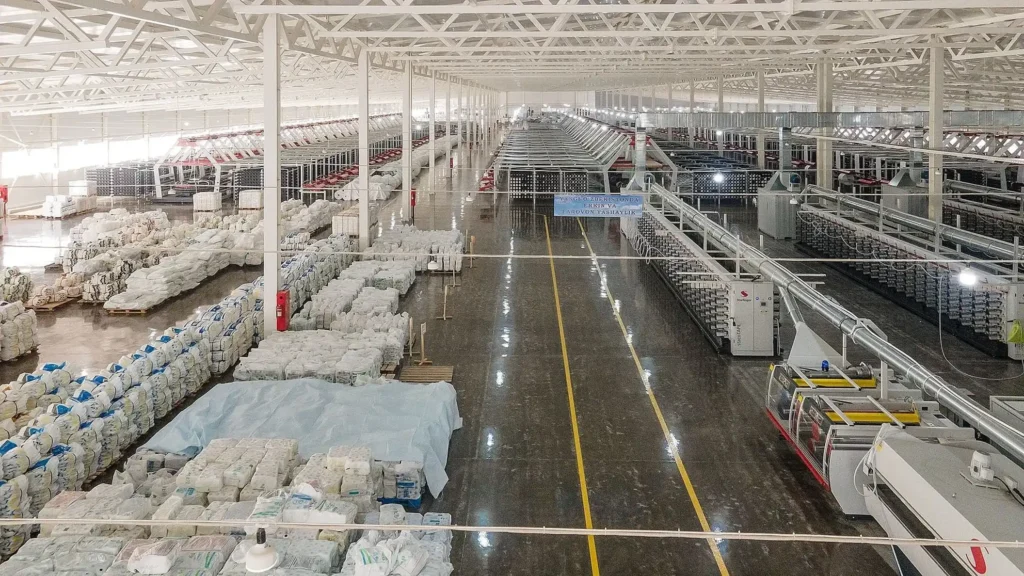
FIBC Bags are flexible intermediate bulk containers engineered to move powders, granules, and small particulates at industrial scale. In day‑to‑day trade they are also known as bulk ton bags, jumbo bags, super sacks, PP woven bulk bags, and flexible intermediate bulk containers. Put simply, FIBC Bags combine a woven polypropylene shell—the structural skeleton—with optional liners and carefully designed inlets and outlets—the functional organs. The features that matter in practice are a high strength‑to‑weight ratio, configurable safe working loads, repeatable handling through forklift loops or sleeves, compatibility with dust collection, and the ability to collapse when empty. The production pathway for FIBC Bags follows a disciplined sequence: polypropylene resin is extruded into tapes, the tapes are drawn to align polymer chains, the tapes are woven (flat or circular) into fabric, the fabric may be coated or laminated, panels are printed, cut, and sewn, loop systems are integrated, inlets and outlets are formed, liners are inserted when required, and every lot is qualified mechanically and dimensionally. Where do FIBC Bags work best? In chemicals and additives, in food ingredients such as sugar, starch, and milk powder, in agriculture for grains, seeds, and fertilizers, in plastics for resins and masterbatch, in minerals including TiO₂ and CaCO₃, and in construction materials such as cement and sand—any situation where bulk solids must travel safely and economically.
Problem — Why industrial shippers reach for FIBC Bags only after pain forces change
Before a plant standardizes on FIBC Bags, it usually struggles with something concrete: paper sacks that slump in humidity; monolayer film bags that stretch on sharp pallets; dense powders that arch during discharge; labels that smear; manual sampling that releases dust. The background physics is unforgiving—hygroscopic products absorb water vapor and cake, fine particles migrate through stitch holes, air entrained during fast filling fights against gravity during discharge. The business result is waste, rework, slow changeovers, and a warehouse that feels like a snow globe. If the packaging is only a container, the process suffers; if the packaging is treated as a component, the process improves. FIBC Bags are the component route.
Method — A systems approach to specifying FIBC Bags
The reliable way to choose FIBC Bags is to break the decision into smaller, testable questions and then close the loop between design and result. Start with the mechanical envelope (safe working load, safety factor, footprint), then move to containment and cleanliness (coatings, liners, seam strategy), proceed to fill and discharge (inlets, outlets, venting), consider flow and stability (baffles, conical bottoms, anti‑slip behavior), and finally bind everything to compliance and documentation (ISO 21898 testing, UN 13H marks where relevant, food‑contact or ESD needs when applicable). Horizontal thinking borrows from materials science, powder technology, and material handling; vertical thinking drills from corporate targets—lower claims, faster turns—down to millimeter‑level choices—spout diameter, stitch density, liner gauge. The outcome is a specification for FIBC Bags that is rational, auditable, and teachable.
Method — Subproblem 1: Mechanical envelope for FIBC Bags
Every kilogram you ship is a conversation between denier, weave density, and seam geometry. In FIBC Bags, drawn polypropylene tapes deliver high tenacity at modest grams per square meter; cross‑corner loops spread forces so imperfect forklift alignment does not tear seams; baffle inserts tame body bulge so stacks stay cubic. The vertical view asks how the bag survives top‑lift, cyclic‑lift, stack, and drop tests; the horizontal view asks how those numbers translate into fewer forklift incidents and safer mezzanine lifts. The answer is seldom “more fabric”; it is usually “better load paths.”
Method — Subproblem 2: Containment and cleanliness within FIBC Bags
A good bag leaks nothing it shouldn’t and admits nothing it must not. Coatings convert porous fabric into a barrier against sifting and splash; liners govern gas diffusion—moisture, oxygen, aroma. When FIBC Bags carry hygroscopic goods or aroma‑rich blends, the liner’s water‑vapor transmission rate and oxygen transmission rate predict shelf life more honestly than any slogan. Horizontally we compare polyethylene liners for humidity control with metallized laminates for oxygen and light; vertically we size thickness to route climate and dwell time. The logical loop is simple: a liner costs cents, product loss costs orders of magnitude more.
Method — Subproblem 3: Inlets, outlets, and the choreography of flow in FIBC Bags
Filling is theater; discharge is choreography. Open tops move quickly but invite dust; duffle tops cinch around variable spouts; cylindrical filling spouts integrate with dust collars. Flat bottoms maximize base strength for cut‑and‑tilt unloading; standard discharge spouts meter flow and pair with iris or petal safety closures; conical discharges coax cohesive powders that otherwise arch; duffle bottoms dump completely when speed outranks metering. Horizontally we match outlet style to hopper behavior; vertically we tune diameters, skirt lengths, and tie sequences to the rhythm of the line. Well‑specified FIBC Bags do not need hammering.
Method — Subproblem 4: Flow behavior and stability inside FIBC Bags
Powder science meets warehouse reality at two junctions: mass flow and pallet stability. Internal baffles promote a cube, so layer‑by‑layer stacking does not bruise adjacent loads; anti‑slip coatings reduce domino risk; micro‑perforations, if used, relieve entrained air without creating dust fountains. The horizontal comparison is with boxes and drums—excellent for liquids, poor for powders; the vertical question is how many pallets fit per truck, because freight is paid in cubic meters, not promises. FIBC Bags that hold their shape reclaim space silently.
Method — Subproblem 5: Compliance, documentation, and operator confidence for FIBC Bags
Standards do not exist to slow you down; they exist to make results predictable. FIBC Bags validated to ISO 21898 for lift and stack behave in the plant as they did in the lab; UN 13H classifications allow regulated goods to move; food‑contact declarations, when applicable, keep auditors comfortable; electrostatic types A/B/C/D reduce ignition risk where explosive atmospheres may exist. The horizontal layer is multi‑site repeatability; the vertical layer is the Certificate of Analysis that ties test numbers to lot codes. People operate confidently when numbers match labels.
Results — What changes when operations adopt FIBC Bags deliberately
Factories that document their switch to engineered FIBC Bags report quieter dust monitors around fillers, fewer rework bins after rainy weeks, improved pallet density with baffle builds, shorter emptying times for conical discharges, and calmer audits thanks to COAs that answer questions before they are asked. Less sweeping. Fewer stoppages. Better supplier scorecards. The financial lens shows reduced credits, tighter inventory turns, and measurable labor time returned from housekeeping to production. None of this is magic; it is the predictable reward of treating FIBC Bags as process equipment.
Discussion — Horizontal comparisons and vertical trendlines for FIBC Bags
Compare FIBC Bags with paper sacks: paper prints beautifully but loses its nerve in humidity; FIBC Bags hold shape in damp warehouses. Compare FIBC Bags with monolayer poly film bags: films seal hermetically but slip on pallets and snag on edges; FIBC Bags present woven toughness and configurable friction. Compare FIBC Bags with drums: drums protect liquids and slurries but squander cubic space for powders; FIBC Bags fold flat and fit tight. Vertically the trend is toward smarter hybrids—baffle cubes that run on automated fillers, liners chosen by climate data rather than habit, QR‑coded traceability mapped to test results. If packaging is a question, FIBC Bags are a persuasive answer.
Discussion — Sustainability, governance, and people behind FIBC Bags
A durable package is a sustainable package. FIBC Bags designed for their route avoid mid‑journey failures and the repeat logistics that waste far more carbon than a few extra grams of fabric ever would. Plants increasingly publish ESG reports; in that language, FIBC Bags support reductions in scope‑2 energy through lighter unit weights compared with rigid containers, enable recyclable mono‑polyolefin workflows when liners match shells, and encourage safer workplaces with dust‑controlled inlets and outlets. Governance shows up as traceability: lot‑coded FIBC Bags with COAs and documented tests. People show up as training that turns SOPs into muscle memory.
Method in practice — a compact, end‑to‑end specification logic for FIBC Bags
The habit that separates leaders from laggards is writing the spec before ordering the bag. Define the product’s density, particle size, and moisture sensitivity; describe the filling method and speed; select a top design that fits the filler and a bottom design that fits the hopper; choose coatings and liners based on climate and shelf‑life targets; pick loop style for your handling assets; set SWL and safety factor for your reuse ambition; and request ISO‑style testing with a Certificate of Analysis. Share the drawing with operations and quality before the trial. Then run a pilot. In that pilot you will measure not only lift and discharge time but also dust levels, pallet stability, and operator ergonomics. When the numbers make sense, lock the recipe and scale. For quick orientation, an overview of architectures and options lives here: FIBC Bags.
References
ISO 21898: Packaging — Flexible intermediate bulk containers (FIBCs) for non‑dangerous goods, performance requirements and test methods. IEC 61340‑4‑4: Electrostatics — Standard for classification and testing of FIBC types A/B/C/D. UN Recommendations on the Transport of Dangerous Goods — Model Regulations, 13H series for woven plastic FIBCs. ASTM F1249 and ASTM D3985 — standard methods for water‑vapor and oxygen transmission through films used for liners. EU Regulation No 10/2011 and U.S. 21 CFR 177.1520 — frameworks for plastics intended to contact food where applicable. Technical datasheets and publicly available specifications from leading FIBC fabric and liner resin suppliers, as well as application notes from bulk handling and powder flow literature focusing on mass‑flow behavior, arching, and ratholing in hoppers using large flexible containers.