
What is Kraft Paper Laminated Woven Fabric and how is it recognized across packaging domains?
Kraft Paper Laminated Woven Fabric is a composite packaging substrate in which a printable sack‑kraft paper face is bonded to a woven polypropylene (PP) fabric. The result is a light yet durable sheet that merges paper’s tactile aesthetics and print fidelity with the tensile strength, puncture tolerance, and dimensional stability of a textile. Supplied as rolls or pre‑tubed webs, this laminate becomes the working surface for industrial sacks, retail‑forward pouches, protective wraps, pallet shrouds, crate liners, and dust‑control covers. In tenders and converter catalogs the format is also described as paper‑laminated woven PP, kraft‑paper/PP composite fabric, paper‑faced woven laminate, or kraft‑coated woven substrate. Whatever the label, the functional idea is constant: paper for communication and controlled breathability; woven PP for the load‑bearing backbone; and a carefully engineered bonding layer to join them without sacrificing machinability or end‑of‑life options.
Why has this composite gained traction in the last year? Because supply chains are under pressure to run faster, communicate more clearly, waste less, and—wherever possible—align with mono‑material recovery streams or fiber routes. A purely paper sack breathes well and prints beautifully but suffers under wet or abrasive conditions. A pure polyolefin bag is rugged and moisture‑resistant, yet its print surface and hand feel can be unforgiving. Kraft Paper Laminated Woven Fabric sits in the middle ground with intention: a printable, familiar exterior supported by a textile‑like core that resists punctures, forklifts, and long‑haul vibration.
The material of Kraft Paper Laminated Woven Fabric: layer selection, properties, and cost logic
The composite is not a single sheet so much as a modular stack. Each layer introduces properties and costs, and each interface adds opportunities for failure if neglected. Below, the materials are mapped with their roles, trade‑offs, and typical parameter windows used by converters.
A) Sack kraft paper (outer face)
High‑porosity sack kraft (≈70–100 g/m² for a single outer ply) delivers stiffness, burst strength, and a receptive print surface. Natural brown grades emphasize sustainability cues; white‑top variants maximize color pop and fine text readability.
Functional traits: Breathability aids deaeration during fast filling; the fibrous surface anchors flexo or gravure inks; varnishes add rub resistance. Paper also provides a familiar, human‑centric feel that retail buyers often prefer for premium grains and flours.
Cost signal: Pricing tracks timber and energy markets. Because the paper face takes print directly, separate labels (and label waste) can be reduced.
B) Woven polypropylene fabric (inner backbone)
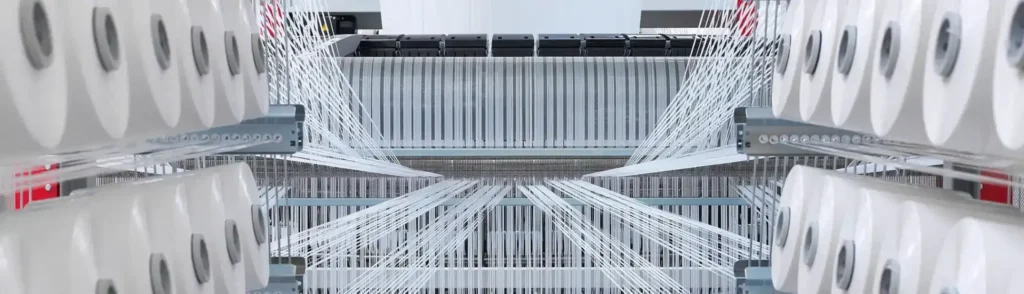
Isotactic PP is extruded, slit into tapes, and drawn to orient chains. Those tapes are interlaced on circular or flat looms into meshes like 10×10, 12×12, or 14×14 ends per inch. Typical fabric basis weights span 56–140 g/m² depending on load and abuse. Orientation and weave geometry translate low mass into tensile and tear strength, distributing local stresses from chute edges, forklift tines, and pallet compression.
Functional traits: Low moisture uptake, broad chemical compatibility, and a forgiving textile architecture that handles shock and puncture better than monolithic films at similar mass.
Cost signal: Strength from geometry allows down‑gauging; commodity PP resins keep the backbone economically stable. PIR/PCR may be used in non‑contact layers subject to validation.
C) Bonding system (polyolefin tie or solventless adhesive)
A co‑extruded polyolefin tie—LDPE/PP with functional anhydride‑grafted layers—is applied at a heated nip to fuse the paper and the fabric. Typical coat weights run 12–23 g/m². Alternatively, solventless PU adhesives provide wet‑out latitude and low VOC operations; cure schedules must be controlled to avoid blocking and ensure full bond development.
Functional traits: Proper wet‑out and nip pressure are essential to avoid delamination at folds and valve corners. Tie chemistry can be tuned for heat‑seal compatibility in pinch‑top or valve patches.
Cost signal: The bonding layer is a small percentage of mass but a large lever on yield: too little increases scrap; too much stiffens folds and consumes resin.
D) Optional liners & coatings
Loose‑in or cuffed tubular liners (HDPE, LDPE, LLDPE, or PP) add sealability and odor control for hygroscopic or dusty contents. Paper faces may receive water‑resistant or rub‑resistant varnishes to improve legibility through handling.
Functional traits: Engineered micro‑perforations in liners allow controlled deaeration during high‑rate filling without visible dusting. Coatings must balance moisture resistance with print anchorage.
Cost signal: Liners add material and a step but can dramatically reduce damage and claims on hygroscopic goods.
| Layer | Typical Range / Option | Primary Function | Notes |
|---|---|---|---|
| Sack kraft paper | 70–100 g/m² (outer ply) | Print surface, stiffness, breathability | Brown or white‑top; varnish optional |
| Woven PP fabric | 10×10–14×14; 56–140 g/m² | Tensile backbone, tear resistance | Strength per gram; puncture control |
| Polyolefin tie / PU adhesive | 12–23 g/m² (tie); PU mix ratios per spec | Fusion bond, foldability | Controls peel; tune for heat‑sealability |
| Optional liner | HDPE/LDPE/LLDPE/PP; micro‑perfs | Sealability, dust/odor control | Include in migration/COF testing |
Reference stack for Kraft Paper Laminated Woven Fabric:
[Printed Sack Kraft Paper] → [Polyolefin Tie or Solventless PU] → [Woven PP Fabric] → (Optional PE/PP Liner)
What are the features of Kraft Paper Laminated Woven Fabric that matter on real lines?
Strength without bulk; moisture management without excessive plastic; premium graphics without fragile labels. These are not slogans, they are operational targets that this laminate hits in factories and warehouses every day.
- Balanced mechanics and aesthetics — Paper delivers a readable, tactile face; the woven core resists puncture and tear. Together they give both shelf appeal and all‑route durability.
- Stable stacking and neat presentation — Paper stiffness plus textile backbone produce crisp edges and upright stance, improving pallet interlock and robotic handling.
- Configurable moisture strategy — Paper breathes for fast deaeration; liners and light varnishes tighten moisture ingress when required. Tuning beats all‑or‑nothing barriers.
- Graphic excellence — Direct print on paper supports multi‑color artwork, hazard icons, and machine‑readable codes. No secondary label to peel or scuff.
- Operator‑friendly converting — A grippy paper face aids folding and pick‑and‑place; the woven base tolerates high draw and compression in sewing, pinch‑top, and block‑bottom valve formats.
- Credible end‑of‑life pathways — Paper‑dominant builds align with fiber recovery where contamination is controlled; PP‑rich variants target polyolefin streams. On‑pack guidance should always reflect local infrastructure.
- Cost‑to‑service efficiency — Better cube utilization, reduced scuff returns, and puncture tolerance move the conversation from cost‑per‑bag to cost‑per‑delivered‑ton.
What is the production process of Kraft Paper Laminated Woven Fabric from mill to finished sack?
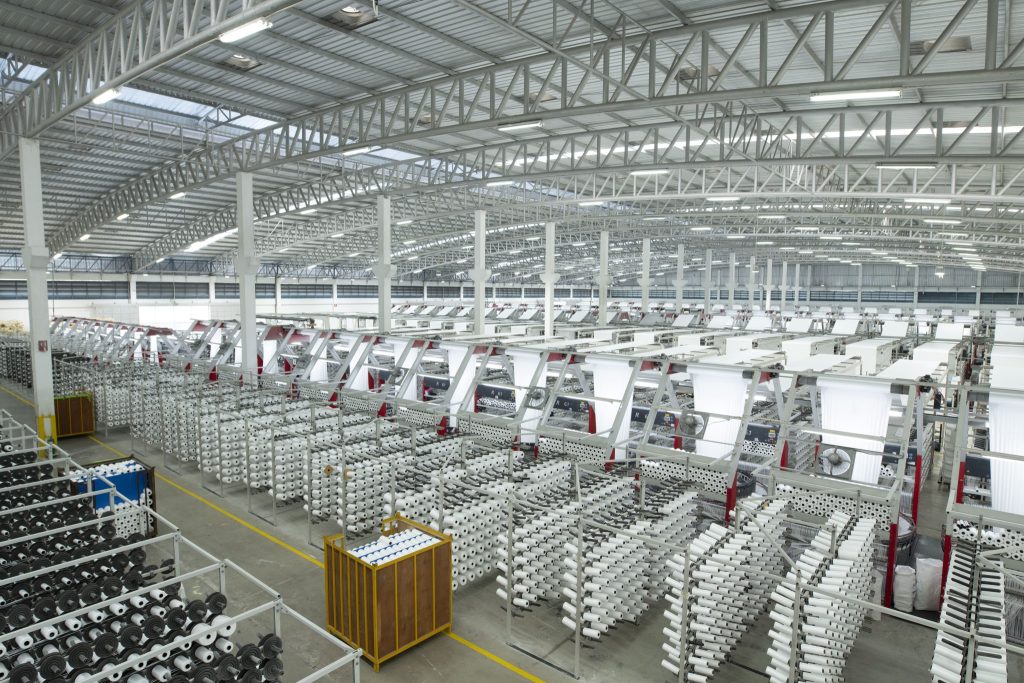
- Tape extrusion & drawing (PP fabric) — PP pellets are melted, cast, slit into tapes, and drawn to raise modulus and tensile properties while minimizing gauge.
- Weaving — Oriented tapes feed circular or flat looms to make tubular or sheet fabrics; mesh and gsm govern mechanics and downstream print smoothness.
- Paper procurement & conditioning — Reels are tested for moisture, porosity, tensile, and Cobb; they are equilibrated to plant humidity to reduce curl and register drift.
- Bonding preparation — Extrusion‑coat heads are set to coat‑weight windows and nip temperatures, or solventless adhesives are metered by ratio‑controlled pumps with inline monitoring.
- Lamination — Paper and fabric are married at the nip. Tension control prevents skew; coat‑weight logs and peel tests verify bond uniformity across the web.
- Optional coatings — Water‑resistant or rub‑resistant varnishes are applied to the paper face; adhesion and legibility are re‑verified.
- Roll conditioning & slitting — Laminated webs are cooled, conditioned, inspected, then slit to converter widths.
- Bag conversion pathways —
- Sewn open mouth — Tubed, gusseted, cut, hemmed, and sewn; easy‑open tapes optional.
- Pinch‑top — Heat‑sealable layers at the mouth allow hermetic sealing after fill, raising sifting resistance.
- Block‑bottom valve — Valve sleeves or patches are installed; bottoms are folded and glued to form square bases for upright stance and pallet efficiency.
- Quality control — Tensile/tear, drop tests, seam/valve peel, COF (dry & humid), Cobb for paper, MVTR where relevant, color ΔE, registration, and dimensional checks.
What is the application of Kraft Paper Laminated Woven Fabric across industries?
Cement & construction minerals
Paper breathability aids clean deaeration; the woven core resists puncture from angular particles. Square‑base valve formats support fast cycles and clean floors.
Fertilizers & soil amendments
Hygroscopic blends favor moisture‑managed varnishes and liners, large print panels for nutrient declarations, and anti‑slip surfaces for humid climates.
Industrial minerals & pigments
Calcium carbonate, talc, silica, barite, and titanium dioxide drive higher fabric gsm, reinforced valve patches, and rub‑resistant print systems.
Food‑adjacent ingredients
Sugars, starches, salt, and dairy powders rely on clear, durable print and compliant liners; pinch‑top closures deliver tidy, fiber‑free seals.
Retail‑forward grains
Premium rice and specialty flours use the natural paper aesthetic for shelf appeal while the woven core preserves transport toughness.
Analyzing the phrase Kraft Paper Laminated Woven Fabric: Enhancing Packaging Solutions
The phrase divides neatly into two promises: enhancing and solutions. Enhancing points to better runnability, readability, and reliability; solutions speaks to the composite’s ability to reconcile trade‑offs across disciplines. Below, we decompose those claims into solvable sub‑problems and then synthesize them into a unified specification.
Sub‑problem 1: Product rheology and hazard profile
- Is the product a free‑flowing granule or a cohesive, aeration‑prone powder? Does it absorb moisture? Is it abrasive or aromatic?
- Levers: Paper porosity for deaeration, liner gauge and perforation, fabric gsm and mesh, mouth closure (pinch vs sewn), and valve geometry (if used).
- Metrics: Fill time, dust index at filler, ballooning rate, mass accuracy, post‑fill settling profile.
Sub‑problem 2: Line integration and ergonomics
- What fillers and closures are available—heat, ultrasound, or sewing? How much handling space is available for operators or robots?
- Levers: Hem design and mouth stiffness, COF on the outer face for pick‑and‑place, dimensional tolerances for robotic palletizers, easy‑open features for discharge.
- Metrics: OEE, mis‑seat rate, seam defect ppm, mean time to changeover.
Sub‑problem 3: Logistics and climate exposure
- What humidity and temperatures will the route see? Are pallets stretch‑wrapped, hooded, or both? Is outdoor laydown expected?
- Levers: Anti‑slip textures and COF windows, UV stabilization, water‑resistant varnish, gusset depth and base squareness for cube efficiency.
- Metrics: Pallet compression, slip‑angle tests, container cube utilization, damage/claim rate.
Sub‑problem 4: Communication, compliance, and traceability
- What must the package say and survive—brand visuals, instructions, hazard marks, batch codes?
- Levers: Ink system selection, varnish coverage, panel hierarchy and font sizes, barcode redundancy, ΔE color discipline.
- Metrics: Barcode scan rates after rub, rub‑resistance, ΔE audits, regulatory panel sign‑off.
Sub‑problem 5: End‑of‑life pathways and claims discipline
- Where will the laminate go—fiber recovery, PP stream, or energy recovery? What recycled‑content mandates apply?
- Levers: Paper/PP ratio, avoidance of incompatible patches where possible, truthful on‑pack labels that mirror local infrastructure, PIR/PCR in non‑contact layers.
- Metrics: Sortation acceptance, mechanicals with PIR/PCR, third‑party claim verification.
Systematizing Kraft Paper Laminated Woven Fabric: from sub‑problems to one specification
- Define the product & route — Particle size/shape, cohesiveness, bulk density, moisture sensitivity, climate by lane, regulatory scope.
- Select the architecture — Paper‑forward for breathability and print grace; PP‑rich when puncture and moisture are dominant; hybrid when both matter.
- Engineer filling & closure — For valves: set diameter, sleeve stiffness, venting. For open‑mouth/pinch: set hem geometry and heat‑seal windows.
- Lock surfaces — Choose varnish, matte/gloss balance, and COF textures that stabilize pallets but preserve conveyor glide.
- Plan artwork & codes — Define panel hierarchy, code redundancy, minimum sizes, and ΔE tolerances; reserve clear zones around scanners.
- Validate & scale — Drop/compression, peel, Cobb/MVTR, COF in dry/humid states, barcode after abrasion; run line trials under worst conditions.
- Monitor & improve — Track damage and returns; adjust micro‑textures and liners by season; keep artwork current with regulations.
Technical details and quick‑reference tables
| Parameter | Typical Options / Ranges | Why It Matters |
|---|---|---|
| Paper grammage | 70–100 g/m² (outer ply) | Stiffness, print quality, breathability |
| Paper porosity | Mill‑tuned (for deaeration) | Fill speed and dust control |
| Woven PP mesh | 10×10; 12×12; 14×14 | Tensile/tear balance, print smoothness |
| Fabric basis weight | 56–140 g/m² | Load capacity vs flexibility |
| Bond coat weight | 12–23 g/m² | Peel strength and foldability |
| COF target (outer face) | ≈0.3–0.6 | Pallet stability vs conveyor glide |
| Parameter | Typical Options / Ranges | Why It Matters |
|---|---|---|
| Printing method | Flexo or gravure on paper face | Resolution, ink laydown, legibility |
| Color count | 4–10 (higher possible) | Branding richness; regulatory clarity |
| Varnish | Water‑resistant / rub‑resistant | Readability and scuff control |
| Markings | QR/Code‑128; batch/date codes | Traceability and audits |
| Food‑contact | Liner compliance; migration testing | Safety and legal conformity |
| Risk mode | Primary cause | Mitigation |
|---|---|---|
| Delamination at folds/valve | Low bond mass; poor wet‑out; mis‑set nip | Tighten coat‑weight; verify nip; edge peel tests |
| Ink rub or smear | Under‑varnished panels; rough handling | Specify rub‑resistant varnish; QC rub tests |
| Moisture ingress | Outdoor exposure; high RH routes | Add liner/varnish; improve wrap; review Cobb/MVTR |
| Pallet slippage | Low COF under humidity | Micro‑textures; anti‑slip packages; test wet/dry |
| Sifting at seams | Needle holes; poor closure | Filler cords; pinch‑top seals; hem/tape optimization |
Human‑style guidance, comparisons, and rhetorical lenses
Is one substrate always best? Not really. A purely paper sack breathes beautifully and prints with grace, yet stumbles in the rain. A mono‑PE film bag seals like a dream, yet may require extra thickness to resist puncture. The composite is a bridge: not a compromise for compromise’s sake, but a deliberate pairing where each layer does what it does best. When speed meets dust; when graphics meet abrasion; when moisture meets shelf appeal—this is where Kraft Paper Laminated Woven Fabric earns its keep.
- Versus multi‑wall paper alone — Better puncture tolerance and wet‑route resilience, with the option to preserve paper’s breathability and print feel.
- Versus plain woven PP without paper — Superior printability and human‑friendly hand feel; fewer secondary labels and label failures.
- Versus heavy‑duty mono‑film — Improved print surface and stack aesthetics; similar or better puncture resistance at lower apparent gauge because the textile carries the load.
Keyword weaving and semantic variants for Kraft Paper Laminated Woven Fabric
To keep language natural while improving discoverability, this page interleaves close relatives and long‑tail phrases: paper‑laminated woven polypropylene, kraft‑paper/PP composite fabric, paper‑faced woven packaging, laminated woven sack material, pinch‑top paper‑laminated woven bags, block‑bottom valve sacks with paper/PP laminate, moisture‑managed paper‑laminate packaging for fertilizers, and abrasion‑tolerant paper‑laminated sacks for minerals. Each phrase reflects how engineers and buyers search without distorting the core technology.
Related link (encyclopedic style): see kraft paper bags for foundational context relevant to the paper face of Kraft Paper Laminated Woven Fabric.
From parts to practice: a unifying specification for Kraft Paper Laminated Woven Fabric
- Gather a one‑page brief: product flow, moisture sensitivity, climate exposure, target throughput, pallet pattern, compliance scope.
- Choose paper grade and grammage; select fabric mesh/gsm; pick bonding method and coat weight; decide on liner presence and gauge.
- Fix the conversion route—sewn open mouth for flexibility, pinch‑top for sifting control and tamper evidence, or block‑bottom valve for speed.
- Specify surfaces: varnish, matte/gloss balance, and COF textures for safe pallets and stable conveyor glide.
- Architect artwork: panel hierarchy, color targets, and redundant codes placed on orthogonal panels for resilience.
- Validate under worst case: drop/compression, peel, Cobb/MVTR, COF (dry/humid), barcode after abrasion, and on‑line trials.
- Monitor live shipments and iterate: adjust micro‑textures seasonally, refine glue patterns, and update labels as regulations evolve.
- What is Kraft Paper Laminated Woven Fabric and how is it recognized across packaging domains?
- The material of Kraft Paper Laminated Woven Fabric: layer selection, properties, and cost logic
- What are the features of Kraft Paper Laminated Woven Fabric that matter on real lines?
- What is the production process of Kraft Paper Laminated Woven Fabric from mill to finished sack?
- What is the application of Kraft Paper Laminated Woven Fabric across industries?
- Analyzing the phrase Kraft Paper Laminated Woven Fabric: Enhancing Packaging Solutions
- Systematizing Kraft Paper Laminated Woven Fabric: from sub‑problems to one specification
- Technical details and quick‑reference tables
- Human‑style guidance, comparisons, and rhetorical lenses
- Keyword weaving and semantic variants for Kraft Paper Laminated Woven Fabric
- From parts to practice: a unifying specification for Kraft Paper Laminated Woven Fabric
By merging traditional craftsmanship with modern material science, kraft paper laminated woven fabric has emerged as a cornerstone of sustainable and durable packaging. VidePak, leveraging 30+ years of industry expertise, exemplifies how innovation in material engineering and ESG-driven production can redefine global packaging standards. This report explores the historical evolution, market adaptability, and strategic growth of this solution, anchored by VidePak’s technological prowess.
Historical Evolution: From Industrial Roots to Modern Innovations
The origins of kraft paper laminated woven fabric trace back to the 19th-century industrial revolution, where advancements in pulp processing and textile weaving converged. German chemist Friedrich Keller’s 1844 invention of wood pulp papermaking laid the groundwork for kraft paper, while the 20th-century plastics revolution introduced polypropylene (PP) as a durable, lightweight alternative to traditional textiles.
Key Insight from Industry Leaders
Ray, CEO of VidePak, remarks:
“The fusion of kraft paper’s natural resilience and PP’s synthetic durability wasn’t accidental—it was a response to industries demanding packaging that balanced strength and sustainability. Today, this hybrid material is the backbone of sectors from agriculture to pharmaceuticals.”
The first commercial kraft paper bags, developed in 1908 by U.S. grocer Walter DuViner, prioritized load capacity (up to 75 lbs) and reusability. However, the mid-20th century saw plastics dominate due to lower costs, until environmental concerns revived kraft paper’s relevance in the 2000s.
Market Adaptability: Diversification and Specialization
Kraft paper laminated woven fabric’s success lies in its adaptability to niche demands:
1. Structural Innovations
- Valve Designs: Ideal for powdered chemicals, reducing spillage by 90% in cement transport.
- Laminated Layers: BOPP coatings enhance moisture resistance (<0.1 g/m²/24h vapor transmission), critical for hygroscopic materials like fertilizers.
- Custom Printing: High-definition branding withstands abrasion, with 8-color Pantone accuracy for regulatory compliance.
2. Sector-Specific Applications
| Industry | Use Case | VidePak Solution |
|---|---|---|
| Agriculture | Grain storage | 150 GSM kraft-PP blend with UV stabilization |
| Construction | Cement transport | Double-stitched seams + anti-static liners |
| Retail | Luxury packaging | Embossed finishes + RFID tracking integration |
Case Study: A Chinese feed producer reduced spoilage by 40% after switching to VidePak’s moisture-proof kraft-PP bags, which combine 200 GSM fabric with PE inner liners.
Growth in China: Sustainability and Market Precision
China’s dominance in kraft paper laminated woven fabric production is rooted in regional industrial clusters like Wenzhou’s “Plastic Weaving Capital,” where manufacturers pioneered cost-effective, high-volume solutions. However, rising ESG pressures have reshaped priorities:
1. Sustainable Manufacturing
- Solar Integration: VidePak’s 2MW rooftop solar system powers 60% of production, reducing CO₂ emissions by 1,200 tons/year.
- Circular Economy: 98% of PP waste is recycled via Starlinger’s RecoStar system, cutting raw material costs by 15%.
2. Brand Differentiation
Chinese manufacturers now emphasize certifications (e.g., EU EN 13432 for compostability) and hyper-customization. VidePak’s 30+ lamination machines enable rapid prototyping for niche markets, such as anti-bacterial liners for medical packaging.
Technical Specifications and Competitive Edge
| Parameter | VidePak Standard | Industry Average |
|---|---|---|
| Tensile Strength | 35–50 N/cm² | 20–30 N/cm² |
| Thickness | 80–200 GSM | 60–150 GSM |
| Print Resolution | 300 dpi | 150–200 dpi |
| Lead Time | 14 days (custom orders) | 21–30 days |
FAQs: Addressing Client Concerns
Q1: How does kraft-PP compare to pure plastic bags in cost?
A: While 20% pricier upfront, kraft-PP bags last 3x longer, reducing lifecycle costs by 35%.
Q2: Can laminated fabric withstand extreme temperatures?
A: Yes. Cold-resistant PP blends maintain flexibility at -25°C, tested for Siberian clients.
Q3: Are these bags recyclable?
A: Absolutely. VidePak’s products use 30% post-consumer recycled PP and are industrially compostable.
Strategic Recommendations for Global Expansion
- Leverage Automation: Integrate AI-driven quality control systems to reduce defects below 0.5%.
- Amplify ESG Narratives: Certify products via Cradle-to-Cradle (C2C) to attract EU/US buyers.
- Target Emerging Markets: Partner with Indian e-commerce giants for lightweight, branded packaging solutions.
External Resources
- Explore how kraft paper weaving enhances logistical efficiency.
- Learn about sustainable practices in modern packaging.
Conclusion
Kraft paper laminated woven fabric epitomizes the synergy between tradition and innovation. VidePak’s commitment to solar-powered production, precision engineering, and market agility positions it as a leader in an industry where sustainability is no longer optional—it’s imperative. As global demand shifts toward eco-conscious solutions, the fusion of kraft paper’s heritage and PP’s modernity will continue to redefine packaging excellence.
Word count: 1,150