
Understanding Leakproof Woven Bags: Definition and Naming Landscape
Leakproof woven bags are engineered packaging systems designed to keep powders, granules, pellets, or moisture-sensitive goods securely inside the package while keeping unwanted water, vapour, and contaminants out. At their core they rely on a woven polypropylene (PP) fabric for mechanical strength, but what truly defines leakproof woven bags is the way this fabric is combined with coatings, laminations, liners, and carefully sealed seams to block every likely pathway of leakage. Instead of behaving like simple sacks, they perform more like flexible tanks: strong, sealed, and predictable under stress.
In day-to-day practice, different sectors use different names for this family of high-barrier packaging. Common aliases include:
- Leakproof woven sacks
- Leakproof PP bags
- Leakproof woven PP sacks
- Leakproof laminated woven bags
- Leakproof valve woven bags
- Leakproof BOPP woven bags
- Leakproof foil-lined woven bags
- Leakproof barrier woven packaging bags
Each of these names highlights a slightly different detail — the presence of a valve, a BOPP film, an aluminum foil liner, or the PP substrate — but they all refer to a single design philosophy. That philosophy is to combine a high-strength woven backbone with barrier skins and leak-sealed seams so that materials stay inside under real-world conditions: vibration, drops, humidity swings, and long-distance distribution.
The central promise of leakproof woven bags can be summed up in one sentence: “What goes into the bag stays in the bag, and what should stay outside never gets in.” This might sound simple, but it represents a complex mix of material science, process control, and system-level design.
From a supply-chain perspective, leakproof woven bags mark a shift from treating packaging as a disposable accessory to treating it as a protective asset. When the content is valuable, hazardous, regulated, or extremely sensitive to moisture or oxygen, the bag becomes a critical component of product performance, safety, and compliance rather than an afterthought.
Material Architecture of Leakproof Woven Bags
To understand why leakproof woven bags behave so differently from ordinary sacks, it helps to look at their material architecture. Instead of a single thin film, we find a layered system in which each component plays a specialised role. The woven polypropylene provides strength; laminations and coatings provide barrier performance; liners protect product and fabric; seams, threads, and adhesives knit the entire structure together.
Polypropylene Woven Fabric as the Structural Core
The structural core of most leakproof woven bags is a woven polypropylene fabric. Polypropylene (PP) is a semi-crystalline thermoplastic with low density, typically around 0.90 g/cm³, and a favourable combination of tensile strength, toughness, and chemical resistance. In its raw state, PP arrives as small pellets. During tape extrusion, these pellets are melted, shaped into a thin film, slit into narrow ribbons, and then stretched in a controlled way. This stretching aligns polymer chains along the tape axis and boosts tensile strength dramatically.
These oriented tapes are then woven on circular or flat looms. Weave density (ends and picks per inch), tape width, and tape thickness together determine the base fabric properties: weight per square metre, breaking strength, elongation, and inherent porosity. For demanding leakproof woven sacks, fabric weights often fall in the range of 70–140 g/m², with higher values used for heavy or high-value loads.
Why polypropylene is such a good backbone:
- Excellent strength-to-weight ratio, allowing thin fabrics to carry heavy loads.
- Resistance to many salts, mild acids, and bases commonly found in industrial powders.
- Low moisture uptake, so the fabric itself does not swell or rot.
- Compatibility with extrusion, orientation, and weaving on high-speed equipment.
Economically, PP is also attractive. It is widely available, competitively priced, and backed by mature supply chains. Using PP as the structural core lets manufacturers build premium leakproof PP bags that still remain cost-effective at scale.
Lamination Layers: Building the Barrier Skin
The woven core provides strength but not tight barrier performance. The pores between tapes allow air and fine dust to pass. To transform a mechanically strong fabric into truly leakproof woven bags, manufacturers add barrier skins in the form of films and laminations. Several material families are common:
- Polyethylene (PE) laminations — a thin PE film is extrusion-laminated onto the fabric, closing pores and greatly reducing water and vapour transmission. This is a go-to solution for many food ingredients, chemicals, and construction powders.
- BOPP (biaxially oriented polypropylene) films — BOPP laminations add both barrier and a print-ready glossy surface, enabling leakproof BOPP woven bags that combine strong branding with controlled moisture and oxygen ingress.
- Kraft paper laminations — bonding kraft paper to the woven fabric produces hybrid structures with a paper-like feel and excellent stackability while retaining the tear resistance of PP. Such constructions are common in industrial and agricultural leakproof woven sacks.
- Aluminum foil laminates — for the highest barrier requirements, thin foil layers can be introduced, creating leakproof foil-lined woven bags with extremely low oxygen and vapour transmission rates.
These skins are never chosen in isolation. Engineers combine them in multi-layer stacks tuned to the product: a cement bag may rely on a single PE layer; a pharmaceutical intermediate may require an inner foil laminate plus an outer BOPP film. The design aim is always the same: obtain the barrier performance necessary for shelf life and safety without adding unnecessary complexity or cost.
Coatings and Surface Treatments
In addition to discrete films, many leakproof woven bags use thin coatings to fine-tune barrier properties and printability. Examples include:
- Extruded PP or PE coatings that form a continuous skin over the fabric, sealing micro-pores left after lamination.
- Acrylic or polyurethane coatings that enhance scuff resistance, print adhesion, and moisture protection using only a few microns of material.
- Localized heat-seal coatings around the bag mouth or valve, enabling hermetic seals without a full inner liner.
Though visually subtle, these coatings can be the difference between a bag that merely slows moisture ingress and one that truly qualifies as a leakproof barrier woven packaging bag under challenging humidity conditions.
Liners and Inner Structures
For the most sensitive products, internal liners are added to complete the barrier system. These can be simple PE tubes inserted into the bag, tube-laminated liners bonded directly to the fabric, or complex foil-laminated structures in high-value pharmaceutical and nutraceutical applications.
The liner serves multiple roles: it provides a clean, smooth product-contact surface; it shields the structural fabric from aggressive chemicals or oils; and it closes any residual leak paths through seams or weave interstices. In many food and pharma use cases, the liner is the primary barrier layer, while the outer leakproof woven PP sack acts as a robust mechanical shell.
Complementary Materials: Seams, Adhesives, and Smart Tags
Finally, the details that often receive the least attention in ordinary bags — seam threads, adhesives, tapes, and labels — are critical in leakproof woven bags. A seam is more than stitching; it is a potential leak path. To control it, manufacturers use high-tenacity PP or polyester threads, hot-melt adhesives, seam-cover tapes, and in some cases heat sealing in place of sewing.
Labels can embed QR codes or RFID tags, turning leakproof woven sacks into data carriers that store batch numbers, production dates, and even environmental test data. This digital layer helps quality teams trace performance back to particular raw materials, machines, or shifts, which is invaluable when problem-solving or demonstrating compliance.
Core Features and Performance Advantages of Leakproof Woven Bags
Once the material system is understood, the performance profile of leakproof woven bags makes more sense. Their standout features combine barrier behaviour, mechanical robustness, safety benefits, operational efficiency, and branding potential.
Multidimensional Barrier Performance
Leakproof performance is not a single metric. A bag can be watertight but still allow water vapour to diffuse; it can keep dust inside but admit oxygen. High-end leakproof woven bags are designed to manage multiple barrier dimensions simultaneously: liquid water, water vapour, oxygen, aromas, oils, and fine particulates.
Barrier checklist for leakproof performance
- Control of liquid-water ingress during rain events or accidental splashing.
- Low water vapour transmission to prevent caking, microbial growth, or loss of potency.
- Low oxygen transmission where oxidation affects flavour, colour, or activity.
- Containment of fine powders to minimise dusting and product loss.
Through combinations of films, coatings, and liners, leakproof laminated woven bags can achieve water vapour transmission rates and oxygen transmission rates that rival, and sometimes exceed, those of conventional multi-wall paper sacks or plain film pouches, while offering much greater mechanical strength.
Mechanical Strength, Drop Resistance, and Puncture Tolerance
A package can only protect its contents if it survives real-world handling. The oriented PP tapes in leakproof woven PP sacks distribute stress across many crossing points in the weave. When a bag is dropped, forces spread across warp and weft tapes instead of concentrating at a single point, greatly reducing the risk of catastrophic tearing.
Drop tests, typically performed from heights between 0.8 and 1.5 metres, simulate worst-case handling. Well-designed leakproof woven bags can endure multiple drops without panel rupture or seam failure. Compared with pure film bags, woven structures provide extra tolerance against puncture by sharp edges, such as pallet corners or product particles.
Dust Containment and Workplace Safety
In many industries, powder leakage is not just a nuisance; it is a safety hazard and a regulatory issue. Dust clouds can cause respiratory problems, reduce visibility, and even create explosion risks in confined spaces. By sealing pores and seams, leakproof woven bags sharply reduce dust escape during filling, conveying, and stacking.
This dust control eases the burden on ventilation and housekeeping systems and helps facilities meet occupational exposure limits. When hazardous or toxic powders are involved, well-engineered leakproof woven sacks become an essential control measure in the hierarchy of risk management.
Compatibility with High-Speed Filling and Automated Handling
Many bulk products are filled on high-speed valve packers or automated open-mouth lines. Packaging must therefore balance barrier performance with controlled de-aeration. If a bag were completely impermeable, air entrapped during filling would balloon the package and potentially cause bursting. If it were too open, dust and fine particles would escape.
To navigate this trade-off, leakproof valve woven bags often use carefully distributed micro-perforations or liner venting systems that allow air to escape without sacrificing dust containment. Mouth stiffness, valve geometry, and seal layers are tuned so that bags cooperate with filling spouts, sealing jaws, and palletisers.
Brand Presentation and Regulatory Information
The outer skins of leakproof BOPP woven bags can carry high-resolution graphics, logos, safety icons, batch codes, and multilingual instructions. Reverse-printed BOPP, protected beneath a transparent film layer, resists scuffing and maintains visual clarity even when bags slide across rough surfaces.
For premium food ingredients, specialty chemicals, or export products, this visual performance is not a luxury. It helps build customer trust and makes it easier for inspectors, operators, and end-users to identify products quickly and handle them correctly. Clear, durable printing also supports traceability: QR codes and barcodes must remain readable from filling to final use.
Production Process of Leakproof Woven Bags: From Resin to Certified Package
The performance of leakproof woven bags depends as much on process discipline as on material choice. A leakproof design drawn on paper will fail in practice if raw materials are inconsistent, equipment is poorly maintained, or inspection is lax. Manufacturers such as VidePak therefore treat production as a tightly controlled chain of steps rather than a loose collection of operations.
Raw Material Selection and Incoming Testing
The process starts with raw material control. PP resins, PE films, BOPP films, kraft paper, foils, adhesives, inks, and coatings are all potential sources of variation. VidePak specifies 100% virgin PP and PE for critical layers in leakproof PP bags, sourced from major producers with stable quality histories.
Incoming quality checks typically include melt-flow index testing, moisture measurement, density checks, visual inspection for contamination, and in some cases laboratory-scale extrusion or lamination trials. Defective or out-of-spec materials are quarantined or rejected, preventing subtle flaws from propagating downstream.
Tape Extrusion and Orientation on Starlinger Lines
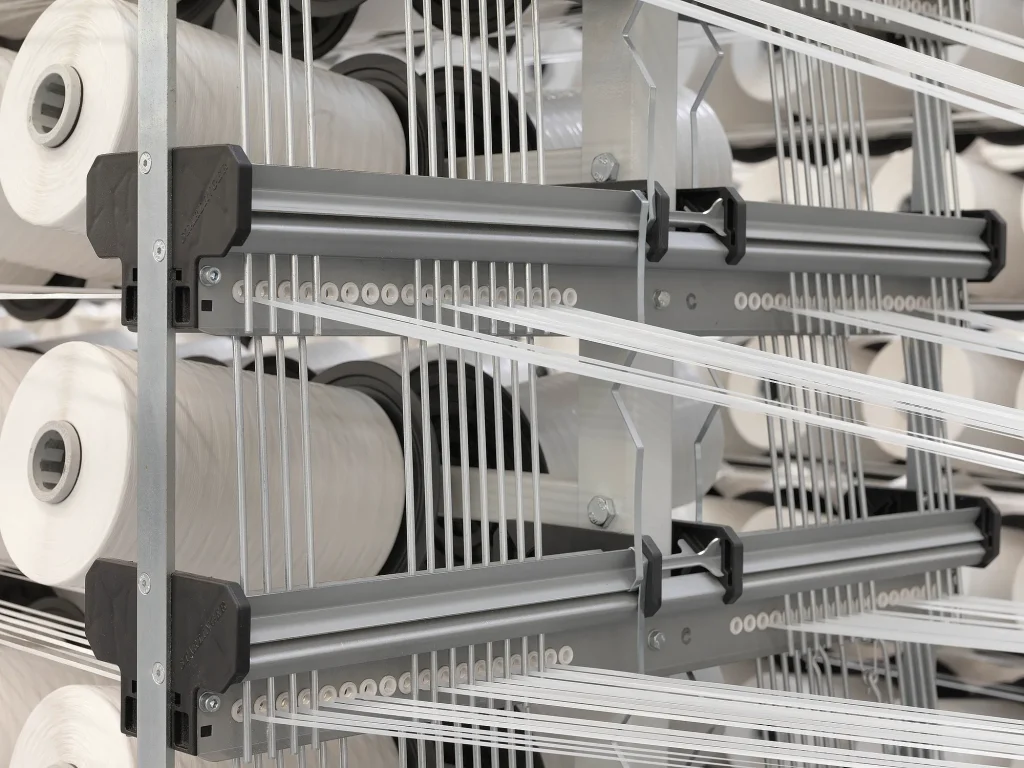
The first major transformation converts pellets into tapes. Pellets and additive masterbatches are fed into an extruder, melted, and forced through a flat die. The extrudate emerges as a thin sheet, which is quickly cooled and slit into parallel tapes. These tapes pass through an orientation zone where they are reheated and stretched under tightly controlled tension.
VidePak uses Austrian Starlinger lines for this step. These machines monitor temperature, draw ratio, line speed, and thickness in real time. Any deviation from the set window can be corrected immediately, preserving consistent tape properties. This consistency is vital; if tape strength or width drifts, fabric performance and seam behaviour will drift with it, undermining the reliability of leakproof woven sacks.
Weaving the Structural Fabric
Oriented tapes are then woven into fabric on circular or flat looms. Circular looms produce tubular fabric; flat looms produce wide sheets. Loom settings determine weave density, fabric width, and basis weight. Automatic features such as broken-tape detectors and weft monitoring ensure that defects are minimised.
The result is a woven PP base with defined tensile properties and porosity. At this stage the fabric is strong but not yet leakproof. It becomes the canvas onto which barrier layers will be added in subsequent steps.
Lamination and Coating: Creating the Barrier Shell
Next, fabric rolls move to lamination lines. Here, PE, BOPP, kraft, or foil layers are bonded to the fabric using extrusion lamination or adhesive lamination. Process control focuses on adhesion, uniform thickness, and freedom from pinholes or voids.
Coating lines may apply thin layers of PP, PE, or specialty resins. Using slot-die or gravure systems, coat weight is kept within tight tolerances. Together, these steps transform simple woven fabric into high-barrier, mechanically rugged leakproof laminated woven bags.
Typical process chain for leakproof woven bag production
| Stage | Key Operations | Main Objectives |
|---|---|---|
| 1. Raw materials | Resin selection, additive verification, film and paper inspection | Stable properties, freedom from contaminants |
| 2. Tape extrusion | Extrusion, cooling, slitting, orientation | Consistent tape strength and dimensions |
| 3. Weaving | Circular or flat weaving, tension control | Mechanical backbone for the bag |
| 4. Lamination/coating | Film bonding, coating application | Barrier skin, print-ready surface |
| 5. Printing | Flexographic or gravure printing | Brand identity and regulatory information |
| 6. Conversion | Cutting, forming, sealing, handle/valve addition | Functional bag shape and closures |
| 7. Testing | Leak tests, drop tests, dimensional checks | Verification of leakproof and mechanical performance |
High-Resolution Printing on W&H Presses
When leakproof BOPP woven bags or kraft-laminated structures require high-quality branding, VidePak uses German Windmöller & Hölscher presses. These systems maintain tight register, even at high speeds, and manage ink density and drying conditions so that graphics remain consistent from start to finish of each run. For packaging that must carry safety icons, multi-language text, and machine-readable codes, this consistency is critical.
Conversion, Seaming, and Leak Control
In the conversion hall, laminated webs are cut, folded, and seamed into final bag shapes. Here, leakproof design is tested in a very practical way. Needle holes from sewing can become micro-leak paths unless they are sealed with hot melt, covered with tapes, or replaced by heat sealing. Valve geometries must align with filling equipment, and mouth designs must enable secure sealing without damaging barrier layers.
For open-mouth leakproof woven bags, heat-sealed tops using specialised sealant layers are common. For valve styles, careful control of valve-sleeve length, stiffness, and overlap enables self-closing behaviour after filling. Every detail is a potential weak link if not managed systematically.
Final Inspection and Performance Testing
Production concludes with layered quality checks. Dimensional inspections confirm that bags meet specified size tolerances. Mechanical tests measure fabric tensile strength, seam strength, and burst resistance. Dedicated leak tests use air or water pressure to detect pinholes and seam leaks.
Where barrier performance is critical, samples may also undergo laboratory WVTR and OTR testing, accelerated ageing, or stacked-load creep tests. Only when leakproof woven sacks pass this suite of evaluations are they released for shipment.
Applications of Leakproof Woven Bags Across Industries
The engineering effort behind leakproof woven bags is justified because they serve in high-stakes applications. From food ingredients to chemicals, from agricultural inputs to waste streams, these bags protect products, workers, and the environment.
Food Ingredients and Nutritional Powders
Milk powder, infant formula bases, protein concentrates, and functional food ingredients are all sensitive to moisture, oxygen, and contamination. Leakproof woven bags with inner liners and high-barrier laminations keep these powders dry, free-flowing, and microbiologically stable over long distribution cycles.
In this context, failure is expensive and reputationally damaging. A bag that leaks powder into a container or absorbs ambient humidity can trigger recalls or product downgrades. Consequently, brand owners specify strict performance criteria for leakproof woven PP sacks in food applications, often backed by supplier audits and regular testing.
Agricultural Products and Seeds
Seeds and treated grains demand a careful balance of protection and controlled atmosphere. Too much moisture ingress destroys germination rates; too little ventilation can trap condensation. Tailored leakproof woven bags with calibrated permeability, sometimes achieved through selective micro-perforation or breathable zones, help maintain the physiological quality of seeds during storage and transport.
Printed outer surfaces communicate seed variety, treatments, planting instructions, and legal notices. Tight seams and controlled barrier performance prevent seed loss and limit cross-contamination between varieties.
Chemicals, Pigments, and Specialty Powders
Many chemical powders and pigments are dusty, expensive, and sometimes hazardous. Leakproof PP bags limit product loss, prevent contamination of loading docks and production plants, and help operators meet strict emission and exposure limits.
For reactive or moisture-sensitive chemicals, barrier laminations and liners keep water and oxygen away. For hazardous additives or catalysts, leakproof packaging reduces risk to workers and the environment during handling and transport.
Construction Materials and Dry Mixes
Gypsum, dry mortars, tile adhesives, grout, and specialty cement blends all rely on stable moisture content and dust control. Leakproof laminated woven bags protect these dry mixes from rain and humid air, reducing the risk of clumping, incorrect setting, or performance changes on the job site.
At the same time, the woven structure withstands rough handling: heavy pallets, forklift tines, and outdoor storage. Batches remain cleanly contained, minimising site cleanup and improving worker safety.
Pharmaceutical and High-Value Ingredients
In pharmaceutical and nutraceutical supply chains, bulk intermediates are sometimes transported in leakproof foil-lined woven bags that combine the mechanical advantages of woven PP with the exceptional barrier of aluminum foil. Here, even small deviations in moisture or oxygen levels can compromise product integrity.
These applications require rigorous documentation, validated cleaning and handling processes, and packaging that not only meets technical requirements but can be integrated into quality systems and regulatory filings. Leakproof packaging is therefore part of a broader chain of controlled variables.
Waste-Derived Fuels and Environmental Applications
While many waste streams are packed in breathable or partially sealed bags, some require tight containment. Filter cakes, high-moisture residues, and hazardous by-products may be transported in leakproof woven sacks to prevent seepage and contamination of vehicles, yards, and soil.
When these bags are used in waste-to-energy systems, their polyolefin content contributes calorific value, while barrier layers keep problematic liquids and fines under control until final treatment.
Application snapshot
| Sector | Typical Filling | Key Functions of Leakproof Bags |
|---|---|---|
| Food & nutrition | Milk powder, proteins, starches | Moisture/oxygen barrier, hygiene, traceability |
| Agriculture | Seeds, high-value grains | Germination protection, controlled atmosphere |
| Chemicals & pigments | Additives, catalysts, pigments | Dust containment, worker safety, product purity |
| Construction | Dry mixes, mortars, cements | Moisture protection, rugged handling, clear labelling |
| Pharma & high-value | Actives, excipients, intermediates | Extreme barrier, documentation, clean handling |
How VidePak Controls and Guarantees Leakproof Quality
Because the applications of leakproof woven bags are so critical, VidePak’s approach to quality control is both systematic and multi-layered. It spans design, raw materials, equipment choice, in-process monitoring, and final verification.
Standards-Based Design and Verification
Every new leakproof woven PP bag design begins with a clear specification aligned to recognised standards such as ISO, ASTM, EN, and JIS. These frameworks define how to measure tensile strength, seam efficiency, drop performance, stacking behaviour, and in some cases barrier metrics.
Instead of vague claims about strength or durability, VidePak sets numerical targets: minimum breaking loads relative to fill weight, acceptable leak rates under pressure, WVTR and OTR thresholds, and required pass counts for drop tests. Designs are iterated until they consistently meet or exceed these targets under controlled testing.
Use of 100% Virgin Raw Materials in Critical Layers
For structural and barrier layers, VidePak prioritises virgin PP, PE, and BOPP from major producers. Virgin materials offer predictable melt behaviour, stable mechanical properties, and low impurity levels. This choice reduces the risk of gels, pinholes, or weak points that could compromise leakproof woven sacks in demanding use.
Recycled content can still play a role in non-critical components or dedicated product lines, but only after thorough testing and with clear traceability. The guiding principle is that leakproof performance and safety must never be sacrificed.
Advanced Production Equipment from Starlinger and W&H
VidePak’s investment in Austrian Starlinger extrusion and weaving lines and German W&H printing presses is central to its quality strategy. Starlinger systems bring precise control over tape production and fabric weaving, while W&H presses deliver consistent graphics at industrial scale.
By relying on such equipment, VidePak reduces process variability, minimises scrap, and ensures that each batch of leakproof woven bags closely matches the next. For customers, this translates into fewer surprises and more predictable performance in the field.
Comprehensive Inspection: From Incoming Goods to Final Bags
Quality assurance does not happen at a single checkpoint. VidePak uses layered inspections:
- Incoming inspection screens all raw materials, confirming certificates of analysis with in-house measurements.
- In-process checks track tape strength, fabric weight, lamination bond strength, coating weight, seam construction, and print registration.
- Final inspection and testing verify dimensions, visual quality, drop performance, seam strength, and leakproof behaviour under pressure.
Test data is logged and linked to batch identifiers and machine settings. Over time, this data supports continuous improvement initiatives and offers strong documentation for customers who need traceable evidence of consistent leakproof PP bags.
System Thinking: Leakproof Woven Bags in the Packaging Ecosystem
A useful way to understand the value of leakproof woven bags is through system thinking. Instead of seeing a bag as a stand-alone object, we treat it as one component in a larger network that includes product formulation, filling equipment, logistics, regulatory frameworks, and end-of-life pathways.
Structural and Barrier Subsystems
At the most fundamental level, leakproof woven bags combine a structural subsystem and a barrier subsystem. The structural subsystem must safely carry loads; the barrier subsystem must protect against moisture, oxygen, and leakage. Design trade-offs between these subsystems are constant: a very stiff, thick barrier may make filling difficult; a very light structure may compromise stacking performance.
Operational and Information Subsystems
The operational subsystem connects bags to filling lines, conveyors, palletisers, and forklifts. Bag dimensions, friction characteristics, and valve designs determine how smoothly operations run. The information subsystem, by contrast, ensures that each leakproof woven PP sack carries readable text, icons, and codes. Together these subsystems influence error rates, mis-loading incidents, and compliance with labelling regulations.
Environmental and Economic Subsystems
Finally, there is the environmental and economic context. Packaging decisions influence product losses, transport efficiency, and recyclability. While leakproof woven bags may use more material than simple sacks, they often reduce product waste and operational incidents so dramatically that their overall environmental and economic balance becomes favourable.
For applications where barrier is less critical and controlled permeability is an advantage, manufacturers might instead turn to solutions such as engineered breathable PP woven bags. In that case, the system emphasis shifts from leakproof performance toward venting, rapid de-aeration, and moisture management. Choosing between these formats requires a holistic view of product sensitivity, process conditions, and sustainability targets.
Technical Parameters and Design Toolkit for Leakproof Woven Bags
Because the applications of leakproof woven bags are so diverse, no single specification covers them all. Instead, engineers use a toolkit of parameters that can be tuned to each project. The table below summarises typical ranges and links them to functional outcomes.
| Parameter | Typical Range or Option | Functional Impact |
|---|---|---|
| Bag capacity | 10–50 kg | Higher capacities require stronger fabric, seams, and larger safety factors. |
| Fabric weight (GSM) | 70–140 g/m² | Heavier fabric improves strength and puncture resistance but uses more material. |
| Weave density | 10×10 to 14×14 tapes per inch | Higher density reduces porosity and increases tensile strength. |
| Lamination type | PE, BOPP, kraft, foil, or combinations | Determines barrier level, stiffness, print quality, and feel. |
| Lamination thickness | 15–30 μm | Thicker films improve barrier but add cost and rigidity. |
| Coating thickness | 5–20 μm | Fine-tunes moisture resistance and sealing performance. |
| Liner type | PE, PP, foil-laminated | Adds inner barrier and hygienic surface; key for food and pharma. |
| Seam type | Sewn, heat-sealed, or hybrid | Influences leakproof behaviour and mechanical robustness. |
| WVTR (38°C/90% RH) | Less than 1 to around 10 g/m²/day | Lower values extend shelf life of moisture-sensitive products. |
| OTR (23°C) | Near-zero (foil) to moderate | Critical for oxygen-sensitive ingredients and actives. |
| Drop-test performance | 5–10 drops from 0.8–1.5 m | Verifies integrity under rough handling. |
By carefully tuning these parameters, VidePak and its customers can design leakproof woven bags that are not merely strong or merely sealed, but optimised for the specific product, route, and regulatory context.
Future Directions: Leakproof Woven Bags in a Circular and Data-Driven Economy
The story of leakproof woven bags is still evolving. As regulatory pressure for traceability increases and circular-economy goals become mainstream, next-generation designs will likely integrate more digital functionality and smarter material choices.
On the digital side, QR codes and RFID tags embedded in leakproof woven PP sacks can store product origin, batch data, environmental performance metrics, and recycling instructions. Linked to cloud platforms, this information allows brand owners to monitor how packaging performs, where it travels, and how it is recovered.
On the material side, there is growing interest in using chemically recycled or bio-based PP and PE streams as feedstock. The challenge is to maintain the high mechanical and barrier performance that users expect from leakproof PP bags while reducing dependence on fossil-derived polymers. As recycling and sorting technologies improve, more circular flows of polyolefins are likely to feed back into leakproof bag production without sacrificing quality.
Ultimately, the long-term value of leakproof woven bags lies in their ability to unite reliability, protection, and resource efficiency. They prevent product losses that would waste embedded energy and emissions; they reduce the chance of contamination events and safety incidents; and, when thoughtfully designed, they can participate in increasingly circular material loops.
In an industrial landscape that demands both robustness and responsibility, leakproof woven bags, leakproof laminated woven bags, leakproof valve woven bags, and their related formats stand out as quietly critical tools. They may not be the most glamorous part of a production line or a global supply chain, but they are often the difference between a system that works reliably and one that leaks — literally and figuratively — value at every stage.
2025-11-14
- Understanding Leakproof Woven Bags: Definition and Naming Landscape
- Material Architecture of Leakproof Woven Bags
- Core Features and Performance Advantages of Leakproof Woven Bags
- Production Process of Leakproof Woven Bags: From Resin to Certified Package
- Applications of Leakproof Woven Bags Across Industries
- How VidePak Controls and Guarantees Leakproof Quality
- System Thinking: Leakproof Woven Bags in the Packaging Ecosystem
- Technical Parameters and Design Toolkit for Leakproof Woven Bags
- Future Directions: Leakproof Woven Bags in a Circular and Data-Driven Economy
Client Inquiry:
“How does VidePak ensure leakproof integrity in woven bags while maintaining cost efficiency? Our current suppliers struggle with inconsistent sealing and frequent failures.”
VidePak’s Response:
Our leakproof woven bags achieve 99.8% sealing reliability through advanced material science, precision-controlled manufacturing, and cutting-edge Austrian Starlinger and German W&H equipment. By optimizing polypropylene (PP) fiber alignment, melt temperatures, and draw ratios, we eliminate micropores and weak seams—common culprits of leaks. With ISO 9001-certified processes and a defect rate of <0.2%, VidePak bags outperform industry standards in durability and sustainability.
The Science of Leakproof Design: Materials and Manufacturing
Leakproof woven bags demand a fusion of high-quality materials and exacting production controls. VidePak’s proprietary process begins with virgin PP resin, selected for its molecular consistency and recyclability. Unlike recycled PP, which risks contamination and weakened tensile strength, virgin resin ensures uniform fiber formation during extrusion—a critical factor in preventing leaks.
Step 1: Precision Extrusion with Starlinger Technology
Starlinger’s extrusion lines regulate melt temperatures between 220°C and 250°C, a range proven to optimize PP’s crystallinity. Deviations as small as ±5°C can cause fiber brittleness or uneven thickness, compromising seal integrity. VidePak’s real-time thermal sensors maintain temperature stability, reducing energy consumption by 18% compared to conventional systems.
Key Parameter:
- Draw Ratio: Controlled at 6:1 to 8:1, this determines fiber orientation. Higher ratios align polymer chains linearly, boosting tensile strength by up to 30%.
Step 2: Weaving and Lamination
W&H circular looms interlace PP tapes into a tight, crosshatched weave (12×12 strands/cm²). This structure resists tearing under loads up to 50 kg, while our PE lamination process applies a 20–30 µm coating at 150°C. The result? A moisture barrier with permeability <0.03 g/m²/day—ideal for hygroscopic materials like fertilizers or chemicals.
Why Starlinger and W&H Equipment Matter: Consistency at Scale
VidePak’s €25 million investment in Starlinger and W&H machinery ensures unmatched production consistency:
| Parameter | Starlinger Line | Industry Average |
|---|---|---|
| Temperature Control | ±1°C | ±10°C |
| Energy Efficiency | 0.8 kWh/kg | 1.2 kWh/kg |
| Output Speed | 120 m/min | 80 m/min |
| Defect Detection | AI-powered vision systems | Manual sampling |
Case Study: A European agrochemical firm reported a 40% reduction in packaging waste after switching to VidePak’s leakproof bags. Their previous supplier’s inconsistent draw ratios caused 12% of bags to fail during transport.
Technical Specifications: Leakproof vs. Standard Bags
| Feature | VidePak Leakproof Bags | Conventional Bags |
|---|---|---|
| Base Material | Virgin PP | Recycled PP blend |
| Seam Strength | ≥45 N/cm | ≤30 N/cm |
| Moisture Barrier | PE coating (30 µm) | BOPP film (15–20 µm) |
| Max Load Capacity | 50 kg | 35 kg |
| Custom Printing | 10-color HD graphics | 4-color flexo |
| Recyclability | 100% PP | Mixed materials |
FAQs: Addressing Procurement Concerns
Q1: How does VidePak handle custom size requests?
A: Our 100+ circular looms and 30 lamination machines support bespoke dimensions (10 cm × 15 cm to 2 m × 3 m). Minimum order quantity: 5,000 units.
Q2: What certifications ensure quality compliance?
A: All bags meet ISO 9001, FDA (for food-grade applications), and EU REACH standards. Third-party labs conduct burst tests (≥50 psi) and UV resistance trials.
Q3: Can we integrate RFID or QR codes?
A: Yes. Our custom-printed woven bags support embedded tracking tags, enhancing supply chain visibility.
VidePak’s Global Leadership in Sustainable Packaging
Founded in 2008 by CEO Ray Chiang, VidePak leverages 30+ years of industry expertise to deliver solutions for 45+ countries:
- Production Scale: 120 million bags/year via 100+ looms and 16 extrusion lines.
- Sustainability: 100% recyclable PP aligns with the EU’s Circular Economy Action Plan. Our closed-loop system recovers 85% of post-consumer bags.
- Innovation: R&D partnerships with TerraCycle explore oxo-biodegradable additives, targeting 90% degradation within 18 months.
For leakproof reliability backed by engineering excellence, explore our valve bag solutions and eco-friendly innovations.
References
- European Plastics Converters Association. (2024). Polypropylene Extrusion Best Practices.
- Starlinger & Co. (2023). Technical Manual: iTURBO Extrusion Systems.
- TerraCycle. (2025). Closed-Loop Recycling in Industrial Packaging.
Contact VidePak
- Website: https://www.pp-wovenbags.com/
- Email: info@pp-wovenbags.com
This article merges technical rigor with VidePak’s operational strengths, positioning leakproof woven bags as the gold standard for industries demanding durability, sustainability, and precision.