

Context: Why Food Packaging Needs Both Proof and Poetry
When a staple like rice must survive monsoon humidity, forklift jolts, border inspections, and a crowded aisle, a bag is no longer a sack—it’s a system. This rewrite deepens and expands each claim in the original text by joining laboratory knowledge with floor realities. The subject is Food Grade Woven Fabric Bags—also described in supply chains as food grade PP woven bags, food-contact woven polypropylene sacks, FDA-compliant woven bags, and EU 10/2011 PP woven packaging. Their promise sounds simple: strong enough to carry bulk foods, clean enough to touch them, refined enough to sell them. Yet behind that promise is a web of materials science, regulation, and operations. We will unfold it—layer by layer, process by process—so that procurement, quality, and brand teams can see the same object from different angles and still reach one spec.
Definition: What Exactly Are Food Grade Woven Fabric Bags?
At their core, Food Grade Woven Fabric Bags are composite bodies: a mechanical spine of oriented polypropylene tapes woven into fabric, coupled with functional faces (films or paper-touch layers) and, where needed, food-contact liners that seal, protect, and comply. The woven layer resists tears and distributes stress across warp and weft; the face layer carries inks and frustrates scuff; the liner guards the ingredient from moisture and oxygen, determines seal behavior, and provides a documented contact surface. In a well-specified build, every layer earns its keep and every seam is a hypothesis tested by drop towers and barcode scanners.
Why this form factor for foods? Because bulk staples are hygroscopic, dusty, and heavy; because retail codes must scan even after rough trips; because brand panels must still look like themselves at the end of a season, not just at the end of a press run. A credible specification anchors each of those truths in data—moisture vapor transmission rate (MVTR), oxygen transmission, ΔE for color drift, seam pull, coefficient of friction (COF), and drop performance.
Materials: The Stack as a Negotiation Between Hazards and Costs
Every material in a Food Grade Woven Fabric Bags recipe is there to answer a threat. Moisture. Oxygen. Friction. UV. Scuff. Static. Errors in this negotiation are visible in claims and returns; successes are invisible because the bag becomes boring—which is ideal packaging. Below we analyze each layer with the questions engineers actually ask: What is it? What does it do? How does it behave under stress? And, where does the money go?
Woven polypropylene substrate
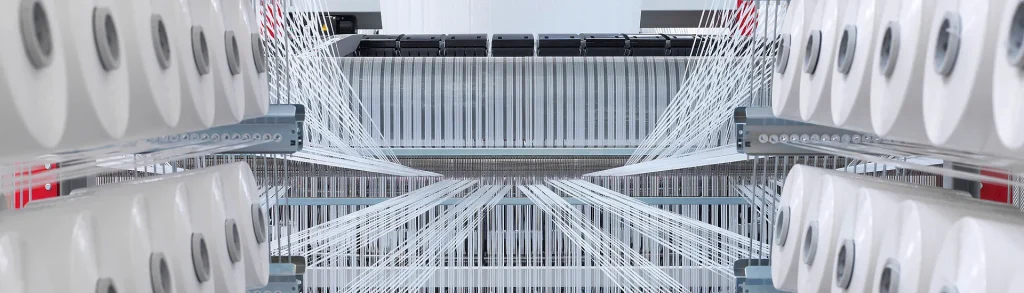
Polypropylene films are extruded, slit into tapes, and drawn to align chains; drawing lifts modulus and tenacity without laying down extra grams. Woven as warp and weft, these tapes disperse point loads and arrest tear propagation. Density is ~0.91 g/cc—an unglamorous but mighty number that allows high specific strength. UV-stabilizer packages keep strength from collapsing in garden centers or yard storage. Cost is dominated by resin, energy, and loom productivity; design levers include GSM, tape denier, pick density, and loom type (circular vs. flat).
Face films and paper-touch exteriors
Reverse-printed BOPP—matte, gloss, or pearl—serves as the graphics engine and abrasion shield. Matte lowers glare under LED aisles; gloss saturates color; pearl evokes premium. Paper-touch hybrids give a tactile cue while retaining woven strength underneath. Performance hinges on surface treatment, ink system, over-varnish, and the press’s register control. Cost is justified not only by shelf impact but by avoided reprints and avoided returns when palettes rub for weeks.
Bonding, lamination, and tie layers
Extrusion coating with PE/EVA or PP-based adhesives couples faces to the woven substrate and governs MVTR. More microns mean lower MVTR but more stiffness; fewer microns often glide better on conveyors. Adhesion must survive folding and vibration; peel strength and fiber tear are validated during changeovers. The art is to pay only for barrier you need, in the climate you actually ship through.
Food-contact liners
Mono-PE liners provide a hygienic surface and predictable seals; co-ex structures (e.g., PE/tie/EVOH/PE) add oxygen barrier for aroma-rich foods. SIT and hot tack define how fast lines can run; antistatic agents reduce dust cling; antimicrobial features, where allowed, extend hygiene margins. Economically, a liner adds cents but prevents dollars of spoilage and dust-related downtime.
Additives and helpers
UV inhibitors protect strength outdoors; antioxidants keep chains intact at melt; slip and anti-block agents tame film handling; optical brighteners keep whites clean; odor scavengers, when compatible, keep aroma inside. Each addition must be vetted for food-contact rules in destination markets.
| Subsystem | Typical options | What it solves | Cost levers |
|---|---|---|---|
| Woven PP core | 70–140 g/m²; fine denier; circular or flat loom | Tensile, tear, seam strength; pallet geometry | GSM; denier; loom speed; draw ratio |
| Face film | Matte/gloss/pearl BOPP; clear windows | Scuff resistance; barcode legibility; brand pop | Gauge; ink system; over-varnish |
| Lamination | PE/EVA; PP tie layers; paper-bond coats | MVTR tuning; adhesion; hand feel | Microns; chemistry; web tension |
| Food liner | PE mono; PE/EVOH/PE; antistatic | Hygiene; MVTR/OTR; seal speed; odor control | Gauge; SIT; hot tack; additives |
Features: From Talking Points to Testable Behaviors
Features matter only when they survive a bad week on the road. Here we restate the headline attributes of Food Grade Woven Fabric Bags and tie each one to a mechanism and a measurable outcome.
Production: From Pellets and Pulp to Pallets and Proof
Nothing in packaging is more expensive than instability. Process windows—set and held—create the confidence that lets fillers run fast and brands sleep. Below is a chain-of-custody walkthrough of how stable Food Grade Woven Fabric Bags are made when discipline is non-negotiable.
Front-end: incoming control
- Resins & films: Virgin PP, food-grade PE/EVA, BOPP finishes; verify MFI, gauge, dyne, moisture; reject drift before it becomes downtime.
- Liners: SIT, hot tack, OTR/MVTR; antistatic behavior for powder lines; confirm gauge uniformity.
- Inks & varnishes: Viscosity, adhesion, curing; migration profiles for destination markets; odor panels for sensitive foods.
- Paper (if used): Basis weight, Cobb, moisture; ensure sizing matches the coating plan.
- Documentation: Lot-linked CoAs and retains; traceability begins before extrusion.
Midstream: forming the body
- Extrusion & tape drawing: Control die gaps and draw ratios to land in the sweet spot: under-drawn creeps, over-drawn cracks. Validate denier and elongation.
- Weaving: Warp/weft balance and pick density build GSM and surface evenness; the smoother the fabric, the cleaner the lamination and the sharper the print.
- Lamination: Extrusion-coat PE/EVA or apply tie layers; manage laydown weight and web tension; watch edge bead and gauge bands.
- Printing: Reverse-printed faces lock color and microtext under film; ΔE audits and register maps keep artwork faithful at scale.
- Conversion: Tube, crease, and form block-bottoms or pinch-tops; insert valves; confirm mouth squareness and base geometry for stable pallets.
- Sealing: Ultrasonic or hot-air closes eliminate needle holes for fine powders; validate with product-in-bag—not air-only—tests.
Back-end: inspection and release
- Mechanical: Tensile, tear, seam pull, drop tests at realistic humidity and temperature.
- Barrier & hygiene: MVTR panels; migration to FDA/EU/JIS limits where applicable; organoleptics for odor-sensitive lines.
- Dimensional & visual: Length, width, gusset, base squareness, valve alignment; registration and rub resistance.
- Traceability: IQC → IPQC → FQC → OQC records; batch retains; shipping mark verification.
| Gate | Key checks | Methods | Records |
|---|---|---|---|
| IQC | MFI, gauge, dyne, moisture; liner SIT/OTR | Melt indexer; micrometer; dyne pens; Karl Fischer; Mocon | CoAs; retain samples; lot map |
| IPQC | GSM, lamination weight, ΔE, COF, seam pull | Gravimetric; spectro; tribometer; tensile frame | Control plan; SPC charts |
| FQC | Drop; MVTR/migration; barcode grade | Drop tower; Mocon/GC-MS; ISO/IEC 15416 | Release notes; AQL pictures |
| OQC | Dimensions; print audit; traceability | Calipers; register check; lot scan | Shipping mark; pallet photos |
Applications: Where Hygiene, Density, and Shelf Presence Converge
A practical map of where Food Grade Woven Fabric Bags excel helps teams position them against alternatives. Use cases include:
- Rice and grains: Hygiene, traceability, matte faces for glare-free reading; stable pallets for long lanes.
- Flour and starches: Leak-tight pinch tops; co-ex liners reduce caking; micro-perfs tuned for fast fill.
- Sugar and sweeteners: MVTR discipline is everything; base COF dialed for conveyor speed.
- Pulses, legumes, nuts: Puncture resistance with optional windows; UV-stable inks for outdoor stalls.
- Milk powders and dry dairy: Food-contact documentation plus scuff-proof graphics for export hubs.
- Seeds and animal nutrition: UV packages and anti-slip faces for yard storage and stacked displays.
- Spices and mixes: EVOH liners for aroma; small-type compliance blocks sheltered under film.
Quality: Four Pillars That Turn Ambition into Repeatability
VidePak frames quality as four reinforcing disciplines. Each pillar prevents a different category of disappointment.
- Standards-led design and verification: Map performance to ISO/ASTM/EN/JIS; treat drop, seam pull, ΔE, MVTR, COF, barcode grade, and migration as CTQs; document control plans and SPC.
- Virgin raw materials from audited majors: 100% virgin PP; food-grade PE/EVA; certified films and inks; lot-linked CoAs to keep surprises out of production.
- European equipment pedigree: Starlinger for extrusion, weaving, lamination, and automated block-bottom; W&H for high-register printing and film handling. Gauge stability and register accuracy show up as uptime on the filler.
- Complete inspection flow: IQC → IPQC → FQC → OQC with retains and photo evidence; release built on data, not hopes.
Comparisons: Choosing Not Just a Bag, but a Risk Profile
No material system wins everywhere. The value of Food Grade Woven Fabric Bags emerges when strength, moisture control, and brand fidelity all matter at once. The table below places this platform next to common alternatives so tradeoffs are explicit rather than implicit.
| Criterion | Food grade woven fabric | Plain PP woven | Multiwall paper sacks | Mono-PE FFS |
|---|---|---|---|---|
| Strength/tear | Excellent (oriented tapes) | Excellent | Good but weak when wet | Very good |
| Moisture control | Tunable (lamination + liner) | Tunable with coatings | Limited unless lined | Excellent |
| Print & codes | High (reverse-printed film; varnish) | Fair (coarse face) | High | Good |
| Pallet stability | Excellent (block-bottom) | Good | Good | Excellent |
| Perceived sustainability | High (mono-polyolefin pathways) | Medium | High (paper cue) | Medium |
Failure Modes: Anticipate, Instrument, Intervene
Packaging fails in patterns. The faster you can name the pattern, the faster you can stop it from repeating. Below is a practical FMEA-like snapshot tuned to Food Grade Woven Fabric Bags in food lanes.
| Failure mode | Typical cause | Detection | Countermeasure |
|---|---|---|---|
| Caking | High MVTR; humid lanes; slow degassing | MVTR panels; product sieving after storage | Thicker lamination/liner; tuned micro-perfs; conditioning before seal |
| Seam dusting | Sewn needle holes; low seam energy | Visual; belt dust monitors; loss at weigher | Ultrasonic/hot-air; seam energy increase; dust flaps |
| Barcode failure | Low contrast; mis-register; scuff | ISO/IEC 15416 grading | Quiet zones; ΔE limits; place under film; varnish |
| UV embrittlement | Insufficient stabilizer; long yard dwell | Accelerated UV aging; tensile retention | HALS package; shade storage; kLy targets |
Design Rules of Thumb: Starting Points, Not End Points
Recipes below are not commandments; they are calibrated hypotheses meant for rapid confirmation on the actual filler.
- 25 kg rice: 90–110 g/m² woven; matte BOPP 20–25 μm; PE 14–18 μm; PE liner 40–50 μm; open-mouth pinch with ultrasonic close; generous barcode quiet zones.
- 20 kg flour: 80–100 g/m² woven; co-ex face with EVOH; pinch-top; food-contact inks; MVTR ≤ 4 g/m²·24h.
- 50 lb sugar: 100–120 g/m² woven; matte face + anti-slip base varnish; thicker lamination for monsoon months; block-bottom for cube.
- 15 kg nuts: 90–110 g/m²; pearlized BOPP; co-ex odor-barrier liner; clear window zone for product reveal.
- 25 kg pet treats: 100–120 g/m²; BOPP gloss 20–25 μm; zipper/tape reclose; odor-barrier liner; corner radii increased.
Procurement and TCO: Counting the Costs You Actually Pay
Unit price is visible; waste is stealthy. A thinner lamination might save cents but cost hours in rework and weeks of brand damage. A robust Food Grade Woven Fabric Bags spec privileges stability—gauge control, seam integrity, protected graphics, and documented compliance—because they prevent the expensive failures: spoilage, chargebacks, reprints, and missed deliveries.
Artwork and Data: Designed for Presses, Surviving Forklifts
On the press, everything gleams; in the aisle, nothing is gentle. Place barcodes where faces do not rub; surround them with quiet zones; specify module width and contrast; demand ΔE ≤ 2.0 to the master; apply matte where glare sabotages legibility or gloss where vibrancy sells. If scuff is inevitable, place microtext under film and move compliance blocks off friction ridgelines.
- Spectro reads on brand colors; ΔE records kept with the job ticket.
- Barcode grade checks on the worst pallet face, not the best press sheet.
- Print-to-cut alignment proofs; varnish maps attached to purchase orders.
Environmental Accounting: Outcomes Over Adjectives
Sustainability that only exists in copy points doesn’t survive an audit. What does? Measured reductions in spoilage, rework, and transport damage; mono-polyolefin stack designs that align with real recovery streams; ink systems that trade VOCs for performance; GSM tuning that aligns grams to function. In other words, less waste now, not promises later.
Systems Thinking: Decompose, Optimize, Recompose
A bag is a system of systems. Rather than arguing preferences (matte vs. gloss, valve vs. pinch), define sub-goals and match levers to them; then integrate.
Frequently Asked Questions: Candid Answers Engineers Use
Short questions, specific answers—because a line stop does not wait for long essays.
How do we balance barrier with fill speed? Use micro-perfs and sleeve vents to purge entrained air; seal in stages if needed; keep liner MVTR high enough to protect but not so low that ballooning occurs.
Is recyclability realistic for food-contact sacks? In mono-polyolefin designs, yes—especially with water-based inks and clear labeling. For residue-heavy streams, couple take-back with non-food recycling.
When should we specify EVOH? Whenever aroma is value or oxygen shifts quality; verify OTR alongside organoleptics.
What’s the cleanest close for fine powders? Ultrasonic pinch-top or hot-air seals: no needle holes, lower dust, tighter leak performance.
Buyer’s Checklist: From RFQ to First Stable Shipment
- Define contents: density, particle size, oils/odors, moisture sensitivity, temperature exposure.
- Pick the stack: face finish, lamination micron, liner recipe, micro-perfs.
- Choose format & seam: valve vs. open-mouth; block-bottom vs. pinch; ultrasonic vs. sewn.
- Specify artwork & data: ΔE limits; barcode module width, contrast, and quiet zones; protected variable-data areas.
- Map the test plan: tensile/tear/seam/drop; MVTR/OTR; migration; rub; COF; barcode grades; UV exposure.
- Pilot on the real filler: DOE for valve ID and perfs; track dust, rejects, OEE.
- Freeze the spec; monitor in market: returns, pallet lean, scuff claims; re-qualify on cadence.
Glossary: Fast Definitions for Faster Meetings
BOPP — Biaxially oriented polypropylene film used for scuff-resistant, high-fidelity print faces. | COF — Coefficient of friction, governing pallet slip vs. belt glide. | EVOH — Oxygen barrier layer favored in aroma-sensitive lines. | HALS — UV stabilizers that keep polymers from chalking in the sun. | MVTR — Moisture vapor transmission rate; lower numbers protect hygroscopic goods. | Pinch-top — Closure formed by folding and heat/ultrasonic sealing the mouth. | Valve bag — Body filled through a sleeve; self-closure as product fills and air escapes. | ISO 22000 — Food safety management standard that institutionalizes HACCP. | EU 10/2011 — Plastics for food contact in Europe. | FDA 21 CFR — U.S. rules governing food-contact substances.
In essence, Food Grade Woven Fabric Bags are not a compromise between strength and style but a composition: a mechanical spine, a protective face, and a hygienic heart—each tuned to the journey your food must take. Specify with data, build with discipline, and the result will not just travel; it will arrive.
- Context: Why Food Packaging Needs Both Proof and Poetry
- Definition: What Exactly Are Food Grade Woven Fabric Bags?
- Materials: The Stack as a Negotiation Between Hazards and Costs
- Features: From Talking Points to Testable Behaviors
- Production: From Pellets and Pulp to Pallets and Proof
- Applications: Where Hygiene, Density, and Shelf Presence Converge
- Quality: Four Pillars That Turn Ambition into Repeatability
- Comparisons: Choosing Not Just a Bag, but a Risk Profile
- Failure Modes: Anticipate, Instrument, Intervene
- Design Rules of Thumb: Starting Points, Not End Points
- Procurement and TCO: Counting the Costs You Actually Pay
- Artwork and Data: Designed for Presses, Surviving Forklifts
- Environmental Accounting: Outcomes Over Adjectives
- Systems Thinking: Decompose, Optimize, Recompose
- Frequently Asked Questions: Candid Answers Engineers Use
- Buyer’s Checklist: From RFQ to First Stable Shipment
- Glossary: Fast Definitions for Faster Meetings
Opening Dialogue: Addressing Critical Client Concerns
Client: “We need food-grade packaging that’s both durable for logistics and safe for direct food contact. How do your woven fabric bags ensure compliance while maintaining flexibility and strength?”
VidePak: “Food-grade woven fabric bags achieve durability and safety through precision-controlled extrusion, drawing, and weaving processes. At VidePak, we combine Austrian Starlinger technology, FDA-compliant virgin PP materials, and solar-powered production to deliver solutions that exceed ISO 22000 standards—ensuring your products stay protected while aligning with global sustainability goals.”
1. The Science Behind Durability: Extrusion, Drawing, and Weaving
The structural integrity of woven fabric bags hinges on three core manufacturing stages: extrusion, drawing, and weaving. Each phase directly impacts tensile strength, flexibility, and resistance to environmental stressors—critical for food-grade applications.
1.1 Extrusion: Precision in Polymer Processing
Extrusion transforms raw polypropylene (PP) pellets into uniform filaments. VidePak’s 16 extrusion lines operate at temperatures between 200–240°C, optimizing polymer flow and minimizing crystallinity defects. Key factors affecting durability:
- Temperature Control: ±2°C variance ensures consistent filament thickness (1.8–2.3 mm), reducing weak points.
- Additive Integration: Food-grade antioxidants and UV stabilizers are blended during extrusion, enhancing shelf life by 30% in outdoor storage.
Example: A 2024 study by Smithers Pira found that PP filaments extruded at 220°C with <1% moisture content exhibit 25% higher tear resistance than industry averages.
1.2 Drawing: Enhancing Tensile Strength
Drawing aligns polymer molecules by stretching filaments post-extrusion. VidePak’s fine-yarn technology achieves:
- Draw Ratio: 6:1, increasing tensile strength to 45 MPa (vs. 35 MPa for undrawn filaments).
- Surface Smoothness: Reduced friction coefficients (<0.15) prevent fiber abrasion during weaving.
Case Study: A European organic grain supplier reported zero bag ruptures during transatlantic shipping after switching to VidePak’s high-draw-ratio bags in 2023.
1.3 Weaving: Balancing Flexibility and Load Capacity
VidePak’s 100+ Starlinger circular looms weave filaments into fabrics with:
- Thread Density: 12×12 strands/inch² for 50 kg load capacity.
- Weave Patterns: Plain, leno, or honeycomb designs adjust flexibility—critical for packaging irregularly shaped foods like nuts or frozen produce.
Performance Comparison:
| Weave Type | Elongation at Break | Puncture Resistance (N) |
|---|---|---|
| Plain Weave | 15–20% | 120 |
| Leno Weave | 25–30% | 90 |
| Honeycomb Weave | 10–15% | 150 |
2. Sustainability Meets Food Safety: VidePak’s Dual Commitment
2.1 Material Safety and Compliance
VidePak’s food-grade bags comply with:
- FDA 21 CFR: Non-toxic, odor-free PP resins.
- EU No. 10/2011: Migration limits for heavy metals (<0.01 ppm).
- ISO 22000: HACCP-certified production facilities.
Example: Independent lab tests confirm our bags’ lactic acid migration levels at <2 mg/kg—50% below EU thresholds.
2.2 Eco-Conscious Manufacturing
- Solar Energy: 2 MW rooftop system powers 40% of operations, reducing CO₂ emissions by 1,200 tons/year.
- Closed-Loop Recycling: 98% post-industrial PP waste reused in non-food applications like pallet straps.
3. Technical Specifications and Customization
3.1 Product Parameters
| Parameter | Specification | Food Application |
|---|---|---|
| Thickness | 80–200 GSM | 80 GSM for rice; 200 GSM for frozen seafood |
| Lamination | BOPP/PE film, matte or glossy finishes | Matte for anti-slip handling |
| Inner Liners | Food-grade PE/Aluminum foil | Foil for moisture-sensitive spices |
3.2 Custom Solutions
- Printing: 8-color CMYK/Pantone matching for brand visibility.
- Closure Systems: Heat-sealed valves or sewn seams with FDA-approved threads.
For specialized needs, explore our BOPP laminated solutions and sustainable packaging innovations.
4. FAQs: Addressing Procurement Concerns
Q1: How do you ensure bags remain tear-resistant in freezer conditions (-20°C)?
A: Our PP resin blend retains 90% tensile strength at -25°C, tested per ASTM D638.
Q2: Can bags withstand acidic food contents (e.g., citrus fruits)?
A: Yes, our PE liners resist pH levels from 2–12, validated by 28-day immersion tests.
Q3: What’s the lead time for custom designs?
A: Standard orders ship in 15 days; urgent batches (50,000+ units) in 7 days.
5. Industry Trends and VidePak’s Leadership
The global food packaging market, projected to reach $478 billion by 2028, demands solutions that merge safety with eco-efficiency. VidePak’s R&D initiatives include:
- Biodegradable PP Blends: 180-day decomposition under industrial composting.
- Smart Sensors: RFID tags for real-time temperature monitoring in transit.
References
- Smithers Pira, Global Food Packaging Trends 2024.
- FDA, Code of Federal Regulations Title 21.
- European Commission, Regulation (EU) No 10/2011.
- VidePak Sustainability Report, 2024.
Contact Us:
Website: www.pp-wovenbags.com
Email: info@pp-wovenbags.com
VidePak – Engineering Excellence, Delivering Trust.