
FIBC Bulk Bags: Ensuring Quality with an Overview of Production and Testing Standards

What Are FIBC Bulk Bags and Why Do They Matter?

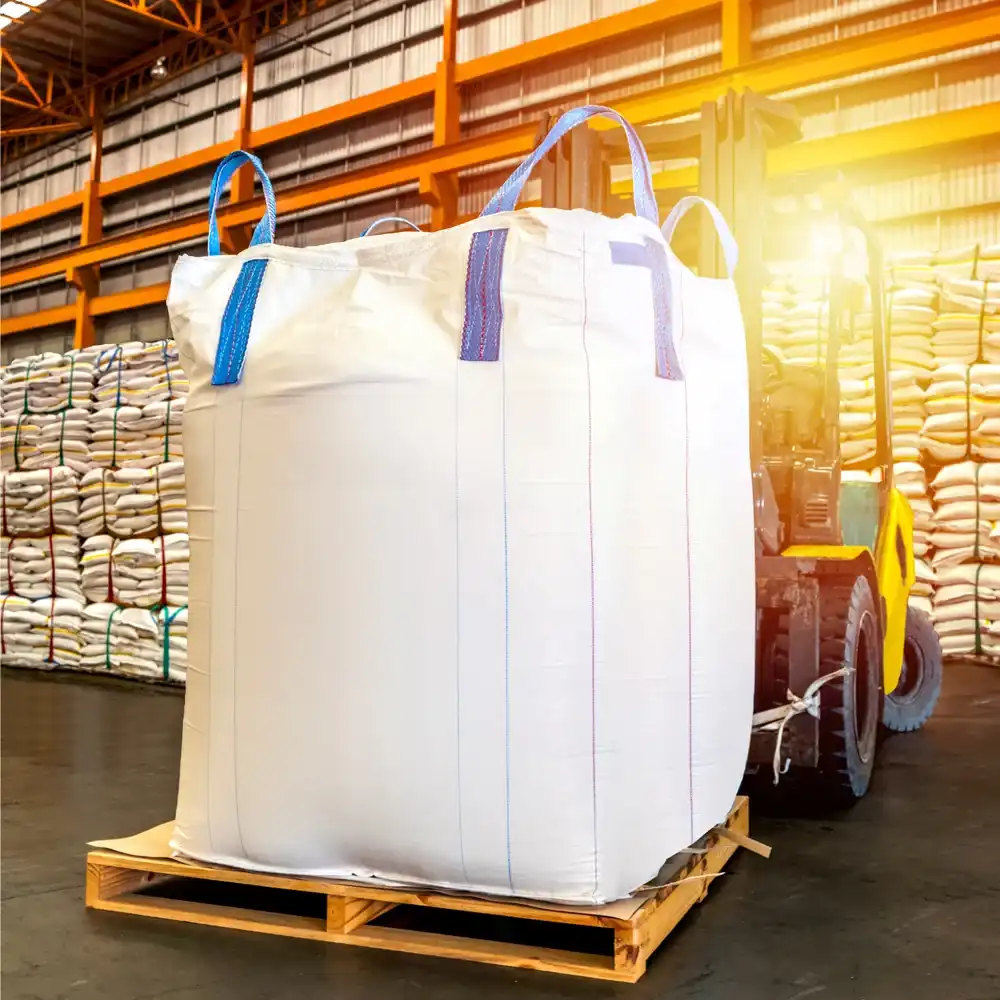
In modern bulk logistics, FIBC Bulk Bags—the flexible intermediate bulk containers that warehouse managers also call jumbo bags or ton bags—stand at the intersection of material science, safety engineering, and supply-chain design. They are capacious yet light, strong yet flexible, simple to handle yet highly configurable. A single engineered container consolidates dozens of small sacks into one controlled unit, enabling faster filling, safer lifting, cleaner storage, and easier traceability. When granular resin, milled minerals, refined sugar, powdered pigments, or polymer pellets must move across continents, the question is not if FIBC Bulk Bags can help, but how to specify them precisely so they behave as intended from the first lift to the final discharge.

Key aliases you will encounter in procurement conversations: Jumbo Bags, Ton Bags, Bulk Bags, and Flexible Intermediate Bulk Containers. Each term points to the same engineered family, with nuanced differences in regional usage and industry jargon.

Typical SWL: 500–2,000 kg, depending on design, fabric mass, seam architecture, lift-loop geometry, and test outcomes.

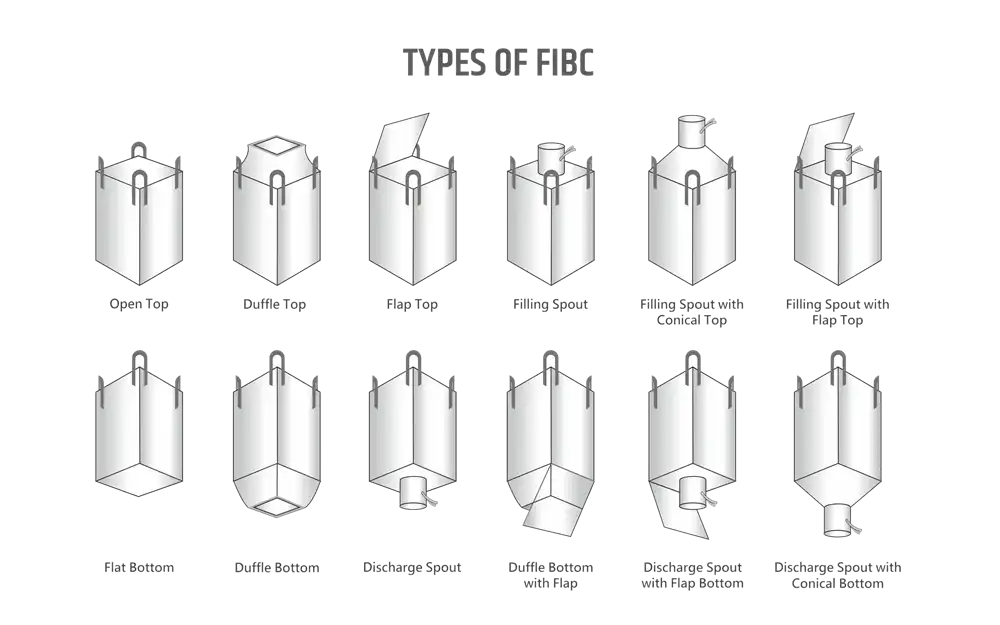
Common builds: tubular or U-panel shells, with or without baffles, with spout tops or duffel tops, with flat bottoms or conical discharges.

Core materials: oriented PP tapes woven into fabric; optional PE or co-ex liners; optional conductive or dissipative yarns for static control.

How do these containers earn their keep? They reduce the number of touches. They accelerate line throughput. They cut waste and housekeeping time. They enable consistent pallet footprints, safer stacking, and clearer identification. To make that promise real, the design must align with the product’s physical behavior (flow or no flow?), the environment’s electrical classification (is there flammable dust or vapor?), and the journey’s constraints (how long outdoors? how often lifted?). The sections that follow are designed as a practical, engineering-first walkthrough of FIBC Bulk Bags for buyers, quality managers, and plant engineers who want durable results rather than surprises.

Material System of FIBC Bulk Bags: Resin, Additives, Liners, and ESD Fabrics

All performance flows from materials. Change the resin, and you change the drawability of tapes. Change the masterbatch, and you alter UV aging. Change the liner, and you reshape moisture risk, aroma migration, and dust containment. In other words: the shell is not merely a fabric; it is a system. The liner is not mere plastic; it is a barrier strategy. And static control is not a sticker; it is an engineered fabric choice with operational discipline. The following map decomposes that system so each component’s role is obvious.

  • Shell fabric (PP woven): semi-crystalline polypropylene tapes, extruded, slit, oriented, and woven into tubular or flat textiles. Known for high tensile-to-weight ratio, abrasion resistance, and chemical tolerance to common salts and fertilizers.
  • Additive package: UV stabilizers (often HALS and/or carbon black), antioxidants, and color masterbatches. These tune weathering, oxidative stability, and brand appearance.
  • Liners: LDPE or LLDPE for moisture and dust, co-ex structures (e.g., PE/EVOH/PE) for barrier-sensitive powders, and—when warranted—foil laminates for elevated oxygen/light protection.
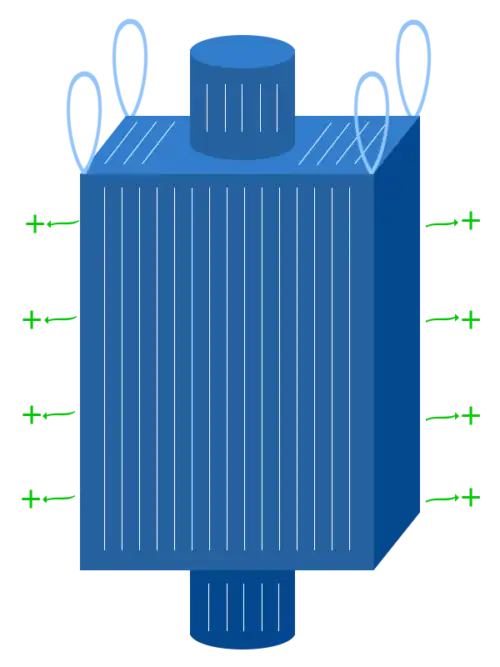
  • Static control fabrics: Type B (prevents propagating brush discharges), Type C (conductive—must be grounded), and Type D (static-dissipative—designed to neutralize charge without ground cables).
  • Ancillaries: lift loops (woven PP webbing), baffles, reinforcement patches, spout/duffel assemblies, drawcords, document pouches, and labels.

Cost levers are not where newcomers expect them. Fabric GSM can be right-sized via process capability; coating or lamination adds a protective layer but must be controlled for laydown uniformity; liners can switch from loose to form-fit to reduce creasing and product hang-up during discharge. The best strategy aligns material choices with real risks: sun, moisture, dust explosions, hygiene, impact shocks, and warehouse creep.

Component Purpose Typical Options Risk Managed
PP woven shell Load-bearing envelope GSM 130–240; tubular or U-panel Tensile, abrasion, seam efficiency
Coating/lamination Moisture and creep control PP/PE coatings, film laminate Humidity, dimensional stability
Liner Barrier and product hygiene LDPE/LLDPE, co-ex (EVOH), foil Moisture ingress, aroma, dust
ESD fabric type Static hazard management Type B / Type C (grounded) / Type D Brush/spark discharge
Lift loops Handling interface Cross-corner, side-seam, single-point Overhead safety, ergonomics

Design Features of FIBC Bulk Bags That Drive Real-World Performance

Features are not decorative; features are risk controls and productivity levers. The following core attributes determine how FIBC Bulk Bags behave when they are filled on vibrating weighers, lifted by forklifts or cranes, stacked in humid warehouses, and discharged at mixers or hoppers. Some options reduce bulging and freight cost; some options manage dust and static; some options save minutes on every fill cycle. Combine them carefully and the bag becomes an enabler, not a constraint.

Load rating and safety factor: The safe working load is validated by cyclic lift testing; safety factors of 5:1 (single trip) and 6:1 (multiple trips) are common architectures. Specify the rating honestly and test it thoroughly.

Baffles: Internal panels stitched at the corners restrain bulging, preserve the footprint, and increase pallet density. In some lanes, baffles pay for themselves in one container shipment.

Liners: From simple loose inserts to form-fit liners bonded at specific tabs, liners reduce dust, protect against moisture, and smooth the discharge of cohesive powders.

Lift-loop geometry: Cross-corner loops help operators find the loops under stretch-wrap; side-seam loops can reduce folded height; single-point loops can simplify crane lifts.

Tip for specification writers: Do not specify everything; specify what matters. If your product is hygroscopic, prioritize liner thickness and seal strength. If your warehouses are outdoors, mandate UV stabilization with certification. If your process area is classified for flammable dust, choose Type C or Type D and write the grounding method into the work instruction.

Production Journey of FIBC Bulk Bags: From Virgin Resin to Shipment Release

Manufacturing FIBC Bulk Bags is a sequence of controlled transformations. Each step has inputs, setpoints, measurements, and release criteria. Where the equipment base is best-in-class—Starlinger for extrusion/looming and W&H for coating/printing—process drift narrows, variation reduces, and final properties become more predictable. The following map serves as a practical traveler from incoming inspection to final quality clearing.

  1. Incoming inspection: verify melt-flow index of PP resin; check masterbatch lots (UV, antioxidant, color); quarantine conductive yarns and anti-static agents by lot; confirm liner resin grade and thickness targets.
  2. Extrusion and tape orientation (Starlinger): control melt temperature, haul-off speed, and draw ratio to achieve stable denier and tensile/elongation on tapes; lock reel IDs to machine and operator.
  3. Weaving (Starlinger circular looms): set pick density and loom tension; patrol-inspect for missing picks and roll marks; map defects to avoid placing seams on weak zones.
  4. Coating/lamination (W&H): define laydown weight and adhesion; perform peel tests; watch for voids and orange-peel; record nip pressure and temperature.
  5. Printing (W&H): manage artwork versions; control registration; manage solvent and drying to respect food-contact requirements when applicable.
  6. Conversion: heat-cut or cold-cut panels for body, base, baffles, and reinforcements; measure cut-edge stability and seal bands.
  7. Sewing and assembly: apply standard seam recipes with stitch density controls; use Poka-Yoke jigs for loop placement; align baffles within tolerance; attach spouts/duffels and document pouches.
  8. Liner fabrication and insertion: extrude liner film; verify thickness and seal strength; insert and fix liners (loose, tabbed, or glued); ensure spout-to-liner interfaces are dust-tight.
  9. Cleaning, packing, and labeling: needle/debris control; standardized folding to protect loops and spouts; apply serialized labels and barcodes.
  10. Final quality checks: dimensional audit; GSM and mass checks; tensile/seam/loop tests; liner pressure tests; ESD and UV documentation; AQL sampling and QA sign-off.

Why equipment pedigree matters: When extrusion lines hold denier tightly and looms maintain pick density with low downtime, fabric variation falls. When coaters control laydown and printers keep registration, appearance stabilizes and coatings perform as intended. The net result is not only fewer nonconformances but also stronger confidence in safety factors and long-term storage behavior.

Where FIBC Bulk Bags Excel: Industry Applications and Edge Cases

Use-cases are as diverse as the particles that fill the bags. From grains that flow like a river to pigments that clump at the first hint of humidity, FIBC Bulk Bags adapt through liners, coatings, baffles, and carefully chosen loop geometries. Below are representative sectors and the design cues they demand.

Agriculture: refined sugar, rice, grain, seeds. Prioritize moisture control via liners; consider baffles for stackability in silos and warehouses; implement food-contact controls as needed.

Chemicals and polymers: pellets, flakes, and powders. When explosive dust or solvent vapors are plausible, use Type C (grounded) or Type D (dissipative) shells and document operator instructions.

Construction and mining: sand, gravel, crushed stone, cement, ore concentrates. Favor rugged base reinforcements and conical discharges for dense, low-flow materials.

Food and nutraceuticals: flour, starches, whey, fine powders. Adopt form-fit liners to limit creasing, reduce dusting, and improve discharge predictability.

Fertilizer and salts: weather-tolerant builds with higher UV stabilizer levels; coated exteriors can help resist humidity and preserve dimensional stability.

Recycling and waste: rubble, scrap, and reclaim streams. Open-top duffels speed loading; heavy-duty loops tolerate rough handling and crane lifts.

How VidePak Governs Quality for FIBC Bulk Bags: A Four-Pillar Method

Pillar 1 — Standards: Align design and verification with mainstream norms (ISO, ASTM, EN, JIS as relevant). Validate SWL/SF, seam strength, drop behavior, stack/creep, static properties, and—when required—food-contact and UN categories.

Pillar 2 — Materials: Use virgin PP/PE resins for premium and food-grade builds; qualify masterbatch suppliers; control melt-flow index for stable tape drawing and downline consistency.

Pillar 3 — Equipment: Deploy Starlinger lines for extrusion & weaving and W&H systems for coating & printing. Tight machine capability reduces unit variation and raises repeatability.

Pillar 4 — Layered QC: IQC/IPQC/FQC/OQC checks spanning dimensions, GSM, tensile/seam/loop, liner seals, ESD/UV documents, and AQL sampling. No certificate pack, no shipment release.

The practical output of this method is simple: FIBC Bulk Bags that behave as engineered. When the warehouse lifts, they hold; when the weather bears down, they endure; when the operator discharges, they flow. Not by accident—by system.

Testing Map for FIBC Bulk Bags: What to Measure and What It Catches

Parameter What It Measures Typical Method Failure Mode Caught Operational Meaning
Fabric GSM and bag mass Consistency of load-bearing envelope GSM cutters, calibrated scales Underbuild or overbuild Strength at cost target
Seam strength & efficiency Integrity of stitched joints Strip/grab, pull-to-break Seam pops Predicts shock resilience
Loop tensile Safety margin for overhead lifts Loop break tests Loop tear Operator safety
Drop/impact behavior Shock tolerance when handled roughly Instrumented drop tests Base seam or liner rupture Real-world incident predictor
Static properties Risk of brush/spark discharges Resistivity, continuity, decay Ignition in classified areas Safe powder handling
UV exposure durability Weathering resistance Accelerated UV cycles Embrittlement, chalking Outdoor storage readiness
Liner thickness and seals Barrier integrity Thickness mic, pressure tests Moisture ingress, leaks Product quality protection

Testing is not bureaucracy; it is foresight, codified. It reveals weak edges, unstable seams, underbuilt loops, and liners that only look right. Measure what matters and you will ship fewer regrets.

System Thinking for FIBC Bulk Bags: From Local Controls to Plant-Level Capability

What causes most field failures? Not freak events, but small, repeatable drifts: denier scatter from extrusion, pick-density variation in weaving, coating laydown that wanders, stitch density that slips, grounding that is forgotten, UV stabilizers that are under-dosed. The cure is a system where materials, machines, measurements, and methods align to create capability. Below is a compact map of local controls and how they aggregate into predictable deliveries.

  • Materials: IQC on melt-flow, density, ash, moisture, and color. Dual-source with matched specs. Interlocks on masterbatch dosing.
  • Extrusion: closed-loop thickness and denier monitoring; SPC charts with alarm thresholds and defined reactions.
  • Weaving: daily tension calibration, patrol inspection for broken ends and missing picks, defect mapping integrated into panel nesting.
  • Coating: inline gauge checks, adhesion spot tests, nip pressure audits, and temperature logging.
  • Sewing: standard seam recipes, thread lot control, periodic pull tests, fixtures to prevent loop misplacement.
  • ESD: selection tool tied to product SDS and area classification; continuity testers at pack-out; clear operator instructions on grounding or dissipative handling.
  • UV: exposure profiling by geography and dwell time; documented stabilizer levels; certification included in the certificate pack.

When these controls are enforced, plant capability emerges: Cp/Cpk on GSM and coating laydown rises; seam efficiency stabilizes; loop tensile margins sit comfortably above targets; AQL pass rates climb; customer PPM falls. In other words, the factory stops hoping and starts knowing.

Choosing FIBC Bulk Bags: Application-Led Design Tables and Practical Notes

Application Shell Liner Loops Top/Bottom Notes
Refined sugar, flour 160–200 GSM PP, food-grade LDPE/LLDPE form-fit Cross-corner Spout / Conical Hygiene controls; metal detect optional
Fertilizer 180–220 GSM + UV PE as needed Side-seam Spout / Flat Outdoor dwell considered
Pigments and fine powders 180–220 GSM Co-ex EVOH or foil Cross-corner Spout / Star-closure Dust and odor control
Polymer pellets 160–190 GSM Loose PE Cross-corner Spout / Spout Document pouches for CoAs
Aggregates and sand 200–240 GSM None Side-seam Duffel / Flat Rugged base reinforcement
Flammable dust settings Type C or Type D fabric Liner matched to ESD Cross-corner Spout / Spout Grounding discipline or dissipative handling

A design choice is a hypothesis about the future. If your future includes salt air, long sunlight exposure, or two cranes working in tight aisles, write those into the specification. Then test against them.

Risk Map for FIBC Bulk Bags: Problems, Signals, and Countermeasures

Risk Early Signal Countermeasure Proof
Bulging/overhang on pallet Loaded width exceeds pallet at mid-height Add baffles; adjust GSM; validate fill level Loaded cube check with baffle tolerance audit
Seam pops under shock Telltale stitch stretch and puckering Tight seam recipe; needle spec; impact tests Instrumented drop results; seam efficiency
Moisture ingress Off-spec moisture readings; caking Coated shell + barrier liner; seal validation WVTR/pressure tests; humidity trials
Static ignition Audible snaps; visual sparking Type C with ground or Type D; training Continuity/decay tests; operator checks
UV degradation outdoors Chalking, embrittlement after months Stabilizer package + covers UV cycle certification

KPI Dashboard for FIBC Bulk Bags Operations

KPI Definition Target Why It Matters
Seam efficiency (%) Seam break vs. fabric break ≥ 80% Predicts resilience under shock
Loop break strength Average loop tensile ≥ 2.5× SWL Overhead lifting safety margin
GSM capability (Cpk) Process capability on grammage ≥ 1.33 (better ≥ 1.67) Controls cost and variation
Coating laydown Cpk Thickness capability ≥ 1.33 Moisture & creep stability
AQL lot accept rate % lots passed ≥ 99% Overall process health

Cost and Value Levers for FIBC Bulk Bags

Baffle optimization: because the cheapest freight is the freight you do not pay. By restraining bulge, baffles increase bag-per-pallet density, often trimming shipping cost per ton by double-digit percentages.

Right-sized GSM: capability-driven grammage avoids quiet overbuild. Strength holds where it must, cost recedes where it can.

ESD fit: pick Type C or Type D based on hazard, not habit. When a ground cable will be reliably connected, Type C often provides the most economical path to safety; when not, Type D buys simplicity.

Form-fit liners: less creasing, smoother discharge, cleaner docks. On dusty pigments, this small change can pay back in housekeeping time alone.

Documentation and Traceability for FIBC Bulk Bags

  • Certificate of Analysis: GSM, tensile, seam, loop, liner thickness/seals, ESD/UV data where specified.
  • Compliance set: references to applicable norms; migration statements for food-contact builds; UN/ESD handling instructions.
  • Traceability: lot IDs for resin, masterbatch, tapes, fabric, coating, liner; machine IDs (Starlinger and W&H); traveler IDs and operator stamps.
  • Use instructions: lifting with spreaders when needed; stacking limits; storage and re-use conditions.

Station-Level SOPs for FIBC Bulk Bags Manufacturing

  1. Extrusion: record setpoints and stabilize denier; sample tensile and elongation; quarantine off-target reels.
  2. Weaving: maintain loom health; verify pick density; map defects; schedule preventive maintenance.
  3. Coating/Lamination: control laydown with gravimetric checks; validate adhesion; document nip/temperature.
  4. Printing: proof approvals; maintain registration; manage solvents and drying parameters.
  5. Cutting & Conversion: heat-cut widths; inspect seal bands; track scrap percentage.
  6. Sewing & Assembly: standardized seam recipes; thread lot control; loop placement jigs; pull-test samples per shift.
  7. Liner: inspect thickness and seals; pressure test samples; align spout-to-liner interfaces.
  8. Cleaning & Packing: foreign-object control; folding discipline to protect loops; correct pallet patterns and wrap tension.

Training and Safety Notes for FIBC Bulk Bags in the Field

Grounding drill (Type C): connect clamps before filling and keep them on during discharge; verify continuity with a tester; train operators to react to out-of-range readings.

Forklift etiquette: enter loops cleanly; avoid sharp tine edges; use spreader bars where specified; never lift by one loop unless designed for it.

Stacking wisdom: respect maximum stack heights; use slip sheets as needed; monitor deformation on the first layer; keep bags covered outdoors.

Sustainability and Footprint in FIBC Bulk Bags

The greenest kilogram is the one you never make; the greenest kilometer is the one you never ship. By right-sizing GSM, using baffles to improve cube, and designing liners with appropriate (not excessive) barrier, FIBC Bulk Bags lower material and transport intensity. Where regulations allow, recycled content can serve in non-critical, non-food layers with traceability; at end-of-life, shells and liners can be separated to accelerate recycling.

Failure Analysis and CAPA for FIBC Bulk Bags

  • Seam pop: examine stitch density and needle heating; look for fray at cut edges; replicate with controlled pull tests.
  • Loop tear: check webbing weave, bartack pattern, and alignment; validate loop break margin ≥ 2.5× SWL.
  • Liner leak: map pinholes; review sealing bar wear/temperature; perform pressure and bubble tests.
  • Static incident: verify ground continuity; review training and humidity; confirm correct Type selection.
  • UV cracking: cross-section microscopy; verify stabilizer dose; correlate with exposure calendar.

Supplier Qualification and Audit Notes for FIBC Bulk Bags

  • Verify equipment pedigree (Starlinger for extrusion/looming; W&H for coating/printing).
  • Request historical CoA trends on GSM, seam efficiency, loop tensile, and liner seals.
  • Run pilot lots with accelerated testing—UV cycles, cyclic lift, and ESD characterization.
  • Audit SPC charts, the closure speed of corrective actions, and customer PPM trends quarterly.

Field Troubleshooting Playbooks for FIBC Bulk Bags

Bag will not discharge: check for bridging and cohesion; add vibration or massage; specify conical base and form-fit liner; manage moisture.

Static snaps: slow the fill rate; verify grounding; increase humidity if feasible; switch to Type D if ground discipline is unreliable.

Excess bulging: add baffles; verify GSM and weave density; confirm fill height; revisit stacking practice.

Condensation in liner: increase liner thickness; improve ventilation; add desiccants; manage temperature differentials during loading.

Common Buyer Questions on FIBC Bulk Bags (and Straight Answers)

What safety factor should I select?

Single-trip use typically employs 5:1; multi-trip designs target 6:1 with appropriate validation. Choose according to your handling cycle, incident history, and local requirements.

Do I need a liner?

If your product is moisture-sensitive, dusty, or food-grade, yes. Barrier needs drive thickness and material choice; form-fit liners reduce creasing and improve discharge.

Type B, C, or D?

Use Type C when a grounding program is reliable. Use Type D when you need neutralization without a ground cable. Type B helps with propagating brush discharges but is not a substitute for grounding where explosive atmospheres are possible.

Keyword Clusters and Long-Tail Phrases for FIBC Bulk Bags

Use natural-language clusters that readers actually type: jumbo bag with baffles, form-fit liner FIBC, conductive Type C bulk bag, static dissipative Type D container, UV stabilized PP bulk sack, cross-corner loop ton bag, food-grade FIBC for sugar, foil-lined FIBC for oxygen barrier, spout top conical bottom jumbo bag, and Starlinger W&H FIBC manufacturing. Each phrase solves a particular problem in a buyer’s head.

Further Reading for Buyers of FIBC Bulk Bags

For an extended buyer-oriented perspective on PP fabric bag choices, see this in-depth guide: strategy framework for selecting PP fabric bags. It complements the present discussion by mapping buyer objectives to specific construction options.

Operational Checklists You Can Copy Into Your RFQs

  • Describe the product with SDS and hazard notes; define SWL and safety factor; specify dimensions and pallet plan.
  • Set shell GSM targets for wall/base/baffle; specify coating or lamination; pick liner type and thickness.
  • Select loop style and working height; choose top and bottom designs; add any special closures.
  • Declare food, ESD, UV, or UN requirements; include artwork and labeling instructions.
  • Request CoA items, AQL levels, and documentation; require traceability and serial labeling.
2025-10-26
Table Of Contents
  1. What Are FIBC Bulk Bags and Why Do They Matter?
  2. Material System of FIBC Bulk Bags: Resin, Additives, Liners, and ESD Fabrics
  3. Design Features of FIBC Bulk Bags That Drive Real-World Performance
  4. Production Journey of FIBC Bulk Bags: From Virgin Resin to Shipment Release
  5. Where FIBC Bulk Bags Excel: Industry Applications and Edge Cases
  6. How VidePak Governs Quality for FIBC Bulk Bags: A Four-Pillar Method
  7. Testing Map for FIBC Bulk Bags: What to Measure and What It Catches
  8. System Thinking for FIBC Bulk Bags: From Local Controls to Plant-Level Capability
  9. Choosing FIBC Bulk Bags: Application-Led Design Tables and Practical Notes
  10. Risk Map for FIBC Bulk Bags: Problems, Signals, and Countermeasures
  11. KPI Dashboard for FIBC Bulk Bags Operations
  12. Cost and Value Levers for FIBC Bulk Bags
  13. Documentation and Traceability for FIBC Bulk Bags
  14. Station-Level SOPs for FIBC Bulk Bags Manufacturing
  15. Training and Safety Notes for FIBC Bulk Bags in the Field
  16. Sustainability and Footprint in FIBC Bulk Bags
  17. Failure Analysis and CAPA for FIBC Bulk Bags
  18. Supplier Qualification and Audit Notes for FIBC Bulk Bags
  19. Field Troubleshooting Playbooks for FIBC Bulk Bags
  20. Common Buyer Questions on FIBC Bulk Bags (and Straight Answers)
  21. Keyword Clusters and Long-Tail Phrases for FIBC Bulk Bags
  22. Further Reading for Buyers of FIBC Bulk Bags
  23. Operational Checklists You Can Copy Into Your RFQs

FIBC Bulk Bags, also known as Jumbo Bags, Ton Bags, and FIBC Bags, are vital for the transportation and storage of bulk materials across various industries. With a focus on customizable designs, including various inlet and outlet configurations, these bags provide flexible solutions for different applications. However, ensuring the quality of these bags is paramount, as numerous factors can affect their performance and safety. This article explores common quality issues associated with woven bags and highlights the comprehensive testing protocols implemented to guarantee that our products meet the highest standards.

Understanding FIBC Bulk Bags

FIBC Bulk Bags are large, flexible intermediate bulk containers designed to hold and transport bulk materials. They can be made from various materials, typically woven polypropylene (PP), which provides strength and durability. The customizable features of these bags—such as top opening designs (e.g., spout and flat top) and discharge options—allow users to select the best configuration for their specific needs.

Key Features:

  • Customizable Openings: Options include large openings for easy filling and specialized discharge spouts for efficient unloading.
  • High Load Capacity: Designed to carry significant weight, often ranging from 500 kg to 2,000 kg, depending on the application.
  • Durability: Built to withstand harsh handling and environmental conditions, ensuring the safety of the contents.

Common Quality Issues in Woven Bags

While FIBC Bulk Bags are engineered for durability and performance, several common quality issues can arise during production and use. Understanding these issues is crucial for maintaining high standards.

  1. Thickness Tolerance:
  • Variability in thickness can affect the bag’s strength and load capacity. Bags that are too thin may tear under stress, while excessively thick bags can be cumbersome and difficult to handle.
  1. Cut Edge Quality:
  • The cut edges of the bags must be neat and consistent. Uneven or frayed edges can lead to weak points that compromise the bag’s integrity.
  1. Color Variation:
  • Inconsistent color can indicate problems in the production process and may affect branding. Color variation can also impact UV resistance, as darker colors may absorb more sunlight.
  1. Weight Consistency:
  • The weight of the bag (grammage) must be consistent across production batches. Variations can affect both performance and cost-effectiveness.
  1. Mechanical Properties:
  • Key mechanical properties such as tensile strength, elongation, impact resistance, and aging performance are critical for ensuring the bag can withstand its intended use.
  1. Environmental Resistance:
  • FIBC Bulk Bags must be tested for UV resistance and aging to ensure longevity when exposed to sunlight and environmental elements.
  1. Eco-Friendliness:
  • As sustainability becomes increasingly important, the environmental performance of the materials used in production is a growing concern.

Comprehensive Quality Testing

To mitigate these common quality issues, our company implements a rigorous testing protocol that covers all aspects of FIBC Bulk Bag production. Here are the key testing parameters:

Testing ParameterDescription
Thickness ToleranceMeasurement of the bag’s material thickness to ensure consistency.
Cut Edge QualityInspection of cut edges for neatness and uniformity.
Color ConsistencyAssessment of color uniformity across bags.
Weight ConsistencyVerification of the grammage to meet specified standards.
Tensile StrengthTesting of the original material and finished bags for tensile strength and elongation rate.
Impact ResistanceEvaluation of the bag’s ability to withstand sudden force.
Aging PerformanceAssessment of the material’s durability over time under various conditions.
UV ResistanceTesting the bags’ ability to resist degradation from UV exposure.
Eco-FriendlinessVerification that materials used meet environmental standards.

The Importance of Quality Control

Quality control in the production of FIBC Bulk Bags is essential for several reasons:

  1. Safety and Reliability:
  • High-quality bags ensure that materials are securely contained, reducing the risk of spills and accidents during transport and handling.
  1. Cost-Effectiveness:
  • By minimizing defects and ensuring consistency, companies can reduce waste and lower costs associated with returns or replacements.
  1. Brand Reputation:
  • Delivering reliable products helps build trust with customers, enhancing brand reputation and customer loyalty.
  1. Regulatory Compliance:
  • Many industries require compliance with specific safety and quality standards. Thorough testing ensures that products meet these requirements.

Case Study: Application in Various Industries

FIBC Bulk Bags find applications in diverse sectors, including agriculture, construction, and chemical industries. For instance, in agriculture, these bags are often used to transport grains, seeds, and fertilizers. Their customizable design features allow for easy filling and discharge, improving efficiency in handling bulk materials.

  1. Transporting Grains:
  • The robust construction of Jumbo Bags ensures that grains are protected from moisture and contamination, while large openings facilitate quick loading.
  1. Chemical Storage:
  • In the chemical industry, FIBC Bags can be customized to include special features such as electrostatic discharge (ESD) protection, ensuring safe transport of hazardous materials.
  1. Construction Materials:
  • The strength and durability of these bags make them ideal for transporting heavy construction materials like sand, gravel, and cement, minimizing the risk of breakage during transit.

Conclusion

The production and quality assurance of FIBC Bulk Bags are crucial for ensuring the safety and effectiveness of bulk material handling. By addressing common quality issues through comprehensive testing protocols, our company guarantees that our products meet the highest industry standards. From customizable designs to rigorous quality control, FIBC Bulk Bags provide reliable solutions for various applications, ensuring that your products are transported safely and efficiently.

References

  1. Thompson, R. (2023). “Quality Control in Bulk Packaging: A Comprehensive Approach.” Journal of Packaging Science, 42(1), 15-30.
  2. Green, M. (2022). “Understanding the Impact of Material Quality on Bulk Bags.” Logistics and Supply Chain Management, 29(3), 77-89.
  3. Lee, A. (2021). “Advancements in FIBC Design and Manufacturing.” International Journal of Textile Science, 26(2), 50-65.

Leave a Comment

Your email address will not be published. Required fields are marked *

Scroll to Top