
Definition, Scope, and Context of HDPE Fabric Bags within Quality Management
HDPE Fabric Bags are heavy‑duty packaging formats manufactured from woven high‑density polyethylene tapes that are slit from film, drawn for orientation, and interlaced as warp and weft. Unlike thin monolayer film sacks, the textile‑like substrate of HDPE Fabric Bags delivers a high modulus‑to‑mass ratio, exceptional tear propagation resistance, reliable cold‑weather toughness, and long service life under abrasive handling. What distinguishes modern HDPE Fabric Bags in real plants is not just the polymer; it is the marriage of materials science with a disciplined quality management system that turns tribal know‑how into auditable, repeatable performance.
Aliases used across procurement specs and RFQs for HDPE Fabric Bags (terminology varies by region and sector):
- woven HDPE sacks
- polyethylene woven packaging
- coated HDPE woven bags
- laminated HDPE fabric sacks
- open‑mouth HDPE woven bags
- valve‑type HDPE fabric bags
- block‑bottom HDPE woven packaging
- tarpaulin‑grade HDPE fabric bags
- mono‑polyolefin HDPE woven sacks
- heavy‑duty HDPE textile bags
When packaging decisions are made under a formal quality management system, the specification of HDPE Fabric Bags becomes a controlled process rather than a commodity purchase. Denier, pick density, fabric GSM, coat weight, bond strength, COF zoning, and valve geometry are treated as process inputs; drop performance, WVTR, scuff cycles, and pallet stability are treated as outputs; and the discipline of measurement, analysis, and improvement connects the two. In short, a bag is a system, and a system is only as stable as its controls.
Constituent Materials of HDPE Fabric Bags: Chemistry, Functions, and Cost Logic
Every layer inside HDPE Fabric Bags exists to solve a concrete problem. The woven substrate carries tensile loads and resists puncture; coatings or laminates close weave interstices and create a stable print face; liners protect contents from humidity and contamination; closures and vents reconcile fill speed with cleanliness; and small additives—often overlooked—tune friction, UV stability, and static behavior. The following grid of functional blocks serves as a blueprint for material choices and the quality controls that keep those choices reliable.
Structural Substrate — Woven HDPE Tape Fabric
Virgin HDPE is extruded to a thin film, slit to narrow ribbons, then drawn mono‑axially to align chains and elevate tensile modulus. These oriented tapes—commonly 600–1200 denier—are woven in a plain pattern to a target pick density (8×8 to 12×12 picks/in is typical). Fabric mass for 10–25 kg formats spans ~55–120 g/m²; dense, abrasive products press toward ~140 g/m².
Why HDPE? Compared with PP, HDPE exhibits superior environmental stress‑crack resistance and better toughness at sub‑zero temperatures, making HDPE Fabric Bags attractive for winter logistics, salts, and certain caustics. Quality controls focus on tape gauge uniformity (SPC), draw ratio windows, and tensile testing on tapes and finished fabric.
Coatings and Laminates — Barrier & Print Face
Extrusion coating with HDPE or LDPE seals the fabric pores and, when needed, provides a heat‑sealable inner or outer surface. Lamination with polyolefin film (HDPE, PE, or PP) enables reverse printing and raises scuff resistance. Kraft paper faces are used for tactile aesthetics and easy‑open options where outdoor exposure is limited.
Cost logic: film lamination raises unit cost but typically lowers total applied cost by protecting graphics and reducing abrasion‑related returns. Under a QMS, bond strength (peel tests), coat weight (gravimetric), and surface energy (dyne checks) are monitored lot by lot.
Liners and Inserts — Hygiene & Moisture Defense
Loose, sleeve, or attached liners in LDPE/LLDPE (25–60 μm) protect hygroscopic contents and create a clean contact surface. Where aroma or oxygen control is critical, co‑extruded liners with EVOH appear, acknowledging trade‑offs for recyclability. Venting strategies (micro‑perfs above fill level) reconcile fast de‑aeration with humidity defense.
Printing & Decoration — Communication That Survives
Reverse printing on film shelters ink; direct flexo or gravure on coated fabric or paper serves short runs and classic aesthetics. Barcode grades, scuff cycles, and delta‑E color drift are verified routinely. For HDPE Fabric Bags that move through rough conveyor systems, ink protection is not a luxury; it is a process requirement.
Closures, Seams, and Valves — Interface with Fillers
Open‑mouth (sewn, pinch‑top, heat‑sealed) and valve formats (patch valves, internal flaps, ultrasonic sleeves) define how bags meet the spout. Localized micro‑perfs near the valve enable rapid de‑aeration for aerated powders. Stitch density, seam allowances, or heat‑seal windows are documented and audited under the QMS.
Additives & Finishes — Small Inputs, Large Outcomes
Slip agents tune COF for stable pallets without conveyor snag. UV stabilizers preserve performance in yard storage. Antistatic packages reduce ignition risk with dusty products. These fraction‑of‑a‑percent inputs have outsized effects on safety and runnability; the QMS tracks dosage, certificate of analysis, and field performance.
| Parameter | Typical Window | Why It Matters |
|---|---|---|
| Fabric weight (GSM) | 55–140 g/m² | Sets tensile/tear and drop behavior; dense products push higher. |
| Tape denier | 600–1200 D | Correlates with puncture resistance and modulus. |
| Pick density | 8×8 to 12×12 picks/in | Tighter weaves reduce sifting and aid print flatness. |
| Coat weight (PE/HDPE) | 12–30 g/m² | Seals interstices; enables heat‑seal; affects foldability. |
| Bond strength (laminate) | ≥ 2.0 N/15 mm (typical) | Guards against delamination in rain and rub. |
| Outer COF (face) | 0.30–0.45 | Balances pallet stability vs conveyor flow. |
| Outer COF (gusset) | 0.20–0.30 | Encourages smooth shingling and transfer. |
| Micro‑perfs (powders) | 80–250 holes/m² localized | De‑aeration without global barrier loss. |
| WVTR (film‑laminated) | < 3–6 g/m²·day @ 38 °C/90% RH | Indicator of moisture defense for hygroscopic goods. |
For background on the woven substrate family related to HDPE Fabric Bags, see woven polypropylene bags as a reference for construction logic shared across polyolefin fabrics.
Signature Features and Measurable Performance of HDPE Fabric Bags
Why do operations teams continue to specify HDPE Fabric Bags for fertilizers, minerals, salts, and agricultural commodities? Because the design translates directly into outcomes that are easy to see and hard to dispute: fewer seam bursts, less dust in the filler room, squarer pallets, more legible codes, and fewer claims after rain exposure. The cards below condense those outcomes into practical heuristics.
Strength‑to‑Weight
Oriented HDPE tapes provide high tensile and puncture resistance at modest GSM, outperforming many paper or film sacks in drop and rough handling tests.
Cold‑Weather Toughness
HDPE maintains ductility at low temperatures, which preserves seam integrity and reduces crack propagation during winter handling.
Moisture & Sifting Control
Coats and laminates close interstices; localized micro‑perfs vent air near the mouth, protecting the rest of the panel from humidity ingress.
Friction Tuning
COF zoning—higher on faces for stack stability, lower on gussets for conveyor transfer—creates square, secure pallets with good line flow.
Print Endurance
Reverse‑printed films and protective varnishes preserve brand panels and barcodes, reducing mis‑picks and rework.
Automation Compatibility
Valve constructions increase bags‑per‑minute for fine powders; heat‑seal open‑mouth formats simplify lines for granules and pellets.
Tip: treat stack geometry as a first‑order KPI. If pallets lean, confirm COF on faces vs gussets, block‑bottom crease quality, and wrap recipe before chasing fabric GSM.
Production Process of HDPE Fabric Bags: From Pellet to Pallet
A consistent bag is the result of a consistent process. The sequence below mirrors how most converters manufacture HDPE Fabric Bags, with the checks that a robust quality system uses to make each step auditable.
- Resin selection and conditioning. Qualify HDPE grades and masterbatches; control moisture and temperature; archive certificates of analysis. Key checks: MFI, volatiles, pellet cleanliness.
- Film extrusion and slitting. Produce a thin sheet; slit to tapes with narrow gauge tolerance. Key checks: thickness SPC, slit edge quality, gel count.
- Tape drawing. Align polymer chains by controlled heating and draw ratio. Key checks: tensile modulus, elongation at break, draw ratio records.
- Weaving. Interlace warp and weft to target pick density and width. Key checks: pick counter logs, selvage integrity, fabric inspection.
- Surface activation. Corona or flame treat to elevate surface energy for lamination and printing. Key checks: dyne level and treatment uniformity.
- Coating/lamination. Extrusion coat or bond a film/paper face. Key checks: coat weight, bond strength, fold/crease quality.
- Printing. Reverse print on film before lamination or direct flexo/gravure on coated faces. Key checks: adhesion, scuff cycles, delta‑E, barcode grade.
- Conversion. Cut, gusset, form block bottoms, and close sides/bottoms by sewing or heat‑sealing; integrate valves or liners. Key checks: stitch density or heat‑seal window; valve dimensions and placement.
- Perforation & venting. Apply micro‑perfs tailored to product aeration needs. Key checks: hole count maps, airflow tests.
- Quality verification & palletization. WVTR, COF, drop/creep, seam efficiency, print scuff; then square and wrap pallets per validated recipe. Key checks: release authorization and lot traceability.
Application Map and Selection Logic for HDPE Fabric Bags
Because the platform is configurable, HDPE Fabric Bags serve a surprisingly wide range of bulk goods. The following cards translate sectors into spec tendencies so engineers can move from intuition to initial trials quickly.
Fertilizers & Salts
Abrasive prills and caustic salts demand robust fabrics, UV‑stabilized faces for yard storage, and often liners for hygroscopic grades such as urea. Valve vs open‑mouth depends on flowability and dust tolerance.
Construction Powders
Cement, white cement, gypsum, and admixtures benefit from de‑aeration‑friendly valve designs, scuff‑resistant exteriors, and targeted micro‑perfs. Moisture management is decisive for shelf life and workability.
Agricultural Commodities
Seeds and grains leverage the strength‑to‑weight edge for rough rural logistics; laminated faces protect graphics where retail display matters and easy‑open features aid end users.
Outdoor Fuels & Garden Products
Charcoal, pellets, soil amendments require puncture resistance and weatherability. UV packages and COF tuning protect seasonal stacks exposed to sun and rain.
Related construction variants: explore valve bags as a complementary format used alongside HDPE Fabric Bags on high‑speed powder fillers.
Quality Management for HDPE Fabric Bags: Turning Materials into a Stable Process
A quality management system is the quiet architecture behind reliable packaging. It defines scope, codifies risk‑based thinking, and installs feedback loops. For HDPE Fabric Bags, five pillars tend to matter most: governance, documented information, operational control, measurement & improvement, and supplier/change management.
Governance
Define policy and scope from extrusion to dispatch. Use FMEA to rank seam bursts, delamination, pallet slip, barcode loss, and humidity ingress by risk priority.
Specs & Records
Create living specs per SKU: GSM, denier, picks, coat weight, bond targets, COF, seam method, perf map, tests. Keep CoAs, SPC charts, dyne logs, peel tests, drop results.
Operational Control
Stabilize windows at extrusion/draw, weaving, coating/lamination, printing, conversion, and venting. Use control charts on critical dimensions and properties.
Measurement & Improvement
Trend WVTR, COF, drop/creep, seam efficiency, scuff cycles, barcode grades. Pareto customer claims; run 5‑Why and verify fixes with data.
Suppliers & Change
Qualify resin, masterbatch, film, paper, thread, adhesive vendors. Manage changes via risk assessments, prototypes, and customer communication.
| Stage | Key Controls | Records |
|---|---|---|
| Extrusion & Draw | Melt temp, gauge, draw ratio; tensile on tapes | CoA, SPC charts, tensile reports |
| Weaving | Pick density, width, selvage quality | Loom logs, inspection sheets |
| Treatment | Dynes, line speed, treatment coverage | Dyne logs, verification swabs |
| Coating/Lamination | Coat weight, bond strength, foldability | Gravimetric checks, peel tests |
| Printing | Adhesion, scuff cycles, delta‑E, barcode grade | Color reports, barcode verification |
| Conversion | Stitch density or seal window; valve placement | First‑article approvals, jig IDs |
| Perforation | Hole density/diameter; airflow profile | Perf maps, airflow tests |
| QA Release | WVTR, COF, drop/creep, seam efficiency, scuff | Lot records, release sign‑offs |
System Thinking for HDPE Fabric Bags: From Sub‑Problems to an Integrated Spec
Large problems become solvable when decomposed. The framework below maps physics to levers and then to synthesis so engineers can move swiftly from observation to countermeasure.
Mechanical Integrity
Physics: Impact energy redistributes through fabric stretch and seam load paths; block‑bottom geometry spreads stresses more evenly than pillow shapes.
Levers: GSM, denier, pick density, draw ratio, seam method, thread type, seam allowances.
Synthesis: Set a GSM floor determined by product density and drop height; improve seam efficiency via stitch upgrades or heat‑seal conversion; use square‑up creases to stabilize pallets.
Moisture & De‑aeration
Physics: Pneumatic filling entrains air that must exit rapidly without sacrificing humidity defense.
Levers: Micro‑perf density and zoning, coat weight, liner presence and venting strategy, storage climate.
Synthesis: Localize micro‑perfs near valves; keep global panels intact; use thin liners in tropical storage; validate WVTR under accelerated humidity.
Communication Durability
Physics: Scuff is driven by pressure, surface energy, and roughness; unprotected inks fade or smear.
Levers: Reverse‑printed film, varnish on direct print, COF zoning to cut bag‑to‑bag abrasion.
Synthesis: Choose protected graphics for high‑touch routes; otherwise protect with varnish and storage discipline.
Machinability & Throughput
Physics: Line speed depends on mouth fit, aeration profile, and the stability of the first stack layer.
Levers: Valve geometry, perf map, gusset dimensions, COF targets, squareness.
Synthesis: Pilot valve geometry and perf density; tune COF for conveyors vs pallets; teach operators to craft a stable base layer.
Rhetorical check: More GSM solves what problem exactly? If failures are at stitches or from scuffing, mass alone is a blunt instrument. Diagnose first, then specify.
Specification Starters for HDPE Fabric Bags (Illustrative)
Use these templates as springboards for trials. Validate against your product density, climate, and line speed before freezing the recipe.
Fertilizer — 25 kg Open‑Mouth Heat‑Seal
Fabric 75–85 g/m²; glossy film 18–20 μm or coated HDPE face; optional 30–40 μm liner for urea; outer COF 0.28–0.32; pallet slip test around 15° incline.
White Cement — 50 kg Valve Bag
Fabric 80–95 g/m² (10×10 weave); matte film 20 μm reverse‑printed; micro‑perfs 160–200 holes/m² near valve; internal flap; outer COF 0.35–0.40; 1.2 m drop; stacked creep to 8 weeks.
Grains/Rice — 25 kg Display‑Forward
Fabric 70–85 g/m²; reverse‑printed film face for shelf clarity; optional hygienic liner; traceability and barcode panels engineered for scannability after transit.
Keyword and Phrase Layout for HDPE Fabric Bags
For clarity and discoverability across regions and procurement cultures, this document interleaves natural synonyms with the primary term HDPE Fabric Bags: woven HDPE sacks, polyethylene woven packaging, laminated HDPE fabric bags, coated HDPE woven sacks, HDPE valve bags, open‑mouth HDPE woven bags, block‑bottom HDPE sacks, moisture‑barrier HDPE packaging, recyclable mono‑polyolefin woven bags, industrial HDPE fabric packaging. These are working phrases used by practitioners, not mere buzzwords.
- Definition, Scope, and Context of HDPE Fabric Bags within Quality Management
- Constituent Materials of HDPE Fabric Bags: Chemistry, Functions, and Cost Logic
- Signature Features and Measurable Performance of HDPE Fabric Bags
- Production Process of HDPE Fabric Bags: From Pellet to Pallet
- Application Map and Selection Logic for HDPE Fabric Bags
- Quality Management for HDPE Fabric Bags: Turning Materials into a Stable Process
- System Thinking for HDPE Fabric Bags: From Sub‑Problems to an Integrated Spec
- Specification Starters for HDPE Fabric Bags (Illustrative)
- Keyword and Phrase Layout for HDPE Fabric Bags
Introduction: The Intersection of Quality and Sustainability
“How does a company like VidePak maintain consistent quality while adapting to global sustainability demands?” This question, posed by a European packaging distributor during a recent industry conference, underscores the dual challenges faced by modern manufacturers: delivering high-performance products and aligning with environmental imperatives. For VidePak, the answer lies in a robust Quality Management System (QMS) that integrates advanced manufacturing technologies, rigorous testing protocols, and a commitment to circular economy principles—particularly through the adoption of recyclable PP materials and compliance with evolving government regulations.
Founded in 2008 and led by Ray, son of the original founder, VidePak has grown into a global leader with $80 million in annual revenue, producing over 100 million HDPE fabric bags annually. With 526 employees and a production arsenal including 100+ circular looms and 30+ lamination machines, the company’s success hinges on its ability to merge quality assurance with sustainable innovation. This report explores how VidePak’s QMS addresses these priorities, supported by data, case studies, and industry trends.
1. Core Pillars of VidePak’s Quality Management System
1.1 Advanced Manufacturing Infrastructure
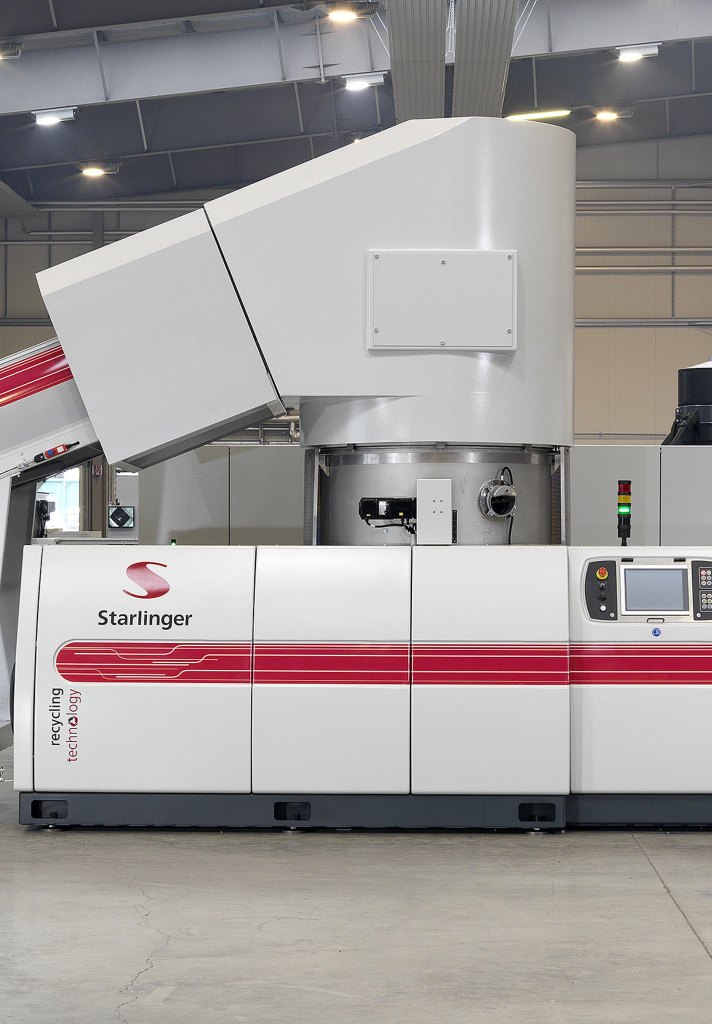
VidePak’s investment in Austrian Starlinger equipment—a benchmark in the industry—ensures precision in production. For example, Starlinger’s circular looms enable seamless weaving of HDPE fabrics with tensile strengths exceeding 25 MPa, critical for heavy-duty applications like construction waste transport. The company’s 16 extrusion lines further enhance material consistency, reducing defects to <0.5% across batches.
Case Study: A 2024 audit of VidePak’s laminated woven bags revealed a 99.3% compliance rate with ISO 9001 standards, attributed to automated defect detection systems integrated into their production lines.
1.2 Material Selection and Recyclability
The shift toward recyclable PP (polypropylene) aligns with global regulations such as the EU’s Single-Use Plastics Directive. PP’s high recycling value—retaining 85% of its properties after reprocessing—makes it ideal for circular workflows. VidePak’s collaboration with material scientists has optimized PP blends for durability, achieving puncture resistance levels of 550N, comparable to virgin HDPE.
Table 1: Key Performance Metrics of VidePak’s PP/HDPE Blends
| Parameter | PP Blend | Virgin HDPE |
|---|---|---|
| Tensile Strength (MPa) | 23 | 25 |
| Puncture Resistance (N) | 550 | 580 |
| Recycling Efficiency | 85% | 70% |
1.3 Compliance with Global Standards
VidePak adheres to stringent regulations, including REACH and FDA food-grade certifications. For instance, their BOPP laminated bags undergo third-party testing for heavy metal content, ensuring compliance with California’s Proposition 65.
2. Waste Management and Circular Economy Integration
2.1 Closed-Loop Recycling Systems
VidePak’s partnership with European recyclers enables the recovery of 60% of post-consumer PP bags. A 2023 pilot project in Germany demonstrated that reprocessed PP could reduce carbon footprints by 40% compared to virgin materials.
Quote from Industry Expert:
“The future of packaging lies in designing for recyclability. VidePak’s use of mono-material PP structures simplifies recycling streams, avoiding contamination from mixed plastics.” — Dr. Elena Müller, Sustainable Packaging Consortium.
2.2 Government Regulations Driving Innovation
China’s 2025 Circular Economy Promotion Law and the U.S. EPA’s National Recycling Strategy mandate higher recycled content in packaging. VidePak’s response includes:
- R&D Investment: 8% of annual revenue allocated to developing bio-based PP alternatives.
- Certifications: Global Recycled Standard (GRS) certification for 30% of product lines.
3. Addressing Challenges: FAQs and Technical Insights
FAQ 1: How does VidePak ensure consistency in multi-color printing?
VidePak’s 30+ printing machines utilize spectral analysis to monitor ink density in real time, reducing color deviation to <1.5%.
FAQ 2: Can recycled PP meet performance requirements for food packaging?
Yes. VidePak’s food-grade PP bags undergo UV sterilization and barrier coating to meet FDA standards, with oxygen transmission rates <5 cm³/m²/day.
4. Future Directions: Sustainability as a Competitive Edge
VidePak’s roadmap includes:
- Blockchain Traceability: Piloting QR-code tracking for recycled content verification.
- Lightweighting: Reducing bag weight by 15% without compromising strength, leveraging nano-additives.
External Resources:
- For insights into recyclable PP materials in logistics, explore how Starlinger technology enhances circular workflows.
- Learn about regulatory standards for polypropylene bags in global markets.
Conclusion
VidePak’s QMS exemplifies how industrial scalability and environmental responsibility can coexist. By prioritizing recyclable PP, adhering to global standards, and investing in cutting-edge technology, the company not only meets today’s quality demands but also positions itself as a leader in tomorrow’s sustainable economy. As Ray emphasizes, “Quality isn’t just a metric—it’s our promise to the planet.”
This report synthesizes data from industry publications, peer-reviewed studies on polymer science, and VidePak’s operational disclosures.