
In the competitive world of packaging, Woven Poly Bags have established themselves as a reliable choice for various industries, offering strength, flexibility, and environmental advantages. However, like any product, these bags are susceptible to quality issues that can affect their performance and usability. This article aims to explore the most common quality problems associated with Woven Poly Sacks, while emphasizing the importance of comprehensive testing measures that ensure product reliability.
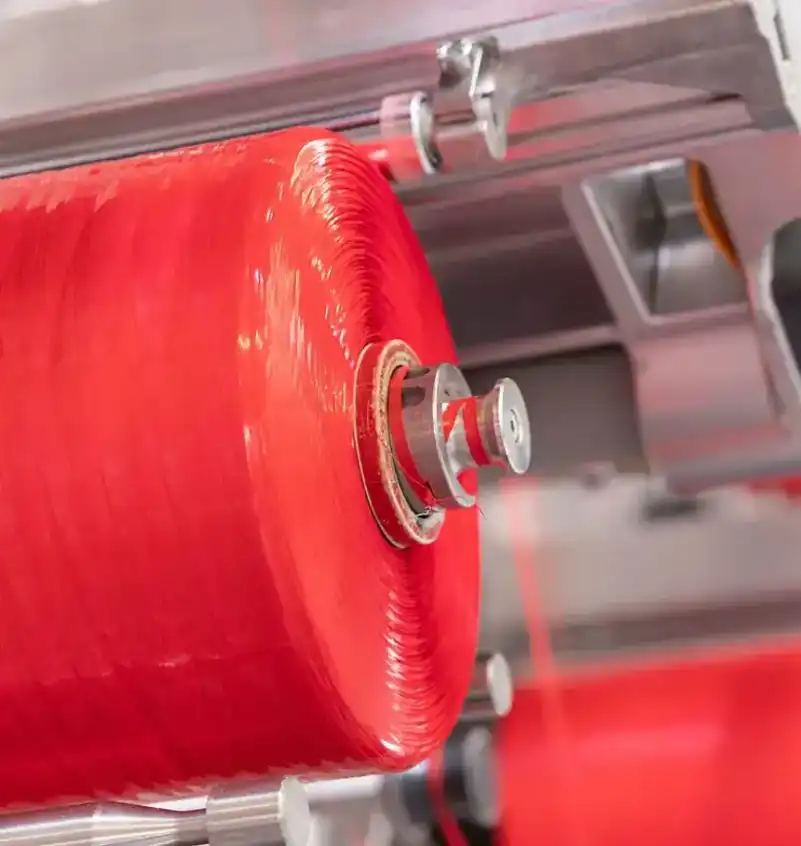
What are Woven Poly Bags?
Woven Poly Bags are interlaced polyolefin packaging structures—predominantly polypropylene—designed to deliver high tensile strength, reliable tear resistance, and stable pallet geometry at low mass. The fabric is produced from oriented slit tapes and converted into tubes that are gusseted and closed as open‑mouth, pinch, or valve formats. Depending on duty, the woven shell may be left uncoated for breathability, selectively coated for print quality and moderate moisture moderation, or laminated with thin films to meet higher scuff or barrier requirements. In practical terms, Woven Poly Bags behave like bricks on pallets, like films at heat sealers, and like billboards in aisles.
Across RFQs, equipment manuals, and supplier catalogs, the same family appears under several aliases. Listing them explicitly keeps requests precise and outcomes predictable:
- Woven polypropylene sacks (PP woven bags)
- Raffia woven bags (PP raffia sacks)
- Block‑bottom woven poly bags
- Valve woven poly sacks
- BOPP‑laminated woven polypropylene bags
- Coated woven PP bags
- Breathable woven poly fertilizer bags
- Heavy‑duty woven poly packaging (10–50 kg)
The Materials of Woven Poly Bags (From Resin to Runnability)
The backbone of Woven Poly Bags is slit‑tape polypropylene, extruded then drawn to align polymer chains. Typical duty ranges: 600–1200 denier tapes, 10×10–12×12 picks per square inch, and uncoated fabric at roughly 60–110 g/m². Coarser, denser products—salts, mineral fertilizers, resin pellets—live near the upper end; free‑flowing agricultural goods can move lower when routes are gentle.
- Strength per gram rises with orientation; elongation falls—balance is key.
- Uncoated faces retain modest porosity that aids fast filling and pressure equalization.
- Cost is dominated by resin mass and tape‑line yield. Right‑weight after drop and seam tests.
Performance takes two routes: a thin PE extrusion coating (about 12–40 g/m²) for print smoothness and moderate moisture defense, or a BOPP lamination (about 15–35 μm) for rich graphics and scuff resistance. Laminations reduce porosity, so vent channels or micro‑perfs usually join the spec to protect filler speed.
- Coats double as sealable surfaces for open‑mouth pinch or top seals.
- Paper–poly hybrids exist for a natural outer aesthetic; confirm bond compatibility with sealing jaws/needles.
Where hygroscopic powders or long humid routes are in play, a loose liner (LDPE/LLDPE at 60–120 μm) or a continuous sleeve may become the primary moisture barrier. HDPE sleeves reduce WVTR at a given gauge but stiffen folds—evaluate risk of fold cracking before deployment.
- UV stabilization (HALS + UVA) for outdoor dwell.
- Antistatic to reduce dust cling and nuisance shocks.
- Slip/antiblock to control bundle separation without stack creep.
- Antiskid patterns on contact faces to raise friction angle.
What are the Features of Woven Poly Bags?
Woven Poly Bags deliver a high modulus‑to‑mass ratio. You ship product, not packaging.
Inherent porosity with optional micro‑perfs lets air escape, reducing blow‑back dust and top‑off delays.
Choose breathable faces for inland routes and coatings/liners for humid climates and hygroscopic powders.
Square shoulders plus antiskid textures build pallets that behave like cartons with fewer rewraps.
Coated or BOPP faces keep graphics crisp and barcodes scannable through dust and wrap glare.
Keeping structures in the PP/PE family simplifies take‑back and avoids the biggest waste driver: product loss.
What is the Production Process of Woven Poly Bags?
- Tape extrusion & slitting. PP is extruded as a thin film and slit into tapes; gauge uniformity drives denier spread and seam reliability.
- Drawing (orientation). Tapes are stretched at temperature; strength goes up as elongation falls. Too high: brittle folds. Too low: limp fabric.
- Weaving. Circular/flat looms interlace tapes at 10×10–12×12 picks/in²; tension stability by shift is monitored.
- Coating/lamination (as specified). PE coats for print and seals; BOPP for rich graphics and rub. Tie‑layers and nip settings set peel strength.
- Printing & coding. Water‑based flexo for brand and icons; registration marks synchronize cut and code; variable data at the line.
- Tubing, gusseting, closure prep. Form tubes, set gussets; prepare for sewn, sealed, or valve closures; fit reinforcement patches as needed.
- Vent engineering. Micro‑perfs or gusset channels support fast fills without sifting; optical checks verify hole size and distribution.
- Final squaring & bundling. Press, count, and bundle to protect edges.
- Inspection & release. Cameras and offline tests confirm geometry, bonds, print register, and barcode grade.
What is the Application of Woven Poly Bags?
Breathable exteriors plus optional liners tame dust at the packer and minimize caking across humidity swings.
Mortar, grout, and tile adhesives benefit from scuff‑resistant faces and square bases for tidy bays.
Flour, sugar, semolina—liners set hygiene and shelf life; woven faces sustain durable graphics.
High denier and robust seams tolerate abrasion; antiskid surfaces suppress slow‑motion lean.
For a concise overview of base constructions related to Woven Poly Bags, see this background resource on woven polypropylene sacks.
Ensuring Quality Through Comprehensive Testing
Promises are cheap; proofs are priceless. With Woven Poly Bags, proof arrives as a chain of tests that link inputs to outputs—materials → process → bag performance → pallet behavior → route reliability.
Verify grammage, denier distribution, pick density, tensile/tear, dyne level (if coated/laminated), liner gauge, and lamination coat weights. Use AQL sampling with numeric bands.
Hold register alignment, weld/paste energy, gusset symmetry, and cut length. Confirm bottom geometry and bond area; calibrate valve sleeve dimensions. Capture settings as a golden set.
Run drops (flat/corner), seal/peel/burst, leak with fines, and fill‑time vs. vent studies. Grade codes post‑wrap and cold‑soak.
Measure friction angle, run pallet tilt/compression, observe lean over 24–72 hours, and test post‑exposure drops after humidity/UV cycles.
Pareto defects, apply SPC to glue and nip, and change one lever at a time. Quarterly reviews close the loop.
System Thinking and Synthesis
Quality is not a part—it is a pattern. Break the pattern down, then weave it back together.
Two to three layers of woven PP in the 60–110 g/m² window, a single‑side PE coat for print, and liner only where humidity or product physics demand it. Reserve BOPP faces for retail‑visible SKUs that truly need scuff‑proof graphics.
Vent pattern ↔ filler type; seal windows documented by SKU; dancer tension and mark readers kept in closed loop to prevent cut drift.
Corner geometry, bond width, antiskid placement, and fill‑height caps prevent slow‑motion pallet lean.
Region‑specific recovery statements; separation guidance for loose liners; food‑adjacent claims tied to the liner, not the outer fabric.
Track OEE, rewraps, scan delays, and credit notes. Real savings appear as avoided defects and stable stacks, not slogans.
Engineering Tables (Color‑coded for Fast Reference)
| Layer / feature | Typical options | Primary purpose | Notes |
|---|---|---|---|
| Shell (woven) | PP raffia 600–1200 D; 10×10–12×12 weave; 60–110 g/m² | Tensile/tear; puncture tolerance | Right‑weight after seam & drop tests |
| Venting aids | Inherent porosity; upper‑face micro‑perfs; vented gussets | De‑aeration at fill; humidity smoothing | Confine perfs for fine powders |
| Coatings | PE coat 12–20 g/m² (selective) | Print smoothness; scuff control | Avoid sealing whole face on breathable SKUs |
| Liner (optional) | LDPE/LLDPE 60–120 μm; HDPE for lower WVTR | Moisture/dust barrier; hygiene | Loose, tacked, or sleeve; validate seals |
| Antiskid | Embossed coat; twill zones | Stack friction; pallet stability | Place on contact faces |
| Property | Method / metric | Acceptance example |
|---|---|---|
| Fabric tensile & elongation | Grab tensile (strip/warp) | Within spec window; Cpk ≥ target both axes |
| Seam efficiency (sewn) | % of fabric tensile; seam creep | ≥ 70–80% of fabric grab strength |
| Seal integrity (heat‑seal) | Peel & burst; seal window (T/P/dwell) | Peel within documented window; zero pinholes |
| Drop performance | Flat & corner drops (conditioned) | 5/5 passes at 1.0–1.2 m at labeled mass |
| Barcode grade | ANSI/ISO grading after wrap | Grade ≥ C across mandatory faces |
| Stage | Sample size & frequency | Notes |
|---|---|---|
| Incoming fabric/film | AQL per lot | Verify grammage, dyne, tensile, coat weights |
| In‑process (hourly) | 3 bags / line / hour | Cut length, gusset symmetry, seam/seal checks |
| Functional (per shift) | 5 filled bags | Alternate flat/corner drops; rotate SKUs weekly |
| Unit‑load | 1 pallet / 10 pallets | Tilt/compression and lean observations |
| Use case | Barrier choice | De‑aeration aids | Extras |
|---|---|---|---|
| Humid coastal fertilizer routes | 80–100 μm LLDPE liner | Upper‑face perfs + heat‑seal | Antiskid faces; reinforced corners |
| Temperate inland, low dust | 12–20 g/m² PE coating | Light or none | Focus on print & codes |
| Premium pet food (abrasive) | Coated face + 60–80 μm liner | Moderate perfs | Handle patch; varnish rub zones |
| Resin pellets long haul | Unlined heavy‑denier raffia | Minimal perfs; tight seams | Antiskid; tuned wrap recipe |
Risk Register and Durable Fixes
| Symptom | Likely root cause | Durable fix |
|---|---|---|
| Sifting at corners | Perf density too high near seams; sleeve mismatch | Reduce perfs at corners; resize sleeve; add internal patch |
| Delamination blisters | Thin tie‑layer; nip imbalance; wet substrates | Raise tie‑layer; balance nip; condition moisture; peel by roll |
| Seam tears at drop | Low stitch density; needle cuts strands; low GSM | Double‑fold seam; smaller needle; raise GSM/denier |
| Leaning stacks | Overfill; low friction faces; wrap mismatch | Fill‑height cap; add antiskid; tune wrap recipe |
| Barcode failures | Low contrast; glare; rub | Increase x‑dimension; move code zone; varnish; verify grade |
Route‑to‑Spec Workflow (From Question to Golden Set)
- Define the duty in numbers. Density, particle size, hygroscopicity, dust level, route length, climate, drop/tilt risks, and display style. Quantify; avoid adjectives.
- Select the base structure. Choose weave/denier/GSM by seam and drop data; add coatings only as needed; use liners where humidity and fines demand them.
- Engineer the machine recipe. Forming geometry; seal windows; registration mark design; venting aids. Save the golden set per SKU.
- Validate the pallet. Antiskid, pallet pattern, wrap settings, and stack height—prove with tilt/compression and lean studies.
- Write the quality plan. Tests, methods, acceptance bands, and sampling cadence; include pre‑shipment pallet audits and barcode grades post‑wrap.
- Publish recovery guidance. Keep polymers in the PP/PE family; state separation guidance for liners; keep claims region‑specific.
- Close the loop. Track OEE, Pareto defects, housekeeping hours, rewraps, damage credits; refresh golden sets with season or material shifts.
Rhetoric and Clear Thinking (Questions That Write the Spec)
Ask, test, revise—then repeat. Should Woven Poly Bags breathe everywhere, or only near the mouth? Should liners be routine insurance, or targeted to monsoon routes? Do we prefer indestructible‑looking sacks, or pallets that behave predictably? Parallel pairs sharpen decisions: vent area versus sift risk; liner gauge versus WVTR; antiskid versus wrap tension. Name the failure you most fear—dust, clods, or lean—and the specification will fall into place.
Keywords and Long‑Tail Phrases (Placed Naturally)
Woven Poly Bags; PP woven bags; woven polypropylene sacks; raffia woven bags; BOPP‑laminated woven poly bags; coated woven PP sacks; breathable woven poly fertilizer bags; heavy‑duty woven poly packaging; valve woven poly bags; block‑bottom woven polypropylene sacks; barcode‑ready woven PP packaging; antiskid woven poly sacks; moisture‑managed woven polypropylene bags; production testing for woven poly bags; comprehensive quality testing for woven polypropylene sacks.
Understanding Woven Poly Bags
Woven Poly Bags, also known as Poly Woven Bags or PP Woven Sacks, are made from woven polypropylene fibers. They are widely used for packaging agricultural products, construction materials, and industrial goods due to their durability and lightweight nature.
Key Features of Woven Poly Bags
- High Strength
- The woven structure provides significant tensile strength, enabling these bags to hold heavy loads without tearing.
- Moisture Resistance
- They offer protection against moisture, making them suitable for storing items like grains and chemicals.
- Customization Options
- These bags can be tailored in terms of size, color, and printing to meet specific customer needs.
Common Quality Issues in Woven Poly Sacks
Despite their advantages, Woven Poly Sacks can encounter several quality issues that may impact their performance. Understanding these problems is crucial for manufacturers and users alike.
1. Inconsistent Thickness
Thickness inconsistency can lead to significant issues in bag performance.
- Impacts: A bag that is too thin may tear easily, while a bag that is excessively thick may be unnecessarily heavy and costly.
- Detection: Regular monitoring of thickness is essential to ensure that it meets specified tolerances.
2. Uneven Cut Edges
The edges of Woven Bags must be cut evenly to ensure proper sealing and closure.
- Impacts: Uneven cut edges can result in improper sealing, leading to potential spillage and product loss.
- Detection: A thorough inspection of cut edges should be part of the quality control process.
3. Frayed Edges
Fraying can occur if the cutting process is not precise or if the bag materials are of poor quality.
- Impacts: Frayed edges can compromise the bag’s integrity and make it more susceptible to tearing.
- Detection: Quality checks should include inspecting edges for any signs of fraying.
4. Color Variations
Color consistency is crucial, especially for branding and product identification.
- Impacts: Significant color differences can affect the visual appeal of the packaging and may lead to customer dissatisfaction.
- Detection: Regular color checks using color-matching systems can ensure uniformity.
5. Weight Variability
Weight variability, or inconsistency in the bag’s weight, can lead to confusion during inventory management.
- Impacts: This can cause issues in pricing and inventory control, affecting the overall efficiency of operations.
- Detection: Regular weight checks should be conducted to ensure compliance with specifications.
6. Insufficient Tensile Strength
The tensile strength of a bag determines its ability to hold weight and resist tearing.
- Impacts: Insufficient tensile strength can lead to bag failure, resulting in product loss and additional costs.
- Detection: Testing the tensile strength of both raw materials and finished products is critical.
7. Impact Resistance
Woven bags should be able to withstand impacts during transportation and handling.
- Impacts: Poor impact resistance can lead to damage during transit, compromising the contents.
- Detection: Impact resistance tests should be performed to assess the bag’s durability.
8. Aging and UV Resistance
Woven bags often face exposure to sunlight and environmental factors.
- Impacts: Insufficient aging and UV resistance can lead to material degradation and loss of strength over time.
- Detection: Regular aging and UV resistance tests can help in evaluating the longevity of the bags.
9. Environmental Compliance
With increasing focus on sustainability, it is essential for packaging materials to meet environmental standards.
- Impacts: Non-compliance with environmental regulations can lead to legal issues and reputational damage.
- Detection: Environmental performance testing should be a key component of the quality assurance process.
Comprehensive Testing for Woven Poly Bags
To address these common quality issues, a thorough testing regimen is essential. At our company, we prioritize a comprehensive quality assurance program that includes various testing parameters.
Key Testing Parameters
| Testing Parameter | Description | Importance |
|---|---|---|
| Thickness Tolerance | Measures the thickness of the bags against specified tolerances | Ensures durability and load capacity |
| Cut Edge Inspection | Checks for evenness and precision of cut edges | Prevents spillage and maintains bag integrity |
| Fray Detection | Inspects bag edges for fraying | Ensures long-lasting performance |
| Color Consistency | Evaluates uniformity of color across batches | Maintains branding and aesthetic appeal |
| Weight Consistency | Measures weight against specifications | Ensures accurate inventory management |
| Tensile Strength Testing | Assesses the strength of raw materials and finished products | Guarantees reliability under load |
| Impact Resistance Testing | Evaluates the bag’s ability to withstand impacts | Prevents damage during handling and transportation |
| Aging and UV Resistance Tests | Tests the bag’s performance over time and under UV exposure | Ensures longevity and durability |
| Environmental Performance Testing | Assesses compliance with environmental standards | Supports sustainability initiatives |
This table summarizes the key testing parameters implemented to ensure the quality and reliability of Woven Poly Sacks.
Importance of Comprehensive Testing
- Quality Assurance
- Comprehensive testing helps identify and rectify potential issues before products reach customers.
- Customer Satisfaction
- Ensuring the quality of PP Woven Bags fosters trust and loyalty among customers.
- Regulatory Compliance
- Adhering to industry standards and regulations safeguards against legal issues.
- Cost-Effectiveness
- Identifying problems early can reduce waste and avoid costly recalls or rework.
The Role of Technology in Quality Control
Advancements in technology play a significant role in enhancing the quality control process for Woven Poly Bags.
Automated Inspection Systems
Automated systems can quickly and accurately assess various quality parameters, ensuring consistent and reliable testing.
Data Analytics
Utilizing data analytics can help identify trends and areas for improvement in the manufacturing process.
Real-Time Monitoring
Real-time monitoring of production lines can facilitate immediate corrective actions, reducing the likelihood of defects.
Future Trends in Woven Poly Bag Quality Control
As industries evolve, so too must the methods used for quality assurance. Key trends to watch include:
- Increased Use of Automation
- Automation will continue to streamline the testing process, increasing efficiency and accuracy.
- Focus on Sustainability
- With environmental concerns on the rise, quality control will increasingly include assessments of recyclability and environmental impact.
- Integration of Smart Technologies
- Smart sensors may soon be used to monitor bag performance in real time, offering insights that can further enhance quality.
- Consumer Awareness
- As consumers become more informed about product quality, manufacturers will need to prioritize transparency and accountability in their quality assurance processes.
Final Thoughts
The integrity of Woven Poly Bags is critical to their success in various applications. By understanding the common quality issues and implementing a robust testing regimen, manufacturers can ensure that their products meet the high standards expected by customers. Our comprehensive quality control measures, including extensive testing of thickness, strength, and environmental compliance, not only enhance the performance of Woven Poly Sacks but also contribute to customer satisfaction and sustainability. Embracing technology and staying attuned to industry trends will further solidify our commitment to quality in the packaging industry.