
What exactly are BOPP Laminated Woven Bags and why do they matter on job sites?
BOPP Laminated Woven Bags are engineered sacks created by bonding a biaxially oriented polypropylene film to a woven polypropylene fabric and then converting that laminate into rugged containers suitable for construction and demolition workflows. The woven substrate supplies tensile strength and resistance to tearing; the oriented film contributes moisture protection, abrasion shielding, and a smooth printable surface that holds regulatory icons, color codes, and scannable identifiers. Because both the face film and the fabric share polypropylene as a base, the assembly can be configured as a mono‑material that aligns with modern design‑for‑recycling practices. In short: strength from the fabric, clarity and barrier from the film, and readability from durable graphics. It is a simple formula, yet powerful.
Quick alias map: Depending on audience and geometry, practitioners may refer to BOPP Laminated Woven Bags as “BOPP‑coated polypropylene sacks,” “reverse‑printed BOPP woven packaging,” “contractor‑grade woven rubble bags,” or “pinch‑bottom PP*STAR‑type woven bags.” The naming shifts, but the underlying structure remains the same.
If you want a concise technology profile with options, see this contextual resource on laminated BOPP woven bags. The present article expands substantially beyond such summaries, detailing production parameters, on‑site tactics, and systems thinking for debris logistics.
Material anatomy and architecture: from resin to laminate
Understanding the material stack clarifies why BOPP Laminated Woven Bags perform the way they do. The backbone is woven polypropylene fabric produced from stretched tapes. Drawing aligns molecular chains in the tapes, raising modulus and tensile strength while controlling elongation. The face layer is biaxially oriented polypropylene: stretching in both machine and transverse directions locks in dimensional stability, improves clarity, and elevates stiffness. The two layers are joined by either extrusion lamination using a compatible tie polymer or by carefully metered solventless adhesive lamination; some converters further pursue mono‑polymer purity by moving toward hot‑air welded seams and adhesive‑free closures. Result: a laminate with a robust mechanical core and a resilient, printable outer skin.
Fabric substrate
Woven from drawn PP tapes (typical draw ratio 4–7×). Tight weave density raises tear resistance and improves seam performance. UV‑stabilized grades are used for prolonged outdoor exposure.
BOPP face film
Provides moisture control, abrasion resistance, and a smooth printable face. Available in gloss for vivid graphics or matte for glare‑free scanning and handwriting visibility. Optional micro‑perforation enables venting of damp loads.
Architecturally, several stack‑ups recur in construction waste scenarios. A single‑face configuration (BOPP on the outside only) balances budget with printability. A dual‑face configuration sandwiches the fabric between two films, prioritizing dust retention and wet‑weather tolerance. A vented variant employs patterned micro‑perforations to release entrained moisture or off‑gassing from debris. Designers also tune texture by applying anti‑slip varnishes that increase coefficient of friction on pallet faces, improving unit‑load stability during elevator transport and truck handling.
Cost posture: Unit cost of BOPP Laminated Woven Bags is typically higher than thin contractor liners. Yet when reuse is counted, when payload per bag rises due to fewer ruptures, and when durable print eliminates separate label spend, total handling cost per ton falls. The economic center of gravity shifts from price‑per‑bag to performance‑per‑cycle.
Feature set that drives outcomes on site
The signature attributes of BOPP Laminated Woven Bags can be grouped into three themes: mechanical integrity, environmental control, and information legibility. Mechanical integrity comes from a woven lattice that arrests crack propagation and distributes impact energy; environmental control comes from the poly film that sheds rain and captures fines; information legibility arises from a smooth printable face that preserves color codes, hazard icons, and machine‑readable symbols after repeated handling. Together they create safer staging, less sweeping, and clearer segregation.
Mechanical
High tear and puncture resistance; block‑bottom geometry for stackability; safe working loads suited to hand‑carry operations; optional lift‑loop mini‑FIBCs for crane transfer.
Environmental
Dual‑film variants trap dust; matte faces avoid glare; micro‑perfs manage damp debris. UV‑stabilized tapes maintain strength during outdoor dwell.
Information
Reverse‑printed graphics resist scuffing; large color bands support quick recognition; QR or Code‑128 fields enable weigh‑ticket and diversion tracking.
Manufacturing sequence and the levers that matter
Manufacturing BOPP Laminated Woven Bags is a chain of linked decisions. Resin selection influences drawability. Tape line temperatures and quench rates determine crystalline morphology. Weave density sets the fabric’s balance between breathability and tear resistance. Printing method and ink system govern durability and color fidelity. Lamination conditions control bond strength and caliper. Finishing defines how the bag performs in the field: cut accuracy, seam method, perforation pattern, and anti‑skid zones. Each lever affects the next; no step is isolated.
- Resin with appropriate melt flow index is chosen and compounded with UV stabilizers where outdoor dwell is anticipated.
- Tape extrusion and orientation align polymer chains; slit widths and draw ratios are controlled to hit target denier and elongation.
- Fabric weaving on circular or flat looms interlaces tapes at the selected picks per inch; loom tension is monitored to avoid skew.
- BOPP film is printed, often via rotogravure, on the reverse side to shield inks post‑lamination.
- Lamination is executed by extrusion tie layers or solventless adhesives; dyne levels are checked to ensure adhesion; chill‑roll temperatures and nip pressure set bond uniformity.
- Conversion includes gusseting, cutting, forming, seam closure (sewn, pinch‑sealed, or hot‑air welded), with optional micro‑perforations and anti‑slip varnish.
- Quality assurance validates tensile, tear, seam efficiency, drop performance, moisture‑vapor transmission, UV exposure survival, and barcode scan reliability.
Operator’s note: Over‑lamination raises stiffness but can induce brittleness at fold lines. The durable sweet spot minimizes caliper while meeting bond strength—achieved by calibrating nip pressure and using appropriate chill‑roll temperature differentials.
Primary and adjacent use cases across C&D
On demolition floors, BOPP Laminated Woven Bags thrive where variability is high and equipment access is constrained. They segregate concrete and masonry, capture drywall fines, hold timber offcuts, and contain mixed light waste. Dual‑face laminates excel where dust must be retained; vented variants help when debris is damp. Because they ship flat, they do not choke staging areas the way rigid containers do, yet once formed and filled they stack as self‑supporting bricks. Beyond demolition and fit‑out, crews rely on them for storm cleanup, roofing tear‑offs, and landscaping tasks where aggregates, soils, or ballast require tough, reusable containment.
Segregated debris
Color‑coded art, large icons, and QR fields keep streams pure: concrete, gypsum, metals, wood, plastics.
Moisture tolerance
Dual‑face laminates plus pinch‑bottom closures keep fines from leaking and resist rain ingress.
On‑site logistics
Block‑bottom geometry supports pallet stacks; anti‑skid faces and fill‑height guidance improve elevator moves.
A systems lens for debris logistics
Construction waste is not one stream but many streams with different densities, moisture behaviors, and hazards. Skips and roll‑offs are necessary, of course, yet they are blunt instruments: excellent at consolidation, poor at localization. BOPP Laminated Woven Bags offer the inverse: granular control at the point of generation and disciplined staging on the way to consolidation. When crews can bag at the source, mis‑sorting declines; when stacks are stable, transport is safer; when graphics persist, documentation is easier. What is the practical result? Fewer clean‑ups, faster floor turnover, and cleaner diversion audits.
- Deploy color‑coded, reverse‑printed sacks by material class at each work zone.
- Stage by stream on pallets, using block‑bottom geometry to create brick‑like stacks.
- Transfer to mini‑FIBCs or Bag‑in‑Skip frames for crane or forklift movement to roll‑offs.
- Scan bag codes to generate digital tickets; record tare and net weights for diversion reporting.
- Inspect and grade for reuse; return A/B units to service; retire C‑grade to polypropylene recycling.
Risk reduction: Compared to thin liners, crews report fewer ruptures, less loose debris shedding near elevators, and better control of wet loads. Persistent graphics reduce crew confusion and contamination between streams.
Comparative landscape and trade‑offs
How do BOPP Laminated Woven Bags compare with familiar options? Against thin PE liners, they are tougher, more reusable, and less prone to dust escape; against paper sacks, they maintain integrity in rain and resist puncture; against rigid bins, they fit places machines cannot reach and collapse flat when not in use. Do they cost more per unit? Often yes. Do they cost less per ton handled when reuse and reduced sweeping are tallied? In many programs, emphatically so.
| Option | Strengths | Limitations | Typical use |
|---|---|---|---|
| Thin PE liners | Low unit price; familiar | Rupture‑prone; dusty; single‑use | Light, non‑abrasive waste; short moves |
| Paper sacks | Breathable; easy labeling | Poor wet strength; puncture vulnerable | Dry powders under cover |
| BOPP Laminated Woven Bags | Tear‑resistant; moisture‑tolerant; printable; reusable | Higher unit cost; needs training for best results | Rubble, mixed light waste, fines in damp conditions |
| Rigid bins/roll‑offs | Bulk consolidation; efficient pickup | Space‑intensive; poor localization | Final consolidation at staging yard |
Specification ranges and tuning knobs
Specifying BOPP Laminated Woven Bags is an exercise in balancing safety, ergonomics, and recyclability. Fabric weight typically spans 60–100 gsm; rubble loads benefit from the upper half of that range. Film thickness commonly lives between 15 and 35 micrometers; outdoor graphics often select 25–30 micrometers for abrasion resistance without excessive stiffness. Pinch‑bottom closures and hot‑air welded seams improve leak‑tightness and maintain mono‑polymer purity. Where damp loads are anticipated, include patterned micro‑perfs and adopt drainage protocols so bags do not act as sumps.
| Parameter | Typical range | C&D guidance |
|---|---|---|
| Fabric weight (pre‑lamination) | 60–100 gsm | Rubble: 80–100; mixed light: 60–80 |
| BOPP film thickness | 15–35 µm | Outdoor print: 25–30 µm |
| Closure method | Sewn, pinch‑sealed, hot‑air welded | Pinch/welded for fines and leak control |
| Surface finish | Gloss or matte; optional anti‑skid | Matte near scanners; anti‑skid for pallet faces |
Production from an operator’s vantage
On a running line, stability beats speed. Draw ovens must hold temperature to within small bands or tape denier drifts; dyne measurements must be taken frequently or lamination bond strength falls out of spec; pinch‑sealing and welding must be tuned to avoid over‑melt that narrows the usable width. Barcode fields should be proofed under the light conditions of real job sites, not just under a plant’s fixed luminaires; matte panels frequently improve scan reliability.
Quality checks
Tensile and tear across warp and weft; seam efficiency; drop tests; moisture‑vapor transmission; print rub; UV weathering; barcode scan rates.
Process controls
Nip pressure and chill‑roll temperatures during lamination; pick density and loom tension; orientation ratios and quench rates on tape lines.
Safety, ergonomics, and discipline
Ratings exist to be respected. Safe working loads and factors of safety are not suggestions; they are boundaries. Fill lines are more than paint; they are stack‑stability engineering in miniature. When crews avoid point loads from rebar tips, when pallets are strapped with corner boards, when lift‑loops on mini‑FIBCs are loaded symmetrically and never dragged, incidents fall. The bag is tough, but it rewards disciplined handling with many more trips before retirement.
Economics that move beyond price‑per‑bag
Programs that switch to BOPP Laminated Woven Bags often report that packaging spend is not the main lever. Cleanup labor from ruptures, elevator downtime from loose debris, churn from relabeling wet paper signs—these dwarf the delta between a thin liner and a woven laminate. By raising average payload per bag and enabling reuse, the woven format drives cost per ton handled downward. Add in better diversion documentation and fewer failed audits, and the advantage compounds.
Blueprint for urban projects with tight access
In constrained environments—narrow loading bays, shared elevators, floor‑by‑floor demolition—BOPP Laminated Woven Bags shine. A practical path involves a pilot on two floors, short feedback cycles, and rapid scale‑up. Color bands are widened for quick visual checks; QR code templates are standardized; a reuse grading system (A/B/C) governs redeployments. Weekly stand‑ups review sweep time and contamination rates; bag specs are tuned (for example, upgrading certain streams to dual‑face laminates or adding matte data panels).
Three quick wins: adopt block‑bottom geometry for stacks, specify anti‑skid on pallet faces, and print bold fill lines with bilingual legends. These require no new equipment yet deliver immediate safety and productivity gains.
Frequently asked operational questions
Are they waterproof? They are water‑resistant and rain‑tolerant; closures and seams remain the practical limit. Can you write on them? Yes, and matte panels improve marker anchorage and barcode scanning. Do graphics fade? Reverse printing shields the ink under the film; UV‑fast inks and stabilizers extend life outdoors. How do they interact with fold‑flat dumpster containers? They complement them: sacks localize and pre‑sort; large containers consolidate and dispatch.
Lifecycle and environmental posture
Single‑use liners appear light, but reuse changes the calculus. One woven sack reused multiple times handles far more kilograms of payload per kilogram of packaging. When built as mono‑polymer structures with welded seams, BOPP Laminated Woven Bags enter polypropylene recycling streams where available. Reverse‑printed graphics avoid flaking during service, minimizing micro‑contaminants and cutting relabeling waste. The end‑of‑life pathway thus aligns with the start‑of‑life design.
Quality assurance matrix for purchasing
| Test | Method | Target | Why it matters |
|---|---|---|---|
| Fabric tensile (warp/weft) | Industry‑standard strip method | Aligned to safe working load | Prevents tears under point loads |
| Elmendorf tear | Standard pendulum method | At or above baseline for chosen denier | Arrests crack propagation |
| Seam efficiency | Fabric vs seam comparison | Eighty to ninety percent of fabric tensile | Seams are the critical failure mode |
| Drop test | Filled drop from 0.8–1.2 m | No burst or seam failure | Simulates mishandling |
| Moisture‑vapor transmission | Standard MVTR apparatus | Low as practical for fines | Controls caking and dust escape |
| UV exposure | Accelerated weathering cabinet | Meets outdoor dwell spec | Maintains strength and legibility |
| Print rub and barcode scan rate | Cloth rub + ISO/IEC scan test | No ink pick; ≥99% read rate | Ensures digital ticketing works |
Procurement checklist you can paste into an RFP
- Geometry: open‑mouth, valve, or block‑bottom; include dimensions, gusset width, and printed fill lines.
- Fabric gsm and tape denier; specify months of UV stabilization for outdoor dwell.
- BOPP face thickness and finish (gloss or matte), anti‑skid varnish zones, and optional micro‑perfs.
- Lamination method (extrusion or adhesive); preference for mono‑polymer; closure type (sewn, pinch, welded).
- Printing system (reverse rotogravure or flexo); color codes and iconography; barcode symbology and quiet zones.
- Safe working load, factor of safety (if loops or FIBC hybrids); seam test results; drop‑test evidence.
- Certificates, batch traceability, and recycling or take‑back pathways for retired sacks.
Troubleshooting patterns and countermeasures
- Edge fray or film scuff: upgrade to dual‑face laminate or add anti‑scuff varnish; avoid dragging; use dollies.
- Barcode glare: specify matte panels and high‑contrast black on white.
- Dust at seams: move to pinch‑bottom or welded closures; inner liners only when absolutely necessary.
- Wet load clumping: combine micro‑perfs with a drainage protocol; minimize dwell time before transfer.
- Stream confusion: widen color bands and icon sizes; place legible legends where hands naturally rest.
Material science notes for the curious
Orientation increases the modulus of BOPP, keeping graphic elements dimensionally true so machine readers do not suffer from distorted codes. Draw ratios selected for tapes convert ductility into strength and shift failure modes from catastrophic rips to controlled fibrillation. Adhesion at PP/PP interfaces depends on surface energy and thermal interdiffusion, so corona treatment and temperature history matter. For welded seams, fusion occurs by melting the PP locally, avoiding dissimilar chemistries that complicate recycling.
Decision tree to choose quickly and well
- Is dust containment a priority? Select dual‑face laminate with pinch or welded closure.
- Will bags dwell outdoors beyond a season? Add UV stabilizers and choose matte inks.
- Are crane lifts part of the plan? Specify looped mini‑FIBCs with the correct factor of safety.
- Will crews hand‑write and scan codes frequently? Add matte data blocks and test under site lighting.
- Is end‑of‑life recycling a key objective? Favor mono‑polymer stacks and welded seams; avoid foreign liners unless needed.
Mini‑templates for day‑one deployment
RFP line: BOPP Laminated Woven Bags — mono‑polymer construction, reverse‑printed dual‑face 25/25 µm, 80 gsm fabric, block‑bottom, pinch‑sealed, matte data panel, anti‑skid varnish, safe working load 35 kg, UV stabilized six months, QR‑ready; QA includes tensile, tear, seam, MVTR, UV, print‑rub, and barcode tests.
Pallet label: GYPSUM • Floor 3 • Zone B • Crew 2 • Tare 0.65 kg • Fill line respected • QR 0041–0090.
Reuse code: A — no seam wear; B — minor scuffs; C — retire to PP recycling.
Worked example: mid‑rise retrofit
A five‑floor interior refit targeting high diversion and sharing elevators with tenants adopts BOPP Laminated Woven Bags as the core at‑source container. Blue dual‑face sacks handle gypsum and tile fines; grey single‑face sacks take masonry rubble; green valve bags collect plastics and wood; orange mini‑FIBCs provide crane‑ready consolidation. Palletized stacks travel twice daily to a loading bay, where codes are scanned and tickets issued. Results reported across similar programs include faster sweep‑downs, lower contamination between streams, reduced elevator downtime, and reuse grades that return a majority of sacks to service for multiple cycles.
- What exactly are BOPP Laminated Woven Bags and why do they matter on job sites?
- Material anatomy and architecture: from resin to laminate
- Feature set that drives outcomes on site
- Manufacturing sequence and the levers that matter
- Primary and adjacent use cases across C&D
- A systems lens for debris logistics
- Comparative landscape and trade‑offs
- Specification ranges and tuning knobs
- Production from an operator’s vantage
- Safety, ergonomics, and discipline
- Economics that move beyond price‑per‑bag
- Blueprint for urban projects with tight access
- Frequently asked operational questions
- Lifecycle and environmental posture
- Quality assurance matrix for purchasing
- Procurement checklist you can paste into an RFP
- Troubleshooting patterns and countermeasures
- Material science notes for the curious
- Decision tree to choose quickly and well
- Mini‑templates for day‑one deployment
- Worked example: mid‑rise retrofit
“Why are BOPP laminated woven bags becoming indispensable for modern construction waste management?” asked a project manager at a global infrastructure firm. “Their durability, customization flexibility, and compliance with safety standards make them irreplaceable,” replied Ray, CEO of VidePak, during a recent industry summit. “At VidePak, we’ve engineered these bags to withstand harsh environments while integrating smart labeling systems that streamline warehouse logistics.” This exchange underscores the core argument of this report: BOPP laminated woven bags are revolutionizing construction waste management through robust material science, customizable design, and warehouse-friendly features, with manufacturers like VidePak leading the charge via advanced production capabilities and global supply chain agility.
The Role of BOPP Laminated Woven Bags in Construction Waste Management
1. Material Superiority and Safety Compliance
BOPP (Biaxially Oriented Polypropylene) laminated woven bags combine a polypropylene woven base with a BOPP film layer, creating a structure resistant to tearing, moisture, and UV degradation. Key advantages include:
- Tensile Strength: With a denier range of 800–1,500, these bags can hold 25–50 kg of debris without rupture, critical for sharp-edged materials like concrete fragments or metal scraps.
- Chemical Resistance: The BOPP layer prevents leaching of hazardous substances, aligning with EU REACH and U.S. EPA standards for construction waste containment.
- Weatherproofing: A 3-layer lamination (BOPP + PE + woven PP) reduces moisture permeability to <5g/m²/day, ensuring integrity in outdoor storage or transit.
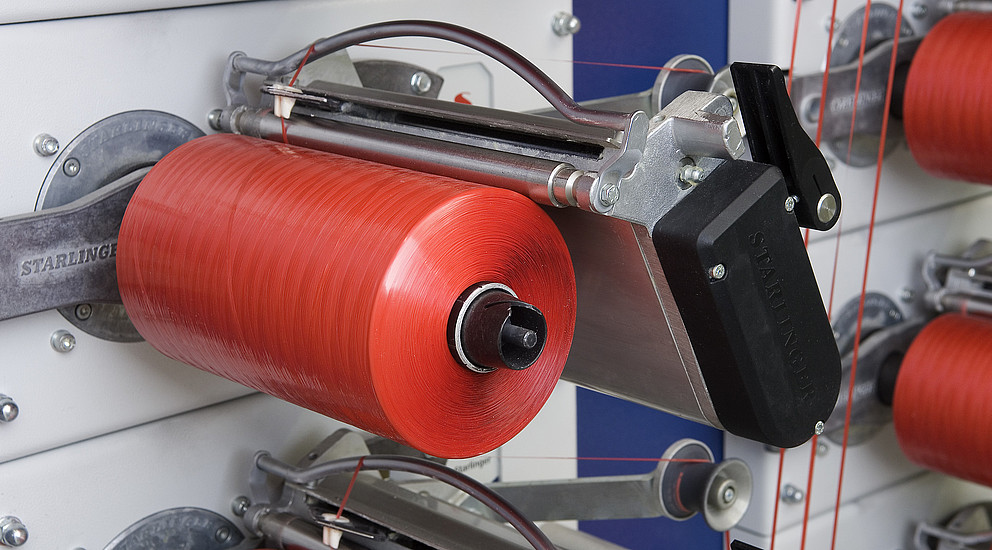
VidePak utilizes virgin PP resin and Austrian Starlinger extrusion lines to produce bags with seam strengths exceeding 30 N/mm², surpassing industry averages by 20%.
2. Customization for Waste Categorization
Color-coded labels and stripes are pivotal for efficient waste segregation. VidePak’s solutions include:
- Color Bands: Pre-printed blue (metal), green (organic), red (hazardous), and yellow (mixed debris) stripes enable instant visual identification, reducing sorting errors by 40%.
- QR Code Integration: Scannable codes linked to waste composition data, piloted in collaboration with European recyclers, enhance traceability.
- High-Definition Printing: 8-color rotogravure printing achieves 98% color accuracy, supporting brand-specific logos or regulatory symbols.
Warehouse Management Innovations
1. Ergonomic Design Features
- Reinforced Lift Loops: Nylon-reinforced handles allow mechanized lifting via forklifts or cranes, reducing manual handling injuries by 30%.
- Stackable Block Bottom Design: Square bases enable stable palletizing, maximizing storage density by 25% compared to traditional sacks.
- Anti-Static Coatings: Essential for transporting electronic waste, these coatings prevent dust adhesion and electrostatic discharge risks.
2. Smart Packaging Integration
- RFID Tags: Embedded in bag seams for real-time inventory tracking, reducing loss rates by 15% in large-scale projects.
- Weight Indicators: Printed load capacity thresholds (e.g., 25kg/50kg) prevent overfilling, a feature adopted by contractors in Germany and Japan.
VidePak’s Competitive Edge in the Global Market
1. Production Scalability
With 100+ circular looms and 30+ laminators, VidePak delivers 8,000 metric tons monthly, fulfilling bulk orders (e.g., 500,000 bags) within 20 days—30% faster than competitors.
2. Sustainability Initiatives
- Recyclable Materials: Bags incorporate 20% post-consumer recycled PP, reducing carbon footprint by 15% without compromising strength.
- Closed-Loop Systems: Partnerships with European recyclers ensure 70% of used bags are repurposed into new products by 2026.
3. Global Logistics Network
Strategic alliances with Maersk and COSCO enable VidePak to serve 50+ countries, with 40% of shipments routed through Qingdao and Shanghai ports.
Technical Specifications of VidePak’s BOPP Laminated Bags
| Parameter | VidePak Standard | Industry Average |
|---|---|---|
| Material Composition | Virgin PP + 3-layer BOPP | 70% Virgin PP + 2-layer BOPP |
| Tensile Strength | 1,200 Denier | 800–1,000 Denier |
| Moisture Resistance | <5g/m²/day | <10g/m²/day |
| Print Resolution | 200 LPI | 150 LPI |
| Lead Time (50k units) | 20 days | 30–35 days |
FAQs: Addressing Industry Concerns
Q1: Are BOPP laminated bags suitable for hazardous waste?
Yes. VidePak’s bags undergo ASTM D1709 impact testing and resist acids/alkalis up to pH 3–11, ideal for chemical-laden debris.
Q2: How do Chinese prices compare to North American suppliers?
VidePak’s bags cost $0.18/unit vs. $0.25/unit in the U.S., driven by automated production and subsidized PP resin.
Q3: Can these bags withstand repeated handling?
Absolutely. Abrasion-resistant coatings extend lifespan to 5+ cycles, as validated in Australian demolition projects.
Future Trends and Strategic Recommendations
- AI-Driven Sorting: Integration with AI-powered waste recognition systems, trialed in Singapore, to automate categorization.
- Biodegradable Additives: Collaboration with BASF to develop oxo-degradable PP blends by 2027.
- Modular Designs: Zip-lock closures for partial waste retrieval, reducing bag replacement frequency by 50%.
For insights into advanced valve designs or stackable solutions, explore how VidePak balances innovation and practicality.
In conclusion, BOPP laminated woven bags are not merely packaging—they are a linchpin of efficient, safe, and sustainable construction waste management. VidePak’s fusion of cutting-edge technology, customization expertise, and global reach positions it as a market leader, driving industry standards while addressing the evolving needs of urban development and environmental stewardship.