
What are these bags, and what do we actually mean by the name?
In industrial packaging, few formats balance print quality, strength, and moisture behavior as neatly as BOPP Woven Bags. The term refers to a laminate in which biaxially oriented polypropylene (BOPP) film—reverse printed for protection and clarity—is bonded to a woven polypropylene (PP) fabric that supplies tensile strength and tear resistance. Converted into valve or open‑mouth formats, BOPP Woven Bags serve powders and granulates across 10–50 kg fills: cement, dry mortar blends, gypsum and plasters, mineral fillers, animal feeds, resins, fertilizers, and more. Their block‑bottom variants stand like bricks; their gusseted bodies stack efficiently; their film skins keep graphics legible in yards and depots that do not always enjoy perfect weather.
Because vocabulary shifts across markets and machine platforms, it helps to catalogue common aliases. Same archetype, different labels.
- BOPP laminated PP woven sacks
- BOPP reverse‑printed woven polypropylene bags
- BOPP woven block‑bottom valve bags
- Printed and laminated woven PP bags
- WPP BOPP bags
- BOPP film on PP fabric sacks
- AD‑style block‑bottom woven valve bags
- BOPP laminated cement bags
What materials build the stack, and why do the layers matter?
Performance in BOPP Woven Bags emerges from the interaction of layers, not a single “magic” substrate. Stack design governs speed on the filler, durability in transit, readability on site, and even the feasibility of end‑of‑life options.
BOPP is biaxially oriented to raise tensile strength and stiffness while providing optical clarity. After corona or flame treatment (≈38–42 dynes), reverse printing places ink on the inner face so the film protects graphics during handling. Gauges from 15–35 μm, matte/gloss finishes, and selective overprint varnish (OPV) bands allow glare management and friction tuning.
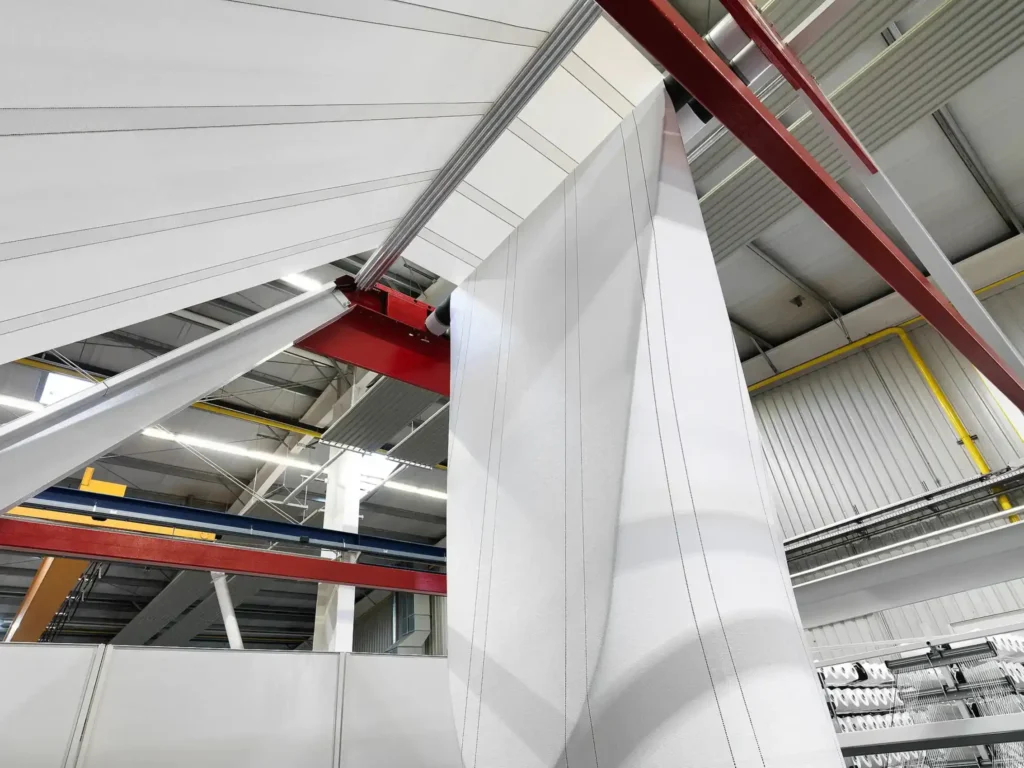
Extruded PP tapes, drawn for tenacity and woven at roughly 10–12 tapes/cm in warp and weft, produce a fabric that resists puncture and tearing while maintaining a predictable modulus. This skeleton gives BOPP Woven Bags their load‑bearing character and their ability to survive forklift contact or corner abrasion.
A thin PP or PE seal coat creates clean closures; deliberately placed micro/macro perforations vent entrained air during fast fills without ejecting excessive dust. The porosity pattern is a speed dial every plant can feel.
Solventless polyurethane laminating systems are common in film‑to‑fabric bonding; they enable high web speeds with predictable cure windows. Proper laydown delivers peel/shear integrity through temperature cycles and preserves foldability at the block bottom.
Flexographic or rotogravure ink sets tuned for BOPP dominate. OPVs adjust rub resistance and coefficient of friction; LED‑UV/EB‑curable chemistries are emerging in niche programs that prioritize low migration and energy‑efficient curing.
Think of the stack as a conversation: BOPP speaks image and weather, the fabric speaks strength, the inner coat speaks sealing and breathability, and the adhesive keeps everyone listening.
Which features matter most on real docks and jobsites?
Capabilities should survive forklifts, forklifts should survive the day, and operators should read instructions without squinting. That pragmatic bar shapes the feature set of BOPP Woven Bags.
- Brick‑like stance from block‑bottom conversions improves pallet density and reduces topple risk.
- Moisture and splash tolerance outperforms uncoated papers on humid routes and open yards.
- Oriented PP tapes resist propagation tears; corners survive scrapes that cut monolithic films.
- De‑aeration tuning supports high bags‑per‑minute with cleaner weighments and fewer rejects.
- Reverse‑printed film maintains crisp multi‑language panels and small hazard icons.
- Polyolefin mono‑material paths enable participation in PP recycling where infrastructure exists.
- Anti‑skid OPV bands and UV‑stabilized fabrics support tall stacks and outdoor dwell.
How do factories turn resins and film into pallet‑ready sacks?
Manufacturing is choreography. Every station—extrusion, weaving, printing, lamination, conversion—hands the next one a success or a problem. Here is the standard arc for BOPP Woven Bags.
- PP is cast, slit, and oriented to reach target tenacity; winding quality sets loom uptime.
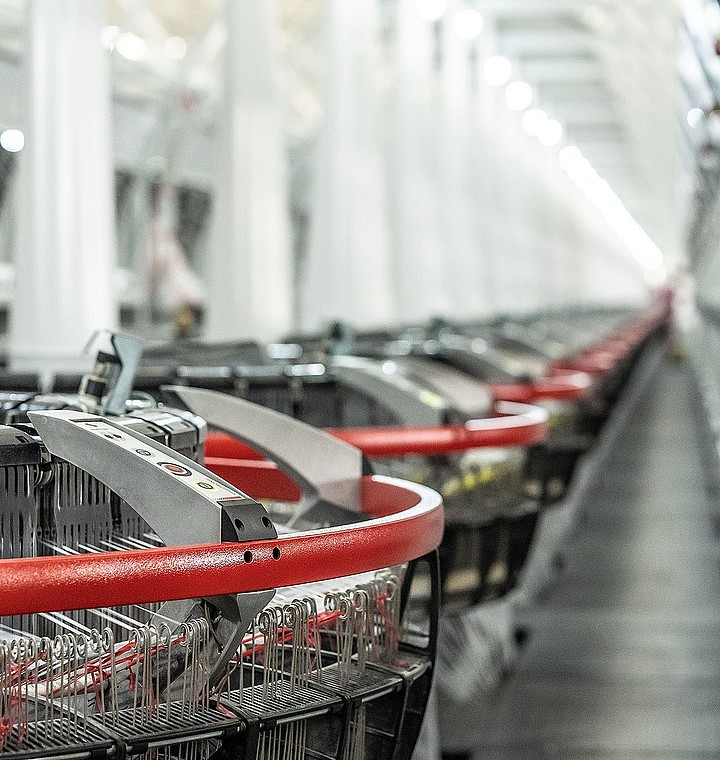
- Circular or flat looms choose pick counts to balance stiffness and foldability; inline coats can tune porosity.
- Tenter‑line films receive reverse prints via gravure or HD flexo; registration and ink density determine small‑text success.
- Adhesive laydown, nip, and cure create bond strength without curl; too little adhesive risks delam, too much harms fold quality.
- Laminates form tubes; valves are prepared; print marks guide cutters so panels align after bottoming.
- Folders/pasters build the rectangle; valves are inserted and heat‑set; open‑mouth variants prepare pinch‑seals.
- Pattern maps balance rapid de‑aeration with dust containment and weight accuracy.
- Tensile, tear, drop, stack, WVTR, UV exposure, and seal integrity; camera systems confirm registration and code readability.
- Bundles are wrapped with corner boards and documented pallet patterns for efficient warehouses.
Where do these bags fit, and how do we choose wisely?
BOPP Woven Bags excel where products dislike moisture, trap air during filling, abrade corners, and require clear instructions at use. This includes building materials, minerals, agriculture, and selected retail bulk where shelf visibility matters.
Moisture resistance and impact toughness prevent caking and splits; valve formats sustain high throughput in modern cement plants.
Tile adhesives, grouts, self‑levelers, and gypsum benefit from perforation maps that vent air while controlling dust; clear graphics guide mixing ratios.
Silica, limestone, calcium carbonate, barite, and pigments demand abrasion resistance and UV‑stable fabrics for yard storage between mills and jobsites.
Heavy stacks and rough handling argue for anti‑skid finishes and corner reinforcements while keeping product information legible.
BOPP Woven Bags: Exploring Advanced Printing Techniques
Printing is not decoration; it is a technical discipline that determines safety communication, regulatory compliance, and brand differentiation. On BOPP Woven Bags, film properties, press technology, inks, screens, and web handling converge. Below is a practitioner’s guide to techniques that raise image quality without sacrificing speed or cost discipline.
Artwork prints on the film’s inner face and laminates against the fabric, shielding inks from abrasion and weather. This enables higher color counts and finer screens; small pictograms and QR codes remain readable through logistics.
Gravure excels at ultra‑fine vignettes and long, steady runs; flexo offers faster, cheaper changeovers. HD flexo plates and laser‑engraved aniloxes now close much of the tonal gap for film work.
Fixed‑palette CMYKOGV can simulate many brand colors without spot inks, cutting wash‑ups and waste. On BOPP, EG paired with reverse print delivers vivid, consistent color across plants and regions.
Maintain ≈38–42 dynes on BOPP. Log surface energy drift; specify re‑treat windows. Poor wetting drives mottling and weak bonds.
Solvent systems dominate for film wetting; water‑based flexo is advancing with stronger resins and efficient dryers; LED‑UV/EB is promising where line design permits and low migration matters.
Choose line screens that fit press and gauge; stochastic (FM) screening smooths vignettes; hybrid screens reduce rosette artifacts. Reverse print helps fine text because film acts as a lens and mechanical shield.
Specify ±0.2–0.3 mm register tolerance on multi‑layer work. Tension control through printing and lamination underpins print‑to‑cut alignment for clean panels after bottoming.
Vision systems track color drift, streaks, and barcode/QR readability. Define acceptance criteria in the master artwork pack; audit against real warehouse lighting.
Microtext, latent images, serialized QR, and forensic taggants raise barriers to diversion; the clarity of BOPP helps keep these visible after rough handling.
A system map for decision‑making: break, analyze, reassemble
Rational specification for BOPP Woven Bags starts by splitting the problem into subsystems and ends by recombining them into a single, validated playbook.
PSD, air retention, and hygroscopicity govern porosity, perf maps, and valve geometry.
Spout size, seal modules, magazine style, and palletizer drive feasible formats; self‑seal valves may remove manual stations.
Define drop and stack tests early. Adjust denier and pick counts; add corner reinforcements where propagation tears occur.
Set WVTR targets per climate and dwell; add grams for maritime humidity; pair with pallet hoods and desiccants.
Choose between gravure and HD flexo; define EG policy; lock register and code readability criteria.
Prefer mono‑material PP, label for recycling, and evaluate take‑back pilots where volumes justify logistics.
Maintain documentation for inks, adhesives, and labels; align markings with destination markets.
Watch rejects, cleanup, and changeovers. Tune perf and sleeve geometry to win speed without dust; standardize footprints across SKUs.
Recombination formula: Profile product and route (A, D), lock line constraints (B), set mechanics (C), choose print/barrier (E, D), embed stewardship (F), document compliance (G), then optimize OEE (H) and validate in pilot.
Technical tables: numbers operators can use
| Metric | Typical Target/Range | Why It Matters | Lever |
|---|---|---|---|
| BOPP surface energy | 38–42 dynes | Ink wetting and lamination bond | Re‑treat or adjust storage; verify with dyne pens |
| Line screen (film) | 120–200 lpi (gravure/HD flexo) | Image detail and vignette smoothness | Hybrid/FM screening; plate/cylinder quality |
| Register tolerance | ≤±0.2–0.3 mm | Panel alignment after bottoming | Tension control; camera systems |
| Ink viscosity (solvent flexo) | 18–25 s Zahn #2 (indicative) | Color density and laydown | Temperature control; closed‑loop viscosity |
| Coefficient of friction | 0.25–0.45 (panel‑specific) | Pallet stability and machine flow | OPV bands; additive choice |
| Metric | Typical Range | Why It Matters | Lever |
|---|---|---|---|
| Tape yarn denier | 800–1500 | Tear/puncture strength; abrasion | Raise denier or picks; corner reinforcements |
| Weave density | 10–12 × 10–12 tapes/cm | Stiffness vs foldability | Tune picks for stack vs conversion |
| UV stabilization | 200–1600 h | Yard exposure tolerance | Higher package for equatorial routes |
| BOPP film gauge | 15–35 μm | WVTR and scuff behavior | Increase for humid/maritime lanes |
| WVTR (38 °C/90% RH eq.) | <1–10 g/m²·day | Moisture ingress control | Inner coats; desiccant and pallet hoods |
| Metric | Typical Observation | Why It Matters | Lever |
|---|---|---|---|
| Fill rate (BPM) | +3–5% vs poorly tuned specs | Throughput, labor, and scrap | Valve sleeve geometry; perf map; anti‑skid |
| First‑pass yield | >98% goal | Rework and cleanup | Seal dwell control; web handling discipline |
| Changeover time | 10–30 min deltas | Capacity unlocked | EG workflow; plate/cylinder strategy |
Alternatives in context, and when they may be smarter
Context matters. Multiwall paper sacks align with fiber‑only recovery narratives and excel in temperate, short routes. Heavy‑duty PE coextrusions deliver ultra‑low WVTR and form‑fill‑seal speed but lack the woven skeleton’s puncture resistance and stable block‑bottom stance unless gusseted. FIBCs dominate above ~500 kg. For 20–50 kg powders in humid, rough‑handled chains, BOPP Woven Bags typically match the physics and economics best.
Economics that operators feel, accountants confirm
Materials (BOPP, fabric, adhesive, inks) often contribute half to two‑thirds of unit cost; conversion (printing, lamination, tubing, bottoming, sleeve insertion) and overheads (energy, scrap, changeovers, freight) fill the rest. Hidden costs live in rejects, cleanup, and moisture‑related returns. Dial choices—reverse‑print protection, perf maps, sleeve geometry, OPV bands—frequently create more value than shaving grams.
- Adopt expanded‑gamut printing to cut wash‑ups and stabilize color across regions.
- Set a film‑gauge safety band so procurement cannot dip below functional thresholds during price spikes.
- Standardize valve geometry across SKUs to reduce changeover penalties.
- In humid lanes, pair higher film gauge with pallet hooding and desiccants; in dry lanes, validate lighter gauges to bank savings.
Scenario cards: turning variables into reliable specs
20 μm matte BOPP // 1000 denier woven PP // external valve; micro‑perf P2; HD flexo with expanded gamut; OPV COF bands. Readability and clean mouth with reliable de‑aeration and fast art changes.
25 μm gloss BOPP (reverse print) // 1200 denier woven PP // self‑seal internal valve; micro‑perf P3; UV 800 h; pallet hooding. Speed, durability, and moisture defense for monsoon cycles.
30 μm BOPP // 1200 denier // inner seal coat; macro‑perf on upper panel only; desiccant protocol; gravure for photographic branding. Lower WVTR with controlled venting and durable imagery.
18–20 μm BOPP // 900–1000 denier; CI‑flexo EG; plate‑ready art library; barcoded sleeves; OPV matte‑gloss register for premium cues. Rapid changeover economics without print compromise.
A copy‑ready checklist teams can paste into specs
powder/granule; PSD; bulk density; moisture sensitivity; oil/fat if relevant. block‑bottom valve (internal/external) or block‑bottom open‑mouth. BOPP 15–35 μm (matte/gloss, reverse print) // woven PP 800–1500 denier (UV 200–1600 h) // optional inner seal coat. sleeve length/diameter to spout; self‑seal if available; dwell X s @ Y °C. pattern ID and position; target de‑aeration curve. gravure or HD flexo; EG policy; register tolerance; code readability acceptance. drop Z orientations; stack 24–72 h @ load; WVTR target; UV hours. mono‑material PP labeling; notes on take‑back where feasible.
Context link: one page that aligns terminology
For readers comparing film‑on‑fabric constructions adjacent to BOPP Woven Bags, see the concise overview of laminated BOPP woven bags for format nuances and naming alignment.
A human cadence to close (without a formal conclusion)
Write specifications so the next shift inherits skill, not luck. Ask the questions that matter: What fails first—the seam, the corner, or the print? Will a two‑gram film reduction save cents but cost pallets? Are UV hours matched to real yard exposure or to wishful thinking? If one sack prevents one moisture‑ruined pallet, how much material did it just justify? The dials on BOPP Woven Bags are simple to turn and rigorous to validate. Turn one. Test. Observe. Adjust. Document.
- What are these bags, and what do we actually mean by the name?
- What materials build the stack, and why do the layers matter?
- Which features matter most on real docks and jobsites?
- How do factories turn resins and film into pallet‑ready sacks?
- Where do these bags fit, and how do we choose wisely?
- BOPP Woven Bags: Exploring Advanced Printing Techniques
- A system map for decision‑making: break, analyze, reassemble
- Technical tables: numbers operators can use
- Alternatives in context, and when they may be smarter
- Economics that operators feel, accountants confirm
- Scenario cards: turning variables into reliable specs
- A copy‑ready checklist teams can paste into specs
- Context link: one page that aligns terminology
- A human cadence to close (without a formal conclusion)
- 1. The Evolution of BOPP Woven Bags in Waste Management
- 2. Material Science: Why BOPP Dominates Waste Collection
- 3. Advanced Printing: Merging Durability with Brand Impact
- 4. Sustainability Meets Compliance: VidePak’s Innovations
- 5. FAQs: Addressing Industry Pain Points
- 6. The Future: Smart Bags and Circular Economy
A Dialogue with Ray, CEO of VidePak:
Client: “Our waste management clients need durable, branded bags for recyclables. How can BOPP woven bags meet both functional and branding demands?”
Ray: “BOPP woven bags combine unmatched strength, customization, and sustainability. At VidePak, our 10-color HD printing technology ensures vibrant branding that withstands abrasion, while our recyclable PP material reduces landfill waste by 40%. Let’s dive into how these innovations redefine waste collection packaging.”
1. The Evolution of BOPP Woven Bags in Waste Management
Biaxially Oriented Polypropylene (BOPP) woven bags have become indispensable in waste and recyclables collection due to their durability, cost efficiency, and adaptability to advanced printing techniques. Designed for heavy-duty applications like paper, plastic bottles, and industrial waste, these bags offer tensile strengths of 40–60 N/cm² and moisture resistance of ≤0.1 g/m²/day, outperforming traditional polyethylene and jute alternatives.
VidePak leverages Austrian Starlinger machinery to produce over 70 million BOPP bags annually, with 30+ printing machines enabling high-definition, multi-color designs. The company’s focus on circular economy principles aligns with global initiatives like the EU’s 2030 Packaging Waste Directive, which mandates 70% recycling rates for plastic packaging.
2. Material Science: Why BOPP Dominates Waste Collection
2.1 Performance Metrics for Recyclables Packaging
| Parameter | BOPP Woven Bags | PE Bags | Jute Bags |
|---|---|---|---|
| Tensile Strength | 55 N/cm² | 30 N/cm² | 25 N/cm² |
| Abrasion Cycles | 5,000+ | 2,000 | 1,500 |
| Moisture Barrier | 0.08 g/m²/day | 0.5 g/m²/day | 3.0 g/m²/day |
| Recyclability | 100% PP | 80% PE | Non-recyclable |
Case Example:
A European waste management firm switched to VidePak’s BOPP bags for paper recycling. The 120 g/m² laminated bags reduced tear incidents by 65% and extended reuse cycles from 3 to 10 times, cutting annual costs by €120,000.
3. Advanced Printing: Merging Durability with Brand Impact
3.1 HD Flexographic vs. Digital Printing
| Technique | Resolution | Colors Supported | Abrasion Resistance | Eco-Friendliness |
|---|---|---|---|---|
| HD Flexographic | 200 lpi | 10 colors | 5,000+ cycles | Water-based inks |
| Digital Printing | 600 dpi | Unlimited | 2,000 cycles | Solvent-free |
VidePak’s proprietary EcoPrint Pro® technology uses UV-cured inks compliant with REACH Annex XVII, achieving 98% color retention after 12 months of outdoor exposure. For municipal waste campaigns, this ensures logos and safety warnings remain legible throughout the bag’s lifecycle.
3.2 Customization for Waste Streams
- Plastic Bottle Collection: Anti-slip surface textures and 150 g/m² fabric prevent bag rupture under sharp edges.
- Paper Recycling: Breathable micro-perforations (≤0.3 mm) reduce moisture buildup by 50%, complying with EN 643:2014 paper grade standards.
- Hazardous Waste: RFID tags embedded during lamination enable tracking under UN 3291 regulations.
4. Sustainability Meets Compliance: VidePak’s Innovations
4.1 Closed-Loop Recycling Systems
VidePak’s RecycleReady® program recovers 95% of post-consumer BOPP bags through partnerships with global waste processors. Starlinger’s recoSTAR® technology reprocesses PP waste into virgin-grade pellets, reducing carbon footprint by 60% compared to virgin PP production.
4.2 Regulatory Alignment
| Standard | Requirement | VidePak Solution |
|---|---|---|
| EU 94/62/EC | Heavy metals < 100 ppm | Non-toxic pigments (Pb < 5 ppm) |
| US FTC Green Guides | Recyclability claims verification | 3rd-party certified (SCS Global) |
| China GB/T 21661 | Degradability testing | Oxo-biodegradable additives |
5. FAQs: Addressing Industry Pain Points
Q1: How do BOPP bags handle sharp objects like broken glass?
A: Our triple-layered baffle design with 180 g/m² fabric resists punctures up to 50 N force, certified under ISO 13934-1:2013.
Q2: Can printed designs withstand harsh weather?
A: Yes. UV-resistant inks and BOPP lamination (30µm) achieve 4/5 on the Blue Wool Scale after 1,000 hours of xenon arc testing.
Q3: What’s the ROI compared to single-use plastic bags?
A: BOPP bags cost 2x more upfront but last 15x longer, reducing per-use costs by 80%.
6. The Future: Smart Bags and Circular Economy
VidePak is piloting:
- QR Code Integration: Scan-to-sort systems that streamline waste categorization.
- Bio-Based PP: 30% sugarcane-derived polymer blends, targeting Cradle-to-Cradle Platinum certification by 2026.
External Resources:
- Discover how high-definition printing enhances brand visibility in BOPP Laminated Woven Bags: Branding and Market Dynamics.
- Explore sustainable production methods in Recyclable PP Bags: Advanced Production with Starlinger Equipment.
Conclusion
BOPP woven bags are revolutionizing waste management through durability, branding versatility, and eco-conscious engineering. VidePak’s integration of Starlinger technology and circular design principles positions it as a global leader, transforming waste logistics into a driver of sustainability and cost efficiency.