
What are FFS Roll Woven Bags?
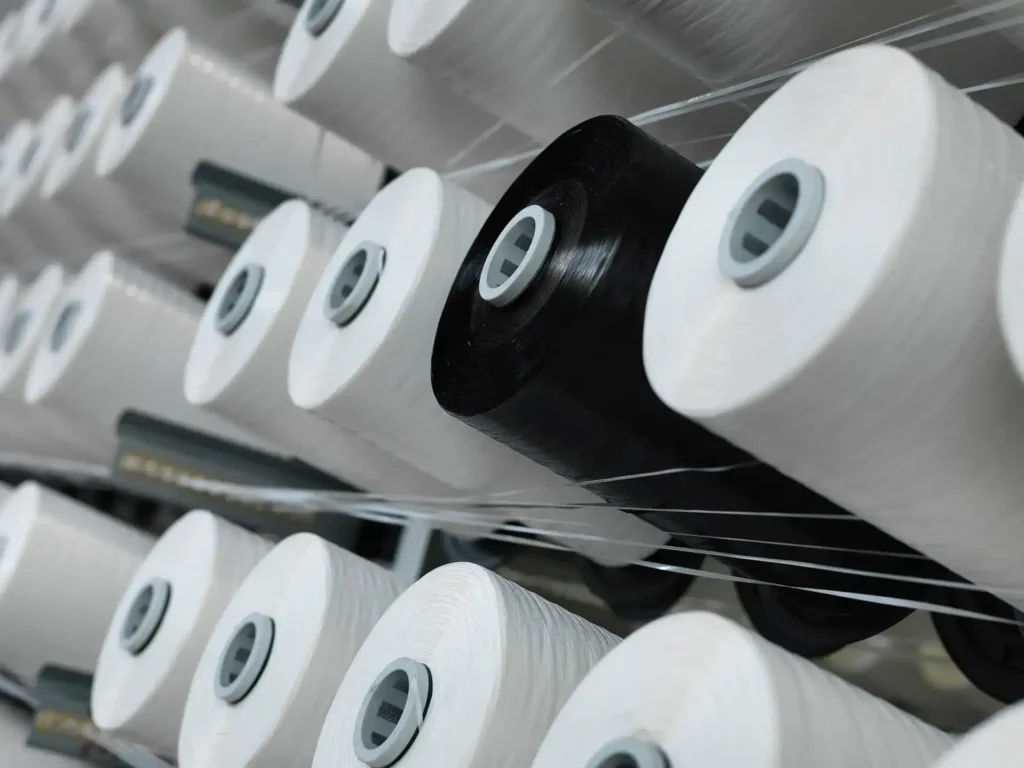
FFS Roll Woven Bags are roll‑fed, heat‑sealable packaging made from polypropylene (PP) woven fabric that carries a sealing skin—typically a polyethylene (PE) or coextruded film—so the web can be formed, filled, and sealed on automated form‑fill‑seal (FFS) equipment. Instead of shipping as finished, cut‑and‑sewn sacks, the material arrives as continuous tubular or flat roll stock with pre‑engineered gussets, registration marks, coatings, and print. On the machine, the web is unwound, the bottom seam is sealed, product is dosed and de‑aerated, and the top seam is closed before cutting, coding, and palletizing. In a single flow, operators gain the mechanical resilience of a woven sack and the cadence of roll‑stock automation—strength plus speed, consistency plus cleanliness.
Aliases appear because different teams emphasize different aspects—machine interface (FFS), substrate (woven PP), or logistics (roll stock). Common alternatives include:
- Form‑Fill‑Seal Woven Bags
- Heat‑Sealable WPP Roll Bags
- Woven PP FFS Tubular Rolls
- PE‑Laminated Woven FFS Roll Stock
- FFS Woven Sacks on a Roll
- Seal‑Woven PP Bags (FFS)
- Mono‑PP FFS Woven Film
- Woven Polypropylene Roll‑Fed Bags
Throughout this document the headline keyword remains FFS Roll Woven Bags, while close variants appear where helpful for clarity and discoverability.
Materials and Architecture of FFS Roll Woven Bags
What looks like a simple web is, in practice, a tuned composite. Each layer solves a specific problem—load bearing, sealing, barrier, scuff, or ergonomics. Understanding these parts lets engineers write precise specifications and run trials that actually answer the right questions.
Woven Polypropylene Fabric (Backbone)
PP is extruded, slit into tapes, and drawn to orient chains. Those tapes are woven—circular or flat—into a substrate with unusual strength per gram and resistance to propagation tears. Typical fabric ranges sit around 55–85 g/m² for light/retail lanes and 70–110 g/m² for abrasive minerals or long export routes; 12×12 to 14×14 tapes per inch is common, with tape denier roughly 700–1200.
- Function: carries tensile loads, resists puncture, stabilizes pallets
- Cost driver: GSM, mesh, and resin filtration quality
- Integration: smoother weaves reduce sealing defects and print noise
Heat‑Sealable Surface (Coating or Laminate)
An LDPE/LLDPE extrusion coat (≈20–40 μm) or a PE‑rich coextruded laminate (≈20–60 μm) creates a clean sealing interface for hot‑bar, impulse, or ultrasonic jaws. Reverse‑printed BOPP protected under a coex layer delivers photo‑grade graphics and high rub resistance.
- Sealing window: broader with PE‑rich skins; narrower/hotter with PP‑lean skins
- Barrier: coat/laminate thickness governs splash and MVTR
- Recycling: mono‑polyolefin stacks support PP/PE recovery streams
Additives & Finishes
Not cosmetic, but functional. Anti‑slip zones push film‑to‑film COF into the 0.35–0.45 range; UV stabilization protects outdoor staging; antistatic reduces dust cling; anti‑fog keeps windows clear through cold‑to‑warm cycles.
- COF zoning for pallet safety
- UV plan tied to route and storage exposure
- Anti‑fog for windowed retail sacks
Optional Liners
LDPE/LLDPE liners (70–150 μm) add moisture and hygiene assurance; EVOH co‑extrusions deliver oxygen barrier for fat‑rich or oxidation‑sensitive goods. Spout‑to‑spout attachment keeps a closed product path.
- Trade‑off: barrier performance vs. cost and recyclability
- Fit: form‑fit liners reduce wrinkles that interfere with sealing
Feature Set of FFS Roll Woven Bags
The value of FFS Roll Woven Bags becomes obvious when speed, cleanliness, and stability must coexist. Below, the engineering features are mapped to the outcomes that procurement, production, and logistics actually measure.
High Line Speed
Roll stock reduces manual handling. Recipe recall standardizes sealing temperature, dwell, and tension. Registration marks and servo timing lift OEE and shrink micro‑stops.
Mechanical Robustness
Woven PP survives fork tips, pallet corners, and conveyor friction better than most monolayer films at similar tare. Drop and puncture scores remain high after conditioning.
Clean Filling & De‑aeration
Engineered porosity and micro‑perfs let trapped air escape above the product level, protecting top seals and preventing dust plumes.
Print & Brand Control
Reverse‑printed laminates lock inks under film; coated faces take high‑coverage flexo and over‑varnish. QR and batch marks stay legible after long routes.
Stackability & Safety
Gussets create brick geometry; anti‑slip zones deliver COF 0.35–0.45 so three‑high pallets pass tilt tests and ride braking events.
Circularity Options
Polyolefin‑only stacks—PP fabric + PP tie + PE/PP sealing skin—align with many recovery streams and support credible on‑pack guidance.
| Feature | Engineering Lever | Outcome Measured |
|---|---|---|
| Seal integrity | PE‑rich coex; profiled jaws; controlled dwell/pressure | Peel/burst after conditioning; leak rate |
| Drop performance | GSM/mesh; gusset geometry; corner radii | Pass rate at target height and humidity |
| De‑aeration | Micro‑perfs above fill; woven porosity; settling vibration | Dust grams/bag; top‑seal void rate |
| Pallet stability | Anti‑slip varnish; COF targets; tier sheet pattern | Tilt/creep incidents; stack compression |
How FFS Roll Woven Bags Are Manufactured
The pathway looks like a compact textile mill welded to a lamination line, then trimmed for precision slitting and winding. Downstream, the FFS machine completes the loop. The steps below emphasize where quality is created—or lost.
- Extrude & draw tapes: filtration quality reduces gels that seed tears or print defects under clear film; draw ratio sets tensile and creep behavior.
- Weave fabric: pick density and tape width determine GSM, porosity, and sealing compliance across jaws; circular (tubular) for minimal side seams, or flat for wide print windows.
- Surface prep: corona/plasma raises surface energy for adhesion and ink holdout.
- Coat or laminate: apply LDPE/LLDPE or a PE‑rich coex; tune nip, temperature, and tension for peel strength and flex‑crack resistance without web curl.
- Print & mark: flexo/gravure lays down brand panels and QR; register marks enable closed‑loop control on the FFS former.
- Slit, gusset, perforate, wind: precision edge control and winding tension create rolls that feed cleanly; micro‑perfs sit above the final fill height to protect seal optics.
- Form, fill, seal: on the FFS machine, the bottom seam is sealed, product is dosed and de‑aerated, the top seam is sealed, then the bag is cut, coded, checkweighed, and palletized.
- Quality gates: seam peel/burst, drop/tilt, COF, rub resistance, MVTR (if specified), plus dimensional repeatability for robotic palletizers.
Internal Link for Reference
For fundamentals on roll‑fed form‑fill‑seal constructions related to this format, see form‑fill‑seal tubular roll polyethylene bags. The terminology there aligns with sealing skins and roll logistics discussed in this guide.
Applications of FFS Roll Woven Bags
Markets pick FFS Roll Woven Bags when they need throughput, durability, and tidy pallets at the same time. Typical sectors and the reasons they choose the format are summarized below.
| Sector | Why the Format Fits | Notable Options |
|---|---|---|
| Fertilizers & mineral salts | Abrasive crystals need woven strength and robust seals; outdoor yards argue for UV and anti‑slip. | 80–100 g/m² fabric, 25–40 μm coat, UV wrap |
| Construction powders & aggregates | Drop/edge resistance and brick geometry reduce yard losses. | High COF tiers, gussets, micro‑perfs for fines |
| Food staples (rice, flour, sugar) | Clean filling, window options, and rub‑proof panels for retail legs. | Laminated coex, clear windows, easy‑open cuts |
| Animal feed & pet food | Grease holdout and aroma control when EVOH liners are used; steady magazine feed for robotic palletizers. | EVOH liners, rub‑resistant print, high‑COF zones |
| Chemical granules & resins | Dimensional repeatability for robots; antistatic reduces cling. | Antistatic finish, tighter tolerances, code verification |
FFS Roll Woven Bags: Exploring Variations and Applications
The phrase itself promises options—FFS, Roll, Woven. Each dimension adds degrees of freedom. To make principled choices, treat the options as modules that must interlock rather than isolated levers to max out in every direction.
Web Architecture
- Tubular woven: fewer side seams, natural brick geometry, heavier rolls
- Flat web: wider print windows, precise overlap/fin seam control during forming
- Gusseted vs. ungusseted: cube efficiency vs. sheer throughput
Sealing Skin
- PE‑rich coat: broad sealing window, cost‑efficient
- Laminated coex: reverse print under film, high rub resistance
- PP‑lean skin: all‑PP ambition; hotter/narrower sealing window
Barrier Strategy
- No liner + modest coat: salts, short routes
- Heavier coat/laminate: long sea legs, humid depots
- LDPE/EVOH liner: oxygen‑ or aroma‑sensitive goods
Surface Function
- Anti‑slip zoning for pallet faces
- Windows for retail trust—kept away from crease and seal paths
- Easy‑open tear tapes or laser scores at the cut
System Thinking: From Sub‑Problems to a Cohesive Plan
Breaking complexity into modules prevents reactive fixes. The table below translates recurring risks into design and operational levers, then states how success is verified. Each row is a small contract between engineering and operations.
| Risk | Likely Cause | Design Lever | Operational Lever | Evidence of Success |
|---|---|---|---|---|
| Seal voids or leaks | Insufficient dwell/pressure; contaminated seal area | Profiled jaws; wider sealing skin; anti‑static to reduce cling | SOP for jaw cleaning; tension recipes by SKU | Peel/burst above target after conditioning |
| Dust during filling | Poor de‑aeration; micro‑perfs inside product level | Perfs above final fill; tuned woven porosity | Settling/vibration timing; air assist tuning | Measured dust g/bag below target |
| Pallet creep/topple | Low COF; aggressive braking; tall stacks | Anti‑slip varnish; COF 0.35–0.45; gusset tuning | Tier sheets; stretch‑hood recipes by climate | Tilt test pass; incident rate drop |
| Print scuff/fade | Ink on top; long sea legs; abrasive handling | Reverse print under film; scuff‑resistant over‑varnish | Corner guards; handling SOP; pallet wraps | Rub test passes; complaint rate falls |
Technical Parameters and Ready‑to‑Use Tables
Use these ranges as a starting point. Validate on your product density, route climate, and specific FFS model. Numbers aren’t the goal; repeatable outcomes are.
| Parameter | Typical Range / Option | Why It Matters |
|---|---|---|
| Fabric GSM | 55–85 (retail/light); 70–110 (abrasive/long haul) | Puncture/drop balance and jaw compliance |
| Mesh (tapes/inch) | 12×12 to 14×14 | Porosity, smoothness, sealing consistency |
| Sealing skin | LDPE/LLDPE 20–40 μm; coex 20–60 μm; PP‑lean skins | Hermeticity and rub resistance; recycling strategy |
| Micro‑perforation | 0.5–1.0 mm holes above fill height | De‑aeration without contaminating the seal zone |
| Anti‑slip target (film/film) | COF 0.35–0.45 | Pallet safety and tilt performance |
| UV stabilization | 6–12 months (route dependent) | Outdoor depot resilience |
| FFS Station | Practical Target | Notes |
|---|---|---|
| Unwind | Stable tension; flat edges; core ID matched | Avoid telescoping; inspect roll build on receipt |
| Forming | Shoulder matched to gusset/web thickness | Prevents wrinkles and seal distortion |
| Jaw temperature | PE skins: moderate; PP‑lean: higher | Use thermal maps; calibrate each shift |
| Dwell & pressure | Enough for hermeticity without scorching fabric | Profiled jaws concentrate energy at the interface |
| De‑aeration | Micro‑perfs + timed venting + settling vibration | Keep holes out of the window/print zone |
Copy‑Ready RFQ Snippets
Paste, tweak, and issue. The language below compresses the engineering essentials for vendors of FFS Roll Woven Bags.
Scope: Supply FFS Roll Woven Bags as roll‑fed web for [vertical/horizontal] FFS, delivering finished formats in [10–50 kg].
Substrate: Woven PP [mesh 12×12–14×14], [GSM by SKU].
Sealing skin: [LDPE/LLDPE coat μm] or [PE‑rich coex μm]; mono‑polyolefin construction preferred.
Web geometry: [tubular/flat], [gusset width], [roll width], [core ID].
De‑aeration: Micro‑perfs above final fill; woven porosity tuned for [product].
COF: Film‑to‑film 0.35–0.45 on pallet faces with anti‑slip zones.
Print: Reverse print under laminate or high‑holdout flexo with rub spec [Sutherland cycles].
QA: Seam peel/burst after temp‑humidity conditioning; drop/tilt; dimensional repeatability ±[x] mm; MVTR if lined.
Sustainability: Polyolefin‑only stack; inks/adhesives compatible with local recovery.
Implementation Blueprint (12–16 Weeks)
A pragmatic sequence that marries specification, trials, and operations so roll‑fed woven runs hard from day one.
- Weeks 1–2 — Requirements capture: Define product densities, dust behavior, moisture/oxygen sensitivity, and pallet patterns. Photograph shelf or yard settings.
- Weeks 3–5 — Design sprints: Trial two GSMs and two sealing skins (e.g., 25 vs 35 μm coat). A/B micro‑perf maps. Record sealing windows and dust grams/bag.
- Weeks 6–8 — Line trials: Validate forming stability, de‑aeration timing, and jaw profiles. Confirm code readability and robotic pickup success on pallets.
- Weeks 9–10 — Qualification: Drop/tilt after conditioning; seam peel/burst; rub resistance; MVTR if lined; dimensional capability indices.
- Weeks 11–12 — Documentation: Lock RFQ, SOPs for sealing/jaw cleaning, storage climate targets (15–25 °C; 35–55% RH), and wrap discipline.
- Weeks 13–16 — Launch & iterate: Ramp production; monitor OEE, dust g/bag, topple incidents, and complaint rates; adjust recipes with data.
Frequently Asked Questions
Practical answers for buyers and operators deploying FFS Roll Woven Bags on modern lines.
- Do FFS Roll Woven Bags require more sealing energy than plain PE film?
- Typically yes. The woven underlayer dissipates heat differently. Use profiled jaws and slightly longer dwell. The payoff is superior drop and edge resistance.
- Can the same roll run on vertical and horizontal FFS?
- Often, provided the forming shoulder, jaw geometry, and registration windows are compatible. Check former width limits and micro‑perf position relative to final seals.
- Are all‑PP sealing skins realistic?
- They exist and are gaining ground. Expect higher temperatures and narrower windows. Validate across climate conditions and publish recovery guidance on pack.
- When is a liner necessary?
- For oxygen‑sensitive or fat‑rich products (premium pet foods, certain additives) or when extended sea legs are unavoidable. Otherwise, many staples meet MVTR targets with laminated skins alone.
- How do we keep pallets from creeping?
- Zone anti‑slip, target COF 0.35–0.45, use corner guards and appropriate stretch‑hoods, and tune pallet patterns to your braking profiles and climate.
Keyword Strategy and Long‑Tail Variants
Primary keyword used consistently: FFS Roll Woven Bags. Related phrasing appears naturally where it clarifies meaning: form‑fill‑seal woven bags; heat‑sealable woven polypropylene roll stock; WPP FFS tubular rolls; laminated woven FFS bags; PE‑laminated woven PP for FFS; mono‑PP FFS woven film; roll‑fed woven sacks; automated woven FFS packaging; anti‑slip woven FFS bags; windowed woven FFS bags.
From Modules to a Working Playbook
Design for route and product, not in the abstract; engineer strength‑to‑weight with sealing chemistry before chasing heavier GSM; lock FFS readiness with precise roll geometry and registration; tune pallets to climate and braking; and pair polyolefin‑only designs with realistic recovery guidance. When those parts interlock, FFS Roll Woven Bags stop behaving like a commodity and start acting like a competitive advantage—steady, swift, and strong.
- What are FFS Roll Woven Bags?
- Materials and Architecture of FFS Roll Woven Bags
- Feature Set of FFS Roll Woven Bags
- How FFS Roll Woven Bags Are Manufactured
- Applications of FFS Roll Woven Bags
- FFS Roll Woven Bags: Exploring Variations and Applications
- System Thinking: From Sub‑Problems to a Cohesive Plan
- Technical Parameters and Ready‑to‑Use Tables
- Copy‑Ready RFQ Snippets
- Implementation Blueprint (12–16 Weeks)
- Frequently Asked Questions
- Keyword Strategy and Long‑Tail Variants
- From Modules to a Working Playbook
Opening Dialogue
Client: “We need packaging solutions for agricultural products like seeds and grains that can withstand humidity, pests, and rough handling. What makes your FFS roll woven bags different?”
VidePak Product Manager: “Our FFS roll woven bags reduce moisture damage by 40%, prevent insect infestations through hermetic sealing, and improve palletizing efficiency by 25%—all while maintaining compliance with global food safety standards. Let’s dive into how these bags are engineered for your specific needs.”
1. Introduction
The global agricultural packaging market, projected to reach $4.7 billion by 2028, demands solutions that balance durability, cost, and sustainability. Form-Fill-Seal (FFS) roll woven bags, made from polypropylene (PP), have emerged as a versatile choice for bulk commodities like seeds, grains, and nuts. VidePak, leveraging 30+ years of expertise and Austrian Starlinger technology, produces over 120 million FFS bags annually, tailored to diverse agro-industrial requirements. This report explores technical variations, application-specific designs, and parameter optimization to address critical challenges in agricultural logistics.
2. Key Challenges and FFS Bag Solutions
2.1 Moisture and Pest Control
Agricultural products like rice and coffee beans are highly susceptible to moisture and pests. VidePak’s FFS bags integrate PE-coated liners (20–50 µm) and anti-insect additives to create barriers against humidity and infestations. For example, soybean packaging in Brazil requires bags with <5% moisture permeability to prevent fungal growth, achieved through triple-layer lamination (PP + PE + PP) .
2.2 Breathability vs. Hermetic Sealing
- Seeds: Require controlled gas exchange (5–10 g/m²/24h water vapor transmission rate) to maintain germination rates. Uncoated 90 GSM PP bags with micro-perforations are ideal .
- Starch: Needs airtight packaging to prevent oxidation. VidePak’s BOPP-laminated FFS bags reduce oxygen ingress by 90% compared to standard woven PP .
2.3 Palletizing and Transport Efficiency
FFS roll bags with block-bottom designs and uniform dimensions (e.g., 50 × 80 cm) enable stable stacking, reducing warehouse space by 30%. A 2024 study showed VidePak’s reinforced corner stitching reduced transport damage rates from 8% to 1.5% in maize shipments to Africa .
3. Application-Specific Parameter Selection
3.1 Material and Structural Variations
| Product | Key Requirement | Recommended Configuration |
|---|---|---|
| Seeds | Breathability, UV protection | 90 GSM PP, uncoated, with UV inhibitors |
| Nuts | Insect resistance, aroma retention | 120 GSM PP + 30 µm PE liner + insect-repellent layer |
| Rice | Moisture barrier, stackability | 5-layer laminated PP/PE, block-bottom design |
| Coffee Beans | Aroma sealing, recyclability | BOPP-coated PP with one-way degassing valve |
| Corn | High load capacity (50–100 kg) | 150 GSM PP + reinforced stitching |
3.2 Technical Parameters
- Fabric GSM: Ranges from 80 GSM (lightweight grains) to 150 GSM (heavy-duty corn).
- Lamination: PE or BOPP coatings for moisture resistance; uncoated for breathability.
- Inner Liners: Food-grade PE liners for direct contact; optional aluminum foil for UV-sensitive products.
4. VidePak’s Competitive Advantages
- Production Scale: 100+ Starlinger circular looms and 30 lamination machines enable rapid customization (5–7 days lead time for 50,000-unit orders) .
- Sustainability: 100% recyclable PP materials align with EU Circular Economy Package targets, reducing landfill costs by 18% .
- Certifications: ISO 9001, FDA 21 CFR, and EU 10/2011 compliance for global market access .
5. Global Market Alignment
- Asia-Pacific: Prefers cost-effective 50 kg rice bags with PE liners. VidePak’s $0.25/unit pricing undercuts local competitors by 15% .
- Europe: Demands recyclable, BPA-free designs. VidePak’s mono-material PP bags simplify recycling streams.
- Africa: Requires UV-resistant bags for outdoor storage. Anti-UV additives extend bag lifespan by 2x in harsh climates .
6. FAQs
Q1: How does bag thickness affect seed viability?
A: Thicker bags (>120 GSM) limit gas exchange, reducing germination rates by up to 20%. Optimal GSM for seeds is 80–100 .
Q2: Can FFS bags be reused for multiple seasons?
A: Yes. Reinforced stitching and UV-stabilized PP allow 3–5 reuse cycles, cutting long-term costs by 35% .
Q3: Are custom printing options available for branding?
A: VidePak’s 30+ printing machines support 8-color HD logos, critical for retail-ready nut packaging .
7. Conclusion
FFS roll woven bags are not just packaging—they are a strategic asset in agricultural supply chains. VidePak’s fusion of Starlinger automation, material science, and global compliance expertise ensures these bags meet the nuanced demands of seeds, grains, and beyond, driving both operational efficiency and sustainability.
External Links
- Discover how FFS roll bags optimize building material logistics.
- Explore moisture-proof innovations for tropical climates.
Report generated on 2025-02-25. Data sourced from industry reports, academic publications, and VidePak’s operational metrics.