# FIBC Bags: A Systems Handbook for Safe, Efficient, and Scalable Bulk Packaging
## What Are FIBC Bags?
**FIBC Bags**—short for Flexible Intermediate Bulk Containers—are large, flexible containers fabricated from woven polypropylene (PP) fabric and engineered to store and transport dry bulk materials at scale. Typical working loads range from 500 kg to 2,000 kg or more depending on design, with safety factors validated through standardized top‑lift and cyclic testing. In supply chains that move powders, granules, and pellets (from cement to cocoa), these containers provide a compact, pallet‑friendly alternative to drums, paper sacks, or rigid IBCs.
**Common aliases of FIBC Bags** (bolded and enumerated for clarity):
1. **Bulk Bags**
2. **Jumbo Bags**
3. **Ton Bags**
4. **Big Bags**
5. **Super Sacks**
6. **PP Woven Bulk Sacks**
7. **FIBC Jumbo Bags**
8. **Flexible Bulk Containers**
While naming varies by region and sector, these terms point to a common architecture: a load‑bearing woven PP shell, reinforced seams and lifting loops, and optional liners or coatings to manage moisture, hygiene, static, or barrier performance.
—
## The Materials of FIBC Bags: From Fibers to Functional Stacks
FIBC Bags are not a single material, but a deliberately tuned stack. Every layer contributes a function—strength, barrier, print quality, friction control, electrostatic safety—so that the whole system performs reliably from filler to consignee.
### 1) Woven Polypropylene Fabric (Structural Backbone)
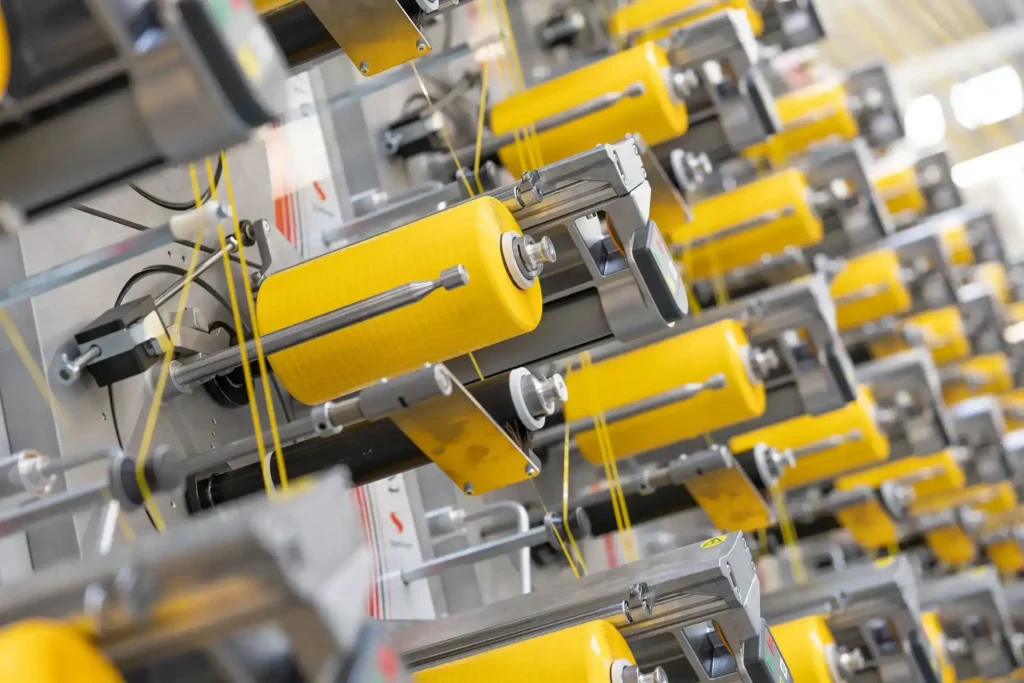
* **Composition**: Extruded PP sheets are slit into narrow tapes (raffia), then drawn to achieve high tenacity and modulus. Tapes are woven on circular or flat looms into tubular or flat fabric.
* **Key properties**: High tensile‑to‑weight ratio, excellent tear and abrasion resistance, dimensional stability during filling/stacking, chemical inertness for most dry goods. UV stabilization (HALS/UVA) protects fabric used in yards or open transport.
* **Typical ranges**: 140–240 gsm for 1–2 tonne designs; lower GSM possible with optimized weave density and seam efficiency.
* **Cost levers**: Resin price, tape line yield, loom uptime, waste control, and coating/lamination choices.
### 2) Lifting Loops, Webbing, and Reinforcements
* **Materials**: High‑tenacity woven PP or polyester webs; PP aligns with mono‑material recovery, PET improves heat resistance. Corner wear patches and perimeter tapes localize stress.
* **Design**: Two‑loop, four‑loop, cross‑corner loops, or single‑point crane loops; loop length and angle govern forklift clearance and lift dynamics.
### 3) Coatings and Laminates (Dust‑Tightness and Splash Resistance)
* **Extrusion coatings**: PP or PE layers (typ. 20–40 g/m² per side) extruded onto the woven shell to reduce powder sifting and moderate water vapor transmission.
* **Lamination stacks**: BOPP‑to‑PP laminates provide high‑gloss print faces and enhanced scuff resistance while retaining polyolefin coherence for end‑of‑life sorting.
### 4) Inner Liners (Barrier and Hygiene)
* **Loose or tabbed PE liners**: 60–150 μm films protect hygroscopic, odor‑sensitive, or dusty products; tabbing prevents liner collapse during discharge.
* **Form‑fit liners**: Fabricated to match the bag’s rectangular or square geometry; improve discharge completeness and shape retention in baffle designs.
* **Coextruded films**: 3–7 layers (LLDPE/HDPE cores, optional EVOH barrier, tie layers) tuned for seal strength, WVTR/OTR targets, and static control.
### 5) Baffle Systems (Shape Retention)
* **Function**: Internal vertical panels stitched or welded to side walls constrain lateral bulging, improving cube utilization and stack stability.
* **Apertures**: Circles, slots, or ovals allow flow while limiting pressure‑driven expansion. Pattern and coverage are tuned to product flowability.
### 6) Electrostatic Categories (Hazard Management)
* **Type A**: No specific ESD features; for non‑flammable environments.
* **Type B**: Low breakdown‑voltage fabric to suppress propagating brush discharges.
* **Type C**: Conductive grid fabrics; must be grounded through loops or designated tabs.
* **Type D**: Static‑dissipative fabrics that do not require grounding but demand strict compatibility with accessories and SOPs.
### 7) Stitching, Seams, and Closures
* **Seam types**: Chain stitch, lockstitch, and safety seams; SPI (stitches per inch) and seam allowances are validated vs. base fabric tear.
* **Top options**: Open top, duffle (skirt), conical or cylindrical fill spouts sized to filler head; dust flaps and tie‑bands on request.
* **Bottom options**: Flat base, discharge spout with petal/star closure, conical bases for poor‑flow powders.
—
## What Are the Features of FIBC Bags?
**FIBC Bags** combine mechanical robustness with operational flexibility. Key attributes include:
1. **High load efficiency**: Safe Working Loads (SWL) of 500–2,000 kg in compact footprints; straight‑sided stacking with baffles increases warehousing density.
2. **Handling versatility**: Multiple lift options accommodate forklifts, cranes, or hooks; form factors adapt to bagging lines with tight headroom.
3. **Process cleanliness**: Coated shells and liners suppress sifting; dust flaps, valve ties, and spout closures reduce housekeeping burden.
4. **Barrier control**: Coextruded liners and coated fabrics manage moisture and oxygen ingress for hygroscopic or oxidation‑sensitive goods.
5. **Electrostatic safety**: Type B/C/D architectures extend use to combustible dusts with documented surface resistivity, grounding continuity, and SOPs.
6. **Configurability**: Four‑panel, U‑panel, circular, or Q‑bag (baffle) bodies; printable faces up to 4–6 colors; UN‑rated variants for certain hazardous solids.
7. **Sustainability levers**: Longer reuse cycles; mono‑polyolefin stacks that simplify recovery; reduced pallet wrap through improved squareness; data‑driven downgauging.
—
## What Is the Production Process of FIBC Bags?
VidePak executes a disciplined, end‑to‑end process—beginning with raw‑material verification and culminating in documented release—anchored by best‑in‑class equipment from Austria (Starlinger‑class PP‑woven technology) and Germany (W&H‑class film and printing). This pedigree narrows process variability and makes quality measurable and repeatable at scale.
### A) Upstream: Raw‑Material Selection and Testing
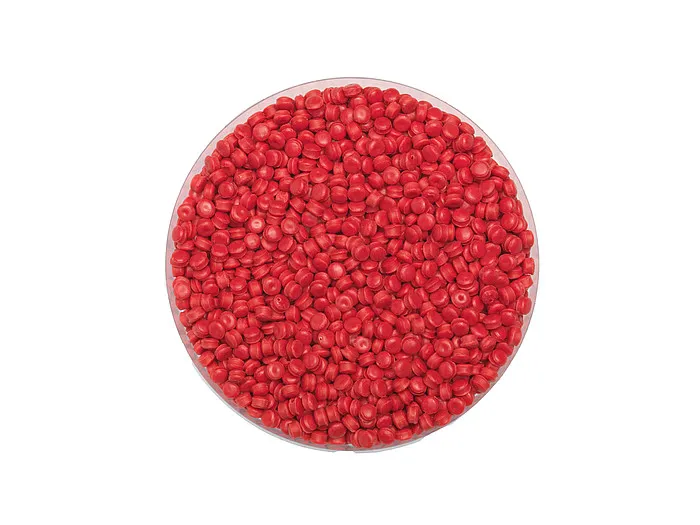
1. **PP Resins (virgin/PIR/PCR)**
* Verify melt flow index (MFI), moisture (Karl Fischer), ash, and color/yellowness index.
* For outdoor storage, confirm UV stabilization packages.
* Pilot tapes validate mechanical baselines before full runs—especially for recycled content.
2. **Films and Coating Resins**
* BOPP: gauge profile, haze/clarity, dyne level, and coefficient of friction (COF) for lamination and print anchorage.
* PE/PP coatings and liners: MI, density, seal window, slip/antiblock, antistatic packages.
3. **Inks, Primers, Over‑lacquers**
* Viscosity, ΔE color targets, and adhesion (tape/rub) checks under controlled humidity.
4. **Webbing, Threads, Reinforcements**
* Tenacity, elongation at break, friction, and heat resistance validated by supplier CoAs and in‑house pulls.
5. **Compliance Pre‑Checks**
* For food/feed, align with FDA/EU requirements; retain migration data. For ESD categories, map to IEC/EN test protocols.
### B) Core Manufacturing (Conversion) — Stabilized by Equipment Pedigree
1. **Tape Extrusion and Orientation (Starlinger‑class)**
* Extrude → slit → draw; control draw ratios to target tenacity and modulus.
* Online thickness gauging with SPC; offline tensile tests on retained samples.
2. **Weaving (Circular/Flat Looms)**
* Set EPI/PPI and GSM for target tear and burst; monitor skew, pinhole rates, and laid‑flat width.
3. **Coating/Lamination**
* Extrusion coat PP/PE or laminate BOPP; verify peel strength, coating weight, and width control; limit curl with managed chill/nip profiles.
4. **Printing (W&H‑class)**
* Reverse print on BOPP for scuff protection; spectrophotometer‑based ΔE tracking; rub and tape tests for durability.
5. **Cutting, Creasing, and Forming**
* Crease memory governs bundle uniformity; die‑cut spouts/valves; fixture jigs ensure baffle symmetry.
6. **Sewing and Assembly**
* Chain/lock stitch combinations with documented SPI and seam allowances; bar‑tacked loops validated through pull tests.
7. **Liner Fabrication and Insertion**
* Loose/tabbed liners or form‑fit liners heat‑sealed and burst‑verified; antistatic levels matched to bag ESD class.
8. **Palletization and Wrap Strategy**
* Squareness and bundle count standardized; optimized COF and corner protectors reduce wrap consumption without compromising stability.
### C) Downstream: Quality Control and Final Audit
* **Mechanical tests**: fabric/laminate tensile, Elmendorf/tongue tear, seam strength, drop/topple/tilt, and burst.
* **Barrier tests**: WVTR/OTR on liner samples; seal strength and burst at ambient and low‑RH conditions.
* **Surface and print**: COF, ink adhesion, scuff/rub resistance, ΔE.
* **Dimensional/visual**: width/length/gusset, squareness, register, defects.
* **Sampling/traceability**: AQL plans with tighten/relax rules; lot coding back to resin/film batches; retention samples for auditability.
**Note on equipment**: While machinery alone cannot ensure quality, the Austria‑ and Germany‑sourced platforms reduce uncontrollable variation, simplify preventive maintenance, and enable tighter control charts—benefits that accumulate across long runs.
—
## What Are the Applications of FIBC Bags?
The sweet spot for **FIBC Bags** is any bulk flow of dry product where safety, density, and handling speed matter:
* **Agriculture**: grains, pulses, seeds, oilseed meals, fertilizers; liners manage moisture, aroma, and hygiene.
* **Food & Feed**: sugar, flour, starches, premixes; food‑grade documentation and cleanroom‑compatible liners.
* **Chemicals & Polymers**: resins (PE/PP/PVC), pigments (TiO₂, carbon black), salts; ESD‑aware designs for combustible dusts.
* **Construction & Minerals**: cement, fly ash, sand, lime, barite; baffle bodies for stack stability and yard logistics.
* **Metals & Mining**: concentrates and fines; dust control and robust seams for rough handling conditions.
* **Pharmaceutical Intermediates**: low extractables liners and tight housekeeping SOPs.
—
## How VidePak Controls and Guarantees the Quality
VidePak applies a four‑pillar method to convert customer risks into measurable specifications and stable outputs:
1. **Standards‑Aligned Design, Production, and Testing**
* Use mainstream methods: ISO 21898/EN 1898 for FIBC design and testing; ASTM for films/fabrics (D882 tensile, D1709 dart, D5733 tongue tear, D6775 seam strength), IEC/EN ESD checks, and ANSI/ASQ Z1.4 sampling.
* Translate each customer requirement (e.g., “no scuff in transit”) into specific, testable metrics (rub cycles, ΔE thresholds, AQL rules).
2. **100% Virgin Raw Materials for Primary Load Paths**
* Virgin PP in load‑bearing tapes and loops secures predictable mechanical baselines. Recycled content is introduced judiciously (e.g., accessories) with transparent declarations where allowed.
3. **Best‑in‑Class Equipment Fleet**
* Tape lines, looms, and coaters/laminators from Austria; printing and film technologies from Germany. This combination stabilizes tape tenacity, weave regularity, laminate peel, and print register—four variables that dominate failure modes.
4. **Comprehensive Testing Regime**
* Incoming verification → in‑process SPC → end‑of‑line audits; root‑cause and CAPA with lot traceability ensure deviations are contained and learned from, not repeated.
—
## Systems Thinking: Decomposing FIBC Performance and Recombining a Solution
Great packaging is a system. To design **FIBC Bags** that consistently perform, decompose the challenge into five subsystems and then recombine them to a coherent bill of materials (BOM) and SOP set.
1. **Structure**: fabric GSM, weave density (EPI × PPI), seam architecture, base geometry, and loop design deliver SWL and drop resistance. Objective: the target SWL and stack height at minimal mass.
2. **Barrier & Hygiene**: liners/coatings achieve WVTR/OTR targets, sifting control, and cleanliness. Objective: product stability during storage/transit with the leanest barrier mass.
3. **Electrostatics**: bag type (A/B/C/D), surface resistivity, and grounding strategy prevent ignition hazards. Objective: safe operation in stated HAZLOC conditions with simple, enforceable SOPs.
4. **Operations**: COF tuning, crease memory, dimensional tolerances, and spout geometry determine line throughput and reject rates. Objective: stable OEE and predictable palletization.
5. **Sustainability**: mono‑polyolefin coherence, downgauging, reuse cycles, and PIR/PCR integration. Objective: fewer grams polymer per delivered tonne and credible, auditable claims.
This framework turns vague wishes (“strong but greener”) into concrete trade‑offs (“reduce GSM 8% while holding drop test, supported by baffles and seam redesign”).
—
## Engineering Deepening: Design Calculations and Choices
### A) Bulging Mechanics and Baffles
* **Problem**: Lateral pressure from bulk solids drives hoop stresses; panels bulge, seams concentrate load, and pallet overhang grows.
* **Solution**: Vertical baffles act as internal ribs, converting hoop stress into axial load paths and preserving a rectangular footprint. Aperture patterns maintain flow; coverage increases for low internal‑friction powders.
### B) SWL and Safety Factor
* **Validation**: SWL (e.g., 1,000–2,000 kg) is proven via top‑lift tests; Safety Factor of 5:1 (single use) or 6:1 (reuse/UN) governs cyclic fatigue margins.
### C) Seam Efficiency
* **Target**: Seam strength ≥ 80–90% of base fabric tear. Control SPI, seam allowance, thread choice, and needle size. Most failures start at transitions—seam starts/stops and corners.
### D) Electrostatic Architecture
* **Selection**: Type C for conductive grids when reliable grounding is available; Type D when grounding is impractical but accessories must be compatible. Pair liners to bag type—avoid insulating layers that defeat the ESD design.
### E) Liner Fit and Discharge Behavior
* **Form‑fit vs. loose**: Form‑fit liners mirror cubic geometry, improving discharge and shape retention; loose liners are economical but can pleat and trap residues.
### F) Cost Modeling
* **Total Landed Cost per Tonne Delivered**
= Bag BOM + Liner + Palletization + Wrap + Handling + Freight − (savings from higher cube utilization, lower damages, fewer rejects, faster line speeds). Baffles and COF tuning often reduce wrap by 20–40%.
—
## Comparative Reasoning: FIBC vs. Alternatives
* **Versus drums**: Higher payload per pallet, better cube utilization, lower reverse logistics complexity; drums excel for liquids and high‑hazard classes.
* **Versus small sacks**: Fewer touches, faster loading/unloading, less secondary packaging; small sacks can be preferable for retail‑facing units and very fine metering.
* **Versus rigid IBCs**: Lower tare, collapsibility for returns, and fewer cleaning steps; rigid IBCs win in liquid containment and closed‑loop reuse with sanitation.
Context dictates the winner. For dry bulk with variable destinations, **FIBC Bags** typically minimize total cost and operational friction.
—
## Failure Modes and Correctives (Field Guide)
* **Delamination at creases** → Raise adhesion or revise fold patterns; check nip/chill profiles; avoid contaminated edges.
* **Seam splits** → Increase seam allowance/SPI; adjust needle; reinforce only where geometry demands.
* **Dust leaks** → Tape inner seams; add liners with tie‑offs; consider hot‑air sealing at critical junctions.
* **Pallet slippage** → Increase COF via face texture/over‑lacquer; standardize wrap tension; add corner protection.
* **Out‑of‑square bundles** → Improve crease memory; tighten width/gusset tolerances; retrain on stacking templates.
* **Static nuisance** → Antistatic liners or additives; ground fillers; monitor RH in dry seasons.
—
## Procurement Playbook: From Risks to Specs (RFQ Template)
1. **Performance targets**: SWL, safety factor, stack height, drop/topple criteria, cyclic load profile.
2. **Geometry**: body style (four‑panel / U‑panel / circular / baffle), baffle dimensions, spout diameters/lengths, liner type, printing zones.
3. **Materials**: fabric GSM, UV spec, coating/lamination weight, ESD class; liner layer stack and gauge.
4. **Testing**: top‑lift, cyclic load, WVTR/OTR, ESD verifications; sampling plan (AQL) and tighten/relax rules.
5. **Compliance**: food‑contact and UN documentation where relevant; migration and ESD reports.
6. **Traceability**: lot coding from resin through film to finished bag; retention samples and CAPA protocol.
—
## Application Mapping (Design Hints)
* **Sugar/Flour** → Food‑grade liner, form‑fit for discharge, Type B fabric; rub‑resistant printing for retail.
* **Fertilizer** → Coated fabric + liner as needed; UV package for yard storage; robust loops for outdoor handling.
* **Cement/Fly Ash** → Heavier GSM with baffles; dust‑tight seams; conical discharge spout; strong base.
* **Polymer Pellets** → Type A/B; document pockets; spout tops tailored to automatic fillers.
* **Pigments/Masterbatch** → Antistatic liners; high print fidelity; sealed seams to block dust paths.
* **Minerals (Lime, Sand)** → Wear patches; reinforced loops; yard durability.
—
## Sustainability Roadmap for FIBC Programs
1. **Mono‑polyolefin design**: Keep the stack PP + PE/BOPP to simplify sorting.
2. **Downgauging with guardrails**: Trim GSM and film gauge using weave density and seam efficiency—verify via controlled A/B pilots.
3. **Reuse cycles**: Where hygiene allows, 6:1 designs with inspection protocols extend life; QR codes track trips and trigger retirement.
4. **Recycled content**: Introduce PIR in accessories, then PCR in non‑contact layers where mechanical margin allows; declare percentages transparently.
5. **Wrap reduction**: COF tuning and squareness can cut wrap 20–40%; report kg saved per pallet.
6. **Data transparency**: Publish grams polymer per tonne shipped and rejection rates as KPIs.
—
## Case‑Style Scenarios
**Scenario A — Hygroscopic powder, caking after 30 days**
* Issues: moisture ingress; caking; bulging stacks.
* Solution: baffle body (200 gsm), 5‑layer form‑fit liner (LLDPE/HDPE/EVOH/HDPE/LLDPE), Type C fabric with grounding; pallet wrap reduction via higher COF. Outcome: moisture within spec, 40% fewer damages.
**Scenario B — Pet‑food brand, scuffed graphics, winter seam bursts**
* Issues: ink rub under low RH; SPI drift.
* Solution: higher‑adhesion ink set, matte over‑lacquer on high‑rub zones; lock SPI with counters; seam allowance increase; COF raised slightly. Outcome: 60% drop in returns; stable palletization.
**Scenario C — Construction yard, slumping stacks and dust complaints**
* Issues: pallet slippage; sifting at seams.
* Solution: coated fabric + inner seam tapes; baffles for squareness; wrap SOP with defined tension; corner protectors. Outcome: cleaner yard, fewer topple events, lower wrap usage.
—
## Tables (Reference Values)
### Table 1. Typical Parameters for FIBC Bags
| Parameter | Typical Options / Ranges |
| ———————– | ————————————————- |
| Safe Working Load (SWL) | 500–2,000 kg (custom higher on request) |
| Safety Factor | 5:1 (single use) or 6:1 (reusable/UN programs) |
| Fabric GSM | 140–240 gsm woven PP (UV stabilized as required) |
| Body Styles | Four‑panel, U‑panel, circular, baffle (Q‑bag) |
| Coating/Lamination | 20–40 g/m² PP/PE; BOPP lamination for print |
| Electrostatic Type | A / B / C (grounded) / D (dissipative) |
| Top/Bottom | Open/duffle/spout; flat or discharge spout |
| Printing | Up to 4–6 colors; corona‑treated faces |
| Liner | Loose/tabbed/form‑fit; 60–150 μm coextruded films |
### Table 2. Liner/Film Options
| Structure | Use Case | Notes |
| ———————————— | ———————— | ————————————— |
| Monolayer PE (60–120 μm) | General moisture control | Economical; verify seal strength |
| 3‑Layer (LLDPE/HDPE/LLDPE) | Toughness + sealability | Better puncture at same gauge |
| 5‑Layer (LLDPE/HDPE/EVOH/HDPE/LLDPE) | Oxygen‑sensitive goods | Very low OTR; ensure tie‑layer adhesion |
| Antistatic grades | Combustible dusts | Pair with Type B/C/D bag strategy |
### Table 3. ESD Categories (At‑a‑Glance)
| Type | Description | Grounding | Typical Use |
| —- | —————————- | ————– | —————————————- |
| A | No specific features | Not applicable | Non‑flammable environments |
| B | Low breakdown‑voltage fabric | Not required | Reduce propagating brush discharges |
| C | Conductive grid fabric | Required | Flammable powders with reliable ground |
| D | Static‑dissipative fabric | Not required | Where ground is impractical; strict SOPs |
### Table 4. QA Checkpoints
| Station | Key Checks | Methods |
| ——————– | ——————————- | —————————————– |
| Resin/film receiving | MFI, moisture, dyne, COF | Lab tests; dyne pens; conditioned samples |
| Tape extrusion | Thickness, draw ratio, tensile | Online gauge; tensile per SOP |
| Weaving | EPI/PPI, GSM, flatness | Loom logs; fabric inspection |
| Coating/Lamination | Peel strength, curl, width | T‑peel; caliper; visual |
| Printing | ΔE, register, rub/tape adhesion | Spectro; rub rigs |
| Conversion | Dimensions, crease memory | Go/no‑go jigs; sample bundles |
| Final QC | Tensile/tear, drop, seam, COF | Lab battery; AQL sampling |
### Table 5. Failure Modes and Correctives
| Symptom | Likely Cause | Corrective |
| ———————– | —————————- | ——————————————– |
| Delamination at creases | Low adhesion; poor chill/nip | Raise peel; adjust lamination; clean edges |
| Seam splits | SPI too low; needle too big | Increase SPI; smaller needle; add allowance |
| Dust leakage | Stitch holes; open paths | Tape seams; add liner; hot‑air sealing |
| Pallet slippage | COF too low; wrap variance | Raise COF; standardize wrap; corners |
| Static nuisance | Dry air; insulating layers | Antistatic liner; ground fillers; RH control |
—
## Glossary (Quick Definitions)
* **Baffle (Q‑bag)**: Internal panels that limit lateral bulging to keep cubic shape.
* **COF (Coefficient of Friction)**: Surface property that governs sliding; tuned for pallet stability vs. machinability.
* **EPI/PPI**: Ends and picks per inch—loom settings that drive weave density.
* **Form‑fit liner**: A liner fabricated to match the bag’s shape for improved discharge and shape retention.
* **Safety factor (5:1 / 6:1)**: Ratio of failure load to SWL defining fatigue margins.
* **UN‑rated FIBC**: Bags tested and certified to transport certain hazardous solids under UN recommendations.
—
## Final Assembly: Turning Specs into a Stable Program
To turn the above into day‑to‑day reliability, align BOM, equipment, and SOPs:
* Build the structural margin into the fabric and seams; use baffles to reclaim warehouse cube without over‑mass.
* Choose liners/coatings that solve real product risks—moisture, oxygen, dust—at minimum gauge.
* Pick an ESD class that matches true hazard profiles and is easy to enforce.
* Tune COF, crease memory, and dimensions so pallets stay square and lines stay fast.
* Instrument the process—SPC on tapes, ΔE on prints, peel on laminates—so variation is seen and acted on.
* Keep materials coherent for end‑of‑life: polyolefin‑only stacks, reuse where safe, and documented wrap reductions.
**FIBC Bags**—also called **Bulk Bags**, **Jumbo Bags**, **Ton Bags**, **Big Bags**, and **Super Sacks**—work best when treated as a system. With disciplined materials, Austria‑ and Germany‑class equipment, and standards‑aligned QA, the result is not just a stronger container but a quieter supply chain: fewer topple events, cleaner filling rooms, steadier pallets, and a lower cost per delivered tonne.
Client: “We need bulk bags that can handle 2,000 kg loads of construction waste without tearing. How does VidePak ensure strength and consistency across batches?” VidePak Specialist: “Our FIBC bags achieve up to 8:1 safety factors using precision-controlled polypropylene (PP) extrusion and weaving processes. With Austrian Starlinger circular looms and German W&H extrusion lines, we maintain ±2°C tolerance in melt temperature and ±3% variation in draw ratios—ensuring tensile strengths exceeding 2,500 N/cm². This guarantees your bulk materials stay secure from factory to site. Let’s dive into how our technology outperforms industry benchmarks.”
1. FIBC Bags: Design and Industrial Applications
Flexible Intermediate Bulk Containers (FIBCs) are engineered to transport and store dry bulk materials like chemicals, grains, and construction debris. Their woven PP fabric structure combines high load capacity (1–2 metric tons) with flexibility, reducing transportation costs by 30–50% compared to rigid containers.
Key Applications
Construction: Heavy-duty FIBCs for sand, cement, and demolition waste (e.g., VidePak’s HeavyGuard Series with 150 GSM PP + BOPP lamination).
Chemicals: UN-certified anti-static bags for hazardous powders, compliant with OSHA and EU CLP standards.
Agriculture: UV-resistant bags for fertilizers, achieving 99% moisture barrier efficiency via PE liners.
Table 1: VidePak FIBC Specifications
Parameter
Standard FIBC
Heavy-Duty FIBC
Food-Grade FIBC
Material
120 GSM PP
150 GSM PP + BOPP
FDA-approved PP
Load Capacity
1,000 kg
2,000 kg
800 kg
Safety Factor
5:1
8:1
6:1
Certifications
ISO 9001, EN 277
UN Certification
FDA 21 CFR
Lead Time
20 days
25 days
18 days
2. Production Process: Precision Engineering with Starlinger & W&H
VidePak’s FIBC manufacturing integrates cutting-edge technology to ensure uniformity and durability.
Step 1: PP Extrusion
Equipment: German W&H extrusion lines with real-time thermal sensors.
Temperature Control: Melt temperatures maintained at 230–250°C (±2°C) to optimize PP molecular alignment.
3. Quality Control: How Temperature and Draw Ratios Define Excellence
The synergy between W&H and Starlinger equipment ensures unmatched consistency:
Melt Temperature
W&H’s Thermal Zones: 8-zone extruders regulate PP viscosity, minimizing thickness deviations to ±0.02 mm.
Data Insight: A 5°C temperature fluctuation can reduce tensile strength by 15%—eliminated via closed-loop feedback systems.
Draw Ratio Optimization
Controlled Stretching: W&H’s draw ratios (5:1 to 7:1) align polymer chains, boosting tear resistance by 20% compared to industry averages.
Energy Efficiency: Starlinger’s servo motors reduce energy consumption by 18% while maintaining ±1% speed accuracy.
4. Sustainability and Global Compliance
VidePak’s FIBCs align with circular economy principles:
Recycled PP: 30% post-industrial recycled content, certified by SGS and EU REACH.
Low-Carbon Production: Solar-powered facilities in Guangdong cut CO₂ emissions by 25%.
Regulatory Alignment
EU EN 13432: Compostable liners for organic waste FIBCs.
US ASTM D6400: Biodegradable additives for marine-safe disposal.
FAQs: Addressing Procurement Concerns
Q1: Can FIBCs withstand monsoon climates? A: Yes. Our TropicalShield Series uses UV-stabilized PP and anti-fungal coatings, tested for 5+ years in Southeast Asia.
Q2: What’s the MOQ for custom-printed FIBCs? A: 5,000 units, with 15-day turnaround using 30+ printing machines.
Q3: How do you ensure UN certification for hazardous materials? A: We conduct in-house IEC 61340-5-1 anti-static tests and partner with TÜV for third-party validation.
References
VidePak Company Profile. https://www.pp-wovenbags.com/.
International Standards: ISO 9001, ASTM D5265, EU REACH.