
In the evolving landscape of packaging solutions, Form-fill-seal Woven Bags have become a critical component for efficient and effective packaging. These bags offer exceptional functionality and adaptability for various applications. Additionally, advancements in printing technology, particularly in the context of woven bags, have significantly enhanced their aesthetic appeal and functionality. This article explores the features of Form-fill-seal Woven Bags, delves into the latest printing methods provided by leading manufacturers, and compares industry practices to highlight the benefits and innovations in this packaging solution.
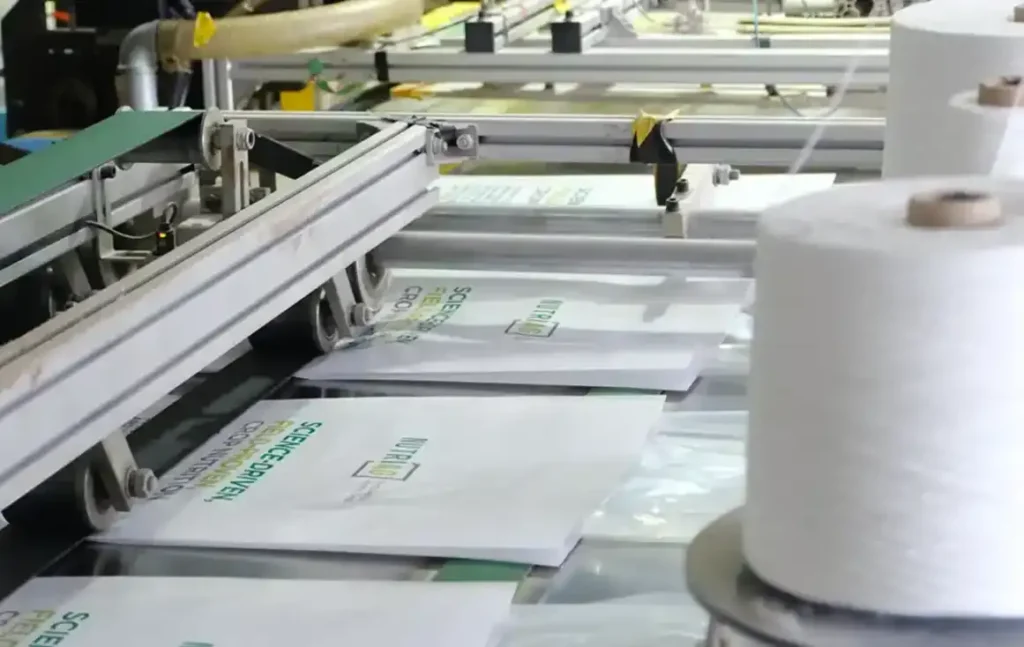
Definition and Naming — What are Form‑Fill‑Seal Woven Bags?
What exactly are Form‑Fill‑Seal Woven Bags, and why do they matter to both industrial packers and retail brands? They are woven‑polyolefin packages supplied primarily as rollstock or pre‑made sleeves that are shaped around a forming device, charged with product, and closed thermally on automated equipment. Engineers talk about substrates and jaw windows; marketers talk about glossy graphics and shelf presence; operators talk about uptime, denesting, and scrap. This format sits at the intersection of those concerns. In the trade, you will also encounter synonyms: FFS woven sacks, woven FFS, PP woven FFS, and woven poly FFS. The essence remains constant: a drawn‑tape woven fabric for mechanical strength, combined with a sealable skin that enables hermetic closure at speed.
The position this format occupies can be seen by contrasting it with its neighbors. Traditional open‑mouth woven sacks are rugged and easily field‑repaired, but they rely on sewing as a separate downstream step and therefore add handling complexity. Film‑only FFS webs run very fast, yet—at equivalent gauge—tend to offer less abrasion and puncture resistance. Form‑Fill‑Seal Woven Bags bridge the gap: when the sealing layer, web tension, and mouth geometry are tuned, the line approaches film‑like cadence, while the woven backbone retains the drop and stack endurance of a sewn sack. As a result, the format is expanding in fertilizers, agricultural minerals, polymer pellets, pet food, salt, and dry building materials where throughput and brand impact must coexist.
If the phrase needs a single mental picture, imagine a woven PP fabric that carries a print‑friendly skin. That skin is not decoration; it is the functional interface to heat, pressure, and dwell at the jaws. When done well, seals hold while hot (hot‑tack), art stays scuff‑free through distribution, and bags denest one by one—never two at a time—under real warehouse conditions.
For readers who want one reference touchpoint on printing‑driven woven structures, see this relevant platform for laminated woven: Form‑Fill‑Seal Woven Bags. Although the page discusses BOPP‑laminated woven in general, many printing principles apply directly to the high‑impact, scuff‑resistant presentation prized in automated lines.
Constituent Materials — The Material of Form‑Fill‑Seal Woven Bags
The backbone of Form‑Fill‑Seal Woven Bags is polypropylene (PP) drawn into tapes and woven into a plain‑weave fabric. PP is chosen for its combination of stiffness, tensile strength, and chemical resistance, all at low mass. Orientation during drawing aligns polymer chains, raising modulus such that the final fabric can carry heavy granular loads without resorting to thick gauges. Most manufacturers favor homopolymer PP in the tapes for higher strength; random or impact copolymers are often reserved for sealing or coating layers where toughness and broader temperature windows matter.
Around this backbone, converters apply layers and additives that address real‑world failure modes: moisture ingress, dust contamination in seals, scuffing during transit, glare over barcodes, and creep on pallets. Understanding each component clarifies the cost–performance equation and reveals why some specs run effortlessly while others fight the line.
- Extrusion coating (PP or PE, ~15–40 µm): A continuous skin that adds moisture control and ink anchorage. When formulated as a sealant, this skin becomes the interface that melts, wets, and interdiffuses at the jaws.
- BOPP laminate (12–25 µm): Reverse‑printed film providing photographic graphics, high rub resistance, and added stiffness at the mouth. The lamination adhesive must wet the fabric peaks and valleys to prevent voids that later telegraph as cosmetic streaks.
- Sealant blend: A polyolefin layer engineered for hot‑tack and a broad sealing plateau—often a mix of PP with metallocene‑LLDPE or similar polymers. The blend must flow through woven topography without starving the interface.
- Liners (LDPE/HDPE, 20–60 µm): Loose or mouth‑stitched films added for hygiene, sifting, or specific barrier needs. Liners must register with the mouth so the seal is liner‑to‑liner, not liner‑to‑fabric voids.
- Additive packages: HALS UV stabilizers for yard storage; antioxidants for heat history; slip/antiblock to tune coefficient of friction; antistatic additives to calm dust; and controlled CaCO₃ masterbatch for stiffness and opacity.
- Inks and varnishes: High‑rub flexo inks for coated fabric, or gravure inks locked under BOPP. Matte/gloss patterns control glare for scanning and guide shopper attention to hero panels.
Cost is dominated by resin mass, not by printing mystique. This is liberating: by engineering strength through orientation and seam geometry, you can lower GSM without sacrificing performance, and move the cost curve while improving handling. Printing and lamination add fixed costs that should be amortized over volume or SKU families. Additives, while only a few percent by weight, often deliver outsized savings by preventing UV chalking, pallet creep, or mis‑picks that cause line stops.
Woven PP tapes (load core) → PP/PE extrusion coating (moisture + print plane) → BOPP laminate (graphics + scuff shield + mouth stiffness) → optional PE liner (hygiene & dust control). Each layer eliminates a specific failure mode for Form‑Fill‑Seal Woven Bags.
Resin mass sets the floor; GSM and PPI determine strength; coating and laminate weights tune barrier and mouth behavior; graphics platform (flexo vs. gravure) sets fixed cost and scuff immunity.
| Component | Material | Common Range | Primary Role | Cost Sensitivity |
|---|---|---|---|---|
| Woven fabric | PP tapes (600–1200 denier) | 60–110 g/m² | Load‑bearing, tear strength | High |
| Extrusion coating | PP or PE | 15–40 µm | Moisture control, print plane, sealable skin | Medium |
| BOPP laminate | Reverse‑printed BOPP | 12–25 µm | Graphics, scuff resistance, mouth stiffness | Medium–High |
| Sealant blend | Polyolefin mix (e.g., mLLDPE/PP) | Hot‑tack tuned | Heat‑sealing window for FFS jaws | Medium |
| Liner (optional) | LDPE/HDPE | 20–60 µm | Hygiene, sifting barrier | Low–Medium |
Distinctive Qualities — What is the Features of Form‑Fill‑Seal Woven Bags
Five capabilities consistently separate Form‑Fill‑Seal Woven Bags from other substrate families. Each capability is a consequence of specific design choices rather than vague material hype, and each comes with practical caveats that an operator can test on day one.
- Line‑rate compatibility: With the correct sealable skin and hot‑tack profile, vertical and horizontal equipment can approach film‑only speeds. The woven base keeps geometry stable through fast fills.
- Strength at low mass: Drawn tapes create a high modulus fabric; seams exploit that strength. Where a monolayer film might require higher gauge, a woven composite meets the same drop/stack without excess resin.
- Tunable barrier and breathability: Uncoated webs vent respiration; coated and laminated constructions resist moisture and dust; liners add hygiene when needed. One platform, many micro‑climates.
- Brand durability: Reverse‑printed BOPP protects inks behind film; matte/gloss orchestration reduces glare and guides attention. Graphics survive forklifts, conveyors, and stack storage.
- Logistics stability: Anti‑slip textures and consistent gussets stabilize pallets; stiffer mouths improve denesting, reducing double‑picks that cripple OEE.
Sealant chemistry and jaw design carry speed; woven geometry carries load. Neither works alone.
Reverse‑printed film shields ink; varnishes add texture; quiet zones preserve code scans.
CoF tuning plus anti‑slip varnish stabilize pallets and reduce stretch‑wrap demand.
Manufacture and Controls — What is the Production Process of Form‑Fill‑Seal Woven Bags
Process steps look familiar on paper—extrude, weave, treat, print, laminate or coat, convert—but the choreography is unforgiving. Small drifts upstream become large losses downstream. The following sequence highlights both the steps and the control levers that prevent surprises at the packer.
- Tape extrusion and drawing: Cast thin sheet, slit, draw. Control width and thickness; log tensile and elongation each shift. Regrind only internal, clean trims within validated percentages.
- Weaving: Manage picks per inch and tape tension; record GSM and dimensional repeatability. Track fabric defects—broken ends and floats—that later become weak seams or leak paths.
- Surface preparation: Corona treat to ≥38 dyn/cm. If coating, control coat weight and chill; if laminating, validate peel strength and uniform wet‑out.
- Printing: For coated fabric, use high‑rub flexo with overprint varnish where needed; for BOPP, reverse‑print gravure. Confirm ΔE targets and barcode grade under glare and through wrap.
- Lamination/coating and sealant application: Apply seal skins with even profile; guard against cold spots across the width. Target a broad hot‑tack plateau to survive ambient swings on the line.
- Conversion (rollstock or sleeves): Add clear eye marks and, where applicable, pre‑form gussets. Coordinate mouth geometry with forming shoulders and jaws, not as an afterthought.
- Quality assurance: Check dyne, CoF, peel, drop, and stack; label rolls clearly for machine direction; moisture‑guard packaging for transit.
Usage Spectrum — What is the Application of Form‑Fill‑Seal Woven Bags
Where do Form‑Fill‑Seal Woven Bags shine? Wherever high throughput meets high abuse. Fertilizers and mineral salts test abrasion; polymer pellets test static and dust; pet food tests brand fidelity and hygiene; building materials test drop resistance; emergency logistics tests speed under pressure. The same platform adapts through layer choices, sealant chemistry, and mouth geometry.
- Fertilizers, minerals, salts: UV packages for yard storage; heavier GSM; anti‑slip finishes; wide sealing windows to handle ambient swings.
- Polymer pellets and additives: Antistats; tuned CoF; careful dust management at the seal; strong but not brittle seals.
- Pet food and feed: Retail‑facing graphics under BOPP; liner‑assisted hygiene; durable seams; consistent gussets for pallet display.
- Dry building blends: Impact tolerance for forklift impacts and pallet drops; matte code fields for scanning in depots.
- Emergency response: Rapid bag creation and filling with better tear tolerance than thin films at comparable mass.
Form‑Fill‑Seal Woven Bags: Exploring Advanced Printing Techniques
The headline blends two worlds: machine cadence and visual persuasion. High‑impact graphics should not slow a line, and speed should not erase narrative. The following techniques make that balance routine rather than lucky.
- Reverse‑printed BOPP lamination: Inks live behind film, solving abrasion at the root. Photographic gravure supports 8–10 colors, halftones, metallics, and under‑white for opacity. Lamination adds mouth stiffness that improves denesting and sensor registration.
- High‑definition flexographic print on coated fabric: With fine plates and anilox rolls, coated woven hosts crisp logos and compliance panels at lower fixed cost than gravure. Use overprint varnish or matte bands to protect art and preserve code contrast.
- Variable data and security: Digital over‑print (inkjet or thermal transfer) adds lot codes, serialized QR, or covert marks. Reserve varnish windows with controlled surface energy to ensure adhesion and dry times.
- Matte/gloss orchestration: Matte fields reduce glare in code zones and at small text; gloss boosts saturation for hero imagery. Tactile varnishes add grip without invading seal areas.
- Registration for machine vision: Eye marks must be high‑contrast and placed away from gusset stress. Stable modulus from lamination helps eye‑mark repeatability as web tension drifts.
- Ink and curing policies: Solvent gravure dominates BOPP; water‑based or solvent flexo covers coated fabric. EB/UV varnishes are evaluated case‑by‑case against heat loads and migration rules.
An easy mistake is to approve art on a smooth film and expect identical results on a woven composite. Texture, coat‑weight uniformity, and jaw planarity alter perceived sharpness. Proof on the real substrate, then evaluate under warehouse light and through stretch wrap. What looks perfect on a light table may wash out under a sodium vapor lamp.
Systems Thinking — From Sub‑Problems to a Unified Specification
A reliable program emerges when teams decompose the work into subsystems and then recompose the decisions into a single, testable spec. The subsystems below align disciplines that often speak different dialects—polymer science, machine physics, color control, and plant hygiene—and translate them into a shared playbook for Form‑Fill‑Seal Woven Bags.
Choose PP grades for draw stability; design sealant blends for broad hot‑tack; allocate UV packages by exposure; apply antistats and slip where dust and friction dominate.
Denier, GSM, and PPI deliver drop/stack performance and dimensional repeatability; gusset design stabilizes pallets and shelf faces.
Coated fabric for value tiers; BOPP lamination for retail hero SKUs; peel and dyne windows set robustness across climates.
ΔE tolerances; code grades (ANSI/ISO C or better through wrap); eye‑mark placement and hue for foolproof triggering.
Jaw temperatures, dwell, pressure; peel targets; burst tests; hot‑tack profiles; jaw face radius and texture.
CoF bands for denesting and pallet safety; mouth stiffness vs. curl; forming‑shoulder polish and web tension policy.
Material declarations under 21 CFR §177.1520 and EU 10/2011 where in scope; FSSC 22000 for packaging manufacture; documented migration and heavy‑metal tests.
Standardize widths and gussets; cluster SKUs for plate/cylinder amortization; dual‑source resins and inks; keep spare cylinders/plates for top movers.
Integrated Specifications — Representative Use Cases
Specifications become convincing when they translate into line stability and pallet integrity. Below are three representative use cases that convert subsystem choices into day‑to‑day performance for Form‑Fill‑Seal Woven Bags.
90 g/m² woven PP with gussets; 30 µm PP coat + 20 µm matte BOPP; mLLDPE‑rich sealant; UV package for 12–18 months; anti‑slip varnish; clear, matte eye‑mark field.
75 g/m² fabric; 18–20 µm PP coat + 20 µm BOPP (matte front, gloss gussets); 35 µm LDPE liner; barcode grade C or better through wrap; haze/gloss targets to the artwork brief.
70 g/m² fabric; 20 µm PP coat, high‑rub flexo; sealant tuned for lower jaw temperatures; antistat package; slip additives for denesting.
Technical Tables — Parameters, Printing Choices, and QA Mapping
| Parameter | Typical Range | Design Intent |
|---|---|---|
| Tape denier | 600–1200 | Scale with abrasion and load |
| Fabric GSM | 60–110 g/m² | Meet drop/stack targets with margin |
| PPI (picks per inch) | 8–14 | Dimensional repeatability for forming |
| Extrusion coating | 15–40 µm | Moisture control, print plane, seal skin |
| BOPP laminate | 12–25 µm | Graphics fidelity and mouth stiffness |
| Platform | Substrate | Strengths | Watch‑outs |
|---|---|---|---|
| Flexographic (high‑rub) | Coated woven fabric | Lower fixed cost; quick changeovers; bold panels | Surface scuff if unvarnished; halftone limits vs. gravure |
| Rotogravure (reverse‑print) | BOPP laminate | Photo quality; scuff proof; matte/gloss control | Cylinder costs; MOQ planning |
| Digital over‑print | Varnish windows | Variable data; serialization; security marks | Surface energy and dry time consistency |
| Property | Method/Target | Purpose |
|---|---|---|
| Peel strength (seals) | N/15 mm at set temp/dwell | Seal integrity on FFS |
| Hot‑tack window | Plateau across ±15–20 °C | Speed tolerance on line |
| Coefficient of friction | ASTM D1894 bands | Denesting and pallet stability |
| Drop test | ASTM D5276 | Handling robustness |
| Stack test | ASTM D4577 dwell | Warehouse stability |
| Barcode grade | ISO/ANSI ≥ C through wrap | Retail and inventory scans |
| Haze/gloss | ASTM D1003 targets | Shelf readability and brand effect |
Professional Anchors — Standards and Identifiers
Disciplined programs keep identifiers at hand. For Form‑Fill‑Seal Woven Bags touching food or pet food, materials should map to 21 CFR §177.1520 in the US or to EU 10/2011 under EC 1935/2004 in Europe. Plants often run under FSSC 22000 (Version 6) with ISO 9001:2015 and ISO 14001:2015. Testing regimes typically include ASTM D5034/D5035 (textile tensile), ISO 13935‑2 (seam strength), ISO 6383‑2 (film tear), ASTM D5276 (drop), ASTM D4577 (stack), ASTM D1894 (CoF), ASTM D5264 (print rub on surface‑printed jobs), and ASTM D1003 (haze/gloss). For color control, many teams adopt practices aligned with the ISO 12647 family.
Cross‑Functional Trade‑offs — Practical Resolutions
Brand impact versus abrasion resistance? Reverse‑printed BOPP resolves the conflict by hiding inks behind film while stiffening the mouth for steadier denesting. Stiffness versus machinability? Trim laminate thickness, adjust hems, and polish forming shoulders to reduce curl. Breathability versus moisture control? Use uncoated fabric where respiration matters; add coatings or liners where shelf life does. Weight versus safety? Light‑weighting saves resin but must be re‑earned through seal geometry and hot‑tack tuning. Cost versus speed? Gravure cylinders cost up front yet repay across long‑running retail SKUs; high‑rub flexo on coated fabric is rational for short runs.
Implementation Roadmap — From Brief to Stable Operation
- Voice of customer and channel mapping: Clarify retail vs. industrial exposure, storage conditions, and required barcode grade through wrap.
- Substrate screening: Select GSM, PPI, and sealing skin; set dyne and CoF windows at goods‑in and pre‑print.
- Print proofs: Gravure or flexo pilots; evaluate ΔE, rub, glare, and code scans under realistic lighting and wrap.
- FFS line trials: Validate forming, registration, seal peel, and hot‑tack plateau across temperature drift; tune jaw faces and dwell.
- Qualification testing: Tensile, seam, peel, drop, stack, CoF, haze/gloss, and when relevant migration per EU 10/2011; file DoCs and third‑party reports.
- Control plan and dashboards: SPC on GSM/PPI/dyne/CoF; seal peel sampling; barcode audits; UV weathering for outdoor SKUs.
Supplier Governance — Risk Controls that Matter
- Dual‑source resins with overlapping melt‑flow ranges; approve two ink vendors for brand colors.
- Standardize widths and gusset depths; cluster SKUs to reuse plate/cylinder sets.
- Agree on regrind policy (internal trims only; validated percentage); keep artwork zones visually clean.
- Hold spare cylinders/plates for the highest‑velocity SKUs to buffer downtime.
Troubleshooting — Fast Diagnostics on the Line
- Pallet creep: Outer CoF too low or wrap tension insufficient → add anti‑slip varnish or tune slip additive; increase overlap.
- Eye‑mark misses: Glare or low contrast → use matte patch and high‑contrast hues; widen marks.
- Weak seals at nominal temps: Dust contamination, cold spots, or aged sealant → add air knives; repolish jaws; verify shelf‑life.
- Mouth curl: Over‑stiff laminate or asymmetrical tension → reduce laminate thickness; re‑set forming shoulder and unwind; add hem pre‑heat.
- QR failures through wrap: Halftone interference and glare → reserve quiet zones; matte bands over codes; test in retail lighting.
Operator Checklist — Day‑One Settings to Pin at the Machine
- Record tape draw ratios and temperatures; verify GSM and PPI vs. spec.
- Check dyne at receipt and pre‑print; re‑treat if stock ages.
- Log coating/lamination weights; spot‑check peel strength by lot.
- Verify eye‑mark swatches; test sensors for reliable triggering.
- Set jaw temp/dwell/pressure to validated window; hot‑tack test hourly at shift start.
- Test CoF per lot; run pallet stability checks on trial unit loads.
- Audit barcode grade through wrap under store‑like lighting.
Understanding Form-Fill-Seal Woven Bags
Form-fill-seal Woven Bags, also known as FFS Woven Bags, are integral to modern packaging operations, particularly for bulk goods and consumer products. These bags are manufactured using a specialized process that combines forming, filling, and sealing in a continuous operation, resulting in a highly efficient and cost-effective packaging solution.
1. Key Features and Benefits
- Efficiency: The form-fill-seal process is renowned for its efficiency, allowing for high-speed production and minimal labor requirements. This is particularly advantageous for large-scale packaging operations where time and cost savings are essential.
- Durability: FFS PP Bags are designed to withstand the rigors of transportation and storage. Made from polypropylene, these bags offer excellent strength and durability, ensuring that products are well-protected throughout the supply chain.
- Customization: The flexibility of the form-fill-seal process allows for customization in terms of bag size, shape, and features. This adaptability makes Form-fill-seal Woven Sacks suitable for a wide range of applications, from food products to industrial materials.
Advanced Printing Techniques for Woven Bags
The printing capabilities for woven bags have advanced significantly, thanks in large part to innovations from leading equipment manufacturers like Starlinger. These advancements have made it possible to achieve high levels of clarity, color saturation, and customization.
1. Printing Methods
- Single-Color Printing: This method involves applying a single color to the surface of the bag, which can be effective for straightforward branding or informational purposes. Form-fill-seal Woven Bags with single-color prints are cost-effective and suitable for many applications.
- Multi-Color Printing: Multi-color printing allows for more complex designs and vibrant visuals. This method uses multiple ink colors to create detailed and eye-catching graphics, enhancing brand recognition and product appeal.
- Full-Color Printing: Full-color or CMYK printing offers the highest level of detail and color accuracy. This technique is ideal for intricate designs and high-resolution images, making it a popular choice for premium products and sophisticated branding.
2. Equipment and Technology
- Starlinger Printing Machines: Starlinger is renowned for its state-of-the-art printing equipment, which ensures high-quality results with excellent clarity and color saturation. Their machines are designed to handle various printing needs, from simple single-color jobs to complex multi-color designs.
- Printing Clarity and Color Saturation: The latest printing technology enables the production of woven bags with sharp, clear images and rich, vibrant colors. This enhances the visual appeal of the bags and ensures that branding and product information stand out.
3. Surface Finishes
- Matte Finish: A matte finish provides a non-reflective surface that can give the bag a sophisticated and understated look. This finish can also reduce glare, making the printed information easier to read.
- Glossy Finish: A glossy finish offers a shiny, reflective surface that can enhance the visual impact of the printed design. This finish can make colors appear more vibrant and give the bag a premium look and feel.
Industry Practices and Comparisons
When evaluating Form-fill-seal Woven Bags and their printing capabilities, it is important to consider industry standards and practices to ensure that the chosen solutions meet quality expectations and provide value.
1. Quality Control
- Our Approach: We utilize the latest printing technologies from reputable manufacturers like Starlinger to ensure that our FFS Woven Bags meet high-quality standards. Our commitment to using advanced equipment and quality materials helps us deliver bags that perform reliably and enhance brand presentation.
- Competitor Practices: While many competitors also use advanced printing technologies, the quality of the final product can vary based on equipment, materials, and processes. It is crucial to select a supplier that maintains rigorous quality control measures to ensure consistent results.
2. Customization and Innovation
- Our Offering: We provide a wide range of customization options for Form-fill-seal Woven Sacks, including various printing methods and surface finishes. This allows businesses to create packaging that aligns with their brand identity and product requirements.
- Industry Trends: The packaging industry is increasingly focused on innovation and customization. Companies that invest in advanced printing technologies and offer a range of customization options are better positioned to meet market demands and differentiate themselves from competitors.
3. Sustainability and Environmental Considerations
- Sustainability: We are committed to incorporating sustainable practices into our packaging solutions, including the use of eco-friendly materials and processes. This aligns with growing consumer and regulatory demands for environmentally responsible products.
- Industry Trends: The trend toward sustainable packaging solutions is gaining momentum, with many companies exploring ways to reduce environmental impact. Staying informed about these trends and adopting sustainable practices is essential for meeting market expectations and contributing to environmental conservation.
Enhancing Packaging Solutions with Advanced Printing
The combination of Form-fill-seal Woven Bags and advanced printing techniques offers numerous benefits for businesses and consumers alike:
- Efficiency and Cost Savings: The form-fill-seal process provides a streamlined and cost-effective packaging solution, making it ideal for high-volume production.
- Customization and Branding: Advanced printing capabilities allow for detailed and vibrant designs, enhancing brand visibility and product appeal. Custom finishes add a premium touch to the packaging.
- Quality and Reliability: High-quality printing equipment ensures that the bags maintain excellent clarity, color saturation, and durability. Rigorous quality control measures help deliver consistent and reliable results.
- Sustainability: By incorporating eco-friendly practices and materials, businesses can align with industry trends and meet consumer demands for sustainable products.
By leveraging the advantages of FFS PP Bags and exploring innovative printing solutions, businesses can enhance their packaging strategies and achieve a competitive edge in the market. The combination of functionality, customization, and quality makes Form-fill-seal Woven Bags a valuable asset for a wide range of applications, from bulk goods to premium products.