
Orientation: mapping Kraft Paper Bags Laminated with PP Woven Fabric to parameters and applications
Across construction materials, agriculture, minerals, food ingredients, and specialty retail, a single hybrid format has become a workhorse for 10–50 kg fills: Kraft Paper Bags Laminated with PP Woven Fabric. This composite marries a printable, high-friction kraft exterior with a puncture-resistant woven polypropylene backbone. The result is a sack that looks and stacks like paper yet behaves with the resilience of poly—absorbing drops, shrugging off pallet-corner abuse, and resisting humidity better than ordinary multi-wall paper alone. The category is not monolithic; it is a tunable architecture whose performance hinges on layer selection, interlayer adhesion, closure style, and converting discipline.
What are Kraft Paper Bags Laminated with PP Woven Fabric? definition, scope, and everyday aliases
Kraft Paper Bags Laminated with PP Woven Fabric are heavy‑duty sacks in which a paper face (natural or white sack kraft) is bonded to a woven polypropylene substrate. The paper skin provides graphics, coefficient of friction for stacking, and a familiar tactile feel; the PP fabric provides tensile strength, tear resistance, and puncture toughness. Typical formats include block‑bottom valve sacks for high‑speed impeller/air packing, pinch‑bottom open‑mouth variants for hermetic seals, and sewn open‑mouth constructions for coarse goods. Fill weights commonly range from 10 to 50 kg, though larger custom sizes exist for specialized lanes.
Because teams use different shorthand, it helps to list frequent aliases for Kraft Paper Bags Laminated with PP Woven Fabric as used in plants, tenders, and purchasing:
- Paper‑laminated PP woven sacks — emphasizes the paper exterior and woven PP core.
- Kraft‑paper laminated woven polypropylene bags — highlights kraft furnish and PP orientation.
- Paper‑faced woven PP valve sacks — indicates valve configuration for high‑speed packers.
- Block‑bottom paper‑PP hybrid bags — focuses on square‑bottom geometry for pallet stability.
- Paper laminated AD‑style woven bags — a nod to certain block‑bottom technology lineages.
- Paper‑poly reinforced sacks — generic but common in cross‑functional meetings.
- Paper‑look woven poly bags — retail‑facing phrasing for garden/DIY channels.
- Paper‑PP composite packaging sacks — procurement shorthand during multi‑site bids.
Materials and layer architecture: papers, woven substrate, ties, and closures
The anatomy of Kraft Paper Bags Laminated with PP Woven Fabric is a layered system where each stratum contributes a specific function. Getting the stack right depends on balancing strength, barrier, machinability, and cost.
Feature set: what Kraft Paper Bags Laminated with PP Woven Fabric do better and why
Decision‑makers don’t buy substrates; they buy outcomes—fewer breakages, cleaner lines, longer shelf stability, clearer branding, safer handling. The recurring advantages of Kraft Paper Bags Laminated with PP Woven Fabric appear both in lab metrics and in field performance.
- High drop survivability at lower mass: woven PP absorbs impact energy and limits crack propagation along folds.
- Puncture resistance at pallet corners: the fabric’s oriented tapes deflect and distribute concentrated loads.
- Moisture tolerance: optional inner films and closed weave reduce humidity ingress versus all‑paper bags.
- Print and compliance: the paper face supports dense text, barcodes, and QR while maintaining pallet friction.
- Machinability: valve sacks run fast with lower dust; PBOM variants achieve hermetic seals for sensitive goods.
- Total cost of ownership: fewer product losses, fewer repacks, and fewer toppled pallets outweigh modest material deltas.
Production flow: from tapes and paper reels to finished block‑bottom sacks
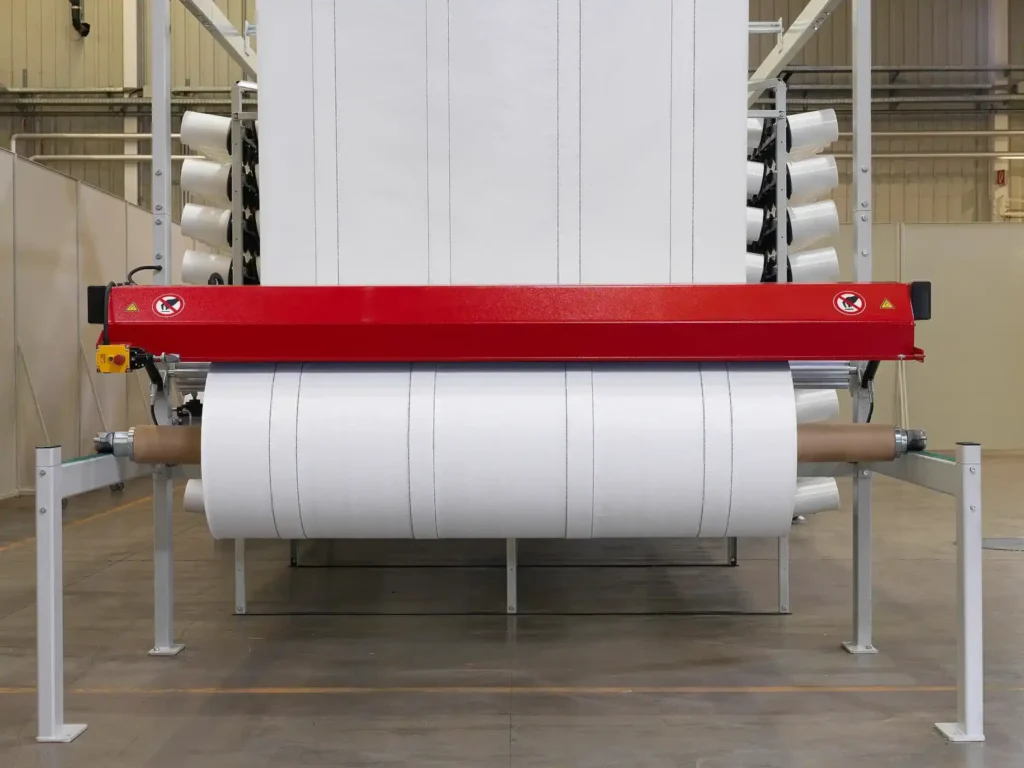
Converters customize workflows, but the choreography follows a familiar arc for Kraft Paper Bags Laminated with PP Woven Fabric.
- Tape extrusion and drawing — polypropylene is extruded into film, slit into tapes, then drawn. Draw ratio tunes tensile and elongation at break.
- Weaving — circular or flat looms interlace tapes to the specified picks per inch (PPI); corona treatment prepares surfaces for coating or lamination.
- Fabric coating (optional) — extrusion coating with PP/PE closes the weave and improves adhesion; coat weight balances stiffness and bond strength.
- Paper preparation — sack kraft reels are slit and moisture‑conditioned; optional varnishes manage scuff and water pick‑up.
- Lamination — either extrusion tie‑layer or solventless PU adhesive bonds paper to fabric; nip pressure and temperature must protect paper flatness.
- Tubing — the laminate web is formed into tubes; longitudinal seams are glued; registration ensures graphics align with future folds.
- Bottoming — block‑bottom geometry is folded and pasted; valve sleeves inserted for valve sacks; pinch layers added for PBOM styles.
- Feature integration — micro‑perforations for venting, antislip coatings, tear tapes, corner reinforcements as needed.
- Quality assurance — peel strength, seam shear, drop tests, COF checks, valve leak tests, and visual AQL prior to palletization.
- Palletization and conditioning — bundles wrapped; humidity controlled to keep paper moisture within spec before shipment.
Applications by sector: matching constructions to risk and value
Use cases reveal why Kraft Paper Bags Laminated with PP Woven Fabric succeed. The goal is to specify a pattern that survives abuse without over‑engineering.
- Building materials — cement, mortar, gypsum: valve sacks with coated fabric and antislip paper; optional inner film in coastal climates.
- Agri‑inputs — fertilizers, seed, soil amendments: fabric mass and corner reinforcements elevated; white paper for branding when retail‑visible.
- Food ingredients & concentrates — flour, sugar, starches, dairy powders: PBOM with inner film and white kraft outer for dense labeling.
- Chemicals and minerals — calcium carbonate, silica, salts, resins: abrasion‑tolerant surfaces and tuned COF to prevent pallet skids.
- Retail garden & DIY — mulch, pellets, aggregates: paper‑forward look with woven strength for forklift and outdoor display abuse.
System thinking: decomposing choices and recombining into a coherent spec
When selecting Kraft Paper Bags Laminated with PP Woven Fabric, treat the decision as five sub‑problems, each with its own levers:
- Moisture risk — set a WVTR target; choose inner film gauge and sealing method; add pallet hooding if climate demands.
- Mechanical abuse — define drop heights and corner impacts; tune fabric grammage, extensible kraft, and reinforcements.
- Line compatibility — valve vs. PBOM vs. SOM; micro‑perforation density for deaeration without sacrificing barrier.
- Branding & compliance — natural vs. white paper, matte vs. gloss topcoats, barcode/QR readability after abrasion.
- End‑of‑life reality — consider peelable liners and paper‑dominant builds where mills accept; otherwise communicate recovery honestly.
Integrate the answers into a testable specification: paper grade and basis weight, fabric mass and PPI, tie system and peel target, closure style and geometry, inner film and seal window, outer COF and varnish, QA gates for peel, drop, COF, and visual AQL. Then run a pilot pallet through real lanes; let the data guide refinement.
Technical parameters and targets
Decision trees by sector
Building materials
- If dust is high, increase micro‑perforations near the valve only; keep panel perforation minimal to preserve barrier.
- If corner punctures persist, raise fabric mass or add corner patches; review pallet corner radii.
- If pallets skid, increase outer COF with varnish and re‑tune stretch‑wrap tension.
Agri‑inputs
- If retail‑visible, select white paper for print density; retain fabric mass for durability.
- If humidity spikes seasonally, integrate a 25–30 µm inner film and move to PBOM for hermeticity.
Food ingredients
- If hygiene overrides speed, prefer PBOM with wide seal windows; validate seal integrity with vibration and leak testing.
- If labels scuff, apply matte topcoats or restrict abrasive contact points in cartons.
Troubleshooting and continuous improvement
- Delamination at creases — increase tie‑layer weight or adjust PU ratio; verify nip and temperature; allow full cure.
- Valve‑corner tears — add reinforcement, tweak sleeve stiffness, review bottomer alignment.
- Caking despite inner film — audit seals, minimize perforations, consider pallet hooding and desiccants.
- Skidding pallets — raise COF via varnish and alter wrap recipe; add slip‑sheets if necessary.
- Graphic scuff — use abrasion‑resistant topcoats or selective BOPP panels on wear faces.
Language, rhetoric, and decision clarity
Parallelism clarifies the trade‑offs: light but strong, paper‑looking yet polymer‑backed, fast to fill yet clean to seal. Contrast focuses attention: is the hidden cost of returns greater than the visible cost of heavier fabric? Questions sharpen intent: if humidity risk is the villain, why not right‑size the inner film first? Repetition, carefully used, drives memory: paper for print, fabric for strength, film for moisture. Each line in the spec should echo that triad.
A worked specification: integrating the pieces
Imagine a regional cement producer standardizing across three mills. The team selects Kraft Paper Bags Laminated with PP Woven Fabric to raise drop ratings while maintaining a paper‑first look.
- Outer: 70 gsm natural extensible sack kraft with antislip matte topcoat.
- Core: 100 g/m² woven PP, extrusion‑coated for adhesion.
- Inner: 25 µm coex LDPE/LLDPE film for moisture risk; micro‑perforations localized near the valve.
- Closure: block‑bottom valve with self‑sealing sleeve; geometry tuned to packer spout.
- QA: peel failure in paper fiber; 8/10 drops at 1.2 m; COF aligned to pallet wrap; visual AQL for print and scuff.
Pilot pallets travel through humid coastal distribution. Field data show reduced corner splits and better stack stability. Minor tweaks follow—slightly deeper valve patch, revised wrap tension—and the spec moves to standard with confidence.
Keyword strategy (natural) and near‑synonyms
Primary phrase: Kraft Paper Bags Laminated with PP Woven Fabric. Naturally integrated long‑tails: paper‑laminated PP woven sacks; kraft‑paper laminated woven polypropylene bags; paper‑PP hybrid valve sacks; block‑bottom paper‑PP bags; paper‑faced woven poly sacks; high‑strength paper‑PP packaging; moisture‑barrier paper laminated woven bags; hybrid paper and woven polypropylene sacks.
- Orientation: mapping Kraft Paper Bags Laminated with PP Woven Fabric to parameters and applications
- What are Kraft Paper Bags Laminated with PP Woven Fabric? definition, scope, and everyday aliases
- Materials and layer architecture: papers, woven substrate, ties, and closures
- Feature set: what Kraft Paper Bags Laminated with PP Woven Fabric do better and why
- Production flow: from tapes and paper reels to finished block‑bottom sacks
- Applications by sector: matching constructions to risk and value
- System thinking: decomposing choices and recombining into a coherent spec
- Technical parameters and targets
- Decision trees by sector
- Troubleshooting and continuous improvement
- Language, rhetoric, and decision clarity
- A worked specification: integrating the pieces
- Keyword strategy (natural) and near‑synonyms
“Why choose kraft-PP laminated bags over traditional plastic packaging?” asked a sustainability officer at a recent packaging summit. “Because they merge biodegradability with industrial-grade durability, while enabling high-definition branding,” responded Ray, CEO of VidePak. This exchange captures the essence of kraft-PP composite bags—a solution balancing ecological responsibility and commercial practicality.
In an era where packaging must satisfy both environmental regulations and supply chain demands, kraft paper laminated with polypropylene (PP) woven fabric has emerged as a versatile choice for industries ranging from agriculture to retail. For manufacturers like VidePak—a global leader in woven bag production since 2008—the challenge lies in optimizing material synergies, print quality, and cost-efficiency. This report explores the technical specifications, manufacturing innovations, and applications of kraft-PP laminated bags, with insights into how VidePak leverages Starlinger and W&H machinery to deliver cutting-edge solutions.
1. Technical Foundations: Material Synergy and Production Workflow
1.1 The Anatomy of Kraft-PP Laminated Bags
Kraft-PP laminated bags combine kraft paper’s biodegradability (80% faster decomposition than pure PP) with PP woven fabric’s tear resistance (tensile strength: 800–1,200 N/5 cm). The lamination process bonds these layers using solvent-free adhesives, achieving peel strengths of ≥3.5 N/15mm (ASTM F88).
Production Workflow Breakdown
- Extrusion & Tape Drawing: PP pellets are melted at 200–240°C and extruded into tapes (2–3 mm wide) using Starlinger’s AD-Star® lines, which maintain ±0.005 mm thickness tolerance.
- Weaving: Circular looms weave tapes into fabric (12×12 strands/inch), optimized for load-bearing (up to 50 kg).
- Lamination: Kraft paper (80–120 gsm) is bonded to PP fabric via W&H’s Novomatic 3000, ensuring <0.1% air bubble formation.
- Printing: High-definition flexography (8-color CI presses) achieves 120-line/inch resolution, ideal for photorealistic logos.
- Surface Finishing: Matte or glossy coatings are applied using UV-curable varnishes, enhancing scratch resistance by 40%.
2. Customization and Quality Control: The VidePak Edge
2.1 Advanced Printing Techniques
VidePak’s 30+ printing machines support:
- Single-Color Simplicity: Cost-effective for bulk orders (e.g., agricultural seed bags).
- Multicolor Precision: 6–8 color gradients for retail branding, achieving ΔE < 2 (near-perfect color accuracy).
- Glossy vs. Matte Finishes: Matte coatings reduce glare for outdoor storage, while glossy finishes enhance shelf appeal.
2.2 Quality Assurance Protocols
| Parameter | Test Method | VidePak Standard | Industry Benchmark |
|---|---|---|---|
| Tensile Strength | ASTM D5034 | 1,100 N/5 cm | 800 N/5 cm |
| Moisture Barrier | ASTM E96 | 0.5 g/m²/day | 2.0 g/m²/day |
| Print Adhesion | ASTM D3359 | 4B (No peel-off) | 3B |
A 2024 study by the International Journal of Packaging Science noted that VidePak’s laminated bags reduced rice spoilage by 18% in humid climates due to superior moisture control.
3. Applications: Where Functionality Meets Sustainability
3.1 Agricultural and Feed Packaging
- Seed Storage: Kraft-PP bags block UV light, preserving germination rates (95% viability after 12 months).
- Livestock Feed: Anti-mold additives in PP fabric reduce contamination risks by 30%.
- Case Study: A Vietnamese rice exporter reported a 22% reduction in transport damage after switching to VidePak’s 120 gsm laminated bags.
3.2 Retail and Consumer Goods
- Premium Branding: Matte finishes with embossed logos elevate luxury product packaging (e.g., organic coffee).
- E-Commerce: QR code-integrated printing enables supply chain tracking, a feature demanded by 67% of logistics firms in 2024.
4. FAQs: Addressing Industry Concerns
Q1: How does lamination thickness affect performance?
A: A 15–20 µm adhesive layer optimizes bond strength without compromising flexibility. Thicker layers (>25 µm) increase rigidity, risking delamination in cold climates.
Q2: Are these bags recyclable?
A: Yes. VidePak’s kraft-PP bags separate into paper and PP components via hydro-pulping, achieving 85% recyclability per ISO 15270 standards.
5. Future Trends: Smart and Sustainable Innovations
VidePak is piloting biodegradable PP blends (30% plant-based resins) and RFID-enabled bags for real-time inventory management. These align with the EU’s 2027 Single-Use Plastics Directive, which mandates 50% recycled content in packaging.
External Resources
- Discover how kraft paper woven bags are redefining sustainable packaging.
- Explore innovations in livestock feed packaging with laminated solutions.
In conclusion, kraft-PP laminated bags are not merely containers—they are strategic assets for businesses navigating sustainability mandates and consumer expectations. By marrying Austrian engineering with ecological innovation, VidePak continues to lead a market where every gram of material and pixel of print translates to competitive advantage.