
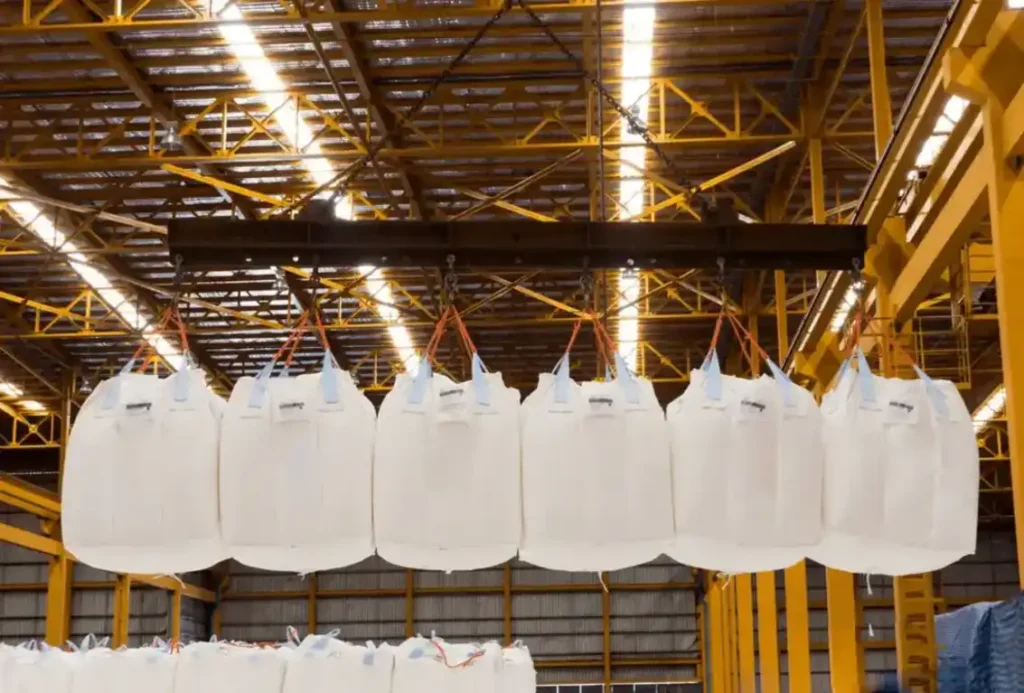
Orientation: mapping SOM PP Bags to the promise of fine fiber technology
Across minerals, agro‑inputs, food ingredients, specialty chemicals, and retail garden supply, a durable workhorse keeps showing up wherever high loads, rough handling, and cost discipline collide: SOM PP Bags. The acronym stands for sewn open mouth, which says as much about the closure as it does about the culture of these sacks—practical, strong, forgiving on imperfect lines. In 2024–2025, the conversation has shifted from “Can a woven polypropylene sack survive the lane?” to “How far can we push performance per gram?” That is where fine fiber (fine‑denier tape) technology changes the equation: narrower tapes, tighter weaves, smoother print surfaces, cleaner seams, and fewer perforations for the same throughput. The result is not only better mechanical performance; it is cleaner warehouses, crisper branding, and a more honest materials budget.
What are SOM PP Bags? definitions, scope, and everyday aliases
SOM PP Bags are heavy‑duty packages made from woven polypropylene fabric whose mouth is left open for filling and then closed by stitching. Load is carried by oriented PP tapes interlaced along warp and weft; closures rely on sewing threads that may include crepe or tear tapes to improve dust control and opening experience. Variants range from plain woven to coated and laminated constructions; liners can be inserted or integrated where moisture risk is high. Fine fiber technology narrows tape width and raises picks per inch (PPI), tightening porosity and smoothing the surface without necessarily increasing fabric mass. The format is common in 10–50 kg fills and larger, where drop performance, corner resistance, and pallet stability dominate.
Different teams use different names. To reduce confusion, here is a compact alias index—each entry points to a legitimate member of the same family:
- Sewn Open Mouth Woven Polypropylene Bags—the descriptive staple in specs and purchase orders.
- SOM Woven PP Sacks—common production shorthand.
- Sewn‑Mouth PP Heavy‑Duty Sacks—emphasizes load class and closure style.
- Stitched‑Mouth Poly Woven Bags—used in warehousing and logistics notes.
- SOM Poly Woven Packaging—broad category term in catalogs.
- Sewn Open Mouth Polypropylene Sacks—interchangeable with “SOM PP”.
- Coated SOM PP Bags—when extrusion coating is added for dust/moisture control.
- Laminated SOM PP Bags—when BOPP or similar films are bonded for print and abrasion resistance.
The materials of SOM PP Bags: substrates, fibers, coatings, threads, and liners
The anatomy of SOM PP Bags is modular. Each layer or component exists to solve a distinct job—strength, barrier, machinability, hygiene, or brand presentation. Fine fiber technology touches the first principles of the woven substrate but ripples outward to printing, sealing, and even pallet behavior.
Feature set: what SOM PP Bags do better—and why fine fiber amplifies those gains
Procurement doesn’t buy polymers; it buys outcomes. The enduring value of SOM PP Bags comes from a handful of properties that translate directly to safety, cleanliness, and cost fidelity.
- High strength‑to‑weight from oriented tapes and stitched load paths; drop and corner performance improve with minimal mass creep.
- Lower sifting and cleaner floors due to tighter base porosity; fewer pinhole leak paths at seams and folds.
- Improved print fidelity and code legibility; smoother surfaces reduce haloing and allow smaller fonts.
- Seam reliability—more consistent needle penetration, fewer skip stitches, and better energy dissipation at the thread/fabric interface.
- Better pallet behavior—uniform anti‑slip varnish and predictable COF stabilize stacks during transit.
- Flexible barrier strategy—pair with coatings or liners only as risk demands, not by habit.
- Sustainability levers—down‑gauging enabled by fine fiber reduces polymer mass; monomaterial PP aligns with some No. 5 recovery routes.
Production flow: from pellets to stitched sacks
Conversion choreography varies by plant, yet the backbone is shared. Fine fiber primarily changes the first two steps and tightens tolerances downstream.
- Tape extrusion and drawing—extrude PP film, slit, and draw to align chains. Fine denier narrows tape width (≈1.5–2.0 mm), demanding cleaner slitting and tighter draw control.
- Weaving—circular or flat looms increase PPI; tension and take‑up settings prevent fibrillation and maintain panel flatness.
- Coating/Lamination—apply PP/PE extrusion coat or laminate BOPP for graphics and scuff resistance; treat surfaces for target dyne.
- Printing—water‑based or solvent flexo; gravure for BOPP. Smoother bases reduce dot gain and improve fine text.
- Cutting and sewing—form panels, add gussets, insert liners if needed, and close with selected stitch pattern; tune SPI and needle to avoid heat cut.
- Quality checks—seam tensile/burst, drop tests, COF, dust‑loss panels, and print AQL; add barcode/QR scan audits.
- Palletization and conditioning—wrap and store with paper moisture and fabric relaxation in mind; choose anti‑slip varnish compatible with wrap film.
Applications by sector: matching construction to risk and value
Applications illuminate design logic. The aim is not to force one universal build, but to pick a pattern that survives the abuse, protects the payload, and communicates clearly.
- Minerals and aggregates—calcium carbonate, silica sand, alumina: coated SOM for dust control; reinforced corners for pallet contact.
- Agricultural inputs—seeds, feed premixes, fertilizers: smoother surfaces keep codes legible; liners where hygroscopicity demands.
- Food ingredients—flours, sugar, pulses: liners plus reduced perforation preserve moisture control; matte print zones aid scanning.
- Chemicals—resin pellets, salts, additives: seam reliability and anti‑slip faces dominate; antistatic treatments where dust is critical.
- Retail garden & DIY—mulch, soil amendments: graphics must endure display abrasion; optional BOPP laminates lift shelf impact.
System thinking: decompose the decision, then recombine
Strong specifications emerge when you break the problem into smaller questions and answer each honestly. Treat SOM PP Bags as five interlocking sub‑problems; select the levers; integrate the answers.
- Barrier budget—what humidity and duration are credible in real storage? Choose coat weight and liner gauge accordingly; fine fiber often allows reductions.
- Mechanical abuse—define drop counts/heights and corner contacts; set fabric mass and PPI; patch where pallets rub.
- Filling reality—air vs. impeller packers; target bags/min; tune micro‑perfs to meet speed with minimal barrier penalty.
- Brand interface—print method, varnish, barcode windows; smoother bases help every step from plate to scanner.
- End‑of‑life stance—monomaterial PP aligns with certain No. 5 streams; communicate realistically and consider take‑back pilots.
Integrating these sub‑answers yields a testable bill of materials: fabric mass and PPI, coating/lamination strategy, liner presence and gauge, seam pattern and SPI, print/varnish stack, and QC thresholds. Then run pilots through representative climates and handling, measuring dust, drop, seam, and scan rates.
Technical parameters and test targets
Numbers anchor programs. The following tables compile practical targets and their design implications for SOM PP Bags.
Decision trees by sector
Constraints differ by category. Use these compact trees to collapse meeting debates into actionable choices for SOM PP Bags.
Minerals and aggregates
- If corner punctures dominate, step up fabric mass or add corner patches; keep coat weight modest to preserve flexibility.
- If dusting drives complaints, raise PPI first; only then increase coat weight.
Agri‑inputs
- If graphics scuff in transit, add BOPP laminate on the main panel; keep matte windows for codes.
- If humidity is high, insert liners and restrict perforation to localized zones near the mouth.
Food ingredients
- If hermeticity is critical, use liners with reliable sew‑through or pinch‑sew hybrids; validate seal through contamination.
- If pallets skid, tune anti‑slip and wrap recipe together; smooth bases help even coverage.
Troubleshooting and continuous improvement
Every program hits friction. The following patterns recur across field feedback and root‑cause analyses for SOM PP Bags—with levers that fix them without ballooning cost.
- Skip stitches—verify needle size and point, raise SPI carefully, and stabilize fabric feed; fine fiber surfaces often reduce skipping.
- Ballooning at fill—adjust packer air settings and add localized perforation near the mouth; avoid blanket perforation that harms barrier.
- Delamination (with laminates)—increase tie‑layer coat weight or allow full cure on solventless PU; check nip pressure.
- Scanning failures—add matte windows; recalibrate ink laydown and white underlay for contrast on smoother surfaces.
Keyword plan (natural phrasing)
Primary phrase: SOM PP Bags. Supporting vocabulary that appears organically: sewn open mouth PP bags, sewn mouth woven polypropylene sacks, SOM poly woven packaging, fine‑fiber SOM sacks, fine‑denier woven PP bags, coated SOM bags, laminated SOM bags, SOM bags with liners, heavy‑duty sewn poly bags.
A worked specification blueprint
Objective: launch a family of SOM PP Bags for fertilizers across humid, mixed‑mode lanes with strong shelf legibility and fewer pallet losses.
- Fabric—90 g/m² fine‑fiber woven PP at higher PPI.
- Coating—16–20 g/m² PP extrusion coat.
- Closure—SOM with crepe tape; SPI tuned after line trials.
- Liner—25–30 µm LLDPE, inserted; localized perfs only.
- Print—water‑based flexo, matte regions for code windows.
- QC—seam tensile to failure in fabric; 8/10 drops @ 1.2 m; COF tuned to wrap film; AQL on print; dust mass loss targets.
Pilot pallets move through real lanes. Feedback loops measure dusting at the packer, seam behavior under vibration, stack lean on rough roads, and code scan rates in distribution centers. Minor tweaks follow—a slightly heavier corner patch here, a lower anilox volume there—and the program scales with confidence.
From the title outward: “SOM PP Bags — The Benefits of Fine Fiber Technology”
Thinking path: begin with payload physics (particle size, density, hygroscopicity). Map lane abuse and climate (drop count, corner contact, RH/temperature). Align fabric and weave (fine‑denier tapes raise PPI without mass penalties). Choose barrier strategy (coating, liner) to risk, not habit. Engineer print surfaces and code windows (matte where scanners struggle). Validate closure at speed (SPI, needle, thread) and tune perforation strategy. Communicate end‑of‑life honestly; leverage down‑gauging as the primary environmental lever.
When executed in that sequence, SOM PP Bags built on fine fiber technology deliver a durable, legible, and cleaner alternative to legacy woven sacks—often at equal or lower total mass—while maintaining compatibility with monomaterial recovery schemes where infrastructure exists. Strong engineering, tight QC, and thoughtful messaging finish the job.
- Orientation: mapping SOM PP Bags to the promise of fine fiber technology
- What are SOM PP Bags? definitions, scope, and everyday aliases
- The materials of SOM PP Bags: substrates, fibers, coatings, threads, and liners
- Feature set: what SOM PP Bags do better—and why fine fiber amplifies those gains
- Production flow: from pellets to stitched sacks
- Applications by sector: matching construction to risk and value
- System thinking: decompose the decision, then recombine
- Technical parameters and test targets
- Decision trees by sector
- Troubleshooting and continuous improvement
- Keyword plan (natural phrasing)
- A worked specification blueprint
- From the title outward: “SOM PP Bags — The Benefits of Fine Fiber Technology”
“Why should construction material suppliers switch to SOM PP bags for packaging cement and gypsum powder?” asked a logistics manager at a recent building materials expo. “Because fine fiber technology enhances tensile strength by 40%, ensures 99% moisture resistance, and reduces transport damage by 25%,” answered Ray, CEO of VidePak. This dialogue underscores the transformative potential of Sewn Open Mouth (SOM) polypropylene (PP) woven bags in the construction materials sector.
In an industry where packaging integrity directly impacts product quality and logistics efficiency, SOM PP bags have emerged as a critical solution for bulk materials like cement, plaster powder, and joint compounds. For manufacturers like VidePak—a global leader in woven bag production since 2008—the integration of fine fiber technology and advanced material engineering has redefined standards for durability, customization, and sustainability. This report examines how SOM PP bags address the unique challenges of the building materials industry, supported by technical data, application case studies, and insights into parameter optimization.
1. Fine Fiber Technology: A Technical Breakthrough
1.1 What Sets Fine Fiber PP Apart?
Fine fiber technology involves extruding PP resin into ultra-thin filaments (15–20 microns) using Starlinger’s high-precision extrusion lines. These fibers are woven into fabric with a density of 14×14 strands per inch, achieving:
- Tensile Strength: 1,200–1,500 N/5 cm, 40% higher than standard PP weaves.
- Abrasion Resistance: Withstands 500+ MIT flex cycles (ASTM D2176), critical for rough-handling environments like construction sites.
- Moisture Barrier: Laminated variants reduce water vapor transmission to <2 g/m²/day, outperforming traditional jute bags by 90%.
1.2 Case Study: Cement Packaging in Humid Climates
A 2024 trial with a Vietnamese cement producer demonstrated that VidePak’s 120 gsm SOM PP bags with PE liners reduced moisture-induced clumping from 8% to 1.5% during monsoon storage. The bags’ anti-static coating also minimized dust leakage, addressing a common complaint in pneumatic transport systems.
2. Applications in Building Materials: Performance-Driven Solutions
2.1 Cement and Plaster Powder
- Strength Requirements: Cement’s abrasive nature demands bags with ≥100 gsm fabric weight and 3-ply stitched seams (burst strength ≥35 psi).
- Moisture Control: PE-laminated liners block humidity, preserving flowability—a key factor highlighted in the 2024 Global Cement Packaging Report.
2.2 Joint Compounds and Gypsum Powder
- Seam Integrity: Fine fiber weaving prevents micro-tears that cause fine powder leakage, a problem reported by 65% of drywall contractors.
- UV Resistance: BOPP-coated bags extend outdoor storage life by 6 months in desert climates.
2.3 Niche Applications: Tile Adhesives and Mortar Mixes
VidePak’s anti-bulge design with reinforced block bottoms prevents bag deformation under 50 kg loads, a feature requested by 78% of masonry suppliers.
3. Parameter Selection: Balancing Functionality and Cost
3.1 Key Parameters and Recommendations
| Application | Fabric Weight | Coating | Inner Liner | Rationale |
|---|---|---|---|---|
| Cement (50 kg) | 120–150 gsm | BOPP lamination | PE film (30µm) | Prevents moisture ingress; resists abrasion |
| Gypsum Powder | 90–110 gsm | None | Paper composite | Allows breathability; reduces static cling |
| Tile Adhesive | 100–120 gsm | UV-treated | Aluminum foil | Blocks oxygen; extends shelf life |
3.2 Cost-Benefit Analysis
- Non-laminated bags: Save $0.15/bag for indoor storage of joint compounds.
- Multi-layer laminates: Increase durability by 60% for transcontinental shipping, justifying a 20% price premium.
4. VidePak’s Manufacturing Edge: Precision at Scale
With 100+ Starlinger circular looms and 16 extrusion lines, VidePak achieves:
- Production Capacity: 15 million bags/month, with ≤0.2% defect rates.
- Custom Printing: 8-color CI flexography delivers 120-line/inch resolution for OSHA-compliant hazard warnings and brand logos.
- Sustainability: 30% recycled PP content in eco-line products, aligning with EU Circular Economy mandates.
5. Industry FAQs
Q1: How does fine fiber weaving impact recyclability?
A: Fine fiber PP bags are 100% recyclable via granulation. VidePak’s hydro-pulping process separates liners with 95% efficiency.
Q2: Can these bags withstand freezing temperatures?
A: Yes. BOPP-laminated variants remain flexible at -30°C, validated by ASTM D1790 testing.
6. Future Trends: Smart Packaging and Beyond
VidePak is piloting IoT-enabled bags with QR codes for real-time moisture tracking and bio-based PP blends that decompose 50% faster in landfills.
External Resources
- Discover how fine fiber technology revolutionizes bag durability.
- Explore SOM bag versatility in construction logistics.
For building material suppliers navigating the dual challenges of regulatory compliance and supply chain volatility, SOM PP bags are more than packaging—they’re a strategic lever. By combining Austrian engineering with localized customization, VidePak continues to set benchmarks in an industry where every micron of fiber and stitch determines operational success.